10 Results for "

ZIKV-IN-5

" in MedChemExpress (MCE) Product Catalog:
Products (10)

10 Results for "ZIKV-IN-5" in MCE Product Catalog:

Cat. No.: HY-151448
CAS No.: 3033697-92-3
Target:  

Virus Protease

Research Areas:  

Infection

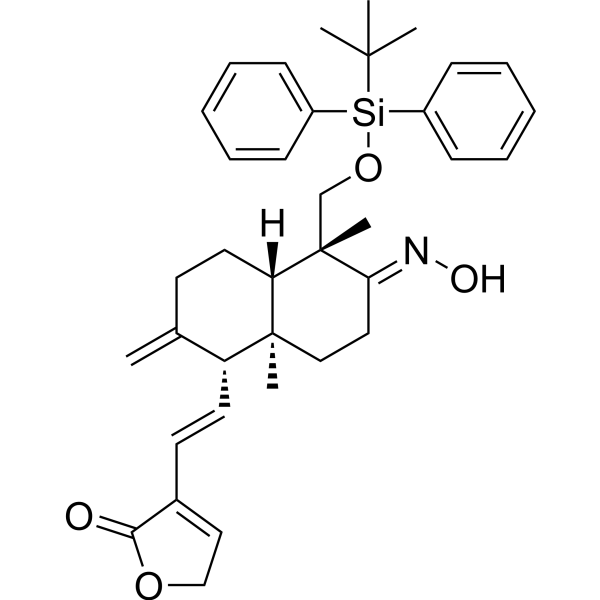
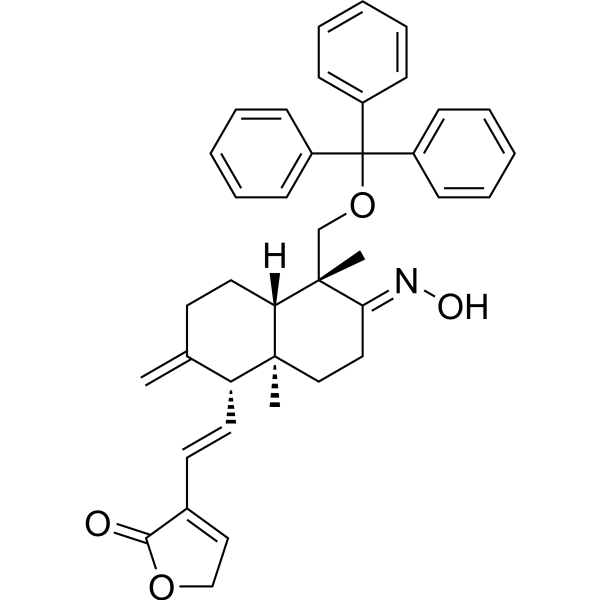
ZIKV-IN-5 (compound 5c) is a low-cytotoxicity and acid-stable anti-ZIKV agent (EC50=0.71 μM). ZIKV-IN-5 effectively inhibits the activity of ZIKV NS5 MTase .
loading...
    loading...
2
2 Cited Publications
Cat. No.: HY-N4118
CAS No.: 483-17-0
Synonyms: (-)-CephaelINe; NSC 32944 free base
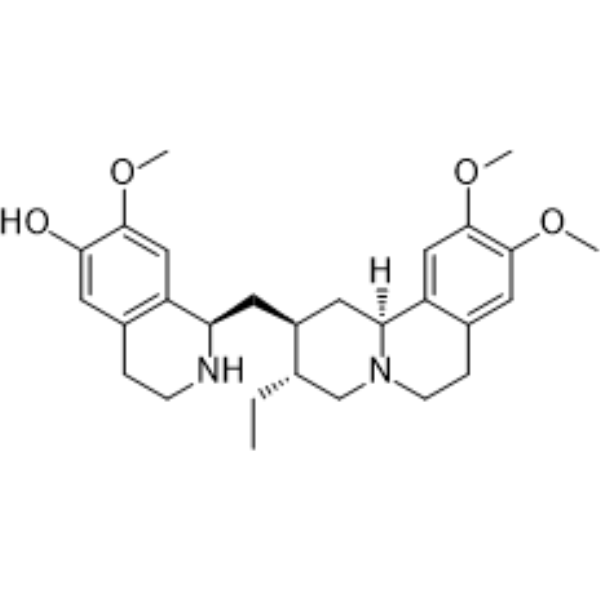
Cephaeline ((-)-Cephaeline; NSC 32944) is a ferroptosis inducer, with broad-spectrum anticancer and antiviral activities. Cephaeline induces ferroptosis (Ferroptosis) by upregulating p53, inhibiting NRF2, activating ULK3, downregulating the expressions of SLC7A11 and GPX4 in a p53-dependent manner, reducing GSH and mitochondrial membrane potential, and increasing lipid peroxidation and iron accumulation. Cephaeline inhibits cancer cell proliferation, migration and tumor growth. Cephaeline inhibits Ebola virus (EBOV) VLP entry and infection, with IC50 values of 3.27 μM and 22.18 μM respectively; it also inhibits Zika virus (ZIKV) NS5 RdRp activity (IC50 = 976 nM), and binds to severe acute respiratory syndrome coronavirus 2 (SARS-CoV-2) RdRp and N protein, with Kd values of 8.9 μM and 53.8 μM respectively. Cephaeline can be used in studies related to breast cancer, lung cancer, COVID-19, EBOV and ZIKV infections [5].
loading...
    loading...
Cat. No.: HY-150234
CAS No.: 381188-63-2
Purity:  ≥95.0%
Research Areas:  

Infection

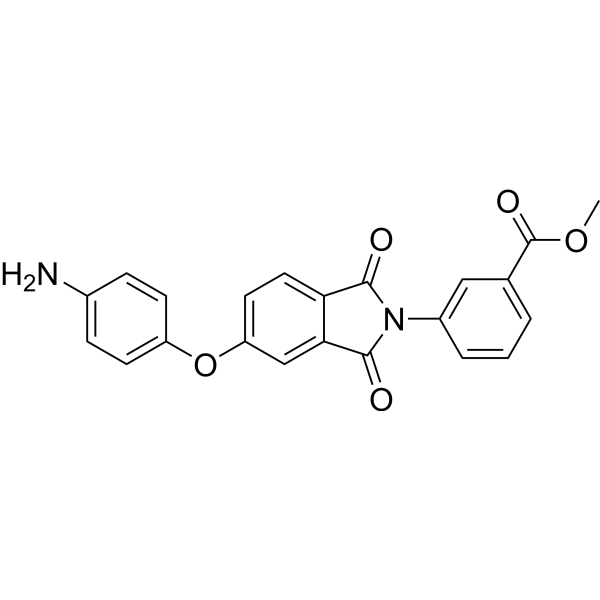
LabMol-319 is a potent zika virus (ZIKV) NS5 RdRp inhibitor with an IC50 of 1.6 μM. LabMol-319 is an antiviral agent .
loading...
    loading...
Cat. No.: HY-N2076
CAS No.: 3738-70-3
Synonyms: (-)-CephaelINe hydrochloride; NSC 32944 monohydrochloride
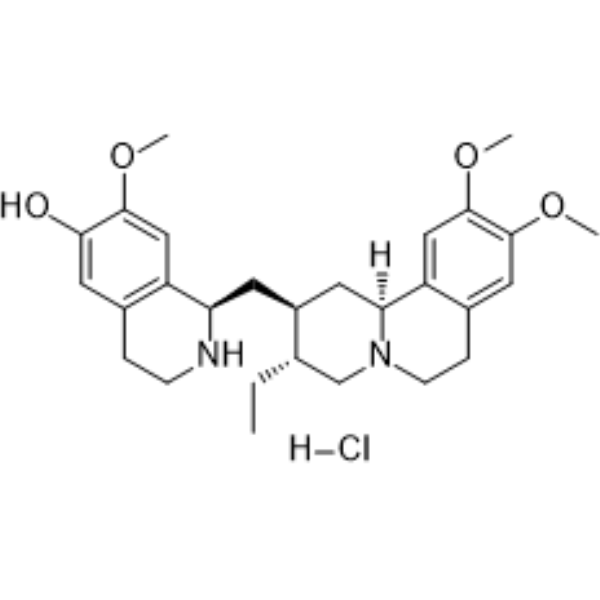
Cephaeline hydrochloride ((-)-Cephaeline (hydrochloride); NSC 32944 (monohydrochloride)) is a ferroptosis inducer, with broad-spectrum anticancer and antiviral activities. Cephaeline hydrochloride induces Ferroptosis by upregulating p53, inhibiting NRF2, activating ULK3, downregulating the expressions of SLC7A11 and GPX4 in a p53-dependent manner, reducing GSH and mitochondrial membrane potential, and increasing lipid peroxidation and iron accumulation. Cephaeline hydrochloride inhibits cancer cell proliferation, migration and tumor growth. Cephaeline hydrochloride inhibits Ebola virus (EBOV) VLP entry and infection, with IC50 values of 3.27 μM and 22.18 μM respectively; it also inhibits Zika virus (ZIKV) NS5 RdRp activity (IC50 = 976 nM), and binds to severe acute respiratory syndrome coronavirus 2 (SARS-CoV-2) RdRp and N protein, with Kd values of 8.9 μM and 53.8 μM respectively. Cephaeline hydrochloride can be used in studies related to breast cancer, lung cancer, COVID-19, EBOV and ZIKV infections [5].
loading...
    loading...
Cat. No.: HY-151446
CAS No.: 947699-46-9
Research Areas:  

Infection

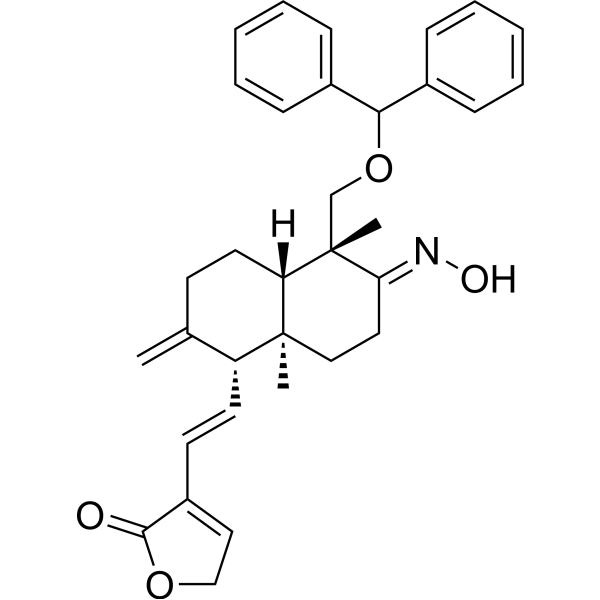
ZIKV-IN-3 (compound 5a), an andrographolide derivatives, is a potent ZIKV NS5 methyl transferase (MTase) inhibitor with an IC50 value of 18.34 μM. ZIKV-IN-3 inhibits ZIKV replication and infection. ZIKV-IN-3 can be used in research of Zika virus (ZIKV) .
loading...
    loading...
Cat. No.: HY-151447
CAS No.: 3033697-91-2
Target:  

Virus Protease

Research Areas:  

Infection

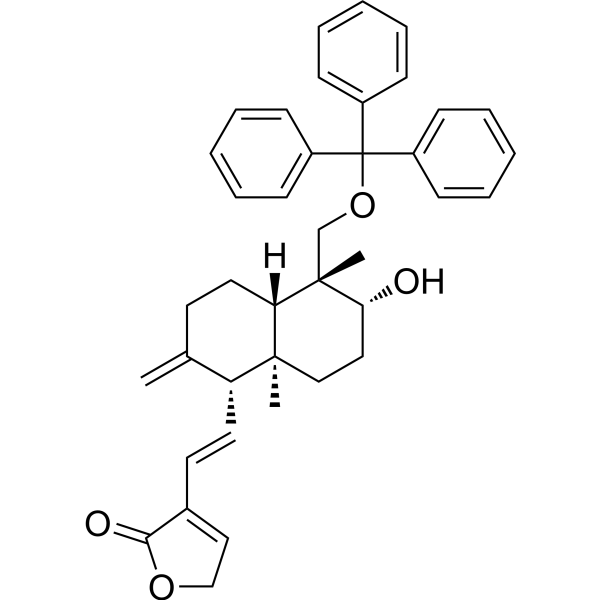
ZIKV-IN-4 (compound 5b) is a low-cytotoxicity and acid-stable anti-ZIKV agent (EC50=3.49 μM). ZIKV-IN-4 effectively inhibits the activity of ZIKV NS5 MTase .
loading...
    loading...
Cat. No.: HY-151445
CAS No.: 910582-16-0
Research Areas:  

Infection

ZIKV-IN-2 (compound 3a) is a potent ZIKV NS5 methyl transferase (MTase) inhibitor with an IC50 value of 38.86 μM. ZIKV-IN-2 inhibits ZIKV replication and infection. ZIKV-IN-2 can be used in research of Zika virus (ZIKV) .
loading...
    loading...
Cat. No.: HY-155053
Research Areas:  

Inflammation/Immunology

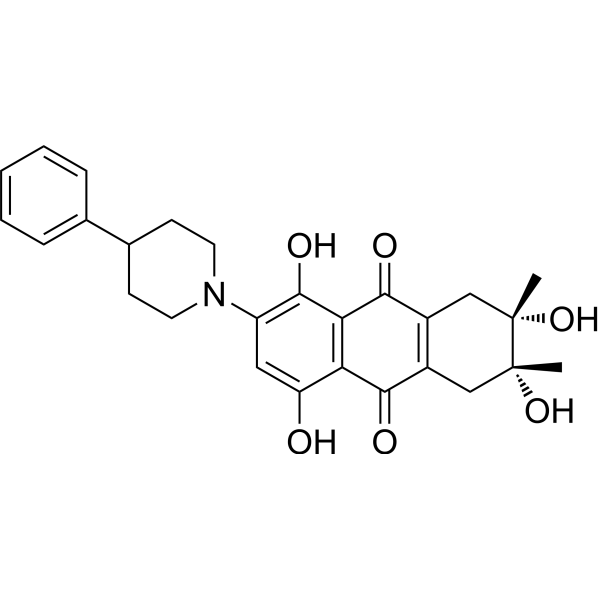
ZIKV-IN-6 (compound 22) is an inhibitor of Zika virus (ZIKV), with low cytotoxicity (CC50>50 μM). ZIKV-IN-6 binds to ZIKV RdRp directly and inhibits viral RNA synthesis by ZIKV NS5. ZIKV-IN-6 suppresses the excessive inflammatory response and pyroptosis .
loading...
    loading...
Cat. No.: HY-179722
Target:  

Dengue Virus

Research Areas:  

Infection

MTase-IN-2 (compound 32) is a potent NS5 methyltransferase inhibitor with IC50s of 2.14 μM and 2.01 μM against the Dengue virus (DENV3) MTase domain and Zika virus (ZIKV) NS5 MTase domain, respectively .
loading...
    loading...
Cat. No.: HY-N4118A
CAS No.: 6014-81-9
Synonyms: (-)-CephaelINe dihydrobromide; NSC 32944 dihydrobromide
Cephaeline dihydrobromide ((-)-Cephaeline dihydrobromide; NSC 32944 dihydrobromide) is a ferroptosis inducer, with broad-spectrum anticancer and antiviral activities. Cephaeline dihydrobromide induces ferroptosis (Ferroptosis) by upregulating p53, inhibiting NRF2, activating ULK3, downregulating the expressions of SLC7A11 and GPX4 in a p53-dependent manner, reducing GSH and mitochondrial membrane potential, and increasing lipid peroxidation and iron accumulation. Cephaeline dihydrobromide inhibits cancer cell proliferation, migration and tumor growth. Cephaeline dihydrobromide inhibits Ebola virus (EBOV) VLP entry and infection, with IC50 values of 3.27 μM and 22.18 μM respectively; it also inhibits Zika virus (ZIKV) NS5 RdRp activity (IC50 = 976 nM), and binds to severe acute respiratory syndrome coronavirus 2 (SARS-CoV-2) RdRp and N protein, with Kd values of 8.9 μM and 53.8 μM respectively. Cephaeline dihydrobromide can be used in studies related to breast cancer, lung cancer, COVID-19, EBOV and ZIKV infections [5].
loading...
    loading...

