1. Search Result
Search Result
Results for "

aberrations

" in MedChemExpress (MCE) Product Catalog:

35

Inhibitors & Agonists

3

Screening Libraries

1

Fluorescent Dye

3

Biochemical Assay Reagents

5

Natural
Products

3

Isotope-Labeled Compounds

1

Click Chemistry

Cat. No. Product Name Target Research Areas Chemical Structure
  • HY-W004544
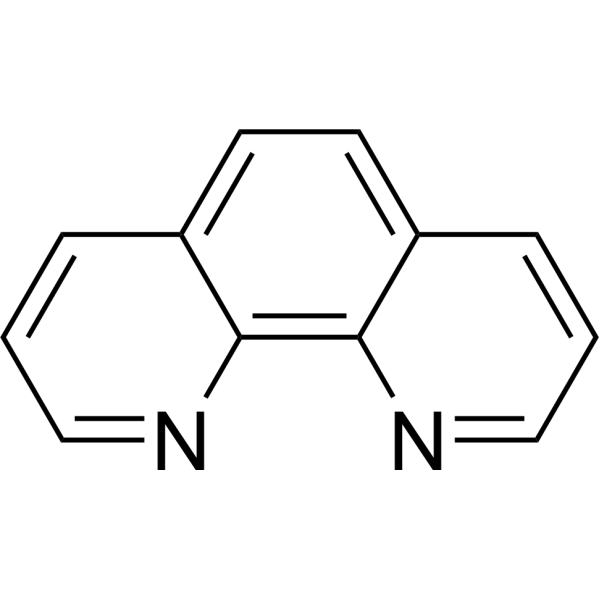
    o-Phenanthroline
    5 Publications Verification

    1,10-Phenanthroline

    Environmental Pollutants MMP Others
    o-Phenanthroline (1,10-Phenanthroline), a metal chelator, prevents the induction of chromosomal aberrations in streptozotocin-treated cells. o-Phenanthroline (1,10-Phenanthroline) forms a red chelate with Fe 2+ that absorbs maximally at 510 nm. o-Phenanthroline (1,10-Phenanthroline) is also a MMP inhibitor .
    o-Phenanthroline
  • HY-N6739

    Bacterial Apoptosis Fungal PI3K Akt TNF Receptor Interleukin Related Infection Cancer
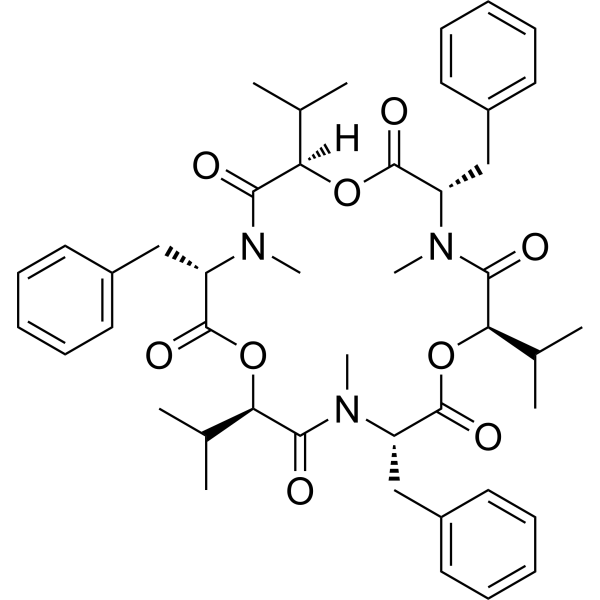
    Beauvericin is a cyclohexapeptide Fusarium toxin with insecticidal, antibacterial, anticancer, antiviral and cytotoxic activities. Beauvericin causes cellular genotoxicity by producing DNA breaks, chromosomal aberrations and micronuclei, and inhibits the PI3K/AKT pathway to induce apoptosis, thereby inhibiting the growth of HCC. In addition, Beauvericin affects immune function by inhibiting lymphocyte proliferation and interfering with the differentiation process of human monocytes into macrophages .
    Beauvericin
  • HY-Y1841
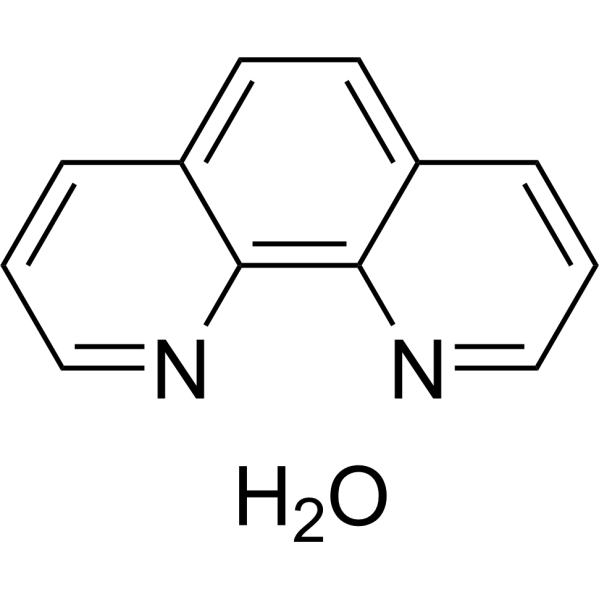
    o-Phenanthroline monohydrate
    5 Publications Verification

    1,10-Phenanthroline monohydrate

    MOFs MMP Others
    o-Phenanthroline (1,10-Phenanthroline) monohydrate, a metal chelator, prevents the induction of chromosomal aberrations in streptozotocin-treated cells. o-Phenanthroline monohydrate forms a red chelate with Fe 2+ that absorbs maximally at 510 nm. o-Phenanthroline (1,10-Phenanthroline) monohydrate is also a MMP inhibitor .
    o-Phenanthroline monohydrate
  • HY-W017113
    2-Mercaptobenzothiazole
    1 Publications Verification

    Environmental Pollutants Endogenous Metabolite Metabolic Disease
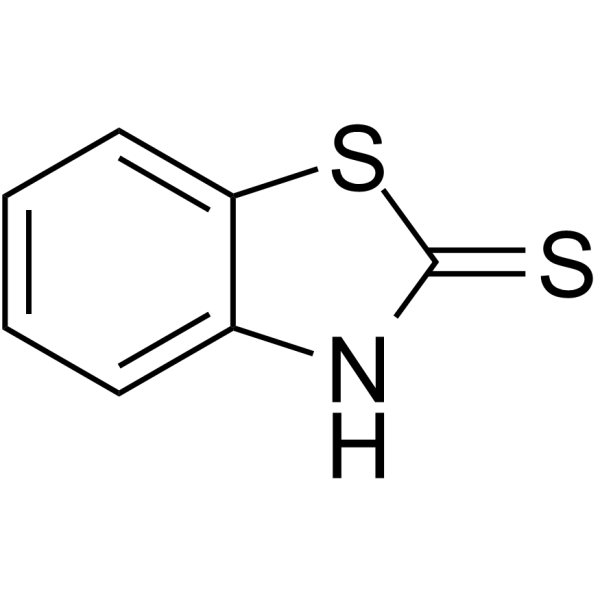
    2-Mercaptobenzothiazole is an activator of the aryl hydrocarbon receptor (AhR) , inhibiting thyroid hormone synthesis and dopamine beta-hydroxylase activity . 2-Mercaptobenzothiazole promotes bladder cancer cell invasion by altering the conformation of the AhR ligand binding domain (LBD), activating AhR transcription, and upregulating the mRNA and protein expression of target genes CYP1A1 and CYP1B1 . 2-Mercaptobenzothiazole inhibits thyroid peroxidase (TPO) with an IC50 value of 11.5 μM, induces histological changes such as follicular cell hypertrophy in Xenopus laevis tadpoles, delaying metamorphosis . 2-Mercaptobenzothiazole increases chromosomal aberrations and sister chromatid exchanges (SCEs) in Chinese hamster ovary (CHO) cells, and enhances carcinogenicity in F344/N rats . 2-Mercaptobenzothiazole inhibits norepinephrine synthesis in mice and completely blocks the conversion of exogenous dopamine to norepinephrine in rat cardiomyocytes .
    2-Mercaptobenzothiazole
  • HY-127034

    Ser/Thr Protease DNA/RNA Synthesis Metabolic Disease Cancer
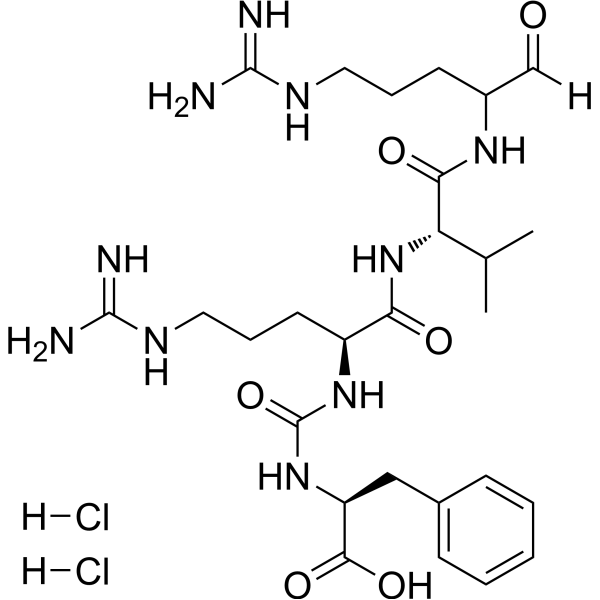
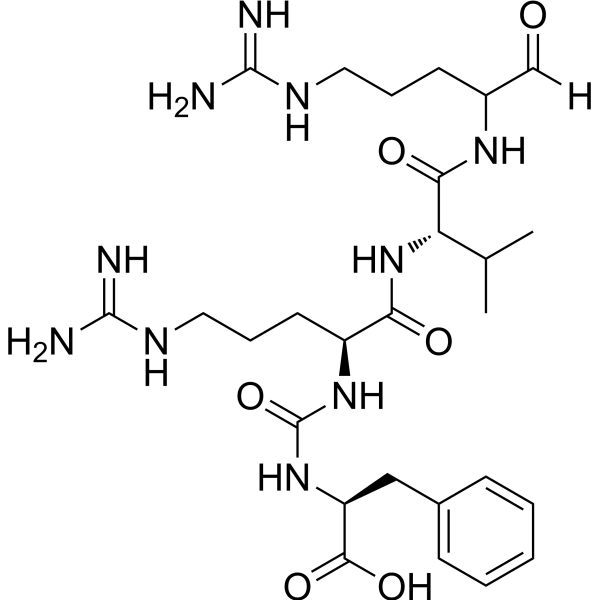
    Antipain dihydrochloride is a protease inhibitor isolated from Actinomycetes. Antipain dihydrochloride inhibits N-methyl-N'-nitro-N-nitrosoguanidine (MNNG)-induced transformation and increases chromosomal aberrations. Antipain dihydrochloride restricts uterine DNA synthesis and function in mice .
    Antipain dihydrochloride
  • HY-Y1010

    Glycidol

    Drug Isomer Cancer
    Oxiran-2-ylmethanol (Glycidol) is an ester product. Oxiran-2-ylmethanol induces base pair point mutations in bacterial strains and structural chromosome aberrations in cultured cells. Oxiran-2-ylmethanol forms N-(2,3-dihydroxypropyl)valine hemoglobin adducts. Oxiran-2-ylmethanol acts as an animal carcinogen but does not significantly induce micronucleated immature erythrocytes in animal bone marrow. Oxiran-2-ylmethanol enables anionic polymerization to produce linear poly(glycidol). Oxiran-2-ylmethanol can be used for cancer-related research .
    Oxiran-2-ylmethanol
  • HY-176747

    DMPPD

    Reactive Oxygen Species (ROS) Others
    7-PPD (DMPPD) is a rubber antioxidant that scavenges free radicals and inhibits the oxidative degradation of rubber chains. 7-PPD shows promise for research in tire manufacturing and rubber product processing .
    7-PPD
  • HY-W013762

    Environmental Pollutants Biochemical Assay Reagents Others
    Tributyl citrate is a low-toxicity and orally active citrate ester with no genotoxicity or skin sensitizing activity. Tributyl citrate also acts as a plasticizer, solvent, FDA-approved indirect food additive, and topical anesthetic, among other uses. Tributyl citrate induces a needle-prick insensitivity response that lasts for more than 2 hours, and a 5% suspension of it temporarily eliminates the corneal reflex in rabbits. Tributyl citrate causes no significant systemic toxicity in rats and cats at most tested doses, and only may cause growth retardation and gastrointestinal reactions such as diarrhea and nausea at high doses or with repeated oral administration .
    Tributyl citrate
  • HY-117089

    Environmental Pollutants Fungal Infection
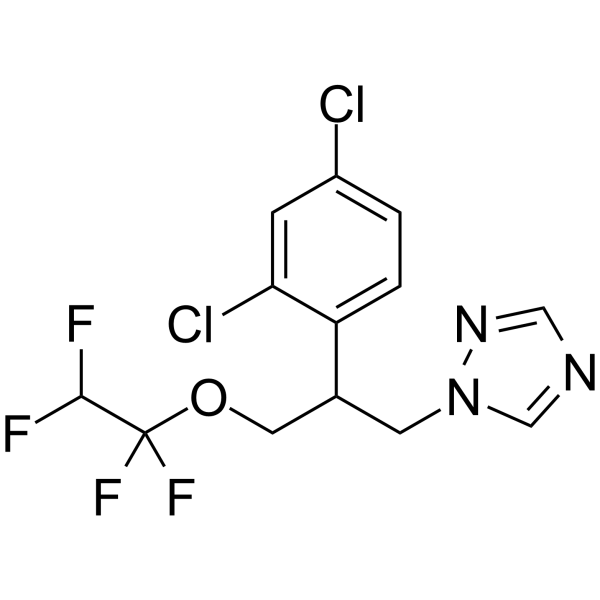
    Tetraconazole is a selective irreversible inhibitor of 14-α-sterol demethylase (CYP51) with antifungal activity. Tetraconazole competitively binds to the enzyme to block fungal ergosterol synthesis, resulting in cell membrane damage. The EC50 of tetraconazole against wheat pathogens is 0.382-0.802 mg/L, and the EC50 against onion root tip meristem cell growth is 6.7 mg/L, and (R)-(+)-Tetraconazole is 1.49-1.98 times more active than (S)-(-)-Tetraconazole. Tetraconazole can also induce oxidative stress and chromosomal aberrations in plant cells .
    Tetraconazole
  • HY-110242

    Mps1 Apoptosis Cancer
    Mps-BAY2a is a monopolar spindle 1 (MPS1) inhibitor with an IC50 of 1 nM against human MPS1. Mps-BAY2a induces mitotic aberrations and apoptosis in cancer cells .
    Mps-BAY2a
  • HY-119366

    ROR Inflammation/Immunology
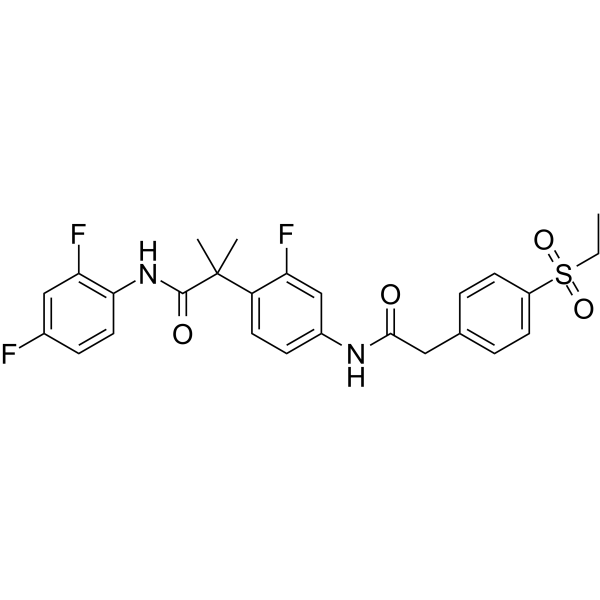
    S18-000003 is a potent, selective and orally active inhibitor of retinoic acid receptor-related orphan receptor-gamma-t (RORγt), with an IC50 of <30 nM towards human RORγt in competitive binding assays. S18-000003 shows selectivity for RORγt over other ROR family members (IC50>10 μM). S18-000003 can be used for the research of psoriasis with low risk of thymic aberrations .
    S18-000003
  • HY-W178327

    Adenosine Receptor Cancer
    8-Chloro caffeine binds to adenosine receptors (Ki = 30 µM). 8-Chloro caffeine potentiates UV-induced chromosomal aberrations in Cl-I Chinese hamster embryonic lung cells. 8-Chloro caffeine is a derivative of the methylxanthine alkaloid caffeine .
    8-Chloro caffeine
  • HY-B0035B

    Sulfadimidine 100 µg/mL in acetonitrile; Sulfadimerazine 100 µg/mL in acetonitrile

    Antibiotic Bacterial Infection
    Sulfamethazine (Sulfadimidine) 100 µg/mL in acetonitrile is a brain-penetrant sulfonamide antibiotic. Sulfamethazine 100 µg/mL in acetonitrile inhibits bacterial growth by blocking the synthesis of folic acid. Sulfamethazine 100 µg/mL in acetonitrile can be used for research on bacterial infections .
    Sulfamethazine 100 µg/mL in acetonitrile
  • HY-127039

    Ser/Thr Protease DNA/RNA Synthesis Metabolic Disease Cancer
    Antipain is a protease inhibitor isolated from Actinomycetes. Antipain inhibits N-methyl-N'-nitro-N-nitrosoguanidine (MNNG)-induced transformation and increases chromosomal aberrations. Antipain restricts uterine DNA synthesis and function in mice .
    Antipain
  • HY-N6739S

    Acyltransferase Isotope-Labeled Compounds Infection
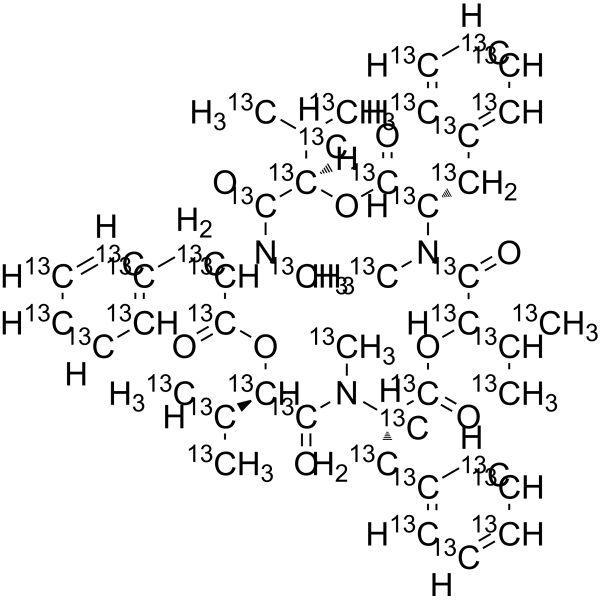
    Beauvericin- 13C45 is 13C labeled Beauvericin (HY-N6739). Beauvericin is a cyclohexapeptide Fusarium toxin with insecticidal, antibacterial, anticancer, antiviral and cytotoxic activities. Beauvericin causes cellular genotoxicity by producing DNA breaks, chromosomal aberrations and micronuclei, and inhibits the PI3K/AKT pathway to induce apoptosis, thereby inhibiting the growth of HCC. In addition, Beauvericin affects immune function by inhibiting lymphocyte proliferation and interfering with the differentiation process of human monocytes into macrophages .
    Beauvericin-13C45
  • HY-174974

    FGFR Cancer
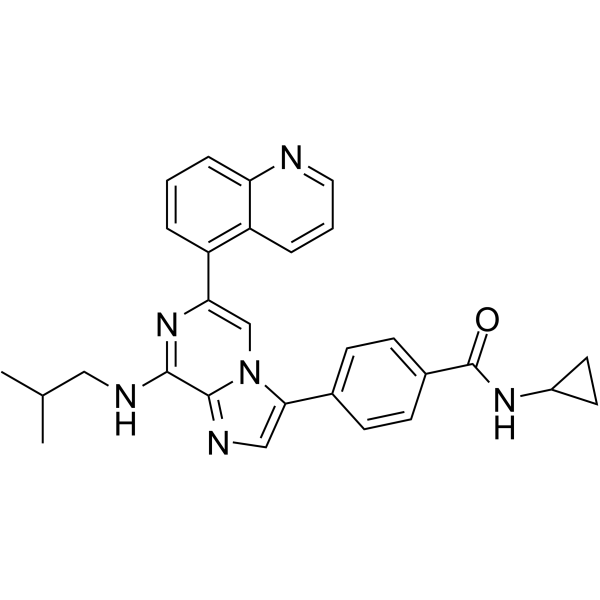
    ISM7594 is an orally active FGFR2/3 inhibitor. ISM7594 shows broad-spectrum antiproliferative potency in FGFR2- or FGFR3-altered cancer cell panels, including FGFR2/3 amplification, fusion, and mutation (BaF3-TEL-FGFR2-V564F (IC50 = 0.067 nM), BaF3-TEL-FGFR2-V564I (IC50 = 2 nM)) types. ISM7594 inhibits tumor growth in a dose-dependent manner. ISM7594 can be used for the study of advanced solid tumors with FGFR2/3 aberrations .
    ISM7594
  • HY-135243

    DNA/RNA Synthesis Cancer
    Ypenyl is a cytostatic. Ypenyl hydrochloride, belonging to the alkylating agent class, exhibits clear genotoxicity and cell cycle disruption properties. Ypenyl induces chromosomal aberrations in broad bean root tip meristem cells and leads to a decrease in the mitotic index. Ypenyl may be used in cancer research .
    Ypenyl
  • HY-153856

    EGFR Cancer
    TAS2940 is a brain-penetrable, orally active, irreversible and selective pan-ERBB inhibitor. TAS2940 against wild-type HER2, HER2 V777L, and A775_G776insYVMA with IC50 values of 5.6 nM, 2.1 nM, and 1.0 nM, respectively. TAS2940 can be used for the study of tumors with HER2 and EGFR aberrations .
    TAS2940
  • HY-19437

    AT-1727

    Topoisomerase Cancer
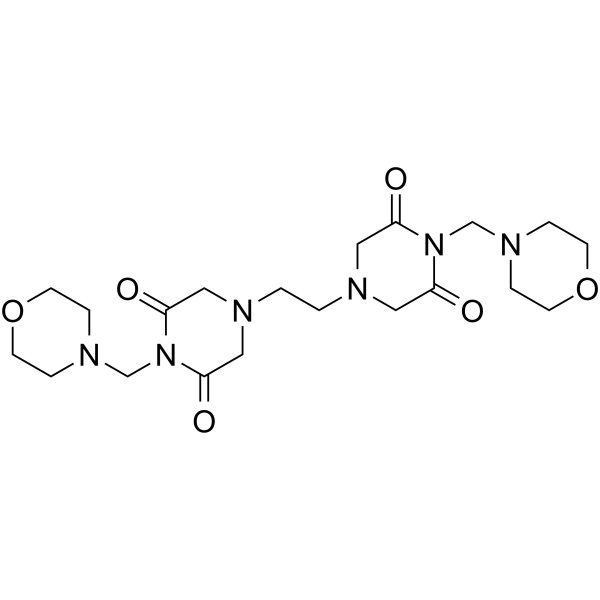
    Bimolane (AT-1727), a human topoisomerase II inhibitor, can be used as an anti-neoplastic agent and for the research of psoriasis. Bimolane shows leukemogenic activity and induces multiple types of chromosomal aberrations in human lymphocytes .
    Bimolane
  • HY-153856A

    EGFR Cancer
    TAS2940 fumarate is a brain-penetrable, orally active, irreversible and selective pan-ERBB inhibitor. TAS2940 fumarate against wild-type HER2, HER2 V777L, and A775_G776insYVMA with IC50 values of 5.6 nM, 2.1 nM, and 1.0 nM, respectively. TAS2940 fumarate can be used for the study of tumors with HER2 and EGFR aberrations .
    TAS2940 fumarate
  • HY-Y1841R

    Reference Standards MMP Others
    o-Phenanthroline (1,10-Phenanthroline) monohydrate, a metal chelator, prevents the induction of chromosomal aberrations in streptozotocin-treated cells. o-Phenanthroline monohydrate forms a red chelate with Fe2+ that absorbs maximally at 510 nm. o-Phenanthroline (1,10-Phenanthroline) monohydrate is also a MMP inhibitor .
    o-Phenanthroline monohydrate (Standard)
  • HY-N4014

    Others Others
    Ilicol is a natural product isolated from the roots of Saussurea lappa Clarke. Ilicol inhibits root growth and shows IC50 values of 1.22, 2.90, 7.35, 8.07 mM against P. miliaceum , A. sativa, L. sativa , and R. sativus, respectively. Ilicol reduces Allium cepa cell division without chromosome aberration .
    Ilicol
  • HY-105578A

    MA 1143 hydrochloride

    Endogenous Metabolite Inflammation/Immunology
    Letimide hydrochloride (MA 1143 hydrochloride) is an analgesic with potent analgesic activity. Letimide hydrochloride has shown cytogenetic effects on human lymphocytes in in vitro experiments. Letimide hydrochloride did not exhibit significant chromosomal aberrations or sister chromatid exchanges in in vivo studies in mouse bone marrow cells. Teratogenic studies conducted on mice with Letimide hydrochloride also did not show obvious effects on inducing congenital malformations .
    Letimide hydrochloride
  • HY-W004544S

    1,10-Phenanthroline-d8

    Isotope-Labeled Compounds MMP Others
    o-Phenanthroline-d8 is the deuterium labeled o-Phenanthroline. o-Phenanthroline (1,10-Phenanthroline), a metal chelator, prevents the induction of chromosomal aberrations in streptozotocin-treated cells. o-Phenanthroline (1,10-Phenanthroline) forms a red chelate with Fe2+ that absorbs maximally at 510 nm. o-Phenanthroline (1,10-Phenanthroline) is also a MMP inhibitor .
    o-Phenanthroline-d8
  • HY-Y1010S

    Glycidol-d5

    Isotope-Labeled Compounds Drug Isomer Others
    Oxiran-2-ylmethanol-d5 is the deuterium labeled Oxiran-2-ylmethanol (Glycidol) (HY-Y1010). Oxiran-2-ylmethanol is an ester product. Oxiran-2-ylmethanol induces base pair point mutations in bacterial strains and structural chromosome aberrations in cultured cells. Oxiran-2-ylmethanol forms N-(2,3-dihydroxypropyl)valine hemoglobin adducts. Oxiran-2-ylmethanol acts as an animal carcinogen but does not significantly induce micronucleated immature erythrocytes in animal bone marrow. Oxiran-2-ylmethanol enables anionic polymerization to produce linear poly(glycidol). Oxiran-2-ylmethanol can be used for cancer-related research .
    Oxiran-2-ylmethanol-d5
  • HY-Y1010R

    Glycidol (Standard)

    Reference Standards Drug Isomer Cancer
    Oxiran-2-ylmethanol (Standard) is the analytical standard of Oxiran-2-ylmethanol (Glycidol) (HY-Y1010). This product is intended for research and analytical applications. Oxiran-2-ylmethanol is an ester product. Oxiran-2-ylmethanol induces base pair point mutations in bacterial strains and structural chromosome aberrations in cultured cells. Oxiran-2-ylmethanol forms N-(2,3-dihydroxypropyl)valine hemoglobin adducts. Oxiran-2-ylmethanol acts as an animal carcinogen but does not significantly induce micronucleated immature erythrocytes in animal bone marrow. Oxiran-2-ylmethanol enables anionic polymerization to produce linear poly(glycidol). Oxiran-2-ylmethanol can be used for cancer-related research .
    Oxiran-2-ylmethanol (Standard)
  • HY-D0335

    Biochemical Assay Reagents Others
    Acid blue 9 diammonium is a triarylmethane dye and inducer. Acid blue 9 diammonium induces chromosomal aberrations in onion root tip meristematic cells. Acid blue 9 diammonium exhibits cytogenetic toxicity to onion root tip meristematic cells .
    Acid blue 9 diammonium
  • HY-122145

    DNA/RNA Synthesis Cancer
    Ypenyl hydrochloride is a cytostatic. Ypenyl hydrochloride, belonging to the alkylating agent class, exhibits clear genotoxicity and cell cycle disruption properties. Ypenyl hydrochloride induces chromosomal aberrations in broad bean root tip meristem cells and leads to a decrease in the mitotic index. Ypenyl hydrochloride may be used in cancer research .
    Ypenyl hydrochloride
  • HY-182682

    NSC-146171

    DNA Alkylator/Crosslinker Cancer
    IOB-82 is a bifunctional alkylating agent. IOB‑82 induces marked nuclear and cytoplasmic alterations, elicits severe chromatid and chromosome aberrations, and remodels chromosome ploidy. IOB-82 exerts dose-dependent radiomimetic effects and preferentially cytotoxic to large A-type rat ascites cells. IOB-82 can be applied in the research of melanoma‑derived tumors and leukemia .
    IOB-82
  • HY-B1509A

    Parasite Infection Endocrinology
    Trypaflavin is an acridine compound and antimalarial agent. Trypaflavin invades germ cells. Trypaflavin induces aberrations in unfertilized oocytes. Trypaflavin increases the frequency of chromosomal aberrations. Trypaflavin shows weak mutagenicity. Trypaflavin is highly toxic to Leishmania, causing immediate lysis of the leptomonads .
    Trypaflavin
  • HY-B1509B

    Parasite Infection Endocrinology
    Trypaflavin bromide is an orally active acridine compound and antimalarial agent. Trypaflavin bromide invades germ cells. Trypaflavin bromide induces aberrations in unfertilized oocytes. Trypaflavin bromide increases the frequency of chromosomal aberrations. Trypaflavin bromide shows weak mutagenicity. Trypaflavin bromide is highly toxic to Leishmania, causing immediate lysis of the leptomonads .
    Trypaflavin bromide
  • HY-127158

    Bacterial Infection
    Fenaminosulf is a plant immune modulator and mutagen. Fenaminosulf impairs plant immune recognition and signal transduction by inhibiting the activities of key kinases such as Xa21 and PBL19, thereby regulating the expression of genes related to hormone metabolism, phenylpropane biosynthesis, and plant-pathogen interactions. Fenaminosulf affects the growth and gall formation of Zizania latifolia in a concentration-dependent manner. Fenaminosulf induces mutations in bacterial systems and causes plant chromosome aberrations, but shows no mutagenic activity or lethal effect in Drosophila melanogaster. Fenaminosulf exhibits inconsistent carcinogenicity in rat studies .
    Fenaminosulf
  • HY-119578

    Cytochrome P450 Cancer
    Imiprothrin is an inducer that induces CYP1A2 and metallothionein 1a, with significant genotoxicity and cytotoxicity. In rat hepatocytes, Imiprothrin initiates detoxification responses by triggering the overexpression of these two genes. Imiprothrin induces chromosomal aberrations and micronucleus formation in rat bone marrow cells, and causes DNA damage in hepatocytes. Imiprothrin triggers oxidative stress in rats, leading to lipid peroxidation, excessive reactive oxygen species production and redox imbalance, which in turn impairs liver and kidney functions and causes tissue damage. Imiprothrin inhibits weight gain in mice, and even causes high mortality in female mice at high doses. However, it shows no carcinogenicity in rat experiments; among relevant indicators, aspartate aminotransferase and total protein are identified as sensitive toxicity biomarkers .
    Imiprothrin
  • HY-N18080

    Parasite DNA Alkylator/Crosslinker Bacterial Infection Inflammation/Immunology Cancer
    Parthenin is a pseudoguaianolide-type sesquiterpene lactone present in Parthenium hysterophorus L. Parthenin induces chromosomal aberrations, mainly chromatid breaks, in human peripheral blood lymphocytes. Parthenin exhibits toxicity against Salmonella typhimurium and Escherichia coli strains, with reduced toxicity in the presence of a metabolic activation system (S9). Parthenin acts as an antifeedant against the 6th instar larvae of the tobacco cutworm (Spodoptera litura). Parthenin shows insecticidal activity against adult cowpea weevils (Callosobruchus maculatus). Parthenin inhibits seed germination and seedling growth of sicklepod (Cassia tora). Parthenin possesses nematicidal activity against the 2nd instar larvae of the southern root-knot nematode (Meloidogyne incognita). Parthenin serves as a research agent for studies related to cancer, malaria, amoebiasis, inflammatory diseases, and bacterial infections .
    Parthenin
  • HY-N19612

    Ser/Thr Protease Others
    Proteasefrom aspergillus oryzae is a serine protease identified in the non-transgenic Aspergillus ochraceus strain AE-P. Proteasefrom aspergillus oryzae functions as a food enzyme and catalyzes protein hydrolysis with broad-spectrum specificity .
    Proteasefrom aspergillus oryzae

Inquiry Online

Your information is safe with us. * Required Fields.

Salutation


Country or Region *

Applicant Name *


Organization Name *

Department *


Email Address *


Product Name *

Cat. No.


Requested quantity *

Phone Number *


Remarks

Inquiry Online

Inquiry Information

Product Name:
Cat. No.:
Quantity:
MCE Japan Authorized Agent:

