



Search Result
Results for "
adjuvant
" in MedChemExpress (MCE) Product Catalog:
136
Biochemical Assay Reagents
8
Isotope-Labeled Compounds
| Cat. No. |
Product Name |
Target |
Research Areas |
Chemical Structure |
-
- HY-153808
-
|
|
Toll-like Receptor (TLR)
|
Inflammation/Immunology
|
|
Complete Freund's adjuvant (CFA) is an immunoadjuvant emulsified with antigen by its discoverer Jules T. Freund to enhance an animal's immune response to an antigen. Complete Freund's adjuvant (CFA) is also an inducer of the Th1 immune response and a ligand of TLRs. Complete Freund's adjuvant (CFA) contains heat-killed inactive tuberculosis bacilli and consists of a paraffin oil-in-water emulsion. Complete Freund's adjuvant (CFA) stimulates a strong and durable immune response and can be used to induce persistent inflammatory pain models in mice, experimental autoimmune myocarditis (EAM) models, and more. Incomplete Freund's adjuvant (IFA) (HY-153808A) is another type of Freund's Adjuvant that stimulates a weaker immune response .
|
-
-
- HY-N7819
-
|
Norphytane
|
Others
|
Inflammation/Immunology
|
|
Pristane (Norphytane) is a naturally occurring hydrocarbon oil found in small quantities in many plants, in various marine organisms, and as the most active component of mineral oil . Pristane is a non-antigenic adjuvant, and induces MHC class II-restricted, arthritogenic T cells in the rat .
|
-
-
- HY-B1521
-
-
-
- HY-153808A
-
|
|
Bacterial
|
Inflammation/Immunology
Cancer
|
|
Incomplete Freund's adjuvant (IFA) (Montanide ISA-51) is an immunoadjuvant emulsified with antigen by its discoverer Jules T. Freund. Incomplete Freund's adjuvant (IFA) does not contain inactivated tuberculosis bacilli and consists of petroleum jelly containing lanolin. Incomplete Freund's adjuvant (IFA) induces high antibody titers and long-lasting effector T cell responses with no long-term effects on collagen disease, tumors, or death. Complete Freund's adjuvant (CFA) (HY-153808) is another type of Freund's Adjuvant that stimulates a stronger immune response .
|
-
-
- HY-101092
-
|
Stimulon
|
NOD-like Receptor (NLR)
|
Inflammation/Immunology
Cancer
|
|
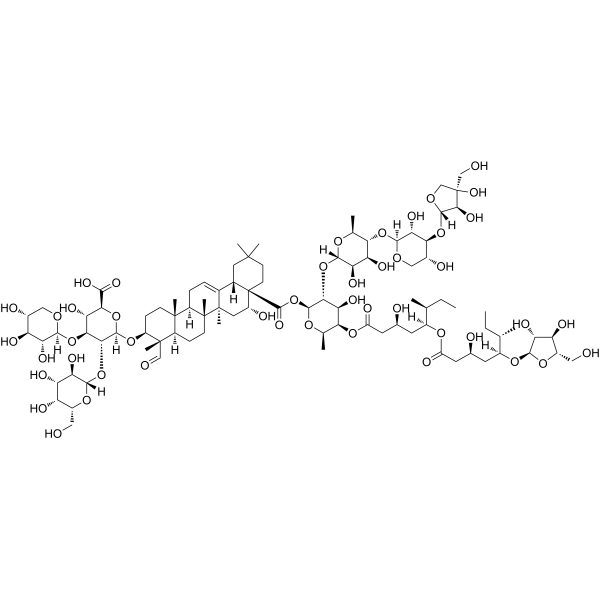
QS-21-Api, an immunostimulatory saponin, could be used as a potent vaccine adjuvant. QS-21-Api stimulates Th2 humoral and Th1 cell-mediated immune responses through action on antigen presenting cells (APCs) and T cells. QS-21-Api can activate the NLRP3 inflammasome with subsequent release of caspase-1 dependent cytokines, IL-1β and IL-18 .
|
-
-
- HY-150218
-
|
ODN 2006 sodium; ODN 7909 sodium; PF-3512676 sodium; CpG 7909 sodium
|
Toll-like Receptor (TLR)
|
Cancer
|
|
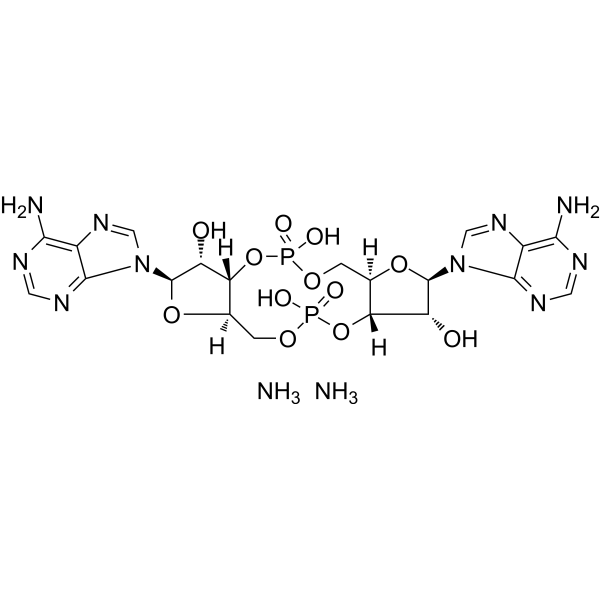
Agatolimod sodium (ODN 2006) is a class B CpG ODN and is a TLR9 agonist. Agatolimod sodium can be used as vaccine adjuvant. Agatolimod sodium can be used for the research of cancer. Sequence: 5’-TCGTCGTTTTGTCGTTTTGTCGTT-3’ .
|
-
-
- HY-123942
-
|
|
Toll-like Receptor (TLR)
TNF Receptor
p38 MAPK
NF-κB
|
Inflammation/Immunology
Cancer
|
|
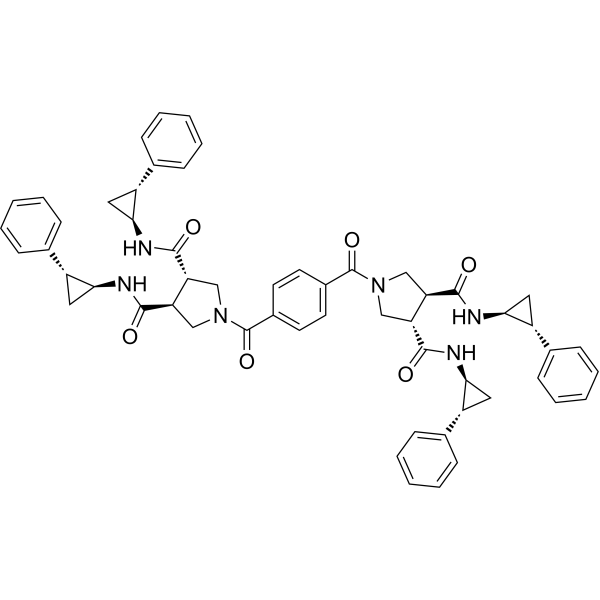
Diprovocim is a potent TLR1/TLR2 agonist. Diprovocim elicits full agonist activity in human THP-1 cells (EC50=110 pM). Diprovocim stimulates the release of TNF-α from mouse macrophages (EC50=1.3 nM). Diprovocim activates downstream MAPK and NF-κB signaling pathway. Diprovocim displays strong adjuvant activity in mice, particularly abetting cellular immune responses .
|
-
-
- HY-153808B
-
|
|
Toll-like Receptor (TLR)
|
Inflammation/Immunology
|
|
Complete Freund's adjuvant (CFA, 1 mg/ml) is an immunoadjuvant emulsified with antigen that can enhance an animal's immune response to an antigen. Complete Freund's adjuvant (CFA, 1 mg/ml) is also an inducer of the Th1 immune response and a ligand of TLRs. Complete Freund's adjuvant (CFA, 1 mg/ml) contains heat-killed inactive tuberculosis bacilli and consists of a paraffin oil-in-water emulsion. Complete Freund's adjuvant (CFA, 1 mg/ml) stimulates a strong and durable immune response and can be used to induce rheumatoid arthritis in rats, and more .
|
-
-
- HY-125685
-
|
|
Bacterial
Fungal
|
Cancer
|
|
Germacrene D is isolated from Solidago canadensis. Germacrene D has antibacterial and antifungal activities and can be used as an adjuvant agent in the application of aminoglycosides and azoles .
|
-
-
- HY-148068
-
|
|
STING
|
Inflammation/Immunology
Cancer
|
|
STING agonist-20 (compound 95) is a potent STING agonist used in the synthesis of XMT-2056. STING agonist-20 can be used as a vaccine adjuvant in the study of cancer and other inflammatory, immune diseases .
|
-
-
- HY-113462
-
|
|
Others
|
Cancer
|
|
α-Carotene, a precursor of vitamin A, is used as an anti-metastatic agent or as an adjuvant for anti-cancer agents. α-Carotene is isolated from yellow-orange and dark-green vegetables .
|
-
-
- HY-W062216
-
|
|
Bacterial
Arginase
|
Infection
|
|
2-Aminoimidazole is a potent antibiofilm agent that can be used as an adjuvant to antimicrobial. 2-aminoimidazoles disrupts the ability of bacteria to protect themselves by inhibiting biofilm formation and genetically-encoded antibiotic resistance traits. 2-Aminoimidazole is also a weak noncompetitive inhibitor of human arginase I with a Ki of 3.6 mM .
|
-
-
- HY-B1422
-
|
Aminacrine
|
Bacterial
HIV
|
Infection
|
|
9-Aminoacridine, a fluorescent probe, acts as an indicator of pH for quantitative determination of transmembrane pH gradients (inside acidic). 9-Aminoacridine is an antimicrobial. 9-Aminoacridine exerts its antimicrobial activity by interacting with specific bacterial DNA and disrupting the proton motive force in K. pneumoniae. 9-Aminoacridine is a HIV-1 inhibitor and inhibits HIV LTR transcription highly dependent on the presence and location of the amino moiety. 9-Aminoacridine inhibits virus replication in HIV-1 infected cell lines. 9-Aminoacridine is used as a Rifampin (RIF; HY-B0272) adjuvant for the multidrug-resistant K. pneumoniae infections .
|
-
-
- HY-112137
-
|
|
Caspase
Interleukin Related
MyD88
|
Inflammation/Immunology
|
|
Trehalose-6,6'-dibehenate is an orally active glycolipid. Trehalose-6,6'-dibehenate activates Mincle and inflammasome, inducing IL-1β secretion in a caspase activity-dependent manner. Trehalose-6,6'-dibehenate exerts a Myd88-dependent adjuvant activity. Trehalose-6,6'-dibehenate induces Th-1/Th-17 immune responses .
|
-
-
- HY-150750
-
-
-
- HY-150724C
-
|
1018 ISS sodium
|
Toll-like Receptor (TLR)
|
Inflammation/Immunology
|
|
ODN 1018 (1018 ISS) sodium is a TLR9 agonist and immune modulator. ODN 1018 sodium exhibits adjuvant activity and augments CD8+ T cell responses with LNP-encapsulated OVA peptides. ODN 1018 sodium triggers sustained suppression of allergic airway inflammation. ODN 1018 sodium can be used for the research of allergic asthma and systemic lupus erythematosus .
|
-
-
- HY-153205
-
|
|
Biochemical Assay Reagents
|
Inflammation/Immunology
|
|
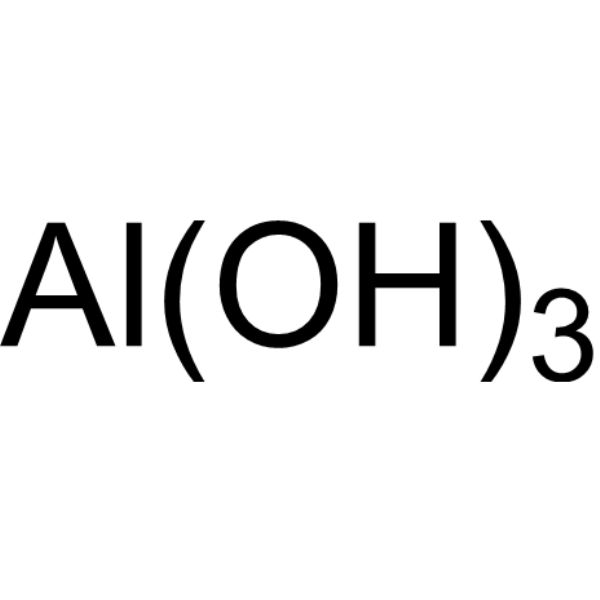
Aluminum hydroxide adjuvant is a vaccine aluminum adjuvant. The aluminum content is 9-11 mg/mL. Aluminum hydroxide adjuvant induces the differentiation of macrophages into a new type of mature, specialized antigen-presenting cells in vitro . It has a strong adsorption capacity for negatively charged antigens, a significant sustained-release effect, no stress response, high safety, and can effectively induce immune responses in the body. It is suitable for various veterinary vaccines, including inactivated vaccines or gene-engineered subunit vaccines for bacterial and viral diseases of livestock and poultry. It is suitable for various veterinary vaccines, including inactivated vaccines or gene-engineered subunit vaccines for bacterial and viral diseases of livestock and poultry.
|
-
-
- HY-162501
-
Yaddle1
1 Publications Verification
|
Piezo Channel
|
Inflammation/Immunology
|
|
Yaddle1 is an agonist of the mechano-activated ion channel (Piezo1) with a half-maximal effective concentration (MEC50) of 0.40 μM. Yaddle1 can significantly trigger Ca 2+ inflow in T cells and induce T cell activation response. Yaddle1 can be used in the study of vaccine adjuvants .
|
-
-
- HY-111582
-
|
|
Toll-like Receptor (TLR)
|
Inflammation/Immunology
|
|
BBIQ is a imidazoquinoline compound and a potent and selectively toll-like receptor 7 (TLR7) agonist with an EC50 of 59.1 nM for human TLR7. BBIQ is a powerful vaccine adjuvant that enhances innate immune responses .
|
-
-
- HY-150726
-
|
|
Toll-like Receptor (TLR)
Bacterial
|
Infection
Neurological Disease
Inflammation/Immunology
|
|
ODN 1668, a class B CpG ODN (oligodeoxynucleotide), is a TLR-9 agonist. ODN 1668 has strong immune regulatory properties, can enhance the level of antibody IgG2 subtype, promote the immune response of T cells and B cells, and can be used in the study of vaccine adjuvants. In addition, CpG ODN 1668 induces an antimicrobial immune response via a CaTLR9 dependent pathway in groupers. Sequence: 5'-tccatgacgttcctgatgct-3’ .
|
-
-
- HY-150726C
-
|
|
Toll-like Receptor (TLR)
Bacterial
|
Infection
Neurological Disease
Inflammation/Immunology
|
|
ODN 1668 sodium, a class B CpG ODN (oligodeoxynucleotide), is a TLR-9 agonist. ODN 1668 sodium has strong immune regulatory properties, can enhance the level of antibody IgG2 subtype, promote the immune response of T cells and B cells, and can be used in the study of vaccine adjuvants. In addition, CpG ODN 1668 sodium induces an antimicrobial immune response via a CaTLR9 dependent pathway in groupers. Sequence: 5'-tccatgacgttcctgatgct-3’ .
|
-
-
- HY-116442
-
|
|
Xanthine Oxidase
|
Cardiovascular Disease
Inflammation/Immunology
|
|
Azapropazone is an orally active nonsteroidal anti-inflammatory agent. Azapropazone inhibits Xanthine oxidase activity with an IC50 of 70-140 μg/mL. Azapropazone exerts significant cardiomyocyte protective effects on dogs with ischemia-reperfusion injury . Azapropazone reduces arthritis. Azapropazone inhibits Adrenaline-induced platelet aggregation. Azapropazone can be used for the research of myocardial ischemia and reperfusion injury, adjuvant arthritis, and gouty arthritis .
|
-
-
- HY-138139A
-
|
T785 hydrochloride
|
Toll-like Receptor (TLR)
|
Inflammation/Immunology
Cancer
|
|
AXC-715 (T785) hydrochloride is a TLR7/TLR8 dual agonist. AXC-715 can be used for synthesis of antibody-adjuvant immunoconjugates, comprising an antibody construct that binds programmed death-ligand 1 (PD-L1) linked to one or more adjuvants .
|
-
-
- HY-150750A
-
|
|
Toll-like Receptor (TLR)
Apoptosis
Interleukin Related
TNF Receptor
IFNAR
|
Inflammation/Immunology
Cancer
|
|
ODN M362 sodium is a TLR9 agonist that acts as a vaccine adjuvant. ODN M362 sodium activates mouse splenocytes, induces apoptosis in human hepatocellular carcinoma cells, upregulates proinflammatory cytokines in human hepatocellular carcinoma cells, and inhibits the proliferation of human hepatocellular carcinoma cells. ODN M362 sodium upregulates the expression of TLR9/TLR6, activates downstream signaling pathways via IRAK4 and IRF7, and strongly amplifies antigen-specific cellular immune responses to participate in innate immune activation. ODN M362 sodium can be used in research related to hepatocellular carcinoma and breast cancer .
|
-
-
- HY-111792
-
|
CRX-601
|
Toll-like Receptor (TLR)
|
Inflammation/Immunology
Cancer
|
|
GSK1795091 (CRX-601), an immunologic stimulator, is a synthetic TLR4 agonist. Antitumor activity. GSK1795091 can be used as a vaccine adjuvant to enhance both mucosal and systemic immunity to influenza virus vaccines. Not only, GSK1795091 inhibits tumor growth and increases the survival in mice model, but results in long term survival in influenza challenge model in mice .
|
-
-
- HY-153879
-
|
|
Liposome
Toll-like Receptor (TLR)
|
Infection
Inflammation/Immunology
|
|
C12-TLRa is an ionized adjuvant lipid. C12-TLRa targets TLR7/8 receptors in endosomes. C12-TLRa enhances mRNA delivery as a structural component of LNPs. C12-TLRa enhances innate immune responses. C12-TLRa can be used for the research of SARS-CoV-2 mRNA vaccine .
|
-
-
- HY-13219
-
|
|
COX
Lipoxygenase
Reactive Oxygen Species (ROS)
NF-κB
|
Neurological Disease
Inflammation/Immunology
|
|
Tepoxalin is an orally active dual inhibitor of Cyclooxygenase/Lipoxygenase, with IC50 values of 4.6 μM (sheep cyclooxygenase), 2.85 μM (rat cyclooxygenase), 0.15 μM (rat 5-lipoxygenase), and 3.0 μM (h12-lipoxygenase), respectively. Tepoxalin inhibits ROS production and NF-κB activation. Tepoxalin suppresses the production of thromboxane B2, leukotriene B4, prostaglandins and cytokines, and blocks platelet aggregation. Tepoxalin exhibits potent anti-inflammatory activity in rats with adjuvant-induced arthritis. Tepoxalin possesses analgesic activity. Tepoxalin shows no ulcerogenic activity within the anti-inflammatory dose range. Tepoxalin can be used in studies related to adjuvant-induced arthritis, skin inflammation and Alzheimer's disease .
|
-
-
- HY-N11630
-
|
|
Influenza Virus
Biochemical Assay Reagents
|
Infection
|
|
Pinellic acid is an orally active adjuvant for intranasal influenza vaccines. Pinellic acid can be extracted from the tubers of Pinellia ternata Breitenbach. When administered intranasally in combination with influenza HA vaccine, Pinellic acid slightly increases the titers of antiviral IgG antibodies in bronchoalveolar lavage fluid and serum. Pinellic acid shows no hemolytic activity. Pinellic acid can be used in studies related to influenza virus infection .
|
-
-
- HY-N9517
-
|
QS 7 Api
|
Others
|
Inflammation/Immunology
Cancer
|
|
QS 7 (QS 7 Api) is a triterpene saponin found in the bark of Quillaja saponaria and immune adjuvant with immune response potentiator activity. QS 7 can be used as vaccine adjuvant for the research of antitumor and antiviral vaccine development .
|
-
-
- HY-N3522
-
|
|
Others
|
Inflammation/Immunology
|
|
Platycoside E is a platycodigenin-type saponin isolated from the root of Platycodon grandiflorum with haemolytic activity and adjuvant potential. Platycoside E promotes the production of the sera OVA-specific IgG2a and IgG2b antibody in the ovalbumin (OVA)-immunized mice .
|
-
-
- HY-159747
-
|
|
Toll-like Receptor (TLR)
|
Inflammation/Immunology
|
|
Aluminum hydroxide adjuvant (aluminum : 4~6 mg/mL) is a micron level water-based aluminum hydroxide adjuvant. The aluminum content is 4 - 6 mg/ml. It has a strong adsorption capacity for negatively charged antigens, a significant sustained-release effect, no stress response, high safety, and can effectively induce immune responses in the body. It is suitable for various veterinary vaccines, including inactivated vaccines or gene-engineered subunit vaccines for bacterial and viral diseases of livestock and poultry.
|
-
-
- HY-150743C
-
|
|
Toll-like Receptor (TLR)
|
Inflammation/Immunology
|
|
ODN 2395 sodium is a C class oligodeoxynucleotide and can be used as vaccine adjuvant. ODN 2395 sodium is also a TLR9 agonist. ODN 2395 sodium can be used in the research of immunological vaccines. Sequence: 5'-tcgtcgttttcggcgc:gcgccg-3' .
|
-
-
- HY-150734A
-
|
|
Toll-like Receptor (TLR)
|
Infection
|
|
ODN 2007 sodium, a class B CpG ODN (oligodeoxynucleotide), is a Toll-like receptor (TLR) ligand. ODN 2007 sodium can be used as an immunomodulator, vaccine adjuvant, and enhance immune responses in mammals, fish, and humans. ODN 2007 sequence: 5'-TCGTCGTTGTCGTTTTGTCGTT-3' .
|
-
-
- HY-150742A
-
|
|
Toll-like Receptor (TLR)
|
Inflammation/Immunology
|
|
ODN 2336 sodium is a A-Class CpG ODN (oligodeoxynucleotides), is a potent TLR9 agonist. ODN 2336 sodium induces the production of IFN-α. ODN 2336 sodium up-regulates the expression of IP-10 mRNA and IL-18 mRNA. ODN 2336 sodium can be used as adjuvant of vaccines .
|
-
-
- HY-B2241A
-
|
Aluminum potassium sulfate dodecahydrate, for cell culture
|
Biochemical Assay Reagents
|
Inflammation/Immunology
|
|
Potassiumalum, for cell culture (Aluminum potassium sulfate dodecahydrate, for cell culture) is an egg white adjuvant. Potassiumalum, for cell culture acts as a mordant to help dyes bind to tissue components, enhancing the staining effect and stability during staining. Potassiumalum, for cell culture can induce allergic reactions in mice. Potassium alum, for cell culture can be used in research for bacterial and tissue staining .
|
-
-
- HY-142998
-
|
|
Liposome
Interleukin Related
IFNAR
|
Infection
Inflammation/Immunology
|
|
Vaxfectin is a second-generation cationic lipid-based suspension that adjuvants effectively both pDNA and protein-based vaccines. Vaxfectin can boost the immune response against a range of pDNA-expressed pathogenic antigens in vivo. Vaxfectin can increase IgG titers and give rise to an IL-6 dependent enhancement of the humoral immune response without altering the Th1 type immune response. Vaxfectin can be studied for vaccine formulation .
|
-
-
- HY-158694A
-
|
|
Toll-like Receptor (TLR)
|
Inflammation/Immunology
|
|
TLR7 agonist 20 hydrochloride is a selective Toll-like receptor 7 (TLR7) agonist with an EC50 of 0.22 μM. TLR7 agonist 20 hydrochloride, as an immunostimulant and vaccine adjuvant, enhances the production of anti-spike protein antibodies, increases IgG2b and IgG2c levels, and thereby drives Th1-type immune responses in mice. TLR7 agonist 20 hydrochloride can be used in studies related to non-inflammatory potent vaccine adjuvants .
|
-
-
- HY-144002
-
|
RC-529
|
Biochemical Assay Reagents
|
Inflammation/Immunology
|
|
RIBI-529 (RC-529), a lipid A mimetic (aminoalkyl glucosaminide 4-phosphate), is a adjuvant with a similar efficacy to MPL (Corixa). RIBI-529 signals through Toll-like receptor 4 to stimulate the innate immune system .
|
-
-
- HY-160197
-
|
|
NOD-like Receptor (NLR)
|
Others
|
|
Aluminum phosphate adjuvant is a safe and effective adjuvant that activates immune system and immune system-related pathways in monocytes .
|
-
-
- HY-159746
-
|
|
Biochemical Assay Reagents
|
Inflammation/Immunology
|
|
Carbomer adjuvant (HS801) is an adjuvant composed of carbomer and cationic polymers. This adjuvant is safe, non-toxic, and metabolizable. It can enhance the immune response, increase the antibody titer of each antigen component of the vaccine after immunization, and reduce the number of immunizations required. It is suitable for various veterinary vaccines. It is recommended for use in porcine circovirus, mycoplasma hyopneumoniae, and haemophilus parasuis.
|
-
-
- HY-150219
-
-
-
- HY-116230
-
|
|
Ser/Thr Protease
|
Inflammation/Immunology
|
|
BI-L-45 XX is an orally active anti-inflammatory agent. BI-L-45 XX can inhibit the release of neutrophil enzymes and chemotaxis, and is used in the study of adjuvant-induced arthritis .
|
-
-
- HY-19542S1
-
|
C6-Cer-d11; N-Hexanoylsphingosine-d11
|
Apoptosis
Isotope-Labeled Compounds
|
Cancer
|
|
C6 Ceramide-d11 is deuterated labeled C6 Ceramide (HY-19542). C6-ceramide, a ceramide pathway activator, shows activity against a variety of cancer cell lines. C6-ceramide can be used as an adjuvant for chemotherapeutic agents, to enhance anti-tumor effects .
|
-
-
- HY-150501
-
|
|
Toll-like Receptor (TLR)
|
Inflammation/Immunology
|
|
Diprovocim-X (compound 35) is a potent TLR1/TLR2 (toll-like receptor 1/2) agonist, with EC50 values of 0.14 and 0.75 nM for hTLR1/TLR2 and mTLR1/TLR2, respectively. Diprovocim-X is a potent adjuvant in vivo in mice, and serves to stimulate the adaptive immune response .
|
-
-
- HY-150734
-
|
|
Toll-like Receptor (TLR)
|
Infection
Inflammation/Immunology
|
|
ODN 2007, a class B CpG ODN (oligodeoxynucleotide), is a Toll-like receptor (TLR) ligand. ODN 2007 can be used as an immunomodulator, vaccine adjuvant, and enhance immune responses in mammals, fish, and humans. ODN 2007 sequence: 5'-TCGTCGTTGTCGTTTTGTCGTT-3' .
|
-
-
- HY-150742
-
|
|
Toll-like Receptor (TLR)
|
Inflammation/Immunology
|
|
ODN 2336 is a A-Class CpG ODN (oligodeoxynucleotides), is a potent TLR9 agonist. ODN 2336 induces the production of IFN-α. ODN 2336 up-regulates the expression of IP-10 mRNA and IL-18 mRNA. ODN 2336 can be used as adjuvant of vaccines .
|
-
-
- HY-159671
-
-
-
- HY-158694
-
|
|
Toll-like Receptor (TLR)
|
Inflammation/Immunology
|
|
TLR7 agonist 20 is a selective Toll-like receptor 7 (TLR7) agonist with an EC50 of 0.22 μM. TLR7 agonist 20, as an immunostimulant and vaccine adjuvant, enhances the production of anti-spike protein antibodies, increases IgG2b and IgG2c levels, and thereby drives Th1-type immune responses in mice. TLR7 agonist 20 can be used in studies related to non-inflammatory potent vaccine adjuvants .
|
-
-
- HY-P10686
-
|
|
EGFR
|
Cancer
|
|
CH401 peptide is a HER2-derived antigen peptide. After being bound to the artificial viral capsid by a self-assembled β-cyclic peptide, CH401 peptide is encapsulated in a lipid bilayer containing the lipid adjuvant α-GalCer, and can be studied as a self-adjuvant anti-breast cancer vaccine candidate .
|
-
-
- HY-N2216
-
|
Onjisaponin F
|
Influenza Virus
|
Infection
|
|
Polygalasaponin XXXI (Onjisaponin F) is an effective adjuvant for intranasal administration of influenza Influenza hemagglutinin (HA) vaccine to protect influenza virus infection .
|
-
- HY-168159
-
|
|
Toll-like Receptor (TLR)
NOD-like Receptor (NLR)
|
Inflammation/Immunology
|
|
TLR7 agonist 27 (compound 24) is a potent TLR7 agonist with an EC50 of 238.1 nM. TLR7 agonist 27 shows weak agonistic activity against NOD2 (nucleotide-binding oligomerization domain 2) (EC50 of 6.2 μM). TLR7 agonist 27 is a potent immunostimulant, and can be used as a vaccine adjuvant and/or immunotherapeutic .
|
-
- HY-153209G
-
|
|
Biochemical Assay Reagents
|
Others
|
|
Adjuvant-4 (GMP) is a GMP grade Adjuvant-4. Adjuvant-4 is a vaccine adjuvant that enhances antigen-specific antibody titers and cytotoxic T lymphocyte (CTL) responses . Adjuvant is generally an oil-in-water emulsifier of mineral oil and mannitol monooleate.
|
-
- HY-153209
-
|
|
Biochemical Assay Reagents
|
Others
|
|
Adjuvant-4 is a vaccine adjuvant that enhances antigen-specific antibody titers and cytotoxic T lymphocyte (CTL) responses . Adjuvant is generally an oil-in-water emulsifier of mineral oil and mannitol monooleate.
|
-
- HY-N7819R
-
|
Norphytane (Standard)
|
Reference Standards
Others
|
Inflammation/Immunology
|
|
Pristane (Norphytane) is a naturally occurring hydrocarbon oil found in small quantities in many plants, in various marine organisms, and as the most active component of mineral oil . Pristane is a non-antigenic adjuvant, and induces MHC class II-restricted, arthritogenic T cells in the rat .
|
-
- HY-121496
-
|
|
Toll-like Receptor (TLR)
Influenza Virus
|
Infection
Inflammation/Immunology
Cancer
|
|
3M-011 is a potent dual toll-like receptor TLR7/8 agonist and a cytokine inducer. 3M-011 significantly inhibits H3N2 influenza viral replication in the nasal cavity. 3M-011 is also a potent adjuvant to radiotherapy that induces local and profound systemic immune responses during radiotherapy. 3M-011 strongly has antitumor action .
|
-
- HY-160198
-
-
- HY-145439
-
|
|
Bacterial
NF-κB
|
Infection
|
|
Colistin adjuvant-1 is a colistin adjuvant, shows increased colistin potentiation activity against Gram-negative bacteria. Colistin adjuvant-1 inhibits NF-κB with an IC50 of 0.209 μM .
|
-
- HY-145440
-
|
|
Bacterial
|
Infection
|
|
Colistin adjuvant-2 is a colistin adjuvant, shows increased colistin potentiation activity against Gram-negative bacteria .
|
-
- HY-159743
-
|
|
Toll-like Receptor (TLR)
|
Inflammation/Immunology
|
|
M101 is a vaccine adjuvant. Its main component is highly purified immunologically active substances with a pH value ranging from 4.0 to 6.5. This adjuvant is safe, non-toxic and metabolizable, and can effectively induce immune responses in the body. It has strong immune effects on both T-cell-dependent and T-cell-independent antigens. This adjuvant is applicable to various veterinary vaccines and is recommended for use in porcine circovirus.
|
-
- HY-159930
-
|
|
Bacterial
|
Infection
|
|
Antibiotic adjuvant 3 (compound 8g) is an antibiotic adjuvant with potent colistin-potentiating activity and low mammalian toxicity. Antibiotic adjuvant 3 has minimum re-sensitizing concentration of 0.25 μg/mL agnist of Escherichia coli AR-0493 .
|
-
- HY-159929
-
|
|
Bacterial
|
Infection
|
|
Antibiotic adjuvant 2 (compound 5q) is an antibiotic adjuvant with potent colistin-potentiating activity and low mammalian toxicity. Antibiotic adjuvant 2 has minimum re-sensitizing concentration of 0.125 μg/mL agnist of Escherichia coli AR-0493 .
|
-
- HY-161870
-
|
|
Antibiotic
|
Infection
|
|
Antibiotic adjuvant 1 (compound 3e) is an antibiotic adjuvant that presents insufficient antibacterial activity (MIC > 128 µg/mL) and potentiate the activity of Cloxacillin (HY-B0466A)(66-fold) with synergistic effect .
|
-
- HY-159744
-
|
|
Toll-like Receptor (TLR)
|
Inflammation/Immunology
|
|
Liposomal adjuvant (M103) is mainly composed of phospholipids and prepared with highly purified immunostimulatory substances (polysaccharides), with a pH value of 6.2-6.8. This adjuvant is safe, non-toxic, and metabolizable. It can induce cellular and humoral immunity, has a sustained-release effect, and can prolong the residence time of antigens in the body. This adjuvant is suitable for various veterinary vaccines, including inactivated vaccines and genetically engineered subunit vaccines. It is recommended for use in rabies, porcine circovirus, , foot-and-mouth disease (FMD), and blue ear disease, etc.
|
-
- HY-106027
-
|
RO 31-3948
|
PPAR
|
Metabolic Disease
Inflammation/Immunology
|
|
Romazarit (RO 31-3948) is an anti-inflammatory agent with antirheumatic effect. Romazarit exhibits PPARα agonist activity. Romazarit (30 mg/kg) inhibits the development of hindpaw inflammation in an adjuvant arthritis model .
|
-
- HY-169247
-
-
- HY-159913
-
-
- HY-W782032A
-
-
- HY-163091
-
-
- HY-159914
-
-
- HY-159671B
-
-
- HY-159671A
-
|
3D-MPL (14) triethylamine
|
Toll-like Receptor (TLR)
|
Inflammation/Immunology
|
|
3D-Monophosphoryl Lipid (14) (3D-Monophosphoryl Lipid (14)) triethylamine is a TLR4 agonist that can be used as a vaccine adjuvant to enhance the immunogenicity of vaccines .
|
-
- HY-159672B
-
|
3D-MPL (12,16) triethylamine
|
Toll-like Receptor (TLR)
|
Inflammation/Immunology
|
|
3D-Monophosphoryl Lipid (12,16) (3D-MPL (12,16)) triethylamine is a TLR4 agonist that can be used as a vaccine adjuvant to enhance the immunogenicity of vaccines .
|
-
- HY-159672
-
-
- HY-167676
-
|
|
DNA/RNA Synthesis
|
Inflammation/Immunology
|
|
Cofpropamine, a caffeine derivative that inhibits polyadenylation, enhances the inhibitory effect of cyclophosphamide (HY-17420) in rat adjuvant arthritis and mouse collagen arthritis models .
|
-
- HY-120049
-
-
- HY-100158
-
|
|
Bacterial
HSV
|
Infection
Inflammation/Immunology
|
|
FCE-20696 hydrochloride is an orally active immunomodulator. FCE-20696 hydrochloride also shows anti-inflammation and anti-infection effects. FCE-20696 hydrochloride can be used for the researches of infection, inflammation and immunology, such as adjuvant arthritis .
|
-
- HY-162725
-
|
|
Toll-like Receptor (TLR)
|
Infection
Inflammation/Immunology
|
|
TLR7 agonist 24 (Compound 21) is an agonist for TLR7 with EC50 of 3.72 μM. TLR7 agonist 24 can be used as a vaccine adjuvant when combined with Aluminum Hydroxide (HY-B1521), that enhances the immune response against SARS-CoV-2 and hepatitis B antigens .
|
-
- HY-144767
-
|
|
Bacterial
|
Infection
|
|
PA3552-IN-1 (compound 15) is an antibiotic adjuvant that restores sensitivity of MDR P. aeruginosa DK2 strain to Polymyxin B. PA3552-IN-1 can reduce PA3552 expression .
|
-
- HY-133166
-
|
|
TRP Channel
|
Neurological Disease
|
|
A-889425 is an oral active selective TRPV1 receptor antagonist with the with an IC50 of 335 nM (rat) and 34 nM (human). A-889425 has good penetration into the CNS and reduces mechanical allodynia and spinal neuron responses to mechanical stimulation of Complete Freund's adjuvant (HY-153808)-inflamed rat hind paws .
|
-
- HY-N16024
-
|
|
Toll-like Receptor (TLR)
|
Inflammation/Immunology
|
|
FP-20 sodium, a selective TLR4 agonist, is a vaccine adjuvant. FP-20 sodium induces MAPK- and NLRP3-dependent inflammasome activation. FP20 shows no toxicity in mouse vaccination experiments with OVA antigen and induces IgG production .
|
-
- HY-W062216R
-
|
|
Reference Standards
Bacterial
Arginase
|
Infection
|
|
2-Aminoimidazole is a potent antibiofilm agent that can be used as an adjuvant to antimicrobial. 2-aminoimidazoles disrupts the ability of bacteria to protect themselves by inhibiting biofilm formation and genetically-encoded antibiotic resistance traits. 2-Aminoimidazole is also a weak noncompetitive inhibitor of human arginase I with a Ki of 3.6 mM .
|
-
- HY-163670
-
|
|
Toll-like Receptor (TLR)
|
Infection
|
|
TLR7 agonist 21 (Compound 27B) is a selective agonist for Toll-like receptor 7(TLR7), with an EC50 of 17.53 nM (for human TLR7) and 41.7 nM (for mouse TLR7). TLR7 agonist 21 stimulates the secretion of pro-inflammatory cytokines, such as IL-6, TNF-α, IFN-α1, and IL-4. TLR7 agonist 21 acts as a vaccine adjuvant, increases levels of IgG and IgA, and protects the mouse from influenza virus infections .
|
-
- HY-168204
-
|
|
Bacterial
Fungal
|
Infection
|
|
3-Acetyl-28-N–(3–guanidinobutoxy)-oleanolic acid (compound J1) is a potent antimicrobial agent. 3-Acetyl-28-N–(3–guanidinobutoxy)-oleanolic acid shows anti-gram-positive bacteria and fungi activity. 3-Acetyl-28-N–(3–guanidinobutoxy)-oleanolic acid can be used as antibiotic adjuvants. 3-Acetyl-28-N–(3–guanidinobutoxy)-oleanolic disrupts the bacterial cell membrane, inserts into the DNA, and binds to DNA gyrase. 3-Acetyl-28-N–(3–guanidinobutoxy)-oleanolic reduces microbial count in a mouse MRSA skin infection model and accelerates wound healing .
|
-
- HY-159753
-
|
|
Toll-like Receptor (TLR)
|
Inflammation/Immunology
|
|
HS105 is a vaccine adjuvant and a key component in vaccines. Adjuvants can be divided into immunostimulants and delivery systems. Adjuvants can not only enhance the intensity and durability of immune responses, but also affect the type of immune responses. On the one hand, immunostimulants promote the production of antigen signals and co-stimulatory signals by targeting Toll-like receptors (TLRs) and other pattern recognition receptors (PRRs), leading to the maturation and activation of antigen presenting cells (APCs), thereby enhancing adaptive immune responses; on the other hand, delivery systems are carrier materials that promote antigen delivery by prolonging the bioavailability of loaded antigens and targeting antigens to lymph nodes or APCs. Several common adjuvants include: saponins, TLRs agonists, polysaccharides, nanoparticles, cytokines, and mucosal adjuvants .
|
-
- HY-N16013
-
-
- HY-N16020
-
-
- HY-N16009
-
-
- HY-B1422R
-
|
Aminacrine (Standard)
|
Reference Standards
Bacterial
HIV
|
Infection
|
|
9-Aminoacridine (Standard) is the analytical standard of 9-Aminoacridine. This product is intended for research and analytical applications. 9-Aminoacridine, a fluorescent probe, acts as an indicator of pH for quantitative determination of transmembrane pH gradients (inside acidic). 9-Aminoacridine is an antimicrobial. 9-Aminoacridine exerts its antimicrobial activity by interacting with specific bacterial DNA and disrupting the proton motive force in K. pneumoniae. 9-Aminoacridine is a HIV-1 inhibitor and inhibits HIV LTR transcription highly dependent on the presence and location of the amino moiety. 9-Aminoacridine inhibits virus replication in HIV-1 infected cell lines. 9-Aminoacridine is used as a Rifampin (RIF; HY-B0272) adjuvant for the multidrug-resistant K. pneumoniae infections .
|
-
- HY-161583
-
|
|
Biochemical Assay Reagents
|
Inflammation/Immunology
|
|
Marijuana/BSA is the antigen-adjuvant conjugate of Marijuana and Bovine Serum Albumin (BSA). By conjugating the antigen with a protein adjuvant, the production of antigen-specific antibodies in vaccine models can be enhanced. The conjugate does not affect protein folding or destroy major epitopes, and it can enhance cross-presentation and the production of antigen-specific T cells.
|
-
- HY-181935
-
|
|
Bacterial
|
Infection
|
|
Antibiotic adjuvant 4 (Compound 13) is an Antibiotic adjuvant and efflux pump inhibitor. Antibiotic adjuvant 4 exhibits potent efflux pump inhibitory activity. Antibiotic adjuvant 4 significantly downregulates virulence-related genes of Staphylococcus aureus when used alone or in combination with antibiotics. Antibiotic adjuvant 4 enhances the efficacy of Ciprofloxacin (HY-B0356) against multiagent-resistant Staphylococcus aureus strains .
|
-
- HY-182675
-
|
|
Antibiotic
Bacterial
|
Infection
|
|
Antibiotic adjuvant 5 (Compound 2) acts as an Antibiotic adjuvant. Antibiotic adjuvant 5 enhances the activity of Azithromycin (HY-17506), Clarithromycin (HY-17508), Doripenem (HY-B0187) and Rifampin (HY-B0272) against *Pseudomonas aeruginosa* PAO1. When used in combination with Azithromycin, Antibiotic adjuvant 5 increases the survival rate of *Galleria mellonella* during *Pseudomonas aeruginosa* PAO1 infection. Antibiotic adjuvant 5 is applicable for the research of *Pseudomonas aeruginosa* infection .
|
-
- HY-159874
-
|
|
Interleukin Related
|
Cancer
|
|
KRN7000 analog 2 is a iNKT agonist, which is promising for research of antitumor agents and vaccine adjuvants.
|
-
- HY-W740009
-
|
|
Drug Metabolite
Prostaglandin Receptor
|
Inflammation/Immunology
|
|
4-Oxoetodolac, Etodolac (HY-76251) metabolite, is an orally active antiinflammatory agent. 4-Oxoetodolac blocks prostaglandin production in cultured chondrocyte cells. 4-Oxoetodolac exhibits slight antiinflammatory activity in a rat adjuvant edema model. 4-Oxoetodolac can be used for the research of inflammation .
|
-
- HY-159751
-
|
|
Toll-like Receptor (TLR)
|
Inflammation/Immunology
|
|
HS101 is a vaccine adjuvant and a key component in vaccines. Adjuvants can be divided into immunostimulants and delivery systems. Adjuvants can not only enhance the intensity and durability of immune responses, but also affect the type of immune responses. On the one hand, immunostimulants promote the production of antigen signals and co-stimulatory signals by targeting Toll-like receptors (TLRs) and other pattern recognition receptors (PRRs), leading to the maturation and activation of antigen presenting cells (APCs), thereby enhancing adaptive immune responses; on the other hand, delivery systems are carrier materials that promote antigen delivery by prolonging the bioavailability of loaded antigens and targeting antigens to lymph nodes or APCs. Several common adjuvants include: saponins, TLRs agonists, polysaccharides, nanoparticles, cytokines, and mucosal adjuvants .
|
-
- HY-159918
-
-
- HY-N15893
-
-
- HY-161561
-
|
|
Biochemical Assay Reagents
|
Inflammation/Immunology
|
|
PROMETON/OVA is an antigen-adjuvant conjugate formed by the coupling of PROMETON and ovalbumin (OVA). By conjugating the antigen with a protein adjuvant, the production of antigen-specific antibodies in vaccine models can be enhanced. The conjugate does not affect protein folding or disrupt major epitopes and enhances cross-presentation and the production of antigen-specific T cells.
|
-
- HY-B1091B
-
|
MPD/BSA
|
Biochemical Assay Reagents
|
Others
|
|
Methylphenidate/BSA (MPD/BSA) is an antigen-adjuvant conjugate conjugate of Methylphenidate and BSA. By conjugating the antigen with a protein adjuvant, the production of antigen-specific antibodies in vaccine models can be enhanced. The conjugate does not affect protein folding or disrupt major epitopes, and can enhance cross-presentation and the production of antigen-specific T cells.
|
-
- HY-B1380A
-
|
CAR/BSA
|
Biochemical Assay Reagents
|
Others
|
|
Carisoprodol/BSA (CAR/BSA) is an antigen-adjuvant conjugate conjugate of Carisoprodol and BSA. By conjugating the antigen with a protein adjuvant, the production of antigen-specific antibodies in vaccine models can be enhanced. The conjugate does not affect protein folding or disrupt major epitopes, and can enhance cross-presentation and the production of antigen-specific T cells.
|
-
- HY-171435A
-
|
PCP/BSA
|
Biochemical Assay Reagents
|
Others
|
|
Phencyclidine/BSA (PCP/BSA) is an antigen-adjuvant conjugate conjugate of Phencyclidine and BSA. By conjugating the antigen with a protein adjuvant, the production of antigen-specific antibodies in vaccine models can be enhanced. The conjugate does not affect protein folding or disrupt major epitopes, and can enhance cross-presentation and the production of antigen-specific T cells.
|
-
- HY-161562
-
|
|
Biochemical Assay Reagents
|
Inflammation/Immunology
|
|
PROMETON/BSA is an antigen-adjuvant conjugate formed by the coupling of PROMETON with bovine serum albumin (BSA). By coupling the antigen to the protein adjuvant, the production of antigen-specific antibodies in vaccine models can be enhanced. The conjugate does not affect protein folding or disrupt major epitopes, and it can enhance cross-presentation and the production of antigen-specific T cells.
|
-
- HY-103447A
-
|
|
Biochemical Assay Reagents
|
Others
|
|
Zearalenone/KLH is an antigen-adjuvant conjugate conjugate of Zearalenone (HY-103447) and KLH. By conjugating the antigen with a protein adjuvant, the production of antigen-specific antibodies in vaccine models can be enhanced. The conjugate does not affect protein folding or disrupt major epitopes, and can enhance cross-presentation and the production of antigen-specific T cells.
|
-
- HY-156616
-
|
|
Liposome
|
Inflammation/Immunology
|
|
VC1052 is a dialkoxypropylammonium-based material and is the core cationic lipid component of the cationic lipid adjuvant Vaxfectin (HY-142998). Vaxfectin consists of VC1052 and lipid DPyPE (HY-112766) in a 1:1 molar ratio. Vaxfectin can be used as a vaccine adjuvant for the preparation of plasmid DNA and protein vaccines .
|
-
- HY-NP217A
-
|
|
Biochemical Assay Reagents
|
Others
|
|
Valine/BSA is an antigen-adjuvant conjugate conjugate of Valine (HY-N0717) and BSA. By conjugating the antigen with a protein adjuvant, the production of antigen-specific antibodies in vaccine models can be enhanced. The conjugate does not affect protein folding or disrupt major epitopes, and can enhance cross-presentation and the production of antigen-specific T cells.
|
-
- HY-NP209B
-
|
|
Biochemical Assay Reagents
|
Others
|
|
Succinic?acid-KLH is an antigen-adjuvant conjugate conjugate of Succinic acid (HY-N0420) and KLH. By conjugating the antigen with a protein adjuvant, the production of antigen-specific antibodies in vaccine models can be enhanced. The conjugate does not affect protein folding or disrupt major epitopes, and can enhance cross-presentation and the production of antigen-specific T cells.
|
-
- HY-NP209
-
|
|
Biochemical Assay Reagents
|
Others
|
|
Succinic?acid-BSA is an antigen-adjuvant conjugate conjugate of Succinic acid (HY-N0420) and BSA. By conjugating the antigen with a protein adjuvant, the production of antigen-specific antibodies in vaccine models can be enhanced. The conjugate does not affect protein folding or disrupt major epitopes, and can enhance cross-presentation and the production of antigen-specific T cells.
|
-
- HY-183207
-
|
|
Biochemical Assay Reagents
|
Others
|
|
CD56 peptide/BSA is an antigen-adjuvant conjugate conjugate of CD56 peptide and BSA. By conjugating the antigen with a protein adjuvant, the production of antigen-specific antibodies in vaccine models can be enhanced. The conjugate does not affect protein folding or disrupt major epitopes, and can enhance cross-presentation and the production of antigen-specific T cells.
|
-
- HY-183209A
-
|
|
Biochemical Assay Reagents
|
Others
|
|
Puromycin-KLH is an antigen-adjuvant conjugate conjugate of Puromycin (HY-B1743) and KLH. By conjugating the antigen with a protein adjuvant, the production of antigen-specific antibodies in vaccine models can be enhanced. The conjugate does not affect protein folding or disrupt major epitopes, and can enhance cross-presentation and the production of antigen-specific T cells.
|
-
- HY-161529
-
|
|
Angiotensin Receptor
|
Inflammation/Immunology
|
|
Angiotensin I/BSA is an antigen-adjuvant conjugate of Angiotensin I and bovine serum albumin (BSA). By conjugating the antigen with a protein adjuvant, the production of antigen-specific antibodies in vaccine models can be enhanced. The conjugate does not affect protein folding or disrupt major epitopes, and it can enhance cross-presentation and the generation of antigen-specific T cells.
|
-
- HY-NP217B
-
|
|
Biochemical Assay Reagents
|
Others
|
|
Valine/KLH is an antigen-adjuvant conjugate conjugate of Valine (HY-N0717) and KLH. By conjugating the antigen with a protein adjuvant, the production of antigen-specific antibodies in vaccine models can be enhanced. The conjugate does not affect protein folding or disrupt major epitopes, and can enhance cross-presentation and the production of antigen-specific T cells.
|
-
- HY-138139B
-
|
T785 trihydrochloride
|
Toll-like Receptor (TLR)
|
Inflammation/Immunology
Cancer
|
|
AXC-715 (T785) trihydrochloride is a TLR7/TLR8 dual agonist. AXC-715 trihydrochloride can be used for synthesis of antibody-adjuvant immunoconjugates, comprising an antibody construct that binds programmed death-ligand 1 (PD-L1) linked to one or more adjuvants .
|
-
- HY-161549
-
|
|
Biochemical Assay Reagents
|
Inflammation/Immunology
|
|
Phosphotyrosine/BSA is an antigen-adjuvant conjugate formed by coupling Phosphotyrosine with Bovine Serum Albumin (BSA). By conjugating the antigen with protein adjuvants, the production of antigen-specific antibodies in vaccine models can be enhanced. The conjugate does not affect protein folding or disrupt major epitopes, and it can enhance cross-presentation and the generation of antigen-specific T cells.
|
-
- HY-161553
-
|
|
Biochemical Assay Reagents
|
Inflammation/Immunology
|
|
Biotin/KLH is an antigen-adjuvant conjugate that consists of Biotin and Keyhole Limpet Hemocyanin (KLH). By conjugating the antigen with a protein adjuvant, the production of antigen-specific antibodies in vaccine models can be enhanced. The conjugate does not affect protein folding or disrupt major epitopes, and it can enhance cross-presentation and the generation of antigen-specific T cells.
|
-
- HY-B0015B
-
|
|
Biochemical Assay Reagents
|
Others
|
|
Paclitaxel-BSA is an antigen-adjuvant conjugate conjugate of Paclitaxel (HY-B0015) and BSA. By conjugating the antigen with a protein adjuvant, the production of antigen-specific antibodies in vaccine models can be enhanced. The conjugate does not affect protein folding or disrupt major epitopes, and can enhance cross-presentation and the production of antigen-specific T cells.
|
-
- HY-B0015C
-
|
|
Biochemical Assay Reagents
|
Others
|
|
Paclitaxel-KLH is an antigen-adjuvant conjugate conjugate of Paclitaxel (HY-B0015) and KLH. By conjugating the antigen with a protein adjuvant, the production of antigen-specific antibodies in vaccine models can be enhanced. The conjugate does not affect protein folding or disrupt major epitopes, and can enhance cross-presentation and the production of antigen-specific T cells.
|
-
- HY-NP0207A
-
|
|
Biochemical Assay Reagents
|
Others
|
|
Vomitoxin/KLH is an antigen-adjuvant conjugate conjugate of Vomitoxin (HY-N6684) and KLH. By conjugating the antigen with a protein adjuvant, the production of antigen-specific antibodies in vaccine models can be enhanced. The conjugate does not affect protein folding or disrupt major epitopes, and can enhance cross-presentation and the production of antigen-specific T cells.
|
-
- HY-183209
-
|
|
Biochemical Assay Reagents
|
Others
|
|
Puromycin-BSA is an antigen-adjuvant conjugate conjugate of Puromycin (HY-B1743) and BSA. By conjugating the antigen with a protein adjuvant, the production of antigen-specific antibodies in vaccine models can be enhanced. The conjugate does not affect protein folding or disrupt major epitopes, and can enhance cross-presentation and the production of antigen-specific T cells.
|
-
- HY-163556
-
|
|
Biochemical Assay Reagents
|
Inflammation/Immunology
|
|
COT/BSA is the antigen-adjuvant conjugate of COT (cyclooctatetraene) and Bovine Serum Albumin (BSA). By conjugating the antigen with a protein adjuvant, the production of antigen-specific antibodies in vaccine models can be enhanced. The conjugate does not affect protein folding or disrupt major epitopes and can enhance cross-presentation and the generation of antigen-specific T cells.
|
-
- HY-119866
-
-
- HY-183211B
-
|
|
Biochemical Assay Reagents
|
Others
|
|
Glycyrrhizic acid/KLH is an antigen-adjuvant conjugate conjugate of Glycyrrhizic acid (HY-N0184) and KLH. By conjugating the antigen with a protein adjuvant, the production of antigen-specific antibodies in vaccine models can be enhanced. The conjugate does not affect protein folding or disrupt major epitopes, and can enhance cross-presentation and the production of antigen-specific T cells.
|
-
- HY-161542
-
|
|
Biochemical Assay Reagents
|
Inflammation/Immunology
|
|
Isoniazid/BSA is an antigen-adjuvant conjugate of Isoniazid (HY-B0329) and Bovine Serum Albumin (BSA). By conjugating the antigen with a protein adjuvant, the production of antigen-specific antibodies in vaccine models can be enhanced. The conjugate does not affect protein folding or disrupt major epitopes, and it can enhance cross-presentation and the generation of antigen-specific T cells.
|
-
- HY-161540
-
|
|
Biochemical Assay Reagents
|
Inflammation/Immunology
|
|
Oxytetracycline/OVA is an antigen-adjuvant conjugate formed by the coupling of Oxytetracycline (HY-B0275) with ovalbumin (OVA). By conjugating the antigen with a protein adjuvant, it enhances the production of antigen-specific antibodies in vaccine models. The conjugate does not affect protein folding or destroy the major epitopes, and it can enhance cross-presentation and the generation of antigen-specific T cells.
|
-
- HY-158279
-
|
|
Antibiotic
Bacterial
|
Inflammation/Immunology
|
|
Gentamicin/OVA is an antigen-adjuvant conjugate conjugate of Gentamicin (HY-A0276A) and ovalbumin (OVA). By conjugating the antigen with a protein adjuvant, the production of antigen-specific antibodies in vaccine models can be enhanced. The conjugate does not affect protein folding or disrupt major epitopes, and can enhance cross-presentation and the production of antigen-specific T cells.
|
-
- HY-183208
-
|
|
Biochemical Assay Reagents
|
Others
|
|
Ki-67 peptide/BSA is an antigen-adjuvant conjugate conjugate of Ki-67 peptide and BSA. By conjugating the antigen with a protein adjuvant, the production of antigen-specific antibodies in vaccine models can be enhanced. The conjugate does not affect protein folding or disrupt major epitopes, and can enhance cross-presentation and the production of antigen-specific T cells.
|
-
- HY-163555
-
|
|
Biochemical Assay Reagents
|
Inflammation/Immunology
|
|
BZO/BSA is an antigen-adjuvant conjugate formed by the coupling of BZO (benzodiazepine) with bovine serum albumin (BSA). By conjugating the antigen with a protein adjuvant, the production of antigen-specific antibodies in vaccine models can be enhanced. The conjugate does not affect protein folding or disrupt major epitopes, and it can enhance cross-presentation and the production of antigen-specific T cells.
|
-
- HY-161555
-
|
|
Biochemical Assay Reagents
|
Inflammation/Immunology
|
|
Clenbuterol/KLH is an antigen-adjuvant conjugate of Clenbuterol (HY-B1615) and Keyhole Limpet Hemocyanin (KLH). By conjugating the antigen with a protein adjuvant, the production of antigen-specific antibodies in vaccine models can be enhanced. The conjugate does not affect protein folding or disrupt major epitopes, and it can enhance cross-presentation and the generation of antigen-specific T cells.
|
-
- HY-161554
-
|
|
Biochemical Assay Reagents
|
Inflammation/Immunology
|
|
Clenbuterol/BSA is an antigen-adjuvant conjugate of Clenbuterol (HY-B1615) and Bovine Serum Albumin (BSA). By conjugating the antigen with a protein adjuvant, it can enhance the production of antigen-specific antibodies in vaccine models. The conjugate does not affect protein folding or disrupt major epitopes, and it can enhance cross-presentation and the generation of antigen-specific T cells.
|
-
- HY-183211A
-
|
|
Biochemical Assay Reagents
|
Inflammation/Immunology
|
|
Glycyrrhizic acid/OVA is an antigen-adjuvant conjugate conjugate of Glycyrrhizic acid (HY-N0184) and ovalbumin (OVA). By conjugating the antigen with a protein adjuvant, the production of antigen-specific antibodies in vaccine models can be enhanced. The conjugate does not affect protein folding or disrupt major epitopes, and can enhance cross-presentation and the production of antigen-specific T cells.
|
-
- HY-161566
-
|
|
Biochemical Assay Reagents
|
Inflammation/Immunology
|
|
DHT/BSA is an antigen-adjuvant conjugate formed by the coupling of DHT (dihydrotestosterone) and bovine serum albumin (BSA). By conjugating the antigen with the protein adjuvant, the production of antigen-specific antibodies in vaccine models can be enhanced. The conjugate does not affect protein folding or disrupt major epitopes, and it can enhance cross-presentation and the generation of antigen-specific T cells.
|
-
- HY-183209B
-
|
|
Biochemical Assay Reagents
|
Others
|
|
Puromycin-OVA is an antigen-adjuvant conjugate conjugate of Puromycin (HY-B1743) and ovalbumin (OVA). By conjugating the antigen with a protein adjuvant, the production of antigen-specific antibodies in vaccine models can be enhanced. The conjugate does not affect protein folding or disrupt major epitopes, and can enhance cross-presentation and the production of antigen-specific T cells.
|
-
- HY-B1277C
-
|
THP/BSA
|
Biochemical Assay Reagents
|
Others
|
|
Trihexyphenidyl/BSA (THP/BSA) is an antigen-adjuvant conjugate conjugate of Trihexyphenidyl (HY-B1277A) and BSA. By conjugating the antigen with a protein adjuvant, the production of antigen-specific antibodies in vaccine models can be enhanced. The conjugate does not affect protein folding or disrupt major epitopes, and can enhance cross-presentation and the production of antigen-specific T cells.
|
-
- HY-161532
-
|
|
Biochemical Assay Reagents
|
Inflammation/Immunology
|
|
Eugenol/OVA is an antigen-adjuvant conjugate formed by the conjugation of Eugenol (HY-N0337) with Ovalbumin (OVA). By conjugating the antigen with a protein adjuvant, the production of antigen-specific antibodies in vaccine models can be enhanced. The conjugate does not affect protein folding or disrupt key epitopes, and it can enhance cross-presentation and the generation of antigen-specific T cells.
|
-
- HY-161591
-
|
|
Biochemical Assay Reagents
|
Inflammation/Immunology
|
|
SEM/BSA is an antigen-adjuvant conjugate formed by the conjugation of SEM (furanesalin) with bovine serum albumin (BSA). By conjugating the antigen with a protein adjuvant, the production of antigen-specific antibodies in vaccine models can be enhanced. The conjugate does not affect protein folding or disrupt major epitopes, and it can enhance cross-presentation and the generation of antigen-specific T cells.
|
-
- HY-183210
-
|
|
Biochemical Assay Reagents
|
Others
|
|
Ochratoxin A/BSA is an antigen-adjuvant conjugate conjugate of Ochratoxin A (HY-N6788) and BSA. By conjugating the antigen with a protein adjuvant, the production of antigen-specific antibodies in vaccine models can be enhanced. The conjugate does not affect protein folding or disrupt major epitopes, and can enhance cross-presentation and the production of antigen-specific T cells.
|
-
- HY-161594
-
|
|
Biochemical Assay Reagents
|
Inflammation/Immunology
|
|
Furazolidone/BSA is the antigen-adjuvant conjugate of Furazolidone (HY-B1336) and bovine serum albumin (BSA). By conjugating the antigen with the protein adjuvant, the production of antigen-specific antibodies in vaccine models can be enhanced. The conjugate does not affect protein folding or disrupt the major epitopes, and it can enhance cross-presentation and the generation of antigen-specific T cells.
|
-
- HY-161530
-
|
|
Angiotensin Receptor
|
Inflammation/Immunology
|
|
Angiotensin II/BSA is an antigen-adjuvant conjugate formed by the coupling of Angiotensin II with bovine serum albumin (BSA). By coupling the antigen with a protein adjuvant, the production of antigen-specific antibodies in vaccine models can be enhanced. The conjugate does not affect protein folding or disrupt major epitopes, and it can enhance cross-presentation and the generation of antigen-specific T cells.
|
-
- HY-161558
-
|
|
Biochemical Assay Reagents
|
Inflammation/Immunology
|
|
Ractopamine/KLH is an antigen-adjuvant conjugate of Ractopamine (HY-113781) and Keyhole Limpet Hemocyanin (KLH). By conjugating the antigen with a protein adjuvant, the production of antigen-specific antibodies in vaccine models can be enhanced. The conjugate does not affect protein folding or disrupt major epitopes, and it can enhance cross-presentation and the production of antigen-specific T cells.
|
-
- HY-161533
-
|
|
Biochemical Assay Reagents
|
Inflammation/Immunology
|
|
Digoxin/BSA is an antigen-adjuvant conjugate of Digoxin (HY-B1049) and Bovine Serum Albumin (BSA). By conjugating the antigen with a protein adjuvant, the production of antigen-specific antibodies in vaccine models can be enhanced. The conjugate does not affect protein folding or disrupt major epitopes, and it can enhance cross-presentation and the generation of antigen-specific T cells.
|
-
- HY-B0015A
-
|
|
Biochemical Assay Reagents
|
Others
|
|
Paclitaxel-OVA is an antigen-adjuvant conjugate conjugate of Paclitaxel (HY-B0015) and ovalbumin (OVA). By conjugating the antigen with a protein adjuvant, the production of antigen-specific antibodies in vaccine models can be enhanced. The conjugate does not affect protein folding or disrupt major epitopes, and can enhance cross-presentation and the production of antigen-specific T cells.
|
-
- HY-NP217
-
|
|
Biochemical Assay Reagents
|
Inflammation/Immunology
|
|
Valine/OVA is an antigen-adjuvant conjugate conjugate of Valine (HY-N0717) and ovalbumin (OVA). By conjugating the antigen with a protein adjuvant, the production of antigen-specific antibodies in vaccine models can be enhanced. The conjugate does not affect protein folding or disrupt major epitopes, and can enhance cross-presentation and the production of antigen-specific T cells.
|
-
- HY-163553
-
|
|
Biochemical Assay Reagents
|
Inflammation/Immunology
|
|
Metronidazole/BSA is an antigen-adjuvant conjugate of Metronidazole (HY-B0318) and Bovine Serum Albumin (BSA). By conjugating the antigen with the protein adjuvant, the production of antigen-specific antibodies in vaccine models can be enhanced. The conjugate does not affect protein folding or disrupt major epitopes, and it can enhance cross-presentation and the production of antigen-specific T cells.
|
-
- HY-101871
-
-
- HY-N16034
-
-
- HY-N15952
-
-
- HY-161590
-
|
|
Biochemical Assay Reagents
|
Inflammation/Immunology
|
|
AHD/BSA is the antigen-adjuvant conjugate of AHD (furan-2-carboxylic acid) and Bovine Serum Albumin (BSA). By conjugating the antigen with the protein adjuvant, the production of antigen-specific antibodies in vaccine models can be enhanced. The conjugate does not affect protein folding or destroy the main epitopes, and it can enhance cross-presentation and the generation of antigen-specific T cells.
|
-
- HY-161586
-
-
- HY-161546
-
|
|
Biochemical Assay Reagents
|
Inflammation/Immunology
|
|
Melamine/KLH is an antigen-adjuvant conjugate formed by coupling Melamine (HY-Y1117) with Keyhole Limpet Hemocyanin (KLH). By conjugating the antigen with a protein adjuvant, the production of antigen-specific antibodies in vaccine models can be enhanced. The conjugate does not affect protein folding or disrupt the primary epitopes, and can enhance cross-presentation and the generation of antigen-specific T cells.
|
-
- HY-161535
-
|
|
Biochemical Assay Reagents
|
Inflammation/Immunology
|
|
Oxytetracycline/BSA is an antigen-adjuvant conjugate formed by the coupling of Oxytetracycline (HY-B0275) with Bovine Serum Albumin (BSA). By conjugating the antigen with the protein adjuvant, the production of antigen-specific antibodies in vaccine models can be enhanced. The conjugate does not affect protein folding or disrupt major epitopes, and it can enhance cross-presentation and the production of antigen-specific T cells.
|
-
- HY-161580
-
|
|
Biochemical Assay Reagents
|
Inflammation/Immunology
|
|
3-Nitrotyrosine/BSA is an antigen-adjuvant conjugate formed by the conjugation of 3-Nitrotyrosine with Bovine Serum Albumin (BSA). By conjugating the antigen with a protein adjuvant, the production of antigen-specific antibodies in vaccine models can be enhanced. The conjugate does not affect protein folding or disrupt major epitopes, and it enhances cross-presentation and the generation of antigen-specific T cells.
|
-
- HY-161528
-
|
|
Biochemical Assay Reagents
|
Inflammation/Immunology
|
|
T3/OVA is an antigen-adjuvant conjugate formed by conjugating T3 (thyroxine) with ovalbumin (OVA). By conjugating the antigen with protein adjuvants, the production of antigen-specific antibodies in vaccine models can be enhanced. The conjugate does not affect protein folding or disrupt major epitopes, and it can enhance cross-presentation and the generation of antigen-specific T cells.
|
-
- HY-161560
-
|
|
Biochemical Assay Reagents
|
Inflammation/Immunology
|
|
Tacrolimus/BSA is the antigen-adjuvant conjugate formed by the conjugation of Tacrolimus (HY-13756) with Bovine Serum Albumin (BSA). By conjugating the antigen with a protein adjuvant, it can enhance the production of antigen-specific antibodies in vaccine models. The conjugate does not affect protein folding or disrupt major epitopes, and it can enhance cross-presentation and the generation of antigen-specific T cells.
|
-
- HY-161557
-
|
|
Biochemical Assay Reagents
|
Inflammation/Immunology
|
|
Ractopamine/BSA is an antigen-adjuvant conjugate formed by the conjugation of Ractopamine (HY-113781) with Bovine Serum Albumin (BSA). By conjugating the antigen with a protein adjuvant, the production of antigen-specific antibodies in vaccine models can be enhanced. The conjugate does not affect protein folding or disrupt major epitopes, and it can enhance cross-presentation and the generation of antigen-specific T cells.
|
-
- HY-161541
-
|
|
Biochemical Assay Reagents
|
Inflammation/Immunology
|
|
Estradiol/BSA is the antigen-adjuvant conjugate formed by the coupling of Estradiol (HY-B0141) with Bovine Serum Albumin (BSA). By coupling the antigen with a protein adjuvant, the production of antigen-specific antibodies in vaccine models can be enhanced. The conjugate does not affect protein folding or disrupt major epitopes, and it can enhance cross-presentation and the generation of antigen-specific T cells.
|
-
- HY-161589
-
|
|
Biochemical Assay Reagents
|
Inflammation/Immunology
|
|
GABA/KLH is an antigen-adjuvant conjugate formed by the coupling of GABA (γ-aminobutyric acid) with keyhole limpet hemocyanin (KLH). By coupling the antigen with a protein adjuvant, it can enhance the production of antigen-specific antibodies in vaccine models. The conjugate does not affect protein folding or disrupt major epitopes, and it can enhance cross-presentation and the generation of antigen-specific T cells.
|
-
- HY-161534
-
|
|
Biochemical Assay Reagents
|
Inflammation/Immunology
|
|
Sulfadiazine/BSA is an antigen-adjuvant conjugate formed by the conjugation of Sulfadiazine (HY-B0273) with Bovine Serum Albumin (BSA). By conjugating the antigen with the protein adjuvant, the production of antigen-specific antibodies in vaccine models can be enhanced. The conjugate does not affect protein folding or disrupt major epitopes, and it can enhance cross-presentation and the generation of antigen-specific T cells.
|
-
- HY-161552
-
|
|
Biochemical Assay Reagents
|
Inflammation/Immunology
|
|
T3/BSA is an antigen-adjuvant conjugate of T3 (thyroid hormone) and bovine serum albumin (BSA). By conjugating the antigen with a protein adjuvant, the production of antigen-specific antibodies in vaccine models can be enhanced. The conjugate does not affect protein folding or disrupt major epitopes, and it can enhance cross-presentation and the generation of antigen-specific T cells.
|
-
- HY-161588
-
|
|
Biochemical Assay Reagents
|
Inflammation/Immunology
|
|
GABA/BSA is an antigen-adjuvant conjugate formed by the coupling of GABA (γ-aminobutyric acid) with Bovine Serum Albumin (BSA). By coupling the antigen with a protein adjuvant, the production of antigen-specific antibodies in vaccine models can be enhanced. The conjugate does not affect protein folding or disrupt major epitopes, and it can enhance cross-presentation and the generation of antigen-specific T cells.
|
-
- HY-161559
-
|
|
Biochemical Assay Reagents
|
Inflammation/Immunology
|
|
Sudan I/OVA is an antigen-adjuvant conjugate formed by coupling Sudan I (HY-D0024) with Ovalbumin (OVA). By conjugating the antigen with a protein adjuvant, the production of antigen-specific antibodies in vaccine models can be enhanced. The conjugate does not affect protein folding or disrupt the main epitopes, and it can enhance cross-presentation and the generation of antigen-specific T cells.
|
-
- HY-158268B
-
|
|
Biochemical Assay Reagents
|
Others
|
|
4-Hydroxynonenal/KLH is an antigen-adjuvant conjugate conjugate of 4-Hydroxynonenal (HY-113466) and KLH. By conjugating the antigen with a protein adjuvant, the production of antigen-specific antibodies in vaccine models can be enhanced. The conjugate does not affect protein folding or disrupt major epitopes, and can enhance cross-presentation and the production of antigen-specific T cells.
|
-
- HY-158268A
-
|
|
Biochemical Assay Reagents
|
Inflammation/Immunology
|
|
4-Hydroxynonenal/OVA is an antigen-adjuvant conjugate conjugate of 4-Hydroxynonenal (HY-113466) and ovalbumin (OVA). By conjugating the antigen with a protein adjuvant, the production of antigen-specific antibodies in vaccine models can be enhanced. The conjugate does not affect protein folding or disrupt major epitopes, and can enhance cross-presentation and the production of antigen-specific T cells.
|
-
- HY-161585
-
|
|
Biochemical Assay Reagents
|
Inflammation/Immunology
|
|
Diethylstilbestrol/KLH is an antigen-adjuvant conjugate formed by the coupling of Diethylstilbestrol (HY-14598) with Keyhole Limpet Hemocyanin (KLH). By conjugating the antigen with a protein adjuvant, the production of antigen-specific antibodies in vaccine models can be enhanced. The conjugate does not affect protein folding or disrupt major epitopes, and it can enhance cross-presentation and the generation of antigen-specific T cells.
|
-
- HY-139703
-
-
- HY-N0045C
-
|
|
Biochemical Assay Reagents
|
Others
|
|
Ginsenoside Rg1/KLH is an antigen-adjuvant conjugate conjugate of Ginsenoside Rg1 (HY-N0045) and KLH. By conjugating the antigen with a protein adjuvant, the production of antigen-specific antibodies in vaccine models can be enhanced. The conjugate does not affect protein folding or disrupt major epitopes, and can enhance cross-presentation and the production of antigen-specific T cells.
|
-
- HY-161545
-
|
|
Biochemical Assay Reagents
|
Inflammation/Immunology
|
|
Sudan I/BSA is the antigen-adjuvant conjugate formed by Sudan I (HY-D0024) and Bovine Serum Albumin (BSA). By conjugating the antigen with a protein adjuvant, the production of antigen-specific antibodies in vaccine models can be enhanced. The conjugate does not affect protein folding or disrupt major epitopes, and it can enhance cross-presentation and the generation of antigen-specific T cells.
|
-
- HY-161556
-
|
|
Biochemical Assay Reagents
|
Inflammation/Immunology
|
|
Alginic acid/KLH is an antigen-adjuvant conjugate formed by the coupling of Alginic acid (HY-W127758) with Keyhole Limpet Hemocyanin (KLH). By conjugating the antigen with the protein adjuvant, the production of antigen-specific antibodies in vaccine models can be enhanced. The conjugate does not affect protein folding or disrupt major epitopes, and it can enhance cross-presentation and the generation of antigen-specific T cells.
|
-
- HY-161526
-
|
|
Biochemical Assay Reagents
|
Inflammation/Immunology
|
|
T3/KLH is an antigen-adjuvant conjugate formed by the coupling of T3 (thyroid hormone) with keyhole limpet hemocyanin (KLH). By coupling the antigen with the protein adjuvant, the production of antigen-specific antibodies in vaccine models can be enhanced. The conjugate does not affect protein folding or disrupt major epitopes, and it can enhance cross-presentation and the generation of antigen-specific T cells.
|
-
- HY-N0045A
-
|
|
Biochemical Assay Reagents
|
Others
|
|
Ginsenoside Rg1/BSA is an antigen-adjuvant conjugate conjugate of Ginsenoside Rg1 (HY-N0045) and BSA. By conjugating the antigen with a protein adjuvant, the production of antigen-specific antibodies in vaccine models can be enhanced. The conjugate does not affect protein folding or disrupt major epitopes, and can enhance cross-presentation and the production of antigen-specific T cells.
|
-
- HY-161584
-
|
|
Biochemical Assay Reagents
|
Inflammation/Immunology
|
|
Sudan I/KLH is an antigen-adjuvant conjugate formed by the coupling of Sudan I (HY-D0024) with Keyhole Limpet Hemocyanin (KLH). By conjugating the antigen with a protein adjuvant, the production of antigen-specific antibodies in vaccine models can be enhanced. The conjugate does not affect protein folding or disrupt major epitopes, and it can enhance cross-presentation and the generation of antigen-specific T cells.
|
-
- HY-126715
-
-
- HY-101950
-
KIN1148
3 Publications Verification
|
Influenza Virus
|
Infection
|
|
KIN1148, a small-molecule IRF3 agonist, is a novel influenza vaccine adjuvant found to enhance flu vaccine efficacy.
|
-
- HY-123209
-
|
WS-9659 A
|
Antibiotic
Bacterial
|
Infection
Cancer
|
|
Lavanducyanin (WS-9659 A) is an antibiotic targeting microbial cell membranes. Lavanducyanin is promising for research of infections and cancer adjuvants .
|
-
- HY-N0045B
-
|
|
Biochemical Assay Reagents
|
Inflammation/Immunology
|
|
Ginsenoside Rg1/OVA is an antigen-adjuvant conjugate conjugate of Ginsenoside Rg1 (HY-N0045) and ovalbumin (OVA). By conjugating the antigen with a protein adjuvant, the production of antigen-specific antibodies in vaccine models can be enhanced. The conjugate does not affect protein folding or disrupt major epitopes, and can enhance cross-presentation and the production of antigen-specific T cells.
|
-
- HY-161565
-
|
|
Biochemical Assay Reagents
|
Inflammation/Immunology
|
|
Gastrin(1-17)/BSA is an antigen-adjuvant conjugate formed by the coupling of Gastrin(1-17) and Bovine Serum Albumin (BSA). By conjugating the antigen with a protein adjuvant, the production of antigen-specific antibodies in vaccine models can be enhanced. The conjugate does not affect protein folding or destroy major epitopes, and it can enhance cross-presentation and the production of antigen-specific T cells.
|
-
- HY-183211
-
|
|
Biochemical Assay Reagents
|
Others
|
|
Ginsenoside Rg1/OVA is an antigen-adjuvant conjugate conjugate of Ginsenoside Rg1 (HY-N0045) and ovalbumin (OVA). By conjugating the antigen with a protein adjuvant, the production of antigen-specific antibodies in vaccine models can be enhanced. The conjugate does not affect protein folding or disrupt major epitopes, and can enhance cross-presentation and the production of antigen-specific T cells.
|
-
- HY-163552
-
|
|
Prostaglandin Receptor
|
Inflammation/Immunology
|
|
Prostaglandin F2a/BSA is an antigen-adjuvant conjugate formed by the conjugation of Prostaglandin F2a with Bovine Serum Albumin (BSA). By conjugating the antigen with a protein adjuvant, the production of antigen-specific antibodies in vaccine models can be enhanced. The conjugate does not affect protein folding or disrupt major epitopes and can enhance cross-presentation as well as the generation of antigen-specific T cells.
|
-
- HY-158278A
-
|
|
Biochemical Assay Reagents
|
Inflammation/Immunology
|
|
Aflatoxin B1/OVA is an antigen-adjuvant conjugate conjugate of Aflatoxin B1 (HY-N6615) and ovalbumin (OVA). By conjugating the antigen with a protein adjuvant, the production of antigen-specific antibodies in vaccine models can be enhanced. The conjugate does not affect protein folding or disrupt major epitopes, and can enhance cross-presentation and the production of antigen-specific T cells.
|
-
- HY-161563
-
|
|
Biochemical Assay Reagents
|
Inflammation/Immunology
|
|
4,4'-Sulfonyldiphenol/BSA is the antigen-adjuvant conjugate of 4,4'-Sulfonyldiphenol (HY-W011927) and Bovine Serum Albumin (BSA). By conjugating the antigen with a protein adjuvant, the production of antigen-specific antibodies in vaccine models can be enhanced. The conjugate does not affect protein folding or disrupt major epitopes, and it can enhance cross-presentation and the production of antigen-specific T cells.
|
-
- HY-142123
-
|
|
Glucocorticoid Receptor
|
Inflammation/Immunology
|
|
Fluocortolone is an orally active anti-inflammatory agent that effectively reduces plasma fibrinogen levels. Fluocortolone inhibits Mycobacterium butyricum-induced foot edema in a rat model of adjuvanted joint inflammation (3-12 mg/kg) .
|
-
- HY-159670B
-
|
MPLA-12 triethylamine
|
Toll-like Receptor (TLR)
|
Inflammation/Immunology
|
|
Monophosphoryl Lipid A-12 (triethylamine) is a toll-like receptor 4 agonist. Monophosphoryl Lipid A-12 (triethylamine) can be used for the research of immunization and vaccine .
|
-
- HY-142123R
-
|
|
Glucocorticoid Receptor
Reference Standards
|
Inflammation/Immunology
|
|
Fluocortolone (Standard) is the analytical standard of Fluocortolone. This product is intended for research and analytical applications. Fluocortolone is an orally active anti-inflammatory agent that effectively reduces plasma fibrinogen levels. Fluocortolone inhibits Mycobacterium butyricum-induced foot edema in a rat model of adjuvanted joint inflammation (3-12 mg/kg) .
|
-
- HY-182369
-
|
|
Toll-like Receptor (TLR)
TNF Receptor
Interleukin Related
IFNAR
Drug Derivative
|
Inflammation/Immunology
|
|
VA06 is a derivative of QS-21 (HY-101092A) that retains potent adjuvant activity while significantly reducing toxicity. VA06 self-assembles into flexible worm-like micelles with continuously elongated nanostructures and enhanced drug-loading encapsulation capacity. VA06 induces antigen-specific antibody production, enhances the secretion of TNF-α, IFN-γ and IL-2 in CD4 + and CD8 + T cells, and promotes the expression of immune-related and antiviral-related genes in mature dendritic cells. VA06 does not require liposome formulation, which simplifies production and storage processes. VA06 can be used in the research of varicella-zoster virus infection and Mycobacterium tuberculosis infection .
|
-
- HY-107634
-
-
- HY-139719
-
|
|
NF-κB
|
Inflammation/Immunology
|
|
IMD-biphenylC is a novel imidazoquinolinone-NF-κB immunomodulator dimer that inhibits tumor proliferation while induces low systemic inflammation and reduces adjuvant toxicity.
|
-
- HY-14769A
-
|
5,10-Methylenetetrafolate calcium; ANX-510
|
Endogenous Metabolite
|
Cancer
|
|
Folitixorin calcium is a cofactor and an analog of leucovorin. Folitixorin calcium is a promising agent for modulation of 5-FU cytotoxicity in adjuvant cancer research .
|
-
- HY-139718
-
|
|
NF-κB
|
Inflammation/Immunology
|
|
IMD-biphenylB is a potent imidazoquinolinone-NF-κB immunomodulator dimer that inhibits tumor proliferation while induces low systemic inflammation and reduces adjuvant toxicity.
|
-
- HY-161551
-
|
|
Biochemical Assay Reagents
|
Inflammation/Immunology
|
|
25-OH Vitamin D3/KLH is an antigen-adjuvant conjugate of 25-OH Vitamin D3 (HY-158285) and Keyhole Limpet Hemocyanin (KLH). By conjugating the antigen with the protein adjuvant, the production of antigen-specific antibodies in vaccine models can be enhanced. The conjugate does not affect protein folding or disrupt major epitopes, and it can enhance cross-presentation and the generation of antigen-specific T cells.
|
-
- HY-164485
-
|
|
Toll-like Receptor (TLR)
SARS-CoV
|
Infection
|
|
INI-4001 is a TLR7/8 agonist and vaccine adjuvant. INI-4001 regulates innate and adaptive immune responses by activating murine TLR7 and human TLR7/TLR8. INI-4001 enhances IgG and neutralizing antibody responses against Powassan virus (POWV), reduces viral loads in the brain, liver and spleen, provides complete protection against lethal POWV challenge, and skews immune responses toward a Th1 phenotype. When INI-4001 is used in combination with Al (OH)3 and SARS-CoV-2 RBD antigen, it efficiently adsorbs to Al (OH)3, promotes Th1 immunity and enhances SARS-CoV-2 neutralizing antibody responses. INI-4001 is applicable to research related to Powassan virus infection and COVID-19 .
|
-
- HY-168137
-
-
- HY-114897
-
|
|
p38 MAPK
|
Inflammation/Immunology
|
|
L-167307 is an effective pyrrole-based p38 kinase inhibitor that can reduce secondary paw swelling in rat adjuvant-induced arthritis models .
|
-
- HY-14769
-
|
5,10-Methylenetetrafolate; ANX-510 free acid
|
Endogenous Metabolite
|
Cancer
|
|
Folitixorin (5,10-methylenetetrahydrofolate) is a cofactor and an analog of leucovorin. Folitixorin is a promising agent for modulation of 5-FU cytotoxicity in adjuvant cancer research .
|
-
- HY-N16463
-
|
|
Drug Intermediate
|
Others
|
|
QS-S2 is the impurity of QS-21 (HY-101092A). QS-21 is an innate immune system-targeted adjuvant .
|
-
- HY-150219A
-
-
- HY-139716
-
|
|
NF-κB
|
Inflammation/Immunology
|
|
IMD-catechol is a novel imidazoquinolinone-NF-κB immunomodulator dimer that improves efficacy in a CT26 mouse colon carcinoma tumor model while eliciting minimal adjuvant toxicity.
|
-
- HY-163674
-
|
|
Interleukin Related
|
Inflammation/Immunology
|
|
Mincle agonist 1 (compound 1c) is a Mincle agonist. Mincle agonist 1 can promote IL-1β expression in BMDM cells. Mincle agonist 1 can be used in immune and inflammation related research .
|
-
- HY-N2843
-
|
|
Others
|
Inflammation/Immunology
|
|
α-Amyrin palmitate is isolated from Santalum album (sandalwood). α-Amyrin palmitate can be used for the study of arthritis in vivo .
|
-
- HY-152955
-
|
|
STING
|
Infection
Inflammation/Immunology
|
|
STING agonist-22 (CF501) is a potent non-nucleotide STING agonist. STING agonist-22 is a adjuvant by activating STING to induce the type I interferon (IFN-I) response and proinflammatory cytokine production. STING agonist-22 can be used as an adjuvant to boost the original protein vaccine, producing potent, broad, and long-term immune protection. STING agonist-22 can be used for SARS-CoV-2 variants and sarbecovirus diseases research .
|
-
- HY-159100
-
-
- HY-W782032
-
-
- HY-126363
-
|
Diethyldithiocarbamic acid
|
HIV
|
Infection
Cancer
|
|
Ditiocarb (Diethyldithiocarbamic acid) is an accelerator of the rate of copper cementation. Ditiocarb (Diethyldithiocarbamic acid) reduces the incidence of HIV infection, and also enhances adjuvant immunoresearch of high risk breast cancer .
|
-
- HY-141420
-
|
|
Liposome
|
Inflammation/Immunology
|
|
PtdIns-(3,4,5)-P3(1,2-dihexanoyl) ammonium (compound 850176) is a vaccine adjuvant that enhances the immune function of vaccines .
|
-
- HY-W782032B
-
-
- HY-N2258
-
|
|
Apoptosis
|
Inflammation/Immunology
|
|
Poncirin is isolated from Poncirus trifoliata with anti-inflammory activites. Poncirin significantly reduces mechanical hyperalgesia and allodynia in Complete Freund’s Adjuvant (CFA)-induced inflammatory pain models .
|
-
- HY-P11766
-
|
GALA-cholesterol
|
Biochemical Assay Reagents
|
Cancer
|
|
GALA-chol is a cholesterol-conjugated pH-responsive fusion peptide that can serve as a delivery adjuvant. GALA-chol enhances the endocytosis of siRNA RET/PTC1-SQ nanoparticles, inhibits cell viability, and undergoes pH-responsive charge conversion in the acidic lysosomal environment, thereby promoting lysosomal escape of small extracellular vesicle (sEV) cargo. GALA-chol anchors to the sEV membrane and maintains the structural integrity and intrinsic homing activity of sEVs. GALA-chol can be used in studies related to adjuvant delivery .
|
-
- HY-181916
-
|
|
Toll-like Receptor (TLR)
PD-1/PD-L1
|
Inflammation/Immunology
Cancer
|
|
BXY-14 is a TLR2 agonist and vaccine adjuvant. BXY-14 significantly downregulates the expression of intratumoral PD-L1 in mouse models. BXY-14 acts as a vaccine adjuvant to induce antibody responses. BXY-14 exhibits synergistic efficacy when combined with the anti-PD-L1 monoclonal antibody Atezolizumab (HY-P9904) in mouse models of melanoma, and prolongs overall survival. BXY-14 is applicable to research related to melanoma .
|
-
- HY-159672A
-
-
- HY-17484
-
|
CP 65703
|
Drug Derivative
|
Inflammation/Immunology
|
|
Ampiroxicam is an orally active prodrug of non-steroidal anti-inflammatory drug (NSAID). Ampiroxicam inhibits paw swelling in adjuvant-induced arthritis and acute inflammation models, and suppresses phenylbenzoquinone-induced stretching responses in mice. Ampiroxicam is rapidly and completely converted to Piroxicam (HY-B0253) via non-specific esterases and first-pass metabolism. Ampiroxicam induces contact hypersensitivity and photosensitivity reactions through photoproducts generated by UVA. Ampiroxicam can be used in research related to photosensitivity, adjuvant-induced arthritis, rheumatism, osteoarthritis and other inflammatory diseases .
|
-
- HY-N16329
-
-
- HY-N16301
-
-
- HY-19295
-
|
|
CXCR
|
Inflammation/Immunology
Endocrinology
|
|
TRK-530 sodium is an orally active bisphosphonate. TRK-530 sodium inhibits CINC-1. TRK-530 sodium inhibits dental calculus formation. TRK-530 sodium also inhibits paw edema, joint destruction and osteomyelitis .
|
-
- HY-Y0498
-
|
|
Environmental Pollutants
Biochemical Assay Reagents
|
Others
|
|
Aluminum oxide is a nanoparticulate carrier and adjuvant.Aluminum oxide elicits antibody production against non-immunogenic haptens when coupled to them in mice and rabbits. Aluminum oxide functions in eliciting antibodies from non-immunogenic haptens .
|
-
- HY-B0350AG
-
|
Butanoic acid sodium; Butyric acid sodium
|
HDAC
Autophagy
Apoptosis
Endogenous Metabolite
|
Cancer
|
|
Sodium butyrate (GMP) refers to Sodium butyrate (HY-B0350A) of GMP grade. Small molecules of GMP grade can be used as adjuvants in cell therapy. Sodium Butyrate (sodium butanoate) is an inhibitor of HDAC, possessing anti-tumor activity .
|
-
- HY-106841
-
|
R-75231; R88021
|
Adenosine Receptor
Nucleoside Transporters
|
Inflammation/Immunology
|
|
Draflazine (R-75231) is a ENT1 inhibitor. Draflazine (R-75231) completely reverses the hypersensitivity in the complete Freund’s adjuvant (CFA) model of mechanical hyperalgesia and the carrageenan inflammation model of thermal and mechanical hyperalgesia .
|
-
- HY-177691
-
-
- HY-159754
-
|
|
Toll-like Receptor (TLR)
|
Inflammation/Immunology
|
|
HS201 is a nucleotide extract that can be used as a vaccine adjuvant. HS201 can activate Toll-like receptors and trigger Th1 immune responses. HS201 is mainly used in inactivated vaccines for diseases such as foot-and-mouth disease.
|
-
- HY-W698462
-
|
(3S)-3-Hydroxytetradecanoic acid
|
Drug Isomer
|
Inflammation/Immunology
|
|
(S)-3-Hydroxymyristic acid ((3S)-3-Hydroxytetradecanoic acid) is the enantiomer of (R)-3-hydroxytetradecanoic acid (a lipid A component) (HY-W288375), and enhances the inherent immune adjuvant activity of lipid A .
|
-
- HY-148663
-
|
Tripalmitoyl pentapeptide
|
MAPKAPK2 (MK2)
|
Inflammation/Immunology
|
|
Mitogenic Pentapeptide (Tripalmitoyl pentapeptide) is an effective activator of B lymphocyte mitogen and polyclonal. Mitogen Pentapeptide is a synthetic N-terminal analog of E. coli outer membrane lipoproteins. Mitogenic Pentapeptide can be used for the study of immune adjuvants .
|
-
- HY-P1771
-
|
|
Biochemical Assay Reagents
|
Inflammation/Immunology
|
|
OVA G4 peptide is a variant of the agonist ovalbumin (OVA) peptide SIINFEKL (257-264). SIINFEKL is routinely used to stimulate ovalbumin-specific T cells and to test new vaccine adjuvants can form a stable hydrogel .
|
-
- HY-16724
-
|
1-Methyl-D-tryptophan; NLG-8189
|
Indoleamine 2,3-Dioxygenase (IDO)
|
Cancer
|
|
Indoximod (1-Methyl-D-tryptophan) is an orally active indoleamine 2,3-dioxygenase (IDO) pathway inhibitor. Indoximod acts as a Trp mimetic in regulating mTOR. Indoximod is an immunometabolic adjuvant used for the research of cancer .
|
-
- HY-17484R
-
|
CP 65703 (Standard)
|
Reference Standards
|
Inflammation/Immunology
|
|
Ampiroxicam (Standard) is the analytical standard of Ampiroxicam. This product is intended for research and analytical applications. Ampiroxicam is an orally active prodrug of non-steroidal anti-inflammatory drug (NSAID). Ampiroxicam inhibits paw swelling in adjuvant-induced arthritis and acute inflammation models, and suppresses phenylbenzoquinone-induced stretching responses in mice. Ampiroxicam is rapidly and completely converted to Piroxicam (HY-B0253) via non-specific esterases and first-pass metabolism. Ampiroxicam induces contact hypersensitivity and photosensitivity reactions through photoproducts generated by UVA. Ampiroxicam can be used in research related to photosensitivity, adjuvant-induced arthritis, rheumatism, osteoarthritis and other inflammatory diseases.
|
-
- HY-159919
-
|
|
Toll-like Receptor (TLR)
|
Inflammation/Immunology
|
|
UM-3006 is a highly efficient TLR7/8 agonist that enhances immune responses by activating the TLR signaling pathway. UM-3006 holds significant research and application potential in the fields of vaccine adjuvants and immune diseases .
|
-
- HY-101950R
-
|
|
Reference Standards
Influenza Virus
|
Infection
|
|
KIN1148 (Standard) is the analytical standard of KIN1148 (HY-101950). This product is intended for research and analytical applications. KIN1148, a small-molecule IRF3 agonist, is a novel influenza vaccine adjuvant found to enhance flu vaccine efficacy.
|
-
- HY-P1771A
-
|
|
Biochemical Assay Reagents
|
Inflammation/Immunology
|
|
OVA G4 peptide TFA is a variant of the agonist ovalbumin (OVA) peptide SIINFEKL (257-264). SIINFEKL is routinely used to stimulate ovalbumin-specific T cells and to test new vaccine adjuvants can form a stable hydrogel .
|
-
- HY-144016
-
|
|
Liposome
|
Others
|
|
16:0 EPC chloride, a P-O-ethyl derivative, is a saturated cationic lipid. 16:0 EPC chloride can serve as a DNA and RNA transfecting agent. 16:0 EPC chloride can be used as a co-adjuvant for preparing vaccines and promote drug delivery .
|
-
- HY-124237A
-
|
C8-HSL
|
Bacterial
|
Infection
Inflammation/Immunology
|
|
N-Octanoyl-L-homoserine lactone is an autoinducer. It mainly serves as a key inter- and intra-species communication medium or "signal molecule" in Gram-negative bacteria. N-Octanoyl-L-homoserine lactone microparticles exhibit adjuvant potential when used in combination with various particulate vaccines .
|
-
- HY-113064
-
|
|
Endogenous Metabolite
|
Cancer
|
|
Selenocystine is a broad-spectrum anti-cancer agent. Selenocystine induces DNA damage in HepG2 cells, particularly in the form of DNA double strand breaks (DSBs). Selenocystine exhibits great promise as a therapeutic or adjuvant agent targeting DNA repair for cancer treatment .
|
-
- HY-N15770
-
|
|
Biochemical Assay Reagents
|
Inflammation/Immunology
|
|
VSA 2, a saponin-based vaccine adjuvant, is a derivative of Momordica saponin (MS) II. VSA 2 is an immunostimulant, shows consistent enhancement of immunoglobulin G2a (IgG2a) production when it was in formulation with either ovalbumin or recombinant hemagglutinin B (rHagB) antigen .
|
-
- HY-106526
-
|
Bactacine; Nanbacine
|
Bacterial
|
Infection
Inflammation/Immunology
|
|
Xibornol (Bactacine) has strong antibacterial action against Streptococcus pneumoniae, Streptococcus pyogenes, and Staphyloccus aureus, as well as against Actinomyces israelii and Corynebacterium ulcerans. Xibornol has the potential for using for the antisepsis of the oral cavity and as adjuvant in pharyngeal infections caused by Gram-positive microorganisms .
|
-
- HY-N2258R
-
|
|
Reference Standards
Apoptosis
|
Inflammation/Immunology
|
|
Poncirin (Standard) is the analytical standard of Poncirin. This product is intended for research and analytical applications. Poncirin is isolated from Poncirus trifoliata with anti-inflammory activites. Poncirin significantly reduces mechanical hyperalgesia and allodynia in Complete Freund’s Adjuvant (CFA)-induced inflammatory pain models .
|
-
- HY-101092B
-
-
- HY-P1439
-
RS 09
Maximum Cited Publications
18 Publications Verification
|
Toll-like Receptor (TLR)
NF-κB
|
Inflammation/Immunology
|
|
RS 09 is an LPS (HY-D1056) peptide mimic and TLR4 agonist. RS 09 can bind to TLR-4 and activate NF-κB. RS 09 can function as an adjuvant in vivo, enhancing the antigen-specific immune response .
|
-
- HY-122991
-
|
|
Histone Methyltransferase
|
Neurological Disease
|
|
Prospasmine hydrochloride is an anticholinergic drug that has the activity of inhibiting glandular secretions and relaxing smooth muscles. Prospasmine hydrochloride is mainly used to inhibit certain types of gastrointestinal disorders. Prospasmine hydrochloride helps relieve pain caused by smooth muscle spasms. Prospasmine hydrochloride is also used as an anesthetic adjuvant in some cases .
|
-
- HY-B0926B
-
|
N-Methyl-D-glucamine diatrizoate
|
Biochemical Assay Reagents
|
Metabolic Disease
|
|
Diatrizoate meglumine (N-Methyl-D-glucamine diatrizoate) is an orally active, water-soluble, poorly absorbable iodinated contrast agent. Diatrizoate meglumine is widely used as an adjuvant for radiological diagnosis and can also be applied to studies of small bowel obstruction in non-malignant conditions .
|
-
- HY-159102
-
|
|
Toll-like Receptor (TLR)
|
Inflammation/Immunology
|
|
PVP-037.2 is a TLR7/8 agonist. PVP-037.2 can serve as an adjuvant to enhance vaccine-induced TH1 type immune responses, increasing the production of antigen-specific antibodies IgG1 and IgG2c .
|
-
- HY-163704
-
|
|
IFNAR
Interleukin Related
|
Inflammation/Immunology
Cancer
|
|
KRN7000 analog 1 exhibits good Th1-biased immune response through induction of interferon-γ (IFN-γ) and reduction of interleukin-4 (IL-4). KRN7000 analog 1 is potential as an antitumor agent and vaccine adjuvant .
|
-
- HY-17556A
-
|
Leucovorin disodium
|
Endogenous Metabolite
Antifolate
|
Cancer
|
|
Folinic acid (Leucovorin) disodium is a biological folic acid and is a forms of vitamin B9. Folinic acid disodium is generally administered along with Methotrexate (HY-14519) as a rescue agent to decrease MTX-induced toxicity. Folinic acid disodium and Sfluorouracil adjuvant chemotherapy shows effective in colon carcinoma .
|
-
- HY-W009722
-
|
Ditiocarb sodium trihydrate
|
HIV
Biochemical Assay Reagents
|
Infection
|
|
Sodium diethylcarbamodithioate (Ditiocarb sodium) trihydrate is a copper reagent. The reaction with Cu 2+ solution resulted in the formation of a complex, which increased the copper displacement precipitation rate. Sodium diethylcarbamodithioate trihydrate can reduce HIV infection and can be used in adjuvant immune research of high-risk breast cancer .
|
-
- HY-NP0211
-
|
|
Biochemical Assay Reagents
|
Inflammation/Immunology
|
|
DHT-OVA is a conjugate of DHT (Dihydrotestosterone) and OVA peptide. By conjugating the antigen with a protein adjuvant, the production of antigen-specific antibodies in vaccine models can be enhanced. The conjugate does not affect protein folding or disrupt linear epitopes, and it can enhance cross-presentation and the generation of antigen-specific T cells.
|
-
- HY-D1056B4
-
|
LPS, from bacterial (Salmonella typhosa)
|
Toll-like Receptor (TLR)
|
Inflammation/Immunology
|
Lipopolysaccharides, from Salmonella typhosa are lipopolysaccharide endotoxins and TLR-4 activators derived from Salmonella typhosa, classified as S-type LPS, which can activate pathogen-associated molecular patterns (PAMP) of the immune system and induce cellular secretion of migrasomes. Lipopolysaccharides, from Salmonella typhosa exhibit a typical three-part structure: O-antigen, core oligosaccharide, and lipid A. Lipopolysaccharides, from Salmonella typhosa can serve as vaccine adjuvants and demonstrate adjuvant activity targeting B cells in immune responses in vivo .
It is recommended to prepare a solution with concentration ≥2 mg/mL. Vortex thoroughly for more than 10 minutes. Due to the adsorption characteristics of LPS, silanized container or low adsorption centrifuge tubes should be used for aliquoting and storage, and mix thoroughly before use.
|
-
- HY-N15163
-
|
|
Others
|
Inflammation/Immunology
Cancer
|
|
Saponin D is a natural product. Saponin D can be obtained from the leaves of Hovenia dulcis. The glycosidic bond of Saponin D is cleaved in an alkaline manner to yield Jujubogenin and Saponin G. A self-nanoemulsifying adjuvant with Saponin D boosts immune response and exerts an anti-lymphoma effect .
|
-
- HY-161544
-
|
|
Biochemical Assay Reagents
|
Inflammation/Immunology
|
|
Cholyglycine/BSA is a conjugate of Cholyglycine and Bovine Serum Albumin (BSA). By conjugating the antigen with a protein adjuvant, the production of antigen-specific antibodies in vaccine models can be enhanced. The conjugate does not affect protein folding or disrupt major epitopes, and it can enhance cross-presentation and the production of antigen-specific T cells.
|
-
- HY-B1250
-
|
|
Biochemical Assay Reagents
|
Cancer
|
|
Acedoben is a biochemical agent. Acedoben and iron ions can construct a fast self-assembled coordination complex. The Fe-Ace coordination complex can not only serve as a carrier of tumor antigens, but also enhance antigen-specific anti-tumor immunity due to its inherent adjuvant properties .
|
-
- HY-B1250A
-
|
|
Biochemical Assay Reagents
|
Cancer
|
|
Acedoben sodium is the sodium salt form of Acedoben. Acedoben and iron ions can construct a rapidly self-assembled coordination complex, and the Fe-Ace coordination complex can not only serve as a carrier of tumor antigens, but also enhance antigen-specific anti-tumor immunity due to its inherent adjuvant properties .
|
-
- HY-163399
-
|
|
Bacterial
|
Infection
|
|
Antibacterial agent 197 (compound 1-deAA) is a termination inhibitor of non-classical anhydroglycosyl receptors and anhydrowall peptide-type peptidoglycan (PG) in bacterial TGase, with activity against Staphylococcus aureus. Antibacterial agent 197 synergizes with Vancomycin (HY-B0671) and is its antibacterial adjuvant .
|
-
- HY-P1439A
-
RS 09 TFA
Maximum Cited Publications
18 Publications Verification
|
Toll-like Receptor (TLR)
NF-κB
|
Inflammation/Immunology
|
|
RS 09 TFA is an LPS (HY-D1056) peptide mimic and TLR4 agonist. RS 09 TFA can bind to TLR-4 and activate NF-κB. RS 09 TFA can function as an adjuvant in vivo, enhancing the antigen-specific immune response .
|
-
- HY-N8458
-
|
NSC 272693
|
PGE synthase
|
Inflammation/Immunology
|
|
Cryogenine is an alkaloid originally isolated from H. salicifolia that has anti-inflammatory activity. It inhibits prostaglandin synthetase (IC50=424 μM). Cryogenine (100 mg/kg per day, p.o.) reduces paw edema and the mean arthritic index in a rat model of adjuvant-induced polyarthritis.
|
-
- HY-NP0250
-
|
|
Biochemical Assay Reagents
|
Inflammation/Immunology
|
|
Kanamycin-BSA is a conjugate of Kanamycin (HY-16566) and BSA. By conjugating the antigen with protein adjuvants, the production of antigen-specific antibodies in vaccine models can be enhanced. The conjugate does not affect protein folding or disrupt the primary epitopes, and it can enhance cross-presentation and the generation of antigen-specific T cells .
|
-
- HY-NP0254A
-
|
|
Biochemical Assay Reagents
|
Inflammation/Immunology
|
|
Thyroxin-BSA is a conjugate of Thyroxin (HY-101406) and BSA. By conjugating the antigen with protein adjuvants, the production of antigen-specific antibodies in vaccine models can be enhanced. The conjugate does not affect protein folding or disrupt the primary epitopes, and it can enhance cross-presentation and the generation of antigen-specific T cells .
|
-
- HY-NP0249A
-
|
|
Biochemical Assay Reagents
|
Inflammation/Immunology
|
|
Neomycin-BSA is a conjugate of Neomycin (HY-150520) and BSA. By conjugating the antigen with protein adjuvants, the production of antigen-specific antibodies in vaccine models can be enhanced. The conjugate does not affect protein folding or disrupt the primary epitopes, and it can enhance cross-presentation and the generation of antigen-specific T cells .
|
-
- HY-161543
-
|
|
Biochemical Assay Reagents
|
Inflammation/Immunology
|
|
DHT/KLH is a conjugate of DHT (dihydrotestosterone) and keyhole limpet hemocyanin (KLH). By conjugating the antigen with a protein adjuvant, the production of antigen-specific antibodies in vaccine models can be enhanced. The conjugate does not affect protein folding or disrupt linear epitopes, and it can enhance cross-presentation and the generation of antigen-specific T cells.
|
-
- HY-123693
-
|
|
Insecticide
|
Inflammation/Immunology
|
|
ML358 is a first in class, potent, and selective inhibitor of the SKN-1 pathway (IC50=0.24 μM). ML358 sensitizes the model nematode C. elegans to oxidants and anthelmintic. ML358 potentially used as adjuvants to increase the efficacy and useful life of current anthelmintics .
|
-
- HY-N9470
-
|
|
Others
|
Inflammation/Immunology
Cancer
|
|
λ-Carrageenan is a seaweed polysaccharide which has been generally used as proinflammatory agent in the basic research. λ-Carrageenan is a potent antitumor agent .
|
-
- HY-12914
-
|
|
TRP Channel
|
Neurological Disease
Inflammation/Immunology
|
|
V116517 is a potent, orally active transient receptor potential vanilloid (TRPV1) antagonist. V116517 shows potent activity in inhibiting both capsaicin (CAP)- and acid (pH 5)-induced currents in rat DRG neurons expressing native TRPV (IC50=423.2 nM for CAP; IC50=180.3 nM for acid). V116517 can be used for the research of pain .
|
-
- HY-161587
-
|
|
Biochemical Assay Reagents
|
Inflammation/Immunology
|
|
Chloramphenicol/OVA is a conjugate of Chloramphenicol (HY-B0239) and Ovalbumin (OVA). By conjugating the antigen with a protein adjuvant, the production of antigen-specific antibodies in vaccine models can be enhanced. The conjugate does not affect protein folding or disrupt major epitopes and can enhance cross-presentation and the production of antigen-specific T cells.
|
-
- HY-NP0247
-
|
|
Biochemical Assay Reagents
|
Inflammation/Immunology
|
|
Sulfadimidine-BSA is a conjugate of Sulfadimidine (HY-B0035) and BSA. By conjugating the antigen with protein adjuvants, the production of antigen-specific antibodies in vaccine models can be enhanced. The conjugate does not affect protein folding or disrupt the primary epitopes, and it can enhance cross-presentation and the generation of antigen-specific T cells .
|
-
- HY-NP0250A
-
|
|
Biochemical Assay Reagents
|
Inflammation/Immunology
|
|
Kanamycin-OVA is a conjugate of Kanamycin (HY-16566) and Ovalbumin (OVA). By conjugating the antigen with protein adjuvants, the production of antigen-specific antibodies in vaccine models can be enhanced. The conjugate does not affect protein folding or disrupt the primary epitopes, and it can enhance cross-presentation and the generation of antigen-specific T cells .
|
-
- HY-161581
-
|
|
Biochemical Assay Reagents
|
Inflammation/Immunology
|
|
Metronidazole/OVA is a conjugate of Metronidazole (HY-B0318) and Ovalbumin (OVA). By conjugating the antigen with protein adjuvants, the production of antigen-specific antibodies in vaccine models can be enhanced. The conjugate does not affect protein folding or disrupt the primary epitopes, and it can enhance cross-presentation and the generation of antigen-specific T cells.
|
-
- HY-161557A
-
|
|
Biochemical Assay Reagents
|
Inflammation/Immunology
|
|
Ractopamine-OVA is a conjugate of Ractopamine (HY-113781) and Ovalbumin (OVA). By conjugating the antigen with protein adjuvants, the production of antigen-specific antibodies in vaccine models can be enhanced. The conjugate does not affect protein folding or disrupt the primary epitopes, and it can enhance cross-presentation and the generation of antigen-specific T cells .
|
-
- HY-126363S
-
|
Diethyldithiocarbamic acid-d10
|
Isotope-Labeled Compounds
HIV
|
Infection
|
|
Ditiocarb-d10 (Diethyldithiocarbamic acid-d10) is the deuterium labeled Ditiocarb (HY-126363) . Ditiocarb (Diethyldithiocarbamic acid) is an accelerator of the rate of copper cementation. Ditiocarb (Diethyldithiocarbamic acid) reduces the incidence of HIV infection, and also enhances adjuvant immunoresearch of high risk breast cancer .
|
-
- HY-NP0249
-
|
|
Biochemical Assay Reagents
|
Inflammation/Immunology
|
|
Neomycin-OVA is a conjugate of Neomycin (HY-150520) and Ovalbumin (OVA). By conjugating the antigen with protein adjuvants, the production of antigen-specific antibodies in vaccine models can be enhanced. The conjugate does not affect protein folding or disrupt the primary epitopes, and it can enhance cross-presentation and the generation of antigen-specific T cells .
|
-
- HY-NP0251
-
|
|
Biochemical Assay Reagents
|
Inflammation/Immunology
|
|
Ofloxacin-BSA is a conjugate of Ofloxacin (HY-B0125) and BS. By conjugating the antigen with protein adjuvants, the production of antigen-specific antibodies in vaccine models can be enhanced. The conjugate does not affect protein folding or disrupt the primary epitopes, and it can enhance cross-presentation and the generation of antigen-specific T cells .
|
-
- HY-NP0255
-
|
|
Biochemical Assay Reagents
|
Inflammation/Immunology
|
|
Amoxicillin-BSA is a conjugate of Amoxicillin (HY-B0467A) and BSA. By conjugating the antigen with protein adjuvants, the production of antigen-specific antibodies in vaccine models can be enhanced. The conjugate does not affect protein folding or disrupt the primary epitopes, and it can enhance cross-presentation and the generation of antigen-specific T cells .
|
-
- HY-161554A
-
|
|
Biochemical Assay Reagents
|
Inflammation/Immunology
|
|
Clenbuterol-OVA is a conjugate of Clenbuterol (HY-101406) and Ovalbumin (OVA). By conjugating the antigen with protein adjuvants, the production of antigen-specific antibodies in vaccine models can be enhanced. The conjugate does not affect protein folding or disrupt the primary epitopes, and it can enhance cross-presentation and the generation of antigen-specific T cells .
|
-
- HY-NP0252
-
|
|
Biochemical Assay Reagents
|
Inflammation/Immunology
|
|
Sulfamonomethoxine-BSA is a conjugate of Sulfamonomethoxine (HY-B0946) and BSA. By conjugating the antigen with protein adjuvants, the production of antigen-specific antibodies in vaccine models can be enhanced. The conjugate does not affect protein folding or disrupt the primary epitopes, and it can enhance cross-presentation and the generation of antigen-specific T cells .
|
-
- HY-NP0253A
-
|
|
Biochemical Assay Reagents
|
Inflammation/Immunology
|
|
Salbutamol-BSA is a conjugate of Salbutamol (HY-B1037) and BSA. By conjugating the antigen with protein adjuvants, the production of antigen-specific antibodies in vaccine models can be enhanced. The conjugate does not affect protein folding or disrupt the primary epitopes, and it can enhance cross-presentation and the generation of antigen-specific T cells .
|
-
- HY-NP0248
-
|
|
Biochemical Assay Reagents
|
Inflammation/Immunology
|
|
Ciprofloxacin-BSA is a conjugate of Ciprofloxacin (HY-B0356) and BSA. By conjugating the antigen with protein adjuvants, the production of antigen-specific antibodies in vaccine models can be enhanced. The conjugate does not affect protein folding or disrupt the primary epitopes, and it can enhance cross-presentation and the generation of antigen-specific T cells .
|
-
- HY-NP0254
-
|
|
Biochemical Assay Reagents
|
Inflammation/Immunology
|
|
Thyroxin-OVA is a conjugate of Thyroxin (HY-101406) and Ovalbumin (OVA). By conjugating the antigen with protein adjuvants, the production of antigen-specific antibodies in vaccine models can be enhanced. The conjugate does not affect protein folding or disrupt the primary epitopes, and it can enhance cross-presentation and the generation of antigen-specific T cells .
|
-
- HY-NP0253
-
|
|
Biochemical Assay Reagents
|
Inflammation/Immunology
|
|
Salbutamol-OVA is a conjugate of Salbutamol (HY-B1037) and Ovalbumin (OVA). By conjugating the antigen with protein adjuvants, the production of antigen-specific antibodies in vaccine models can be enhanced. The conjugate does not affect protein folding or disrupt the primary epitopes, and it can enhance cross-presentation and the generation of antigen-specific T cells .
|
-
- HY-161534A
-
|
|
Biochemical Assay Reagents
|
Inflammation/Immunology
|
|
Sulfadiazine-OVA is a conjugate of Sulfadiazinen (HY-B0273) and Ovalbumin (OVA). By conjugating the antigen with protein adjuvants, the production of antigen-specific antibodies in vaccine models can be enhanced. The conjugate does not affect protein folding or disrupt the primary epitopes, and it can enhance cross-presentation and the generation of antigen-specific T cells .
|
-
- HY-NP0246
-
|
|
Biochemical Assay Reagents
|
Inflammation/Immunology
|
|
Sulfamerazine-OVA is a conjugate of Sulfamerazine (HY-B0512) and Ovalbumin (OVA). By conjugating the antigen with protein adjuvants, the production of antigen-specific antibodies in vaccine models can be enhanced. The conjugate does not affect protein folding or disrupt the primary epitopes, and it can enhance cross-presentation and the generation of antigen-specific T cells .
|
-
- HY-161548
-
|
|
Biochemical Assay Reagents
|
Inflammation/Immunology
|
|
Metronidazole/KLH is a conjugate of Metronidazole (HY-B0318) and Keyhole Limpet Hemocyanin (KLH). By conjugating the antigen with the protein adjuvant, the production of antigen-specific antibodies in vaccine models can be enhanced. The conjugate does not affect protein folding or disrupt major epitopes and can enhance cross-presentation and the generation of antigen-specific T cells.
|
-
- HY-NP0247A
-
|
|
Biochemical Assay Reagents
|
Inflammation/Immunology
|
|
Sulfadimidine-OVA is a conjugate of Sulfadimidine (HY-B0035) and Ovalbumin (OVA). By conjugating the antigen with protein adjuvants, the production of antigen-specific antibodies in vaccine models can be enhanced. The conjugate does not affect protein folding or disrupt the primary epitopes, and it can enhance cross-presentation and the generation of antigen-specific T cells .
|
-
- HY-P4191
-
|
MSPYSSDTTPCCFAYIARPLPRAHIKEYFYTSGKCSN
|
CCR
|
Inflammation/Immunology
|
|
Met-RANTES (human) is the antagonist for CCR1 and CCR5. Met-RANTES (human) inhibits chemokines human MIP-1α and MIP-1β with IC50 of 5 and 2 nM. Met-RANTES (human) reduces bone destruction and ameliorates rats adjuvant-induced arthritis (AIA) .
|
-
- HY-NP0255A
-
|
|
Biochemical Assay Reagents
|
Inflammation/Immunology
|
|
Amoxicillin-OVA is a conjugate of Amoxicillin (HY-B0467A) and Ovalbumin (OVA). By conjugating the antigen with protein adjuvants, the production of antigen-specific antibodies in vaccine models can be enhanced. The conjugate does not affect protein folding or disrupt the primary epitopes, and it can enhance cross-presentation and the generation of antigen-specific T cells .
|
-
- HY-19543
-
Brusatol
Maximum Cited Publications
40 Publications Verification
NSC 172924
|
Keap1-Nrf2
Apoptosis
|
Cancer
|
|
Brusatol (NSC 172924) is a unique inhibitor of the Nrf2 pathway that sensitizes a broad spectrum of cancer cells to Cisplatin and other chemotherapeutic agents. Brusatol enhances the efficacy of chemotherapy by inhibiting the Nrf2-mediated defense mechanism. Brusatol can be developed into an adjuvant chemotherapeutic agent . Brusatol increases cellular apoptosis .
|
-
- HY-114565
-
|
|
Lipoxygenase
Enterovirus
|
Inflammation/Immunology
|
|
LY221068 is an anti-oxidant and an orally active, potent inhibitor of iron-dependent lipid peroxidation and 5-lipoxygenase with antiinflammatory properties. LY221068 inhibits bone damage and paw swelling in the Freund's Complete adjuvant (HY-153808) induced arthritis (FCA) model of rats. LY221068 is promising for research of arthritis .
|
-
- HY-NP0252A
-
|
|
Biochemical Assay Reagents
|
Inflammation/Immunology
|
|
Sulfamonomethoxine-OVA is a conjugate of Sulfamonomethoxine (HY-B0946) and Ovalbumin (OVA). By conjugating the antigen with protein adjuvants, the production of antigen-specific antibodies in vaccine models can be enhanced. The conjugate does not affect protein folding or disrupt the primary epitopes, and it can enhance cross-presentation and the generation of antigen-specific T cells .
|
-
- HY-NP0248A
-
|
|
Biochemical Assay Reagents
|
Inflammation/Immunology
|
|
Ciprofloxacin-OVA is a conjugate of Ciprofloxacin (HY-B0356) and Ovalbumin (OVA). By conjugating the antigen with protein adjuvants, the production of antigen-specific antibodies in vaccine models can be enhanced. The conjugate does not affect protein folding or disrupt the primary epitopes, and it can enhance cross-presentation and the generation of antigen-specific T cells .
|
-
- HY-NP0251A
-
|
|
Biochemical Assay Reagents
|
Inflammation/Immunology
|
|
Ofloxacin-OVA is a conjugate of Ofloxacin (HY-B0125) and Ovalbumin (OVA). By conjugating the antigen with protein adjuvants, the production of antigen-specific antibodies in vaccine models can be enhanced. The conjugate does not affect protein folding or disrupt the primary epitopes, and it can enhance cross-presentation and the generation of antigen-specific T cells .
|
-
- HY-16724R
-
|
1-Methyl-D-tryptophan (Standard); NLG-8189 (Standard)
|
Indoleamine 2,3-Dioxygenase (IDO)
Reference Standards
|
Cancer
|
|
Indoximod (Standard) is the analytical standard of Indoximod. This product is intended for research and analytical applications. Indoximod (1-Methyl-D-tryptophan) is an orally active indoleamine 2,3-dioxygenase (IDO) pathway inhibitor. Indoximod acts as a Trp mimetic in regulating mTOR. Indoximod is an immunometabolic adjuvant used for the research of cancer .
|
-
- HY-162726
-
|
|
Interleukin Related
|
Cancer
|
|
GCS-11 is a powerful natural killer T (NKT) cell agonist. It boosts the production of IFN-γ and IL-4, with a particular selectivity for IFN-γ. GCS-11 exhibits anticancer activity. GCS-11 has the potential for research into cancer immunotherapies or vaccine development as a promising adjuvant .
|
-
- HY-161531
-
|
|
Biochemical Assay Reagents
|
Inflammation/Immunology
|
|
Diethylstilbestrol/BSA is a conjugate of Diethylstilbestrol (HY-14598) and Bovine Serum Albumin (BSA). By conjugating the antigen with a protein adjuvant, the production of antigen-specific antibodies in vaccine models can be enhanced. The conjugate does not affect protein folding or disrupt major epitopes, and it can enhance cross-presentation and the production of antigen-specific T cells.
|
-
- HY-NP0245
-
|
|
Biochemical Assay Reagents
|
Inflammation/Immunology
|
|
Retinoic acid-HSA is a conjugate of Retinoic acid (HY-14649) and Human serum albumin (HSA). By conjugating the antigen with protein adjuvants, the production of antigen-specific antibodies in vaccine models can be enhanced. The conjugate does not affect protein folding or disrupt the primary epitopes, and it can enhance cross-presentation and the generation of antigen-specific T cells .
|
-
- HY-150743
-
|
|
Toll-like Receptor (TLR)
|
Infection
Inflammation/Immunology
|
|
ODN 2395 is a C class oligodeoxynucleotide and can be used as vaccine adjuvant. ODN 2395 is also a TLR9 agonist. ODN 2395 can be used in the research of immunological vaccines. Sequence: 5'-tcgtcgttttcggcgc:gcgccg-3' (Note: The bases are phosphorothioate; ODN 2395 contains the partial palindromic sequence cggcgc:gcgccg) .
|
-
- HY-112624U
-
|
Dextran 20; Dextran D20; Dextran T20(MW 16000-24000)
|
Biochemical Assay Reagents
|
Others
|
|
Dextran T20 (Dextran 20; Dextran D20) (MW 20,000) is a dehydrated glucose polymer with an average molecular weight of 20,000. Dextran T20 (MW 20,000) has excellent biodegradability and good biocompatibility, and can be used as a gene delivery vector, an immune adjuvant carrier, and a hemoglobin stabilizer .
|
-
- HY-N7819S
-
|
|
Isotope-Labeled Compounds
|
Inflammation/Immunology
|
|
Pristane-d40 is the deuterium labeled Pristane . Pristane (Norphytane) is a naturally occurring hydrocarbon oil found in small quantities in many plants, in various marine organisms, and as the most active component of mineral oil . Pristane is a non-antigenic adjuvant, and induces MHC class II-restricted, arthritogenic T cells in the rat .
|
-
- HY-163550
-
|
|
Biochemical Assay Reagents
|
Inflammation/Immunology
|
|
5-MethylCytosine/BSA is a conjugate of 5-MethylCytosine (HY-W008091) and Bovine Serum Albumin (BSA). By conjugating the antigen with the protein adjuvant, the production of antigen-specific antibodies in vaccine models can be enhanced. The conjugate does not affect protein folding or destroy key epitopes, and it can enhance cross-presentation and the generation of antigen-specific T cells.
|
-
- HY-B1637R
-
|
Sodium diethyldithiocarbamate (Standard)
|
HIV
Biochemical Assay Reagents
Reference Standards
|
Infection
|
|
Ditiocarb sodium (Standard) is the analytical standard of Ditiocarb sodium. This product is intended for research and analytical applications. Ditiocarb sodium (Sodium diethyldithiocarbamate) is a copper reagent. The reaction with Cu2+ solution resulted in the formation of a complex, which increased the copper displacement precipitation rate. Ditiocarb sodium can reduce HIV infection and can be used in adjuvant immune research of high-risk breast cancer .
|
-
- HY-148016
-
|
|
Protease Activated Receptor (PAR)
ERK
|
Inflammation/Immunology
|
|
I-287 is a orally active selective PAR2 inhibitor that acting as a negative allosteric regulator on Gαq and Gα12/13 activity and their downstream effectors. I-287 reduces Complete Freund's adjuvant (HY-153808)-induced inflammation in mice and can be used for inflammation/immunology research .
|
-
- HY-150724
-
|
1018 ISS
|
Toll-like Receptor (TLR)
|
Inflammation/Immunology
|
|
ODN 1018 (1018 ISS) is a TLR9 agonist and immune modulator. ODN 1018 exhibits adjuvant activity and augments CD8+ T cell responses with LNP-encapsulated OVA peptides. ODN 1018 triggers sustained suppression of allergic airway inflammation. ODN 1018 can be used for the research of allergic asthma and systemic lupus erythematosus .
|
-
- HY-111582G
-
|
|
Toll-like Receptor (TLR)
|
Inflammation/Immunology
|
|
BBIQ (GMP) is BBIQ (HY-111582) produced by using GMP guidelines. GMP small molecules works appropriately as an auxiliary reagent for cell therapy manufacture. BBIQ is a potent and selectively toll-like receptor 7 (TLR7) agonist with an EC50 of 59.1 nM. BBIQ is a powerful vaccine adjuvant that enhances innate immune responses .
|
-
- HY-D1005A23
-
|
PEG-PPG-PEG, 4400 (Average)
|
Environmental Pollutants
Biochemical Assay Reagents
P-glycoprotein
|
Inflammation/Immunology
|
|
Poloxamer 401 L121 is a block copolymer of polyethylene oxide and polypropylene oxide with an average molecular weight of 4400. Poloxamer has the ability to inhibit P-gp. Poloxamer 401 inhibits multiagent resistance and adjuvant activity. Poloxamer 401 can be used as a cosmetic ingredient. Poloxamer 401 can be used in nanoparticle engineering (lymphatic targeting particles) research .
|
-
- HY-129555
-
|
|
Bacterial
HSV
Antibiotic
|
Infection
|
|
Surfactin is a potent cyclic lipopeptide biosurfactants consists of four isomers (Surfactin A, B, C and D), which mediates flux of mono-and divalent cations, such as calcium, across lipid bilayer membranes. Surfactin can act as an antimicrobial adjuvant with anti-bacterial, anti-fungal, antimycoplasma and hemolytic effects . Surfactin also has antiviral activity against a variety of enveloped viruses .
|
-
- HY-150744A
-
|
|
Toll-like Receptor (TLR)
|
Inflammation/Immunology
|
|
ODN 24888 sodium is an guanine-modified inhibitory oligonucleotides (INH-ODN), shows potent inhibition on TLR7/TLR9-mediated signaling. ODN 24888 sodium impairs IFN-α level and NF-κB activation, inhibits IL-6 release. ODN 24888 sodium involves in immune and inflammatory responses, can be used as a vaccine adjuvant .
|
-
- HY-119530
-
|
BW 57-323
|
Nucleoside Antimetabolite/Analog
|
Others
|
|
Thiamiprine (BW 57-323) is a compound related to azathioprine. Its nucleoside forms are similar to the parent compound in terms of cytotoxicity in vitro (except for the arabinoside). In the rat adjuvant arthritis model in vivo, its riboside and 2'-deoxyriboside are less active than the parent compound. The arabinoside is inactive and nontoxic. It has similar potency to the other parent compounds tested, but has a different safety profile.
|
-
- HY-W766751
-
|
5,10-Methylenetetrafolate-d4; ANX-510 free acid-d4
|
Isotope-Labeled Compounds
Endogenous Metabolite
|
Cancer
|
|
Folitixorin-d4 (5,10-Methylenetetrafolate-d4; ANX-510 (free acid)-d4) is the deuterium labeled Folitixorin (HY-14769). Folitixorin (5,10-methylenetetrahydrofolate) is a cofactor and an analog of leucovorin. Folitixorin is a promising agent for modulation of 5-FU cytotoxicity in adjuvant cancer research .
|
-
- HY-157444
-
|
|
HIF/HIF Prolyl-Hydroxylase
|
Cancer
|
|
5,3',4',3'',4'',5''-6-O-Ethyl-EGCG (Y6) is a potent adjuvant obtained by optimization of the structure of EGCG. 5,3',4',3'',4'',5''-6-O-Ethyl-EGCG (Y6) decreases the expression of HIF-1α and CBR1 at both the mRNA and protein levels .
|
-
- HY-W009722A
-
|
Ditiocarb sodium trihydrate, ACS, 99.0%
|
HIV
Biochemical Assay Reagents
|
Infection
|
|
Sodium diethylcarbamodithioate trihydrate, ACS, 99.0% (Ditiocarb sodium trihydrate, ACS, 99.0%) is a copper reagent. The reaction with Cu 2+ solution resulted in the formation of a complex, which increased the copper displacement precipitation rate. Sodium diethylcarbamodithioate trihydrate, ACS, 99.0% can reduce HIV infection and can be used in adjuvant immune research of high-risk breast cancer .
|
-
- HY-B1250R
-
|
|
Biochemical Assay Reagents
Reference Standards
|
Cancer
|
|
Acedoben (Standard) is the analytical standard of Acedoben. This product is intended for research and analytical applications. Acedoben is a biochemical agent. Acedoben and iron ions can construct a fast self-assembled coordination complex. The Fe-Ace coordination complex can not only serve as a carrier of tumor antigens, but also enhance antigen-specific anti-tumor immunity due to its inherent adjuvant properties .
|
-
- HY-150744
-
|
|
Toll-like Receptor (TLR)
|
Inflammation/Immunology
|
|
ODN 24888 is an guanine-modified inhibitory oligonucleotides (INH-ODN), shows potent inhibition on TLR7/TLR9-mediated signaling. ODN 24888 impairs IFN-α level and NF-κB activation, inhibits IL-6 release. ODN 24888 involves in immune and inflammatory responses, can be used as a vaccine adjuvant .
|
-
- HY-15041
-
|
|
Bradykinin Receptor
|
Inflammation/Immunology
|
|
NVP-SAA164 is an orally active nonpeptide kinin B1 receptor antagonist. NVP-SAA164 reverses CFA (Complete Freund's adjuvant) (HY-153808)-induced mechanical hyperalgesia and desArg10KD-induced hyperalgesia in hB1-KI mice, and is inactive in a model of inflammatory pain in wild-type mice .
|
-
- HY-W050088
-
|
HP 549
|
Drug Derivative
|
Neurological Disease
Inflammation/Immunology
|
|
Isoxepac (HP 549) is an orally active non-steroidal anti-inflammatory agent. Isoxepac can inhibit Carrageenan (HY-125474) paw oedema, adjuvant-induced polyarthritis, and prostaglandin synthesis. Isoxepac (200 mg) has an analgesic effect after meniscectomy with a low incidence of side effects. Isoxepac can be used in the research of inflammatory (rheumatoid arthritis) and pain-related diseases .
|
-
- HY-179445
-
|
|
Sodium Channel
|
Neurological Disease
Inflammation/Immunology
|
|
Nav1.7-IN-20 (Compound 3AG) is an orally active Nav1.7 channel inhibitor with an IC50 of 3.1 μM. Nav1.7-IN-20 demonstrates analgesic efficacy in a complete Freund's adjuvant (CFA) inflammatory pain model. Nav1.7-IN-20 can be used for pain research .
|
-
- HY-11048
-
NS11394
3 Publications Verification
|
GABA Receptor
|
Neurological Disease
|
|
NS11394 is an orally active and unique subtype-selective GABAA positive allosteric receptor (PAM), with a Ki of ~0.5 nM. NS11394 shows a selectivity profile in the order of GABAA-5 > α3 > α2 > α1-containing receptors. NS11394 has anxiolytic and anti-inflammatory properties .
|
-
- HY-14305
-
|
|
p38 MAPK
|
Inflammation/Immunology
|
|
BMS-582949 (compound 7k) is an orally active and highly selective p38α MAP kinase inhibitor, with IC50 values of 13 nM for p38α, and 50 nM for cellular TNFα. BMS-582949 can be used for research on rheumatoid arthritis .
|
-
- HY-156087G
-
|
|
Apoptosis
Necroptosis
|
Cancer
|
|
Cholicamideβ (GMP) is a GMP grade of Cholicamideβ. Cholicamideβ (compound 6) is a self-assembling, small molecule, cancer vaccine adjuvant. Cholicamideβ can form virus-like particles with low cytotoxicity. Cholicamideβ, upon binding to peptide antigens, enhances antigen presentation by dendritic cells and induces antigen-specific T cells. Cholicamideβ can induce apoptosis and necrosis .
|
-
- HY-156087
-
|
|
Apoptosis
Necroptosis
|
Cancer
|
|
Cholicamideβ (GMP) is a GMP grade of Cholicamideβ. Cholicamideβ (compound 6) is a self-assembling, small molecule, cancer vaccine adjuvant. Cholicamideβ can form virus-like particles with low cytotoxicity. Cholicamideβ, upon binding to peptide antigens, enhances antigen presentation by dendritic cells and induces antigen-specific T cells. Cholicamideβ can induce apoptosis and necrosis .
|
-
- HY-P4191A
-
|
|
CCR
|
Inflammation/Immunology
|
|
Met-RANTES (human) acetate is the acetate form of Met-RANTES (human) (HY-P4191). Met-RANTES (human) acetate is the antagonist for CCR1 and CCR5. Met-RANTES (human) acetate inhibits chemokines human MIP-1α and MIP-1β with IC50 of 5 and 2 nM. Met-RANTES (human) acetate reduces bone destruction and ameliorates rats adjuvant-induced arthritis (AIA) .
|
-
- HY-181713
-
|
|
Bacterial
G-quadruplex
|
Infection
|
|
Antibiofilm agent-19 is an antibiofilm agent with iron-chelating activity. Antibiofilm agent-19 potently inhibits biofilm formation by wild-type PAO1 and the hyper-biofilm mutant strain PAO1-ΔwspF. Antibiofilm agent-19 promotes the formation of c-di-GMP G-quadruplexes and disrupts iron acquisition systems. It can be used in studies on antibacterial adjuvants .
|
-
- HY-N15846
-
|
|
Drug Derivative
|
Infection
Inflammation/Immunology
|
|
VSA 1, a semisynthetic QS-21 (HY-101092) analog, is a saponin adjuvant. VSA 1 potentiates antigen-specific IgG1 and IgG2a immune responses in BALB/c mice, indicating a mixed Th1/Th2 immune response. VSA 1 significantly improves vaccine efficacy after primary immunization and enhances homologous protection .
|
-
- HY-141432G
-
|
Cbl-b-IN-3
|
E1/E2/E3 Enzyme
|
Inflammation/Immunology
Cancer
|
|
NX-1607 (Cbl-b-IN-3) (GMP) is a GMP-grade NX-1607 (HY-141432). GMP-grade small molecules can be used as adjuvant agents in cell therapy. NX-1607 (GMP) enhances antigen recall, reduces T cell exhaustion and increases cytokine production. NX-1607 is an inhibitor of Cbl-b (an E3 enzyme) .
|
-
- HY-101092A
-
|
|
Toll-like Receptor (TLR)
|
Infection
Cancer
|
|
QS-21 is a mixture of QS-21-Xyl (HY-101092B) and QS-21-Api (HY-101092), with a ratio of 35:65. QS-21 is an innate immune system-targeted adjuvant. QS-21 is promising for research of oncology vaccines (e.g., melanoma) and infectious disease vaccines (e.g., HIV, malaria) .
|
-
- HY-P990059
-
|
INT-016; AZD8205 Antibody
|
ADC Antibody
CD276/B7-H3
|
Cancer
|
|
Puxitatug (INT-016; AZD8205 Antibody) is a monoclonal antibody targeting VTCN1/B7-H4. Puxitatug can be used to synthesize antibody-drug conjugates (ADCs), such as Puxitatug samrotecan (HY-171689), which can be applied to various solid tumors. Puxitatug can also be used for researching adjuvant therapies for gastric cancer .
|
-
- HY-171239
-
|
|
Toll-like Receptor (TLR)
NF-κB
MHC
|
Others
|
|
Ste2Cys is a diacylglycerol cysteine-type immunologic adjuvant lipid molecule. Ste2Cys can bind to TLR2 and activate NF-κB signaling pathway. Ste2Cy can upregulate the expression of MHC II class molecules on the surface of mouse bone marrow-derived D1 dendritic cells. Ste2Cys can be used for research of the development of immunologic vaccines .
|
-
- HY-W145481A
-
|
Carob galactomannan
|
Sirtuin
|
Inflammation/Immunology
|
|
D-Galacto-D-mannan (Carob galactomannan) is an orally active Dectin-2 agonist. D-Galacto-D-mannan exerts antioxidant activity against hydroxyl radical generation. D-Galacto-D-mannan activates Dectin-2 to trigger downstream signaling pathways, promote the expression of immunoregulatory molecules, coordinate innate and adaptive immune responses, and inhibit excessive inflammatory responses by upregulating the expression of Sirtuin 1. When used as a vaccine adjuvant, D-Galacto-D-mannan induces cellular and humoral immune responses, promotes IFNγ secretion, increases antibody levels and virus neutralization titers, and elevates the levels of immunoglobulin G and A. D-Galacto-D-mannan can serve as an adjuvant for foot-and-mouth disease vaccines, enhance the vaccine-mediated ability of hosts to defend against viral infection in mice, and reduce local side effects at the inoculation site in pigs. D-Galacto-D-mannan can be used in the research of inflammatory and immune diseases, such as foot-and-mouth disease .
|
-
- HY-107202
-
-
- HY-Y0850U9
-
|
Polyvinyl alcohol (Mw 67000, 87-89% hydrolyzed, ~1400 polymerization); Poly(Ethenol) (Mw 67000, 87-89% hydrolyzed, ~1400 polymerization)
|
Biochemical Assay Reagents
|
Others
|
|
PVA (Mw 67000, 87-89% hydrolyzed, ~1400 polymerization) is a polyvinyl alcohol with a molecular weight of 67000 and hydrolytic properties. Degree of hydrolysis refers to the conversion rate of acetate groups in the original polyvinyl acetate to hydroxyl groups; PVA (Mw 67000, 87-89% hydrolyzed, ~1400 polymerization) is obtained by hydrolyzing and removing acetate groups after the polymerization of vinyl acetate. Polyvinyl alcohol with different degrees of hydrolysis can be used to form self-crosslinked cryogels and is applied as a biological adjuvant .
|
-
- HY-135748
-
|
Poly(I:C) sodium
|
RIG-I-like receptor (RLR)
Toll-like Receptor (TLR)
Apoptosis
|
Inflammation/Immunology
Cancer
|
|
Polyinosinic-polycytidylic acid (Poly(I:C)) sodium is a synthetic analog of double-stranded RNA and an agonist of toll-like receptor 3 (TLR3) and retinoic acid inducible gene I (RIG-I)-like receptors (RIG-I and MDA5). Polyinosinic-polycytidylic acid sodium can be used as a vaccine adjuvant to enhance innate and adaptive immune responses, and to alter the tumor microenvironment. Polyinosinic-polycytidylic acid sodium can directly trigger cancer cells to undergo apoptosis .
|
-
- HY-134958
-
|
Poly(I:C) potassium
|
Toll-like Receptor (TLR)
Apoptosis
|
Inflammation/Immunology
Cancer
|
|
Polyinosinic-polycytidylic acid potassium (Poly(I:C) potassium) is a synthetic analog of double-stranded RNA and an agonist of toll-like receptor 3 (TLR3) and retinoic acid inducible gene I (RIG-I)-like receptors (RIG-I and MDA5). Polyinosinic-polycytidylic acid sodium can be used as a vaccine adjuvant to enhance innate and adaptive immune responses, and to alter the tumor microenvironment. Polyinosinic-polycytidylic acid potassium can directly trigger cancer cells to undergoApoptosis .
|
-
- HY-167715
-
|
|
Histamine Receptor
Phosphodiesterase (PDE)
|
Inflammation/Immunology
|
|
Traxanox is an orally available diuretic that enhances phagocytosis of yeast granules by mouse peritoneal macrophages and rat peritoneal polymorphonuclear leukocytes in vitro.
Traxanox inhibits IgE-mediated histamine release and cyclic AMP phosphodiesterase
activity.Traxanox exhibits anti-inflammatory activity, as it inhibits the anaphylactoid reaction and reduces pleural fluid accumulation in experimental models of inflammation. Traxanox also demonstrates a synergistic effect when combined with hydrocortisone or indomethacin in suppressing adjuvant arthritis in rats.
|
-
- HY-14176G
-
|
γ-Secretase-IN-1
|
γ-secretase
|
Cancer
|
|
Compound E (GMP) is a GMP-grade Compound E (HY-14176). GMP-grade small molecules can be used as adjuvant reagents in cell therapy. Compound E is a γ-secretase inhibitor. Compound E inhibits β-amyloid(40), β-amyloid(42), and Notch γ-secretase cleavage with IC50 values of 0.24, 0.37, and 0.32 nM, respectively .
|
-
- HY-182034
-
|
|
Toll-like Receptor (TLR)
Interleukin Related
TNF Receptor
|
Inflammation/Immunology
|
|
GAP214 is a monosaccharide lipid A analogue and TLR4/MD-2 complex modulator.GAP214 binds to the TLR4/MD-2 complex via hydrophobic interactions, salt bridges, and hydrogen bonds, induces dimerization of the complex to initiate intracellular signaling cascades.GAP214 functions as an immunostimulant and vaccine adjuvant, enhances antigen-specific IgG antibody production in a mouse model .
|
-
- HY-159902
-
|
|
Interleukin Related
|
Inflammation/Immunology
Cancer
|
|
KRN7000 analog 3 (Compound 14),α-GalCer (HY-102022) analogue, is a iNKT agonist. KRN7000 analog 3 induces higher levels of IL-2 cytokine secretion (49.2-62.6 ng/mL) than a-GalCer (44.1 ng/mL) in mNK1.2 cells. KRN7000 analog 3 is promising for research of antitumor agents and vaccine adjuvants .
|
-
- HY-N0220
-
-
- HY-N0220R
-
-
- HY-182506
-
|
BM 12.531
|
Biochemical Assay Reagents
|
Inflammation/Immunology
Cancer
|
|
Azimexon (BM 12.531) is an orally active immunomodulator with radioprotective and antitumor activities. Azimexon prolongs survival in multiple mouse models, enhances immunity and hematopoiesis, and alleviates radiation injury and tumor metastasis. Azimexon causes reversible hemolytic anemia in rats and dogs, and exerts therapeutic activity against adjuvant-induced arthritis in rats. Azimexon can be used for the research of lung carcinoma, leukemia, multiple myeloma, lung tumor, arthritis, breast cancer and AIDS‑related complex .
|
-
- HY-W021450A
-
|
|
Biochemical Assay Reagents
|
Neurological Disease
|
|
DL-Fluorocitric acid barium is a glial cell metabolic inhibitor. DL-Fluorocitric acid barium inhibits mechanical hyperalgesia induced by subcutaneous injection of complete Freund's adjuvant in rats. DL-Fluorocitric acid barium inhibits nociceptive behaviors induced by Histamine (HY-B1204) in mice and blocks the phosphorylation of the NMDA receptor NR1 subunit in the lumbar spinal cord of mice. DL-Fluorocitric acid (barium) can be used in the research of mechanical hyperalgesia and nociceptive pain .
|
-
- HY-114873
-
|
LY25684
|
Phospholipase
COX
Lipoxygenase
Leukotriene Receptor
|
Inflammation/Immunology
|
|
LY256548 (LY25648) is an orally available anti-ischemic and anti-inflammatory compound with central nervous system activity. LY256548 is an inhibitor of phospholipase A2, 5-lipoxygenase (5-LOX), and COX, and inhibits A23187 (HY-N6687)-stimulated leukotriene B4 production. LY256548 inhibits bone damage and paw swelling in the rat Freund's complete adjuvant-induced arthritis (FCA) model .
|
-
- HY-119821R
-
|
|
Reference Standards
Glycosidase
|
Infection
|
|
Thiamiprine (Standard) is the analytical standard of Thiamiprine. This product is intended for research and analytical applications. Thiamiprine (BW 57-323) is a compound related to azathioprine. Its nucleoside forms are similar to the parent compound in terms of cytotoxicity in vitro (except for the arabinoside). In the rat adjuvant arthritis model in vivo, its riboside and 2'-deoxyriboside are less active than the parent compound. The arabinoside is inactive and nontoxic. It has similar potency to the other parent compounds tested, but has a different safety profile.
|
-
- HY-177091
-
|
|
PIKfyve
Interleukin Related
MHC
|
Inflammation/Immunology
|
|
AS2795440 is a PIKfyve inhibitor. AS2795440 selectively inhibits proinflammatory cytokine such as IL-12p40 and IL-6 production and B cell activation without affecting Ca 2+ signaling. AS2795440 significantly reduces joint inflammation and bone loss in adjuvant-induced arthritis (AIA) mice model. AS2795440 can be used for inflammatory and autoimmune diseases like rheumatoid arthritis, psoriasis and inflammatory bowel disease research .
|
-
- HY-119530R
-
|
BW 57-323 (Standard)
|
Nucleoside Antimetabolite/Analog
Reference Standards
|
Others
|
|
Thiamiprine (Standard) is the analytical standard of Thiamiprine. This product is intended for research and analytical applications. Thiamiprine (BW 57-323) is a compound related to azathioprine. Its nucleoside forms are similar to the parent compound in terms of cytotoxicity in vitro (except for the arabinoside). In the rat adjuvant arthritis model in vivo, its riboside and 2'-deoxyriboside are less active than the parent compound. The arabinoside is inactive and nontoxic. It has similar potency to the other parent compounds tested, but has a different safety profile.
|
-
- HY-NP141
-
|
4-Hydroxy-3-nitrophenylacetyl-bovine serum albumin
|
Biochemical Assay Reagents
|
Inflammation/Immunology
|
|
NP-BSA (4-Hydroxy-3-nitrophenylacetyl-bovine serum albumin) is an antigen-adjuvant conjugate of 4-Hydroxy-3-nitrophenylacetyl (NP) conjugated to bovine serum albumin (BSA), which is an immune complex. NP-BSA is taken up, processed, and presented by antigen-presenting cells to stimulate T-cell proliferation and the production of antigen-specific antibodies. NP-BSA can be used in the research of immunological vaccines .
|
-
- HY-144120
-
|
|
SARS-CoV
|
Infection
|
|
αGalCer-RBD is a self-adjuvanting lipoprotein conjugate. αGalCer-RBD induces potent immunity against SARS-CoV-2 and its variants of concern. αGalCer-RBD conjugate induces RBD-specific, cytokine-producing T cell development. αGalCer-RBD has great potential to be an effective COVID-19 vaccine candidate. α-Galactosylceramide (αGalCer) is a potent invariant natural killer T cell (iNKT) agonist . RBD: receptor-binding domain
|
-
- HY-159750
-
|
|
Toll-like Receptor (TLR)
|
Inflammation/Immunology
|
|
M903 is a new type of mineral oil-based adjuvant, which belongs to water-in-oil-in-water (w/o/w) emulsion. It can enhance both cellular and humoral immunity against non-specific antigens, stimulate specific immunity against the antigens, delay the release of the antigens in the body, and improve the immunity of animals. It is applicable to various veterinary vaccines, including inactivated vaccines and genetically engineered subunit vaccines, such as pig vaccines for foot-and-mouth disease and blue ear disease.
|
-
- HY-150644
-
|
|
Aldose Reductase
|
Cancer
|
|
S07-2010 is a potent pan-AKR1C (aldo-keto reductase family 1 member C) inhibitor, with IC50 values of 0.19, 0.36, 0.47, and 0.73 μM for AKR1C3, AKR1C4, AKR1C1 and AKR1C2, respectively. S07-2010 induces apoptosis in A549/DDP cells. S07-2010 strengthens the cytotoxicity of chemotherapeutic agents in drug-resistant cells. S07-2010 significantly inhibits the proliferation of drug-resistant cells .
|
-
- HY-130605
-
|
|
P2X Receptor
|
Neurological Disease
|
|
BAY-1797, a chemical probe, is a potent, orally active, and selective P2X4 antagonist, with an IC50 of 211 nM against human P2X4. BAY-1797 displays no or very weak activity on the other P2X ion channels. BAY-1797 shows anti-nociceptive and anti-inflammatory effects .
|
-
- HY-W014421
-
AP-18
2 Publications Verification
|
TRP Channel
|
Neurological Disease
|
|
AP-18, a potent and selective TRPA1 inhibitor, blocks activation of TRPA1 by 50 μM Cinnamaldehyde with an IC50 of 3.1 μM and 4.5 μM for human and mouse TRPA1, respectively. AP-18 reverses complete Freund's adjuvant (CFA)-induced mechanical hyperalgesia in mice. AP-18 attenuated 30 μM AITC-induced Yo-Pro uptake in a concentration-dependent manner, with an IC50 of 10.3 μM .
|
-
- HY-107510
-
|
|
mGluR
|
Neurological Disease
|
|
YM-230888 is an orally active, selective and allosteric mGlu1 receptor antagonist with a Ki of 13 nM. YM-230888 inhibits mGlu1-mediated inositol phosphate production in rat cerebellar granule cells with an IC50 of 13 nM. YM-230888 shows antinociceptive response in Streptozotocin (HY-13753)-induced hyperalgesia models. YM-230888 significantly reduces pain parameters in complete Freund's adjuvant (HY-153808)-induced arthritic pain models .
|
-
- HY-107632G
-
-
- HY-161525
-
|
|
Biochemical Assay Reagents
|
Inflammation/Immunology
|
|
1-(2-Aminoethyl)-1H-pyrazol-4-ylphosphonic acid linker/BSA is the conjugate of 1-(2-Aminoethyl)-1H-pyrazol-4-ylphosphonic acid linker and bovine serum albumin (BSA). By conjugating the antigen with a protein adjuvant, it enhances the production of antigen-specific antibodies in vaccine models. The conjugate does not affect protein folding or disrupt key epitopes, and it can enhance cross-presentation and the generation of antigen-specific T cells.
|
-
- HY-111164
-
|
|
p38 MAPK
Phosphodiesterase (PDE)
|
Inflammation/Immunology
|
|
CBS-3595 is a dual inhibitor of p38 MAP kinase and phosphodiesterase 4 with anti-inflammatory and anti-allodynic activities. CBS-3595 reduces the production of the proinflammatory cytokine IL-6 and increases the levels of the anti-inflammatory cytokine IL-10 in rats. CBS-3595 reduces paw oedema formation in the Complete Freund’s adjuvant (CFA) (HY-153808)-induced arthritis rat model. CBS-3595 is promising for research of autoimmune diseases .
|
-
- HY-112589
-
|
|
Bacterial
|
Infection
Cancer
|
|
BRITE-338733 is an inhibitor of E. coli RecA ATPase activity (IC50: 4.7 μM). BRITE-338733 also inhibits the ATP hydrolysis activity of RSC chromatin remodeling enzyme by binding to its ATP-binding pocket and DNA (IC50: 0.316 μM). BRITE-338733 exhibits cytotoxicity against MCF-7 and MDA-MB-231 breast cancer cells. BRITE-338733 can be used in studies on antibacterial adjuvants and anticancer research .
|
-
- HY-125130
-
|
Hes-7-G
|
HMG-CoA Reductase (HMGCR)
Bacterial
Interleukin Related
|
Infection
Metabolic Disease
Inflammation/Immunology
|
|
Hesperetin 7-O-glucoside is a typical flavonoid monoglucoside, which is an anti-inflammatory agent and an antihypertensive with orally active. Hesperetin 7-O-glucoside is a commonly used food adjuvant. Hesperetin 7-O-glucoside inhibits human intestinal maltase and human HMG-CoA reductase with Ki of 1.8 mM and 9.8 μM, respectively. Hesperetin 7-O-glucoside has antibacterial activity and can regulate intestinal flora and metabolic homeostasis in mice .
|
-
- HY-179009
-
|
|
NOD-like Receptor (NLR)
Interleukin Related
|
Inflammation/Immunology
|
NOD2 agonist 4 (Compound 12b) is a potent NOD2 agonist with an EC50 of 44.1 nM. NOD2 agonist 4 induces cytokine production (MCP-1, IL-6 and IL-8) in peripheral blood mononuclear cells (PBMCs), both alone and in combination with Lipopolysaccharide (LPS) (HY-D1056). NOD2 agonist 4 can be used for the studies of NOD2-targeted immunomodulator or vaccine adjuvant .
|
-
- HY-W050088S
-
|
HP 549-d6
|
Isotope-Labeled Compounds
Drug Derivative
|
Neurological Disease
Inflammation/Immunology
|
|
Isoxepac-d6 (HP 549-d6) is the deuterium labeled Isoxepac (HY-W050088). Isoxepac (HP 549) is an orally active non-steroidal anti-inflammatory agent. Isoxepac can inhibit Carrageenan (HY-125474) paw oedema, adjuvant-induced polyarthritis, and prostaglandin synthesis. Isoxepac (200 mg) has an analgesic effect after meniscectomy with a low incidence of side effects. Isoxepac can be used in the research of inflammatory (rheumatoid arthritis) and pain-related diseases .
|
-
- HY-P10701
-
|
|
Biochemical Assay Reagents
|
Inflammation/Immunology
Cancer
|
|
Q11 peptide is a β-sheet-forming peptide that plays an important role in self-assembly and targeted applications. As a scaffold peptide, Q11 peptide can display immunogenic epitopes and is widely used in peptide-based immune vaccine research. Additionally, Q11 peptide can be conjugated with MUC1 glycopeptides for the study of self-assembling, adjuvant-free MUC1 glycopeptide vaccines. Q11 peptide holds great potential for research in the field of cancer immunology .
|
-
- HY-116442R
-
|
|
Reference Standards
Xanthine Oxidase
|
Cardiovascular Disease
Inflammation/Immunology
|
|
Azapropazone (Standard) is the analytical standard of Azapropazone (HY-116442). This product is intended for research and analytical applications. Azapropazone is an orally active nonsteroidal anti-inflammatory agent. Azapropazone inhibits Xanthine oxidase activity with an IC50 of 70-140 μg/mL. Azapropazone exerts significant cardiomyocyte protective effects on dogs with ischemia-reperfusion injury . Azapropazone reduces arthritis. Azapropazone inhibits Adrenaline-induced platelet aggregation. Azapropazone can be used for the research of myocardial ischemia and reperfusion injury, adjuvant arthritis, and gouty arthritis .
|
-
- HY-178966
-
|
|
STING
|
Infection
Inflammation/Immunology
|
|
STING agonist-48 is a potent STING agonist that exhibits STING-dependent activity in vitro (EC50 = 4.02 μM). STING agonist-48 prefers to bind with the transmembrane domain (TMD) over the cytosolic cyclic dinucleotide (CDN) domain. STING agonist-48 shows adjuvant efficacy, enhancing IgG and Th1/Th2 cytokine responses in humanized STING mice. STING agonist-48 can be used for the study of inflammation-related diseases .
|
-
- HY-B1138
-
|
CL-82204
|
COX
Caspase
|
Infection
Neurological Disease
Inflammation/Immunology
Cancer
|
|
Fenbufen (CL-82204) is an orally active non-steroidal anti-inflammatory drug (NSAID), with analgetic and antipyretic effects. Fenbufen has potent activity in a variety of animal model, including carageenin edema, UV erythema and adjuvant arthritis. Fenbufen has inhibitory activities against COX-1 and COX-2 with IC50s of 3.9 μM and 8.1 μM, respectively. Fenbufen is a caspases (caspase-1, 3, 4, 5, 9) inhibitor .
|
-
- HY-112766
-
|
|
Liposome
|
Others
|
|
DPyPE is a neutral phosphatidylethanolamine lipid composed of a polyisoprene alkyl chain with two pyridine-containing phosphine ligands. DPyPE is mainly used in liposome formulations and to enhance the efficiency of gene delivery in vitro and in vivo. For example, DPyPE can be mixed with cationic lipids such as VC1052 (HY-156616) (in a 1:1 ratio) to form the vaccine adjuvant Vaxfectin (HY-142998). DPyPE assists VC1052 in binding to negatively charged pDNA to form a uniform liposome complex by regulating the fluidity and stability of the liposome membrane .
|
-
- HY-10181G
-
|
BMS-354825 (GMP)
|
Src
Bcr-Abl
Apoptosis
Autophagy
|
Cancer
|
|
Dasatinib (BMS-354825) (GMP) is a GMP-grade Dasatinib (HY-10181). GMP-grade small molecules can be used as adjuvant agents in cell therapy. Dasatinib (BMS-354825) is an orally active, ATP-competitive, dual Src/Bcr-Abl inhibitor with potent antitumor activity. The Ki values for Src and Bcr-Abl are 16 pM and 30 pM, respectively. Dasatinib inhibits Bcr-Abl and Src with IC50 values of less than 1.0 nM and 0.5 nM, respectively. Dasatinib also induces apoptosis and autophagy .
|
-
- HY-W050088R
-
|
HP 549 (Standard)
|
Reference Standards
Drug Derivative
|
Neurological Disease
Inflammation/Immunology
|
|
Isoxepac (Standard) (HP 549 (Standard)) is the analytical standard of Isoxepac (HY-W050088). This product is intended for research and analytical applications. Isoxepac (HP 549) is an orally active non-steroidal anti-inflammatory agent. Isoxepac can inhibit Carrageenan (HY-125474) paw oedema, adjuvant-induced polyarthritis, and prostaglandin synthesis. Isoxepac (200 mg) has an analgesic effect after meniscectomy with a low incidence of side effects. Isoxepac can be used in the research of inflammatory (rheumatoid arthritis) and pain-related diseases .
|
-
- HY-12326A
-
|
Cyclic diadenylate disodium; Cyclic-di-AMP disodium
|
STING
Bacterial
Endogenous Metabolite
|
Inflammation/Immunology
|
|
c-di-AMP (Cyclic diadenylate) sodium is a STING agonist, which binds to the transmembrane protein STING thereby activating the TBK3-IRF3 signaling pathway, subsequently triggering the production of type I IFN and TNF. c-di-AMP sodium is also a bacterial second messenger, which regulates cell growth, survival, and virulence, primarily within Gram-positive bacteria, and also regulates host immune response. c-di-AMP sodium acts as a potent mucosal adjuvant stimulating both humoral and cellular responses .
|
-
- HY-P11060
-
|
Adpgk peptide
|
MHC
|
Cancer
|
|
MC38 SLP Adpgk (Adpgk peptide) is an H-2 K b-restricted colorectal cancer neoantigen peptide. MC38 SLP Adpgk is formulated into PCNP nanocomplexes together with CpG ODN. PCNP vaccines significantly enhance the co-delivery efficiency of neoantigens and adjuvants to lymphoid organs, and activate cytotoxic T cells. PCNP vaccines not only protect mice from MC-38 colorectal tumor invasion, but also exhibit anti-tumor efficacy in established colorectal tumor models and significantly prolong the survival of tumor-bearing mice .
|
-
- HY-12326B
-
|
Cyclic diadenylate diammonium; Cyclic-di-AMP diammonium
|
STING
Bacterial
Endogenous Metabolite
|
Inflammation/Immunology
|
|
c-di-AMP diammonium is a STING agonist, which binds to the transmembrane protein STING thereby activating the TBK3-IRF3 signaling pathway, subsequently triggering the production of type I IFN and TNF. c-di-AMP diammonium is also a bacterial second messenger, which regulates cell growth, survival, and virulence, primarily within Gram-positive bacteria, and also regulates host immune response. c-di-AMP diammonium acts as a potent mucosal adjuvant stimulating both humoral and cellular responses .
|
-
- HY-W116335A
-
|
|
Environmental Pollutants
Biochemical Assay Reagents
|
Inflammation/Immunology
|
|
Dried aluminum hydroxide gel, United States Pharmacopeia (USP) Reference Standard is a commonly used antacid with remarkable compound adhesion and release activity. Dried aluminum hydroxide gel, United States Pharmacopeia (USP) Reference Standard can effectively neutralize gastric acid and relieve stomach discomfort. Dried aluminum hydroxide gel, United States Pharmacopeia (USP) Reference Standard is also often used as an adjuvant in vaccines to enhance immune responses. Dried aluminum hydroxide gel, United States Pharmacopeia (USP) Reference Standard can improve the stability and bioavailability of compounds in preparations .
|
-
- HY-150725
-
|
|
IFNAR
TNF Receptor
|
Infection
Inflammation/Immunology
Cancer
|
|
ODN 1585 is a potent inducer of IFN and TNFα production. ODN 1585 is a potent stimulator of NK (natural killer) function. ODN 1585 increases CD8+ T-cell function, including the CD8+ T cell-mediated production of IFN-γ. ODN 1585 induces regression of established melanomas in mice. ODN 1585 can confer complete protection against malaria in mice. ODN 1585 can be used for acute myelogenous leukemia (AML) and malaria research. ODN 1585 can be used as a vaccine adjuvant .
|
-
- HY-150725C
-
|
|
TNF Receptor
IFNAR
|
Infection
Inflammation/Immunology
Cancer
|
|
ODN 1585 sodium is a potent inducer of IFN and TNFα production. ODN 1585 sodium is a potent stimulator of NK (natural killer) function. ODN 1585 sodium increases CD8+ T-cell function, including the CD8+ T cell-mediated production of IFN-γ. ODN 1585 sodium induces regression of established melanomas in mice. ODN 1585 sodium can confer complete protection against malaria in mice. ODN 1585 sodium can be used for acute myelogenous leukemia (AML) and malaria research. ODN 1585 sodium can be used as a vaccine adjuvant .
|
-
- HY-401721
-
|
|
Biochemical Assay Reagents
|
Others
|
|
5-CNAC is an orally active enhancer of absorption, with no pharmacological activity on its own. 5-CNAC can significantly enhance the absorption efficiency of the drug (such as Salmon calcitonin (HY-P0090)) when administered together with it in the gastrointestinal tract. 5-CNAC binds reversibly and non-covalently to peptide drugs, protecting them from degradation by gastrointestinal enzymes, increasing their lipid solubility, promoting passive transcellular absorption, and not damaging the integrity of the intestinal epithelium. 5-CNAC can be used in the research of adjuvants for orally administered peptide agents .
|
-
- HY-107202GL
-
|
Poly(I:C) (GMP Like)
|
Toll-like Receptor (TLR)
PKD
HSP
Bcl-2 Family
Interleukin Related
Apoptosis
|
Infection
Inflammation/Immunology
Cancer
|
|
Polyinosinic-polycytidylic acid (Poly(I:C)) (GMP Like) is the GMP Like class Polyinosinic-polycytidylic acid (HY-107202), and can be used as pharmaceutical excipients. Polyinosinic-polycytidylic acid (Poly(I:C)) is a synthetic analog of double-stranded RNA and an agonist of toll-like receptor 3 (TLR3) and retinoic acid inducible gene I (RIG-I)-like receptors (RIG-I and MDA5). Polyinosinic-polycytidylic acid can be used as a vaccine adjuvant to enhance innate and adaptive immune responses, and to alter the tumor microenvironment. Polyinosinic-polycytidylic acid can directly trigger cancer cells to undergo apoptosis .
|
-
- HY-B1138R
-
|
CL-82204 (Standard)
|
Reference Standards
COX
Caspase
|
Inflammation/Immunology
|
|
Fenbufen (Standard) is the analytical standard of Fenbufen. This product is intended for research and analytical applications. Fenbufen (CL-82204) is an orally active non-steroidal anti-inflammatory drug (NSAID), with analgetic and antipyretic effects. Fenbufen has potent activity in a variety of animal model, including carageenin edema, UV erythema and adjuvant arthritis. Fenbufen has inhibitory activities against COX-1 and COX-2 with IC50s of 3.9 μM and 8.1 μM, respectively. Fenbufen is a caspases (caspase-1, 3, 4, 5, 9) inhibitor .
|
-
- HY-12326
-
|
Cyclic diadenylate; Cyclic-di-AMP
|
STING
Bacterial
Endogenous Metabolite
|
Inflammation/Immunology
|
|
c-di-AMP (Cyclic diadenylate) is a STING agonist, which binds to the transmembrane protein STING thereby activating the TBK3-IRF3 signaling pathway, subsequently triggering the production of type I IFN and TNF. c-di-AMP (Cyclic diadenylate) is also a bacterial second messenger, which regulates cell growth, survival, and virulence, primarily within Gram-positive bacteria, and also regulates host immune response. c-di-AMP (Cyclic diadenylate) acts as a potent mucosal adjuvant stimulating both humoral and cellular responses .
|
-
- HY-156957
-
|
|
Biochemical Assay Reagents
|
Others
|
|
5-CNAC disodium is an orally active enhancer of absorption, with no pharmacological activity on its own. 5-CNAC disodium can significantly enhance the absorption efficiency of the drug (such as Salmon calcitonin (HY-P0090)) when administered together with it in the gastrointestinal tract. 5-CNAC disodium binds reversibly and non-covalently to peptide drugs, protecting them from degradation by gastrointestinal enzymes, increasing their lipid solubility, promoting passive transcellular absorption, and not damaging the integrity of the intestinal epithelium. 5-CNAC disodium can be used in the research of adjuvants for orally administered peptide agents .
|
-
- HY-175076
-
|
|
Endogenous Metabolite
|
Metabolic Disease
Inflammation/Immunology
|
|
Globotriaosylceramide (non-hydroxy) (porcine RBC) is a glycosphingolipid found in the cell membranes of mammals. Globotriaosylceramide (non-hydroxy) (porcine RBC) is the core pathogenic molecule of Fabry disease, and its level can be downregulated by supplementing α-galactosidase A. Globotriaosylceramide (non-hydroxy) (porcine RBC) amplifies B-cell receptor signals by regulating the localization of co-receptor CD19, and can be used as a vaccine adjuvant, capable of guiding the generation of broad-spectrum and cross-protective antibody responses. Globotriaosylceramide (non-hydroxy) (porcine RBC) promotes wound healing and reduces scar formation by regulating fibroblast heterogeneity .
|
-
- HY-160719
-
|
|
Peptide-Drug Conjugates (PDCs)
|
Inflammation/Immunology
|
|
NHS-activated 2-octynoic acid-BSA is an immunogen used to establish a mouse model of primary biliary cholangitis (PBC). When used in combination with Complete Freund's Adjuvant (HY-153808), NHS-activated 2-octynoic acid-BSA stimulates the body's immune system, which recognizes it as a foreign antigen and triggers an immune response against autologous biliary epithelial cells. This leads to the production of anti-PDC-E2 antibodies, causing bile duct damage and inflammation. NHS-activated 2-octynoic acid-BSA is promising for use in primary biliary cholangitis research .
|
-
- HY-106901B
-
|
HI-6 dimesylate
|
Cholinesterase (ChE)
nAChR
|
Neurological Disease
|
|
Asoxime dimesylate (HI-6 dimesylate) is an orally active thiosemicarbazone-based antidote. Asoxime dimesylate is a reversible inhibitor of AChE, and its core mechanism of action is to re-activate AChE inhibited by nerve toxins, thereby restoring the cholinergic nerve function. Asoxime dimesylate significantly restores the function of poisoned muscles without reactivating AChE. Asoxime dimesylate is an antagonist of acetylcholine receptors (AChRs), including nicotinic receptor and α7 nAChR. Asoxime dimesylate can serve as an effective immunomodulator, improving the immune effect of the nervous system .
|
-
- HY-N0807
-
|
|
MMP
NF-κB
JAK
Keap1-Nrf2
|
Metabolic Disease
Inflammation/Immunology
Cancer
|
|
Swertiamarin is an orally active natural product with hypoglycemic, lipid-lowering, anti-rheumatic, and antioxidant activities. Swertiamarin can regulate the levels of pro-inflammatory cytokines, MMP, and NF-κB, and promote osteoblast proliferation. Swertiamarin has antioxidant and hepatoprotective effects against carbon tetrachloride induced rat liver toxicity through the Nrf2/HO-1 pathway. Swertiamarin can attenuate inflammatory mediators by regulating JAK2/STAT3 transcription factors in adjuvant induced arthritis rats. Swertiamarin can be used in the research of diabetes and arthritis .
|
-
- HY-181513
-
|
|
Interleukin Related
TNF Receptor
|
Inflammation/Immunology
|
|
DPP-1-IN-2 is a DPP-I inhibitor with a human IC50 of 36.8 nM and oral efficacy. DPP-1-IN-2 binds to intracellular DPP-I, increases its thermal stability, and reduces the activity and expression levels of downstream neutrophil serine proteases by inhibiting its enzymatic activity. DPP-1-IN-2 regulates the secretion of inflammatory factors and chemokines to exert anti-inflammatory effects. DPP-1-IN-2 reverses joint inflammation and tissue damage in adjuvant-induced arthritis rat models. DPP-1-IN-2 is applicable to research related to arthritis .
|
-
- HY-107202A
-
-
- HY-B1138S
-
|
|
Isotope-Labeled Compounds
COX
Caspase
|
Inflammation/Immunology
|
|
Fenbufen-d9 (CL-82204-d9) is the deuterium labeled Fenbufen. Fenbufen (CL-82204) is an orally active non-steroidal anti-inflammatory drug (NSAID), with antipyretic effects. Fenbufen has potent activity in a variety of animal model, including carageenin edema, UV erythema and adjuvant arthritis. Fenbufen has inhibitory activities against COX-1 and COX-2 with IC50s of 3.9 μM and 8.1 μM, respectively. Fenbufen is a caspases (caspase-1, 3, 4, 5, 9) inhibitor .
|
-
- HY-146427
-
|
|
Fungal
|
Infection
|
|
Antifungal agent 29 (compound 9d) is a potent, selective and non-toxic antifungal agent. Antifungal agent 29 shows antifungal activity towards Cryptococcus neoformans (MIC ≤ 0.23 μM) .
|
-
- HY-N15663
-
|
EGCG4′′Me
|
Drug Derivative
|
Inflammation/Immunology
|
|
(-)-Epigallocatechin-3-O-(4-O-methyl)gallate is an orally active catechin derivative found in Taiwanese oolong tea. (-)-Epigallocatechin-3-O-(4-O-methyl)gallate can inhibit histamine release and exhibits anti-inflammation and anti-allergic effect. (-)-Epigallocatechin-3-O-(4-O-methyl)gallate can be used for the researches of immunology and inflammation, such as type I allergic .
|
-
- HY-100754C
-
|
PF-06651600 tosylate
|
JAK
Interleukin Related
STAT
|
Inflammation/Immunology
|
|
Ritlecitinib (PF-06651600) tosylate is a highly selective, orally active, irreversible covalent JAK3 inhibitor (IC50=33 nM) without inhibitory activity towards JAK1, JAK2, and TYK2 (IC50 >10 μ M). Ritlecitinib tosylate rapidly inactivates the JAK3 kinase, and blocks signaling and downstream STAT phosphorylation mediated by common gamma chain cytokines such as IL-2 and IL-15. Ritlecitinib tosylate can inhibit Th1/Th17 cell differentiation and function, and effectively suppress preclinical animal models such as alopecia areata, adjuvant-induced arthritis (AIA), and experimental autoimmune encephalomyelitis (EAE) .
|
-
- HY-100754
-
|
PF-06651600
|
JAK
Interleukin Related
STAT
|
Inflammation/Immunology
|
|
Ritlecitinib (PF-06651600) is a highly selective, orally active, irreversible covalent JAK3 inhibitor (IC50=33 nM) without inhibitory activity towards JAK1, JAK2, and TYK2 (IC50 >10 μ M). Ritlecitinib rapidly inactivates the JAK3 kinase, and blocks signaling and downstream STAT phosphorylation mediated by common gamma chain cytokines such as IL-2 and IL-15. Ritlecitinib can inhibit Th1/Th17 cell differentiation and function, and effectively suppress preclinical animal models such as alopecia areata, adjuvant-induced arthritis (AIA), and experimental autoimmune encephalomyelitis (EAE) .
|
-
- HY-15001G
-
|
SR1
|
Aryl Hydrocarbon Receptor
|
Cancer
|
|
Stemregenin 1 (SR1) (GMP) is a GMP-grade Stemregenin 1 (HY-15001). GMP-grade small molecules can be used as adjuvants in cell therapy. Stemregenin 1 is a potent aryl hydrocarbon receptor (AhR) antagonist with an IC50 of 127 nM. Stemregenin 1 (GMP) can competitively bind to AhR and inhibit its nuclear translocation, inhibiting osteoclastogenesis and promoting hematopoietic progenitor cell expansion by blocking the AhR-c-src-NF-κB/p-ERK MAPK-NFATc1 signaling pathway. Stemregenin 1 (GMP) can be used for the study of osteoporosis, in vitro expansion of hematopoietic stem cells, and the study of the mechanism of bone metabolic diseases .
|
-
- HY-100754A
-
|
PF-06651600 malonate
|
JAK
Interleukin Related
STAT
|
Inflammation/Immunology
|
|
Ritlecitinib (PF-06651600) malonate is a highly selective, orally active, irreversible covalent JAK3 inhibitor (IC50=33 nM) without inhibitory activity towards JAK1, JAK2, and TYK2 (IC50 >10 μ M). Ritlecitinib malonate rapidly inactivates the JAK3 kinase, and blocks signaling and downstream STAT phosphorylation mediated by common gamma chain cytokines such as IL-2 and IL-15. Ritlecitinib malonate can inhibit Th1/Th17 cell differentiation and function, and effectively suppress preclinical animal models such as alopecia areata, adjuvant-induced arthritis (AIA), and experimental autoimmune encephalomyelitis (EAE) .
|
-
- HY-19542
-
|
C6-Cer; N-Hexanoylsphingosine
|
Apoptosis
|
Cancer
|
|
C6 Ceramide (C6-Cer) is a short-chain, cell-permeable ceramide pathway activator with anticancer activity. C6 Ceramide-mediated miR-29b expression participates in the progression of multiple myeloma through suppressing the proliferation, migration and angiogenesis of endothelial cells by targeting Akt signal pathway. C6 Ceramide exhibits multiple anti-cancer properties including cell cycle arrest, Apoptosis, inhibition of tumor growth and enhances the effects of chemotherapy in drug-resistant cancer cells. C6-ceramide can be used as an adjuvant for chemotherapeutic agents, to enhance anti-tumor effects .
|
-
- HY-121856
-
|
|
Others
|
Inflammation/Immunology
|
|
Flumizole, a derivative of substituted 5,6-diaryl-2,3-dihydroimidazo[2,1-b]thiazoles, was synthesized and evaluated for its immunoregulatory and anti-inflammatory properties in animal models such as rat adjuvant-induced arthritis and mouse oxazolone-induced contact sensitivity assays. This compound class combines structural elements from flumizole and levamisole, aiming to enhance therapeutic efficacy. Symmetrically substituted 5,6-diaryl compounds with specific alkyl heteroatom or halogen substitutions showed optimal potency in the arthritis model. However, variations in activity were less consistent in the contact sensitivity assay. Flumizole and related compounds demonstrate potential as dual-action agents, targeting inflammation and immune modulation, offering promise for therapeutic development in immune-related disorders .
|
-
- HY-P10580A
-
|
|
Cadherin
Tie
Claudin
PI3K
Akt
|
Cardiovascular Disease
Infection
Inflammation/Immunology
|
|
Vasculotide TFA is a blood-brain barrier (BBB)-penetrant Tie2 agonist. Vasculotide TFA binds to a unique domain of Tie2, induces receptor clustering to drive phosphorylation, activates downstream PI3K/Akt and eNOS pathways, enhances inter-endothelial cell junctions (such as VE-cadherin and claudin-5), and inhibits inflammatory adhesion molecules, ultimately stabilizing the vascular endothelial barrier and reducing its permeability . Vasculotide TFA alleviates pulmonary microvascular leakage and microcirculatory dysfunction caused by cardiopulmonary bypass, acts as an adjuvant radioprotective agent to reduce acute radiation dermatitis, and promotes BBB recovery after focused ultrasound (FUS). Combination of Vasculotide TFA with antibiotics reduces lung injury .
|
-
- HY-150217
-
|
ODN 10101
|
Toll-like Receptor (TLR)
|
Infection
Inflammation/Immunology
|
|
CpG ODN 10101 (ODN 10101; CPG 10101) is a selective agonist targeting TLR9, a synthetic oligodeoxynucleotide modified with phosphate thioester. CpG ODN 10101 activates B cells and plasmacytoid dendritic cells (pDCs), inducing the production of cytokines and chemokines such as interferon-IFN-α, interferon-inducible protein IP-10, and 2'5'-oligoadenylate synthase (2'5'-OAS), regulating innate immunity and promoting Th1 adaptive immune responses. CpG ODN 10101 also possesses antiviral properties and enhances vaccine immunogenicity, making it suitable as an immunomodulator and vaccine adjuvant for vaccine development in chronic hepatitis C and infectious diseases such as melioidosis, pertussis, and respiratory syncytial virus (RSV) .
|
-
- HY-173163
-
|
|
Bacterial
|
Infection
|
|
(E)-2,6-Di-tert-butyl-4-(4-(diethylamino)styryl)pyrylium (trifluoromethanesulfonate) (Compound 4a) is a Gram-negative outer membrane permeabilizer with synergistic antibacterial activity through the blockage on LptA/LptC interaction via targeting Met47 in LptA. (E)-2,6-Di-tert-butyl-4-(4-(diethylamino)styryl)pyrylium (trifluoromethanesulfonate) potentiates pol B against both wild-typed and MDR A. baumannii and E. coli strains. (E)-2,6-Di-tert-butyl-4-(4-(diethylamino)styryl)pyrylium (trifluoromethanesulfonate) can be used as antibiotic adjuvants against MDR Gram-negative bacteria .
|
-
- HY-P10580
-
|
|
Tie
PI3K
Akt
Cadherin
Claudin
|
Cardiovascular Disease
Infection
Inflammation/Immunology
|
|
Vasculotide is a blood-brain barrier (BBB)-penetrant Tie2 agonist. Vasculotide binds to a unique domain of Tie2, induces receptor clustering to drive phosphorylation, activates downstream PI3K/Akt and eNOS pathways, enhances inter-endothelial cell junctions (such as VE-cadherin and claudin-5), and inhibits inflammatory adhesion molecules, ultimately stabilizing the vascular endothelial barrier and reducing its permeability . Vasculotide alleviates pulmonary microvascular leakage and microcirculatory dysfunction caused by cardiopulmonary bypass, acts as an adjuvant radioprotective agent to reduce acute radiation dermatitis, and promotes BBB recovery after focused ultrasound (FUS). Combination of Vasculotide with antibiotics reduces lung injury .
|
-
- HY-156131
-
|
ADL 2-1294
|
Opioid Receptor
|
Neurological Disease
Inflammation/Immunology
|
|
Loperamide (ADL 2-1294) is selective and orally active μ opioid receptor agonist with Ki valuess of 3, 48 and 1156 nM against μ, δ and κ opioid receptor, respectively. Loperamide produces antinociception and antihyperalgesia. Loperamide exhibits peripheral selectivity, enhancing fluid, electrolyte, and glucose absorption, reversing PGE2 (HY-101952)- and Cholera toxin (HY-P1446)-induced intestinal secretion, and reducing intestinal motility. Loperamide can be used for the researches of inflammatory pain and protracted diarrhoea .
|
-
- HY-100754R
-
|
PF-06651600 (Standard)
|
JAK
Reference Standards
Interleukin Related
STAT
|
Inflammation/Immunology
|
|
Ritlecitinib (Standard) is the analytical standard of Ritlecitinib (HY-100754). This product is intended for research and analytical applications. Ritlecitinib (PF-06651600) is a highly selective, orally active, irreversible covalent JAK3 inhibitor (IC50=33 nM) without inhibitory activity towards JAK1, JAK2, and TYK2 (IC50 >10 μ M). Ritlecitinib rapidly inactivates the JAK3 kinase, and blocks signaling and downstream STAT phosphorylation mediated by common gamma chain cytokines such as IL-2 and IL-15. Ritlecitinib can inhibit Th1/Th17 cell differentiation and function, and effectively suppress preclinical animal models such as alopecia areata, adjuvant-induced arthritis (AIA), and experimental autoimmune encephalomyelitis (EAE) .
|
-
- HY-150741C
-
|
|
Toll-like Receptor (TLR)
|
Cancer
|
|
ODN 2216 sodium is a type A CpG oligodeoxynucleotide vaccine adjuvant and a TLR9 agonist. ODN 2216 sodium interacts with TLR9 in the lysosomes of CD4 + T cells and activates feedback-dependent signaling pathways. ODN 2216 sodium induces the production of type I interferons, IL-6 and TGF-β via the IRAK4/IRF7 axis, while increasing intracellular ATP levels. ODN 2216 sodium not only induces the differentiation of CD4 + T cells into anti-inflammatory Th3-like regulatory phenotypes to inhibit autologous proliferation, but also enhances the specific CD8 + T cell-mediated cytotoxicity against Mammaglobin-A in breast cancer cells. ODN 2216 sodium is widely used in studies related to breast cancer and systemic lupus erythematosus .
|
-
- HY-B1422S
-
|
Aminacrine-13C6
|
Bacterial
HIV
Isotope-Labeled Compounds
|
Infection
|
|
9-Aminoacridine-13C6 is the 13C-labeled 9-Aminoacridine(HY-B1422). 9-Aminoacridine, a fluorescent probe, acts as an indicator of pH for quantitative determination of transmembrane pH gradients (inside acidic). 9-Aminoacridine is an antimicrobial. 9-Aminoacridine exerts its antimicrobial activity by interacting with specific bacterial DNA and disrupting the proton motive force in K. pneumoniae. 9-Aminoacridine is a HIV-1 inhibitor and inhibits HIV LTR transcription highly dependent on the presence and location of the amino moiety. 9-Aminoacridine inhibits virus replication in HIV-1 infected cell lines. 9-Aminoacridine is used as a Rifampin (RIF; HY-B0272) adjuvant for the multidrug-resistant K. pneumoniae infections .
|
-
- HY-135748A
-
|
|
RIG-I-like receptor (RLR)
Toll-like Receptor (TLR)
Apoptosis
|
Infection
Cancer
|
|
Poly (I:C):Kanamycin (1:1) sodium is an isometric complex of Poly (I:C) (HY-135748) and Kanamycin (HY-16566). Poly(I:C) sodium, a synthetic analog of double-stranded RNA, is a TLR3 and retinoic acid-inducible gene I receptor (RIG-I and b>MDA5) agonist. Poly(I:C) sodium can be used as a vaccine adjuvant to enhance innate and adaptive immune responses and induce apoptosis in cancer cells . Kanamycin is an orally active antibacterial agent (Gram-negative/positive bacteria) that inhibits translocation and causes miscoding by binding to the 70S ribosomal subunit. Kanamycin shows good inhibitory activity against Mycobacterium tuberculosis (susceptible and drug-resistant) and Klebsiella pneumoniae, and can be used in the research of tuberculosis and pneumonia .
|
-
- HY-169331
-
|
|
Bacterial
|
Infection
|
|
H2S scavenger 1 triflate (Compound 7b) is a selective H2S scavenger and antibacterial adjuvant. H2S scavenger 1 triflate consumes hydrogen sulfide produced by H2S-producing bacteria via chemical scavenging, and does not act on H2S synthases. H2S scavenger 1 triflate enhances the clearance of H2S-producing bacteria mediated by macrophages and polymorphonuclear neutrophils. H2S scavenger 1 triflate inhibits the biofilm formation of H2S-producing bacteria and eliminates pre-formed biofilms. H2S scavenger 1 triflate can be used for the research of Pseudomonas aeruginosa-infected pneumonia and Pseudomonas aeruginosa-infected skin wounds .
|
-
- HY-150741
-
|
|
Toll-like Receptor (TLR)
IFNAR
Interleukin Related
|
Infection
Inflammation/Immunology
Cancer
|
|
ODN 2216 is a type A CpG oligodeoxynucleotide vaccine adjuvant and a TLR9 agonist. ODN 2216 interacts with TLR9 in the lysosomes of CD4 + T cells and activates feedback-dependent signaling pathways. ODN 2216 induces the production of type I interferons, IL-6 and TGF-β via the IRAK4/IRF7 axis, while increasing intracellular ATP levels. ODN 2216 not only induces the differentiation of CD4 + T cells into anti-inflammatory Th3-like regulatory phenotypes to inhibit autologous proliferation, but also enhances the specific CD8 + T cell-mediated cytotoxicity against Mammaglobin-A in breast cancer cells. ODN 2216 is widely used in studies related to breast cancer and systemic lupus erythematosus .
|
-
- HY-100754CR
-
|
PF-06651600 tosylate (Standard)
|
JAK
Reference Standards
Interleukin Related
STAT
|
Inflammation/Immunology
|
|
Ritlecitinib (tosylate) (Standard) is the analytical standard of Ritlecitinib (tosylate) (HY-100754C). This product is intended for research and analytical applications. Ritlecitinib (PF-06651600) tosylate is a highly selective, orally active, irreversible covalent JAK3 inhibitor (IC50=33 nM) without inhibitory activity towards JAK1, JAK2, and TYK2 (IC50 >10 μ M). Ritlecitinib tosylate rapidly inactivates the JAK3 kinase, and blocks signaling and downstream STAT phosphorylation mediated by common gamma chain cytokines such as IL-2 and IL-15. Ritlecitinib tosylate can inhibit Th1/Th17 cell differentiation and function, and effectively suppress preclinical animal models such as alopecia areata, adjuvant-induced arthritis (AIA), and experimental autoimmune encephalomyelitis (EAE) .
|
-
- HY-P1181
-
|
|
Toll-like Receptor (TLR)
NO Synthase
IKK
Akt
PKC
NF-κB
p38 MAPK
Interleukin Related
|
Cardiovascular Disease
Infection
Inflammation/Immunology
Cancer
|
|
Pam2CSK4 is a TLR2 agonist. Pam2CSK4 induces the expression of iNOS and NO in macrophage cell lines via TBK1 and MyD88 molecules. Pam2CSK4 activates the NF-κB and Bruton's tyrosine kinase signaling pathways in platelets, and promotes platelet-endothelial cell interactions. TLR2 activation triggered by Pam2CSK4 expands myeloid-derived suppressor cells (MDSCs) and suppresses anti-tumor immune responses in the tumor microenvironment. Pam2CSK4 acts as a Th2-polarizing adjuvant in mouse vaccine models against Leishmania major and Brugia malayi. Pam2CSK4 can be used in the research of various diseases, including thromboinflammatory diseases, sepsis, atherosclerosis, heart failure, influenza, lymphoma, melanoma, cutaneous leishmaniasis and lymphatic filariasis .
|
-
- HY-P1181A
-
|
|
Toll-like Receptor (TLR)
NO Synthase
IKK
Akt
PKC
NF-κB
p38 MAPK
Interleukin Related
|
Cardiovascular Disease
Infection
Inflammation/Immunology
Cancer
|
|
Pam2CSK4 TFA is a TLR2 agonist. Pam2CSK4 TFA induces the expression of iNOS and NO in macrophage cell lines via TBK1 and MyD88 molecules. Pam2CSK4 TFA activates the NF-κB and Bruton's tyrosine kinase signaling pathways in platelets, and promotes platelet-endothelial cell interactions. TLR2 activation triggered by Pam2CSK4 TFA expands myeloid-derived suppressor cells (MDSCs) and suppresses anti-tumor immune responses in the tumor microenvironment. Pam2CSK4 TFA acts as a Th2-polarizing adjuvant in mouse vaccine models against Leishmania major and Brugia malayi. Pam2CSK4 TFA can be used in the research of various diseases, including thromboinflammatory diseases, sepsis, atherosclerosis, heart failure, influenza, lymphoma, melanoma, cutaneous leishmaniasis and lymphatic filariasis .
|
-
- HY-N4087
-
|
|
Mitophagy
Autophagy
Ferroptosis
Interleukin Related
IFNAR
Reactive Oxygen Species (ROS)
|
Inflammation/Immunology
Cancer
|
|
Platycodin D2 is an orally active triterpenoid saponin found in Platycodon grandiflorum. Platycodin D2 induces mitophagy in cancer cells through NIX, thereby activating the P21/CyclinA2 pathway and promoting cell senescence. Platycodin D2 induces mitochondrial dysfunction, enhances autophagy, inhibits hepatocellular carcinoma cell proliferation, and exhibits anti-tumor activity against multiple cancer cell types. Platycodin D2 promotes mRNA expression of T-bet, GATA-3, Th1 cytokines IL-2 and IFN-γ, and Th2 cytokines IL-4 and IL-10, enhances splenocyte proliferation, and acts as a vaccine adjuvant with low rabbit red blood cell hemolytic activity. Platycodin D2 induces mitochondrial ROS production, incomplete autophagy, and ferroptosis to inhibit breast cancer cell proliferation. Platycodin D2 can be used for the research of cancer, inflammation and immunology .
|
-
- HY-W766368
-
|
C6-Cer-13C2,d2; N-Hexanoylsphingosine-13C2,d2
|
Isotope-Labeled Compounds
Apoptosis
|
Cancer
|
|
C6 Ceramide- 13C2,d2 (C6-Cer- 13C2,d2) is the deuterium labeled and 13C-labeled C6 Ceramide (HY-19542). C6 Ceramide (C6-Cer) is a short-chain, cell-permeable ceramide pathway activator with anticancer activity. C6 Ceramide-mediated miR-29b expression participates in the progression of multiple myeloma through suppressing the proliferation, migration and angiogenesis of endothelial cells by targeting Akt signal pathway. C6 Ceramide exhibits multiple anti-cancer properties including cell cycle arrest, Apoptosis, inhibition of tumor growth and enhances the effects of chemotherapy in drug-resistant cancer cells. C6-ceramide can be used as an adjuvant for chemotherapeutic agents, to enhance anti-tumor effects .
|
-
- HY-N5112A
-
|
Arnebin 1
|
FGFR
Necroptosis
Apoptosis
CDK
JNK
|
Inflammation/Immunology
|
|
β,β-Dimethylacrylalkannin (Arnebin 1) is an orally active FGFR1 inhibitor (IC50=2.5 μM) and the main active component of Lithospermum erythrorhizon. β,β-Dimethylacrylalkannin blocks downstream signaling by binding to the ATP pocket of FGFR1, and regulates the CDK1/Cdc25C pathway and ROS-JNK axis, thereby inducing G2/M phase arrest, necrosis and apoptosis in cancer cells, and inhibiting tumor proliferation. β,β-Dimethylacrylalkannin also acts as a colistin adjuvant to disrupt the cell membrane of Gram-negative bacteria. β,β-Dimethylacrylalkannin exhibits significant tumor-inhibitory effects with no obvious toxicity in PDX models, but chronic exposure to high doses may alter the relative lung/liver weights of rats, while acute exposure to high doses causes responses such as reduced motor activity. β,β-Dimethylacrylalkannin finds wide application in studies related to hepatocellular carcinoma, colorectal cancer, colistin-resistant bacterial infections, hepatitis and psoriasis .
|
-
- HY-151093
-
-
- HY-165613
-
|
Dipalmitoyl-S-glyceryl-cysteine; S-[2,3-Bis(palmitoyloxy)propyl]cysteine
|
Toll-like Receptor (TLR)
Influenza Virus
NF-κB
|
Infection
Inflammation/Immunology
|
|
Pam2Cys (Dipalmitoyl-S-glyceryl-cysteine; S-[2,3-Bis(palmitoyloxy)propyl]cysteine) is a TLR2 agonist and immunostimulant. Pam2Cys binds to TLR2 to activate dendritic cells and trigger the TLR2-dependent NF-κB signaling pathway. Pam2Cys also induces dendritic cell maturation by upregulating the expression of cell surface MHC II molecules. Pam2Cys activates innate immune signaling pathways, drives pro-inflammatory and antimicrobial responses, enhances the expression of macrophage activation markers, increases phagocytic activity, induces the release of IL-12 and pro-inflammatory cytokines, and polarizes macrophages into a pro-inflammatory, antimicrobial phenotype without interfering with IL-10-induced macrophage polarization. Pam2Cys also serves as the lipid moiety in synthetic lipopeptide vaccines and possesses self-adjuvant properties. Pam2Cys enhances the immunogenicity of conjugated peptide segments and induces cellular and humoral immune responses. However, it does not activate CD4 T cells in mouse splenocyte cultures when used alone. Pam2Cys activates pulmonary TLR2 signaling pathways, triggers innate immune responses, recruits neutrophils and macrophages, induces the secretion of various cytokines, alleviates symptoms and damages associated with influenza A virus infection in mice without impairing adaptive immunity. Pam2Cys can be used in studies related to tuberculosis and influenza A virus infection .
|
-
-
-
HY-L172
-
|
|
140 compounds
|
|
Immunity refers to the ability of the body to resist the invasion of pathogenic microorganisms and resist a variety of diseases. Immunocompromised will inevitably lead to a series of diseases. Immunopotentiator are a class of compounds that enhance immune function and induce immune response. Immunopotentiator can activate the proliferation and differentiation of one or more kinds of immune active cells in the body, promote the secretion of lymphocytes, and then enhance the immune function of the body. Immunopotentiator are mainly used in the treatment of tumors, infectious diseases and immunodeficiency diseases. In addition, immunopotentiator are often used as adjuvants in combination with vaccine antigens to enhance the immunogenicity of vaccines.
MCE designs a unique collection of 140 compounds with definite or potential Immunopotentiating effect, mainly targeting the NOD-like Receptor (NLR), Toll-like Receptor (TLR), NF-κB, etc. It is an effective tool for development and research of anti-cancer, anti-infectious diseases and anti-immunodeficiency diseases compounds.
|
| Cat. No. |
Product Name |
Type |
-
- HY-B1422
-
|
Aminacrine
|
Fluorescent Dye
|
|
9-Aminoacridine, a fluorescent probe, acts as an indicator of pH for quantitative determination of transmembrane pH gradients (inside acidic). 9-Aminoacridine is an antimicrobial. 9-Aminoacridine exerts its antimicrobial activity by interacting with specific bacterial DNA and disrupting the proton motive force in K. pneumoniae. 9-Aminoacridine is a HIV-1 inhibitor and inhibits HIV LTR transcription highly dependent on the presence and location of the amino moiety. 9-Aminoacridine inhibits virus replication in HIV-1 infected cell lines. 9-Aminoacridine is used as a Rifampin (RIF; HY-B0272) adjuvant for the multidrug-resistant K. pneumoniae infections .
|
-
- HY-15001G
-
|
SR1
|
Fluorescent Dye
|
|
Stemregenin 1 (SR1) (GMP) is a GMP-grade Stemregenin 1 (HY-15001). GMP-grade small molecules can be used as adjuvants in cell therapy. Stemregenin 1 is a potent aryl hydrocarbon receptor (AhR) antagonist with an IC50 of 127 nM. Stemregenin 1 (GMP) can competitively bind to AhR and inhibit its nuclear translocation, inhibiting osteoclastogenesis and promoting hematopoietic progenitor cell expansion by blocking the AhR-c-src-NF-κB/p-ERK MAPK-NFATc1 signaling pathway. Stemregenin 1 (GMP) can be used for the study of osteoporosis, in vitro expansion of hematopoietic stem cells, and the study of the mechanism of bone metabolic diseases .
|
-
- HY-107202GL
-
|
Poly(I:C) (GMP Like)
|
Fluorescent Dye
|
|
Polyinosinic-polycytidylic acid (Poly(I:C)) (GMP Like) is the GMP Like class Polyinosinic-polycytidylic acid (HY-107202), and can be used as pharmaceutical excipients. Polyinosinic-polycytidylic acid (Poly(I:C)) is a synthetic analog of double-stranded RNA and an agonist of toll-like receptor 3 (TLR3) and retinoic acid inducible gene I (RIG-I)-like receptors (RIG-I and MDA5). Polyinosinic-polycytidylic acid can be used as a vaccine adjuvant to enhance innate and adaptive immune responses, and to alter the tumor microenvironment. Polyinosinic-polycytidylic acid can directly trigger cancer cells to undergo apoptosis .
|
-
- HY-B0350AG
-
|
Butanoic acid sodium; Butyric acid sodium
|
Fluorescent Dye
|
|
Sodium butyrate (GMP) refers to Sodium butyrate (HY-B0350A) of GMP grade. Small molecules of GMP grade can be used as adjuvants in cell therapy. Sodium Butyrate (sodium butanoate) is an inhibitor of HDAC, possessing anti-tumor activity .
|
-
- HY-14176G
-
|
γ-Secretase-IN-1
|
Fluorescent Dye
|
|
Compound E (GMP) is a GMP-grade Compound E (HY-14176). GMP-grade small molecules can be used as adjuvant reagents in cell therapy. Compound E is a γ-secretase inhibitor. Compound E inhibits β-amyloid(40), β-amyloid(42), and Notch γ-secretase cleavage with IC50 values of 0.24, 0.37, and 0.32 nM, respectively .
|
-
- HY-153209G
-
|
|
Fluorescent Dye
|
|
Adjuvant-4 (GMP) is a GMP grade Adjuvant-4. Adjuvant-4 is a vaccine adjuvant that enhances antigen-specific antibody titers and cytotoxic T lymphocyte (CTL) responses . Adjuvant is generally an oil-in-water emulsifier of mineral oil and mannitol monooleate.
|
-
- HY-160198G
-
|
|
Fluorescent Dye
|
|
Vaccine adjuvant-1 GMP is Vaccine adjuvant-1 produced by using GMP guidelines. GMP small molecules works appropriately as an auxiliary reagent for cell therapy manufacture. Vaccine adjuvant-1 is an vaccine adjuvant is a vaccine adjuvant containing an oil phase, emulsifying agent and water .
|
-
- HY-141432G
-
|
Cbl-b-IN-3
|
Fluorescent Dye
|
|
NX-1607 (Cbl-b-IN-3) (GMP) is a GMP-grade NX-1607 (HY-141432). GMP-grade small molecules can be used as adjuvant agents in cell therapy. NX-1607 (GMP) enhances antigen recall, reduces T cell exhaustion and increases cytokine production. NX-1607 is an inhibitor of Cbl-b (an E3 enzyme) .
|
-
- HY-B1422R
-
|
Aminacrine (Standard)
|
Fluorescent Dye
|
|
9-Aminoacridine (Standard) is the analytical standard of 9-Aminoacridine. This product is intended for research and analytical applications. 9-Aminoacridine, a fluorescent probe, acts as an indicator of pH for quantitative determination of transmembrane pH gradients (inside acidic). 9-Aminoacridine is an antimicrobial. 9-Aminoacridine exerts its antimicrobial activity by interacting with specific bacterial DNA and disrupting the proton motive force in K. pneumoniae. 9-Aminoacridine is a HIV-1 inhibitor and inhibits HIV LTR transcription highly dependent on the presence and location of the amino moiety. 9-Aminoacridine inhibits virus replication in HIV-1 infected cell lines. 9-Aminoacridine is used as a Rifampin (RIF; HY-B0272) adjuvant for the multidrug-resistant K. pneumoniae infections .
|
-
- HY-111582G
-
|
|
Fluorescent Dye
|
|
BBIQ (GMP) is BBIQ (HY-111582) produced by using GMP guidelines. GMP small molecules works appropriately as an auxiliary reagent for cell therapy manufacture. BBIQ is a potent and selectively toll-like receptor 7 (TLR7) agonist with an EC50 of 59.1 nM. BBIQ is a powerful vaccine adjuvant that enhances innate immune responses .
|
-
- HY-156087G
-
|
|
Fluorescent Dye
|
|
Cholicamideβ (GMP) is a GMP grade of Cholicamideβ. Cholicamideβ (compound 6) is a self-assembling, small molecule, cancer vaccine adjuvant. Cholicamideβ can form virus-like particles with low cytotoxicity. Cholicamideβ, upon binding to peptide antigens, enhances antigen presentation by dendritic cells and induces antigen-specific T cells. Cholicamideβ can induce apoptosis and necrosis .
|
| Cat. No. |
Product Name |
Type |
-
- HY-W782032
-
|
3D-MPLA-5
|
Biochemical Assay Reagents
|
|
3D-Monophosphoryl Lipid A-5 (3D-MPLA-5) is a TLR agonist that can be used as an adjuvant for vaccines to enhance their immunogenicity .
|
-
- HY-W009722
-
|
Ditiocarb sodium trihydrate
|
Biochemical Assay Reagents
|
|
Sodium diethylcarbamodithioate (Ditiocarb sodium) trihydrate is a copper reagent. The reaction with Cu 2+ solution resulted in the formation of a complex, which increased the copper displacement precipitation rate. Sodium diethylcarbamodithioate trihydrate can reduce HIV infection and can be used in adjuvant immune research of high-risk breast cancer .
|
-
- HY-B0926B
-
|
N-Methyl-D-glucamine diatrizoate
|
Biochemical Assay Reagents
|
|
Diatrizoate meglumine (N-Methyl-D-glucamine diatrizoate) is an orally active, water-soluble, poorly absorbable iodinated contrast agent. Diatrizoate meglumine is widely used as an adjuvant for radiological diagnosis and can also be applied to studies of small bowel obstruction in non-malignant conditions .
|
-
- HY-D1056B4
-
|
LPS, from bacterial (Salmonella typhosa)
|
Biochemical Assay Reagents
|
Lipopolysaccharides, from Salmonella typhosa are lipopolysaccharide endotoxins and TLR-4 activators derived from Salmonella typhosa, classified as S-type LPS, which can activate pathogen-associated molecular patterns (PAMP) of the immune system and induce cellular secretion of migrasomes. Lipopolysaccharides, from Salmonella typhosa exhibit a typical three-part structure: O-antigen, core oligosaccharide, and lipid A. Lipopolysaccharides, from Salmonella typhosa can serve as vaccine adjuvants and demonstrate adjuvant activity targeting B cells in immune responses in vivo .
It is recommended to prepare a solution with concentration ≥2 mg/mL. Vortex thoroughly for more than 10 minutes. Due to the adsorption characteristics of LPS, silanized container or low adsorption centrifuge tubes should be used for aliquoting and storage, and mix thoroughly before use.
|
-
- HY-161543
-
|
|
Biochemical Assay Reagents
|
|
DHT/KLH is a conjugate of DHT (dihydrotestosterone) and keyhole limpet hemocyanin (KLH). By conjugating the antigen with a protein adjuvant, the production of antigen-specific antibodies in vaccine models can be enhanced. The conjugate does not affect protein folding or disrupt linear epitopes, and it can enhance cross-presentation and the generation of antigen-specific T cells.
|
-
- HY-B2241A
-
|
Aluminum potassium sulfate dodecahydrate, for cell culture
|
Biochemical Assay Reagents
|
|
Potassiumalum, for cell culture (Aluminum potassium sulfate dodecahydrate, for cell culture) is an egg white adjuvant. Potassiumalum, for cell culture acts as a mordant to help dyes bind to tissue components, enhancing the staining effect and stability during staining. Potassiumalum, for cell culture can induce allergic reactions in mice. Potassium alum, for cell culture can be used in research for bacterial and tissue staining .
|
-
- HY-161553
-
|
|
Biochemical Assay Reagents
|
|
Biotin/KLH is an antigen-adjuvant conjugate that consists of Biotin and Keyhole Limpet Hemocyanin (KLH). By conjugating the antigen with a protein adjuvant, the production of antigen-specific antibodies in vaccine models can be enhanced. The conjugate does not affect protein folding or disrupt major epitopes, and it can enhance cross-presentation and the generation of antigen-specific T cells.
|
-
- HY-161533
-
|
|
Biochemical Assay Reagents
|
|
Digoxin/BSA is an antigen-adjuvant conjugate of Digoxin (HY-B1049) and Bovine Serum Albumin (BSA). By conjugating the antigen with a protein adjuvant, the production of antigen-specific antibodies in vaccine models can be enhanced. The conjugate does not affect protein folding or disrupt major epitopes, and it can enhance cross-presentation and the generation of antigen-specific T cells.
|
-
- HY-161560
-
|
|
Biochemical Assay Reagents
|
|
Tacrolimus/BSA is the antigen-adjuvant conjugate formed by the conjugation of Tacrolimus (HY-13756) with Bovine Serum Albumin (BSA). By conjugating the antigen with a protein adjuvant, it can enhance the production of antigen-specific antibodies in vaccine models. The conjugate does not affect protein folding or disrupt major epitopes, and it can enhance cross-presentation and the generation of antigen-specific T cells.
|
-
- HY-B1250
-
|
|
Biochemical Assay Reagents
|
|
Acedoben is a biochemical agent. Acedoben and iron ions can construct a fast self-assembled coordination complex. The Fe-Ace coordination complex can not only serve as a carrier of tumor antigens, but also enhance antigen-specific anti-tumor immunity due to its inherent adjuvant properties .
|
-
- HY-142998
-
|
|
Biochemical Assay Reagents
|
|
Vaxfectin is a second-generation cationic lipid-based suspension that adjuvants effectively both pDNA and protein-based vaccines. Vaxfectin can boost the immune response against a range of pDNA-expressed pathogenic antigens in vivo. Vaxfectin can increase IgG titers and give rise to an IL-6 dependent enhancement of the humoral immune response without altering the Th1 type immune response. Vaxfectin can be studied for vaccine formulation .
|
-
- HY-144002
-
|
RC-529
|
Biochemical Assay Reagents
|
|
RIBI-529 (RC-529), a lipid A mimetic (aminoalkyl glucosaminide 4-phosphate), is a adjuvant with a similar efficacy to MPL (Corixa). RIBI-529 signals through Toll-like receptor 4 to stimulate the innate immune system .
|
-
- HY-144016
-
|
|
Biochemical Assay Reagents
|
|
16:0 EPC chloride, a P-O-ethyl derivative, is a saturated cationic lipid. 16:0 EPC chloride can serve as a DNA and RNA transfecting agent. 16:0 EPC chloride can be used as a co-adjuvant for preparing vaccines and promote drug delivery .
|
-
- HY-161541
-
|
|
Biochemical Assay Reagents
|
|
Estradiol/BSA is the antigen-adjuvant conjugate formed by the coupling of Estradiol (HY-B0141) with Bovine Serum Albumin (BSA). By coupling the antigen with a protein adjuvant, the production of antigen-specific antibodies in vaccine models can be enhanced. The conjugate does not affect protein folding or disrupt major epitopes, and it can enhance cross-presentation and the generation of antigen-specific T cells.
|
-
- HY-161552
-
|
|
Biochemical Assay Reagents
|
|
T3/BSA is an antigen-adjuvant conjugate of T3 (thyroid hormone) and bovine serum albumin (BSA). By conjugating the antigen with a protein adjuvant, the production of antigen-specific antibodies in vaccine models can be enhanced. The conjugate does not affect protein folding or disrupt major epitopes, and it can enhance cross-presentation and the generation of antigen-specific T cells.
|
-
- HY-161526
-
|
|
Biochemical Assay Reagents
|
|
T3/KLH is an antigen-adjuvant conjugate formed by the coupling of T3 (thyroid hormone) with keyhole limpet hemocyanin (KLH). By coupling the antigen with the protein adjuvant, the production of antigen-specific antibodies in vaccine models can be enhanced. The conjugate does not affect protein folding or disrupt major epitopes, and it can enhance cross-presentation and the generation of antigen-specific T cells.
|
-
- HY-B0350AG
-
|
Butanoic acid sodium; Butyric acid sodium
|
Biochemical Assay Reagents
|
|
Sodium butyrate (GMP) refers to Sodium butyrate (HY-B0350A) of GMP grade. Small molecules of GMP grade can be used as adjuvants in cell therapy. Sodium Butyrate (sodium butanoate) is an inhibitor of HDAC, possessing anti-tumor activity .
|
-
- HY-B1250A
-
|
|
Biochemical Assay Reagents
|
|
Acedoben sodium is the sodium salt form of Acedoben. Acedoben and iron ions can construct a rapidly self-assembled coordination complex, and the Fe-Ace coordination complex can not only serve as a carrier of tumor antigens, but also enhance antigen-specific anti-tumor immunity due to its inherent adjuvant properties .
|
-
- HY-159671
-
|
3D-MPL (14)
|
Biochemical Assay Reagents
|
|
3D-Monophosphoryl Lipid (14) (3D-Monophosphoryl Lipid (14)) is a TLR4 agonist that can be used as a vaccine adjuvant to enhance the immunogenicity of vaccines .
|
-
- HY-153209G
-
|
|
Biochemical Assay Reagents
|
|
Adjuvant-4 (GMP) is a GMP grade Adjuvant-4. Adjuvant-4 is a vaccine adjuvant that enhances antigen-specific antibody titers and cytotoxic T lymphocyte (CTL) responses . Adjuvant is generally an oil-in-water emulsifier of mineral oil and mannitol monooleate.
|
-
- HY-160198G
-
|
|
Biochemical Assay Reagents
|
|
Vaccine adjuvant-1 GMP is Vaccine adjuvant-1 produced by using GMP guidelines. GMP small molecules works appropriately as an auxiliary reagent for cell therapy manufacture. Vaccine adjuvant-1 is an vaccine adjuvant is a vaccine adjuvant containing an oil phase, emulsifying agent and water .
|
-
- HY-161566
-
|
|
Biochemical Assay Reagents
|
|
DHT/BSA is an antigen-adjuvant conjugate formed by the coupling of DHT (dihydrotestosterone) and bovine serum albumin (BSA). By conjugating the antigen with the protein adjuvant, the production of antigen-specific antibodies in vaccine models can be enhanced. The conjugate does not affect protein folding or disrupt major epitopes, and it can enhance cross-presentation and the generation of antigen-specific T cells.
|
-
- HY-158279
-
|
|
Biochemical Assay Reagents
|
|
Gentamicin/OVA is an antigen-adjuvant conjugate conjugate of Gentamicin (HY-A0276A) and ovalbumin (OVA). By conjugating the antigen with a protein adjuvant, the production of antigen-specific antibodies in vaccine models can be enhanced. The conjugate does not affect protein folding or disrupt major epitopes, and can enhance cross-presentation and the production of antigen-specific T cells.
|
-
- HY-159672
-
|
3D-MPL (12,16)
|
Biochemical Assay Reagents
|
|
3D-Monophosphoryl Lipid (12,16) (3D-MPL (12,16)) is a TLR4 agonist that can be used as a vaccine adjuvant to enhance the immunogenicity of vaccines .
|
-
- HY-161583
-
|
|
Biochemical Assay Reagents
|
|
Marijuana/BSA is the antigen-adjuvant conjugate of Marijuana and Bovine Serum Albumin (BSA). By conjugating the antigen with a protein adjuvant, the production of antigen-specific antibodies in vaccine models can be enhanced. The conjugate does not affect protein folding or destroy major epitopes, and it can enhance cross-presentation and the production of antigen-specific T cells.
|
-
- HY-156616
-
|
|
Biochemical Assay Reagents
|
|
VC1052 is a dialkoxypropylammonium-based material and is the core cationic lipid component of the cationic lipid adjuvant Vaxfectin (HY-142998). Vaxfectin consists of VC1052 and lipid DPyPE (HY-112766) in a 1:1 molar ratio. Vaxfectin can be used as a vaccine adjuvant for the preparation of plasmid DNA and protein vaccines .
|
-
- HY-161549
-
|
|
Biochemical Assay Reagents
|
|
Phosphotyrosine/BSA is an antigen-adjuvant conjugate formed by coupling Phosphotyrosine with Bovine Serum Albumin (BSA). By conjugating the antigen with protein adjuvants, the production of antigen-specific antibodies in vaccine models can be enhanced. The conjugate does not affect protein folding or disrupt major epitopes, and it can enhance cross-presentation and the generation of antigen-specific T cells.
|
-
- HY-161562
-
|
|
Biochemical Assay Reagents
|
|
PROMETON/BSA is an antigen-adjuvant conjugate formed by the coupling of PROMETON with bovine serum albumin (BSA). By coupling the antigen to the protein adjuvant, the production of antigen-specific antibodies in vaccine models can be enhanced. The conjugate does not affect protein folding or disrupt major epitopes, and it can enhance cross-presentation and the production of antigen-specific T cells.
|
-
- HY-161529
-
|
|
Biochemical Assay Reagents
|
|
Angiotensin I/BSA is an antigen-adjuvant conjugate of Angiotensin I and bovine serum albumin (BSA). By conjugating the antigen with a protein adjuvant, the production of antigen-specific antibodies in vaccine models can be enhanced. The conjugate does not affect protein folding or disrupt major epitopes, and it can enhance cross-presentation and the generation of antigen-specific T cells.
|
-
- HY-163556
-
|
|
Biochemical Assay Reagents
|
|
COT/BSA is the antigen-adjuvant conjugate of COT (cyclooctatetraene) and Bovine Serum Albumin (BSA). By conjugating the antigen with a protein adjuvant, the production of antigen-specific antibodies in vaccine models can be enhanced. The conjugate does not affect protein folding or disrupt major epitopes and can enhance cross-presentation and the generation of antigen-specific T cells.
|
-
- HY-161542
-
|
|
Biochemical Assay Reagents
|
|
Isoniazid/BSA is an antigen-adjuvant conjugate of Isoniazid (HY-B0329) and Bovine Serum Albumin (BSA). By conjugating the antigen with a protein adjuvant, the production of antigen-specific antibodies in vaccine models can be enhanced. The conjugate does not affect protein folding or disrupt major epitopes, and it can enhance cross-presentation and the generation of antigen-specific T cells.
|
-
- HY-161540
-
|
|
Biochemical Assay Reagents
|
|
Oxytetracycline/OVA is an antigen-adjuvant conjugate formed by the coupling of Oxytetracycline (HY-B0275) with ovalbumin (OVA). By conjugating the antigen with a protein adjuvant, it enhances the production of antigen-specific antibodies in vaccine models. The conjugate does not affect protein folding or destroy the major epitopes, and it can enhance cross-presentation and the generation of antigen-specific T cells.
|
-
- HY-163555
-
|
|
Biochemical Assay Reagents
|
|
BZO/BSA is an antigen-adjuvant conjugate formed by the coupling of BZO (benzodiazepine) with bovine serum albumin (BSA). By conjugating the antigen with a protein adjuvant, the production of antigen-specific antibodies in vaccine models can be enhanced. The conjugate does not affect protein folding or disrupt major epitopes, and it can enhance cross-presentation and the production of antigen-specific T cells.
|
-
- HY-161555
-
|
|
Biochemical Assay Reagents
|
|
Clenbuterol/KLH is an antigen-adjuvant conjugate of Clenbuterol (HY-B1615) and Keyhole Limpet Hemocyanin (KLH). By conjugating the antigen with a protein adjuvant, the production of antigen-specific antibodies in vaccine models can be enhanced. The conjugate does not affect protein folding or disrupt major epitopes, and it can enhance cross-presentation and the generation of antigen-specific T cells.
|
-
- HY-161554
-
|
|
Biochemical Assay Reagents
|
|
Clenbuterol/BSA is an antigen-adjuvant conjugate of Clenbuterol (HY-B1615) and Bovine Serum Albumin (BSA). By conjugating the antigen with a protein adjuvant, it can enhance the production of antigen-specific antibodies in vaccine models. The conjugate does not affect protein folding or disrupt major epitopes, and it can enhance cross-presentation and the generation of antigen-specific T cells.
|
-
- HY-161532
-
|
|
Biochemical Assay Reagents
|
|
Eugenol/OVA is an antigen-adjuvant conjugate formed by the conjugation of Eugenol (HY-N0337) with Ovalbumin (OVA). By conjugating the antigen with a protein adjuvant, the production of antigen-specific antibodies in vaccine models can be enhanced. The conjugate does not affect protein folding or disrupt key epitopes, and it can enhance cross-presentation and the generation of antigen-specific T cells.
|
-
- HY-161591
-
|
|
Biochemical Assay Reagents
|
|
SEM/BSA is an antigen-adjuvant conjugate formed by the conjugation of SEM (furanesalin) with bovine serum albumin (BSA). By conjugating the antigen with a protein adjuvant, the production of antigen-specific antibodies in vaccine models can be enhanced. The conjugate does not affect protein folding or disrupt major epitopes, and it can enhance cross-presentation and the generation of antigen-specific T cells.
|
-
- HY-161594
-
|
|
Biochemical Assay Reagents
|
|
Furazolidone/BSA is the antigen-adjuvant conjugate of Furazolidone (HY-B1336) and bovine serum albumin (BSA). By conjugating the antigen with the protein adjuvant, the production of antigen-specific antibodies in vaccine models can be enhanced. The conjugate does not affect protein folding or disrupt the major epitopes, and it can enhance cross-presentation and the generation of antigen-specific T cells.
|
-
- HY-161530
-
|
|
Biochemical Assay Reagents
|
|
Angiotensin II/BSA is an antigen-adjuvant conjugate formed by the coupling of Angiotensin II with bovine serum albumin (BSA). By coupling the antigen with a protein adjuvant, the production of antigen-specific antibodies in vaccine models can be enhanced. The conjugate does not affect protein folding or disrupt major epitopes, and it can enhance cross-presentation and the generation of antigen-specific T cells.
|
-
- HY-161558
-
|
|
Biochemical Assay Reagents
|
|
Ractopamine/KLH is an antigen-adjuvant conjugate of Ractopamine (HY-113781) and Keyhole Limpet Hemocyanin (KLH). By conjugating the antigen with a protein adjuvant, the production of antigen-specific antibodies in vaccine models can be enhanced. The conjugate does not affect protein folding or disrupt major epitopes, and it can enhance cross-presentation and the production of antigen-specific T cells.
|
-
- HY-163553
-
|
|
Biochemical Assay Reagents
|
|
Metronidazole/BSA is an antigen-adjuvant conjugate of Metronidazole (HY-B0318) and Bovine Serum Albumin (BSA). By conjugating the antigen with the protein adjuvant, the production of antigen-specific antibodies in vaccine models can be enhanced. The conjugate does not affect protein folding or disrupt major epitopes, and it can enhance cross-presentation and the production of antigen-specific T cells.
|
-
- HY-161580
-
|
|
Biochemical Assay Reagents
|
|
3-Nitrotyrosine/BSA is an antigen-adjuvant conjugate formed by the conjugation of 3-Nitrotyrosine with Bovine Serum Albumin (BSA). By conjugating the antigen with a protein adjuvant, the production of antigen-specific antibodies in vaccine models can be enhanced. The conjugate does not affect protein folding or disrupt major epitopes, and it enhances cross-presentation and the generation of antigen-specific T cells.
|
-
- HY-161590
-
|
|
Biochemical Assay Reagents
|
|
AHD/BSA is the antigen-adjuvant conjugate of AHD (furan-2-carboxylic acid) and Bovine Serum Albumin (BSA). By conjugating the antigen with the protein adjuvant, the production of antigen-specific antibodies in vaccine models can be enhanced. The conjugate does not affect protein folding or destroy the main epitopes, and it can enhance cross-presentation and the generation of antigen-specific T cells.
|
-
- HY-161586
-
|
|
Biochemical Assay Reagents
|
|
Chloramphenicol/BSA is the antigen-adjuvant conjugate formed by the coupling of Chloramphenicol (HY-B0239) with Bovine Serum Albumin (BSA). By conjugating the antigen with a protein adjuvant, the production of antigen-specific antibodies in vaccine models can be enhanced. The conjugate does not affect protein folding or disrupt major epitopes, and it can enhance cross-presentation and the generation of antigen-specific T cells.
|
-
- HY-161546
-
|
|
Biochemical Assay Reagents
|
|
Melamine/KLH is an antigen-adjuvant conjugate formed by coupling Melamine (HY-Y1117) with Keyhole Limpet Hemocyanin (KLH). By conjugating the antigen with a protein adjuvant, the production of antigen-specific antibodies in vaccine models can be enhanced. The conjugate does not affect protein folding or disrupt the primary epitopes, and can enhance cross-presentation and the generation of antigen-specific T cells.
|
-
- HY-161535
-
|
|
Biochemical Assay Reagents
|
|
Oxytetracycline/BSA is an antigen-adjuvant conjugate formed by the coupling of Oxytetracycline (HY-B0275) with Bovine Serum Albumin (BSA). By conjugating the antigen with the protein adjuvant, the production of antigen-specific antibodies in vaccine models can be enhanced. The conjugate does not affect protein folding or disrupt major epitopes, and it can enhance cross-presentation and the production of antigen-specific T cells.
|
-
- HY-161528
-
|
|
Biochemical Assay Reagents
|
|
T3/OVA is an antigen-adjuvant conjugate formed by conjugating T3 (thyroxine) with ovalbumin (OVA). By conjugating the antigen with protein adjuvants, the production of antigen-specific antibodies in vaccine models can be enhanced. The conjugate does not affect protein folding or disrupt major epitopes, and it can enhance cross-presentation and the generation of antigen-specific T cells.
|
-
- HY-161557
-
|
|
Biochemical Assay Reagents
|
|
Ractopamine/BSA is an antigen-adjuvant conjugate formed by the conjugation of Ractopamine (HY-113781) with Bovine Serum Albumin (BSA). By conjugating the antigen with a protein adjuvant, the production of antigen-specific antibodies in vaccine models can be enhanced. The conjugate does not affect protein folding or disrupt major epitopes, and it can enhance cross-presentation and the generation of antigen-specific T cells.
|
-
- HY-161589
-
|
|
Biochemical Assay Reagents
|
|
GABA/KLH is an antigen-adjuvant conjugate formed by the coupling of GABA (γ-aminobutyric acid) with keyhole limpet hemocyanin (KLH). By coupling the antigen with a protein adjuvant, it can enhance the production of antigen-specific antibodies in vaccine models. The conjugate does not affect protein folding or disrupt major epitopes, and it can enhance cross-presentation and the generation of antigen-specific T cells.
|
-
- HY-161534
-
|
|
Biochemical Assay Reagents
|
|
Sulfadiazine/BSA is an antigen-adjuvant conjugate formed by the conjugation of Sulfadiazine (HY-B0273) with Bovine Serum Albumin (BSA). By conjugating the antigen with the protein adjuvant, the production of antigen-specific antibodies in vaccine models can be enhanced. The conjugate does not affect protein folding or disrupt major epitopes, and it can enhance cross-presentation and the generation of antigen-specific T cells.
|
- HY-161588
-
|
|
Biochemical Assay Reagents
|
|
GABA/BSA is an antigen-adjuvant conjugate formed by the coupling of GABA (γ-aminobutyric acid) with Bovine Serum Albumin (BSA). By coupling the antigen with a protein adjuvant, the production of antigen-specific antibodies in vaccine models can be enhanced. The conjugate does not affect protein folding or disrupt major epitopes, and it can enhance cross-presentation and the generation of antigen-specific T cells.
|
- HY-161559
-
|
|
Biochemical Assay Reagents
|
|
Sudan I/OVA is an antigen-adjuvant conjugate formed by coupling Sudan I (HY-D0024) with Ovalbumin (OVA). By conjugating the antigen with a protein adjuvant, the production of antigen-specific antibodies in vaccine models can be enhanced. The conjugate does not affect protein folding or disrupt the main epitopes, and it can enhance cross-presentation and the generation of antigen-specific T cells.
|
- HY-161585
-
|
|
Biochemical Assay Reagents
|
|
Diethylstilbestrol/KLH is an antigen-adjuvant conjugate formed by the coupling of Diethylstilbestrol (HY-14598) with Keyhole Limpet Hemocyanin (KLH). By conjugating the antigen with a protein adjuvant, the production of antigen-specific antibodies in vaccine models can be enhanced. The conjugate does not affect protein folding or disrupt major epitopes, and it can enhance cross-presentation and the generation of antigen-specific T cells.
|
- HY-163551
-
|
|
Biochemical Assay Reagents
|
|
The BNP peptide/KLH is an antigen-adjuvant conjugate formed by linking BNP peptide (human brain natriuretic peptide) with keyhole limpet hemocyanin (KLH). By conjugating the antigen with a protein adjuvant, the production of antigen-specific antibodies in vaccine models can be enhanced. The conjugate does not affect protein folding or damage the major epitopes, and it can enhance cross-presentation and the generation of antigen-specific T cells.
|
- HY-161545
-
|
|
Biochemical Assay Reagents
|
|
Sudan I/BSA is the antigen-adjuvant conjugate formed by Sudan I (HY-D0024) and Bovine Serum Albumin (BSA). By conjugating the antigen with a protein adjuvant, the production of antigen-specific antibodies in vaccine models can be enhanced. The conjugate does not affect protein folding or disrupt major epitopes, and it can enhance cross-presentation and the generation of antigen-specific T cells.
|
- HY-161556
-
|
|
Biochemical Assay Reagents
|
|
Alginic acid/KLH is an antigen-adjuvant conjugate formed by the coupling of Alginic acid (HY-W127758) with Keyhole Limpet Hemocyanin (KLH). By conjugating the antigen with the protein adjuvant, the production of antigen-specific antibodies in vaccine models can be enhanced. The conjugate does not affect protein folding or disrupt major epitopes, and it can enhance cross-presentation and the generation of antigen-specific T cells.
|
- HY-161584
-
|
|
Biochemical Assay Reagents
|
|
Sudan I/KLH is an antigen-adjuvant conjugate formed by the coupling of Sudan I (HY-D0024) with Keyhole Limpet Hemocyanin (KLH). By conjugating the antigen with a protein adjuvant, the production of antigen-specific antibodies in vaccine models can be enhanced. The conjugate does not affect protein folding or disrupt major epitopes, and it can enhance cross-presentation and the generation of antigen-specific T cells.
|
- HY-161565
-
|
|
Biochemical Assay Reagents
|
|
Gastrin(1-17)/BSA is an antigen-adjuvant conjugate formed by the coupling of Gastrin(1-17) and Bovine Serum Albumin (BSA). By conjugating the antigen with a protein adjuvant, the production of antigen-specific antibodies in vaccine models can be enhanced. The conjugate does not affect protein folding or destroy major epitopes, and it can enhance cross-presentation and the production of antigen-specific T cells.
|
- HY-163552
-
|
|
Biochemical Assay Reagents
|
|
Prostaglandin F2a/BSA is an antigen-adjuvant conjugate formed by the conjugation of Prostaglandin F2a with Bovine Serum Albumin (BSA). By conjugating the antigen with a protein adjuvant, the production of antigen-specific antibodies in vaccine models can be enhanced. The conjugate does not affect protein folding or disrupt major epitopes and can enhance cross-presentation as well as the generation of antigen-specific T cells.
|
- HY-161563
-
|
|
Biochemical Assay Reagents
|
|
4,4'-Sulfonyldiphenol/BSA is the antigen-adjuvant conjugate of 4,4'-Sulfonyldiphenol (HY-W011927) and Bovine Serum Albumin (BSA). By conjugating the antigen with a protein adjuvant, the production of antigen-specific antibodies in vaccine models can be enhanced. The conjugate does not affect protein folding or disrupt major epitopes, and it can enhance cross-presentation and the production of antigen-specific T cells.
|
- HY-161551
-
|
|
Biochemical Assay Reagents
|
|
25-OH Vitamin D3/KLH is an antigen-adjuvant conjugate of 25-OH Vitamin D3 (HY-158285) and Keyhole Limpet Hemocyanin (KLH). By conjugating the antigen with the protein adjuvant, the production of antigen-specific antibodies in vaccine models can be enhanced. The conjugate does not affect protein folding or disrupt major epitopes, and it can enhance cross-presentation and the generation of antigen-specific T cells.
|
- HY-NP0211
-
|
|
Biochemical Assay Reagents
|
|
DHT-OVA is a conjugate of DHT (Dihydrotestosterone) and OVA peptide. By conjugating the antigen with a protein adjuvant, the production of antigen-specific antibodies in vaccine models can be enhanced. The conjugate does not affect protein folding or disrupt linear epitopes, and it can enhance cross-presentation and the generation of antigen-specific T cells.
|
- HY-161544
-
|
|
Biochemical Assay Reagents
|
|
Cholyglycine/BSA is a conjugate of Cholyglycine and Bovine Serum Albumin (BSA). By conjugating the antigen with a protein adjuvant, the production of antigen-specific antibodies in vaccine models can be enhanced. The conjugate does not affect protein folding or disrupt major epitopes, and it can enhance cross-presentation and the production of antigen-specific T cells.
|
- HY-NP0250
-
|
|
Biochemical Assay Reagents
|
|
Kanamycin-BSA is a conjugate of Kanamycin (HY-16566) and BSA. By conjugating the antigen with protein adjuvants, the production of antigen-specific antibodies in vaccine models can be enhanced. The conjugate does not affect protein folding or disrupt the primary epitopes, and it can enhance cross-presentation and the generation of antigen-specific T cells .
|
- HY-161587
-
|
|
Biochemical Assay Reagents
|
|
Chloramphenicol/OVA is a conjugate of Chloramphenicol (HY-B0239) and Ovalbumin (OVA). By conjugating the antigen with a protein adjuvant, the production of antigen-specific antibodies in vaccine models can be enhanced. The conjugate does not affect protein folding or disrupt major epitopes and can enhance cross-presentation and the production of antigen-specific T cells.
|
- HY-161581
-
|
|
Biochemical Assay Reagents
|
|
Metronidazole/OVA is a conjugate of Metronidazole (HY-B0318) and Ovalbumin (OVA). By conjugating the antigen with protein adjuvants, the production of antigen-specific antibodies in vaccine models can be enhanced. The conjugate does not affect protein folding or disrupt the primary epitopes, and it can enhance cross-presentation and the generation of antigen-specific T cells.
|
- HY-161561
-
|
|
Biochemical Assay Reagents
|
|
PROMETON/OVA is an antigen-adjuvant conjugate formed by the coupling of PROMETON and ovalbumin (OVA). By conjugating the antigen with a protein adjuvant, the production of antigen-specific antibodies in vaccine models can be enhanced. The conjugate does not affect protein folding or disrupt major epitopes and enhances cross-presentation and the production of antigen-specific T cells.
|
- HY-B1091B
-
|
MPD/BSA
|
Biochemical Assay Reagents
|
|
Methylphenidate/BSA (MPD/BSA) is an antigen-adjuvant conjugate conjugate of Methylphenidate and BSA. By conjugating the antigen with a protein adjuvant, the production of antigen-specific antibodies in vaccine models can be enhanced. The conjugate does not affect protein folding or disrupt major epitopes, and can enhance cross-presentation and the production of antigen-specific T cells.
|
- HY-B1380A
-
|
CAR/BSA
|
Biochemical Assay Reagents
|
|
Carisoprodol/BSA (CAR/BSA) is an antigen-adjuvant conjugate conjugate of Carisoprodol and BSA. By conjugating the antigen with a protein adjuvant, the production of antigen-specific antibodies in vaccine models can be enhanced. The conjugate does not affect protein folding or disrupt major epitopes, and can enhance cross-presentation and the production of antigen-specific T cells.
|
- HY-171435A
-
|
PCP/BSA
|
Biochemical Assay Reagents
|
|
Phencyclidine/BSA (PCP/BSA) is an antigen-adjuvant conjugate conjugate of Phencyclidine and BSA. By conjugating the antigen with a protein adjuvant, the production of antigen-specific antibodies in vaccine models can be enhanced. The conjugate does not affect protein folding or disrupt major epitopes, and can enhance cross-presentation and the production of antigen-specific T cells.
|
- HY-103447A
-
|
|
Biochemical Assay Reagents
|
|
Zearalenone/KLH is an antigen-adjuvant conjugate conjugate of Zearalenone (HY-103447) and KLH. By conjugating the antigen with a protein adjuvant, the production of antigen-specific antibodies in vaccine models can be enhanced. The conjugate does not affect protein folding or disrupt major epitopes, and can enhance cross-presentation and the production of antigen-specific T cells.
|
- HY-NP217A
-
|
|
Biochemical Assay Reagents
|
|
Valine/BSA is an antigen-adjuvant conjugate conjugate of Valine (HY-N0717) and BSA. By conjugating the antigen with a protein adjuvant, the production of antigen-specific antibodies in vaccine models can be enhanced. The conjugate does not affect protein folding or disrupt major epitopes, and can enhance cross-presentation and the production of antigen-specific T cells.
|
- HY-NP209B
-
|
|
Biochemical Assay Reagents
|
|
Succinic?acid-KLH is an antigen-adjuvant conjugate conjugate of Succinic acid (HY-N0420) and KLH. By conjugating the antigen with a protein adjuvant, the production of antigen-specific antibodies in vaccine models can be enhanced. The conjugate does not affect protein folding or disrupt major epitopes, and can enhance cross-presentation and the production of antigen-specific T cells.
|
- HY-NP209
-
|
|
Biochemical Assay Reagents
|
|
Succinic?acid-BSA is an antigen-adjuvant conjugate conjugate of Succinic acid (HY-N0420) and BSA. By conjugating the antigen with a protein adjuvant, the production of antigen-specific antibodies in vaccine models can be enhanced. The conjugate does not affect protein folding or disrupt major epitopes, and can enhance cross-presentation and the production of antigen-specific T cells.
|
- HY-183207
-
|
|
Biochemical Assay Reagents
|
|
CD56 peptide/BSA is an antigen-adjuvant conjugate conjugate of CD56 peptide and BSA. By conjugating the antigen with a protein adjuvant, the production of antigen-specific antibodies in vaccine models can be enhanced. The conjugate does not affect protein folding or disrupt major epitopes, and can enhance cross-presentation and the production of antigen-specific T cells.
|
- HY-183209A
-
|
|
Biochemical Assay Reagents
|
|
Puromycin-KLH is an antigen-adjuvant conjugate conjugate of Puromycin (HY-B1743) and KLH. By conjugating the antigen with a protein adjuvant, the production of antigen-specific antibodies in vaccine models can be enhanced. The conjugate does not affect protein folding or disrupt major epitopes, and can enhance cross-presentation and the production of antigen-specific T cells.
|
- HY-NP217B
-
|
|
Biochemical Assay Reagents
|
|
Valine/KLH is an antigen-adjuvant conjugate conjugate of Valine (HY-N0717) and KLH. By conjugating the antigen with a protein adjuvant, the production of antigen-specific antibodies in vaccine models can be enhanced. The conjugate does not affect protein folding or disrupt major epitopes, and can enhance cross-presentation and the production of antigen-specific T cells.
|
- HY-B0015B
-
|
|
Biochemical Assay Reagents
|
|
Paclitaxel-BSA is an antigen-adjuvant conjugate conjugate of Paclitaxel (HY-B0015) and BSA. By conjugating the antigen with a protein adjuvant, the production of antigen-specific antibodies in vaccine models can be enhanced. The conjugate does not affect protein folding or disrupt major epitopes, and can enhance cross-presentation and the production of antigen-specific T cells.
|
- HY-B0015C
-
|
|
Biochemical Assay Reagents
|
|
Paclitaxel-KLH is an antigen-adjuvant conjugate conjugate of Paclitaxel (HY-B0015) and KLH. By conjugating the antigen with a protein adjuvant, the production of antigen-specific antibodies in vaccine models can be enhanced. The conjugate does not affect protein folding or disrupt major epitopes, and can enhance cross-presentation and the production of antigen-specific T cells.
|
- HY-NP0207A
-
|
|
Biochemical Assay Reagents
|
|
Vomitoxin/KLH is an antigen-adjuvant conjugate conjugate of Vomitoxin (HY-N6684) and KLH. By conjugating the antigen with a protein adjuvant, the production of antigen-specific antibodies in vaccine models can be enhanced. The conjugate does not affect protein folding or disrupt major epitopes, and can enhance cross-presentation and the production of antigen-specific T cells.
|
- HY-183209
-
|
|
Biochemical Assay Reagents
|
|
Puromycin-BSA is an antigen-adjuvant conjugate conjugate of Puromycin (HY-B1743) and BSA. By conjugating the antigen with a protein adjuvant, the production of antigen-specific antibodies in vaccine models can be enhanced. The conjugate does not affect protein folding or disrupt major epitopes, and can enhance cross-presentation and the production of antigen-specific T cells.
|
- HY-183211B
-
|
|
Biochemical Assay Reagents
|
|
Glycyrrhizic acid/KLH is an antigen-adjuvant conjugate conjugate of Glycyrrhizic acid (HY-N0184) and KLH. By conjugating the antigen with a protein adjuvant, the production of antigen-specific antibodies in vaccine models can be enhanced. The conjugate does not affect protein folding or disrupt major epitopes, and can enhance cross-presentation and the production of antigen-specific T cells.
|
- HY-183208
-
|
|
Biochemical Assay Reagents
|
|
Ki-67 peptide/BSA is an antigen-adjuvant conjugate conjugate of Ki-67 peptide and BSA. By conjugating the antigen with a protein adjuvant, the production of antigen-specific antibodies in vaccine models can be enhanced. The conjugate does not affect protein folding or disrupt major epitopes, and can enhance cross-presentation and the production of antigen-specific T cells.
|
- HY-183211A
-
|
|
Biochemical Assay Reagents
|
|
Glycyrrhizic acid/OVA is an antigen-adjuvant conjugate conjugate of Glycyrrhizic acid (HY-N0184) and ovalbumin (OVA). By conjugating the antigen with a protein adjuvant, the production of antigen-specific antibodies in vaccine models can be enhanced. The conjugate does not affect protein folding or disrupt major epitopes, and can enhance cross-presentation and the production of antigen-specific T cells.
|
- HY-183209B
-
|
|
Biochemical Assay Reagents
|
|
Puromycin-OVA is an antigen-adjuvant conjugate conjugate of Puromycin (HY-B1743) and ovalbumin (OVA). By conjugating the antigen with a protein adjuvant, the production of antigen-specific antibodies in vaccine models can be enhanced. The conjugate does not affect protein folding or disrupt major epitopes, and can enhance cross-presentation and the production of antigen-specific T cells.
|
- HY-B1277C
-
|
THP/BSA
|
Biochemical Assay Reagents
|
|
Trihexyphenidyl/BSA (THP/BSA) is an antigen-adjuvant conjugate conjugate of Trihexyphenidyl (HY-B1277A) and BSA. By conjugating the antigen with a protein adjuvant, the production of antigen-specific antibodies in vaccine models can be enhanced. The conjugate does not affect protein folding or disrupt major epitopes, and can enhance cross-presentation and the production of antigen-specific T cells.
|
- HY-183210
-
|
|
Biochemical Assay Reagents
|
|
Ochratoxin A/BSA is an antigen-adjuvant conjugate conjugate of Ochratoxin A (HY-N6788) and BSA. By conjugating the antigen with a protein adjuvant, the production of antigen-specific antibodies in vaccine models can be enhanced. The conjugate does not affect protein folding or disrupt major epitopes, and can enhance cross-presentation and the production of antigen-specific T cells.
|
- HY-B0015A
-
|
|
Biochemical Assay Reagents
|
|
Paclitaxel-OVA is an antigen-adjuvant conjugate conjugate of Paclitaxel (HY-B0015) and ovalbumin (OVA). By conjugating the antigen with a protein adjuvant, the production of antigen-specific antibodies in vaccine models can be enhanced. The conjugate does not affect protein folding or disrupt major epitopes, and can enhance cross-presentation and the production of antigen-specific T cells.
|
- HY-NP217
-
|
|
Biochemical Assay Reagents
|
|
Valine/OVA is an antigen-adjuvant conjugate conjugate of Valine (HY-N0717) and ovalbumin (OVA). By conjugating the antigen with a protein adjuvant, the production of antigen-specific antibodies in vaccine models can be enhanced. The conjugate does not affect protein folding or disrupt major epitopes, and can enhance cross-presentation and the production of antigen-specific T cells.
|
- HY-158268B
-
|
|
Biochemical Assay Reagents
|
|
4-Hydroxynonenal/KLH is an antigen-adjuvant conjugate conjugate of 4-Hydroxynonenal (HY-113466) and KLH. By conjugating the antigen with a protein adjuvant, the production of antigen-specific antibodies in vaccine models can be enhanced. The conjugate does not affect protein folding or disrupt major epitopes, and can enhance cross-presentation and the production of antigen-specific T cells.
|
- HY-158268A
-
|
|
Biochemical Assay Reagents
|
|
4-Hydroxynonenal/OVA is an antigen-adjuvant conjugate conjugate of 4-Hydroxynonenal (HY-113466) and ovalbumin (OVA). By conjugating the antigen with a protein adjuvant, the production of antigen-specific antibodies in vaccine models can be enhanced. The conjugate does not affect protein folding or disrupt major epitopes, and can enhance cross-presentation and the production of antigen-specific T cells.
|
- HY-N0045C
-
|
|
Biochemical Assay Reagents
|
|
Ginsenoside Rg1/KLH is an antigen-adjuvant conjugate conjugate of Ginsenoside Rg1 (HY-N0045) and KLH. By conjugating the antigen with a protein adjuvant, the production of antigen-specific antibodies in vaccine models can be enhanced. The conjugate does not affect protein folding or disrupt major epitopes, and can enhance cross-presentation and the production of antigen-specific T cells.
|
- HY-N0045A
-
|
|
Biochemical Assay Reagents
|
|
Ginsenoside Rg1/BSA is an antigen-adjuvant conjugate conjugate of Ginsenoside Rg1 (HY-N0045) and BSA. By conjugating the antigen with a protein adjuvant, the production of antigen-specific antibodies in vaccine models can be enhanced. The conjugate does not affect protein folding or disrupt major epitopes, and can enhance cross-presentation and the production of antigen-specific T cells.
|
- HY-N0045B
-
|
|
Biochemical Assay Reagents
|
|
Ginsenoside Rg1/OVA is an antigen-adjuvant conjugate conjugate of Ginsenoside Rg1 (HY-N0045) and ovalbumin (OVA). By conjugating the antigen with a protein adjuvant, the production of antigen-specific antibodies in vaccine models can be enhanced. The conjugate does not affect protein folding or disrupt major epitopes, and can enhance cross-presentation and the production of antigen-specific T cells.
|
- HY-183211
-
|
|
Biochemical Assay Reagents
|
|
Ginsenoside Rg1/OVA is an antigen-adjuvant conjugate conjugate of Ginsenoside Rg1 (HY-N0045) and ovalbumin (OVA). By conjugating the antigen with a protein adjuvant, the production of antigen-specific antibodies in vaccine models can be enhanced. The conjugate does not affect protein folding or disrupt major epitopes, and can enhance cross-presentation and the production of antigen-specific T cells.
|
- HY-158278A
-
|
|
Biochemical Assay Reagents
|
|
Aflatoxin B1/OVA is an antigen-adjuvant conjugate conjugate of Aflatoxin B1 (HY-N6615) and ovalbumin (OVA). By conjugating the antigen with a protein adjuvant, the production of antigen-specific antibodies in vaccine models can be enhanced. The conjugate does not affect protein folding or disrupt major epitopes, and can enhance cross-presentation and the production of antigen-specific T cells.
|
- HY-NP0254A
-
|
|
Biochemical Assay Reagents
|
|
Thyroxin-BSA is a conjugate of Thyroxin (HY-101406) and BSA. By conjugating the antigen with protein adjuvants, the production of antigen-specific antibodies in vaccine models can be enhanced. The conjugate does not affect protein folding or disrupt the primary epitopes, and it can enhance cross-presentation and the generation of antigen-specific T cells .
|
- HY-NP0249A
-
|
|
Biochemical Assay Reagents
|
|
Neomycin-BSA is a conjugate of Neomycin (HY-150520) and BSA. By conjugating the antigen with protein adjuvants, the production of antigen-specific antibodies in vaccine models can be enhanced. The conjugate does not affect protein folding or disrupt the primary epitopes, and it can enhance cross-presentation and the generation of antigen-specific T cells .
|
- HY-NP0247
-
|
|
Biochemical Assay Reagents
|
|
Sulfadimidine-BSA is a conjugate of Sulfadimidine (HY-B0035) and BSA. By conjugating the antigen with protein adjuvants, the production of antigen-specific antibodies in vaccine models can be enhanced. The conjugate does not affect protein folding or disrupt the primary epitopes, and it can enhance cross-presentation and the generation of antigen-specific T cells .
|
- HY-NP0250A
-
|
|
Biochemical Assay Reagents
|
|
Kanamycin-OVA is a conjugate of Kanamycin (HY-16566) and Ovalbumin (OVA). By conjugating the antigen with protein adjuvants, the production of antigen-specific antibodies in vaccine models can be enhanced. The conjugate does not affect protein folding or disrupt the primary epitopes, and it can enhance cross-presentation and the generation of antigen-specific T cells .
|
- HY-161557A
-
|
|
Biochemical Assay Reagents
|
|
Ractopamine-OVA is a conjugate of Ractopamine (HY-113781) and Ovalbumin (OVA). By conjugating the antigen with protein adjuvants, the production of antigen-specific antibodies in vaccine models can be enhanced. The conjugate does not affect protein folding or disrupt the primary epitopes, and it can enhance cross-presentation and the generation of antigen-specific T cells .
|
- HY-NP0249
-
|
|
Biochemical Assay Reagents
|
|
Neomycin-OVA is a conjugate of Neomycin (HY-150520) and Ovalbumin (OVA). By conjugating the antigen with protein adjuvants, the production of antigen-specific antibodies in vaccine models can be enhanced. The conjugate does not affect protein folding or disrupt the primary epitopes, and it can enhance cross-presentation and the generation of antigen-specific T cells .
|
- HY-NP0251
-
|
|
Biochemical Assay Reagents
|
|
Ofloxacin-BSA is a conjugate of Ofloxacin (HY-B0125) and BS. By conjugating the antigen with protein adjuvants, the production of antigen-specific antibodies in vaccine models can be enhanced. The conjugate does not affect protein folding or disrupt the primary epitopes, and it can enhance cross-presentation and the generation of antigen-specific T cells .
|
- HY-NP0255
-
|
|
Biochemical Assay Reagents
|
|
Amoxicillin-BSA is a conjugate of Amoxicillin (HY-B0467A) and BSA. By conjugating the antigen with protein adjuvants, the production of antigen-specific antibodies in vaccine models can be enhanced. The conjugate does not affect protein folding or disrupt the primary epitopes, and it can enhance cross-presentation and the generation of antigen-specific T cells .
|
- HY-161554A
-
|
|
Biochemical Assay Reagents
|
|
Clenbuterol-OVA is a conjugate of Clenbuterol (HY-101406) and Ovalbumin (OVA). By conjugating the antigen with protein adjuvants, the production of antigen-specific antibodies in vaccine models can be enhanced. The conjugate does not affect protein folding or disrupt the primary epitopes, and it can enhance cross-presentation and the generation of antigen-specific T cells .
|
- HY-NP0252
-
|
|
Biochemical Assay Reagents
|
|
Sulfamonomethoxine-BSA is a conjugate of Sulfamonomethoxine (HY-B0946) and BSA. By conjugating the antigen with protein adjuvants, the production of antigen-specific antibodies in vaccine models can be enhanced. The conjugate does not affect protein folding or disrupt the primary epitopes, and it can enhance cross-presentation and the generation of antigen-specific T cells .
|
- HY-NP0253A
-
|
|
Biochemical Assay Reagents
|
|
Salbutamol-BSA is a conjugate of Salbutamol (HY-B1037) and BSA. By conjugating the antigen with protein adjuvants, the production of antigen-specific antibodies in vaccine models can be enhanced. The conjugate does not affect protein folding or disrupt the primary epitopes, and it can enhance cross-presentation and the generation of antigen-specific T cells .
|
- HY-NP0248
-
|
|
Biochemical Assay Reagents
|
|
Ciprofloxacin-BSA is a conjugate of Ciprofloxacin (HY-B0356) and BSA. By conjugating the antigen with protein adjuvants, the production of antigen-specific antibodies in vaccine models can be enhanced. The conjugate does not affect protein folding or disrupt the primary epitopes, and it can enhance cross-presentation and the generation of antigen-specific T cells .
|
- HY-NP0254
-
|
|
Biochemical Assay Reagents
|
|
Thyroxin-OVA is a conjugate of Thyroxin (HY-101406) and Ovalbumin (OVA). By conjugating the antigen with protein adjuvants, the production of antigen-specific antibodies in vaccine models can be enhanced. The conjugate does not affect protein folding or disrupt the primary epitopes, and it can enhance cross-presentation and the generation of antigen-specific T cells .
|
- HY-NP0253
-
|
|
Biochemical Assay Reagents
|
|
Salbutamol-OVA is a conjugate of Salbutamol (HY-B1037) and Ovalbumin (OVA). By conjugating the antigen with protein adjuvants, the production of antigen-specific antibodies in vaccine models can be enhanced. The conjugate does not affect protein folding or disrupt the primary epitopes, and it can enhance cross-presentation and the generation of antigen-specific T cells .
|
- HY-161534A
-
|
|
Biochemical Assay Reagents
|
|
Sulfadiazine-OVA is a conjugate of Sulfadiazinen (HY-B0273) and Ovalbumin (OVA). By conjugating the antigen with protein adjuvants, the production of antigen-specific antibodies in vaccine models can be enhanced. The conjugate does not affect protein folding or disrupt the primary epitopes, and it can enhance cross-presentation and the generation of antigen-specific T cells .
|
- HY-NP0246
-
|
|
Biochemical Assay Reagents
|
|
Sulfamerazine-OVA is a conjugate of Sulfamerazine (HY-B0512) and Ovalbumin (OVA). By conjugating the antigen with protein adjuvants, the production of antigen-specific antibodies in vaccine models can be enhanced. The conjugate does not affect protein folding or disrupt the primary epitopes, and it can enhance cross-presentation and the generation of antigen-specific T cells .
|
- HY-161548
-
|
|
Biochemical Assay Reagents
|
|
Metronidazole/KLH is a conjugate of Metronidazole (HY-B0318) and Keyhole Limpet Hemocyanin (KLH). By conjugating the antigen with the protein adjuvant, the production of antigen-specific antibodies in vaccine models can be enhanced. The conjugate does not affect protein folding or disrupt major epitopes and can enhance cross-presentation and the generation of antigen-specific T cells.
|
- HY-NP0247A
-
|
|
Biochemical Assay Reagents
|
|
Sulfadimidine-OVA is a conjugate of Sulfadimidine (HY-B0035) and Ovalbumin (OVA). By conjugating the antigen with protein adjuvants, the production of antigen-specific antibodies in vaccine models can be enhanced. The conjugate does not affect protein folding or disrupt the primary epitopes, and it can enhance cross-presentation and the generation of antigen-specific T cells .
|
- HY-NP0255A
-
|
|
Biochemical Assay Reagents
|
|
Amoxicillin-OVA is a conjugate of Amoxicillin (HY-B0467A) and Ovalbumin (OVA). By conjugating the antigen with protein adjuvants, the production of antigen-specific antibodies in vaccine models can be enhanced. The conjugate does not affect protein folding or disrupt the primary epitopes, and it can enhance cross-presentation and the generation of antigen-specific T cells .
|
- HY-NP0252A
-
|
|
Biochemical Assay Reagents
|
|
Sulfamonomethoxine-OVA is a conjugate of Sulfamonomethoxine (HY-B0946) and Ovalbumin (OVA). By conjugating the antigen with protein adjuvants, the production of antigen-specific antibodies in vaccine models can be enhanced. The conjugate does not affect protein folding or disrupt the primary epitopes, and it can enhance cross-presentation and the generation of antigen-specific T cells .
|
- HY-NP0248A
-
|
|
Biochemical Assay Reagents
|
|
Ciprofloxacin-OVA is a conjugate of Ciprofloxacin (HY-B0356) and Ovalbumin (OVA). By conjugating the antigen with protein adjuvants, the production of antigen-specific antibodies in vaccine models can be enhanced. The conjugate does not affect protein folding or disrupt the primary epitopes, and it can enhance cross-presentation and the generation of antigen-specific T cells .
|
- HY-NP0251A
-
|
|
Biochemical Assay Reagents
|
|
Ofloxacin-OVA is a conjugate of Ofloxacin (HY-B0125) and Ovalbumin (OVA). By conjugating the antigen with protein adjuvants, the production of antigen-specific antibodies in vaccine models can be enhanced. The conjugate does not affect protein folding or disrupt the primary epitopes, and it can enhance cross-presentation and the generation of antigen-specific T cells .
|
- HY-161531
-
|
|
Biochemical Assay Reagents
|
|
Diethylstilbestrol/BSA is a conjugate of Diethylstilbestrol (HY-14598) and Bovine Serum Albumin (BSA). By conjugating the antigen with a protein adjuvant, the production of antigen-specific antibodies in vaccine models can be enhanced. The conjugate does not affect protein folding or disrupt major epitopes, and it can enhance cross-presentation and the production of antigen-specific T cells.
|
- HY-NP0245
-
|
|
Biochemical Assay Reagents
|
|
Retinoic acid-HSA is a conjugate of Retinoic acid (HY-14649) and Human serum albumin (HSA). By conjugating the antigen with protein adjuvants, the production of antigen-specific antibodies in vaccine models can be enhanced. The conjugate does not affect protein folding or disrupt the primary epitopes, and it can enhance cross-presentation and the generation of antigen-specific T cells .
|
- HY-112624U
-
|
Dextran 20; Dextran D20; Dextran T20(MW 16000-24000)
|
Biochemical Assay Reagents
|
|
Dextran T20 (Dextran 20; Dextran D20) (MW 20,000) is a dehydrated glucose polymer with an average molecular weight of 20,000. Dextran T20 (MW 20,000) has excellent biodegradability and good biocompatibility, and can be used as a gene delivery vector, an immune adjuvant carrier, and a hemoglobin stabilizer .
|
- HY-163550
-
|
|
Biochemical Assay Reagents
|
|
5-MethylCytosine/BSA is a conjugate of 5-MethylCytosine (HY-W008091) and Bovine Serum Albumin (BSA). By conjugating the antigen with the protein adjuvant, the production of antigen-specific antibodies in vaccine models can be enhanced. The conjugate does not affect protein folding or destroy key epitopes, and it can enhance cross-presentation and the generation of antigen-specific T cells.
|
- HY-111582G
-
|
|
Biochemical Assay Reagents
|
|
BBIQ (GMP) is BBIQ (HY-111582) produced by using GMP guidelines. GMP small molecules works appropriately as an auxiliary reagent for cell therapy manufacture. BBIQ is a potent and selectively toll-like receptor 7 (TLR7) agonist with an EC50 of 59.1 nM. BBIQ is a powerful vaccine adjuvant that enhances innate immune responses .
|
- HY-D1005A23
-
|
PEG-PPG-PEG, 4400 (Average)
|
Biochemical Assay Reagents
|
|
Poloxamer 401 L121 is a block copolymer of polyethylene oxide and polypropylene oxide with an average molecular weight of 4400. Poloxamer has the ability to inhibit P-gp. Poloxamer 401 inhibits multiagent resistance and adjuvant activity. Poloxamer 401 can be used as a cosmetic ingredient. Poloxamer 401 can be used in nanoparticle engineering (lymphatic targeting particles) research .
|
- HY-W009722A
-
|
Ditiocarb sodium trihydrate, ACS, 99.0%
|
Biochemical Assay Reagents
|
|
Sodium diethylcarbamodithioate trihydrate, ACS, 99.0% (Ditiocarb sodium trihydrate, ACS, 99.0%) is a copper reagent. The reaction with Cu 2+ solution resulted in the formation of a complex, which increased the copper displacement precipitation rate. Sodium diethylcarbamodithioate trihydrate, ACS, 99.0% can reduce HIV infection and can be used in adjuvant immune research of high-risk breast cancer .
|
- HY-B1250R
-
|
|
Biochemical Assay Reagents
|
|
Acedoben (Standard) is the analytical standard of Acedoben. This product is intended for research and analytical applications. Acedoben is a biochemical agent. Acedoben and iron ions can construct a fast self-assembled coordination complex. The Fe-Ace coordination complex can not only serve as a carrier of tumor antigens, but also enhance antigen-specific anti-tumor immunity due to its inherent adjuvant properties .
|
- HY-156087G
-
|
|
Biochemical Assay Reagents
|
|
Cholicamideβ (GMP) is a GMP grade of Cholicamideβ. Cholicamideβ (compound 6) is a self-assembling, small molecule, cancer vaccine adjuvant. Cholicamideβ can form virus-like particles with low cytotoxicity. Cholicamideβ, upon binding to peptide antigens, enhances antigen presentation by dendritic cells and induces antigen-specific T cells. Cholicamideβ can induce apoptosis and necrosis .
|
- HY-141432G
-
|
Cbl-b-IN-3
|
Biochemical Assay Reagents
|
|
NX-1607 (Cbl-b-IN-3) (GMP) is a GMP-grade NX-1607 (HY-141432). GMP-grade small molecules can be used as adjuvant agents in cell therapy. NX-1607 (GMP) enhances antigen recall, reduces T cell exhaustion and increases cytokine production. NX-1607 is an inhibitor of Cbl-b (an E3 enzyme) .
|
- HY-W145481A
-
|
Carob galactomannan
|
Biochemical Assay Reagents
|
|
D-Galacto-D-mannan (Carob galactomannan) is an orally active Dectin-2 agonist. D-Galacto-D-mannan exerts antioxidant activity against hydroxyl radical generation. D-Galacto-D-mannan activates Dectin-2 to trigger downstream signaling pathways, promote the expression of immunoregulatory molecules, coordinate innate and adaptive immune responses, and inhibit excessive inflammatory responses by upregulating the expression of Sirtuin 1. When used as a vaccine adjuvant, D-Galacto-D-mannan induces cellular and humoral immune responses, promotes IFNγ secretion, increases antibody levels and virus neutralization titers, and elevates the levels of immunoglobulin G and A. D-Galacto-D-mannan can serve as an adjuvant for foot-and-mouth disease vaccines, enhance the vaccine-mediated ability of hosts to defend against viral infection in mice, and reduce local side effects at the inoculation site in pigs. D-Galacto-D-mannan can be used in the research of inflammatory and immune diseases, such as foot-and-mouth disease .
|
- HY-Y0850U9
-
|
Polyvinyl alcohol (Mw 67000, 87-89% hydrolyzed, ~1400 polymerization); Poly(Ethenol) (Mw 67000, 87-89% hydrolyzed, ~1400 polymerization)
|
Biochemical Assay Reagents
|
|
PVA (Mw 67000, 87-89% hydrolyzed, ~1400 polymerization) is a polyvinyl alcohol with a molecular weight of 67000 and hydrolytic properties. Degree of hydrolysis refers to the conversion rate of acetate groups in the original polyvinyl acetate to hydroxyl groups; PVA (Mw 67000, 87-89% hydrolyzed, ~1400 polymerization) is obtained by hydrolyzing and removing acetate groups after the polymerization of vinyl acetate. Polyvinyl alcohol with different degrees of hydrolysis can be used to form self-crosslinked cryogels and is applied as a biological adjuvant .
|
- HY-14176G
-
|
γ-Secretase-IN-1
|
Biochemical Assay Reagents
|
|
Compound E (GMP) is a GMP-grade Compound E (HY-14176). GMP-grade small molecules can be used as adjuvant reagents in cell therapy. Compound E is a γ-secretase inhibitor. Compound E inhibits β-amyloid(40), β-amyloid(42), and Notch γ-secretase cleavage with IC50 values of 0.24, 0.37, and 0.32 nM, respectively .
|
- HY-NP141
-
|
4-Hydroxy-3-nitrophenylacetyl-bovine serum albumin
|
Biochemical Assay Reagents
|
|
NP-BSA (4-Hydroxy-3-nitrophenylacetyl-bovine serum albumin) is an antigen-adjuvant conjugate of 4-Hydroxy-3-nitrophenylacetyl (NP) conjugated to bovine serum albumin (BSA), which is an immune complex. NP-BSA is taken up, processed, and presented by antigen-presenting cells to stimulate T-cell proliferation and the production of antigen-specific antibodies. NP-BSA can be used in the research of immunological vaccines .
|
- HY-161525
-
|
|
Biochemical Assay Reagents
|
|
1-(2-Aminoethyl)-1H-pyrazol-4-ylphosphonic acid linker/BSA is the conjugate of 1-(2-Aminoethyl)-1H-pyrazol-4-ylphosphonic acid linker and bovine serum albumin (BSA). By conjugating the antigen with a protein adjuvant, it enhances the production of antigen-specific antibodies in vaccine models. The conjugate does not affect protein folding or disrupt key epitopes, and it can enhance cross-presentation and the generation of antigen-specific T cells.
|
- HY-161527
-
|
|
Biochemical Assay Reagents
|
|
1-(2-Aminoethyl)-1H-pyrazol-4-ylphosphonic acid-OVA is a conjugate of 1-(2-Aminoethyl)-1H-pyrazol-4-ylphosphonic acid and ovalbumin (OVA). By conjugating the antigen with a protein adjuvant, the production of antigen-specific antibodies in vaccine models can be enhanced. The conjugate does not affect protein folding or disrupt major epitopes, and it can enhance cross-presentation and the production of antigen-specific T cells.
|
- HY-107202GL
-
|
Poly(I:C) (GMP Like)
|
Biochemical Assay Reagents
|
|
Polyinosinic-polycytidylic acid (Poly(I:C)) (GMP Like) is the GMP Like class Polyinosinic-polycytidylic acid (HY-107202), and can be used as pharmaceutical excipients. Polyinosinic-polycytidylic acid (Poly(I:C)) is a synthetic analog of double-stranded RNA and an agonist of toll-like receptor 3 (TLR3) and retinoic acid inducible gene I (RIG-I)-like receptors (RIG-I and MDA5). Polyinosinic-polycytidylic acid can be used as a vaccine adjuvant to enhance innate and adaptive immune responses, and to alter the tumor microenvironment. Polyinosinic-polycytidylic acid can directly trigger cancer cells to undergo apoptosis .
|
- HY-15001G
-
|
SR1
|
Biochemical Assay Reagents
|
|
Stemregenin 1 (SR1) (GMP) is a GMP-grade Stemregenin 1 (HY-15001). GMP-grade small molecules can be used as adjuvants in cell therapy. Stemregenin 1 is a potent aryl hydrocarbon receptor (AhR) antagonist with an IC50 of 127 nM. Stemregenin 1 (GMP) can competitively bind to AhR and inhibit its nuclear translocation, inhibiting osteoclastogenesis and promoting hematopoietic progenitor cell expansion by blocking the AhR-c-src-NF-κB/p-ERK MAPK-NFATc1 signaling pathway. Stemregenin 1 (GMP) can be used for the study of osteoporosis, in vitro expansion of hematopoietic stem cells, and the study of the mechanism of bone metabolic diseases .
|
| Cat. No. |
Product Name |
Target |
Research Area |
-
- HY-P1439
-
RS 09
Maximum Cited Publications
18 Publications Verification
|
Toll-like Receptor (TLR)
NF-κB
|
Inflammation/Immunology
|
|
RS 09 is an LPS (HY-D1056) peptide mimic and TLR4 agonist. RS 09 can bind to TLR-4 and activate NF-κB. RS 09 can function as an adjuvant in vivo, enhancing the antigen-specific immune response .
|
-
- HY-P1181A
-
|
|
Toll-like Receptor (TLR)
NO Synthase
IKK
Akt
PKC
NF-κB
p38 MAPK
Interleukin Related
|
Cardiovascular Disease
Infection
Inflammation/Immunology
Cancer
|
|
Pam2CSK4 TFA is a TLR2 agonist. Pam2CSK4 TFA induces the expression of iNOS and NO in macrophage cell lines via TBK1 and MyD88 molecules. Pam2CSK4 TFA activates the NF-κB and Bruton's tyrosine kinase signaling pathways in platelets, and promotes platelet-endothelial cell interactions. TLR2 activation triggered by Pam2CSK4 TFA expands myeloid-derived suppressor cells (MDSCs) and suppresses anti-tumor immune responses in the tumor microenvironment. Pam2CSK4 TFA acts as a Th2-polarizing adjuvant in mouse vaccine models against Leishmania major and Brugia malayi. Pam2CSK4 TFA can be used in the research of various diseases, including thromboinflammatory diseases, sepsis, atherosclerosis, heart failure, influenza, lymphoma, melanoma, cutaneous leishmaniasis and lymphatic filariasis .
|
-
- HY-113064
-
|
|
Endogenous Metabolite
|
Cancer
|
|
Selenocystine is a broad-spectrum anti-cancer agent. Selenocystine induces DNA damage in HepG2 cells, particularly in the form of DNA double strand breaks (DSBs). Selenocystine exhibits great promise as a therapeutic or adjuvant agent targeting DNA repair for cancer treatment .
|
-
- HY-P10580
-
|
|
Tie
PI3K
Akt
Cadherin
Claudin
|
Cardiovascular Disease
Infection
Inflammation/Immunology
|
|
Vasculotide is a blood-brain barrier (BBB)-penetrant Tie2 agonist. Vasculotide binds to a unique domain of Tie2, induces receptor clustering to drive phosphorylation, activates downstream PI3K/Akt and eNOS pathways, enhances inter-endothelial cell junctions (such as VE-cadherin and claudin-5), and inhibits inflammatory adhesion molecules, ultimately stabilizing the vascular endothelial barrier and reducing its permeability . Vasculotide alleviates pulmonary microvascular leakage and microcirculatory dysfunction caused by cardiopulmonary bypass, acts as an adjuvant radioprotective agent to reduce acute radiation dermatitis, and promotes BBB recovery after focused ultrasound (FUS). Combination of Vasculotide with antibiotics reduces lung injury .
|
-
- HY-P1181
-
|
|
Toll-like Receptor (TLR)
NO Synthase
IKK
Akt
PKC
NF-κB
p38 MAPK
Interleukin Related
|
Cardiovascular Disease
Infection
Inflammation/Immunology
Cancer
|
|
Pam2CSK4 is a TLR2 agonist. Pam2CSK4 induces the expression of iNOS and NO in macrophage cell lines via TBK1 and MyD88 molecules. Pam2CSK4 activates the NF-κB and Bruton's tyrosine kinase signaling pathways in platelets, and promotes platelet-endothelial cell interactions. TLR2 activation triggered by Pam2CSK4 expands myeloid-derived suppressor cells (MDSCs) and suppresses anti-tumor immune responses in the tumor microenvironment. Pam2CSK4 acts as a Th2-polarizing adjuvant in mouse vaccine models against Leishmania major and Brugia malayi. Pam2CSK4 can be used in the research of various diseases, including thromboinflammatory diseases, sepsis, atherosclerosis, heart failure, influenza, lymphoma, melanoma, cutaneous leishmaniasis and lymphatic filariasis .
|
-
- HY-P1439A
-
RS 09 TFA
Maximum Cited Publications
18 Publications Verification
|
Toll-like Receptor (TLR)
NF-κB
|
Inflammation/Immunology
|
|
RS 09 TFA is an LPS (HY-D1056) peptide mimic and TLR4 agonist. RS 09 TFA can bind to TLR-4 and activate NF-κB. RS 09 TFA can function as an adjuvant in vivo, enhancing the antigen-specific immune response .
|
-
- HY-P4191A
-
|
|
CCR
|
Inflammation/Immunology
|
|
Met-RANTES (human) acetate is the acetate form of Met-RANTES (human) (HY-P4191). Met-RANTES (human) acetate is the antagonist for CCR1 and CCR5. Met-RANTES (human) acetate inhibits chemokines human MIP-1α and MIP-1β with IC50 of 5 and 2 nM. Met-RANTES (human) acetate reduces bone destruction and ameliorates rats adjuvant-induced arthritis (AIA) .
|
-
- HY-P1771A
-
|
|
Biochemical Assay Reagents
|
Inflammation/Immunology
|
|
OVA G4 peptide TFA is a variant of the agonist ovalbumin (OVA) peptide SIINFEKL (257-264). SIINFEKL is routinely used to stimulate ovalbumin-specific T cells and to test new vaccine adjuvants can form a stable hydrogel .
|
-
- HY-P11060
-
|
Adpgk peptide
|
MHC
|
Cancer
|
|
MC38 SLP Adpgk (Adpgk peptide) is an H-2 K b-restricted colorectal cancer neoantigen peptide. MC38 SLP Adpgk is formulated into PCNP nanocomplexes together with CpG ODN. PCNP vaccines significantly enhance the co-delivery efficiency of neoantigens and adjuvants to lymphoid organs, and activate cytotoxic T cells. PCNP vaccines not only protect mice from MC-38 colorectal tumor invasion, but also exhibit anti-tumor efficacy in established colorectal tumor models and significantly prolong the survival of tumor-bearing mice .
|
-
- HY-P10580A
-
|
|
Cadherin
Tie
Claudin
PI3K
Akt
|
Cardiovascular Disease
Infection
Inflammation/Immunology
|
|
Vasculotide TFA is a blood-brain barrier (BBB)-penetrant Tie2 agonist. Vasculotide TFA binds to a unique domain of Tie2, induces receptor clustering to drive phosphorylation, activates downstream PI3K/Akt and eNOS pathways, enhances inter-endothelial cell junctions (such as VE-cadherin and claudin-5), and inhibits inflammatory adhesion molecules, ultimately stabilizing the vascular endothelial barrier and reducing its permeability . Vasculotide TFA alleviates pulmonary microvascular leakage and microcirculatory dysfunction caused by cardiopulmonary bypass, acts as an adjuvant radioprotective agent to reduce acute radiation dermatitis, and promotes BBB recovery after focused ultrasound (FUS). Combination of Vasculotide TFA with antibiotics reduces lung injury .
|
-
- HY-148663
-
|
Tripalmitoyl pentapeptide
|
MAPKAPK2 (MK2)
|
Inflammation/Immunology
|
|
Mitogenic Pentapeptide (Tripalmitoyl pentapeptide) is an effective activator of B lymphocyte mitogen and polyclonal. Mitogen Pentapeptide is a synthetic N-terminal analog of E. coli outer membrane lipoproteins. Mitogenic Pentapeptide can be used for the study of immune adjuvants .
|
-
- HY-P10701
-
|
|
Biochemical Assay Reagents
|
Inflammation/Immunology
Cancer
|
|
Q11 peptide is a β-sheet-forming peptide that plays an important role in self-assembly and targeted applications. As a scaffold peptide, Q11 peptide can display immunogenic epitopes and is widely used in peptide-based immune vaccine research. Additionally, Q11 peptide can be conjugated with MUC1 glycopeptides for the study of self-assembling, adjuvant-free MUC1 glycopeptide vaccines. Q11 peptide holds great potential for research in the field of cancer immunology .
|
-
- HY-P10686
-
|
|
EGFR
|
Cancer
|
|
CH401 peptide is a HER2-derived antigen peptide. After being bound to the artificial viral capsid by a self-assembled β-cyclic peptide, CH401 peptide is encapsulated in a lipid bilayer containing the lipid adjuvant α-GalCer, and can be studied as a self-adjuvant anti-breast cancer vaccine candidate .
|
-
- HY-113893
-
|
|
Peptides
|
Inflammation/Immunology
|
|
β-Interleukin I (163-171), human, an immunostimulatory fragment of human IL-1β peptide, is a T cell activator. β-Interleukin I (163-171), human is not an IL-1R-binding domain of IL-1β. β-Interleukin I (163-171), human is a potent adjuvant that enhances the immune response in a variety of exptl. situations .
|
-
- HY-P11059
-
|
Reps1 peptide
|
Peptides
|
Cancer
|
|
MC38 SLP Reps1 is a peptide neoantigen generated by mutation of the MC38 colon cancer cell line and can be used for the synthesis of nanoparticle vaccines .
|
-
- HY-P1771
-
|
|
Biochemical Assay Reagents
|
Inflammation/Immunology
|
|
OVA G4 peptide is a variant of the agonist ovalbumin (OVA) peptide SIINFEKL (257-264). SIINFEKL is routinely used to stimulate ovalbumin-specific T cells and to test new vaccine adjuvants can form a stable hydrogel .
|
-
- HY-P4191
-
|
MSPYSSDTTPCCFAYIARPLPRAHIKEYFYTSGKCSN
|
CCR
|
Inflammation/Immunology
|
|
Met-RANTES (human) is the antagonist for CCR1 and CCR5. Met-RANTES (human) inhibits chemokines human MIP-1α and MIP-1β with IC50 of 5 and 2 nM. Met-RANTES (human) reduces bone destruction and ameliorates rats adjuvant-induced arthritis (AIA) .
|
-
- HY-P11766
-
|
GALA-cholesterol
|
Biochemical Assay Reagents
|
Cancer
|
|
GALA-chol is a cholesterol-conjugated pH-responsive fusion peptide that can serve as a delivery adjuvant. GALA-chol enhances the endocytosis of siRNA RET/PTC1-SQ nanoparticles, inhibits cell viability, and undergoes pH-responsive charge conversion in the acidic lysosomal environment, thereby promoting lysosomal escape of small extracellular vesicle (sEV) cargo. GALA-chol anchors to the sEV membrane and maintains the structural integrity and intrinsic homing activity of sEVs. GALA-chol can be used in studies related to adjuvant delivery .
|
-
- HY-P4096C
-
|
|
Peptides
|
Inflammation/Immunology
|
|
Cys-scHAP-1 is an N-terminal cysteine-labeled disordered peptide of HAP-1. Cys-scHAP-1 can be used to construct scHAP-1-targeted liposomes, which bind to human and rabbit fibroblast-like synoviocytes and localize to inflamed joints in vivo in a rat adjuvant-induced arthritis model. Cys-scHAP-1 is applicable to arthritis research .
|
-
- HY-P4096A
-
|
|
Peptides
|
Inflammation/Immunology
|
|
Cys-HAP-1 is a synovium-homing peptide that specifically binds to human and rabbit fibroblast-like synoviocytes, and does not bind to human umbilical vein endothelial cells regardless of TNF-α treatment. Cys-HAP-1 enables targeted drug delivery to inflamed joints after conjugation with liposomes loaded with anti-arthritic agents. Cys-HAP-1 can be used in studies related to adjuvant arthritis .
|
| Cat. No. |
Product Name |
Target |
Research Area |
Image |
-
- HY-P990059
-
|
INT-016; AZD8205 Antibody
|
ADC Antibody
CD276/B7-H3
|
Cancer
|
|
Puxitatug (INT-016; AZD8205 Antibody) is a monoclonal antibody targeting VTCN1/B7-H4. Puxitatug can be used to synthesize antibody-drug conjugates (ADCs), such as Puxitatug samrotecan (HY-171689), which can be applied to various solid tumors. Puxitatug can also be used for researching adjuvant therapies for gastric cancer .
|
-
(5)
| Cat. No. |
Product Name |
Category |
Target |
Chemical Structure |
-
- HY-N7819
-
-
-
- HY-19543
-
-
-
- HY-101092
-
-
-
- HY-12326A
-
-
-
- HY-14769
-
-
-
- HY-N0220
-
-
-
- HY-125685
-
-
-
- HY-N9470
-
-
-
- HY-129555
-
-
-
- HY-113462
-
-
-
- HY-W062216
-
-
-
- HY-12326
-
-
-
- HY-N0807
-
-
-
- HY-N2258
-
-
-
- HY-125130
-
-
-
- HY-101092B
-
-
-
- HY-N4087
-
|
|
Triterpenes
Structural Classification
Classification of Application Fields
Terpenoids
Platycodon grandiflorus (Jacq.) A. DC.
Campanulaceae
Plants
Disease Research Fields
Source Classification
Cancer
|
Mitophagy
Autophagy
Ferroptosis
Interleukin Related
IFNAR
Reactive Oxygen Species (ROS)
|
|
Platycodin D2 is an orally active triterpenoid saponin found in Platycodon grandiflorum. Platycodin D2 induces mitophagy in cancer cells through NIX, thereby activating the P21/CyclinA2 pathway and promoting cell senescence. Platycodin D2 induces mitochondrial dysfunction, enhances autophagy, inhibits hepatocellular carcinoma cell proliferation, and exhibits anti-tumor activity against multiple cancer cell types. Platycodin D2 promotes mRNA expression of T-bet, GATA-3, Th1 cytokines IL-2 and IFN-γ, and Th2 cytokines IL-4 and IL-10, enhances splenocyte proliferation, and acts as a vaccine adjuvant with low rabbit red blood cell hemolytic activity. Platycodin D2 induces mitochondrial ROS production, incomplete autophagy, and ferroptosis to inhibit breast cancer cell proliferation. Platycodin D2 can be used for the research of cancer, inflammation and immunology .
|
-
-
- HY-N5112A
-
|
Arnebin 1
|
Quinones
Structural Classification
other families
Classification of Application Fields
Other Diseases
Plants
Naphthalene Quinones
Pteris livida Mett.
Disease Research Fields
|
FGFR
Necroptosis
Apoptosis
CDK
JNK
|
|
β,β-Dimethylacrylalkannin (Arnebin 1) is an orally active FGFR1 inhibitor (IC50=2.5 μM) and the main active component of Lithospermum erythrorhizon. β,β-Dimethylacrylalkannin blocks downstream signaling by binding to the ATP pocket of FGFR1, and regulates the CDK1/Cdc25C pathway and ROS-JNK axis, thereby inducing G2/M phase arrest, necrosis and apoptosis in cancer cells, and inhibiting tumor proliferation. β,β-Dimethylacrylalkannin also acts as a colistin adjuvant to disrupt the cell membrane of Gram-negative bacteria. β,β-Dimethylacrylalkannin exhibits significant tumor-inhibitory effects with no obvious toxicity in PDX models, but chronic exposure to high doses may alter the relative lung/liver weights of rats, while acute exposure to high doses causes responses such as reduced motor activity. β,β-Dimethylacrylalkannin finds wide application in studies related to hepatocellular carcinoma, colorectal cancer, colistin-resistant bacterial infections, hepatitis and psoriasis .
|
-
-
- HY-N11630
-
-
-
- HY-113064
-
-
-
- HY-N9517
-
-
-
- HY-N3522
-
-
-
- HY-101092A
-
-
-
- HY-12326B
-
-
-
- HY-N16463
-
-
-
- HY-N15663
-
-
-
- HY-N2843
-
-
-
- HY-N2216
-
-
-
- HY-N7819R
-
-
-
- HY-N16034
-
-
-
- HY-17556A
-
-
-
- HY-N15846
-
|
|
Structural Classification
Lipid
|
Drug Derivative
|
|
VSA 1, a semisynthetic QS-21 (HY-101092) analog, is a saponin adjuvant. VSA 1 potentiates antigen-specific IgG1 and IgG2a immune responses in BALB/c mice, indicating a mixed Th1/Th2 immune response. VSA 1 significantly improves vaccine efficacy after primary immunization and enhances homologous protection .
|
-
-
- HY-N16024
-
|
|
Lipid
|
Toll-like Receptor (TLR)
|
|
FP-20 sodium, a selective TLR4 agonist, is a vaccine adjuvant. FP-20 sodium induces MAPK- and NLRP3-dependent inflammasome activation. FP20 shows no toxicity in mouse vaccination experiments with OVA antigen and induces IgG production .
|
-
-
- HY-W062216R
-
-
-
- HY-N16013
-
-
-
- HY-N16020
-
-
-
- HY-N16009
-
-
-
- HY-N16301
-
|
|
Lipid
|
Biochemical Assay Reagents
|
|
Lipid A (14:0(5)-cyclopropyl17:0(1)) diammonium, a lipid, is an adjuvant. Lipid A (14:0(5)-cyclopropyl17:0(1)) diammonium has immunostimulatory properties.
|
-
-
- HY-N2258R
-
-
-
- HY-N0220R
-
-
-
- HY-119821R
-
|
|
Structural Classification
Microorganisms
Phenols
Polyphenols
Source Classification
|
Reference Standards
Glycosidase
|
|
Thiamiprine (Standard) is the analytical standard of Thiamiprine. This product is intended for research and analytical applications. Thiamiprine (BW 57-323) is a compound related to azathioprine. Its nucleoside forms are similar to the parent compound in terms of cytotoxicity in vitro (except for the arabinoside). In the rat adjuvant arthritis model in vivo, its riboside and 2'-deoxyriboside are less active than the parent compound. The arabinoside is inactive and nontoxic. It has similar potency to the other parent compounds tested, but has a different safety profile.
|
-
-
- HY-N15893
-
-
-
- HY-N15952
-
-
-
- HY-N16329
-
|
|
Lipid
|
Biochemical Assay Reagents
|
|
Lipid A (14:0(5)-iso15:0(1)) diammonium, a lipid, is an adjuvant. Lipid A (14:0(5)-iso15:0(1)) diammonium has immunostimulatory properties.
|
-
-
- HY-N15770
-
|
|
Lipid
|
Biochemical Assay Reagents
|
|
VSA 2, a saponin-based vaccine adjuvant, is a derivative of Momordica saponin (MS) II. VSA 2 is an immunostimulant, shows consistent enhancement of immunoglobulin G2a (IgG2a) production when it was in formulation with either ovalbumin or recombinant hemagglutinin B (rHagB) antigen .
|
-
-
- HY-N15163
-
-
| Cat. No. |
Product Name |
Chemical Structure |
-
- HY-19542S1
-
|
|
|
C6 Ceramide-d11 is deuterated labeled C6 Ceramide (HY-19542). C6-ceramide, a ceramide pathway activator, shows activity against a variety of cancer cell lines. C6-ceramide can be used as an adjuvant for chemotherapeutic agents, to enhance anti-tumor effects .
|
-
-
- HY-N7819S
-
|
|
|
Pristane-d40 is the deuterium labeled Pristane . Pristane (Norphytane) is a naturally occurring hydrocarbon oil found in small quantities in many plants, in various marine organisms, and as the most active component of mineral oil . Pristane is a non-antigenic adjuvant, and induces MHC class II-restricted, arthritogenic T cells in the rat .
|
-
-
- HY-W050088S
-
|
|
|
Isoxepac-d6 (HP 549-d6) is the deuterium labeled Isoxepac (HY-W050088). Isoxepac (HP 549) is an orally active non-steroidal anti-inflammatory agent. Isoxepac can inhibit Carrageenan (HY-125474) paw oedema, adjuvant-induced polyarthritis, and prostaglandin synthesis. Isoxepac (200 mg) has an analgesic effect after meniscectomy with a low incidence of side effects. Isoxepac can be used in the research of inflammatory (rheumatoid arthritis) and pain-related diseases .
|
-
-
- HY-126363S
-
|
|
|
Ditiocarb-d10 (Diethyldithiocarbamic acid-d10) is the deuterium labeled Ditiocarb (HY-126363) . Ditiocarb (Diethyldithiocarbamic acid) is an accelerator of the rate of copper cementation. Ditiocarb (Diethyldithiocarbamic acid) reduces the incidence of HIV infection, and also enhances adjuvant immunoresearch of high risk breast cancer .
|
-
-
- HY-W766751
-
|
|
|
Folitixorin-d4 (5,10-Methylenetetrafolate-d4; ANX-510 (free acid)-d4) is the deuterium labeled Folitixorin (HY-14769). Folitixorin (5,10-methylenetetrahydrofolate) is a cofactor and an analog of leucovorin. Folitixorin is a promising agent for modulation of 5-FU cytotoxicity in adjuvant cancer research .
|
-
-
- HY-B1138S
-
|
|
|
Fenbufen-d9 (CL-82204-d9) is the deuterium labeled Fenbufen. Fenbufen (CL-82204) is an orally active non-steroidal anti-inflammatory drug (NSAID), with antipyretic effects. Fenbufen has potent activity in a variety of animal model, including carageenin edema, UV erythema and adjuvant arthritis. Fenbufen has inhibitory activities against COX-1 and COX-2 with IC50s of 3.9 μM and 8.1 μM, respectively. Fenbufen is a caspases (caspase-1, 3, 4, 5, 9) inhibitor .
|
-
-
- HY-B1422S
-
|
|
|
9-Aminoacridine-13C6 is the 13C-labeled 9-Aminoacridine(HY-B1422). 9-Aminoacridine, a fluorescent probe, acts as an indicator of pH for quantitative determination of transmembrane pH gradients (inside acidic). 9-Aminoacridine is an antimicrobial. 9-Aminoacridine exerts its antimicrobial activity by interacting with specific bacterial DNA and disrupting the proton motive force in K. pneumoniae. 9-Aminoacridine is a HIV-1 inhibitor and inhibits HIV LTR transcription highly dependent on the presence and location of the amino moiety. 9-Aminoacridine inhibits virus replication in HIV-1 infected cell lines. 9-Aminoacridine is used as a Rifampin (RIF; HY-B0272) adjuvant for the multidrug-resistant K. pneumoniae infections .
|
-
-
- HY-W766368
-
|
|
|
C6 Ceramide- 13C2,d2 (C6-Cer- 13C2,d2) is the deuterium labeled and 13C-labeled C6 Ceramide (HY-19542). C6 Ceramide (C6-Cer) is a short-chain, cell-permeable ceramide pathway activator with anticancer activity. C6 Ceramide-mediated miR-29b expression participates in the progression of multiple myeloma through suppressing the proliferation, migration and angiogenesis of endothelial cells by targeting Akt signal pathway. C6 Ceramide exhibits multiple anti-cancer properties including cell cycle arrest, Apoptosis, inhibition of tumor growth and enhances the effects of chemotherapy in drug-resistant cancer cells. C6-ceramide can be used as an adjuvant for chemotherapeutic agents, to enhance anti-tumor effects .
|
-
| Cat. No. |
Product Name |
|
Classification |
-
- HY-159102
-
|
|
|
Azide
|
|
PVP-037.2 is a TLR7/8 agonist. PVP-037.2 can serve as an adjuvant to enhance vaccine-induced TH1 type immune responses, increasing the production of antigen-specific antibodies IgG1 and IgG2c .
|
-
- HY-159100
-
|
|
|
Azide
|
|
PVP-037 is a potent TLR7 and TLR8 agonist adjuvant. PVP-037 shows broad innate immune activation and enhances vaccine immune responses .
|
| Cat. No. |
Product Name |
|
Classification |
-
- HY-153808
-
|
|
|
Adjuvant
|
|
Complete Freund's adjuvant (CFA) is an immunoadjuvant emulsified with antigen by its discoverer Jules T. Freund to enhance an animal's immune response to an antigen. Complete Freund's adjuvant (CFA) is also an inducer of the Th1 immune response and a ligand of TLRs. Complete Freund's adjuvant (CFA) contains heat-killed inactive tuberculosis bacilli and consists of a paraffin oil-in-water emulsion. Complete Freund's adjuvant (CFA) stimulates a strong and durable immune response and can be used to induce persistent inflammatory pain models in mice, experimental autoimmune myocarditis (EAM) models, and more. Incomplete Freund's adjuvant (IFA) (HY-153808A) is another type of Freund's Adjuvant that stimulates a weaker immune response .
|
-
- HY-153808A
-
|
|
|
Adjuvant
|
|
Incomplete Freund's adjuvant (IFA) (Montanide ISA-51) is an immunoadjuvant emulsified with antigen by its discoverer Jules T. Freund. Incomplete Freund's adjuvant (IFA) does not contain inactivated tuberculosis bacilli and consists of petroleum jelly containing lanolin. Incomplete Freund's adjuvant (IFA) induces high antibody titers and long-lasting effector T cell responses with no long-term effects on collagen disease, tumors, or death. Complete Freund's adjuvant (CFA) (HY-153808) is another type of Freund's Adjuvant that stimulates a stronger immune response .
|
-
- HY-150724
-
|
1018 ISS
|
|
CpG ODNs
|
|
ODN 1018 (1018 ISS) is a TLR9 agonist and immune modulator. ODN 1018 exhibits adjuvant activity and augments CD8+ T cell responses with LNP-encapsulated OVA peptides. ODN 1018 triggers sustained suppression of allergic airway inflammation. ODN 1018 can be used for the research of allergic asthma and systemic lupus erythematosus .
|
-
- HY-150218
-
|
ODN 2006 sodium; ODN 7909 sodium; PF-3512676 sodium; CpG 7909 sodium
|
|
CpG ODNs
|
|
Agatolimod sodium (ODN 2006) is a class B CpG ODN and is a TLR9 agonist. Agatolimod sodium can be used as vaccine adjuvant. Agatolimod sodium can be used for the research of cancer. Sequence: 5’-TCGTCGTTTTGTCGTTTTGTCGTT-3’ .
|
-
- HY-153808B
-
|
|
|
Adjuvant
|
|
Complete Freund's adjuvant (CFA, 1 mg/ml) is an immunoadjuvant emulsified with antigen that can enhance an animal's immune response to an antigen. Complete Freund's adjuvant (CFA, 1 mg/ml) is also an inducer of the Th1 immune response and a ligand of TLRs. Complete Freund's adjuvant (CFA, 1 mg/ml) contains heat-killed inactive tuberculosis bacilli and consists of a paraffin oil-in-water emulsion. Complete Freund's adjuvant (CFA, 1 mg/ml) stimulates a strong and durable immune response and can be used to induce rheumatoid arthritis in rats, and more .
|
-
- HY-150743
-
|
|
|
CpG ODNs
|
|
ODN 2395 is a C class oligodeoxynucleotide and can be used as vaccine adjuvant. ODN 2395 is also a TLR9 agonist. ODN 2395 can be used in the research of immunological vaccines. Sequence: 5'-tcgtcgttttcggcgc:gcgccg-3' (Note: The bases are phosphorothioate; ODN 2395 contains the partial palindromic sequence cggcgc:gcgccg) .
|
-
- HY-150741
-
|
|
|
CpG ODNs
|
|
ODN 2216 is a type A CpG oligodeoxynucleotide vaccine adjuvant and a TLR9 agonist. ODN 2216 interacts with TLR9 in the lysosomes of CD4 + T cells and activates feedback-dependent signaling pathways. ODN 2216 induces the production of type I interferons, IL-6 and TGF-β via the IRAK4/IRF7 axis, while increasing intracellular ATP levels. ODN 2216 not only induces the differentiation of CD4 + T cells into anti-inflammatory Th3-like regulatory phenotypes to inhibit autologous proliferation, but also enhances the specific CD8 + T cell-mediated cytotoxicity against Mammaglobin-A in breast cancer cells. ODN 2216 is widely used in studies related to breast cancer and systemic lupus erythematosus .
|
-
- HY-150725
-
|
|
|
CpG ODNs
|
|
ODN 1585 is a potent inducer of IFN and TNFα production. ODN 1585 is a potent stimulator of NK (natural killer) function. ODN 1585 increases CD8+ T-cell function, including the CD8+ T cell-mediated production of IFN-γ. ODN 1585 induces regression of established melanomas in mice. ODN 1585 can confer complete protection against malaria in mice. ODN 1585 can be used for acute myelogenous leukemia (AML) and malaria research. ODN 1585 can be used as a vaccine adjuvant .
|
-
- HY-150750
-
|
|
|
CpG ODNs
|
|
ODN M362, a class C oligodeoxynucleotide, is a TLR-9 agonist and can be used as a vaccine adjuvant. ODN M362 induces cancer cell apoptosis .
|
-
- HY-150724C
-
|
1018 ISS sodium
|
|
CpG ODNs
|
|
ODN 1018 (1018 ISS) sodium is a TLR9 agonist and immune modulator. ODN 1018 sodium exhibits adjuvant activity and augments CD8+ T cell responses with LNP-encapsulated OVA peptides. ODN 1018 sodium triggers sustained suppression of allergic airway inflammation. ODN 1018 sodium can be used for the research of allergic asthma and systemic lupus erythematosus .
|
-
- HY-153205
-
|
|
|
Adjuvant
|
|
Aluminum hydroxide adjuvant is a vaccine aluminum adjuvant. The aluminum content is 9-11 mg/mL. Aluminum hydroxide adjuvant induces the differentiation of macrophages into a new type of mature, specialized antigen-presenting cells in vitro . It has a strong adsorption capacity for negatively charged antigens, a significant sustained-release effect, no stress response, high safety, and can effectively induce immune responses in the body. It is suitable for various veterinary vaccines, including inactivated vaccines or gene-engineered subunit vaccines for bacterial and viral diseases of livestock and poultry. It is suitable for various veterinary vaccines, including inactivated vaccines or gene-engineered subunit vaccines for bacterial and viral diseases of livestock and poultry.
|
-
- HY-150217
-
|
ODN 10101
|
|
CpG ODNs
|
|
CpG ODN 10101 (ODN 10101; CPG 10101) is a selective agonist targeting TLR9, a synthetic oligodeoxynucleotide modified with phosphate thioester. CpG ODN 10101 activates B cells and plasmacytoid dendritic cells (pDCs), inducing the production of cytokines and chemokines such as interferon-IFN-α, interferon-inducible protein IP-10, and 2'5'-oligoadenylate synthase (2'5'-OAS), regulating innate immunity and promoting Th1 adaptive immune responses. CpG ODN 10101 also possesses antiviral properties and enhances vaccine immunogenicity, making it suitable as an immunomodulator and vaccine adjuvant for vaccine development in chronic hepatitis C and infectious diseases such as melioidosis, pertussis, and respiratory syncytial virus (RSV) .
|
-
- HY-150741C
-
|
|
|
CpG ODNs
|
|
ODN 2216 sodium is a type A CpG oligodeoxynucleotide vaccine adjuvant and a TLR9 agonist. ODN 2216 sodium interacts with TLR9 in the lysosomes of CD4 + T cells and activates feedback-dependent signaling pathways. ODN 2216 sodium induces the production of type I interferons, IL-6 and TGF-β via the IRAK4/IRF7 axis, while increasing intracellular ATP levels. ODN 2216 sodium not only induces the differentiation of CD4 + T cells into anti-inflammatory Th3-like regulatory phenotypes to inhibit autologous proliferation, but also enhances the specific CD8 + T cell-mediated cytotoxicity against Mammaglobin-A in breast cancer cells. ODN 2216 sodium is widely used in studies related to breast cancer and systemic lupus erythematosus .
|
-
- HY-111582
-
|
|
|
Adjuvant
|
|
BBIQ is a imidazoquinoline compound and a potent and selectively toll-like receptor 7 (TLR7) agonist with an EC50 of 59.1 nM for human TLR7. BBIQ is a powerful vaccine adjuvant that enhances innate immune responses .
|
-
- HY-150726
-
|
|
|
CpG ODNs
|
|
ODN 1668, a class B CpG ODN (oligodeoxynucleotide), is a TLR-9 agonist. ODN 1668 has strong immune regulatory properties, can enhance the level of antibody IgG2 subtype, promote the immune response of T cells and B cells, and can be used in the study of vaccine adjuvants. In addition, CpG ODN 1668 induces an antimicrobial immune response via a CaTLR9 dependent pathway in groupers. Sequence: 5'-tccatgacgttcctgatgct-3’ .
|
-
- HY-150726C
-
|
|
|
CpG ODNs
|
|
ODN 1668 sodium, a class B CpG ODN (oligodeoxynucleotide), is a TLR-9 agonist. ODN 1668 sodium has strong immune regulatory properties, can enhance the level of antibody IgG2 subtype, promote the immune response of T cells and B cells, and can be used in the study of vaccine adjuvants. In addition, CpG ODN 1668 sodium induces an antimicrobial immune response via a CaTLR9 dependent pathway in groupers. Sequence: 5'-tccatgacgttcctgatgct-3’ .
|
-
- HY-112766
-
|
|
|
Phospholipids
|
|
DPyPE is a neutral phosphatidylethanolamine lipid composed of a polyisoprene alkyl chain with two pyridine-containing phosphine ligands. DPyPE is mainly used in liposome formulations and to enhance the efficiency of gene delivery in vitro and in vivo. For example, DPyPE can be mixed with cationic lipids such as VC1052 (HY-156616) (in a 1:1 ratio) to form the vaccine adjuvant Vaxfectin (HY-142998). DPyPE assists VC1052 in binding to negatively charged pDNA to form a uniform liposome complex by regulating the fluidity and stability of the liposome membrane .
|
-
- HY-150750A
-
|
|
|
CpG ODNs
|
|
ODN M362 sodium is a TLR9 agonist that acts as a vaccine adjuvant. ODN M362 sodium activates mouse splenocytes, induces apoptosis in human hepatocellular carcinoma cells, upregulates proinflammatory cytokines in human hepatocellular carcinoma cells, and inhibits the proliferation of human hepatocellular carcinoma cells. ODN M362 sodium upregulates the expression of TLR9/TLR6, activates downstream signaling pathways via IRAK4 and IRF7, and strongly amplifies antigen-specific cellular immune responses to participate in innate immune activation. ODN M362 sodium can be used in research related to hepatocellular carcinoma and breast cancer .
|
-
- HY-153879
-
|
|
|
Cationic Lipids
|
|
C12-TLRa is an ionized adjuvant lipid. C12-TLRa targets TLR7/8 receptors in endosomes. C12-TLRa enhances mRNA delivery as a structural component of LNPs. C12-TLRa enhances innate immune responses. C12-TLRa can be used for the research of SARS-CoV-2 mRNA vaccine .
|
-
- HY-150725C
-
|
|
|
CpG ODNs
|
|
ODN 1585 sodium is a potent inducer of IFN and TNFα production. ODN 1585 sodium is a potent stimulator of NK (natural killer) function. ODN 1585 sodium increases CD8+ T-cell function, including the CD8+ T cell-mediated production of IFN-γ. ODN 1585 sodium induces regression of established melanomas in mice. ODN 1585 sodium can confer complete protection against malaria in mice. ODN 1585 sodium can be used for acute myelogenous leukemia (AML) and malaria research. ODN 1585 sodium can be used as a vaccine adjuvant .
|
-
- HY-159747
-
|
|
|
Adjuvant
|
|
Aluminum hydroxide adjuvant (aluminum : 4~6 mg/mL) is a micron level water-based aluminum hydroxide adjuvant. The aluminum content is 4 - 6 mg/ml. It has a strong adsorption capacity for negatively charged antigens, a significant sustained-release effect, no stress response, high safety, and can effectively induce immune responses in the body. It is suitable for various veterinary vaccines, including inactivated vaccines or gene-engineered subunit vaccines for bacterial and viral diseases of livestock and poultry.
|
-
- HY-150743C
-
|
|
|
CpG ODNs
|
|
ODN 2395 sodium is a C class oligodeoxynucleotide and can be used as vaccine adjuvant. ODN 2395 sodium is also a TLR9 agonist. ODN 2395 sodium can be used in the research of immunological vaccines. Sequence: 5'-tcgtcgttttcggcgc:gcgccg-3' .
|
-
- HY-150734A
-
|
|
|
CpG ODNs
|
|
ODN 2007 sodium, a class B CpG ODN (oligodeoxynucleotide), is a Toll-like receptor (TLR) ligand. ODN 2007 sodium can be used as an immunomodulator, vaccine adjuvant, and enhance immune responses in mammals, fish, and humans. ODN 2007 sequence: 5'-TCGTCGTTGTCGTTTTGTCGTT-3' .
|
-
- HY-150742A
-
|
|
|
CpG ODNs
|
|
ODN 2336 sodium is a A-Class CpG ODN (oligodeoxynucleotides), is a potent TLR9 agonist. ODN 2336 sodium induces the production of IFN-α. ODN 2336 sodium up-regulates the expression of IP-10 mRNA and IL-18 mRNA. ODN 2336 sodium can be used as adjuvant of vaccines .
|
-
- HY-142998
-
|
|
|
Cationic Lipids
|
|
Vaxfectin is a second-generation cationic lipid-based suspension that adjuvants effectively both pDNA and protein-based vaccines. Vaxfectin can boost the immune response against a range of pDNA-expressed pathogenic antigens in vivo. Vaxfectin can increase IgG titers and give rise to an IL-6 dependent enhancement of the humoral immune response without altering the Th1 type immune response. Vaxfectin can be studied for vaccine formulation .
|
-
- HY-160197
-
|
|
|
Adjuvant
|
|
Aluminum phosphate adjuvant is a safe and effective adjuvant that activates immune system and immune system-related pathways in monocytes .
|
-
- HY-144016
-
|
|
|
Cationic Lipids
|
|
16:0 EPC chloride, a P-O-ethyl derivative, is a saturated cationic lipid. 16:0 EPC chloride can serve as a DNA and RNA transfecting agent. 16:0 EPC chloride can be used as a co-adjuvant for preparing vaccines and promote drug delivery .
|
-
- HY-159746
-
|
|
|
Adjuvant
|
|
Carbomer adjuvant (HS801) is an adjuvant composed of carbomer and cationic polymers. This adjuvant is safe, non-toxic, and metabolizable. It can enhance the immune response, increase the antibody titer of each antigen component of the vaccine after immunization, and reduce the number of immunizations required. It is suitable for various veterinary vaccines. It is recommended for use in porcine circovirus, mycoplasma hyopneumoniae, and haemophilus parasuis.
|
-
- HY-150219
-
|
CpG-ODN M326
|
|
CpG ODNs
|
|
ODN M326 (CpG-ODN M326) is a potent TLR9 agonist. ODN M326 induces the production of TNF. ODN M326 can be used as a vaccine adjuvant .
|
-
- HY-150734
-
|
|
|
CpG ODNs
|
|
ODN 2007, a class B CpG ODN (oligodeoxynucleotide), is a Toll-like receptor (TLR) ligand. ODN 2007 can be used as an immunomodulator, vaccine adjuvant, and enhance immune responses in mammals, fish, and humans. ODN 2007 sequence: 5'-TCGTCGTTGTCGTTTTGTCGTT-3' .
|
-
- HY-150742
-
|
|
|
CpG ODNs
|
|
ODN 2336 is a A-Class CpG ODN (oligodeoxynucleotides), is a potent TLR9 agonist. ODN 2336 induces the production of IFN-α. ODN 2336 up-regulates the expression of IP-10 mRNA and IL-18 mRNA. ODN 2336 can be used as adjuvant of vaccines .
|
-
- HY-150744A
-
|
|
|
CpG ODNs
|
|
ODN 24888 sodium is an guanine-modified inhibitory oligonucleotides (INH-ODN), shows potent inhibition on TLR7/TLR9-mediated signaling. ODN 24888 sodium impairs IFN-α level and NF-κB activation, inhibits IL-6 release. ODN 24888 sodium involves in immune and inflammatory responses, can be used as a vaccine adjuvant .
|
-
- HY-153209
-
|
|
|
Adjuvant
|
|
Adjuvant-4 is a vaccine adjuvant that enhances antigen-specific antibody titers and cytotoxic T lymphocyte (CTL) responses . Adjuvant is generally an oil-in-water emulsifier of mineral oil and mannitol monooleate.
|
-
- HY-160198
-
|
|
|
Adjuvant
|
|
Vaccine adjuvant-1 is an vaccine adjuvant is a vaccine adjuvant containing an oil phase, emulsifying agent and water .
|
-
- HY-159743
-
|
|
|
Adjuvant
|
|
M101 is a vaccine adjuvant. Its main component is highly purified immunologically active substances with a pH value ranging from 4.0 to 6.5. This adjuvant is safe, non-toxic and metabolizable, and can effectively induce immune responses in the body. It has strong immune effects on both T-cell-dependent and T-cell-independent antigens. This adjuvant is applicable to various veterinary vaccines and is recommended for use in porcine circovirus.
|
-
- HY-150744
-
|
|
|
CpG ODNs
|
|
ODN 24888 is an guanine-modified inhibitory oligonucleotides (INH-ODN), shows potent inhibition on TLR7/TLR9-mediated signaling. ODN 24888 impairs IFN-α level and NF-κB activation, inhibits IL-6 release. ODN 24888 involves in immune and inflammatory responses, can be used as a vaccine adjuvant .
|
-
- HY-159744
-
|
|
|
Adjuvant
|
|
Liposomal adjuvant (M103) is mainly composed of phospholipids and prepared with highly purified immunostimulatory substances (polysaccharides), with a pH value of 6.2-6.8. This adjuvant is safe, non-toxic, and metabolizable. It can induce cellular and humoral immunity, has a sustained-release effect, and can prolong the residence time of antigens in the body. This adjuvant is suitable for various veterinary vaccines, including inactivated vaccines and genetically engineered subunit vaccines. It is recommended for use in rabies, porcine circovirus, , foot-and-mouth disease (FMD), and blue ear disease, etc.
|
-
- HY-159753
-
|
|
|
Adjuvant
|
|
HS105 is a vaccine adjuvant and a key component in vaccines. Adjuvants can be divided into immunostimulants and delivery systems. Adjuvants can not only enhance the intensity and durability of immune responses, but also affect the type of immune responses. On the one hand, immunostimulants promote the production of antigen signals and co-stimulatory signals by targeting Toll-like receptors (TLRs) and other pattern recognition receptors (PRRs), leading to the maturation and activation of antigen presenting cells (APCs), thereby enhancing adaptive immune responses; on the other hand, delivery systems are carrier materials that promote antigen delivery by prolonging the bioavailability of loaded antigens and targeting antigens to lymph nodes or APCs. Several common adjuvants include: saponins, TLRs agonists, polysaccharides, nanoparticles, cytokines, and mucosal adjuvants .
|
-
- HY-156616
-
|
|
|
Cationic Lipids
|
|
VC1052 is a dialkoxypropylammonium-based material and is the core cationic lipid component of the cationic lipid adjuvant Vaxfectin (HY-142998). Vaxfectin consists of VC1052 and lipid DPyPE (HY-112766) in a 1:1 molar ratio. Vaxfectin can be used as a vaccine adjuvant for the preparation of plasmid DNA and protein vaccines .
|
-
- HY-150219A
-
|
CpG-ODN M326 sodium
|
|
CpG ODNs
|
|
ODN M326 (CpG-ODN M326) sodium is a potent TLR9 agonist. ODN M326 sodium induces TNF production and serves as a vaccine adjuvant .
|
-
- HY-141420
-
|
|
|
Phospholipids
|
|
PtdIns-(3,4,5)-P3(1,2-dihexanoyl) ammonium (compound 850176) is a vaccine adjuvant that enhances the immune function of vaccines .
|
-
- HY-159754
-
|
|
|
Adjuvant
|
|
HS201 is a nucleotide extract that can be used as a vaccine adjuvant. HS201 can activate Toll-like receptors and trigger Th1 immune responses. HS201 is mainly used in inactivated vaccines for diseases such as foot-and-mouth disease.
|
-
- HY-156087
-
|
|
|
Adjuvant
|
|
Cholicamideβ (GMP) is a GMP grade of Cholicamideβ. Cholicamideβ (compound 6) is a self-assembling, small molecule, cancer vaccine adjuvant. Cholicamideβ can form virus-like particles with low cytotoxicity. Cholicamideβ, upon binding to peptide antigens, enhances antigen presentation by dendritic cells and induces antigen-specific T cells. Cholicamideβ can induce apoptosis and necrosis .
|
-
- HY-159750
-
|
|
|
Adjuvant
|
|
M903 is a new type of mineral oil-based adjuvant, which belongs to water-in-oil-in-water (w/o/w) emulsion. It can enhance both cellular and humoral immunity against non-specific antigens, stimulate specific immunity against the antigens, delay the release of the antigens in the body, and improve the immunity of animals. It is applicable to various veterinary vaccines, including inactivated vaccines and genetically engineered subunit vaccines, such as pig vaccines for foot-and-mouth disease and blue ear disease.
|
-
- HY-159745
-
|
|
|
Adjuvant
|
|
Liposomal adjuvant (M107) is mainly composed of phospholipids and prepared with highly purified immunostimulatory substances, with a pH value of 5-7. This adjuvant is safe, non-toxic, and metabolizable. It can induce strong Th1-mediated cellular immunity. This adjuvant is suitable for various pet vaccines, such as feline panleukopenia, rhinotracheitis, calicivirus (FRC), canine distemper, adenovirus, parvovirus, parainfluenza (DAPP), and others.
|
-
- HY-159752
-
|
|
|
Adjuvant
|
|
HS103 is a vaccine adjuvant and a key component in vaccines. Adjuvants can be divided into immunostimulants and delivery systems. Adjuvants can not only enhance the intensity and durability of immune responses, but also affect the type of immune responses. On the one hand, immunostimulants promote the production of antigen signals and co-stimulatory signals by targeting Toll-like receptors (TLRs) and other pattern recognition receptors (PRRs), leading to the maturation and activation of antigen presenting cells (APCs), thereby enhancing adaptive immune responses; on the other hand, delivery systems are carrier materials that promote antigen delivery by prolonging the bioavailability of loaded antigens and targeting antigens to lymph nodes or APCs. Several common adjuvants include: saponins, TLRs agonists, polysaccharides, nanoparticles, cytokines, and mucosal adjuvants .
|
-
- HY-159751
-
|
|
|
Adjuvant
|
|
HS101 is a vaccine adjuvant and a key component in vaccines. Adjuvants can be divided into immunostimulants and delivery systems. Adjuvants can not only enhance the intensity and durability of immune responses, but also affect the type of immune responses. On the one hand, immunostimulants promote the production of antigen signals and co-stimulatory signals by targeting Toll-like receptors (TLRs) and other pattern recognition receptors (PRRs), leading to the maturation and activation of antigen presenting cells (APCs), thereby enhancing adaptive immune responses; on the other hand, delivery systems are carrier materials that promote antigen delivery by prolonging the bioavailability of loaded antigens and targeting antigens to lymph nodes or APCs. Several common adjuvants include: saponins, TLRs agonists, polysaccharides, nanoparticles, cytokines, and mucosal adjuvants .
|
-
- HY-159749
-
|
|
|
Adjuvant
|
|
M902 is a new type of mineral oil-based adjuvant, which belongs to oil-in-water (O/W) emulsion. It rapidly stimulates the body to produce an immune response, has a low oil content, high safety, can induce natural immune responses, improve the efficiency of antigen uptake and presentation, induce the production of various cytokines, and increase the level of specific antibodies against antigens in the animal body. It is applicable to various veterinary vaccines, including inactivated vaccines and genetically engineered subunit vaccines, such as vaccine for Porcine Circovirus and Mycoplasma Hyopneumoniae.
|
| Cat. No. |
Product Name |
Target |
Research Areas |
Chemical Structure |
-
- HY-B0350AG
-
|
Butanoic acid sodium; Butyric acid sodium
|
HDAC
Autophagy
Apoptosis
Endogenous Metabolite
|
Cancer
|
|
Sodium butyrate (GMP) refers to Sodium butyrate (HY-B0350A) of GMP grade. Small molecules of GMP grade can be used as adjuvants in cell therapy. Sodium Butyrate (sodium butanoate) is an inhibitor of HDAC, possessing anti-tumor activity .
|
-
-
- HY-141432G
-
|
Cbl-b-IN-3
|
E1/E2/E3 Enzyme
|
Inflammation/Immunology
Cancer
|
|
NX-1607 (Cbl-b-IN-3) (GMP) is a GMP-grade NX-1607 (HY-141432). GMP-grade small molecules can be used as adjuvant agents in cell therapy. NX-1607 (GMP) enhances antigen recall, reduces T cell exhaustion and increases cytokine production. NX-1607 is an inhibitor of Cbl-b (an E3 enzyme) .
|
-
-
- HY-14176G
-
|
γ-Secretase-IN-1
|
γ-secretase
|
Cancer
|
|
Compound E (GMP) is a GMP-grade Compound E (HY-14176). GMP-grade small molecules can be used as adjuvant reagents in cell therapy. Compound E is a γ-secretase inhibitor. Compound E inhibits β-amyloid(40), β-amyloid(42), and Notch γ-secretase cleavage with IC50 values of 0.24, 0.37, and 0.32 nM, respectively .
|
-
-
- HY-107632G
-
-
-
- HY-10181G
-
|
BMS-354825 (GMP)
|
Src
Bcr-Abl
Apoptosis
Autophagy
|
Cancer
|
|
Dasatinib (BMS-354825) (GMP) is a GMP-grade Dasatinib (HY-10181). GMP-grade small molecules can be used as adjuvant agents in cell therapy. Dasatinib (BMS-354825) is an orally active, ATP-competitive, dual Src/Bcr-Abl inhibitor with potent antitumor activity. The Ki values for Src and Bcr-Abl are 16 pM and 30 pM, respectively. Dasatinib inhibits Bcr-Abl and Src with IC50 values of less than 1.0 nM and 0.5 nM, respectively. Dasatinib also induces apoptosis and autophagy .
|
-
-
- HY-107202GL
-
|
Poly(I:C) (GMP Like)
|
Toll-like Receptor (TLR)
PKD
HSP
Bcl-2 Family
Interleukin Related
Apoptosis
|
Infection
Inflammation/Immunology
Cancer
|
|
Polyinosinic-polycytidylic acid (Poly(I:C)) (GMP Like) is the GMP Like class Polyinosinic-polycytidylic acid (HY-107202), and can be used as pharmaceutical excipients. Polyinosinic-polycytidylic acid (Poly(I:C)) is a synthetic analog of double-stranded RNA and an agonist of toll-like receptor 3 (TLR3) and retinoic acid inducible gene I (RIG-I)-like receptors (RIG-I and MDA5). Polyinosinic-polycytidylic acid can be used as a vaccine adjuvant to enhance innate and adaptive immune responses, and to alter the tumor microenvironment. Polyinosinic-polycytidylic acid can directly trigger cancer cells to undergo apoptosis .
|
-
-
- HY-15001G
-
|
SR1
|
Aryl Hydrocarbon Receptor
|
Cancer
|
|
Stemregenin 1 (SR1) (GMP) is a GMP-grade Stemregenin 1 (HY-15001). GMP-grade small molecules can be used as adjuvants in cell therapy. Stemregenin 1 is a potent aryl hydrocarbon receptor (AhR) antagonist with an IC50 of 127 nM. Stemregenin 1 (GMP) can competitively bind to AhR and inhibit its nuclear translocation, inhibiting osteoclastogenesis and promoting hematopoietic progenitor cell expansion by blocking the AhR-c-src-NF-κB/p-ERK MAPK-NFATc1 signaling pathway. Stemregenin 1 (GMP) can be used for the study of osteoporosis, in vitro expansion of hematopoietic stem cells, and the study of the mechanism of bone metabolic diseases .
|
-
Your information is safe with us. * Required Fields.
Inquiry Information
- Product Name:
- Cat. No.:
- Quantity:
- MCE Japan Authorized Agent:

