



60 Results for "

amphiphilic peptide

" in MedChemExpress (MCE) Product Catalog:
Products (60)

60 Results for "amphiphilic peptide" in MCE Product Catalog:

Cat. No.: HY-P5307
Synonyms: INF7-A5K-TAT
Research Areas:  

Others

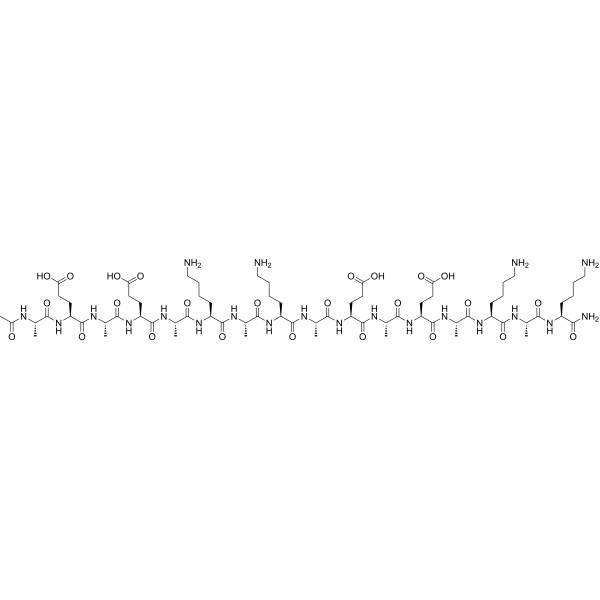
Peptide A5K (INF7-A5K-TAT) is an amphiphilic peptide derived from the HA2-TAT fusion scaffold. Peptide A5K can non-covalently bind to CRISPR ribonucleoproteins and efficiently deliver them to cells, such as primary human T cells, B cells, and NK cells. Peptide A5K enables low-toxicity, precise, and multiplex genome editing, holding great application potential in the field of cell therapy .
loading...
    loading...
Cat. No.: HY-W007599
CAS No.: 2483-46-7
Target:  

Drug Derivative

Research Areas:  

Cancer

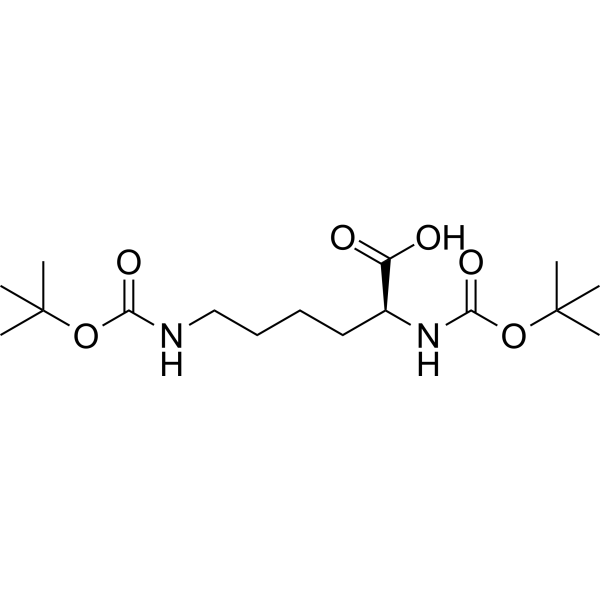
(S)-2,6-Bis((tert-butoxycarbonyl)amino)hexanoic acid is a polypeptide derivative, can be used to synthesis multifunctional amphiphilic peptide dendrimer for non-viral gene delivery in cancer research. (S)-2,6-Bis((tert-butoxycarbonyl)amino)hexanoic acid can be used in the preparation of organic substances that enhance the luminescence intensity of alkaline phosphatase substrates .
loading...
    loading...
Cat. No.: HY-P4121
CAS No.: 1898254-09-5
Target:  

Potassium Channel

Research Areas:  

Inflammation/Immunology Cancer

L17E is an attenuated cationic amphiphilic lytic (ACAL) peptide that can be used to deliver a variety of macromolecules, including proteins, antibodies, and DNA nanostructures. L17E inserts and cleaves the membrane structure through electrostatic interaction, enabling intracellular escape. The efficiency of L17E-mediated delivery is strongly correlated with the expression level of KCNN4 (the gene encoding the calcium-activated potassium channel KCa3.1). L17E also promotes the cellular uptake of macromolecules by inducing micropinocytosis. L17E can be further optimized and improved through dimerization strategies and in combination with other delivery systems, such as nuclear localization signal peptides and cell membrane-coated nanoparticles .
loading...
    loading...
Cat. No.: HY-P5284
CAS No.: 1613231-49-4
Target:  

Inhibitory Antibodies

Research Areas:  

Others

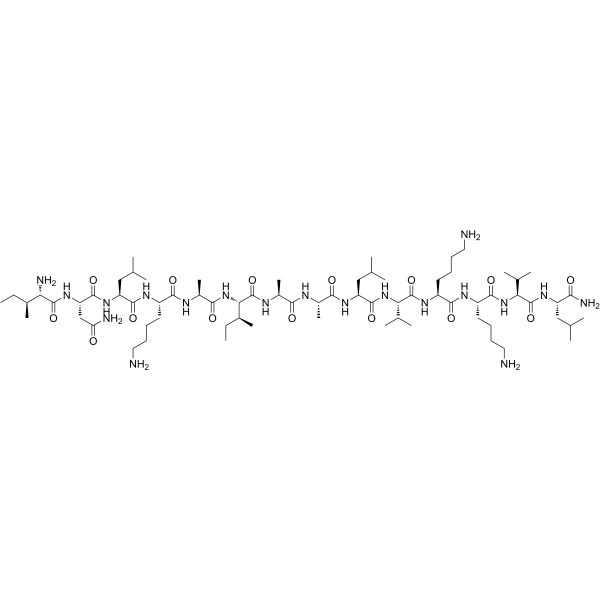
RALA peptide is a cationic amphiphilic delivery agent targeting cell membranes, which forms nanoparticles through electrostatic interactions with anionic drugs. RALA peptide has pH-responsive binding properties, which can enhance the α-helical conformation in an acidic environment and destroy the endosomal membrane, promote the release of drugs into the cytoplasm, and exert efficient intracellular delivery activity. RALA peptide can be used in cancer research (enhancing the activity of bisphosphonates against prostate cancer and breast cancer cells) and bone tissue engineering (promoting osteoblast collagen deposition and extracellular matrix mineralization) .
loading...
    loading...
Cat. No.: HY-P2530
CAS No.: 187987-64-0
Target:  

Inhibitory Antibodies

Research Areas:  

Others

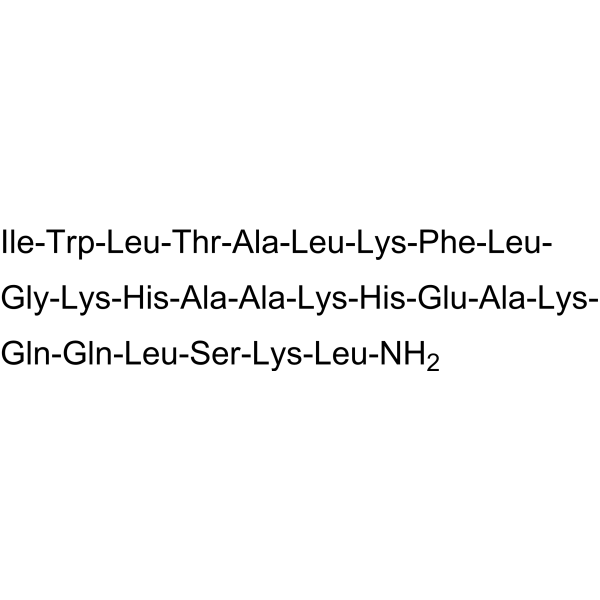
KALA is an amphiphilic peptide that forms an α-helical structure at physiological pH. KALA modifies a plasmid DNA-encapsulating liposomal membrane and is used as a fusogenic peptide in order to achieve effective liver targeting and transfection of DNA via galactose receptors .
loading...
    loading...
Cat. No.: HY-P10649A
Target:  

Inhibitory Antibodies

Research Areas:  

Cancer

CPP12 TFA is a small, amphipathic, cyclic cell-penetrating peptide (CPP). CPP12 TFA binds directly to plasma membrane phospholipids, enters mammalian cells via endocytosis, and then efficiently escapes from endosomes. CPP12 TFA can be used for the intracellular delivery of drugs and chemical probes .
loading...
    loading...
Cat. No.: HY-P10514
CAS No.: 678980-64-8
Research Areas:  

Others

Transportan 10 is a derivative of Transportan (HY-P1732) and is an amphiphilic cell penetrating peptide (CPP). Transportan 10 helps molecules penetrate cell membrane barriers by directly interacting with the lipid bilayer. Transportan 10 can be used in gene therapy or siRNA delivery vector research .
loading...
    loading...
Cat. No.: HY-P5727
CAS No.: 80533-94-4
Target:  

Bacterial

Research Areas:  

Infection

HR1 is a mastoid protease. HR1 can increase the permeability of human erythrocyte membrane. HR1 can induce cytoplasmic membrane permeation in bacteria and mast cells .
loading...
    loading...
Cat. No.: HY-P1631
CAS No.: 125139-67-5
Target:  

Bacterial

Research Areas:  

Infection

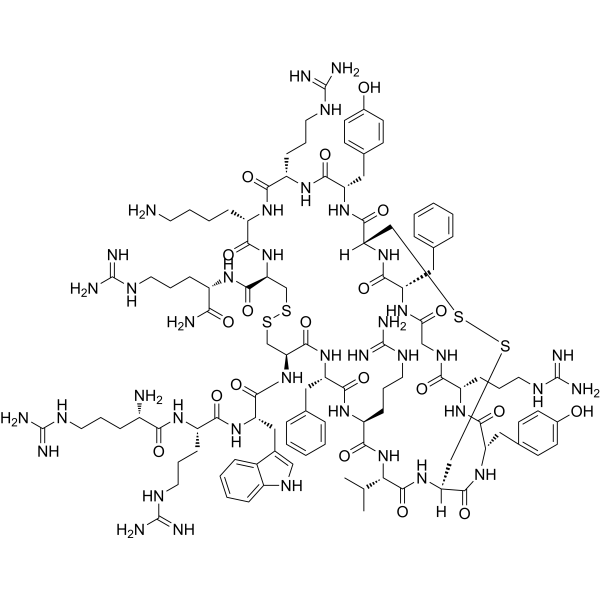
Polyphemusin I is a natural antimicrobial peptide with excellent antimicrobial activity against Gram-negative and Gram-positive bacteria. Polyphemusin I contains 18 amino acids and is stabilized into an amphiphilic, antiparallel β-hairpin by two disulfide bridges .
loading...
    loading...
Cat. No.: HY-P5307A
Synonyms: INF7-A5K-TAT acetate
Research Areas:  

Others

Peptide A5K (INF7-A5K-TAT) acetate is an amphiphilic peptide derived from the HA2-TAT fusion scaffold. Peptide A5K acetate can non-covalently bind to CRISPR ribonucleoproteins and efficiently deliver them to cells, such as primary human T cells, B cells, and NK cells. Peptide A5K acetate enables low-toxicity, precise, and multiplex genome editing, holding great application potential in the field of cell therapy .
loading...
    loading...
Cat. No.: HY-140739A
CAS No.: 185844-12-6
Target:  

Liposome

Research Areas:  

Neurological Disease Cancer

DSPE-PEG2000-Maleimide free acid is a phospholipid-PEG conjugate. DSPE-PEG2000-Maleimide free acid utilizes the amphiphilicity of DSPE to insert into the lipid bilayer of liposomes or nanoparticles. DSPE-PEG2000-Maleimide free acid covalently couples to the sulfhydryl (-SH) of ligands (such as antibodies, peptides, or proteins) via thiol-maleimide click chemistry, giving the particles targeting capabilities. DSPE-PEG2000-Maleimide free acid can be used in the researches of breast cancer, lymphoma, and inherited retinal degeneration .
loading...
    loading...
Cat. No.: HY-P11000
Research Areas:  

Others

INF7TAT is an amphipathic cell-penetrating peptide that mediates intracellular delivery of CRISPR ribonucleoproteins. INF7TAT achieves endosomal escape via the INF7 fragment and cell binding via the TAT fragment. It enables intracellular delivery into primary human T cells and hematopoietic stem and progenitor cells, facilitating gene knockout and AAV-mediated homology-directed repair. INF7TAT can be used for genome editing-related research .
loading...
    loading...
Cat. No.: HY-P11220
Research Areas:  

Infection

Hs02 is a cationic amphiphilic antibacterial peptide derived from human proteins, and it is the membrane-active module of the core chimeric peptide Chim2. Hs02 exhibits broad-spectrum and potent antibacterial activity against various human pathogenic bacteria with the MIC for Staphylococcus aureus and Escherichia coli of as low as 2 μM, and the MBC is 2-4 μM. Hs02 primarily kills bacteria by disrupting the integrity of the bacterial cell membrane, and it has a relatively low selectivity for eukaryotic cell membranes. Hs02 induces the release of IL-12 but does not induce the release of IL-6, indicating its potential for pro-inflammatory or immune activation. Hs02 can be used in antibacterial and immunomodulatory research .
loading...
    loading...
Cat. No.: HY-P5067
CAS No.: 157675-61-1
Target:  

Inhibitory Antibodies

Research Areas:  

Others

EAK16-II is an amphipathic peptide that inhibits the self-sorting of EAKIIH6 in a concentration-dependent manner .
loading...
    loading...
Cat. No.: HY-P10443
CAS No.: 380480-75-1
Target:  

Inhibitory Antibodies

Research Areas:  

Others

ppTG20 is an amphiphilic cell penetrating peptide (KALA) that can be used for gene transfection. ppTG20 can bind to DNA, destabilize membranes, and mediate DNA transfection .
loading...
    loading...
Cat. No.: HY-W440900
Research Areas:  

Others

DSPE-PEG3400-SPDP is an amphiphilic polyPEG which forms lipid bilayer in water. It can be used to encapsualte therapeutic agents, such as hydrophilic nutrierns (protein/peptide, mRNA/DNA/siRNA) or hdyrophobic drugs (
loading...
    loading...
Cat. No.: HY-P10455
Target:  

Bacterial

Research Areas:  

Infection

Cys-Pexiganan TFA is an amphiphilic antimicrobial peptide. Cys-Pexiganan TFA exhibits antibacterial activities against Staphylococcus aureus and Pseudomonas aeruginosa, with MIC of 16 μg/mL and 64.0 μg/mL. Cys-Pexiganan TFA interacts with anionic phospholipids and DNA of microbial cell membranes, disintegrates the cells and leads to cell death .
loading...
    loading...
Cat. No.: HY-W440901
Target:  

Liposome

Research Areas:  

Others

DSPE-PEG5000-SPDP is an amphiphilic polyPEG which forms lipid bilayer in water. It can be used to encapsualte therapeutic agents. The core can encapsulate hydrophilic nutrients, such as protein/peptide and mRNA/DNA/siRNA etc. while the lipid bilayer can solubilize hydrophobic drugs, such as doxorubicin, curcumin etc. The SPDP moiety can react with thiol molecule to form a disulfide bond.
loading...
    loading...
Cat. No.: HY-122297
CAS No.: 2047-13-4
Target:  

Inhibitory Antibodies

Research Areas:  

Others

H-​Arg-​Phe-​OH is an amphipathic peptide. H-​Arg-​Phe-​OH has the ability to induce native-like protein aggregation. H-​Arg-​Phe-​OH can induce aggregation of the neutral model protein yeast alcohol dehydrogenase (ADH) .
loading...
    loading...
Cat. No.: HY-P10520
Target:  

Inhibitory Antibodies

Research Areas:  

Others

RWmix is ??a synthetic cell-penetrating peptide. The secondary amphiphilic nature of RWmix promotes cellular uptake, mainly due to the alternating arrangement of arginine and tryptophan. The presence of tryptophan enhances the anchoring of the peptide to the cell membrane, thereby improving its ability to penetrate the cell membrane. RWmix can be used for gene therapy and siRNA delivery research .
loading...
    loading...

