
1. Search Result
Search Result
Results for "

antiviral therapy

" in MedChemExpress (MCE) Product Catalog:

15

Inhibitors & Agonists

2

Screening Libraries

3

Fluorescent Dyes

3

Biochemical Assay Reagents

1

Inhibitory Antibodies

2

Natural
Products

1

Isotope-Labeled Compounds

3

GMP Molecules

Cat. No. Product Name Target Research Areas Chemical Structure
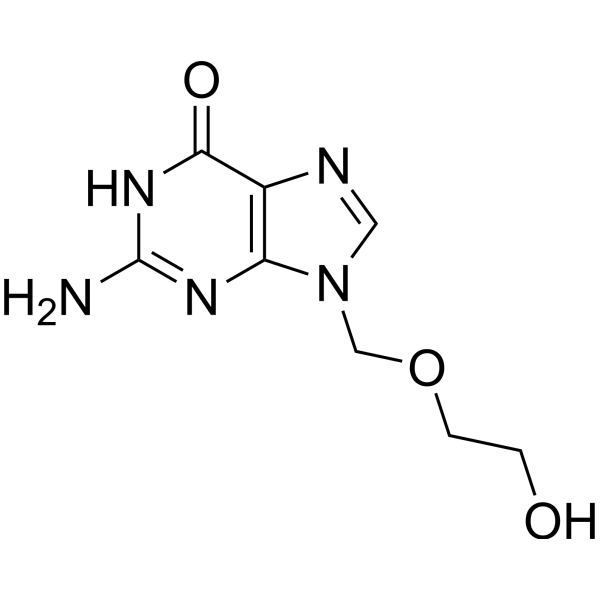
  • HY-17422
    Acyclovir
    Maximum Cited Publications
    21 Publications Verification

    Aciclovir; Acycloguanosine

    HSV Apoptosis Antibiotic Bacterial Infection Cancer
    Acyclovir (Aciclovir) is a potent, orally active antiviral agent. Acyclovir has antiherpetic activity with IC50 values of 0.85 μM and 0.86 μM for HSV-1 and HSV-2, respectively. Acyclovir induces cell cycle perturbation and apoptosis. Acyclovir prevents bacterial infections during induction therapy for acute leukaemia .
    Acyclovir
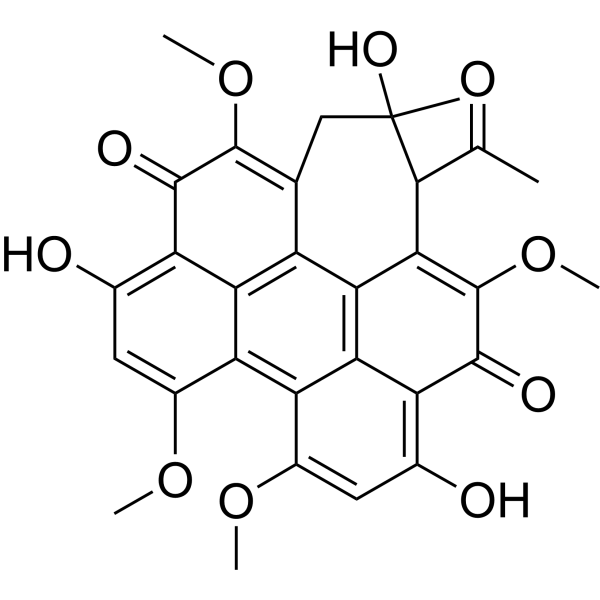
  • HY-N2575
    Hypocrellin A
    2 Publications Verification

    PKC Bacterial Parasite HIV VSV VEGFR Bcl-2 Family Apoptosis Infection Metabolic Disease Cancer
    Hypocrellin A is a PKC inhibitor that exerts antidiabetic activity by reversing the effects of high glucose on endothelin (ET-1) expression. Hypocrellin A is also a photosensitizer for photodynamic therapy (PDT) with anticancer, antibacterial and antiviral activities, especially against human immunodeficiency virus (HIV). In addition, Hypocrellin-A also possesses anti-Leishmania activity (IC50=0.27 μg/ml) .
    Hypocrellin A
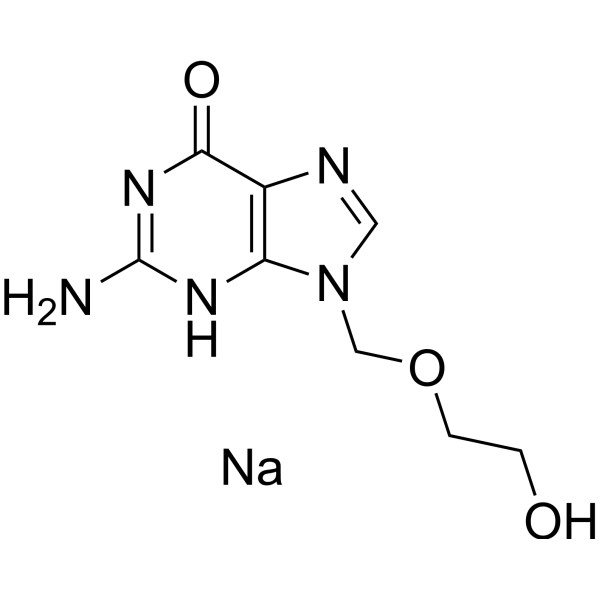
  • HY-17422A
    Acyclovir sodium
    Maximum Cited Publications
    21 Publications Verification

    Aciclovir sodium; Acycloguanosine sodium

    HSV Apoptosis Antibiotic Bacterial Infection Cancer
    Acyclovir (Aciclovir) sodium is a potent, orally active antiviral agent. Acyclovir sodium has antiherpetic activity with IC50 values of 0.85 μM and 0.86 μM for HSV-1 and HSV-2, respectively. Acyclovir sodium induces cell cycle perturbation and apoptosis. Acyclovir sodium prevents bacterial infections during induction therapy for acute leukaemia .
    Acyclovir sodium
  • HY-17422R

    Aciclovir (Standard); Acycloguanosine (Standard)

    Reference Standards HSV Apoptosis Antibiotic Bacterial Infection Cancer
    Acyclovir (Standard) is the analytical standard of Acyclovir. This product is intended for research and analytical applications. Acyclovir (Aciclovir) is a potent, orally active antiviral agent. Acyclovir has antiherpetic activity with IC50 values of 0.85 μM and 0.86 μM for HSV-1 and HSV-2, respectively. Acyclovir induces cell cycle perturbation and apoptosis. Acyclovir prevents bacterial infections during induction therapy for acute leukaemia .
    Acyclovir (Standard)
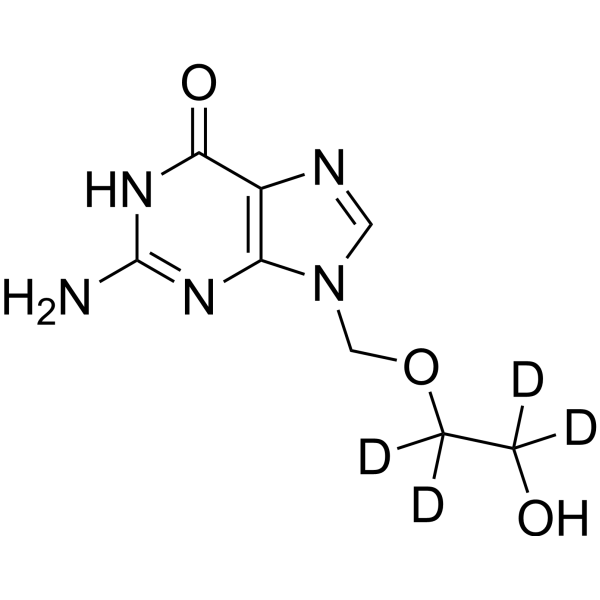
  • HY-17422S1

    Aciclovir-d4; Acycloguanosine-d4

    Isotope-Labeled Compounds HSV Bacterial Apoptosis Antibiotic Infection Cancer
    Acyclovir-d4 is the deuterium labeled Acyclovir. Acyclovir (Aciclovir) is a guanosine analogue and an orally active antiviral agent. Acyclovir inhibits HSV-1 (IC50 of 0.85 μM), HSV-2 (IC50 of 0.86 μM) and varicella-zoster virus. Acyclovir can be phosphorylated by viral thymidine kinase (TK), and Acyclovir triphosphate interferes with viral DNA polymerization through competitive inhibition with guanosine triphosphate and obligatory chain termination . Acyclovir prevents bacterial infections during induction therapy for acute leukaemia .
    Acyclovir-d4
  • HY-B0434G

    Ribasphere; ICN-1229

    Antibiotic RSV HCV Orthopoxvirus Infection
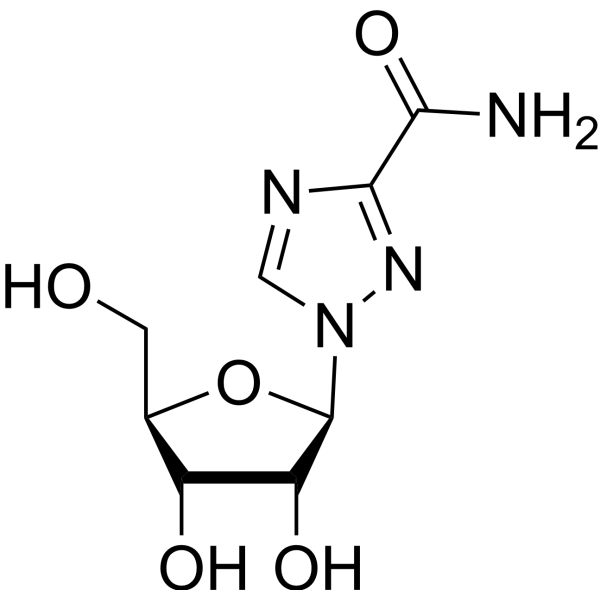
    Ribavirin (GMP) is Ribavirin (HY-B0434) produced by using GMP guidelines. GMP small molecules work appropriately as an auxiliary reagent for cell therapy manufacture. Ribavirin (ICN-1229) is an antiviral agent against a broad spectrum of viruses including HCV, HIVl, and RSV. Ribavirin also has anti-orthopoxvirus and anti-variola activities.
    Ribavirin
  • HY-P99608

    HBV Infection
    Exbivirumab is a monoclonal antibody directed against highly conserved HBsAg epitopes. Exbivirumab enhances the antiviral activity of hepatitis B immunoglobulin (HBIG). Exbivirumab combined with Libivirumab (HY-P99703) decreases circulating HBsAg and hepatitis B virus (HBV) DNA levels in a chronically infected chimpanzee. Exbivirumab can be used for HBV re-infection in liver transplant .
    Exbivirumab
  • HY-156786

    Reactive Oxygen Species (ROS) Influenza Virus SARS-CoV HSV Infection
    TLD-1433 is the fourth-generation ruthenium (II) based photodynamic compound (PDC). TLD-1433 is activated by green light (525 ± 25 nm) and efficiently generates ROS to achieve pathogen inactivation. After photoinactivation, TLD-1433 significantly induces lipid peroxidation of the cell membrane, which can directly damage the integrity of the viral envelope. TLD-1433 has ID50 for enveloped viruses (such as H1N1 influenza virus, coronavirus OC43, HSV-1, Zika virus) is as low as nanomolar level; for non-enveloped viruses (such as adenovirus Ad5, mammalian rotavirus MRV), a concentration of micro-molar level is required for inactivation. TLD-1433 has antigen retention property and can be used for the preparation of inactivated vaccines .
    TLD-1433
  • HY-17422D

    Aciclovir hydrochloride; Acycloguanosine hydrochloride

    HSV Apoptosis Antibiotic Bacterial Infection Cancer
    Acyclovir (Aciclovir) hydrochloride is a potent, orally active antiviral agent. Acyclovir hydrochloride has antiherpetic activity with IC50 values of 0.85 μM and 0.86 μM for HSV-1 and HSV-2, respectively. Acyclovir hydrochloride induces cell cycle perturbation and apoptosis. Acyclovir hydrochloride prevents bacterial infections during induction therapy for acute leukaemia .
    Acyclovir hydrochloride
  • HY-15233G

    AIC246; MK-8228

    CMV Infection
    Letermovir (GMP) is the GMP grade of Letermovir (HY-15233). GMP small molecules works appropriately as an auxiliary reagent for cell therapy manufacture. Letermovir (GMP) is an orally active CMV inhibitor. Letermovir (GMP) targets the CMV terminase complex rather than CMV DNA polymerase and exerts its antiviral activity. Letermovir (GMP) can be used in the study of CMV infection .
    Letermovir
  • HY-118326

    Autophagy Cancer
    MRT 68601 is a potent TBK1 inhibitor with the activity of inhibiting autophagosome formation in lung cancer cells. MRT 68601 may have potential effects against targets associated with host-dependent factors identified in SARS-CoV-2 infection. The drug targets involved in MRT 68601 are related to existing FDA-approved drugs and compounds in clinical trials, which can provide support for the development of broad-spectrum antiviral therapies .
    MRT 68601
  • HY-N2575R

    Reference Standards PKC Bacterial Parasite HIV VSV VEGFR Bcl-2 Family Apoptosis Infection Metabolic Disease Cancer
    Hypocrellin A (Standard) is the analytical standard of Hypocrellin A. This product is intended for research and analytical applications. Hypocrellin A is a PKC inhibitor that exerts antidiabetic activity by reversing the effects of high glucose on endothelin (ET-1) expression. Hypocrellin A is also a photosensitizer for photodynamic therapy (PDT) with anticancer, antibacterial and antiviral activities, especially against human immunodeficiency virus (HIV). In addition, Hypocrellin-A also possesses anti-Leishmania activity (IC50=0.27 μg/ml)[1][2][3][4][5][6][7][8][9].
    Hypocrellin A (Standard)
  • HY-123536

    A-831

    PI4K HCV Infection
    AZD2836 (A-831) is a 4-aminopyrazolone compound with anti-HCV activity. AZD2836 inhibits the activity of the host cell kinase PI4KIIIα, causing metabolic disorder of the cell membrane component PI4P that is necessary for viral replication. In the HCV subgenomic replicon cell model, the EC50 values of AZD2836 for genotype 1b (Con1 strain) and genotype 1a (Lemon strain) are 270 nM and 550 nM, respectively .
    AZD2836
  • HY-170515A

    E1/E2/E3 Enzyme SARS-CoV Infection Neurological Disease Cancer
    (E),(Z)-RNF5 agonist 1 (Compound Analog-1) is a RNF5 agonist that can enhance the ubiquitination and degradation of SARS-CoV-2 E protein by RNF5. (E),(Z)-RNF5 agonist 1 effectively inhibits the replication of SARS-CoV-2 and significantly alleviates pulmonary pathological damage and systemic inflammatory response in mouse infection models. (E),(Z)-RNF5 agonist 1 has a strong cytotoxic effect on neuroblastoma and melanoma. (E),(Z)-RNF5 agonist 1 can be used for research on anti-cancer and anti-viral purposes .
    (E),(Z)-RNF5 agonist 1
  • HY-138794G

    Deubiquitinase SARS-CoV Histone Demethylase Cancer
    XL177A GMP is XL177A (HY-138794) produced by using GMP guidelines. GMP small molecules works appropriately as an auxiliary reagent for cell therapy manufacture. XL177A is a covalent USP7 inhibitor that blocks the deubiquitinase activity of USP7. XL177A destabilizes non-canonical PRC1 complexes or KDM6A and reduces chromatin deposition of H2AK119Ub, thereby relieving the repression of neuronal differentiation programs. Meanwhile, XL177A also regulates the ELOF1-UVSSA-USP7-nuclear β-catenin axis, decreasing the transcription levels of related proteins and the accumulation of nuclear β-catenin. XL177A exerts antiviral effects by reducing the expression levels of coronavirus receptors, and exhibits inhibitory activity against APC-mutated colorectal cancer cells, neuroblastoma, and coronaviruses including SARS-CoV-2 variants. XL177A is mainly used in studies related to colorectal cancer, neuroblastoma, and coronavirus infections .
    XL177A

Inquiry Online

Your information is safe with us. * Required Fields.

Salutation


Country or Region *

Applicant Name *


Organization Name *

Department *


Email Address *


Product Name *

Cat. No.


Requested quantity *

Phone Number *


Remarks

Inquiry Online

Inquiry Information

Product Name:
Cat. No.:
Quantity:
MCE Japan Authorized Agent:

