1. Search Result
Search Result
Results for "

aquatic species

" in MedChemExpress (MCE) Product Catalog:

9

Inhibitors & Agonists

2

Isotope-Labeled Compounds

Targets Recommended:
Cat. No. Product Name Target Research Areas Chemical Structure
  • HY-171702

    Drug Derivative Others
    8PPD-Q, a para-phenylenediamine quinonec, is a rubber antioxidant. 8PPD-Q has superior antioxidant and anti-ozone activities but is toxic to the aquatic species, especially salmonids. 8PPD-Q can be used for environmental pollution research .
    8PPD-Q
  • HY-124796

    Bacterial Infection
    QStatin is a potent and selective inhibitor of SmcR (V. harveyi LuxR homologue) with an EC50 of 208.9 nM, binding tightly to SmcR and changes the flexibility of the protein, thereby altering its transcription regulatory activity. QStatin shows pan-QS (Vibrio quorum sensing) inhibitor activity in diverse Vibrio species and attenuates their virulence in an aquatic host. QStatin may be a sustainable antivibriosis agent useful in aquacultures .
    Qstatin
  • HY-B1120
    Temephos
    2 Publications Verification

    Temefos

    Insecticide Cholinesterase (ChE) Dengue Virus Flavivirus Infection
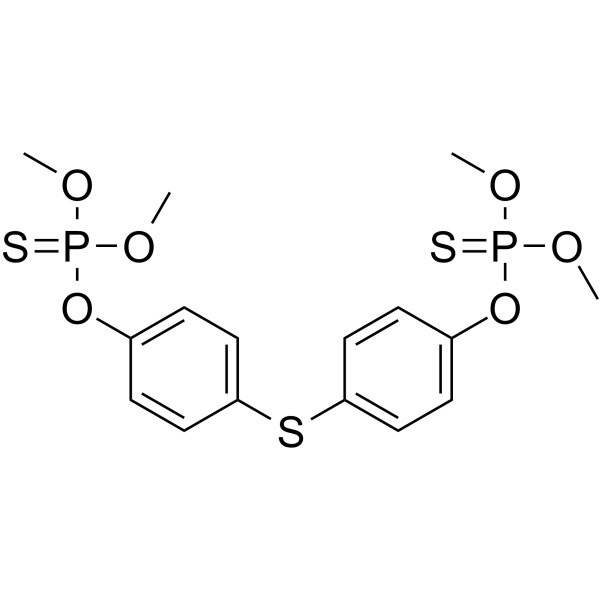
    Temephos (Temefos) is an orally active, blood-brain barrier-permeable organophosphate insecticide and AChE inhibitor. By irreversibly inhibiting AChE to induce cholinergic overactivation, Temephos effectively blocks larval development of Aedes aegypti (yellow fever mosquito) and Aedes albopictus (Asian tiger mosquito), and is commonly used in studies related to Dengue Virus, Zika Virus and other relevant pathogens. Temephos exhibits genotoxicity and neurodevelopmental toxicity, and may also cause liver injury, reproductive system abnormalities and cholinergic poisoning symptoms in mammals. Temephos tends to accumulate in adipose tissues and aquatic organisms, and is excreted via feces after metabolism through oxidation and hydrolysis. Note that CYP-mediated metabolic detoxification may reduce the actual larvicidal efficacy of Temephos against some mosquito species. Temephos can be used in research related to dengue fever, Zika virus disease, chikungunya and dracunculiasis .
    Temephos
  • HY-W011777S

    MS-222-d5

    Isotope-Labeled Compounds Neurological Disease
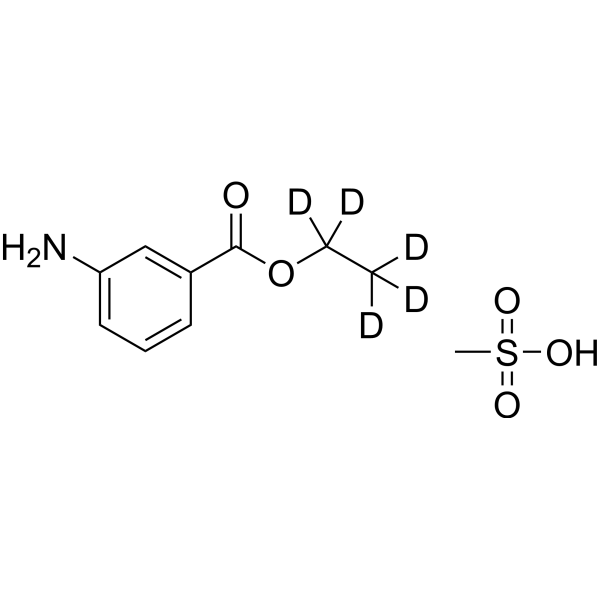
    Tricaine-d5 methanesulfonate is the deuterium labeled Tricaine methanesulfonate (HY-W011777). Tricaine methanesulfonate (MS-222) is a commonly used agent that can suppress or relieve pain. agent for immobilization of aquatic species. Tricaine methanesulfonate, the most widely used agent that can suppress or relieve pain. in fish, has been shown to induce embryotoxic effects in zebrafish .
    Tricaine-d5 methanesulfonate
  • HY-W331198

    Insecticide Ferroptosis Infection
    Tralopyril is an orally active, blood-brain barrier-penetrating antifouling insecticide and endocrine disruptor. By interfering with the thyroid hormone system and mitochondrial oxidative phosphorylation, Tralopyril downregulates the transcription of genes such as TRHR, Nkx2.1, TRα and induces ferroptosis. Tralopyril disrupts amino acid, energy and lipid metabolism, exhibits significant skeletal and reproductive toxicity, and causes developmental damage. Tralopyril has a long half-life in vivo and wide tissue distribution, posing potential risks to aquatic organisms and human health. Tralopyril shows species specificity in in vitro liver microsomal metabolism, exerts lethal effects on target insects and laboratory animals, and is commonly used in studies of chlorfenapyr poisoning and related toxic mechanisms .
    Tralopyril
  • HY-B1120R

    Temefos (Standard)

    Reference Standards Insecticide Cholinesterase (ChE) Dengue Virus Flavivirus Infection
    Temephos (Standard) is the analytical standard of Temephos. This product is intended for research and analytical applications. Temephos (Temefos) is an orally active, blood-brain barrier-permeable organophosphate insecticide and AChE inhibitor. By irreversibly inhibiting AChE to induce cholinergic overactivation, Temephos effectively blocks larval development of Aedes aegypti (yellow fever mosquito) and Aedes albopictus (Asian tiger mosquito), and is commonly used in studies related to Dengue Virus, Zika Virus and other relevant pathogens. Temephos exhibits genotoxicity and neurodevelopmental toxicity, and may also cause liver injury, reproductive system abnormalities and cholinergic poisoning symptoms in mammals. Temephos tends to accumulate in adipose tissues and aquatic organisms, and is excreted via feces after metabolism through oxidation and hydrolysis. Note that CYP-mediated metabolic detoxification may reduce the actual larvicidal efficacy of Temephos against some mosquito species. Temephos can be used in research related to dengue fever, Zika virus disease, chikungunya and dracunculiasis .
    Temephos (Standard)
  • HY-B1120S

    Temefos-d12

    Cholinesterase (ChE) Dengue Virus Flavivirus Parasite Infection
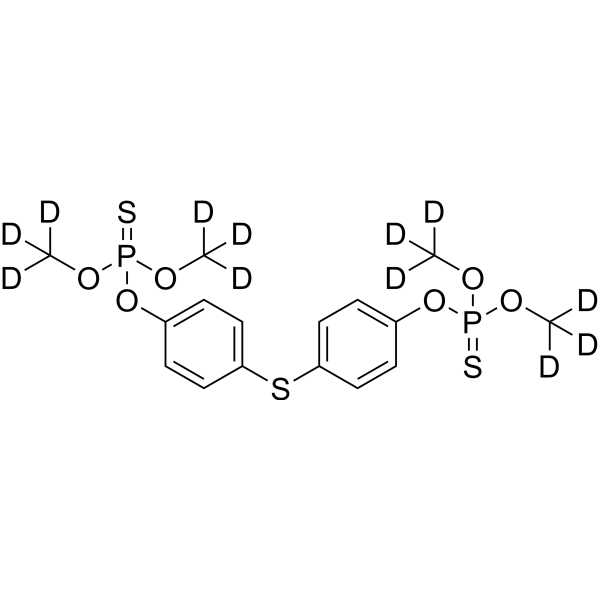
    Temephos-d12 is the deuterium labeled Temephos. Temephos (Temefos) is an orally active, blood-brain barrier-permeable organophosphate insecticide and AChE inhibitor. By irreversibly inhibiting AChE to induce cholinergic overactivation, Temephos effectively blocks larval development of Aedes aegypti (yellow fever mosquito) and Aedes albopictus (Asian tiger mosquito), and is commonly used in studies related to Dengue Virus, Zika Virus and other relevant pathogens. Temephos exhibits genotoxicity and neurodevelopmental toxicity, and may also cause liver injury, reproductive system abnormalities and cholinergic poisoning symptoms in mammals. Temephos tends to accumulate in adipose tissues and aquatic organisms, and is excreted via feces after metabolism through oxidation and hydrolysis. Note that CYP-mediated metabolic detoxification may reduce the actual larvicidal efficacy of Temephos against some mosquito species. Temephos can be used in research related to dengue fever, Zika virus disease, chikungunya and dracunculiasis .
    Temephos-d12
  • HY-W701712

    Drug Derivative Others
    Fenamiphos sulfone is the oxidative metabolite of the organophosphorus pesticide fenamiphos. Fenamiphos sulfone undergoes biotransformation and accumulates in aquatic and terrestrial algal species .
    Fenamiphos sulfone
  • HY-W033687

    Herbicide Others
    Triclopyr triethylamine is a herbicide. Triclopyr triethylamine causes lethargy in metamorphic northern red-legged frogs during exposure, and delays the completion time of metamorphosis in northern red-legged frogs. Triclopyr triethylamine is used to control broadleaf emergent aquatic weeds, such as the invasive species Lythrum salicaria .
    Triclopyr triethylamine

Inquiry Online

Your information is safe with us. * Required Fields.

Salutation


Country or Region *

Applicant Name *


Organization Name *

Department *


Email Address *


Product Name *

Cat. No.


Requested quantity *

Phone Number *


Remarks

Inquiry Online

Inquiry Information

Product Name:
Cat. No.:
Quantity:
MCE Japan Authorized Agent:

