1. Search Result
Search Result
Results for "

break

" in MedChemExpress (MCE) Product Catalog:

244

Inhibitors & Agonists

3

Screening Libraries

4

Fluorescent Dye

9

Biochemical Assay Reagents

6

Peptides

2

Inhibitory Antibodies

34

Natural
Products

1

Recombinant Proteins

7

Isotope-Labeled Compounds

5

Antibodies

1

Oligonucleotides

1

GMP Molecules

Cat. No. Product Name Target Research Areas Chemical Structure
  • HY-E70005A
    Collagenase, Type I
    15+ Cited Publications

    EC 3.4.24.3

    MMP Others
    Collagenase, Type I is a microbially derived matrix metalloproteinases (MMPs) and zinc peptidase. Collagenase, Type I breaks down collagens 1, 3, 7, 8, 10, gelatin, proteoglycans, aggrecan .

    Collagenase, Type I
  • HY-O0004

    MMP Metabolic Disease
    Collagenases are enzymes that break the peptide bonds in collagen. Collagenases are derived from the Clostridium histolyticum. Collagenases (Type I) are proteolytic enzymes that break peptide bonds in collagen and can be used for tissue digestion and dissociation.
    Collagenase I, from Clostridium histolyticum
  • HY-19609
    Calicheamicin
    10+ Cited Publications

    Calicheamicin γ1

    DNA Alkylator/Crosslinker ADC Payload Bacterial Apoptosis Antibiotic Infection Cancer
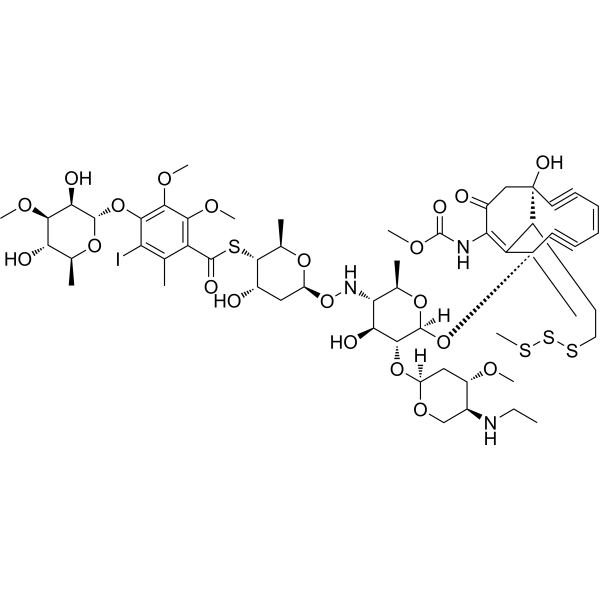
    Calicheamicin, an antitumor antibiotic, is a cytotoxic agent that causes double-strand DNA breaks. Calicheamicin is a DNA synthesis inhibitor .
    Calicheamicin
  • HY-W001187
    Tempo
    10+ Cited Publications

    Mitochondrial Metabolism DNA/RNA Synthesis Reactive Oxygen Species (ROS) Cancer
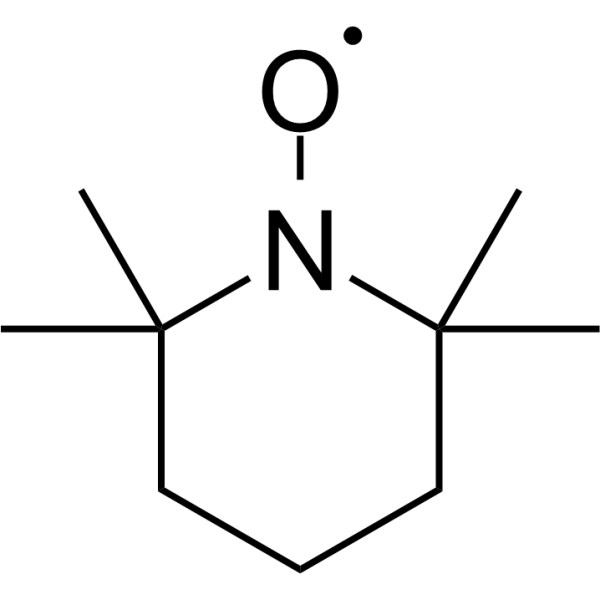
    Tempo is a nitric oxide radical and a selective scavenger of ROS in mitochondria. Tempo is also an organocatalyst that disproportionates superoxide and oxidizes primary alcohols to aldehydes in a catalytic cycle. Tempo has mutagenic and antioxidant effects and can induceDNA strand breaks. Tempo also exerts cytotoxic and mutagenic properties in mouse lymphoma cells .
    Tempo
  • HY-P2373
    Kinase, Natto fermentation
    4 Publications Verification

    PAI-1 Cardiovascular Disease
    Kinase, Natto fermentation is a potent fibrinolytic enzyme. Kinase, Natto fermentation can break down blood clots by directly hydrolyzing fibrin and plasmin substrate. Kinase, Natto fermentation can be used for the research of cardiovascular diseases .
    Kinase, Natto fermentation
  • HY-110111
    T2AA
    2 Publications Verification

    DNA/RNA Synthesis Cancer
    T2AA is a monoubiquitinated proliferating cell nuclear antigen (PCNA) inhibitor that prevents DNA repair, increases double-strand break (DSB) formation and promotes necroptosis and cell cycle arrest in G1 phase .
    T2AA
  • HY-13767
    Tirapazamine
    10+ Cited Publications

    SR259075; SR4233; Win59075; SML 0552; SR 259075; Tirazone

    DNA/RNA Synthesis Cancer
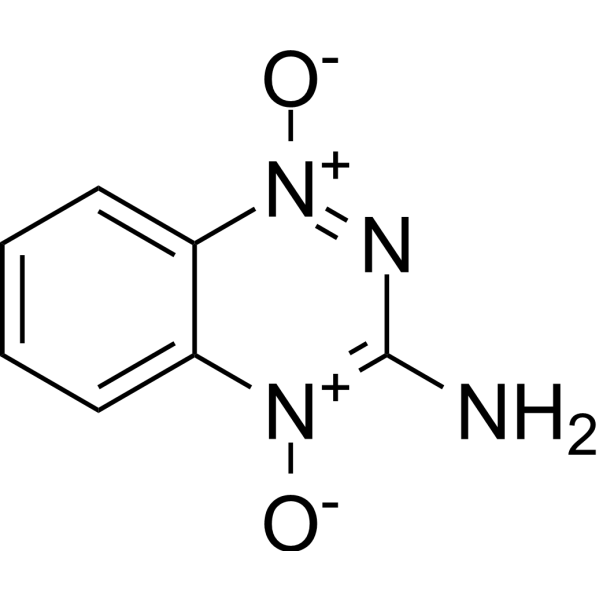
    Tirapazamine (SR259075) is an anticancer agent that shows selective cytotoxicity for hypoxic cells in solid tumors, thereby inducing single-and double-strand breaks in DNA, base damage, and cell death. Tirapazamine is an anticancer and bioreductive agent.Tirapazamine (SR259075) can enhance the cytotoxic effects of ionizing radiation in hypoxic cells .
    Tirapazamine
  • HY-110185
    NSC 617145
    3 Publications Verification

    DNA/RNA Synthesis Cancer
    NSC 617145 is a selective werner syndrome helicase (WRN) helicase inhibitor with an IC50 value of 230 nM. NSC 617145 inhibits WRN ATPase, and induces double-strand breaks (DSB) and chromosomal abnormalities. NSC 617145 shows selective for WRN over BLM, FANCJ, ChlR1, RecQ, and UvrD helicases .
    NSC 617145
  • HY-13744

    RFS 2000; 9-Nitrocamptothecin

    Topoisomerase Cancer
    Rubitecan (RFS 2000), a Camptothecin derivative, is an orally active topoisomerase I inhibitor with broad antitumor activity, and induces protein-linked DNA single-strand breaks, thereby blocking DNA and RNA synthesis in dividing cells .
    Rubitecan
  • HY-19713
    LJI308
    4 Publications Verification

    Ribosomal S6 Kinase (RSK) YB-1 Cancer
    LJI308 is a potent pan-ribosomal S6 kinase (RSK) inhibitor, with IC50s of 6 nM, 4 nM, and 13 nM for RSK1, RSK2, and RSK3, respectively. LJI308 inhibits the phosphorylation of RSK (T359/S363) and YB-1 (S102) after irradiation, treatment with EGF, and in cells expressing a KRAS mutation .
    LJI308
  • HY-164729

    Antibody-Drug Conjugates (ADCs) Topoisomerase Apoptosis Cancer
    FZ-AD005 is a DLL3-targeting antibody-drug conjugate (ADC) with high selectivity, composed of the anti-DLL3 antibody FZ-A038 (HY-P990896), a dipeptide linker (Val-Ala), and DXd (HY-13631D). The Kd value of FZ-AD005 for human DLL3 ranges from 13.29 to 58.3 pmol/L. After binding to DLL3 on the cell surface, FZ-AD005 mediates endocytosis, and the payload DXd is released via cleavage by lysosomal cathepsins. DXd inhibits topoisomerase TopI to induce double-strand DNA breaks, cell cycle arrest and apoptosis, and FZ-AD005 exhibits bystander killing activity against adjacent DLL3-negative cells. FZ-AD005 shows stable circulation in vivo, has good tolerance and acceptable pharmacokinetic profiles in rats and cynomolgus monkeys, and effectively inhibits the growth of DLL3-expressing tumor cells. FZ-AD005 serves as a promising candidate molecule for research on small cell lung cancer and human neuroendocrine prostate cancer .
    FZ-AD005
  • HY-W018326

    DNA/RNA Synthesis Cancer
    Temozolomide acid is a carboxylic acid derivative of Temozolomide (HY-17364) with anticancer activity. Temozolomide is a DNA alkylating agent, methylating the guanine and adenine bases of DNA, causing breaks in DNA double strand, cell cycle arrest, and eventually cell death. Temozolomide acid is promising for research of glioblastoma and brain cancer .
    Temozolomide acid
  • HY-174374

    Topoisomerase Cardiovascular Disease
    Topobexin is a TOP2B-selective inhibitor with IC50 values of 0.19 μM and 4.8 μM for TOP2B and TOP2A (DNA decatenation assay). Topobexin binds to non-homologous residues in the obex pocket and targets the ATPase domain of TOP2B. Topobexin prevents anthracycline-induced DNA double-strand break formation, apoptotic signaling mediated by caspase 3/7, 8 and 9, cardiomyocyte morphological changes, mitochondrial depolarization/loss, left ventricular systolic dysfunction, extracellular matrix remodeling, fibrotic alterations, and increases in plasma cardiac troponin T and BNP. Topobexin does not impair the antiproliferative effects of anthracyclines in cancer cells, exhibits no intrinsic cytotoxicity in cardiomyocytes, and is well tolerated in rabbits. Topobexin can be used in studies related to anthracycline-induced cardiotoxicity .
    Topobexin
  • HY-116770
    PFM01
    5 Publications Verification

    Endonuclease Cancer
    PFM01, N-alkylated Mirin derivative, is a MRE11 endonuclease inhibitor. PFM01 can regulate double-strand break repair (DSBR) by nonhomologous end-joining (NHEJ) versus homologous recombination (HR) .
    PFM01
  • HY-124899
    Hh-Ag1.5
    1 Publications Verification

    SAg1.5

    Hedgehog Metabolic Disease
    Hh-Ag1.5 (SAg1.5) is a potent Hedgehog (Hh) agonist with an EC50 of 1 nM . Hh-Ag1.5 mediated reprogramming breaks the quiescence of noninjured liver stem cells for rescuing liver failure .
    Hh-Ag1.5
  • HY-108345

    Antibiotic Cancer
    Bleomycin is a glycopeptide antibiotic. Bleomycin has potent antitumour activities against a range of lymphomas, head and neck cancers and germ-cell tumours. Bleomycin can be used for the research of cancer and chemotherapy .
    Bleomycin
  • HY-103710
    IBR2
    5+ Cited Publications

    RAD51 Apoptosis Cancer
    IBR2 is a potent and specific RAD51 inhibitor and inhibits RAD51-mediated DNA double-strand break repair. IBR2 disrupts RAD51 multimerization, accelerates proteasome-mediated RAD51 protein degradation, inhibits cancer cell growth and induces apoptosis .
    IBR2
  • HY-111183
    Neocarzinostatin (solution)
    1 Publications Verification

    Zinostatin; Vinostatin

    DNA/RNA Synthesis Bacterial Apoptosis Antibiotic Infection Cancer
    Neocarzinostatin (solution), a potent DNA-damaging, anti-tumor antibiotic, recognizes double-stranded DNA bulge and induces DNA double strand breaks (DSBs). Neocarzinostatin induces apoptosis. Neocarzinostatin has potential for EpCAM-positive cancers treatment .
    Neocarzinostatin (solution)
  • HY-126020
    Bractoppin
    3 Publications Verification

    DNA/RNA Synthesis RAD51 Cancer
    Bractoppin is a potent and selective agent-like inhibitor of phosphopeptide recognition by the human BRCA1 tandem(t) BRCT domain (binding IC50: 74 nM). Bractoppin diminishes BRCA1 recruitment to DNA breaks, in turn suppressing damage-induced G2 arrest and assembly of the recombinase, RAD51. Bractoppin preferentially inhibits BRCA1 tBRCT-dependent steps in the DNA damage response .
    Bractoppin
  • HY-148078
    PFM03
    3 Publications Verification

    Endonuclease Others
    PFM03 is a MRE11 Endonuclease inhibitor. PFM03 regulates DNA double-strand break repair (DSBR) by nonhomologous end-joining (NHEJ) .
    PFM03
  • HY-160424
    DEANO sodium
    1 Publications Verification

    Diethylamine NONOate sodium; Diethylamine nitric oxide sodium

    Reactive Oxygen Species (ROS) Xanthine Oxidase Others
    DEANO sodium is notric oxide donor. DEANO sodium potentiates the abilitv of hypoxanthine/xanthine oxidase to induce lipid peroxidation as well as DNA single- and double-strand breaks .
    DEANO sodium
  • HY-100549
    (S)-Crizotinib
    3 Publications Verification

    DNA/RNA Synthesis Apoptosis Cancer
    (S)-Crizotinib is a potent and selective MTH1 (mutT homologue) inhibitor with an IC50 of 330 nM. (S)-Crizotinib disrupts nucleotide pool homeostasis via MTH1 inhibition, induces an increase in DNA single strand breaks, activates DNA repair in human colon carcinoma cells, and effectively suppresses tumour growth in animal models .
    (S)-Crizotinib
  • HY-13703A
    Nimustine hydrochloride
    1 Publications Verification

    ACNU

    DNA Alkylator/Crosslinker DNA/RNA Synthesis Apoptosis p38 MAPK JNK AP-1 Cancer
    Nimustine hydrochloride (ACNU) is the hydrochloride salt form of Nimustine (HY-13703). Nimustine hydrochloride is an alkylating agent, which induces DNA double-strand breaks (DSBs) and inter-strand crosslinks (ICLs), thereby activating the DNA damage response (DDR) signaling pathway. Nimustine hydrochloride activates p38 MAPK/JNK signaling pathway, and exhibits antitumor activity .
    Nimustine hydrochloride
  • HY-160096

    ATM/ATR Cancer
    M3541 is a potent, ATP-competitive and selective ATM inhibitor with an IC50 of 0.25 nM. M3541 shows remarkable selectivity against other protein kinases. M3541 suppresses double-strand breaks (DSB) repair and has antitumor activities .
    M3541
  • HY-15620
    Methylproamine
    1 Publications Verification

    DNA/RNA Synthesis Others
    Methylproamine is a DNA-binding radioprotector, acts by repair of transient radiation-induced oxidative species on DNA. Methylproamine also protects against ionizing radiation by preventing DNA double-strand breaks .
    Methylproamine
  • HY-N8533

    DNA/RNA Synthesis Infection Cancer
    Sodium Camptothecin is a plant alkaloid, with antitumor activity. Sodium Camptothecin is a reversible inhibitor of RNA synthesis. Sodium Camptothecin is an effective inhibitor of adenovirus replication. Sodium Camptothecin inhibits DNA synthesis and causes breaks in intracellular preformed viral DNA .
    Sodium Camptothecin
  • HY-113064
    Selenocystine
    1 Publications Verification

    Endogenous Metabolite Cancer
    Selenocystine is a broad-spectrum anti-cancer agent. Selenocystine induces DNA damage in HepG2 cells, particularly in the form of DNA double strand breaks (DSBs). Selenocystine exhibits great promise as a therapeutic or adjuvant agent targeting DNA repair for cancer treatment .
    Selenocystine
  • HY-126940

    Reactive Oxygen Species (ROS) P-glycoprotein Apoptosis Cancer
    Furanodiene is a natural terpenoid isolated from Rhizoma Curcumae. Furanodiene plays anti-cancer effects through anti-angiogenesis and inducing ROS production, DNA strand breaks and apoptosis. Furanodiene suppresseed efflux transporter Pgp (P-glycoprotein) function and reduced Pgp protein level .
    Furanodiene
  • HY-108860

    PEG-L-asparaginase; Pegasparaginase

    FGFR Interleukin Related Inflammation/Immunology
    Oncaspar (PEG-L-asparaginase; Pegasparaginase), a pegylated form of native Escherichia coli-derived L-asparaginase, breaks down the amino acid asparagine that are circulating in the bloodstream. Oncaspar plays an important role in acute lymphoblastic leukemia (ALL) through asparagine hydrolysis and activation of the integrated stress response (ISR) pathway .
    Oncaspar
  • HY-115531

    DNA/RNA Synthesis Cancer
    UNC-2170 is a functionally active, fragment-like ligand for 53BP1 (IC50=29 µM; Kd=22 µM). UNC-2170 shows at least 17-fold selectivity for 53BP1 as compared to nine other methyl-lysine (Kme) reader proteins. 53BP1 is a Kme binding protein that plays a central role in DNA Damage Repair (DDR) pathways and is recruited to sites of double-strand breaks (DSB) .
    UNC-2170
  • HY-N5070

    Depressin

    Biochemical Assay Reagents Others
    Depressine is an iridoid glycoside that can be isolated from the methanol extract of the aerial parts of Gentiana depressa. Depressine can be used to reduce oxidative DNA base damage and strand breaks that are prone to occur during the preparation of silver nanoparticles (AgNPs) .
    Depressine
  • HY-13550

    NSC 196473; NSC 290813

    DNA/RNA Synthesis Cancer
    Ametantrone (NSC 196473) is an antitumor agent that intercalates into DNA and induces topoisomerase II (TOP2)-mediated DNA break .
    Ametantrone
  • HY-135218A
    AV-153 free base
    1 Publications Verification

    DNA/RNA Synthesis Cancer
    AV-153 free base, a 1,4-dihydropyridine (1,4-DHP) derivative, is an antimutagenic. AV-153 free base intercalates to DNA in a single strand break and reduces DNA damage, stimulates DNA repair in human cells in vitro. AV-153 free base interacts with thymine and cytosine and has an influence on poly(ADP)ribosylation. AV-153 free base has anti-cancer activity .
    AV-153 free base
  • HY-164279

    DNA/RNA Synthesis Cancer
    YTR107 is a radiation sensitizer. YTR107 binds to nucleophosmin1 (NPM1) and inhibits pentamer formation. YTR107 inhibits recruitment of nucleophosmin to sites of DNA damage, suppresses repair of DNA double strand breaks, and enhances radiosensitization .
    YTR107
  • HY-W543137

    G-quadruplex DNA/RNA Synthesis Mitosis Cancer
    Pt-ttpy, a metallo-organic complex and potent G-quadruplex ligand, effectively triggers substantial telomere-related DNA damage in cancer cells by inhibiting telomerase and/or telomere functions, while also causing various chromatin abnormalities during mitosis, such as chromatin bridges, ultrafine bridges (UFBs), and double-stranded breaks (DSBs).
    PT-ttpy
  • HY-172970

    CDK DNA/RNA Synthesis Apoptosis Cancer
    HQY1428 is an orally active CDK12 inhibitor. HQY1428 inhibits DNA replication, causes G2/M arrest in SKOV3 cells, induces DNA double-strand breaks and apoptosis. HQY1428 has anti-tumor activity in the SKOV3 xenograft mouse model. HQY1428 combined with the HER2 inhibitor Lapatinib (HY-50898) in the NCI-N87 xenograft mouse model produces a synergistic therapeutic effect .
    HQY1428
  • HY-D1023

    5-Bromo-2'-deoxyuridine 5'-triphosphate sodium salt

    DNA/RNA Synthesis Others
    5-BrdUTP sodium salt is a TdT substrate which can be used to label the DNA double-strand breaks.
    5-BrdUTP sodium salt
  • HY-P2892

    Endogenous Metabolite Metabolic Disease
    Fumarase catalyses the conversion of l-malic acid to fumaric acid. Fumarase participates in the tricarboxylic acid cycle in mitochondria. Fumarase participates in the cellular response to DNA double strand breaks .
    Fumarase
  • HY-138645

    DNA/RNA Synthesis Cancer
    5-Iminodaunorubicin is a quinone-modified anthracycline that retains antitumor activity . 5-Iminodaunorubicin produces protein-concealed DNA strand breaks in cancer cells .
    5-Iminodaunorubicin
  • HY-N7147

    Others Cancer
    Irisquinone, a natural product, is an anticancer agent. Irisquinone is also a radiation sensitizer for cancer. Irisquinone reduces GSH level and inhibits the repair of DNA singular strand breaks .
    Irisquinone
  • HY-149348

    Topoisomerase PARP Apoptosis Cancer
    DiPT-4 is a dual TOP1/PARP1 inhibitor that induces massive DNA double-strand breaks (DSBs), cell cycle arrest, and apoptosis in cancer cells. DiPT-4 has the potential to overcome cancer drug resistance .
    DiPT-4
  • HY-W076740

    8-Bromo-9H-purin-6-amine

    DNA/RNA Synthesis Biochemical Assay Reagents Others
    8-Bromoadenine (8-Bromo-9H-purin-6-amine) is a DNA radiosensitizer that inhibits DNA single-strand break repair in cells. 8-Bromoadenine is a brominated derivative of adenine, and radioactive adenine can be prepared by replacing bromine with deuterium .
    8-Bromoadenine
  • HY-16401

    PM00104

    Apoptosis Cancer
    Zalypsis (PM00104) has anti-tumor activity. Zalypsis binds to DNA and shows cytotoxicity. Zalypsis inhibits cell cycle and transcription, and leads to double stranded DNA breaks .
    Zalypsis
  • HY-146095

    MDM-2/p53 DNA/RNA Synthesis Apoptosis Cancer
    p53 Activator 2 (compound 10ah) intercalats into DNA and results in significant DNA double-strand break.p53 Activator 2 increases the expression of p53, p-p53, CDK4, p21 to cause cell cycle arrest at G2/M phase.p53 Activator 2 induce apoptosis and significantly down-regulates the anti-apoptosis proteins Bcl-2, Bcl-xL and the levels of cyclin B1.p53 Activator 2 has anti-proliferation activity against MGC-803 cells, with an IC50 of 1.73 µM. p53 Activator 2 displays potent anticancer efficiency against MGC-803 xenograft tumors models .
    p53 Activator 2
  • HY-123232

    PARP Cancer
    KU-0058684 is a potent PARP inhibitor, with an IC50 of 3.2 nM for PARP-1. KU-0058684 significantly reduces DNA double strand break (DSB) repair .
    KU-0058684
  • HY-N4120

    Autophagy Metabolic Disease
    Valechlorine, an iridoid, is an autophagy enhancer. Valechlorine is effective in alleviating fatty liver by acting as an autophagy enhancer to break down lipid droplets. Valechlorine can be used for the study of nonalcoholic fatty liver disease (NAFLD) .
    Valechlorine
  • HY-W749297

    Phleomycin D2

    DNA Stain Cancer
    Bleomycin B2 (Phleomycin D2) is an anti-cancer agent that targets DNA. Bleomycin B2 causes DNA strand breaks, thereby inhibiting the growth and proliferation of cancer cells. Bleomycin B2 is promising for research of cancers .
    Bleomycin B2
  • HY-18626

    Topoisomerase Cancer
    NK 314 is an inhibitor for topoisomerase IIα, which generates the break of DNA double-strand. NK 314 arrests the cell cycle at G2 phase in human acute myeloid leukemia cells, inhibits the proliferation of CEM with IC90 of 55 nM .
    NK 314
  • HY-13703

    Apoptosis DNA Alkylator/Crosslinker DNA/RNA Synthesis p38 MAPK JNK AP-1 Cancer
    Nimustine is an alkylating agent, which induces DNA double-strand breaks (DSBs) and inter-strand crosslinks (ICLs), thereby activating the DNA damage response (DDR) signaling pathway. Nimustine activates p38 MAPK/JNK signaling pathway, and exhibits antitumor activity .
    Nimustine
  • HY-174499

    mRNA Others
    Cas9 Nickase D10A mRNA expresses a version of the Streptococcus pyogenes SF370 Cas9 protein (CRISPR Associated Protein 9) that contains a D10A amino acid substitution. This mRNA also contains a C-terminal nuclear localization signal followed by a HA tag.Cas9 functions as part of the CRISPR (clustered regularly interspaced short palindromic repeats) genome editing system. In the CRISPR system, an RNA guide sequence targets the site of interest and the Cas9 protein is employed to perform the DNA cleavage. While wild-type Cas9 creates a double-stranded break at the target site, Cas9 nickase creates a single-stranded break. This favors homology-directed repair and decreases the occurrence of non-homologous end joining.
    Cas9 Nickase D10A mRNA (5moU)

Inquiry Online

Your information is safe with us. * Required Fields.

Salutation


Country or Region *

Applicant Name *


Organization Name *

Department *


Email Address *


Product Name *

Cat. No.


Requested quantity *

Phone Number *


Remarks

Inquiry Online

Inquiry Information

Product Name:
Cat. No.:
Quantity:
MCE Japan Authorized Agent:

