Search Result
Results for "
brucei
" in MedChemExpress (MCE) Product Catalog:
1
Biochemical Assay Reagents
1
Isotope-Labeled Compounds
| Cat. No. |
Product Name |
Target |
Research Areas |
Chemical Structure |
-
- HY-125731
-
-
-
- HY-12054
-
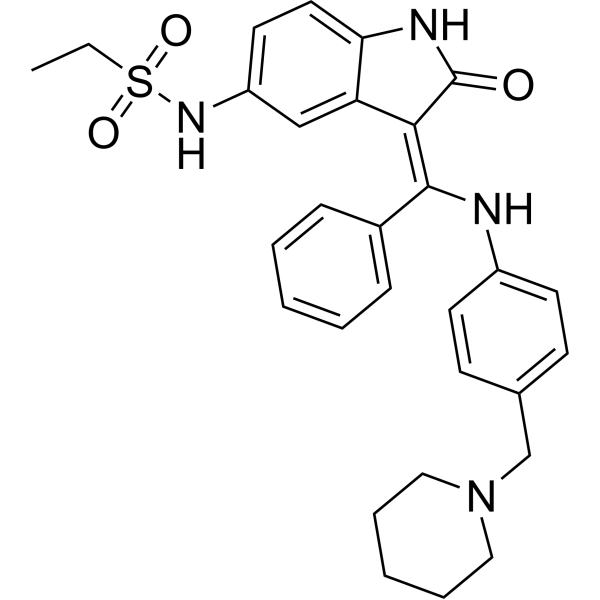
Hesperadin
Maximum Cited Publications
12 Publications Verification
|
Aurora Kinase
Autophagy
Influenza Virus
Parasite
|
Cancer
|
|
Hesperadin is an ATP competitive indolinone inhibitor of Aurora A and B. Hesperadin inhibits Aurora B with an IC50 of 250 nM. Hesperadin inhibits the growth of Trypanosoma brucei by blocking nuclear division and cytokinesis. Hesperadin also is a broad-spectrum influenza antiviral .
|
-
-
- HY-103056
-
|
IMP-366
|
DNA/RNA Synthesis
Parasite
|
Infection
|
|
DDD85646 (IMP-366) is an orally active of trypanosoma brucei N-myristoyltransferase (TbNMT IC50=2 nM; hNMT IC50=4 nM). The enzyme N-myristoyltransferase (NMT) is a potential agent target for human African trypanosomiasis .
|
-
-
- HY-13801
-
|
HOE 239
|
Parasite
|
Infection
|
|
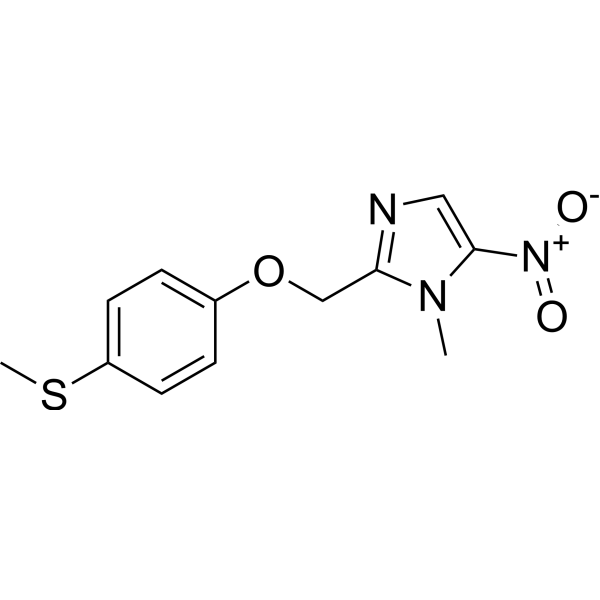
Fexinidazole (HOE 239) is an orally active, potent nitroimidazole antitrypanosomal agent. Fexinidazole shows trypanocidal activity against T. brucei subspecies and strains with IC50s of 0.7-3.3 μM (0.2-0.9 μg/ml). Fexinidazol has the potential for human sleeping sickness (HAT) caused by infection with T. brucei .
|
-
-
- HY-128170
-
|
|
Parasite
|
Infection
|
|
Ebsulfur is a benzisothiazolone cytocidal inhibitor targeting the trypanothione reductase (TryR) of Trypanosoma brucei, with IC50 values of 61-293 nM for Trypanosoma brucei. Ebsulfur can be used for the research of African trypanosomiasis .
|
-
-
- HY-19910
-
|
SCYX-7158; AN5568
|
Parasite
|
Infection
|
|
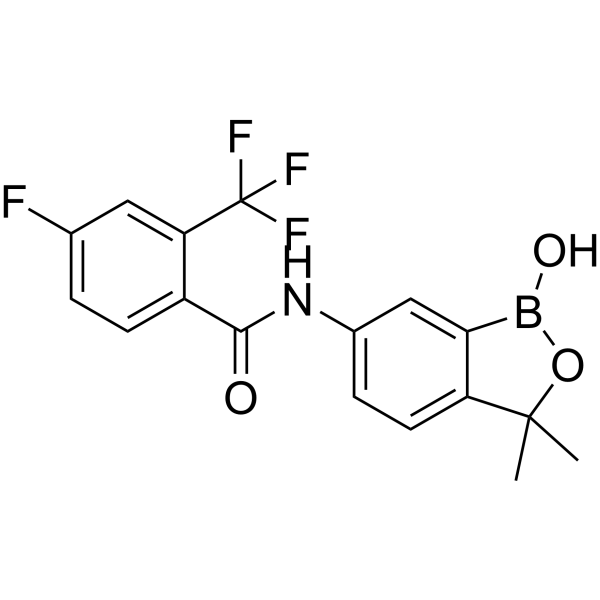
Acoziborole (SCYX-7158) is an effective, safe and orally active antiprotozoal agent for the research of human african trypanosomiasis (HAT). In the T. b. brucei S427 strain, the MIC value for SCYX-7158 is 0.6 μg/mL .
|
-
-
- HY-N0389
-
|
|
COX
Parasite
|
Inflammation/Immunology
|
|
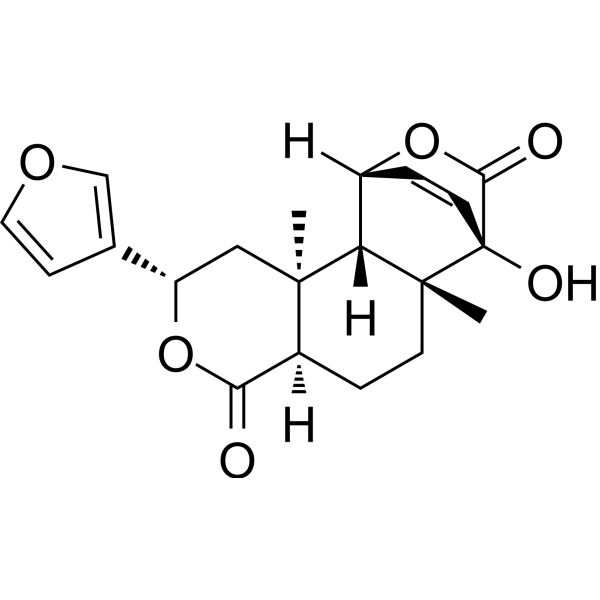
Columbin is an orally active diterpenoid furanolactone from Calumbae radix, has anti-inflammatory and anti-trypanosomal effects. Columbin selectively inhibits COX-2 (EC50=53.1 μM) over COX-1 (EC50=327 μM) .
|
-
-
- HY-N2230
-
|
|
Cholinesterase (ChE)
Parasite
Glycosidase
|
Infection
Neurological Disease
|
|
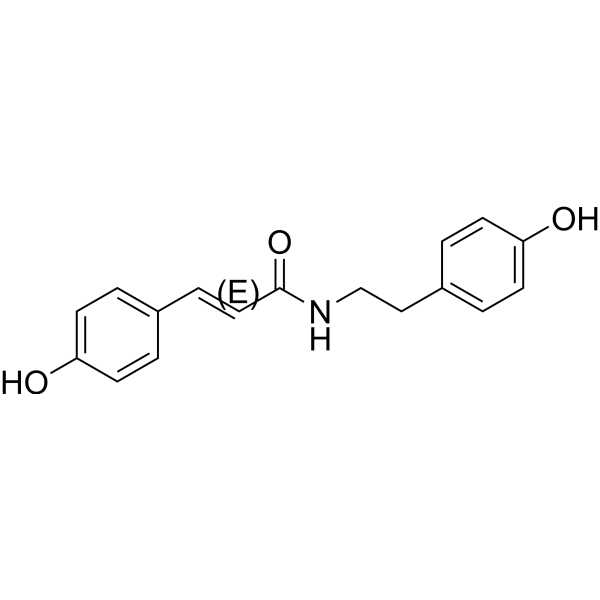
N-p-trans-Coumaroyltyramine is a natural phenolic amide compound and an inhibitor of AChE (IC50: 122 μM) and α-glucosidase (IC50: 2.7 μM). N-p-trans-Coumaroyltyramine also has anti-trypanosomal activity, with an IC50 of 13.3 µM against T. brucei rhodesiense. N-p-trans-Coumaroyltyramine can be used in the research of diseases such as Alzheimer's disease .
|
-
-
- HY-153021
-
|
|
Parasite
|
Infection
|
|
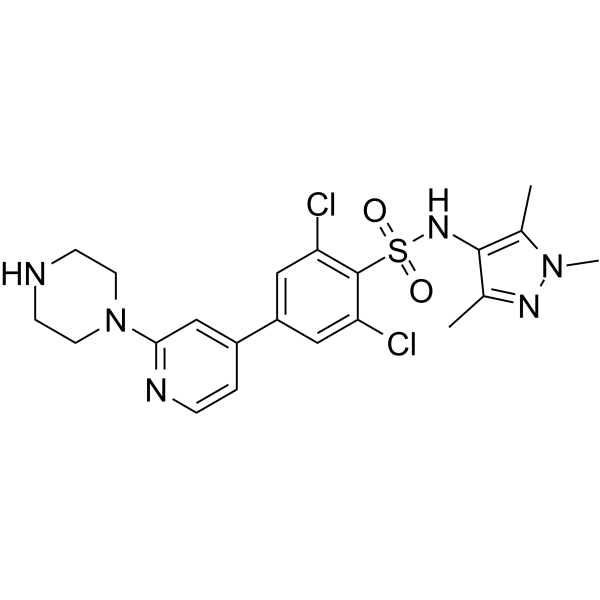
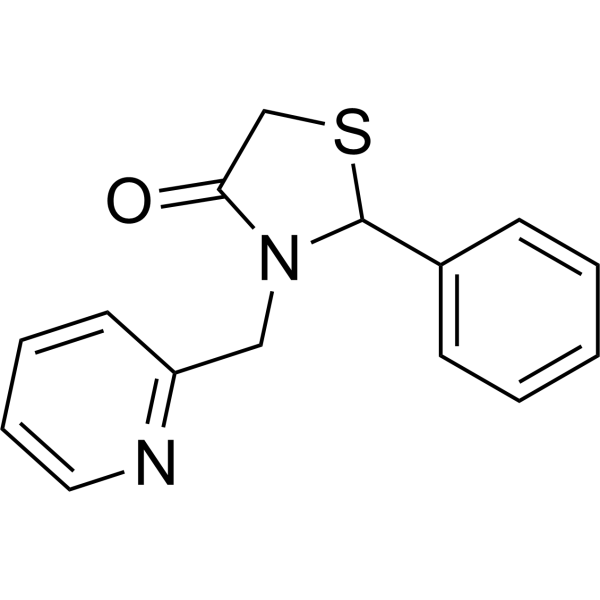
NMT-IN-1 is a Trypanosoma brucei N-myristoyltransferase (TbNMT) inhibitor, with an IC50 of 31 μM against TbNMT and an IC50 of 66 μM against hNMT. As a thiazolidinone hit compound identified via virtual screening, NMT-IN-1 exerts enzymatic inhibitory effects by binding to the active site of TbNMT. NMT-IN-1 adopts a binding mode distinct from that of pyrazole sulfonamide inhibitors and can inhibit the myristoyl transfer reaction catalyzed by TbNMT. NMT-IN-1 is mainly used in the research of anti-parasitic lead compounds for human African trypanosomiasis (African sleeping sickness). It provides a structural basis for the subsequent optimization of TbNMT inhibitors with high activity, high selectivity and blood-brain barrier permeability .
|
-
-
- HY-N7266
-
|
|
Cytochrome P450
Parasite
|
Infection
Cancer
|
|
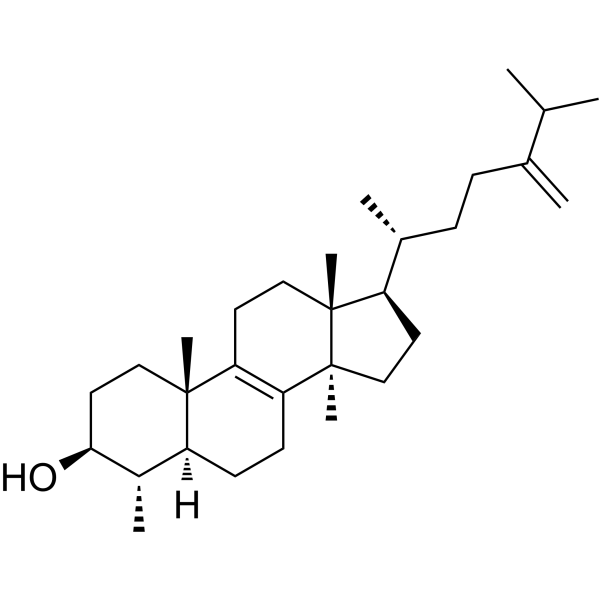
Obtusifoliol is a specific CYP51 inhibitor, Obtusifoliol shows the affinity with Kd values of 1.2 μM and 1.4 μM for Trypanosoma brucei (TB) and human CYP51, respectively .
|
-
-
- HY-136637
-
|
|
Phosphodiesterase (PDE)
Parasite
|
Infection
|
|
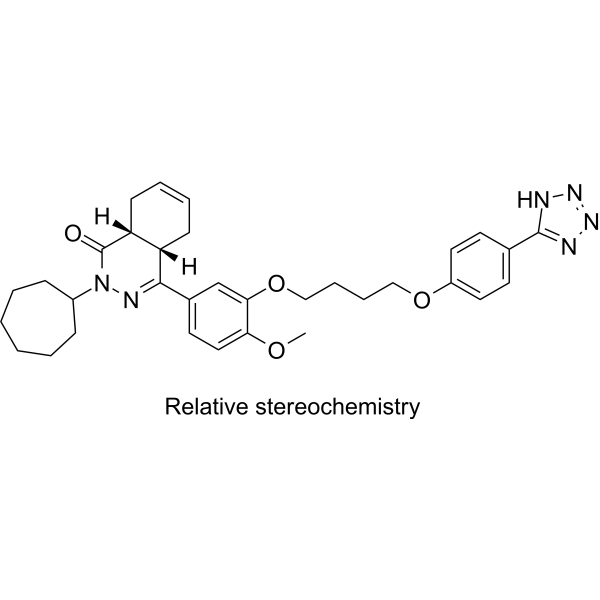
NPD-001 is a potent Trypanosoma brucei phosphodiesterases 1/2 (TbrPDEB1/2) inhibitor, with IC50 values of 4 and 3 nM, respectively. NPD-001 also inhibits hPDE4. NPD-001 can increase cAMP levels in parasites, prevent cytokinesis, and cause the parasites to form multinucleated, multi-flagellated cells that eventually lyse. NPD-001 can be used for the research of infection .
|
-
-
- HY-101015A
-
-
-
- HY-12607
-
|
|
Parasite
|
Infection
|
|
ML251, a potent nanomolar T. brucei and T. cruzi phosphofructokinase (PFK) inhibitor, inhibits T. brucei PFK (IC50=0.37 μM) and T. cruzi PFK (IC50=0.13 μM). ML251 can be used for the research of parasite .
|
-
-
- HY-128268
-
|
|
Parasite
|
Infection
|
|
PFK-IN-1 (compound 1) is a phosphofructokinase (PFK) inhibitor, with IC50 values of 0.41 and 0.23 μM against T.brucei and T.cruzi PFK, respectively, and an ED50 of 15.18 μg/mL for T.brucei. The half-lives of PFK-IN-1 in rat and mouse liver microsomes are 9.7 and 408 minutes, respectively .
|
-
-
- HY-162066
-
|
|
Parasite
|
Infection
|
|
DNDI-6174 is an orally active Leishmania cytochrome b (Qi site of cytochrome bc1 complex/complex III) inhibitor. DNDI-6174 binds to the Qi site of Leishmania cytochrome b, inhibits cytochrome bc1 complex activity in the parasite's electron transport chain across promastigote and axenic amastigote stages. DNDI-6174 reduces parasite burden in rodent models, inhibits growth of various Leishmania species, drug-resistant clinical isolates, and Trypanosoma cruzi, with marginal activity against Trypanosoma brucei. DNDI-6174 can be used for the research of visceral leishmaniasis, cutaneous leishmaniasis .
|
-
-
- HY-125731R
-
|
|
Reference Standards
Endogenous Metabolite
STAT
Autophagy
|
Inflammation/Immunology
Cancer
|
|
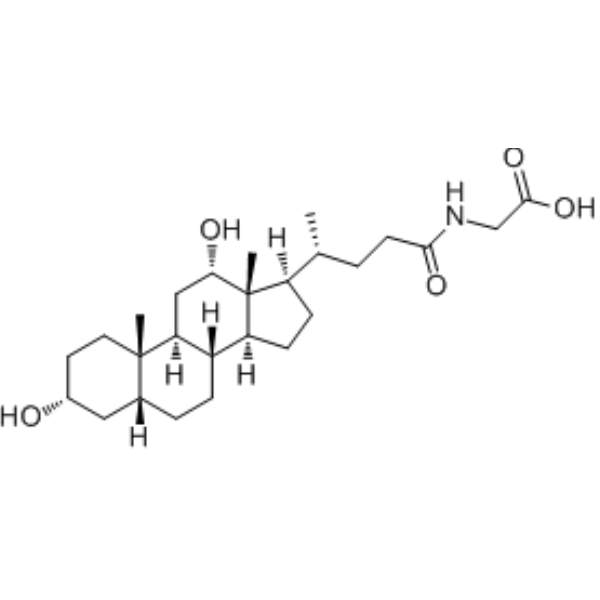
Glycodeoxycholic Acid (Standard) is the analytical standard of Glycodeoxycholic Acid. This product is intended for research and analytical applications. Glycodeoxycholic Acid is a natural product found in Streptomyces nigricans, Trypanosoma brucei and C. elegans. Glycodeoxycholic Acid induces hepatocyte necrosis and autophagy in patients with obstructive cholestasis .
|
-
-
- HY-W052512
-
|
|
Parasite
|
Infection
|
|
Antitrypanosomal agent 1 is a potent and selective trypanothione reductase (TR) inhibitor with an IC50 of 3.3 μM. Antitrypanosomal agent 1 inhibits glutathione reductase (GR) (IC50=64.8 μM) and T. brucei (EC50=1 μM). Antitrypanosomal agent 1 has anti-trypanosomal activity .
|
-
-
- HY-111759
-
|
7-CN-7-C-Ino
|
PKA
Parasite
|
Infection
|
|
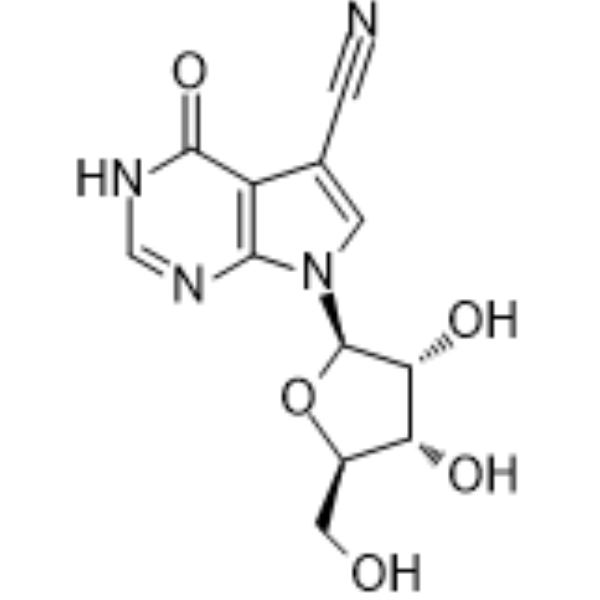
Jaspamycin (7-CN-7-C-Ino) is a potent activator of PKA, binding to the R site (PKAR), with an EC50 of 6.5 nM and Kd of 8 nM in Trypanosoma brucei. Jaspamycin (7-CN-7-C-Ino) does not bind with purified human PKARIα. Anti-parasite activity .
|
-
-
- HY-108938
-
|
|
Cytochrome P450
Fungal
Parasite
|
Infection
|
|
SDZ285428 is a CYP51 inhibitor. SDZ285428 inhibits Trypanosoma cruzi (TC) CYP51 with I/E2 <1 (5 min) and I/E2=9 (1 h). SDZ285428 inhibits Trypanosoma brucei (TB) CYP51 with I/E2 <1 (5 min) and I/E2=35 (1 h) .
|
-
-
- HY-135562
-
|
|
Parasite
Antibiotic
|
Infection
Cancer
|
|
Ascofuranone is an orally active inhibitor of Trypanosoma brucei brucei (TAO) with a Ki value of 2.38 nM. Ascofuranone inhibits IGF-1-induced cancer cell migration, invasion, motility and actin cytoskeleton formation, and exerts anti-tumor effects. Ascofuranone can be used in research related to tumor metastasis, African trypanosomiasis, bacterial infections, lung cancer and hepatocellular carcinoma .
|
-
-
- HY-155655
-
|
|
Parasite
|
Infection
|
|
JC-229 is a TbRPA1 inhibitor. JC-229 targets RPA1 in Trypanosoma brucei. JC-229 can be used for the research of Human African Trypanosomiasis (HAT) .
|
-
-
- HY-W043676
-
|
|
Parasite
Drug Intermediate
|
Infection
|
|
Dibenzosuberol (Compound 2) is a key intermediate in the synthesis of compounds associated with inhibiting Trypanosoma thiol reductase (TryR). Dibenzosuberol also shows inhibition of T. brucei with an EC50 value of 51.3 μM. Dibenzosuberol is also an impurity of Amitriptyline (HY-B0527) .
|
-
-
- HY-169932
-
|
|
Apolipoprotein
|
Infection
|
|
APOL1-IN-2 (Compound 467) is the inhibitor for Apolipoprotein 1 (APOL1). APOL1-IN-2 reduces the APOL1 G2/G1 induced cell death in HEK293 with EC50 of 4.74 nM and 14.3 nM. APOL1-IN-2 reduces the APOL1 G2/G1/G0 induced death of trypanosomes with EC50 of 2.24, 6.03 and 3.72 nM, respectively .
|
-
-
- HY-N7634
-
|
|
Farnesyl Transferase
Parasite
|
Infection
Cancer
|
|
Tectol, isolated from Lippia sidoides, exhibits significant activity against human leukemia cell lines HL60 and CEM . Tectol is a farnesyltransferase (FTase) inhibitor with IC50s of 2.09 and 1.73 μM for human and T. brucei FTase, respectively. Tectol inhibits drug-resistant strain of P. falciparum (FcB1) with an IC50 of 3.44 μM .
|
-
-
- HY-W973644
-
|
|
Mitochondrial Metabolism
Parasite
|
Infection
|
|
LY-266500 is a succinyl CoA synthetase (SCS) specific inhibitor. LY-266500 has inhibitory effects on various parasites, such as Trypanosoma brucei brucei (IC50 =0.6 μM) and Leishmania donovani (IC50 =2.86 μM). LY-266500 can be used for research on parasitic infections .
|
-
-
- HY-179690
-
|
|
Parasite
Adenosine Kinase
|
Infection
|
|
Antiparasitic agent-30 is a potent adenosine kinase TbrAK modulator and antitrypanosomal agent. Antiparasitic agent-30 exhibits significant inhibitory activity against Trypanosoma brucei rhodesiense, while enhancing the activity of recombinant TbrAK(EC50=38 nM, Ka=75 nM-497 nM). Antiparasitic agent-30 exerts its pharmacological effects by eliminating intrinsic substrate inhibition and hyperactivating TbrAK in Trypanosoma brucei rhodesiense. Antiparasitic agent-30 serves as a valuable tool molecule for studying acute African human trypanosomiasis (sleeping sickness) .
|
-
-
- HY-155531
-
|
|
Biochemical Assay Reagents
|
Infection
|
|
PEX5-PEX14 PPI-IN-2 (compound 12) is a PEX14-PEX5 protein-protein interaction (PPI) inhibitor. PEX5-PEX14 PPI-IN-2 inhibits PEX14-PEX5 PPI with EC50 values of 5 and 17 µM in T. b. brucei and HepG2 cells, respectively. PEX5-PEX14 PPI-IN-2 can be used in the research of diseases related to trypanosome infection .
|
-
-
- HY-155732
-
|
|
Parasite
|
Infection
|
|
NPD-2975 (compound 30) is an orally active antitrypanosomal agent, against Human African Trypanosomiasis (HAT). NPD-2975 has low toxicity potential against human MRC-5 lung fibroblasts, and acute mouse model of T. b. brucei infection. NPD-2975 shows acceptable metabolic stability, inhibits T. b. brucei with IC500 of 70 nM in vitro. NPD-2975 also inhibits CYP enzymes resulted in IC50 values of 0.16 and 0.42 μM against CYP1A2 and CYP2C19, respectively .
|
-
-
- HY-Q40175
-
|
|
Parasite
|
Infection
|
|
Antitrypanosomal agent 9 (compound 1) is a potent antitrypanosomal agent. Antitrypanosomal agent 9 shows inhibitory activity against T. b. brucei, with an IC50 of 1.15 μM. Antitrypanosomal agent 9 can be used for human African trypanosomiasis (HAT) research .
|
-
-
- HY-W009689
-
|
|
Parasite
|
Infection
|
|
TbPTR1 inhibitor 2 (Compound 3a) is a PTR1 enzyme inhibitor, with IC50s of 34.2 and 32.9 μM for TbPTR1 and LmPTR1. TbPTR1 inhibitor 2 has anti-parasitic activity against T. brucei (IC50: 34.2 μM) .
|
-
-
- HY-16121
-
|
|
Cathepsin
|
Others
|
|
CAA-0225 is a tissue protease L inhibitor that inhibits rat liver tissue protease L with a IC50 value of 1.9 nM. CAA-0225 can participate in the degradation of autophagosome membrane markers LC3-II and GABARAP (HY-P72639), improve cardiac function in mice with reperfusion injury, and kill and eliminate Trypanosoma brucei parasites [1][2][3].
|
-
-
- HY-155530
-
|
|
Bacterial
|
Infection
|
|
PEX5-PEX14 PPI-IN-1 (Compound 8) is a PEX14-PEX5 PPI inhibitor. PEX5-PEX14 PPI-IN-1 disrupts the PEX5-TbPEX14 PPI with a Ki of 53 μM. PEX5-PEX14 PPI-IN-1 inhibits the bloodstream form of T. b. brucei (EC50: 5 μM) .
|
-
-
- HY-118996A
-
|
|
Parasite
|
Infection
|
|
Isometamidium chloride is an antiprotozoal agent, that exhibits activity against trypanosome. Isometamidium chloride can be used in research of african sleeping sickness .
|
-
-
- HY-101015
-
|
|
Phospholipase
Apoptosis
|
Inflammation/Immunology
|
|
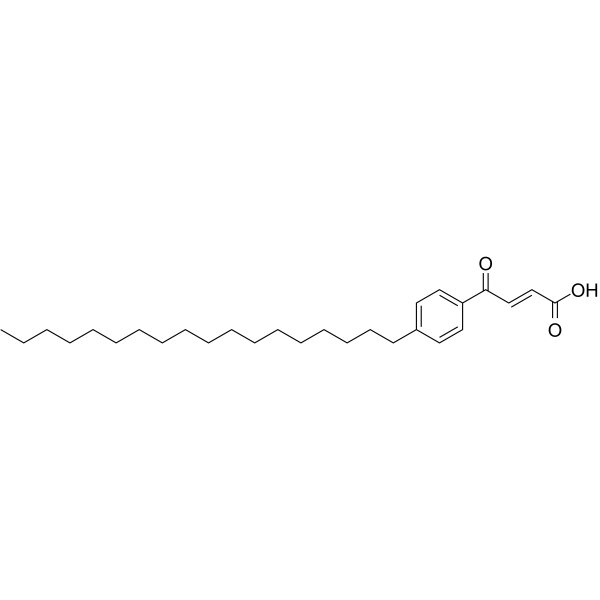
(2E)-OBAA is a potent phospholipase A2 (PLA2) inhibitor, with an IC50 of 70 nM. (2E)-OBAA induces apoptosis of HUVEC cells. (2E)-OBAA blocks Melittin-induced Ca 2+ influx in Trypanosoma brucei, with an IC50 of 0.4 μM .
|
-
-
- HY-N0389R
-
|
|
Reference Standards
COX
Parasite
|
Inflammation/Immunology
|
|
Columbin (Standard) is the analytical standard of Columbin. This product is intended for research and analytical applications. Columbin is an orally active diterpenoid furanolactone from Calumbae radix, has anti-inflammatory and anti-trypanosomal effects. Columbin selectively inhibits COX-2 (EC50=53.1 μM) over COX-1 (EC50=327 μM) .
|
-
-
- HY-136200
-
|
|
Parasite
|
Infection
|
|
Antitrypanosomal agent 2 is a potent and selective trypanosoma brucei inhibitor .
|
-
-
- HY-116045
-
|
|
Parasite
|
Cancer
|
|
PDEB1-IN-1 (Compound 12b) is the derivative of Cilomilast (HY-10790), and serves as an inhibitor for TryPanosoma Brucei PDEB1 (TbrPDEB1) with an IC50 of 0.95 μM. PDEB1-IN-1 inhibits the proliferation of T. Brucei with an EC50 of 26 μM .
|
-
-
- HY-161237
-
|
|
Parasite
|
Infection
|
|
Antitrypanosomal agent 20 (Compd 27) is an anti-trypanosomal, with an IC50 of 0.75 μM for T. b. brucei .
|
-
-
- HY-147933
-
|
|
Parasite
|
Infection
|
|
Antitrypanosomal agent 8 (compound 3b) has potent antitrypanosomal activity against Trypanosoma brucei with an IC50 value of 0.79 μM and exhibits certain cytotoxicity in L6 cells (IC50=80.95 μM) .
|
-
-
- HY-147940
-
|
|
Parasite
|
Infection
|
|
TbPTR1 inhibitor 1 (compound 5d) is a potent kinetoplastid pteridine reductase 1 (PTR1) inhibitor with an IC50<0.1 nM for TbPTR1. TbPTR1 inhibitor 1 has inhibitory activity against Trypanosoma brucei (EC50=0.66 μM) .
|
-
-
- HY-N16437
-
|
|
Parasite
|
Infection
|
|
Panowamycin A is an isochroman compound that can be produced by Streptomyces sp. K07-0010. Panowamycin A exhibits antitrypanosomal activity against the Trypanosoma brucei brucei GUTat 3.1 strain (IC50: 0.40 μg/mL). Panowamycin A shows weak cytotoxicity towards human fetal lung fibroblast MRC-5 cells (IC50: 2.95 μg/mL). Panowamycin A can be used for research in the field of antitrypanosomal studies .
|
-
-
- HY-170363
-
|
|
Proteasome
Parasite
|
Infection
|
|
Proteasome-IN-6 (Compound J-80) inhibits the β5 catalytic subunit of the Trypanosoma brucei 20S proteasome, inibits T. b. brucei, T. b. gambiense and T. b. rhodesiense with EC50s of 157 nM, 220 nM and 156 nM, respectively. Proteasome-IN-6 exhibits antitrypanosomal activity in mouse model .
|
-
-
- HY-147549
-
|
|
Parasite
|
Infection
|
|
Antitrypanosomal agent 6 (compound 18a) is a potent and antitrypanosomal agent with favorable ADME properties. Antitrypanosomal agent 6 is > 2-fold more potent against Trypanosoma brucei (T. brucei) than Nifurtimox, with an IC50 value of 0.47 μM. Antitrypanosomal agent 6 has strong interaction to DNA and can bind with high selectivity to AT-rich DNA .
|
-
-
- HY-147550
-
|
|
Parasite
|
Infection
|
|
Antitrypanosomal agent 7 (compound 18c) is a potent and antitrypanosomal agent with favorable ADME properties. Antitrypanosomal agent 7 is > 2-fold more potent against Trypanosoma brucei (T. brucei) than Nifurtimox, with an IC50 value of 0.71 μM. Antitrypanosomal agent 7 has strong interaction to DNA and can bind with high selectivity to AT-rich DNA .
|
-
-
- HY-175517
-
|
|
Parasite
|
Infection
|
|
PEX5-PEX14 PPI-IN-3 (Compound 7) is an inhibitor of the PEX5-PEX14 protein-protein interaction (PPI) with an EC50 of 95 μM. PEX5-PEX14 PPI-IN-3 has an EC50 of 7.2 μM against Trypanosoma brucei (T. brucei). PEX5-PEX14 PPI-IN-3 exhibits low cytotoxicity towards HepG2 cells and possesses antiparasitic activity .
|
-
-
- HY-168538
-
|
|
Paraptosis
|
Infection
|
|
Antitrypanosomal agent 21 (Compound C-1) is a trypanosoma brucei inhibitor. Antitrypanosomal agent 21 decreases the level of D6XM23 in parasite lysates .
|
-
-
- HY-146071
-
|
|
Parasite
|
Infection
|
|
Antitrypanosomal agent 5 (Compound 25)is a selective anti-trypanosomal agent with IC50s of 1 nM and 483.3 µM against T. brucei cell growth and HEK293 cells growth , respectively .
|
-
-
- HY-155024
-
|
|
Parasite
|
Infection
|
|
HAT-IN-8 (Compound 38) is a BBB-penetrable T. brucei inhibitor (EC50: 0.18 μM). HAT-IN-8 can be used for the research of Human African trypanosomiasis .
|
-
-
- HY-111906
-
|
|
Cytochrome P450
Parasite
|
Infection
|
|
SCYX-6759 is an orally active, blood-brain barrier permeable anti-T. brucei agent. SCYX-6759 inhibits cytochrome P450 (IC50s: 30.3, 30.6, 47.4 μM for 2D6, 2C9, 2C19, respectively.) SCYX-6759 exhibits potent activity against T. b. brucei 427, T. b. rhodesiense STIB900, and T. b. gambiense STIB930, with IC50s of 0.07, 0.038 and 0.030 μg/mL, respectively .
|
-
-
- HY-149986
-
|
|
Parasite
|
Infection
|
|
Antitrypanosomal agent 13 (compound 4b) is a potent antitrypanosomal agent. Antitrypanosomal agent 13 has trypanocidal and cytotoxic activity with GI50 values of 0.18 and 8.4 μM for T. brucei and HL-60, respectively .
|
-
- HY-125632
-
|
|
Parasite
|
Infection
|
|
Ro 19-9638 is the major metabolite of Ro 15-0216. Ro 19-9638 exhibits antiparasitic efficacy against Trypanosoma brucei rhodesiense with an IC50 of 0.0341 µg/mL .
|
-
- HY-162656
-
|
|
Dihydrofolate reductase (DHFR)
|
Infection
|
|
DHFR-IN-19 (Compound 2g) is a selective inhibitor for TbDHFR with Ki of 9 nM. DHFR-IN-19 exhibits antiparasitic activity against Trypanosoma brucei with an EC50 of 14.5 μM .
|
-
- HY-155025
-
|
|
Parasite
GSK-3
|
Infection
|
|
Antitrypanosomal agent 14 (Compound 1) is a T. brucei inhibitor (EC50: 0.47 μM). Antitrypanosomal agent 14 inhibits TbGSK3 with an IC50 of 12 μM. Antitrypanosomal agent 14 can be used for the research of Human African trypanosomiasis .
|
-
- HY-N11550
-
|
|
Parasite
|
Infection
|
|
Salviandulin E is a diterpenoid compound that can be isolated from Salvia leucantha CAV.. Salviandulin E shows antitrypanosomal activity against T. b. brucei GUTat 3.1 parasites with an IC50 value of 0.72 µg/mL .
|
-
- HY-144296
-
|
|
Parasite
|
Infection
|
|
Purine phosphoribosyltransferase-IN-2 is a potent inhibitor of the Plasmodium falciparum ((Pf)), Plasmodium vivax ((Pv)) and Trypanosoma brucei ((Tbr)) 6-oxopurine phosphoribosyltransferase (PRT), with Kis of 30, 20 and 2 nM, respectively .
|
-
- HY-155281
-
|
|
Parasite
|
Infection
|
|
Antiparasitic agent-18 (compound 3a) is active and selective against the T. brucei (EC50=0.4 μM), T. cruzi (EC50=0.21 μM), and L. donovani (EC50=0.26 μM). Antiparasitic agent-18 has potent antiprotozoal activity .
|
-
- HY-163003
-
|
|
Parasite
|
Infection
|
|
Antitrypanosomal agent 19 (compound 10) is an orally available antitrypanosomal agent. Antitrypanosomal agent 19 effectively inhibits the growth of trypanosomatids T. b. brucei, T. b. gambiense and T. b. rhodesiense, mitigating the Human trypanosomiasis (HAT)-induced acute infectious toxicity in mice .
|
-
- HY-158379
-
|
|
Parasite
|
Infection
|
|
Antiparasitic agent-22 (Compound 24) is a pan antiparasitic agent, that inhibits T. Brucei, L. infantum, L. tropica promastigotes (IC50 of 2.41, 5.95, 8.98 μM), L. infantum amastigotes (IC50 of 8.18 μM) and P. falciparum W2 strain (IC50 of 0.155 μM). Antiparasitic agent-22 exhibits low cytotoxicity against THP1, with CC50 of 64.16 μM .
|
-
- HY-151195
-
|
|
Proteasome
Parasite
|
Infection
|
|
20S Proteasome-IN-4 (Compound 7) is a brain-penetrant, parasite-selective, orally active 20S proteasome inhibitor with an IC50 of 6.3 nM against T. b. brucei 20S proteasome. 20S Proteasome-IN-4 can be used for the research of human African trypanosomiasis (HAT) .
|
-
- HY-146049
-
|
|
Parasite
|
Infection
|
|
Antitrypanosomal agent 4 (compound 19) is a potent and blood-brain barrier permeable antitrypanosomal agent. Antitrypanosomal agent 4 has good activity against Trypanosoma cruzi (T. cruzi) and Trypanosoma brucei brucei (T. b. brucei) with IC50s of 1.2 μM and 70 nM, respectively . Antitrypanosomal agent 4 is a click chemistry reagent, it contains an Alkyne group and can undergo copper-catalyzed azide-alkyne cycloaddition (CuAAc) with molecules containing Azide groups.
|
-
- HY-119938
-
|
|
Bacterial
|
Infection
|
|
Tuberculosis inhibitor 1 is a potent and non-cytotoxic trypanosoma brucei growth inhibitor with an EC50 of 5 nM .
|
-
- HY-N3247
-
|
|
Parasite
|
Others
|
|
Monomethyl kolavate is a Trypanosoma brucei GAPDH enzyme (TbGAPDH) inhibitor with theIC50 value of 2 µM .
|
-
- HY-13801R
-
|
HOE 239 (Standard)
|
Reference Standards
Parasite
|
Infection
|
|
Fexinidazole (Standard) is the analytical standard of Fexinidazole. This product is intended for research and analytical applications. Fexinidazole (HOE 239) is an orally active, potent nitroimidazole antitrypanosomal agent. Fexinidazole shows trypanocidal activity against T. brucei subspecies and strains with IC50s of 0.7-3.3 μM (0.2-0.9 μg/ml). Fexinidazol has the potential for human sleeping sickness (HAT) caused by infection with T. brucei .
|
-
- HY-118580
-
|
|
Fungal
Parasite
|
Infection
|
|
RO-09-4609 exhibits antimicrobial activity, that inhibits Candida albicans, Trypanosoma brucei and Plasmodium vivax through inhibition of N-myristoyl transferase .
|
-
- HY-126250
-
|
|
Phosphodiesterase (PDE)
Parasite
|
Infection
Inflammation/Immunology
|
|
NPD1335 is a Trypanosoma brucei phosphodiesterase B1 (TbrPDEB1) inhibitor with submicromolar activities against T. brucei parasites. NPD1335 displays a greatly improved cytotoxicity profile. NPD1335 increases intracellular cAMP levels and results in the distortion of the cell cycle and cell death . NPD-1335 is a click chemistry reagent, it contains an Alkyne group and can undergo copper-catalyzed azide-alkyne cycloaddition (CuAAc) with molecules containing Azide groups.
|
-
- HY-173050
-
|
|
Parasite
|
Infection
|
|
NEU-1017 is a broad-spectrum antiparasitic agent. NEU-1017 inhibits T. brucei, L. major, and P. falciparum with EC50 values of 210 nM, 240 nM, and 3 nM, respectively .
X
|
-
- HY-150506
-
|
|
Parasite
|
Infection
|
|
SPR7 (compound 7) is a potent and selective rhodesain inhibitor, with a Ki of 0.51 nM. SPR7 shows antiparasitic activity against T. b. brucei, with an EC50 of 1.65 μM .
|
-
- HY-169194
-
|
|
Parasite
|
Infection
|
|
Antimalarial agent 44 (Compound 3) is an antimalarial agent against parasite. Antimalarial agent 44 has a good permeability across MDCK-MDR1 cell monolayers and a high clearance by mouse liver microsomes .
|
-
- HY-157028
-
|
|
Others
|
Infection
|
|
Antiparasitic agent-19 (compound 40) is a compound with broad-spectrum antiparasitic activity. Antiparasitic agent-19 has minimal toxicity against Trypanosoma brucei, Leishmania Infantum, and Trypanosoma cruzi .
|
-
- HY-172297
-
-
- HY-W653999
-
-
- HY-173051
-
|
|
Parasite
|
Infection
|
|
Antiparasitic agent-24 (Compound 14a) is an antiparasitic agent, with EC50s of 0.005 μM (L. maj), 0.069 μM (L. don), 0.82 μM (T. brucei), 4.1 μM (T. cruzi) respectively .
|
-
- HY-125084
-
|
|
Parasite
|
Infection
|
|
NEU617 is an anti-parasite agent. NEU617 inhibits the proliferation for the HAT (human African trypanosomiasis) pathogen (EC50: 42 nM for Trypanosoma brucei, 1.8 μM for T. cruzi). NEU617 is a derivative of Lapatinib (HY-50898) .
|
-
- HY-155207
-
|
|
Parasite
|
Infection
|
|
Antileishmanial agent-23 (compound G1/9) is a potent and selective trypanothione reductase (TR) inhibitor, with an IC50 of 2.24 ± 0.52 μM. Antileishmanial agent-23 inhibits the growth of Leishmania, Trypanosoma cruzi, and Trypanosoma brucei .
|
-
- HY-144294
-
|
|
Parasite
|
Infection
|
|
Purine phosphoribosyltransferase-IN-1 (Compound (S,R)-48) is a potent inhibitor of the Plasmodium falciparum (Pf), P. vivax (Pv) and Trypanosoma brucei (Tbr) 6-oxopurine purine phosphoribosyltransferases (PRTs), with Ki values of 50, 20, and 2 nM, respectively .
|
-
- HY-149722
-
|
|
Parasite
|
Infection
|
|
Antiparasitic agent-20 (Compound 1p) is a parasite inhibitor with broad antiparasitic activity. Antiparasitic agent-20 has inhibitory effects on T. brucei and T. cruzi with EC50 values of 0.09 μM and 14.1 μM respectively .
|
-
- HY-145812
-
|
|
Parasite
|
Infection
|
|
CRK12-IN-1 is a potent CRK12 inhibitor. CRK12-IN-1 is extremely potent against T.b. brucei and rapidly cytocidal, as well as equally potent against T. congolense and T. vivax (EC50 of 1.3 and 18 nM, respectively) .
|
-
- HY-146489
-
|
|
Bacterial
Parasite
|
Infection
|
|
Anti-infective agent 3 (compound 3l) shows antiparasitic activity against P. falciparum and T. brucei rhodesiense, with IC50 values of 0.47 and 0.13 μM, respectively. Anti-infective agent 3 shows antimycobacterial activity against Mycobacterium smegmatis with a MIC of 4 μg/mL .
|
-
- HY-146488
-
|
|
Parasite
Bacterial
|
Infection
|
|
Anti-infective agent 2 (compound 3k) shows antiparasitic activity against P. falciparum and T. brucei rhodesiense, with IC50 values of 0.07 and 2.20 μM, respectively. Anti-infective agent 2 shows antimycobacterial activity against Mycobacterium smegmatis with a MIC of 32 μg/mL .
|
-
- HY-N1985
-
|
|
Parasite
|
Infection
|
|
Acetylastragaloside I is a glycoside that can be isolated from the roots of Astragalus baibutensis. Acetylastragaloside I is the first cycloartane-type triterpene with remarkable trypanocidal activity with IC50 values of 9.5 and 5.0 μg/mL for T. brucei rhodesiense and T. cruzi, respectively. Acetylastragaloside I can be used for the research of trypanosome infection .
|
-
- HY-175305
-
|
|
Parasite
|
Infection
|
|
DMU759 is a Lysyl-tRNA synthetase 1 (KRS1) inhibitor. DMU759 has potent anti-kinetoplastid activity against Trypanosoma cruzi , Trypanosoma brucei and Leishmania donovani. DMU759 significantly reduces parasitemia in acute Chagas disease mice model. DMU759 can be used for parasitic infection like Chagas disease research .
|
-
- HY-146487
-
|
|
Bacterial
Parasite
|
Infection
|
|
Anti-infective agent 1 (compound 3a) is a potent and selective antiprotozoal and antimycobacterial agent. Anti-infective agent 1 shows antiparasitic activity against P. falciparum and T. brucei rhodesiense, with IC50 values of 10.95 and 0.06 μM, respectively. Anti-infective agent 1 shows antimycobacterial activity against Mycobacterium smegmatis with a MIC of 8 μg/mL .
|
-
- HY-168619
-
|
|
Parasite
|
Infection
Cancer
|
|
DNA crosslinker 6 (compound 1) is an anti-kinetoplastid compound. DNA crosslinker 6 has a strong ability to bind AT-DNA and can inhibit the binding of AT-hook 1 to DNA (IC50=0.03 µM). In addition, DNA crosslinker 6 also has antiprotozoal activity, with an EC50 value of 0.83 µM for the inhibition of T. brucei .
|
-
- HY-129288
-
|
NEU-391
|
EGFR
Paraptosis
Mitosis
|
Infection
|
|
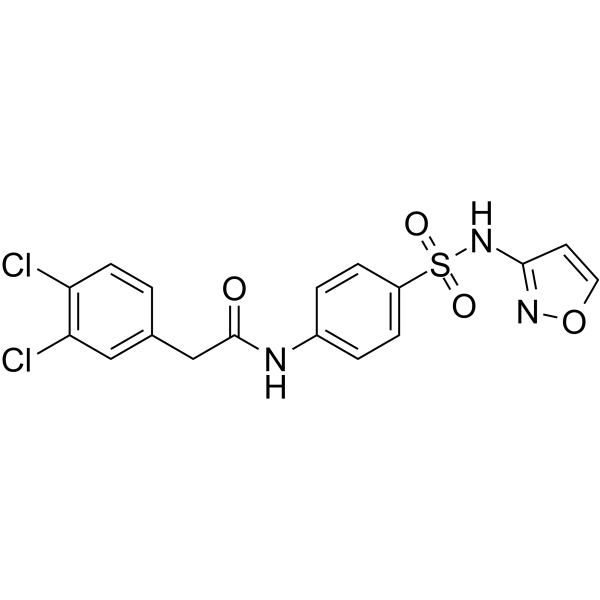
GW837016X (NEU-391) is an orally active ErbB-2 kinase covalent inhibitor. GW837016X also is a potent antitrypanosome agent. GW837016X inhibits mitosis and cytokinesis .
|
-
- HY-176253
-
|
|
Parasite
|
Infection
|
|
Antitrypanosomal agent 26 (Compound 1) is an allosteric trypanosome alternative oxidase (TAO) inhibitor. Antitrypanosomal agent 26 exhibits potent activity against African animal trypanosomes (e.g., Trypanosoma brucei, etc.) with an IC50 value of 1.3 nM for recombinant TAO. Antitrypanosomal agent 26 blocks the mitochondrial electron transport chain of trypanosomes and inhibits glucose-dependent respiration. Antitrypanosomal agent 26 is promising for research of African animal trypanosomiasis, such as bovine trypanosomiasis .
|
-
- HY-175979
-
|
|
Parasite
|
Infection
|
|
HAT-IN-9 (Compound 3F) is a selective proliferation inhibitor targeting Trypanosoma brucei. HAT-IN-9 inhibits the proliferation and division of Trypanosoma brucei. HAT-IN-9 is promising for research of African trypanosomiasis (HAT, i.e., sleeping sickness) .
|
-
- HY-N16437A
-
|
|
Parasite
|
Infection
|
|
Panowamycin B is an isochroman compound that can be produced by Streptomyces sp. K07-0010. Panowamycin B exhibits antitrypanosomal activity against the Trypanosoma brucei brucei GUTat 3.1 strain (IC50: 3.30 μg/mL). Panowamycin B shows weak cytotoxicity towards human fetal lung fibroblast MRC-5 cells (IC50: 13 μg/mL). Panowamycin B can be used for research in the field of antitrypanosomal studies .
|
-
- HY-N19754
-
|
|
Parasite
|
Infection
|
|
Cladospirone B is a secondary metabolite of the endophytic fungus Lasiodiplodia theobromae. Cladospirone B exhibits trypanocidal activity, with a MIC of 17.8 µM against Trypanosoma brucei. Cladospirone B can be used in the research of African human trypanosomiasis (sleeping sickness) .
|
-
- HY-118606
-
|
|
PAK
Parasite
|
Infection
Cancer
|
|
LDN-0044878 is a PAK3 inhibitor. LDN-0044878 inhibits the proliferation or induces the death of p53-deficient cells. LDN-0044878 exhibits moderate trypanocidal activity against Trypanosoma brucei, but does not directly inhibit the core target Rhodesain. LDN-0044878 can be used in studies related to cervical adenocarcinoma and Trypanosoma brucei infection.
|
-
- HY-125188
-
|
|
Parasite
DNA/RNA Synthesis
AMPK
Clathrin
|
Infection
|
|
NEU-4438 is an antimalarial agent. NEU-4438 inhibits DNA synthesis, reduces AMPK-γ, and increases Clathrin heavy chain. NEU-4438 exhibits antiparasitic activity against Trypanosoma brucei. NEU-4438 reduces trypanosome tissue burden in a chronic HAT mouse model .
|
-
- HY-103056R
-
|
IMP-366 (Standard)
|
Reference Standards
DNA/RNA Synthesis
Parasite
|
Infection
|
|
DDD85646 (Standard) is the analytical standard of DDD85646 (HY-103056). This product is intended for research and analytical applications. DDD85646 (IMP-366) is an orally active of trypanosoma brucei N-myristoyltransferase (TbNMT IC50=2 nM; hNMT IC50=4 nM). The enzyme N-myristoyltransferase (NMT) is a potential agent target for human African trypanosomiasis .
|
-
- HY-W743767
-
|
MZR-P
|
IMPDH
Parasite
Drug Metabolite
|
Infection
Inflammation/Immunology
|
|
Mizoribine 5'-monophosphate (MZR-P) is the active metabolite of Mizoribine (HY-17470). Mizoribine 5'-monophosphate is an inhibitor of inosine-5'-monophosphate dehydrogenase (IMPDH), and its Ki values for IMPDH of Trypanosoma brucei, Bacillus subtilis and Oceanobacillus iheyensis are 3.3, 72 and 157 nM respectively. Mizoribine 5'-monophosphate can be used in anti-trypanosomiasis and immunosuppression research .
|
-
- HY-182443
-
|
|
Parasite
|
Infection
|
|
PEX5-PEX14 PPI-IN-4 is a potent PEX14-PEX5 PPI inhibitor, with EC50 values of 7.78 μM, 27.5 μM and 9.31 μM against the protein-protein interactions of TbPEX14-PEX5, TcPEX14-PEX5 and HsPEX14-PEX5, respectively. PEX5-PEX14 PPI-IN-4 exhibits trypanocidal activity against Trypanosoma brucei rhodesiense and Trypanosoma cruzi. PEX5-PEX14 PPI-IN-4 shows cytotoxic activity against mammalian cells. PEX5-PEX14 PPI-IN-4 can be used in the research of human African trypanosomiasis and Chagas disease .
|
-
- HY-183529
-
|
|
Parasite
CDK
GSK-3
|
Infection
|
|
Antitrypanosomal agent 31 is an antitrypanosoma agent with a pEC50 of 6.4. Antitrypanosomal agent 31 inhibits GSK-3β, CDK-2, and CDK-4 with pIC50s of 5.8, 6.9, and 7.1, respectively. Antitrypanosomal agent 31 can be used for the research of human african trypanosomiasis .
|
-
- HY-180452
-
|
|
Paraptosis
|
Infection
|
|
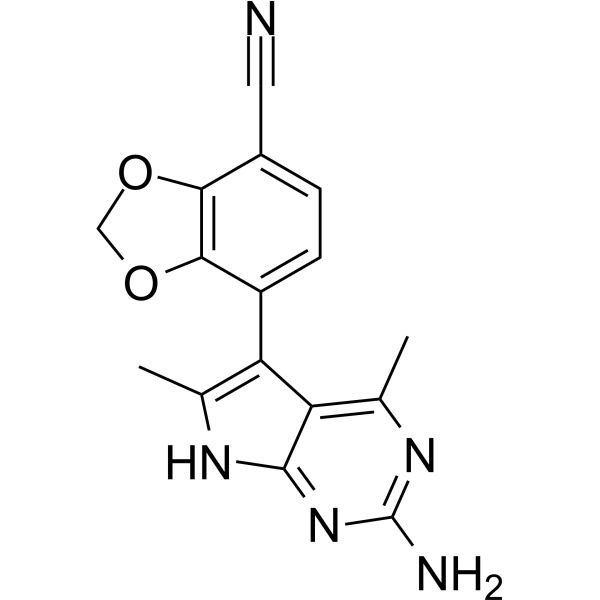
HAT-IN-10 (Compound 12a) is an anti-human African trypanosomiasis (HAT) agent, with an EC50 value of 0.23 μM for T. brucei. HAT-IN-10 can be used for research on HAT .
|
-
- HY-168732
-
|
|
Parasite
|
Infection
|
|
MCG-02 is the inhibitor for cruzain (CRZ) and cathepsin L-like protease (CATL), that inhibits the CRZ in Trypanosoma cruzi and CATL in Trypanosoma brucei with the IC50 0.2 μM and 0.02 μM .
|
-
- HY-175974
-
|
|
Parasite
|
Infection
|
|
Antitrypanosomal agent 27 (Compound 5c) is a quinazoline compound with antitrypanosomal activity. Antitrypanosomal agent 27 inhibits T.b. brucei with a GI50 of 31 nM. Antitrypanosomal agent 27 can be used for the research of human african trypanosomiasis .
|
-
- HY-P11367
-
|
|
Fluorescent Dye
Ser/Thr Protease
|
Infection
Metabolic Disease
|
|
Boc-Ala-Gly-Pro-Arg-AMC is a synthetic fluorescent substrate, widely used for the detection of protease activity. Boc-Ala-Gly-Pro-Arg-AMC can be used to detect the activity of serine proteases and the oligopeptide enzyme B of Trypanosoma brucei .
|
-
- HY-178326
-
|
|
Parasite
|
Infection
|
|
NEU-5123 is a human kinase inhibitor with potent inhibitory activity to several kinases. NEU-5123 is a Trypanosome proliferation inhibitor. NEU-5123 can be used for the research of infection .
|
-
- HY-180943
-
|
|
Parasite
Drug Derivative
Mitochondrial Metabolism
|
Infection
|
|
Antiparasitic agent-39 (Compound 14) is a selective antiparasitic agent and Deferasirox (HY-17359) derivative. Antiparasitic agent-39 reduces the mitochondrial membrane potential. Antiparasitic agent-39 shows antiparasitic activity against T. brucei, T. gambiense, L. Mexicana, T. gondii, B. divergens, P. falciparum with EC50s of 4.2 nM, 10.4 nM, 52.0 nM, 17.0 nM, 41.2 nM, 54.8 nM, respectively .
|
-
- HY-126489
-
|
|
Parasite
|
Infection
|
|
Tetromycin B is a cysteine protease inhibitor with Ki values of 0.62, 1.42, 32.5, and 1.59 μM for rhodesain, falcipain-2, cathepsin L, and cathepsin B, respectively. It inhibits the growth of T. brucei in vitro (IC50=30.87 μM). Tetromycin B is also cytotoxic to HEK293T kidney cells and J774.1 macrophages (IC50s=71.77 and 20.2 μM, respectively).
|
-
- HY-W391625
-
|
(Rac)-Epiligulyl oxide
|
Fungal
|
Cancer
|
|
(Rac)-Dehydrocostus Lactone ((Rac)-Epiligulyl oxide) is a natural product with antiparasitic activity. (Rac)-Dehydrocostus Lactone can significantly inhibit the growth of Trypanosoma brucei rhodesiense. (Rac)-Dehydrocostus Lactone exhibits a broad spectrum of biological effects, including anti-inflammatory, anticancer, antiviral and antimicrobial activities. (Rac)-Dehydrocostus Lactone also has antifungal, antioxidant, antidiabetic, antiulcer and antihelminthic effects. (Rac)-Dehydrocostus Lactone exhibits different IC(50) values in cytotoxicity tests and has a high selectivity index .
|
-
- HY-135190
-
|
α-cedrene
|
Environmental Pollutants
Bacterial
|
Infection
Metabolic Disease
Cancer
|
|
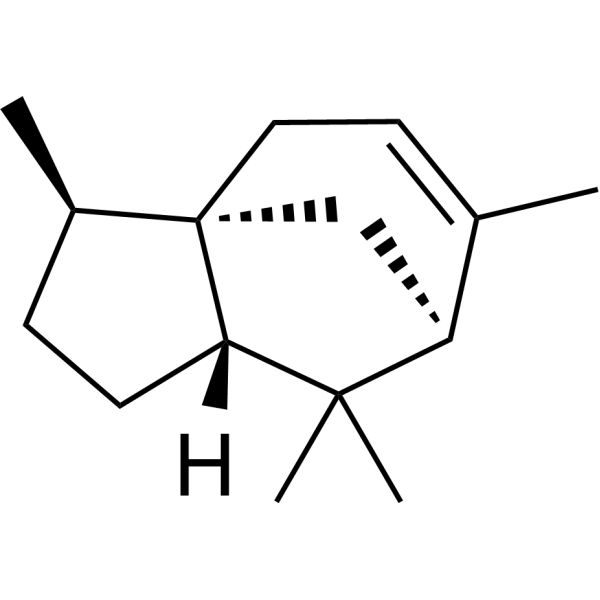
(-)-Cedrene (α-cedrene) is a major constituent that can be found in essential oils. (-)-Cedrene (α-cedrene) is a natural, orally active ligand of mouse olfactory receptor 23, which induces skeletal muscle hypertrophy in mice. (-)-Cedrene exhibits trypanocidal (Trypanosoma b. brucei) (IC50 = 4.07 μg/mL). (-)-Cedrene is antileukemic in vitro (IC50 = 22.2 μg/mL). (-)-Cedrene has antimicrobial activity against anaerobic bacteria and yeast. (-)-Cedrene exhibits anti-obesity activity .
|
-
- HY-147766
-
|
|
Parasite
|
Infection
|
|
Antileishmanial agent-10 (Compound 7h) is an antiprotozoal agent .
|
-
- HY-N8476
-
|
|
Parasite
|
Infection
|
|
Sahandol is a diterpene, that can be isolated from Salvia sahendica. Sahandol shows antiplasmodial, antitrypanosomal, and cytotoxic activities .
|
-
- HY-N2230R
-
|
|
Reference Standards
Cholinesterase (ChE)
Parasite
Glycosidase
|
Infection
Neurological Disease
|
|
N-p-trans-Coumaroyltyramine (Standard) is the analytical standard of N-p-trans-Coumaroyltyramine (HY-N2230). This product is intended for research and analytical applications. N-p-trans-Coumaroyltyramine is a natural phenolic amide compound and an inhibitor of AChE (IC50: 122 μM) and α-glucosidase (IC50: 2.7 μM). N-p-trans-Coumaroyltyramine also has anti-trypanosomal activity, with an IC50 of 13.3 µM against T. brucei rhodesiense. N-p-trans-Coumaroyltyramine can be used in the research of diseases such as Alzheimer's disease.
|
-
- HY-N6674
-
|
ECO-4601; TLN-4601; BU 4664L
|
Apoptosis
Bacterial
Cathepsin
Parasite
Endogenous Metabolite
|
Infection
Inflammation/Immunology
Cancer
|
|
Diazepinomicin (ECO-4601) is an anticancer and antibacterial agent. Diazepinomicin can be produced by a Micromonospora strain. Diazepinomicin induces Apoptosis. Diazepinomicin inhibits the proteases Rhodesain and Cathepsin L at an IC50 of 70-90 μM. Diazepinomicin possesses anti-inflammatory and anti-tumor activity. Diazepinomicin has demonstrated activity against hepatocellular carcinoma. Diazepinomicin shows antiparasitic activity against trypomastigote forms of Trypanosoma brucei with an IC50 of 13.5 μM. Diazepinomicin exhibits moderate antibacterial activity against specific Gram-positive bacteria, with an MIC of approximately 32 μg/mL .
|
-
- HY-185309
-
|
|
Topoisomerase
Parasite
|
Infection
|
|
Anti-Trypanosoma cruzi agent-9 is a topoisomerase II inhibitor. Anti-Trypanosoma cruzi agent-9 inhibits the growth of Trypanosoma cruzi and Leishmania donovani .
|
-
- HY-147765
-
|
|
Parasite
|
Infection
|
|
Anti-Trypanosoma cruzi agent-3 (Compound 7c) is an antiprotozoal agent .
|
-
- HY-135190R
-
|
α-cedrene (Standard)
|
Bacterial
Reference Standards
|
Infection
Metabolic Disease
Cancer
|
|
(-)-Cedrene (α-cedrene) (Standard) is the analytical standard of (-)-Cedrene. This product is intended for research and analytical applications. (-)-Cedrene is a major constituent that can be found in essential oils. (-)-Cedrene (α-cedrene) is a natural, orally active ligand of mouse olfactory receptor 23, which induces skeletal muscle hypertrophy in mice. (-)-Cedrene exhibits trypanocidal (Trypanosoma b. brucei) (IC50 = 4.07 μg/mL). (-)-Cedrene is antileukemic in vitro (IC50 = 22.2 μg/mL). (-)-Cedrene has antimicrobial activity against anaerobic bacteria and yeast. (-)-Cedrene exhibits anti-obesity activity .
|
-
- HY-178064
-
|
|
Parasite
Mitochondrial Metabolism
|
Infection
|
|
Antiparasitic agent-29 (Compound 5) is a Trypanosome alternative oxidase (TAO) inhibitor with an IC50 of 1.3 nM in Trypanosoma brucei. Antiparasitic agent-29 has a broad-spectrum antiparasitic activity against Trypanosoma and Leishmania spp. Antiparasitic agent-29 accumulates in parasite mitochondria, selectively disrupting its energy metabolism and has potent membrane-perturbing activity with no cross-resistance. Antiparasitic agent-29 shows low ecotoxicity in zebrafish and Daphnia magna models. Antiparasitic agent-29 can be used for parasitic diseases like surra and dourine research .
|
-
- HY-14932A
-
|
DB289 maleate
|
Parasite
Antibiotic
|
Infection
|
|
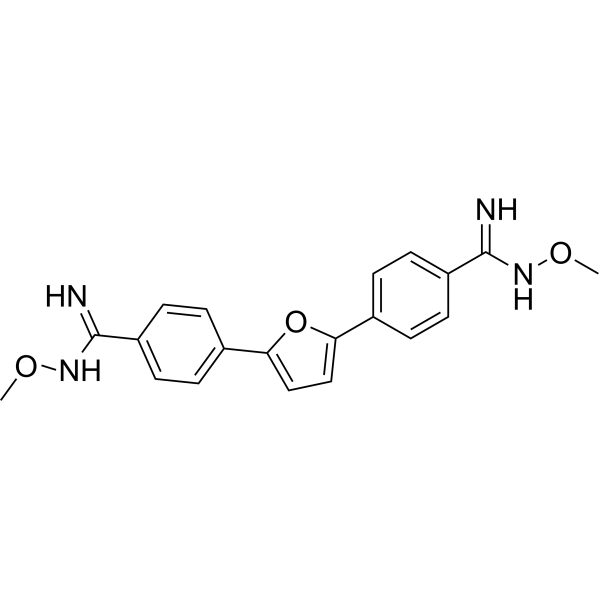
Pafuramidine (maleate) (DB289 (maleate)) is an orally active proagent of Furamidine (HY-110137A). Pafuramidine (maleate) (DB289 (maleate)) is a potent anti-parasitic agent, can be used to research trypanosomiasis, Pneumocystis pneumonia and malaria .
|
-
- HY-14932R
-
|
DB289 (Standard)
|
Reference Standards
Parasite
Antibiotic
|
Infection
|
|
Pafuramidine (Standard) is the analytical standard of Pafuramidine. This product is intended for research and analytical applications. Pafuramidine (DB289) is an orally active proagent of Furamidine (HY-110137A). Pafuramidine is a potent anti-parasitic agent, can be used to research trypanosomiasis, Pneumocystis pneumonia and malaria .
|
-
- HY-14932
-
|
DB289
|
Parasite
Antibiotic
|
Infection
Neurological Disease
|
|
Pafuramidine (DB289) is an orally active proagent of Furamidine (HY-110137A). Pafuramidine is a potent anti-parasitic agent, can be used to research trypanosomiasis, Pneumocystis pneumonia and malaria .
|
-
- HY-119480
-
|
|
Bacterial
|
Infection
|
|
Megazol is an orally active antibacterial agent. Megazol has effective inhibitory against T. b. brueei with an EC50 of 0.01 μg/mL. Megazol can be used for the research of protozoan infections .
|
-
- HY-119480R
-
|
|
Bacterial
|
Infection
|
|
Megazol (Standard) is the analytical standard of Megazol. This product is intended for research and analytical applications. Megazol is an orally active antibacterial agent. Megazol has effective inhibitory against T. b. brueei with an EC50 of 0.01 μg/mL. Megazol can be used for the research of protozoan infections .
|
-
- HY-148014
-
-
- HY-P1759A
-
|
Z-FR-AMC hydrochloride
|
Cathepsin
|
Others
|
|
N-CBZ-Phe-Arg-AMC (Z-FR-AMC) hydrochloride is a cathepsin substrate used in assessment activity of lysosomal cathepsin enzymes .
|
-
- HY-N11173A
-
|
|
Parasite
|
Infection
|
|
trans-Melilotoside is a coumarin precursor and that can be isolated from Melilotus neapolitan. trans-Melilotoside exhibits antiparasitic and DPPH radical-scavenging activity. trans-Melilotoside can be used for the research of human african trypanosomiasis, chagas’ disease, malaria [1] [3].
|
-
- HY-N19727
-
|
|
Interleukin Related
IFNAR
TNF Receptor
Apoptosis
|
Infection
Cancer
|
|
Chamissonolide is a sesquiterpene lactone with cytotoxic, anti-inflammatory and trypanocidal activities. Chamissonolide reduces the mRNA levels of IL-2, IFN-γ, GM-CSF, iNOS and TNF-α, and upregulates the mRNA level of NF-ATc. Chamissonolide decreases the population of naturally occurring apoptotic cells. Chamissonolide can be used in research related to tumors, African trypanosomiasis and Chagas disease .
|
-
- HY-W701798
-
|
(S)-Tritopin; D-Laudanine
|
Drug Derivative
|
Others
|
(+)-Laudanidine ((S)-Tritopin) is a benzyltetrahydroisoquinoline alkaloid found in Stephania species .
|
-
| Cat. No. |
Product Name |
Type |
-
- HY-P1759A
-
|
Z-FR-AMC hydrochloride
|
Biochemical Assay Reagents
|
|
N-CBZ-Phe-Arg-AMC (Z-FR-AMC) hydrochloride is a cathepsin substrate used in assessment activity of lysosomal cathepsin enzymes .
|
| Cat. No. |
Product Name |
Target |
Research Area |
| Cat. No. |
Product Name |
Category |
Target |
Chemical Structure |
| Cat. No. |
Product Name |
Chemical Structure |
-
- HY-W653999
-
|
|
|
Glycodeoxycholic acid-d5 is deuterium labeled Glycodeoxycholic Acid. Glycodeoxycholic Acid is a natural product found in Streptomyces nigricans, Trypanosoma brucei and C. elegans. Glycodeoxycholic Acid induces hepatocyte necrosis and autophagy in patients with obstructive cholestasis .
|
-
Your information is safe with us. * Required Fields.
Inquiry Information
- Product Name:
- Cat. No.:
- Quantity:
- MCE Japan Authorized Agent:

