17 Results for "

c-Met-IN-1

" in MedChemExpress (MCE) Product Catalog:
Products (17)

17 Results for "c-Met-IN-1" in MCE Product Catalog:

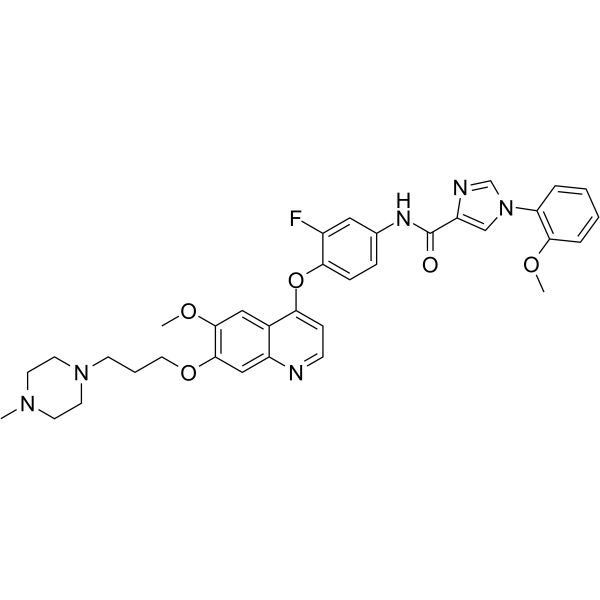
Cat. No.: HY-101031
CAS No.: 2084836-84-8
Target:  

c-Met/HGFR

Research Areas:  

Cancer

c-met-IN-1 (compound 16) is a potent and selective c-Met inhibitor, with IC50 of 1.1 nM, with antitumor activity. [1].
loading...
    loading...
1
1 Cited Publications
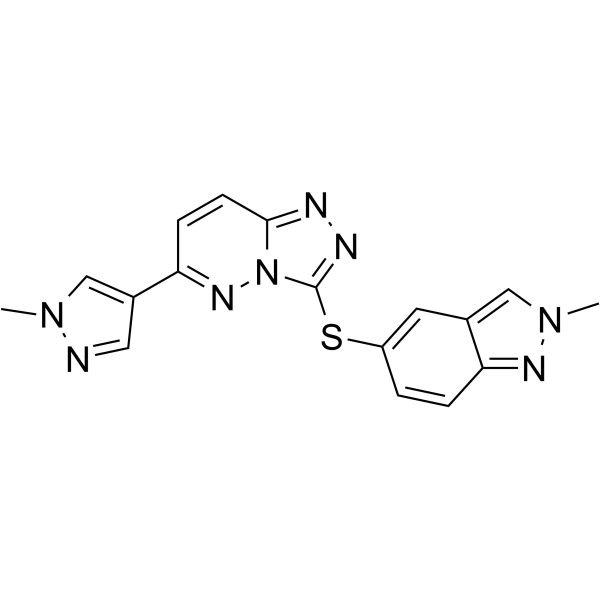
Cat. No.: HY-15735
CAS No.: 1357072-61-7
Purity:  99.26%
Target:  

c-Met/HGFR

Research Areas:  

Cancer

c-Met inhibitor 1 is an orally active c-Met inhibitor. c-Met inhibitor 1 can inhibit c-Met phosphorylation with an IC50 of 0.010 μM. c-Met inhibitor 1 has antitumor activity and can be used for the research of tumors such as gastric cancer, pancreatic cancer and malignant glioma [1].
loading...
    loading...
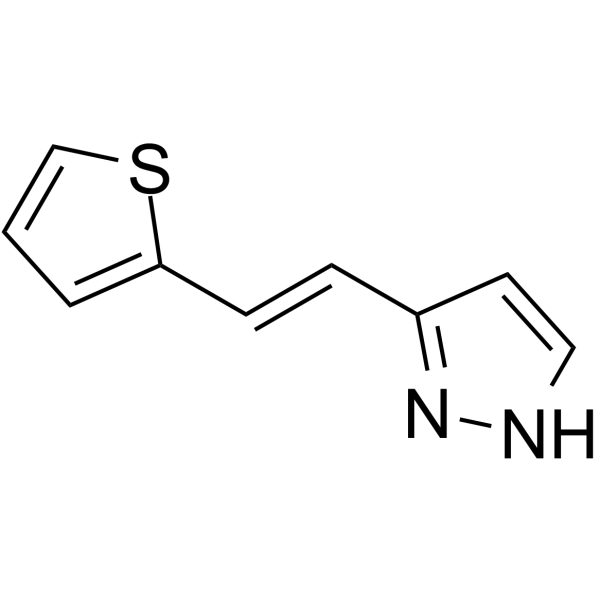
Cat. No.: HY-137455
CAS No.: 1070881-42-3
Purity:  99.89%
Synonyms: ANG-3777
Target:  

c-Met/HGFR

Research Areas:  

Inflammation/Immunology

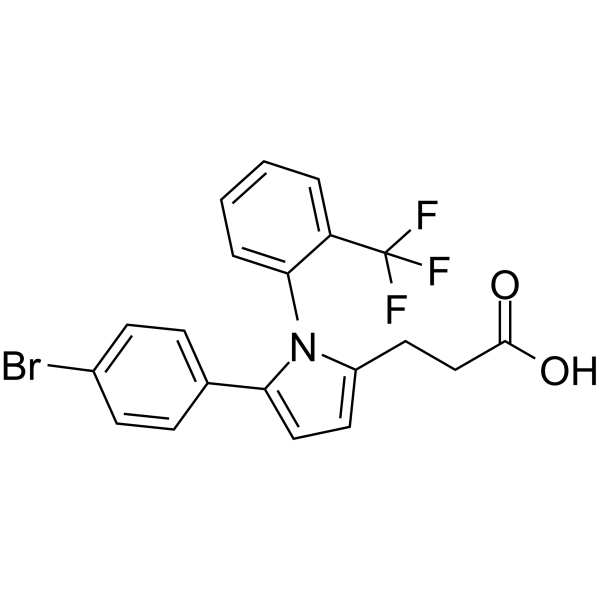
Terevalefim (ANG-3777), an hepatocyte growth factor (HGF) mimetic, selectively activates the c-Met receptor .
loading...
    loading...
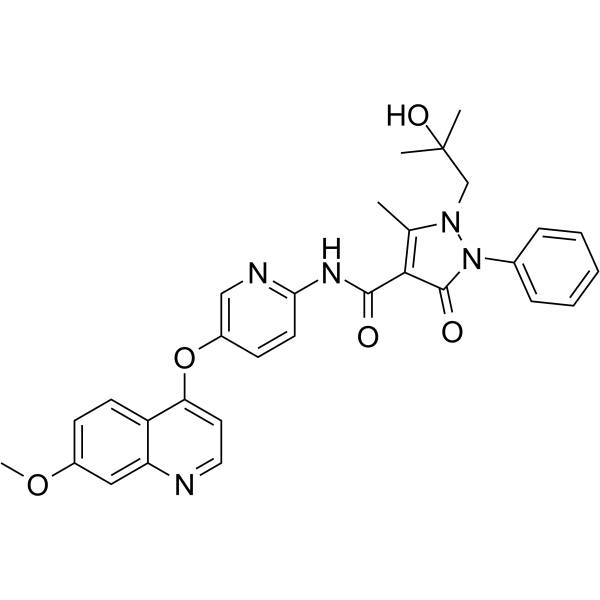
Cat. No.: HY-14723
CAS No.: 913376-83-7
Purity:  98.41%
Target:  

c-Met/HGFR

Research Areas:  

Cancer

AMG-458 is a potent, selective and orally bioavailable c-Met inhibitor, with Ki values of 1.2 nM and 2.0 nM for human and mouse c-Met, respectively .
loading...
    loading...
Cat. No.: HY-168135
CAS No.: 3056647-52-7
Target:  

PROTACs c-Met/HGFR

Research Areas:  

Cancer

PROTAC c-Met degrader-1 is a selective and orally active c-Met PROTAC degrader with a DC50 of 6.21 nM against c-Met. PROTAC c-Met degrader-1 induces CRBN-dependent ubiquitination and proteasomal degradation of c-Met. PROTAC c-Met degrader-1 induces G0/G1 phase arrest in c-Met-dependent cancer cells. PROTAC c-Met degrader-1 kills c-Met-dependent cancer cells. PROTAC c-Met degrader-1 inhibits tumor growth in animal models. PROTAC c-Met degrader-1 can be used for the research of gastric cancer [1].
loading...
    loading...
Cat. No.: HY-124761
CAS No.: 683808-78-8
Research Areas:  

Cancer

Poloppin is a potent, cell penetrant inhibitor of the mitotic Polo-like kinase (PLK) (IC50=26.9 μM) and prevents the protein-protein interaction via the Polo-box domain (PBD) (Kd= 29.5 μM). Poloppin selectively kills cells expressing mutant KRAS, enhancing death in mitosis. Poloppin is used for the study of KRAS-mutant cancers as single agents, or in combination with c-MET inhibitors .
loading...
    loading...
Cat. No.: HY-P991664
AG01 is a monoclonal antibody against progranulin (GP88). AG01 inhibits triple-negative breast cancer (TNBC) cell proliferation and migration, reduces the expression of phosphorylated protein kinases p-Src, p-AKT, and p-ERK, and reduces the expression of oncogenic proteins such as Axl, c-MET, HIF-1α, and VEGF. AG01 inhibits tumor growth and Ki67 expression in a TNBC xenograft mouse model. AG01 can be used in the research of TNBC and other cancers [1].
loading...
    loading...
Cat. No.: HY-178438
CAS No.: 3062159-91-2
Target:  

c-Met/HGFR Apoptosis

Research Areas:  

Cancer

Mer/c-Met-IN-1 is a potent Mer/c-met dual inhibitor with IC50 values of 1 and 19 nM. Mer/c-Met-IN-1 can inhibit cancer cells proliferation, migration and induce apoptosis. Mer/c-Met-IN-1 can be used for the research of cancer, such as colon cancer [1].
loading...
    loading...
Cat. No.: HY-163006
CAS No.: 3020728-68-8
Target:  

EGFR c-Met/HGFR

Research Areas:  

Cancer

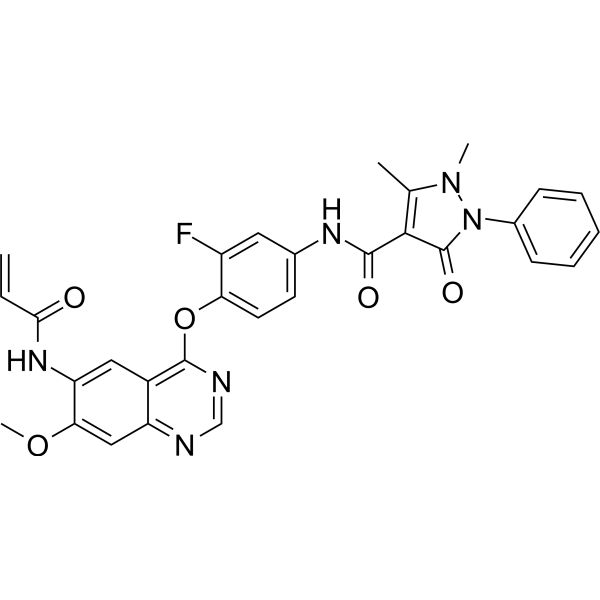
EGFR/c-Met-IN-1 (compound TS-41) is a dual-target inhibitor of EGFR/c-Met. The IC50 for inhibiting EGFR L858R and c-Met is 68.1 nM and 0.26 nM respectively. . EGFR/c-Met-IN-1 induces apoptosis and cell cycle arrest in A549-P cells, downregulating the phosphorylation of EGFR, c-Met, and downstream AKT. EGFR/c-Met-IN-1 inhibits tumor growth in vitro and in vivo [1].
loading...
    loading...
Cat. No.: HY-149674
CAS No.: 3017162-02-3
Target:  

VEGFR

Research Areas:  

Cancer

VEGFR-2/c-Met-IN-1 is a dual inhibitoe of VEGFR-2 and c-Met with IC50s of 138 nM and 74 nM, respectively. VEGFR-2/c-Met-IN-1 has antitumor activity [1].
loading...
    loading...
Cat. No.: HY-161372
CAS No.: 2944101-99-7
Target:  

PARP c-Met/HGFR Apoptosis

Research Areas:  

Cancer

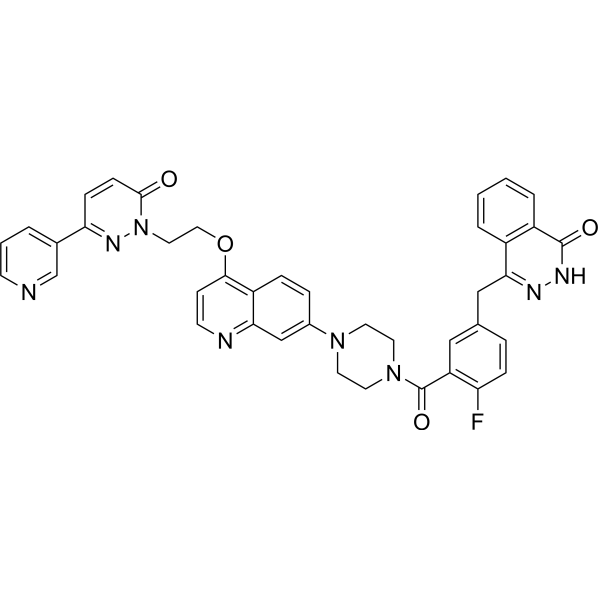
PARP1/c-Met-IN-1 (Compound 16) is a selective dual inhibitor for PARP1 and c-Met, with IC50s of 3.3 and 32.2 nM, respectively. PARP1/c-Met-IN-1 induces cell apoptosis and cell cycle arrest in G2/M phase in MDA-MB-231 cells. PARP1/c-Met-IN-1 exhibits antitumor activity in mice [1].
loading...
    loading...
Cat. No.: HY-P991565

Target:  

c-Met/HGFR

Research Areas:  

Cancer

CE-355621 is a humanized anti-c-Met IgG1 monoclonal antibody. CE-355621 can effectively bind with human c-Met (KD = 200 pM, IC50 = 466 pM) in A549 cells and cyno c-Met (KD = 610 pM) in cynomolgus kidney cells. CE-355621 inhibits the c-Met signaling pathway by blocking HGF binding. CE-355621 significantly inhibits the growth of tumors dependent on the c-Met/HGF pathway. CE-355621 can be used for research on cancer such as glioblastoma and gastric cancer [1] .
loading...
    loading...
Cat. No.: HY-162679
Target:  

c-Met/HGFR Apoptosis

Research Areas:  

Cancer

c-Met degrader-1 (Compound H11) is an orally active c-Met degrader (through the ubiquitin proteasome system). c-Met degrader-1 has anti-hepatocellular carcinoma activity (HCC) and inhibits tumor growth in MHCC97H xenografts. c-Met degrader-1 inhibits HCC cell growth, arrests cell cycle, and induces apoptosis. c-Met degrader-1 may overcome resistance to type Ib inhibitors [1].
loading...
    loading...
Cat. No.: HY-120661
CAS No.: 1195779-24-8
Target:  

c-Met/HGFR VEGFR

Research Areas:  

Cancer

T-1840383 is a potent, ATP-competitive inhibitor of c-Met/VEGFR-2, with the IC50s of 1.9 nM, 7.7 nM, 2.2 nM and 5.5 nM for c-Met, VEGFR1, VEGFR2 and VEGFR3, respectively [1].
loading...
    loading...
Cat. No.: HY-162803
Target:  

Apoptosis c-Met/HGFR STAT

Research Areas:  

Cancer

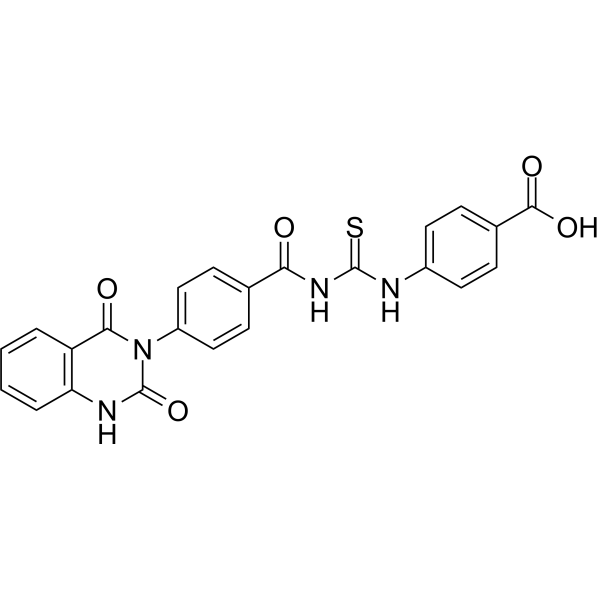
c-Met-IN-24 (compound 3g) is a dual-target inhibitor of STAT-3 ( [1]=4.7 μM) and c-MET ( =12.67 μM) with anticancer activity. c-Met-IN-24 arrests the G2/M cell cycle and induces apoptosis in SNB-75 cells. c-Met-IN-24 can be used in the study of central nervous system cancers [1].
loading...
    loading...
Cat. No.: HY-W425461
CAS No.: 1103506-79-1
Research Areas:  

Others

c-Met ligand-1 is a c-Met ligand and component of c-Met PROTAC degrader (HY-175320) [1].
loading...
    loading...
Cat. No.: HY-P11863
Target:  

c-Met/HGFR

Research Areas:  

Infection Cancer

SMIC-1014 is a cellular mesenchymal-epithelial transition factor (c-Met) ligand. SMIC-1014 binds to the c-Met ectodomain without activating c-Met phosphorylation or inducing receptor internalization. [1] SMIC-1014, when radiolabeled as [ 68Ga]Ga-SMIC-1014, acts as a positron emission tomography (PET) probe with defined pharmacokinetics, achieves specific tumor uptake in xenografts, and functions as a c-Met-targeted diagnostic probe. SMIC-1014 can be used for the research of colon cancer, hepatocellular carcinoma, prostate cancer [1].
loading...
    loading...
  • 1

