

1. Search Result
Search Result
Isoforms Recommended: Cathepsin C
Results for "

cathepsin C

" in MedChemExpress (MCE) Product Catalog:

28

Inhibitors & Agonists

4

Peptides

6

Recombinant Proteins

1

Antibodies

2

Click Chemistry

1

Oligonucleotides

Targets Recommended:
Cat. No. 상품명 Target 연구분야 Chemical Structure
  • HY-W011063

    Cathepsin Metabolic Disease
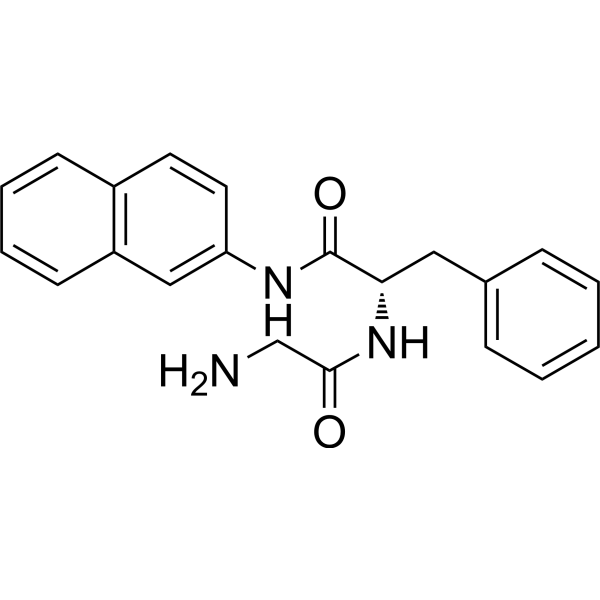
    Gly-Phe-β-naphthylamide is a substrate of Cathepsin C (HY-P2922) and belongs to the lysosomal agonist. Gly-Phe-β-naphthylamide can freely pass through the cell membrane and organelle membrane. Gly-Phe-β-naphthylamide will be specifically hydrolyzed by Cathepsin C, ultimately leading to a permeability lysis when it enters the acidic compartment. Gly-Phe-β-naphthylamide can be used to study lysosomal hydrolysis, lysosomal membrane permeability, and the function of cathepsin C .
    Gly-Phe-β-naphthylamide
  • HY-162874

    STING IFNAR Cancer
    diABZI-V/C-DBCO is a STING agonist with an EC50 of 1.47 nM. diABZI-V/C-DBCO activates the STING pathway, induces the production of IFN-I, and stimulates the secretion of IFN-β. diABZI-V/C-DBCO serves as a substrate for cathepsin B, and releases active diABZI-amine via cathepsin B-mediated cleavage. In an orthotopic mouse model of breast cancer, diABZI-V/C-DBCO increases serum IFN-β levels and the frequency of granzyme B + CD8 + T cells. diABZI-V/C-DBCO is applicable to research related to triple-negative breast cancer .
    diABZI-V/C-DBCO
  • HY-164278

    STING Cathepsin Cancer
    diABZI-V/C-Mal is a STING agonist (with a STING EC50 of 314 nM in TH1 dual reporter cells) and a Cathepsin B substrate. diABZI-V/C-Mal activates STING, thereby triggering the IRF3 signaling pathway. diABZI-V/C-Mal is cleaved by Cathepsin B to regenerate diABZI-NH2 .
    diABZI-V/C-Mal
  • HY-146584

    Cathepsin Inflammation/Immunology
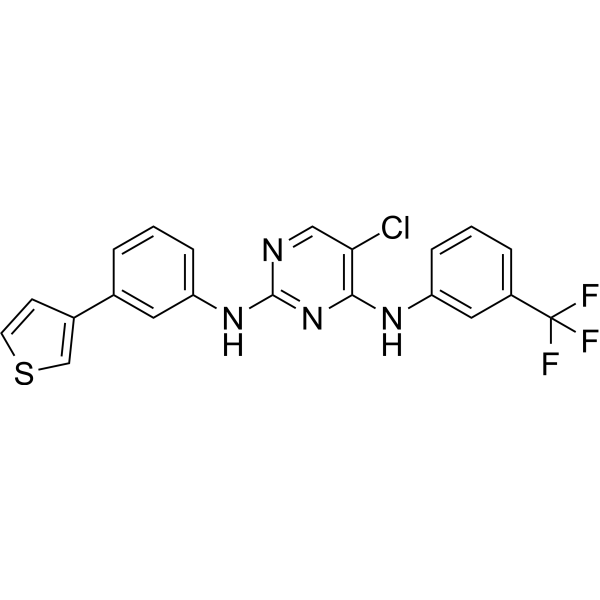
    Cathepsin C-IN-5 (compound SF38) is a potent, selective and orally active Cathepsin C inhibitor with IC50s of 59.9 nM, 4.26 µM, >5 µM, >5 µM, >5 µM for Cat C, Cat L, Cat S, Cat B, Cat K, respectively. Cathepsin C-IN-5 inhibits the Cat C activity in bone marrow and blood. Cathepsin C-IN-5 decreases the activation of NSPs (neutrophil serine proteases). Cathepsin C-IN-5 shows anti-inflammatory activity .
    Cathepsin C-IN-5
  • HY-P4425

    Biochemical Assay Reagents Others
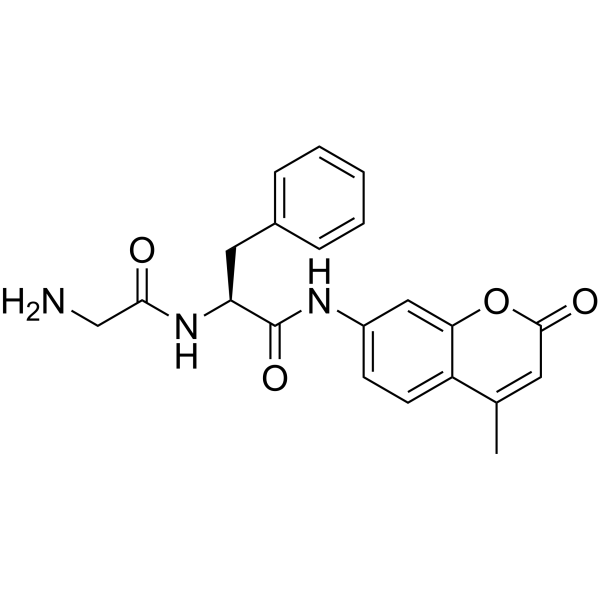
    Gly-Phe-AMC is a fluorogenic peptide substrate consisting of a peptide sequence composed of glycine and phenylalanine, linked to the fluorophore AMC. Gly-Phe-AMC also serves as a cathepsin C substrate. Gly-Phe-AMC is widely used to detect the activity of various proteases .
    Gly-Phe-AMC
  • HY-141867

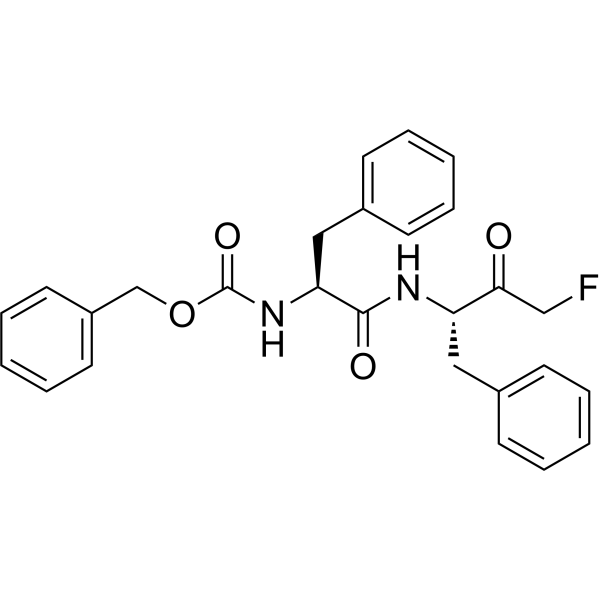
    Z-Phe-Phe-FMK

    Cathepsin MEK Caspase DNA/RNA Synthesis Apoptosis Cardiovascular Disease Neurological Disease
    Z-FF-FMK (Z-Phe-Phe-FMK) is a cell-permeable, irreversible, and cysteine protease inhibitor targeting cathepsin-L. Z-FF-FMK inhibits angiotensin II-induced MEK activation in vascular walls, aortic medial remodeling, blood pressure elevation, and upregulation of cystatin C in aortic walls. Z-FF-FMK prevents β-amyloid-mediated caspase-3 activation, poly (ADP-ribose) polymerase cleavage, DNA fragmentation, and apoptosis of cortical neurons (apoptosis). Z-FF-FMK can be used in research related to hypertension and Alzheimer's disease .
    Z-FF-FMK
  • HY-100227
    E 64c
    3 Publications Verification

    Cathepsin SARS-CoV Metabolic Disease
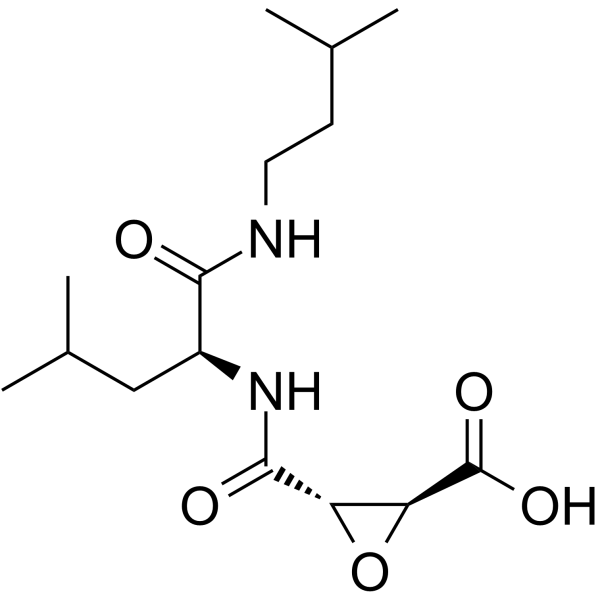
    E 64c is a derivative of naturally occurring epoxide inhibitor of cysteine proteases, a Calcium-activated neutral protease (CANP) inhibitor and a very weak irreversible cathepsin C inhibitor. E 64c exhibits entry-blocking effect for MERS-CoV.
    E 64c
  • HY-10242

    BILN 2061; BILN 2061ZW

    HCV HCV Protease DNA/RNA Synthesis Infection
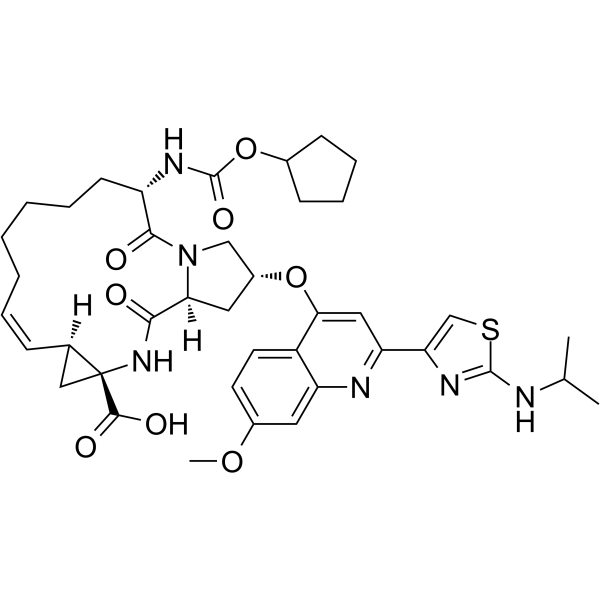
    Ciluprevir (BILN 2061; BILN 2061ZW) is an orally active macrocyclic peptide inhibitor of hepatitis C virus (HCV)NS3 protease, with an IC50 of 3 nM. Ciluprevir has Kᵢ values of 0.66 nM and 0.30 nM against genotypes 1b and 1a, respectively. Ciluprevir inhibits HCV RNA replication with an EC50 of 1.2 nM, and its EC50 values against genotypes 1b and 1a are 3 nM and 4 nM, respectively. Ciluprevir shows no significant inhibition against human leukocyte elastase and hepatic cathepsin B. Ciluprevir can be used for genotype 1 HCV infection .
    Ciluprevir
  • HY-112318A

    Cathepsin Inflammation/Immunology
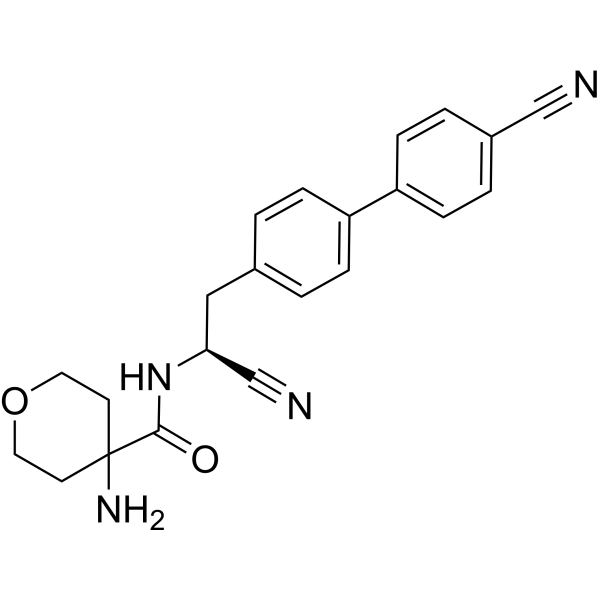
    GSK-2793660 is an orally active and irreversible inhibitor of Cathepsin C (CTSC). GSK-2793660 can be used for the research of bronchiectasis .
    GSK-2793660
  • HY-172242

    Cathepsin Dipeptidyl Peptidase Inflammation/Immunology
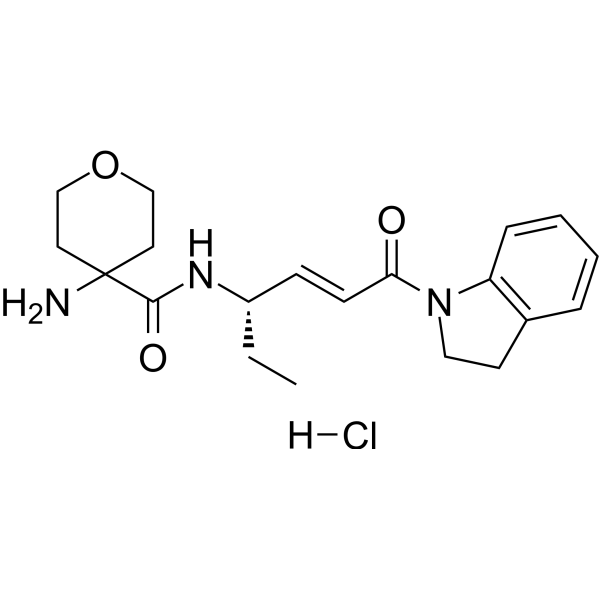
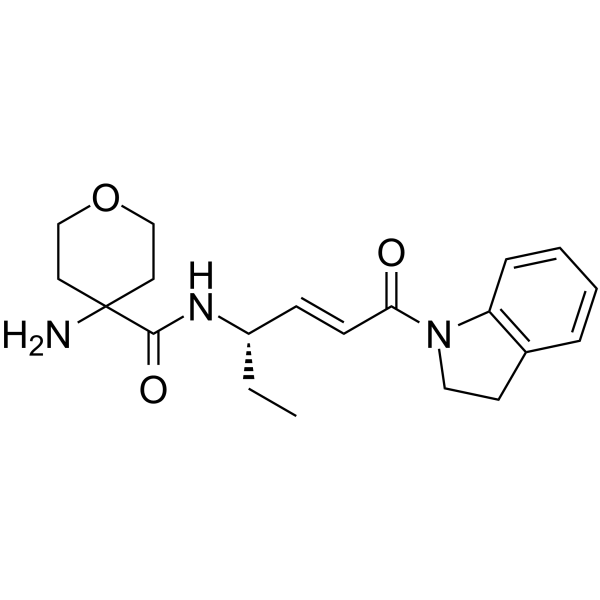
    Verducatib (BI 1291583) is an orally active inhibitor of cathepsin C (also known as DPP1). Verducatib restores the protease-inhibitor balance by inhibiting the activation of neutrophil serine proteases, thereby alleviating pulmonary inflammation and regulating infection responses. Verducatib significantly reduces the risk (including severe exacerbations) and frequency of acute exacerbations in bronchiectasis (BE). Verducatib also improves lung function and quality of life, and shortens the duration of antibiotic use. The overall incidence of adverse events of Verducatib is comparable to that of placebo, with only slightly more mild-to-moderate cutaneous adverse events observed in the high-dose group, demonstrating promising clinical application potential .
    Verducatib
  • HY-P2922

    Cathepsin Cancer
    Cathepsin C is a lysosomal cysteine protease essential for catalytic activation of many serine proteases, including proteinase 3 (PR3), neutrophil elastase (NE), cathepsin G (CTSG), granzyme A/B/C, and mast cell chymase .
    Cathepsin C
  • HY-P3798

    Ser/Thr Protease Others
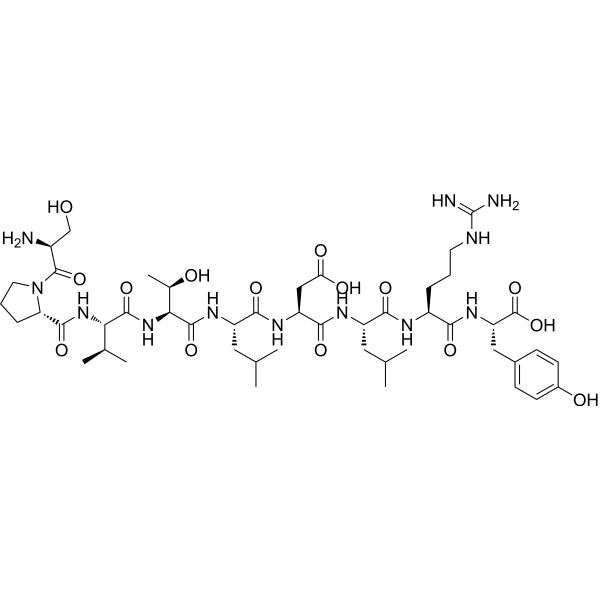
    Eglin c (41-49) is a peptide fragment related to eglin c. Eglin c (41-49) shows inhibitory effects to cathepsin G and α-chymotrypsin with Ki values of 42 and 20 μM, respectively .
    Eglin c (41-49)
  • HY-112318

    Cathepsin Inflammation/Immunology
    GSK-2793660 (free base) is an oral, irreversible inhibitor of Cathepsin C (CTSC). GSK-2793660 (free base) can be used for the research of bronchiectasis .
    GSK-2793660 free base
  • HY-146581

    Cathepsin Inflammation/Immunology
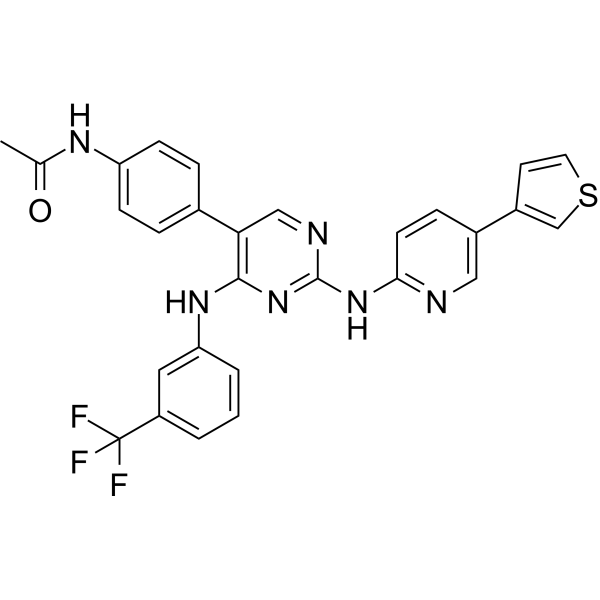
    Cathepsin C-IN-4 (compound SF27) is a potent Cathepsin C (Cat C) inhibitor, with an IC50 of 65.6 nM. Cathepsin C-IN-4 also inhibits THP-1 and U937 cell, with IC50 values of 203.4 and 177.6 nM, respectively .
    Cathepsin C-IN-4
  • HY-146580

    Cathepsin Inflammation/Immunology
    Cathepsin C-IN-3 (compound SF11) is a potent Cathepsin C (Cat C) inhibitor, with an IC50 of 61.79 nM. Cathepsin C-IN-3 also inhibits THP-1 and U937 cell, with IC50 values of 101.5 and 86.5 nM, respectively .
    Cathepsin C-IN-3
  • HY-174380

    Dipeptidyl Peptidase Ser/Thr Protease Elastase Inflammation/Immunology
    DPP-1-IN-1 (Compound 14) is an orally active inhibitor of Cathepsin C (also known as Dipeptidyl peptidase I) with an IC50 of 5.31 nM. DPP-1-IN-1 can inhibit the activity of Cathepsin C downstream Neutrophil elastase in neutrophils. DPP-1-IN-1 can be used in the research of inflammatory diseases .
    DPP-1-IN-1
  • HY-171888

    Cathepsin Elastase Inflammation/Immunology
    BI-9740 is an orally active and selective cathepsin C (CatC) inhibitor, with an IC50 of 0.6 nM in mice and 2.6 nM in rats. BI-9740 can inhibit the production of active neutrophil elastase. Additionally, BI-9740 is capable of reducing the activities of neutrophil elastase and cathepsin G in the bone marrow of rats, alleviating pathological damage to grafts after heart transplantation, shortening the reperfusion time, and improving left ventricular function. BI-9740 can be used in research related to organ transplantation .
    BI-9740
  • HY-155611

    Cathepsin Inflammation/Immunology
    Cathepsin C-IN-6 (compound 2) is a E-64c-hydrazideas based inhibitor of cathepsin C with anti-inflammatory activity. Cathepsin C-IN-6 inhibts activation of neutrophil elastase,exhibits potential efficacy in inflammatory diseases with high neutrophil load (e.g.,chronic obstructive pulmonary disease) .
    Cathepsin C-IN-6
  • HY-132973

    ADC Linker Cancer
    MC-Val-Cit-PAB-NH-C2-NH-Boc is a cathepsin cleavable ADC linker used in the synthesis of antibody-drug conjugates (ADCs) .
    MC-Val-Cit-PAB-NH-C2-NH-Boc
  • HY-177408

    Cathepsin Cancer
    Cathepsin C-IN-7 (Page 68) is a Cathepsin C inhibitor. Cathepsin C-IN-7 can be used in research related to primary cancers and cancer metastases .
    Cathepsin C-IN-7
  • HY-168591

    Cathepsin Cancer
    CTSC-IN-1 (B22) is a CTSC inhibitor. CTSC-IN-1 inhibits CTSC activity by binding to S2 pocket and S1 site. CTSC-IN-1 can be used in the study inflammatory bowel disease .
    CTSC-IN-1
  • HY-P5086

    Cathepsin Others
    H-Gly-Arg-NH2 is a substrate for the determination of bovine spleen cathepsin C activity .
    H-Gly-Arg-NH2
  • HY-159128

    Carbonic Anhydrase Cancer
    hCAIX-IN-21 (compound 16c) is a potent hCAIX inhibitor with KI values of 5.2, 3.5, 12.6, 13600 nM for hCAIX, hCA II, hCA XII, hCA I, respectively. hCAIX-IN-21 inhibits cathepsin B enzyme activity .
    hCAIX-IN-21
  • HY-126988

    α-MAPI

    Elastase Others
    SP-Chymostatin B (α-MAPI) is a strong inhibitor of many proteases, including chymotrypsin, papain, chymotrypsin-like serine proteinases, chymases, and lysosomal cysteine proteinases such as cathepsins A,B,C, H, and L. SP-Chymostatin B weakly inhibits human leucocyte elastase .
    SP-Chymostatin B
  • HY-171509

    Drug-Linker Conjugates for ADC Apoptosis Cancer
    Mal-N(Me)-C6-N(Me)-PNU-159682 (Compound 27), an agent-linker conjugate for ADC, consists the ADC linker Mal-N(Me)-C6-N(Me) and a potent ADC cytotoxin PNU-159682. Mal-N(Me)-C6-N(Me)-PNU-159682 (Compound 27) selectively delivers the payload to CD46-expressing cells, where the linker is cleaved by cathepsin B to release PNU-159682, inducing DNA damage and apoptosis. Mal-N(Me)-C6-N(Me)-PNU-159682 shows durable tumor regression in xenograft (PDX) models of non-small cell lung cancer (NSCLC) and colorectal cancer (CRC) .
    Mal-N(Me)-C6-N(Me)-PNU-159682
  • HY-183166

    Cathepsin Neurological Disease
    Z-Arg-Lys-AOMK is a cathepsin B inhibitor that can cross the blood-brain barrier. Z-Arg-Lys-AOMK reduces cytosolic cathepsin B activity in homogenates of mouse cerebral cortex and hippocampal tissues, and alleviates motor dysfunction associated with CCI-TBI. Z-Arg-Lys-AOMK can be used in the research of traumatic brain injury .
    Z-Arg-Lys-AOMK
  • HY-182757

    RANKL/RANK Nuclear Factor of activated T Cells (NFAT) Cathepsin Metabolic Disease Inflammation/Immunology
    Y1693 is an orally active RANKL inhibitor with a Kd of 5.03 μM for hRANKL. Y1693 inhibits the activation of the downstream c-fos/NFATc1 signaling pathway by blocking its interaction with RANK. Y1693 significantly inhibits RANKL-induced osteoclast differentiation, F-actin ring formation and bone resorptive activity, while downregulating the mRNA and protein expressions of TRAP, cathepsin K, c-fos and NFATc1. Y1693 shows no obvious cytotoxicity to bone marrow-derived macrophages and osteoclast precursor cells, and exhibits favorable ADME properties. Y1693 improves ovariectomy-induced osteoporosis in mice and reverses ligation-induced periodontal alveolar bone loss. Y1693 is applicable to research related to osteoporosis and periodontal diseases .
    Y1693
  • HY-182429

    Beta-secretase Cathepsin Amyloid-β Neurological Disease
    NB-533 is an orally active and brain-penetrant BACE-1 inhibitor with a human IC50 of 0.002 μM. NB-533 also inhibits human cathepsin D with an IC50 of 0.001 μM. NB-533 inhibits amyloidogenic amyloid precursor protein (APP) processing and reduces 40 release. NB-533 reduces brain levels of APP metabolite C99 and Aβ40 in transgenic mice. NB-533 can be used for the research of Alzheimer’s disease .
    NB-533

온라인 문의

Your information is safe with us. * Required Fields.

호칭


Country or Region *

고객명 *


회사명 *

Department *


메일주소 *


상품명 *

Cat. No.


Requested quantity *

전화번호 *


비고

온라인 문의

Inquiry Information

상품명:
Cat. No.:
수량:
MCE Japan Authorized Agent:

