20 Results for "

chemical indicator

" in MedChemExpress (MCE) Product Catalog:
Products (20)

20 Results for "chemical indicator" in MCE Product Catalog:

4
4 Cited Publications
Cat. No.: HY-N0772
CAS No.: 24699-16-9
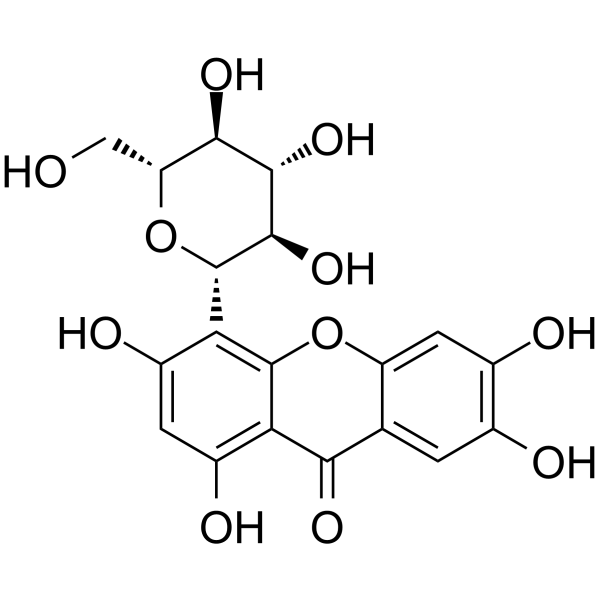
Isomangiferin is an orally active xanthone C-glucoside, and its chemical structure is similar to Mangiferin (HY-N0290). Isomangiferin is an effective VEGFR-2 kinase inhibitor, which can induces cell apoptosis, inhibit the growth, metastasis and angiogenesis of breast cancer. Isomangiferin exerts anti-inflammatory effects by inhibiting the HMGB1/NLRP3/NF-κB signaling pathway, thereby improving the renal function indicators of diabetic mice. Isomangiferin exhibits inhibitory effects on various bacteria and herpes simplex virus type 1 (HSV-1). Isomangiferin promotes the migration and osteogenic differentiation of bone marrow mesenchymal stem cells (BMSCs) and reduces cell apoptosis and the production of ROS by activating the AMPK/ACC pathway, thereby facilitating fracture healing .
loading...
    loading...
1
1 Cited Publications
Cat. No.: HY-D0018
CAS No.: 620-45-1
Synonyms: Dichlorophenylindophenol sodium; DCPIP sodium; Indochlorophenol sodium
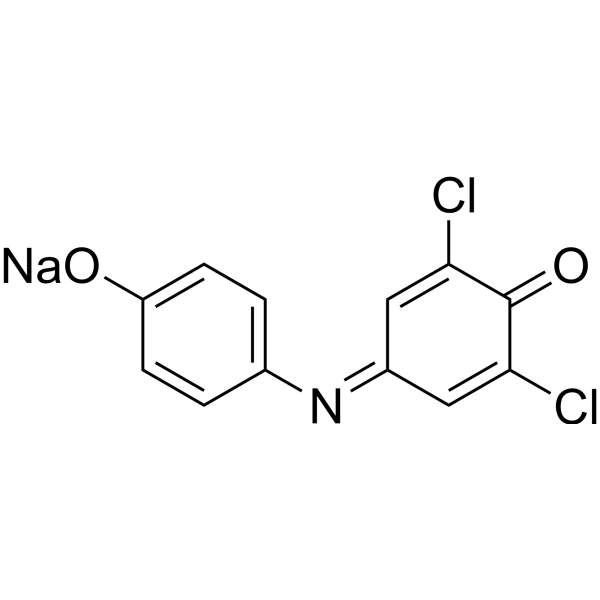
DCIP sodium is a blue dye commonly used in various biochemical and biotechnological applications as an indicator of redox reactions. DCIP sodium has unique chemical properties that change color according to the oxidation state of the substance being tested. It is commonly used in enzyme assays, such as measuring the activity of succinate dehydrogenase, or in protein quantification methods, such as the Lowry assay.
loading...
    loading...
1
1 Cited Publications
Cat. No.: HY-W110798
CAS No.: 115-39-9
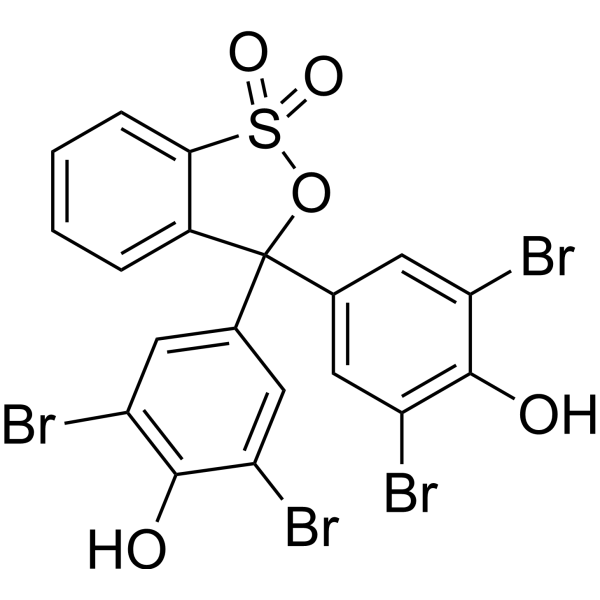
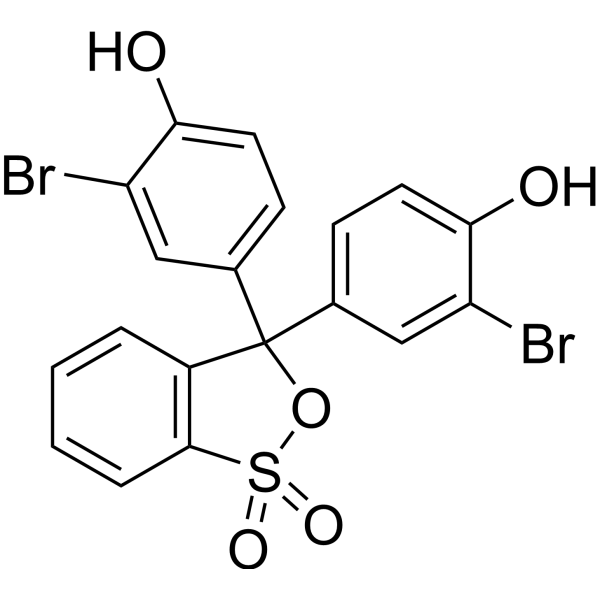
Bromophenol blue indicator (3.0-4.6) is a synthetic dye commonly used as an acid-base indicator with a transition range of pH 3.0-4.6. Bromophenol blue indicator (3.0-4.6) is water soluble and changes color from yellow to blue as the pH of the solution changes from acidic to basic. Its unique chemical properties make it an important ingredient in a variety of scientific applications, especially in biochemistry and molecular biology. In addition, it can be used as a stain in microbiology and histology. However, Bromophenol blue indicator (3.0-4.6) has potential irritating and staining properties.
loading...
    loading...
Cat. No.: HY-W110794
CAS No.: 548-62-9
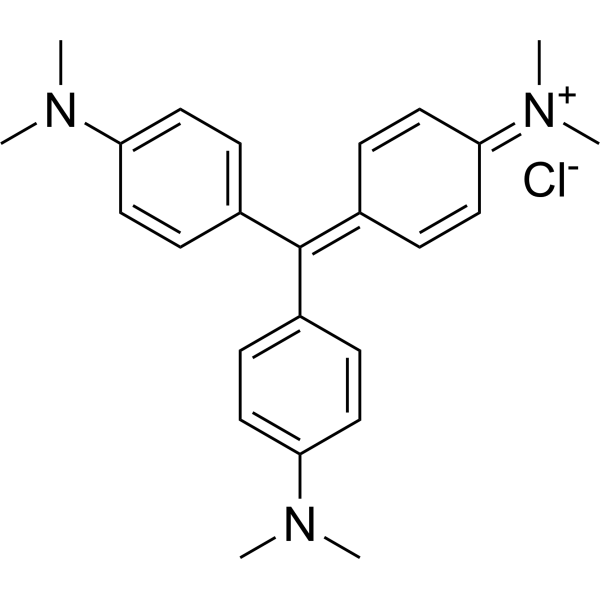
Crystal violet, IND (0.0-2.0) is a specialized indicator suitable for strongly acidic systems, which reflects changes in pH within the range of 0.0-2.0 through color changes. Crystal violet, IND (0.0-2.0) is widely used in acid-base titration, chemical analysis, and industrial testing fields .
loading...
    loading...
Cat. No.: HY-Y0699
CAS No.: 493-52-7
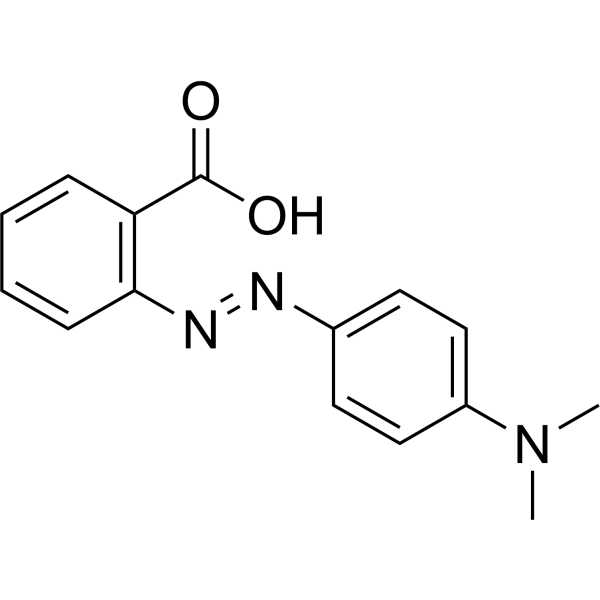
Methyl red is a pH-sensitive acid-base indicator and colorimetric reagent with a pKa of 5.1. Methyl red achieves visual judgment of the titration endpoint through reversible structural changes of protonation (red, pH < 4.4) and deprotonation (yellow, pH > 6.2). Methyl red is widely used in acid-base titration in chemical analysis and buffer pH monitoring in biochemistry .
loading...
    loading...
Cat. No.: HY-109116
CAS No.: 613-11-6
Synonyms: Leukomethylene blue
Hydromethylthionine (Leukomethylene blue) has a very active photochemically active reagent, especially in its interaction with dissolved oxygen. The photochemical activity of Hydromethylthionine is mainly regulated by the reaction of its triplet state with dissolved oxygen, which reacts with dissolved oxygen to form Methylene Blue (HY-14536) and hydronium ions under ultraviolet light. Hydromethylthionine can be used for the photodegradation of model pollutants in semiconductor photocatalysis and for the study of indicators in chemical analysis .
loading...
    loading...
Cat. No.: HY-131490
CAS No.: 1719-71-7
Purity:  99.68%
Synonyms: Violet tetrazolium
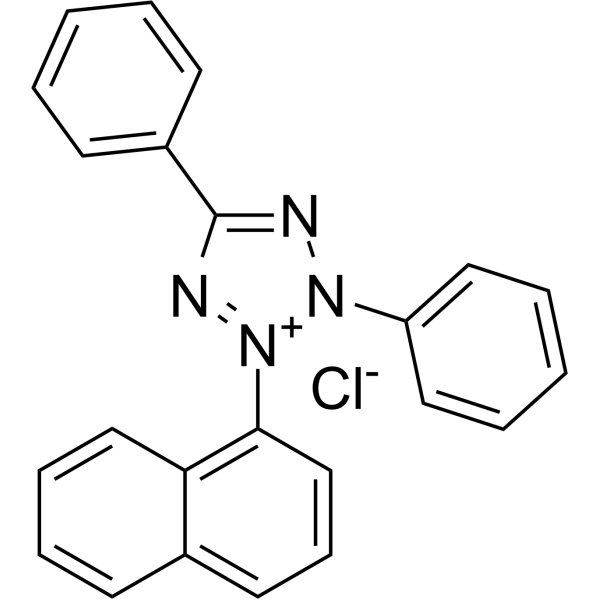
Tetrazolium violet is a redox indicator commonly used in various biochemical assays to measure cell viability and metabolic activity. Tetrazolium Violet has unique chemical properties that allow it to be reduced by cellular enzymes such as dehydrogenases to form a purple formazan product that can be detected spectrophotometrically. This makes it a useful tool for assessing cell health and growth in culture or tissue samples.
loading...
    loading...
Cat. No.: HY-118320
CAS No.: 2243-76-7
Purity:  ≥98.0%
Synonyms: Mordant orange 1
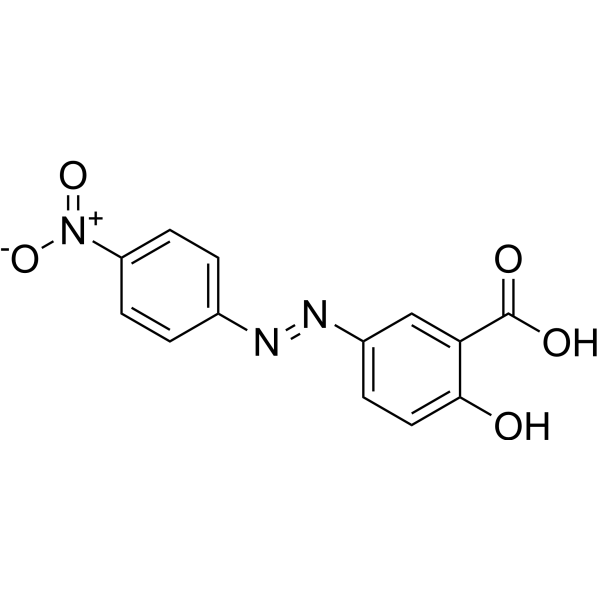
Alizarine Yellow R (Mordant orange 1), Salicylic acid derivative (HY-B0167), is an azo dye. Alizarine Yellow R is used as a pH indicator and a biological stain in chemical examinations and dyeing industries .
loading...
    loading...
Cat. No.: HY-W140535
CAS No.: 301206-84-8
Target:  

Fluorescent Dye MOFs

Research Areas:  

Others

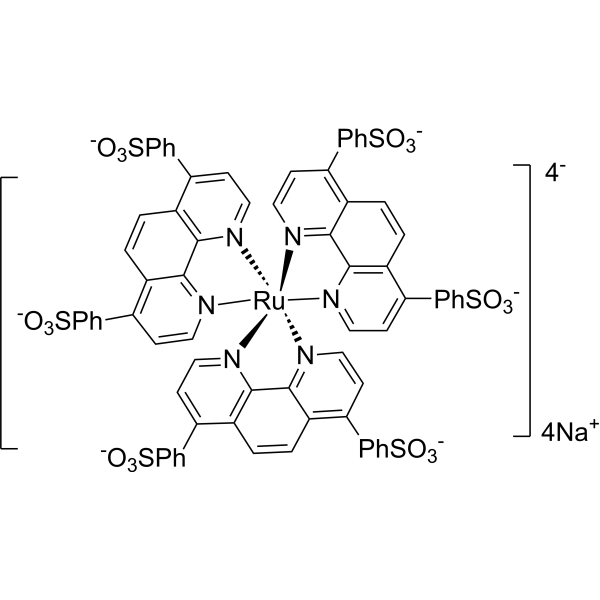
Tetrasodium, 4-(1,10-phenanthrolin-4-yl)benzenesulfonate,ruthenium((II)) is a luminescent ruthenium complex. Tetrasodium, 4-(1,10-phenanthrolin-4-yl)benzenesulfonate,ruthenium((II)) is used in biological and chemical fields as a fluorescent indicator dye and an electrochemiluminescent probe .
loading...
    loading...
Cat. No.: HY-W110791
CAS No.: 6152-67-6
Research Areas:  

Others

Sodium diphenylamine-4-sulfonate is a chemical indicator commonly used in redox titrations. Its reduced state is colorless and its oxidized state is reddish-purple. Sodium diphenylamine-4-sulfonate is also a quencher and reducing agent. Sodium diphenylamine-4-sulfonate inhibits the electrochemiluminescence of the ruthenium tris(bipyridine) system through energy transfer. Sodium diphenylamine-4-sulfonate participates in the synthesis of nanocrystals .
loading...
    loading...
Cat. No.: HY-W110780
CAS No.: 845-10-3
Methyl red sodium is a pH-sensitive acid-base indicator and colorimetric reagent with a pKa of 5.1. Methyl red sodium achieves visual judgment of the titration endpoint through reversible structural changes of protonation (red, pH < 4.4) and deprotonation (yellow, pH > 6.2). Methyl red sodium is widely used in acid-base titration in chemical analysis and buffer pH monitoring in biochemistry .
loading...
    loading...
Cat. No.: HY-Y0699R
CAS No.: 493-52-7
Methyl red (Standard) is the analytical standard of Methyl red (HY-Y0699). This product is intended for research and analytical applications. Methyl red is a pH-sensitive acid-base indicator and colorimetric reagent with a pKa of 5.1. Methyl red achieves visual judgment of the titration endpoint through reversible structural changes of protonation (red, pH < 4.4) and deprotonation (yellow, pH > 6.2). Methyl red is widely used in acid-base titration in chemical analysis and buffer pH monitoring in biochemistry .
loading...
    loading...
Cat. No.: HY-W926978
CAS No.: 102185-50-2
Bromophenol red sodium is a chemical indicator. Bromophenol red sodium binds to lysozyme and inhibits its activity against the bacterial cell wall, but not the polysaccharide component of peptidoglycan .
loading...
    loading...
Cat. No.: HY-D0011A
CAS No.: 2800-80-8
Bromophenol red (sultone form) is a chemical indicator. Bromophenol red (sultone form) binds to lysozyme and inhibits its activity against the bacterial cell wall, but not the polysaccharide component of peptidoglycan .
loading...
    loading...
Cat. No.: HY-N4241
CAS No.: 308821-59-2
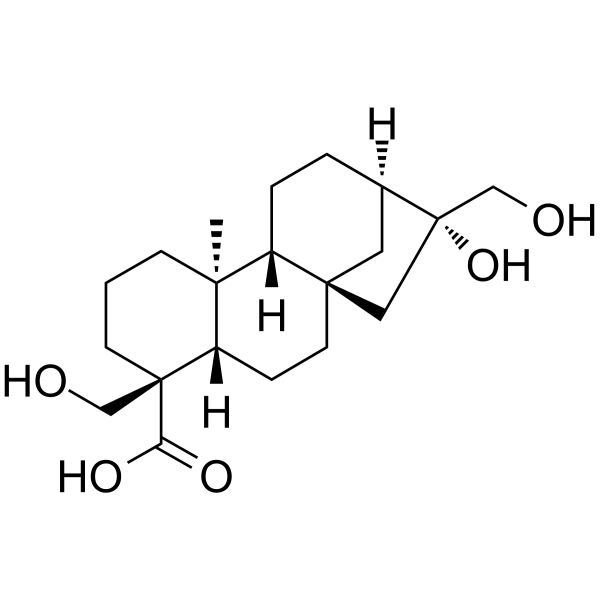
Kauran-18-oic acid, 16,17,19-trihydroxy-, (4α)- (compound 5) is a endogenous ent-kaurane diterpene compound in green coffee beans, providing direct chemical indicators of low-quality coffee .
loading...
    loading...
Cat. No.: HY-W027126
CAS No.: 74873-41-9
Target:  

Apoptosis

Research Areas:  

Metabolic Disease

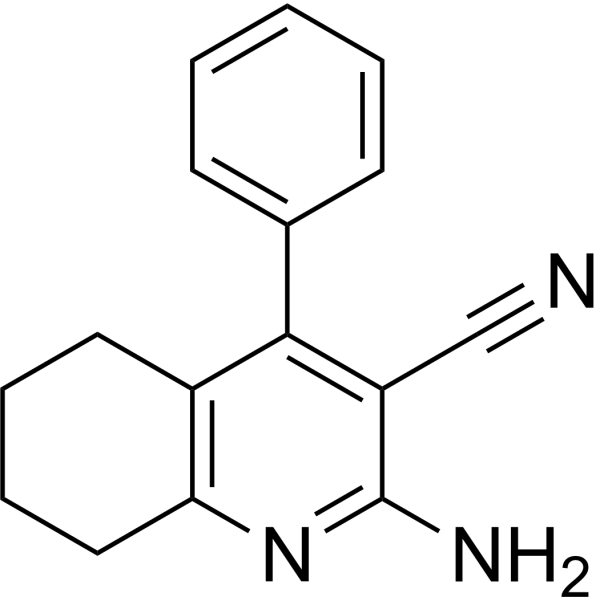
Hepatoprotective agent-2 (compound 2a), a 4-phenyl-tetrahydroquinoline derivative, displays a remarkable hepatoprotective effect. Hepatoprotective agent-2 has antiapoptotic activity. Hepatoprotective agent-2 notably prevents the chemically induced elevation of hepatic indicators associated with liver injury .
loading...
    loading...
Cat. No.: HY-D0018R
CAS No.: 620-45-1
Synonyms: Dichlorophenylindophenol sodium (Standard); DCPIP sodium (Standard); Indochlorophenol sodium (Standard)
DCIP (sodium) (Standard) is the analytical standard of DCIP (sodium). This product is intended for research and analytical applications. DCIP sodium is a blue dye commonly used in various biochemical and biotechnological applications as an indicator of redox reactions. DCIP sodium has unique chemical properties that change color according to the oxidation state of the substance being tested. It is commonly used in enzyme assays, such as measuring the activity of succinate dehydrogenase, or in protein quantification methods, such as the Lowry assay.
loading...
    loading...
Cat. No.: HY-W145108
CAS No.: 63451-28-5
Methyl red hydrochloride is a pH-sensitive acid-base indicator and colorimetric reagent with a pKa of 5.1. Methyl red hydrochloride achieves visual judgment of the titration endpoint through reversible structural changes of protonation (red, pH < 4.4) and deprotonation (yellow, pH > 6.2). Methyl red hydrochloride is widely used in acid-base titration in chemical analysis and buffer pH monitoring in biochemistry .
loading...
    loading...
Cat. No.: HY-N0772R
CAS No.: 24699-16-9
Isomangiferin (Standard) is the analytical standard of Isomangiferin (HY-N0772). This product is intended for research and analytical applications. Isomangiferin is an orally active xanthone C-glucoside, and its chemical structure is similar to Mangiferin (HY-N0290). Isomangiferin is an effective VEGFR-2 kinase inhibitor, which can induces cell apoptosis, inhibit the growth, metastasis and angiogenesis of breast cancer. Isomangiferin exerts anti-inflammatory effects by inhibiting the HMGB1/NLRP3/NF-κB signaling pathway, thereby improving the renal function indicators of diabetic mice. Isomangiferin exhibits inhibitory effects on various bacteria and herpes simplex virus type 1 (HSV-1). Isomangiferin promotes the migration and osteogenic differentiation of bone marrow mesenchymal stem cells (BMSCs) and reduces cell apoptosis and the production of ROS by activating the AMPK/ACC pathway, thereby facilitating fracture healing.
loading...
    loading...
Cat. No.: HY-D3170
C-HBrO-GGT is a dual-target fluorescent indicator with specificity for γ-glutamyl transpeptidase (GGT) and hypobromous acid (HBrO). C-HBrO-GGT acts as a substrate for GGT and HBrO, undergoing enzymatic or chemical modification to trigger channel-specific fluorescence, with sequential activation requiring initial GGT hydrolysis. C-HBrO-GGT enables simultaneous in vitro and in vivo fluorescence detection of GGT and HBrO. C-HBrO-GGT identifies mature atherosclerotic plaque positions and provides early warning of plaque formation before visual or classical immunofluorescent detection. C-HBrO-GGT can be used for the research of atherosclerosis (Ex/Em = 370 nm/500 nm) .
loading...
    loading...
  • 1

