16 Results for "

clonogenic proliferation

" in MedChemExpress (MCE) Product Catalog:
Products (16)

16 Results for "clonogenic proliferation" in MCE Product Catalog:

1
1 Cited Publications
Cat. No.: HY-125254
CAS No.: 2313525-90-3
Purity:  99.72%
Target:  

HRASLS Phospholipase

Research Areas:  

Metabolic Disease Cancer

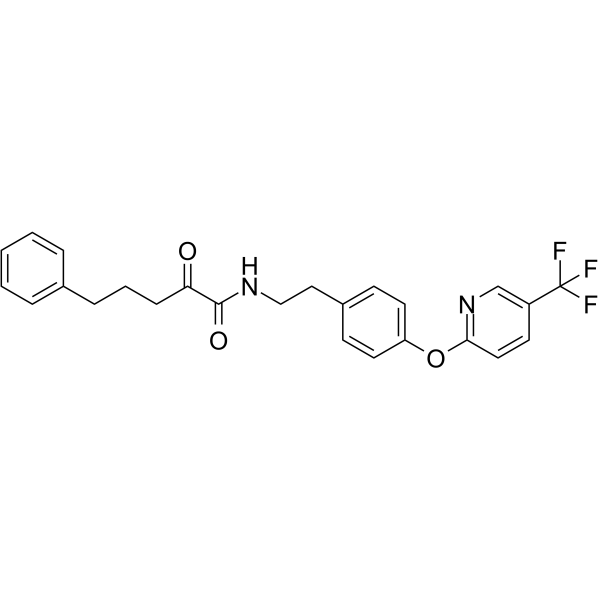
LEI110 is a pan-inhibitor of the HRASLS family and an inhibitor of AP-2α, with a Ki of 20 nM against PLA2G16. LEI110 exhibits inhibitory activity against PLA2G16, HRASLS2, RARRES3 and iNAT, with pIC50 values of 7.0, 6.8, 6.8 and 7.6, respectively. LEI110 binds to the active site of PLA2G16, reduces intracellular arachidonic acid levels, and attenuates oleic acid-induced lipolysis. LEI110 stabilizes AP-2α, impairs its DNA-binding ability, inhibits the transcription of DNA damage repair genes, induces the accumulation of oxidative DNA damage, suppresses cell proliferation and clonogenicity, and sensitizes HCC cells to DNA-damaging agents. LEI110 can be used in research related to obesity, fatty liver disease, the common cold and hepatocellular carcinoma .
loading...
    loading...
1
1 Cited Publications
Cat. No.: HY-156675A
Purity:  99.34%
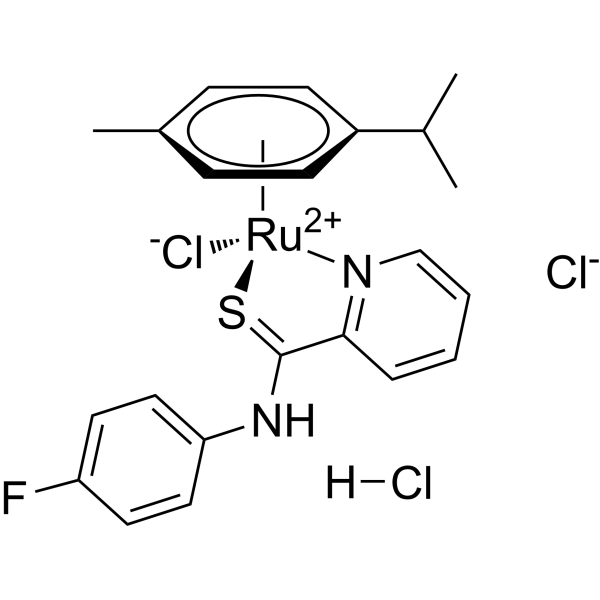
Plecstatin-1 hydrochloride is a metal complex that drives the aggregation and collapse of the plectin network, and disrupts the cytoskeletal structures of α‑tubulin and F‑actin. Plecstatin-1 hydrochloride triggers oxidative stress, mediates the phosphorylation of eIF2α, and induces molecular features associated with immunogenic cell death, including calreticulin membrane exposure, membrane localization of HSP70/HSP90, ATP secretion, and HMGB‑1 release. Plecstatin-1 hydrochloride induces apoptosis via the intrinsic mitochondrial pathway and exerts anti-invasive activity. Plecstatin-1 hydrochloride inhibits sphere proliferation and reduces clonogenicity in the 3D tumor spheroid model of colon cancer cells. Plecstatin-1 hydrochloride is applicable to relevant research on colorectal cancer .
loading...
    loading...
1
1 Cited Publications
Cat. No.: HY-163121
CAS No.: 1096144-06-7
PST3.1a is an orally active and brain-penetrant N-acetylglucosamine glycosyltransferase (MGAT5) inhibitor with a human IC50 of 2 µM. PST3.1a inhibits TGFβR and FAK signaling pathway activity. PST3.1a alters β1,6-GlcNAc N-glycans and microtubule/microfilament integrity, increases OLIG2 expression, and inhibits proliferation, migration, invasiveness, and clonogenic capacities of glioblastoma initiating cells. PST3.1a reduces invasive and proliferative capacity of glioblastoma initiating cells in orthotopic graft models, increases overall survival of orthotopic graft model mice. PST3.1a blunts MGAT5 overexpression, decreases renal fibrosis via collagen 1, collagen 4, and galectin 3 downregulation in a rat chronic kidney disease model. PST3.1a can be used for the research of glioblastoma multiforme and chronic kidney disease .
loading...
    loading...
Cat. No.: HY-159147
CAS No.: 2570251-69-1
Research Areas:  

Cancer

SIAIS039 is an orally active c-ros oncogene 1 (ROS1)-specific PROTAC with DC50s of 154.46 nM, 126.47 nM, 143.69 nM for HCC78 cells, Ba/F3 expressing the CD74-ROS1 fusion and Ba/F3 expressing the SDC4-ROS1 fusion, respectively. SIAIS039 suppresses cell proliferation, induces cell cycle arrest and apoptosis, and inhibits clonogenicity against ROS1-positive cells. SIAIS039 demonstrates anti-tumour effects against ROS1-driven tumor growth vivo. SIAIS039 is composed of the ALK inhibitor Brigatinib (HY-12857), a linker EM-12 (HY-138793), and a VHL ligand E3 ubiquitin ligase 1-Butyne (Red: Brigatinib; Blue: VHL ligand; Black: linker) .
loading...
    loading...
Cat. No.: HY-172824
Target:  

DUBTACs Deubiquitinase

Research Areas:  

Cancer

MS7131 is a USP1-recruiting DUBTACs. MS7131 effectively reduces histone H3 lysine 27 trimethylation and significantly suppresses the proliferation and clonogenicity of cancer cells .
loading...
    loading...
Cat. No.: HY-175243
CAS No.: 2734853-87-1
Research Areas:  

Cancer

ADAR1-IN-1 is a potent ADAR1 inhibitor. ADAR1-IN-1 significantly suppressed DU-145 cell proliferation (IC50 = 1.11 μM), clonogenicity, migration, and invasion, arrests cell cycle, and induces apoptosis. ADAR1-IN-1 safely and effectively inhibits tumor growth. ADAR1-IN-1 can be used for the study of prostate cancer (PCa) .
loading...
    loading...
Cat. No.: HY-162966
CAS No.: 3060519-67-4
Research Areas:  

Cancer

MS7829 is a deubiquitinase-targeting chimera (DUBTAC) that targets cGAS. MS7829 recruits OTUB1 to cGAS, binds covalently to OTUB1, stabilizes the protein abundance of cGAS, and activates the cGAS-STING-IRF3 innate immune signaling pathway in an OTUB1-dependent manner. MS7829 is applicable to cancer-related research .
loading...
    loading...
Cat. No.: HY-179228
CAS No.: 1246964-08-8
Target:  

CTLA-4 TGF-beta/Smad

Research Areas:  

Cancer

AN02 is a derivative of Curcumin (HY-N0005). AN02 inhibits the proliferation and clonogenicity, migration and invasion of ovarian cancer cells. AN02 dose-dependently upregulates the expression of APC and mediates the degradation of CTLA-4 through SMAD4. In the small xenograft model, AN02 significantly inhibits tumor growth and reverses the tumor immune-suppressive microenvironment. AN02, when combined with Ipilimumab (HY-P9901), can enhance efficacy and inhibit epithelial-mesenchymal transition. AN02 can be used for the study of ovarian cancer .
loading...
    loading...
Cat. No.: HY-156675
CAS No.: 2119725-22-1
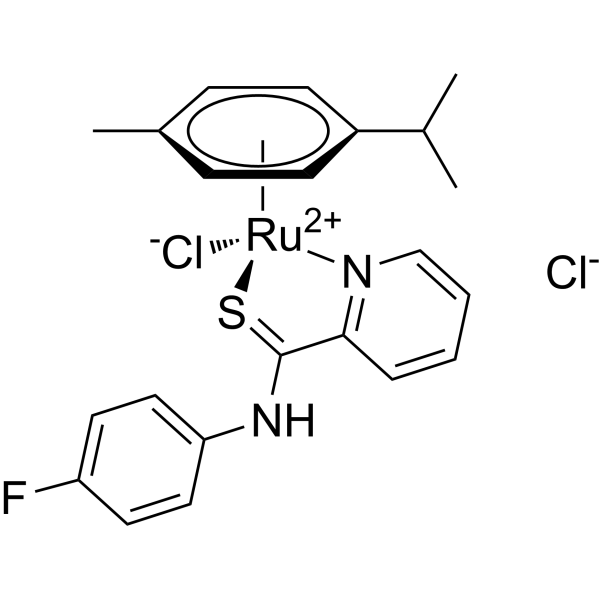
Plecstatin‑1 is a metal complex that drives the aggregation and collapse of the plectin network, and disrupts the cytoskeletal structures of α‑tubulin and F‑actin. Plecstatin-1 triggers oxidative stress, mediates the phosphorylation of eIF2α, and induces molecular features associated with immunogenic cell death, including calreticulin membrane exposure, membrane localization of HSP70/HSP90, ATP secretion, and HMGB‑1 release. Plecstatin-1 induces apoptosis via the intrinsic mitochondrial pathway and exerts anti-invasive activity. Plecstatin‑1 inhibits sphere proliferation and reduces clonogenicity in the 3D tumor spheroid model of colon cancer cells. Plecstatin-1 is applicable to relevant research on colorectal cancer .
loading...
    loading...
Cat. No.: HY-N14618
CAS No.: 23666-50-4
Target:  

Src

Rhodomycin A can suppress lung cancer cell progression via modulating Src-related pathways.?Rhodomycin A significantly suppressed cancer cell proliferation, migration, invasion, and clonogenicity in vitro and tumour growth in vivo .
loading...
    loading...
Cat. No.: HY-116504
CAS No.: 1373764-87-4
Target:  

EGFR Akt ERK Apoptosis

Research Areas:  

Cancer

WB-308 is a novel small molecule that was identified as an inhibitor of EGFR by an in vitro EGFR kinase activity system. WB-308 was able to reduce the proliferation and clonogenicity of NSCLC cells, causing G2/M phase arrest and apoptosis. In addition, WB-308 inhibited tumor growth in two in vivo animal models (lung orthotopic transplantation model and patient-derived clonal mouse model). WB-308 impaired the phosphorylation of EGFR, AKT, and ERK1/2 proteins. Compared with Gefitinib, WB-308 had lower cytotoxicity. This study showed that WB-308 is a new EGFR-TKI that may be considered as an alternative to Gefitinib in the clinical treatment of NSCLC.
loading...
    loading...
Cat. No.: HY-161826
Target:  

Wnt β-catenin HSP CDK c-Myc

Research Areas:  

Cancer

Antitumor agent-174 (Compound 10) directly engages the N-terminal site of Hsp90 and promotes the degradation of β-catenin, thereby suppressing the Wnt/β-catenin signaling. Antitumor agent-174 effectively inhibits proliferation, induce S and G2/M phases arrest and block the clonogenic ability in CRC cells. Antitumor agent-174 down-regulates CDK1, Cyclin D1, c-Myc, Cyclin B1, and Cyclin A2, and upregulaties P21 proteins. Antitumor agent-174 has significant anti-tumor efficacy against colorectal cancer (CRC) with excellent pharmacokinetics and low toxicity .
loading...
    loading...
Cat. No.: HY-184273
CAS No.: 1903103-73-0
Research Areas:  

Cancer

TH-407a is an orally active and selective USP15 inhibitor with an IC50 of 0.76 μM. As an allosteric modulator, TH-407a binds to a non-catalytic site to block deubiquitinating activity. TH-407a inhibits cell growth, proliferation, clonogenicity and migration, regulates the p53 signaling pathway, and reduces the stability of PARP1. TH-407a exhibits anti-tumor activity in breast cancer xenograft mouse models. TH-407a can be used for the research of breast cancer .
loading...
    loading...
Cat. No.: HY-183098
Target:  

PROTACs IKK Apoptosis

Research Areas:  

Cancer

UNC8209 is a selective PROTAC-based TANK-binding kinase 1 (TBK1) degrader. UNC8209 recruits cereblon (CRBN) to mediate ubiquitin-proteasome pathway-dependent TBK1 degradation and reduces AAK1, GAK, and AURKA abundance. UNC8209 suppresses tumor cell proliferation, impairs in vivo tumor growth, inhibits colony and clonogenic growth and enhances tumor cell sensitivity to TNFα or IFN-γ. UNC8209 modulates cell cycle and induces mild apoptosis. UNC8209 can be used for the research of clear cell renal cell carcinoma, non-small cell lung cancer, pancreatic ductal adenocarcinoma .
loading...
    loading...
Cat. No.: HY-184717
Target:  

Atg4 Autophagy

Research Areas:  

Cancer

Atg4B-IN-3 (compound a25) is a ATG4B inhibitor with a Kd value of 18.01 nM against the human target. Atg4B-IN-3 stably regulates the closed conformation of the loop, prevents substrates from accessing the catalytic site Cys74, and thereby inhibits the proteolytic activity of ATG4B. Atg4B-IN-3 blocks autophagic flux, reduces LC3-II levels, promotes p62 accumulation, disrupts autophagy homeostasis and enhances cell death. Atg4B-IN-3 inhibits cell proliferation, migration and clonogenic survival capacity. Atg4B-IN-3 can be used in studies related to esophageal squamous cell carcinoma .
loading...
    loading...
Cat. No.: HY-187179
Target:  

CDK Apoptosis

Research Areas:  

Cancer

CDK2-IN-62 is a predicted CDK2 inhibitor. CDK2-IN-62 induces apoptosis in breast cancer cells and reduces their colony-forming ability. CDK2-IN-62 can be used for the research of breast cancer, ovarian cancer and colorectal cancer .
loading...
    loading...
  • 1

