


32 Results for "

collagen adhesion

" in MedChemExpress (MCE) Product Catalog:
Products (32)

32 Results for "collagen adhesion" in MCE Product Catalog:

4
4 Cited Publications
Cat. No.: HY-P1408
CAS No.: 404882-00-4
Target:  

Integrin VEGFR

Research Areas:  

Cancer

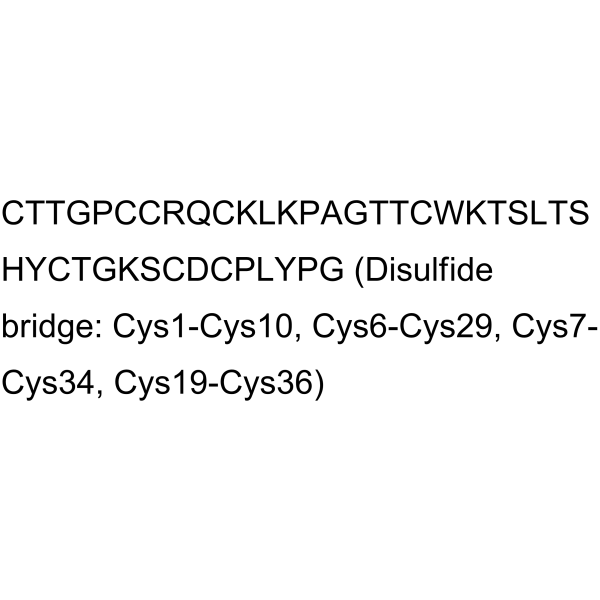
Obtustatin is a non-RGD disintegrin consisting of 41 residues. Obtustatin inhibits the adhesion of α1β1 integrin to type IV Collagen (HY-NP003), blocks α1β1 integrin signaling in endothelial cells, and suppresses FGF2-induced angiogenesis. Obtustatin inhibits tumor progression in mouse models and upregulates VEGF expression in sarcoma-bearing mice. Obtustatin can be used in research related to Lewis lung carcinoma and S-180 sarcoma .
loading...
    loading...
4
4 Cited Publications
Cat. No.: HY-P1408A
Target:  

Integrin

Research Areas:  

Cancer

Obtustatin triacetate is a 41-residue non-RGD disintegrin. Obtustatin triacetate can be isolated from the venom of Vipera lebetina obtusa. Obtustatin triacetate is a potent and selective inhibitor of integrin α1β1 adhesion to type IV collagen. Obtustatin triacetate inhibits angiogenesis and may be used in cancer research .
loading...
    loading...
3
3 Cited Publications
Cat. No.: HY-107588
CAS No.: 916734-43-5
Purity:  99.94%
Target:  

Integrin

Research Areas:  

Cardiovascular Disease

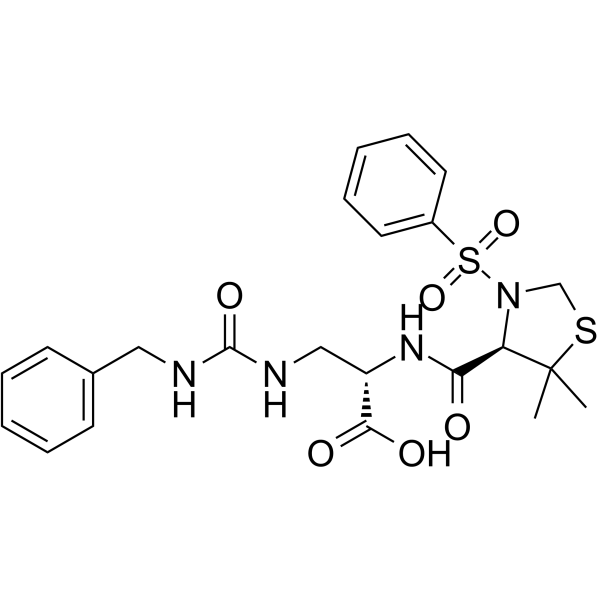
TC-I 15 (TC-I-15) is a type of allosteric collagen-binding integrin α2β1 inhibitor, and it also inhibits α1β1 and α11β1. TC-I 15 inhibits platelet adhesion to collagen and thrombus deposition. TC-I 15 prevents the formation of a pre-metastatic microenvironment by inhibiting the uptake of cancer-associated fibroblast (CAF) extracellular vesicles (EVs) by lung fibroblasts, which reduces the metastasis of salivary gland adenocystic carcinoma (SACC) to the lungs in mouse models, .
loading...
    loading...
2
2 Cited Publications
Cat. No.: HY-112726
CAS No.: 1478364-68-9
Purity:  98.79%
Synonyms: BI-1467335
Target:  

VAP-1 MMP

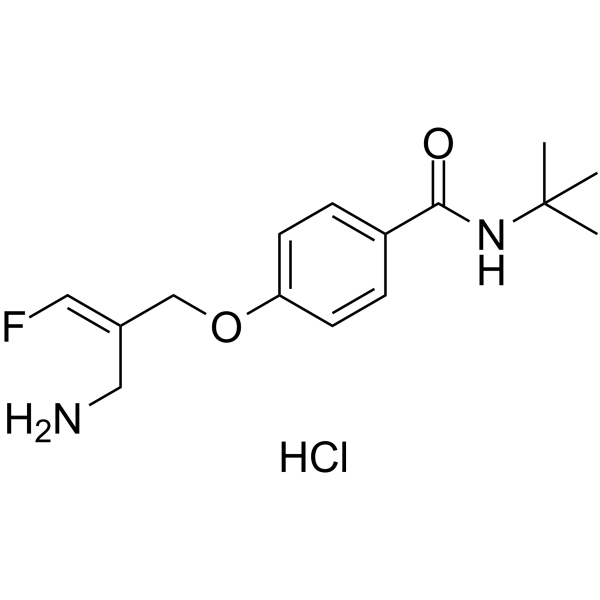
PXS-4728A is an orally active, selective VAP-1/SSAO inhibitor with an IC50 of 5 nM and a Ki of 175 nM. PXS-4728A inhibits the expression of MMP-9. It reduces cell rolling, adhesion and migration, decreases cell infiltration levels, pro-inflammatory cytokines, chemokines and collagen deposition, and improves pulmonary function. PXS-4728A reduces the formation and progression of atherosclerotic plaques, and decreases blood lipid and blood glucose levels as well as body weight gain. PXS-4728A can be used in research related to chronic obstructive pulmonary disease, cystic fibrosis, acute pulmonary inflammation, acute lung injury, bronchiolitis obliterans syndrome, rhinovirus-exacerbated asthma, sepsis, Klebsiella pneumoniae pulmonary infection and atherosclerosis .
loading...
    loading...
1
1 Cited Publications
Cat. No.: HY-E70005H
CAS No.: 9001-12-1
Target:  

Proteasome

Research Areas:  

Cardiovascular Disease

Collagenase, Type VIII is a mixed enzyme derived from Clostridium histolyticum that contains collagenase, a nonspecific protease, and a clostripain. Collagenase, Type VIII can hydrolyze Type VIII collagen and may be used to study the formation of atherosclerosis. Type VIII collagen is a regulator of endothelial cell differentiation and angiogenesis, a substrate for cell adhesion and migration such as smooth muscle cells, and may accumulate in atherosclerosis. After endotoxin activates the expression of Collagenase, Type VIII, it can reduce the production of Type VIII collagen and has the potential to inhibit atherosclerosis .
loading...
    loading...
1
1 Cited Publications
Cat. No.: HY-P2975
CAS No.: 114956-81-9
Synonyms: Mouse laminin (Engelbreth-Holm-Swarm murine sarcoma basement membrane)
Laminin (Engelbreth-Holm-Swarm murine sarcoma basement membrane) is a crucial structural element in animal tissues, forming part of the scaffolding that supports tissue architecture. It interacts with type IV collagen through entactin and perlecan, connects to cell membranes via integrin receptors, dystroglycan complexes, and Lutheran blood group glycoproteins, and contains functional domains that facilitate collagen binding, cell adhesion, heparin interaction, and promote neurite outgrowth.
loading...
    loading...
1
1 Cited Publications
Cat. No.: HY-158226
Synonyms: ElaMA
Elastin Methacrylated (ElaMA) elastin recruits and modulates innate immune cells and accelerates angiogenesis at the wound site, thereby improving wound regeneration. Elastin Methacrylated attracts large numbers of neutrophils and primarily M2 macrophages to the wound and induces their penetration into the hydrogel. Elastin Methacrylated has excellent immunomodulatory effects, leading to superior angiogenesis, collagen deposition and dermal regeneration . Elastin Methacrylated needs to self-assemble into fibrous hydrogel under the action of photoinitiator LAP (HY-44076), and target bioactive adhesion sites, play an inherent supporting role for tissue cells and biodegradable activity.
Application: cell culture, biological 3D printing, tissue engineering, etc.
loading...
    loading...
Cat. No.: HY-N2163
CAS No.: 172760-03-1
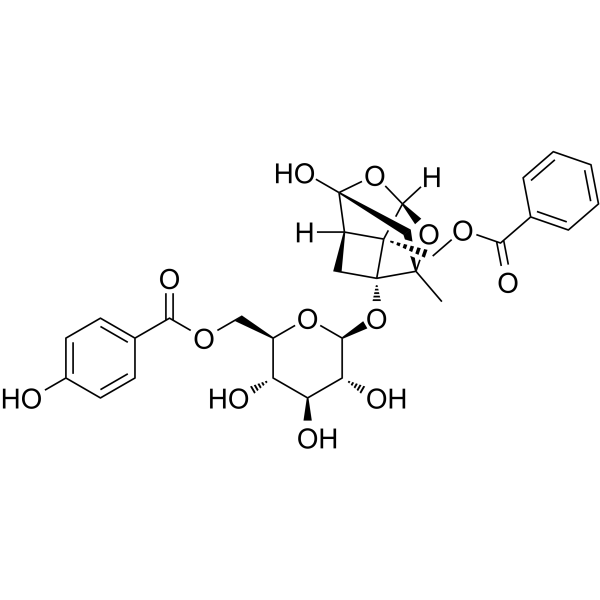
Mudanpioside C is a protein disulfide isomerase (PDI) inhibitor with a human IC50 of 3.31 μM and human Kd of 3.9 μM. Mudanpioside C suppresses collagen-induced platelet aggregation, interferes with platelet activation, adhesion, and spreading. Mudanpioside C can be used for the research of cardiovascular diseases .
loading...
    loading...
Cat. No.: HY-W129161
CAS No.: 827306-88-7
Research Areas:  

Metabolic Disease

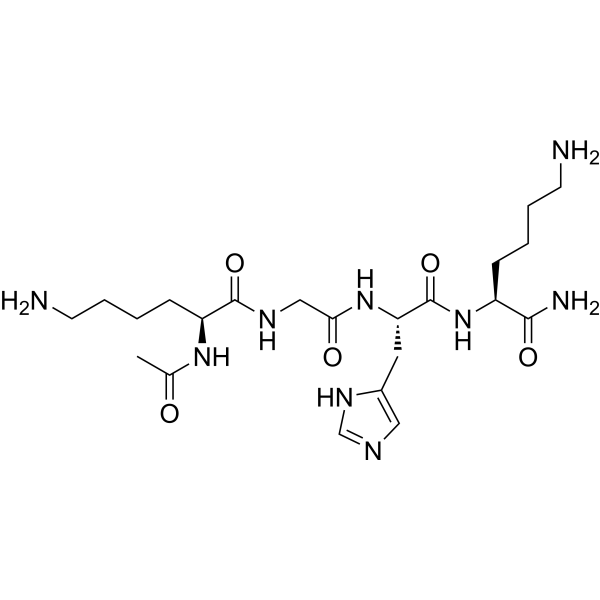
Acetyl tetrapeptide-3 is a synthetic peptide. Acetyl tetrapeptide-3 enhances the adhesion of hair follicles to the scalp but also promotes the development of new hair follicles. Acetyl tetrapeptide-3 stimulates the synthesis of collagen III in hair follicles. Acetyl tetrapeptide-3 combined with Biochanin A (HY-14595) and ginseng extracts, can stimulate dermal papilla extracellular matrix (ECM) proteins by increasing hydroxyproline, Collagen Type 3, and laminin, yielding a significant improvement in hair follicle size and hair anchoring .
loading...
    loading...
Cat. No.: HY-P11328
CAS No.: 245120-10-9
Target:  

Integrin

Research Areas:  

Others

GFOGER peptide is an artificially synthesized collagen-mimetic sequence. GFOGER peptide acts as a ligand for α2β1, α11β1 and α1β1 integrins, thereby supporting integrin-mediated cell adhesion to collagen. GFOGER peptide triggers signaling pathways mediated by the α2β1 integrin receptor and upregulates osteoblast differentiation. GFOGER peptide accelerates and enhances bone formation at sites of refractory femoral defects. GFOGER peptide can be passively adsorbed onto polymer scaffolds for cell-free/growth factor-free bone formation. GFOGER peptide is used in biomaterials such as hydrogels and 3D bioinks for tissue engineering research including bone formation .
loading...
    loading...
Cat. No.: HY-NP132A
Recombinant humanized type III collagen (MW 55900) is a type III collagen with a molecular weight of 55900 Da. Recombinant humanized type III collagen has various biological functions, such as promoting skin extracellular matrix regeneration and improving the cell microenvironment. Recombinant humanized type III collagen inhibits the proliferation, migration, and invasion of breast cancer cells. Type III collagen functions in cell adhesion, migration, proliferation and differentiation through its interaction with integrins .
loading...
    loading...
Cat. No.: HY-NP132
Recombinant Humanized Type III Collagen 28.6kDa is a 28.6 kDa recombinant humanized type III collagen. Recombinant Humanized Type III Collagen possesses a variety of biological functions, such as promoting the regeneration of the skin extracellular matrix and improving the cellular microenvironment. Recombinant Humanized Type III Collagen can also inhibit the proliferation, migration and invasion of breast cancer cells. Recombinant Humanized Type III Collagen plays a role in cell adhesion, migration, proliferation and differentiation by interacting with Integrin .
loading...
    loading...
Cat. No.: HY-N2600
CAS No.: 76472-87-2
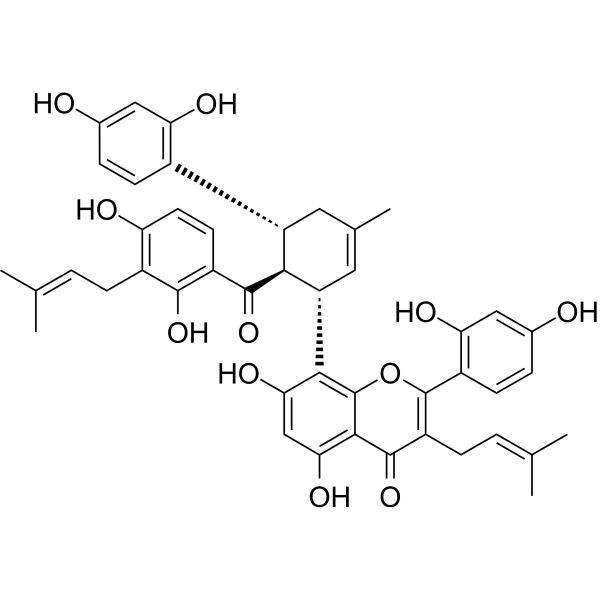
Kuwanon H is a selective non-peptide bombesin receptor antagonist and platelet activation inhibitor. Kuwanon H also acts as a specific antagonist of GRP-preferring receptors, with a Ki value of 290 nM for mouse GRP-R and 6500 nM for rat NMB-R. Kuwanon H inhibits the phosphorylation of AKT, mTOR, ERK, cPLA2 and p38, and upregulates TRIB3. It induces endoplasmic reticulum stress, apoptosis and autophagosome formation. Kuwanon H blocks calcium mobilization, mitogenic signaling, DNA synthesis, dense granule secretion, thromboxane A2 generation and integrin αIIb/β3 activity. It inhibits collagen-induced platelet aggregation and fibronectin adhesion, and delays clot retraction. Kuwanon H inhibits melanoma cell growth in vitro and in vivo, and enhances the sensitivity of melanoma cells to CDDP. It can be used in research related to melanoma, small cell lung cancer and thrombosis .
loading...
    loading...
Cat. No.: HY-P5832
CAS No.: 836606-84-9
Target:  

TGF-beta/Smad RUNX

Research Areas:  

Metabolic Disease

BMP2-derived peptide is an osteogenic inducer and BMP receptor ligand. BMP2-derived peptide binds to BMP receptors on the cell surface to form a complex, activates the downstream Smad signaling pathway, and regulates the expression of osteogenic transcription factors. BMP2-derived peptide effectively promotes the adhesion, proliferation, osteogenic differentiation and mineralization of bone marrow mesenchymal stem cells, significantly up-regulates the mRNA levels of OCN, Runx2 and type I collagen, and increases alkaline phosphatase activity and calcium deposition. BMP2-derived peptide induces osteoblast differentiation and ectopic bone regeneration, and improves cranial bone defect repair. Meanwhile, BMP2-derived peptide enhances the cytocompatibility of mesoporous silica nanoparticles, synergistically increases osteogenic activity with Dexamethasone (HY-14648), serving as an important tool for bone defect repair research .
loading...
    loading...
Cat. No.: HY-P11087
CAS No.: 134335-45-8
Target:  

Collagen RUNX Integrin

Research Areas:  

Inflammation/Immunology

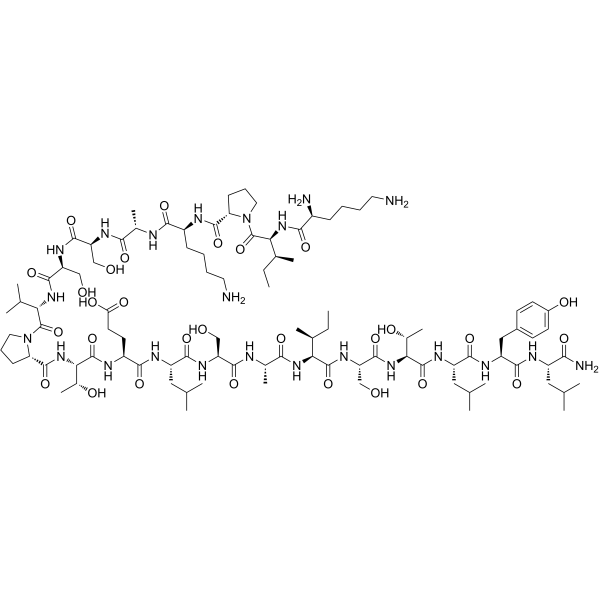
P15 is a type I collagen-mimetic peptide with pro-adhesive properties. P15 binds to membrane integrin, including α2β1, to mediate cell adhesion and trigger the production of growth factors and cytokines. P15 upregulates the expression of osteogenic genes via targets including RUNX2, OSTRX and BSP. P15 stimulates the adhesion and proliferation of osteoblasts, enhances alkaline phosphatase activity and calcium deposition, and supports osteogenic differentiation. P15 can be used in research related to periodontal bone defects, cervical intervertebral disc defects, and non-union/bone defects .
loading...
    loading...
Cat. No.: HY-158225
Synonyms: Col1MA
Methacrylated Type I collagen (Col1MA) is a methacrylated tissue engineering scaffold material that retains the basic properties of natural collagen . Methacrylated Type I collagen needs to self-assemble into fibrous hydrogel under the action of photoinitiator LAP (HY-44076), and target bioactive adhesion sites, play an inherent supporting role for tissue cells and biodegradable activity.
Application: cell culture, biological 3D printing, tissue engineering, etc.
loading...
    loading...
Cat. No.: HY-NP162
Recombinant Humanized Type XVII Collagen is a transmembrane protein that forms hemidesmosomes. Recombinant Humanized Type XVII Collagen facilitates interactions between stem cells,surrounding cells,and the extracellular matrix,thereby regulating skin homeostasis,aging,and wound healing. Recombinant Humanized Type XVII Collagen also possesses unique cell adhesion sites and signal transduction functions,which can regulate cell migration,proliferation,and differentiation .
loading...
    loading...
Cat. No.: HY-177331
CAS No.: 1259029-47-4
Target:  

Integrin

Research Areas:  

Cardiovascular Disease

BTT-3034, a sulfonamide derivative, is an α2β1 integrin inhibitor. BTT-3034 inhibits cell adhesion to rat tail collagen I with an EC50 of 160 nM and a corresponding Emaxof 86%. BTT-3034 inhibits collagen binding by an α2 variant carrying the conformationally activating E318W mutation .
loading...
    loading...
Cat. No.: HY-113612
CAS No.: 682329-63-1
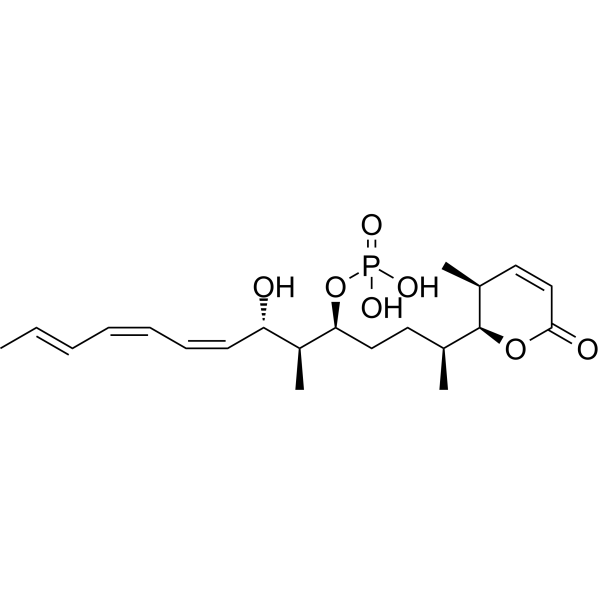
Cytostatin is an effective and selective protein phosphatase 2A (PP2A) inhibitor with an IC50 value of 210 nM. Cytostatin exhibits anti-metastatic properties, good antitumor activity, and can induce apoptosis. Cytostatin can also prevent the adhesion of B16 melanoma cells to components of the extracellular matrix (laminin and collagen). Cytostatin belongs to the family of natural product fosriecin .
loading...
    loading...
Cat. No.: HY-168087
CAS No.: 1893340-21-0
Target:  

Integrin

Research Areas:  

Inflammation/Immunology

GSK3335103 is an orally active non-peptidic αvβ6 integrin inhibitor with a pIC50 of 8 and a pKi of 9.96. GSK3335103 blocks αvβ6 integrin-mediated cell adhesion and TGF-β1 activation, induces integrin internalization, recycling and lysosomal degradation, attenuates TGFβ signaling and reduces collagen deposition. GSK3335103 decreases the level of pSmad2 in BAL cells and collagen deposition in lung tissues in a mouse model of pulmonary fibrosis. GSK3335103 can be used in research related to pulmonary fibrosis .
loading...
    loading...

