12 Results for "

cytoskeletal disruption

" in MedChemExpress (MCE) Product Catalog:
Products (12)

12 Results for "cytoskeletal disruption" in MCE Product Catalog:

1
1 Cited Publications
Cat. No.: HY-156675A
Purity:  99.34%
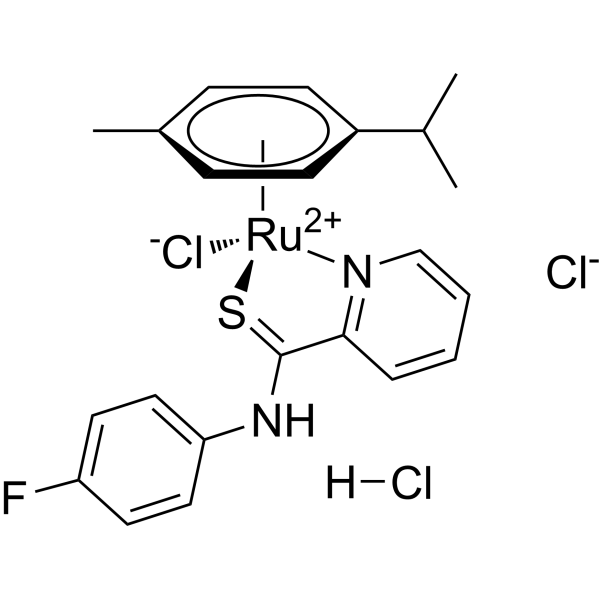
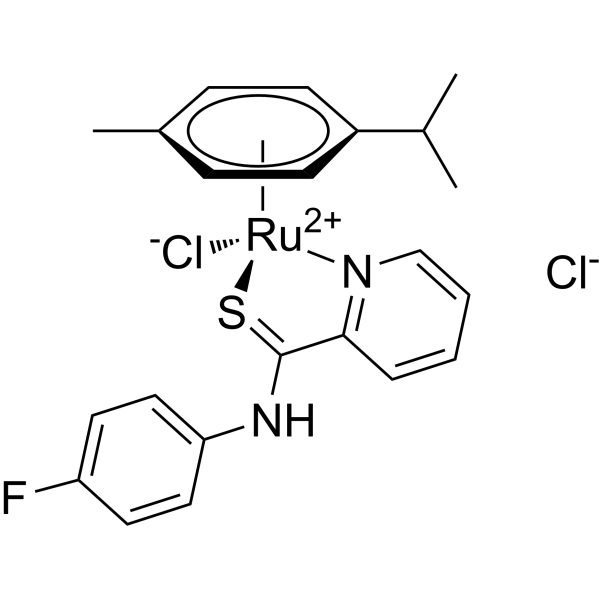
Plecstatin-1 hydrochloride is a metal complex that drives the aggregation and collapse of the plectin network, and disrupts the cytoskeletal structures of α‑tubulin and F‑actin. Plecstatin-1 hydrochloride triggers oxidative stress, mediates the phosphorylation of eIF2α, and induces molecular features associated with immunogenic cell death, including calreticulin membrane exposure, membrane localization of HSP70/HSP90, ATP secretion, and HMGB‑1 release. Plecstatin-1 hydrochloride induces apoptosis via the intrinsic mitochondrial pathway and exerts anti-invasive activity. Plecstatin-1 hydrochloride inhibits sphere proliferation and reduces clonogenicity in the 3D tumor spheroid model of colon cancer cells. Plecstatin-1 hydrochloride is applicable to relevant research on colorectal cancer .
loading...
    loading...
Cat. No.: HY-W021040
CAS No.: 131341-86-1
Synonyms: CGA-173506
Research Areas:  

Infection Cancer

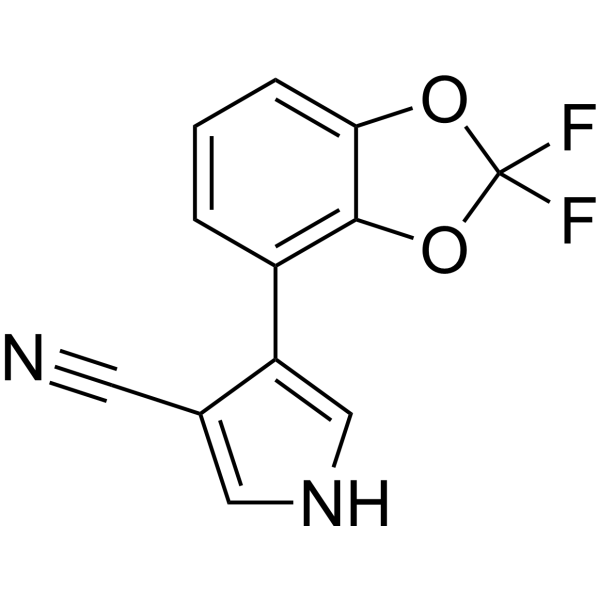
Fludioxonil (CGA-173506) is a phenylpyrrole-type fungicide with oral activity that can inhibit the growth of S. sclerotiorum. Fludioxonil promotes tumor growth and metastasis, and induces cardiac toxicity. Fludioxonil causes cytoskeletal disruption, DNA damage, and apoptosis in mouse glioma cells .
loading...
    loading...
Cat. No.: HY-N6701
CAS No.: 39156-67-7
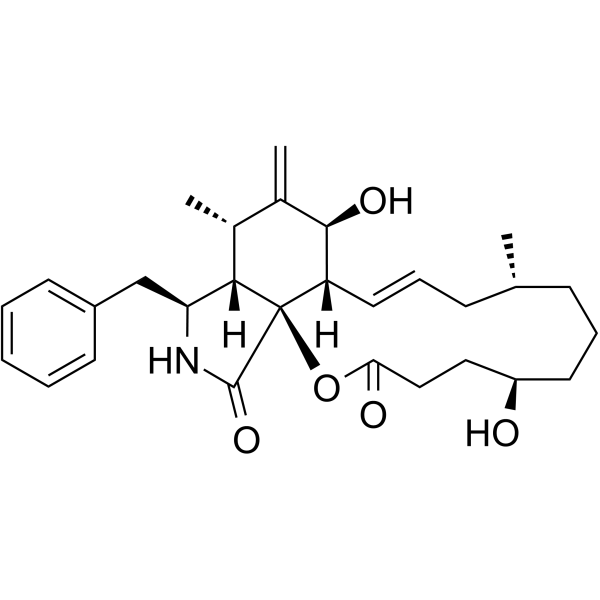
Dihydrocytochalasin B is an Actin disruptor. Dihydrocytochalasin B disrupts actin microfilament bundles, inhibits actin polymerization, and alters intracellular actin cytoskeletal structures. Dihydrocytochalasin B blocks the initiation of DNA synthesis. Dihydrocytochalasin B inhibits Calcium transport. Dihydrocytochalasin B inhibits cytokinesis and alters cell morphology. Dihydrocytochalasin B can be used in studies related to rickets .
loading...
    loading...
Cat. No.: HY-131900
CAS No.: 84477-87-2
Purity:  99.96%
Target:  

PKC PKA PKG Arp2/3 Complex

Research Areas:  

Others

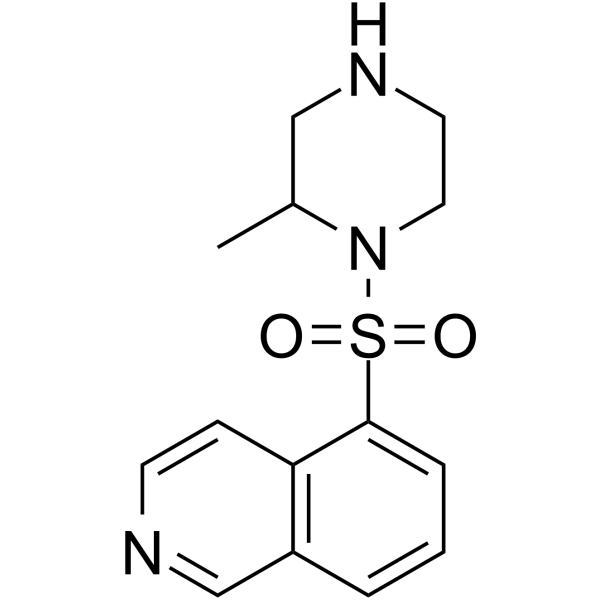
Protein kinase inhibitor H-7 is a selective inhibitor of PKC and cyclic nucleotide-dependent protein kinases, with a Ki value of 6.0 μM for rabbit protein kinase C, a Ki value of 3.0 μM for rabbit cAMP-dependent protein kinase, and a Ki value of 5.8 μM for porcine cGMP-dependent protein kinase. Protein kinase inhibitor H-7 has no effect on Ca 2+-calmodulin-dependent enzymes. Protein kinase inhibitor H-7 regulates the Actin cytoskeleton, inhibits contractility, disrupts stress fibers, induces protrusive activity, stabilizes intercellular junctions, and triggers rapid and reversible cytoskeletal reorganization. Protein kinase inhibitor H-7 serves as a research tool for elucidating the functions of protein kinase C-mediated signaling systems .
loading...
    loading...
Cat. No.: HY-156675
CAS No.: 2119725-22-1
Plecstatin‑1 is a metal complex that drives the aggregation and collapse of the plectin network, and disrupts the cytoskeletal structures of α‑tubulin and F‑actin. Plecstatin-1 triggers oxidative stress, mediates the phosphorylation of eIF2α, and induces molecular features associated with immunogenic cell death, including calreticulin membrane exposure, membrane localization of HSP70/HSP90, ATP secretion, and HMGB‑1 release. Plecstatin-1 induces apoptosis via the intrinsic mitochondrial pathway and exerts anti-invasive activity. Plecstatin‑1 inhibits sphere proliferation and reduces clonogenicity in the 3D tumor spheroid model of colon cancer cells. Plecstatin-1 is applicable to relevant research on colorectal cancer .
loading...
    loading...
Cat. No.: HY-175261
Research Areas:  

Cancer

DHI1 is an anti-leukemia agent with high selectivity for Jurkat (IC50 = 21.83 μM) and HL-60 (IC50 = 19.14 μM) leukemia cells and has low toxicity to non-cancerous cells. DHI1 can induce G2/M phase cell arrest in Jurkat and HL-60 leukemia cells, as well as S phase arrest in HL-60 cells, and has significant effects on cell cycle signaling molecules Wee1, cyclin B1, cdc2 on Tyr15, and Chk1. DHI1 inhibits the migration and invasion of Jurkat and HL-60 cells by disrupting cytoskeletal actin filaments. DHI1 can be used to study hematological malignancies .
loading...
    loading...
Cat. No.: HY-W021040S
CAS No.: 1185003-07-9
Synonyms: CGA-173506-13C3
Fludioxonil- 13C3 (CGA-173506- 13C3) is 13C labeled Fludioxonil. Fludioxonil (CGA-173506) is a phenylpyrrole-type fungicide with oral activity that can inhibit the growth of S. sclerotiorum. Fludioxonil promotes tumor growth and metastasis, and induces cardiac toxicity. Fludioxonil causes cytoskeletal disruption, DNA damage, and apoptosis in mouse glioma cells .
loading...
    loading...
Cat. No.: HY-101145
CAS No.: 1001478-90-5
Research Areas:  

Cancer

CK37 is a competitive choline kinase-α inhibitor. CK37 inhibits purified recombinant human choline kinase-α activity. CK37 suppresses MAPK and PI3K/AKT signaling, disrupts actin cytoskeletal organization. CK37 diminishs activating phosphorylations of ERK. CK37 exhibits anticancer activity against cervical cancer, melanoma, Lewis lung carcinoma, lung adenocarcinoma, breast cancer, and leukemia .
loading...
    loading...
Cat. No.: HY-W308414
CAS No.: 21129-27-1
4-Isopropyl-1-methylcyclohexanol is a terpenoid component. 4-Isopropyl-1-methylcyclohexanol can be isolated from extracts of peppermint (Mentha × piperita). 4-Isopropyl-1-methylcyclohexanol reduces the level of mitotic nuclei, exhibits no antibacterial activity against bacteria, and shows no antiviral activity against respiratory syncytial virus .
loading...
    loading...
Cat. No.: HY-W718178
CAS No.: 152-84-1
Ruberythric acid is a natural product found in madder (Rubia tinctorum). Acid treatment induces hydrolysis of Ruberythric acid, producing pentose-containing sugar residues and alizarin. Ruberythric acid inhibits stimulus-induced phosphorylation of IKK, IκBα and p65 in the NF-κB pathway, regulates tight junction integrity, suppresses stimulus-induced MLCK activation and myosin light chain phosphorylation, reduces tight junction disruption associated with cytoskeletal contraction, alleviates stimulus-induced increase in intestinal permeability, and prevents stimulus-induced redistribution of tight junction proteins. Ruberythric acid forms red salts when dissolved in alkali and can be used as a dye. Ruberythric acid is applicable to research related to inflammatory bowel disease .
loading...
    loading...
Cat. No.: HY-187719
CAS No.: 318262-42-9
Target:  

Proton Pump Apoptosis

Research Areas:  

Cancer

NIK-12192 is an orally active inhibitor of vacuolar H +-ATPase. NIK-12192 reduces intracellular pH, decreases lysosomal volume and acidity, and alters the intracellular localization of V-ATPase by inhibiting proton pumps . NIK-12192 induces αvβ5 integrin polarization, cytoskeletal disruption, cell detachment, anoikis-mediated delayed apoptosis and necrosis, a delayed reduction in mitochondrial membrane potential, and lysosomal/phagosomal accumulation. NIK-12192 inhibits tumor cell migration, invasion, and three-dimensional spheroid growth, and enhances the activity of Topotecan (HY-13768). NIK-12192 suppresses spontaneous lung metastasis in vivo. NIK-12192 is used in research related to colon cancer, ovarian cancer, lung cancer, breast cancer, renal cancer, prostate cancer, acute myeloid leukemia, and melanoma .
loading...
    loading...
Cat. No.: HY-W715812
CAS No.: 116255-48-2
Bromuconazole is a triazole fungicide with oral efficacy and blood-brain barrier permeability . Bromuconazole protects crops from various fungal contaminations. Bromuconazole exhibits cytotoxicity against a variety of cancer cells, induces G0/G1 cell cycle arrest and inhibits DNA synthesis in cancer cells, and triggers cytoskeletal structural disorder, genotoxic damage, apoptotic (apoptosis) cell death, and mitochondrial membrane depolarization. Bromuconazole activates caspase-3, induces excessive production of ROS, p53 and Bax, lipid peroxidation, increased activities of SOD and CAT, and downregulates Bcl-2. By upregulating p-ERK1/2 and p-JNK, Bromuconazole disrupts the MAPK signaling pathway, impairs the cellular stress response of human trophoblast cells and endometrial cells, and damages the implantation process . Bromuconazole is applicable to research related to glioma, colon cancer, reproductive injury (implantation dysfunction), and cardiac dysfunction .
loading...
    loading...
  • 1

