8 Results for "

cytosolic DNA

" in MedChemExpress (MCE) Product Catalog:
Products (8)

8 Results for "cytosolic DNA" in MCE Product Catalog:

28
28 Publications Verification
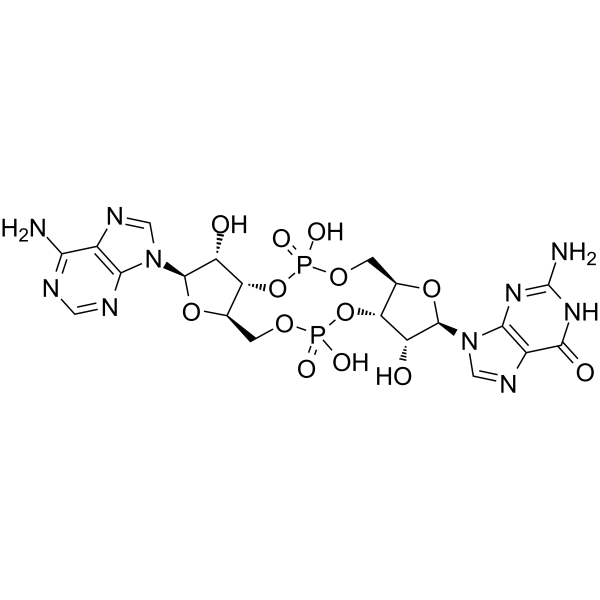
Cat. No.: HY-12512
CAS No.: 849214-04-6
Purity:  98.28%
Synonyms: Cyclic GMP-AMP; 3',3'-cGAMP
Target:  

STING

Research Areas:  

Inflammation/Immunology

cGAMP (Cyclic GMP-AMP) functions as an endogenous second messenger in metazoans and triggers interferon production in response to cytosolic DNA. cGAMP activates stimulator of interferon genes (STING), which activates a signaling cascade leading to the production of type I interferons and other immune mediators .
loading...
    loading...
28
28 Publications Verification
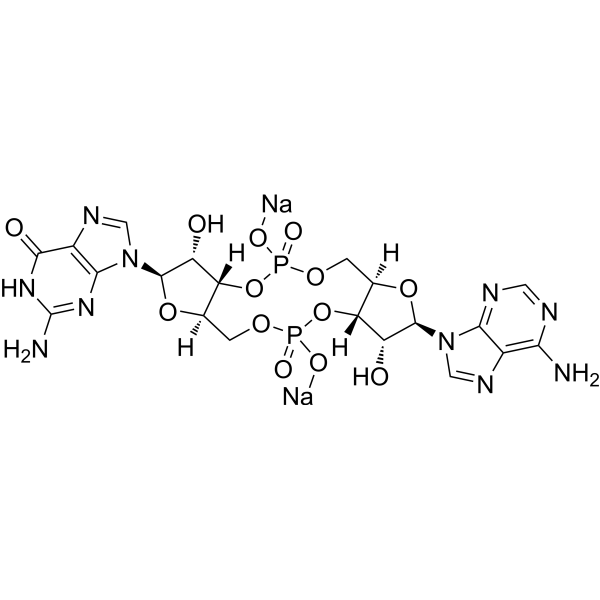
Cat. No.: HY-110385
CAS No.: 2407516-83-8
Purity:  98.47%
Synonyms: Cyclic GMP-AMP disodium; 3',3'-cGAMP disodium
cGAMP (Cyclic GMP-AMP) disodium functions as an endogenous second messenger in metazoans and triggers interferon production in response to cytosolic DNA. cGAMP diammonium activates stimulator of interferon genes (STING), which activates a signaling cascade leading to the production of type I interferons and other immune mediators .
loading...
    loading...
28
28 Publications Verification
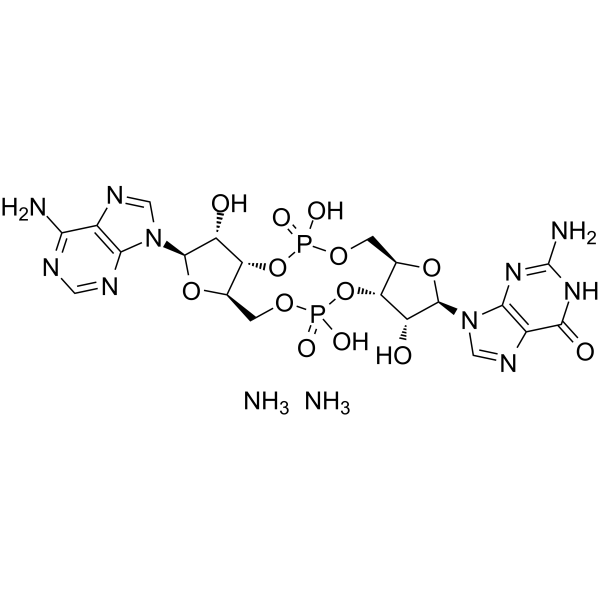
Cat. No.: HY-110385A
Purity:  95.19%
Synonyms: Cyclic GMP-AMP diammonium; 3',3'-cGAMP diammonium
cGAMP (Cyclic GMP-AMP) diammonium functions as an endogenous second messenger in metazoans and triggers interferon production in response to cytosolic DNA. cGAMP diammonium activates stimulator of interferon genes (STING), which activates a signaling cascade leading to the production of type I interferons and other immune mediators .
loading...
    loading...
4
4 Cited Publications
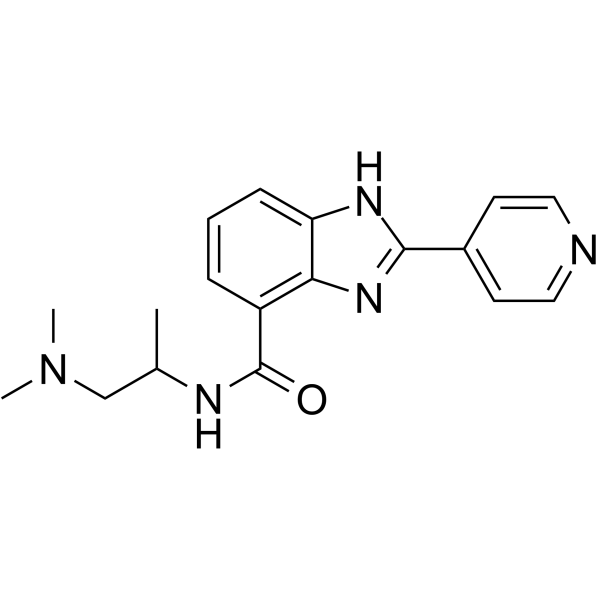
Cat. No.: HY-112951
CAS No.: 2438721-44-7
Purity:  99.91%
Target:  

STING

Research Areas:  

Cancer

ChX710 could prime the type I interferon response to cytosolic DNA, which induces the ISRE promoter sequence, specific cellular Interferon-Stimulated Genes (ISGs), and the phosphorylation of Interferon Regulatory Factor (IRF) 3.
loading...
    loading...
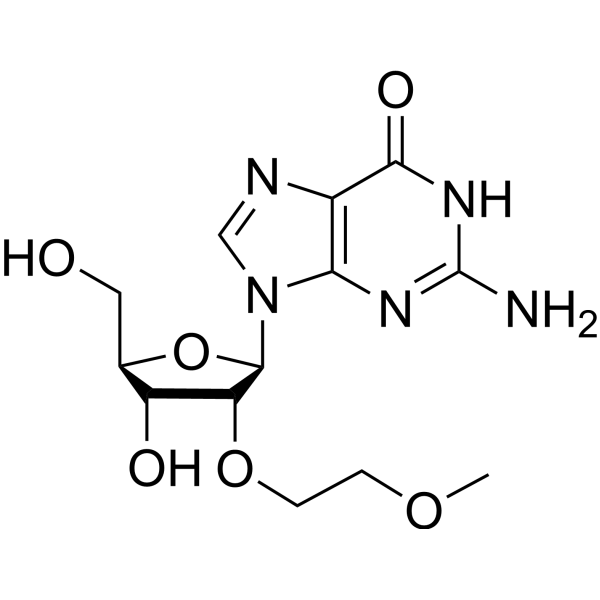
Cat. No.: HY-23789
CAS No.: 473278-54-5
Synonyms: 2'-O-MOE-rG
2′-O-(2-Methoxyethyl)guanosine (2'-O-MOE-rG) is a 2'-O-methoxyethyl-modified nucleoside analogue and an important intermediate in the synthesis of nucleic acid drugs. 2′-O-(2-Methoxyethyl)guanosine neither effectively phosphorylated by cytosolic nucleoside kinases, nor are they incorporated into cellular DNA or RNA .
loading...
    loading...
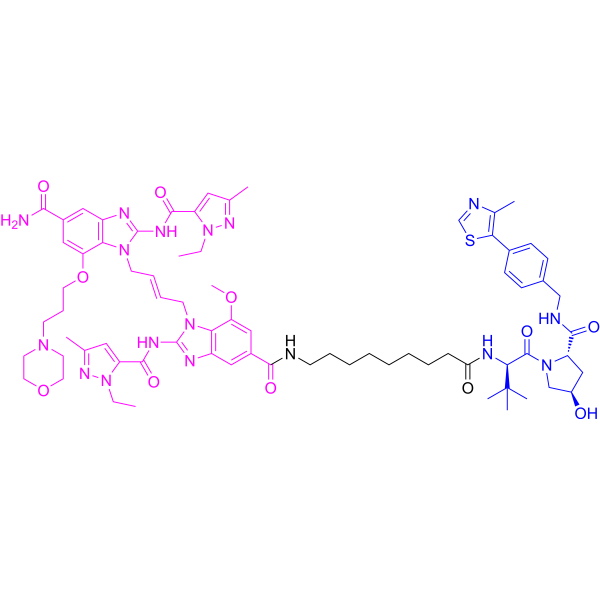
Cat. No.: HY-158048
CAS No.: 3094059-54-5
Target:  

PROTACs STING HSV

Research Areas:  

Infection Cancer

UNC9036 is a STING PROTAC degrader with a DC50 value of 227 nM. UNC9036 binds to and activates STING, recruits the VHL E3 ligase to target phosphorylated STING for ubiquitination and proteasomal degradation. UNC9036 inhibits downstream innate immune signaling events triggered by cytoplasmic DNA sensing, including IRF3 phosphorylation. UNC9036 reduces the antiviral response of cells infected with HSV-1. UNC9036 can be used in the research of renal cell carcinoma .
loading...
    loading...
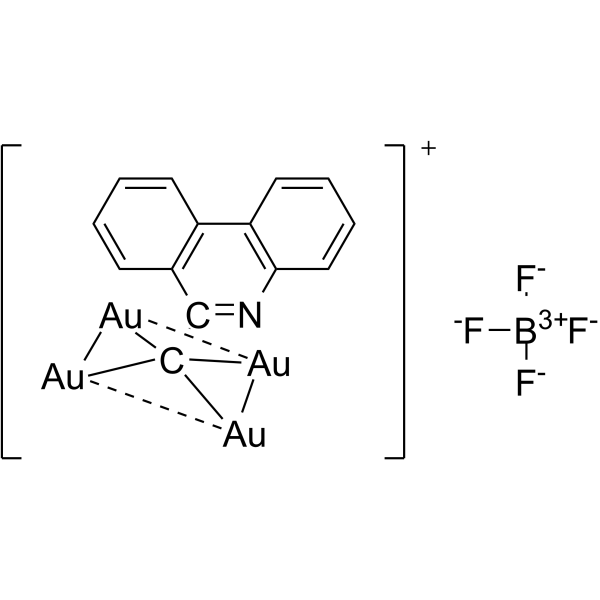
Cat. No.: HY-149035
PAA4 is a hypercoordinate carbon-centered tetranuclear gold (I) cluster prodrug . PAA4 releases active Au (I) ions upon triggering by GSH (HY-D0187), and this process is accelerated in the acidic microenvironment of bladder cancer cells with high GSH expression. PAA4 inhibits the activities of cytosolic TrxR1 and mitochondrial TrxR2, inducing ROS accumulation, lipid peroxidation, ferroptosis, loss of mitochondrial membrane potential and DNA damage. PAA4 can be used in bladder cancer-related research .
loading...
    loading...
Cat. No.: HY-181967
Research Areas:  

Cancer

PROTAC PARP1 degrader-5 is a PARP1 PROTAC degrader with a DC50 of 0.12 μM. PROTAC PARP1 degrader-5 hijacks the ubiquitin-proteasome system via catalytic ternary complex formation to drive sustained PARP1 degradation. PROTAC PARP1 degrader-5 induces DNA damage, drives marginal cytosolic double-stranded DNA accumulation in tumor cells, and up-regulates PD-L1 surface expression in tumor cells. PROTAC PARP1 degrader-5 shows tumor growth inhibition activity in murine melanoma models when encapsulated in lipid nanoparticles. PROTAC PARP1 degrader-5 can be used for the research of cancer, such as melanoma .
loading...
    loading...

