Search Result
Results for "
dermatophytes
" in MedChemExpress (MCE) Product Catalog:
1
Biochemical Assay Reagents
8
Isotope-Labeled Compounds
| Cat. No. |
Product Name |
Target |
Research Areas |
Chemical Structure |
-
- HY-17643
-
|
VT-1161
|
Fungal
Cytochrome P450
|
Infection
|
|
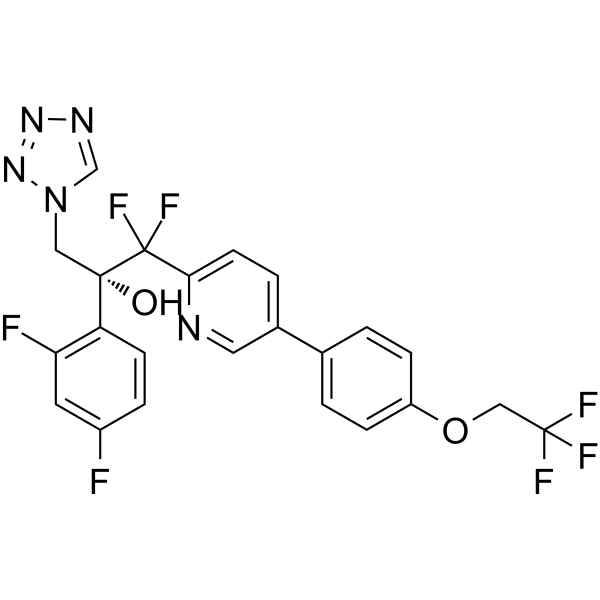
Oteseconazole (VT-1161) is a potent and orally active anti-fungal agent. Oteseconazole potently binds to and inhibits Candida albicans cytochrome P45051 (CYP51) activity (Kd ≤39 nM), shows no obvious effect on human CYP51. Oteseconazole also can be used for the research of dermatophytes .
|
-
-
- HY-B0450
-
Ciclopirox
Maximum Cited Publications
10 Publications Verification
HOE296b
|
Fungal
Bacterial
Ferroptosis
Autophagy
|
Infection
Inflammation/Immunology
Cancer
|
|
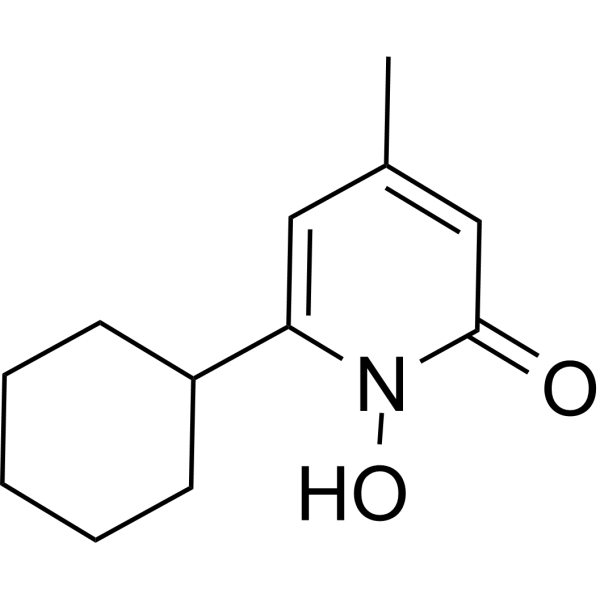
Ciclopirox (HOE296b) is a synthetic and orally active antifungal agent that can be used for superficial mycoses reseaech. Ciclopirox olamine has a very broad spectrum of activity and inhibits dermatophytes, yeasts, molds, and many Gram-positive and Gram-negative species pathogenic. Ciclopirox also has anticancer and anti-inflammatory effect .
|
-
-
- HY-B0450A
-
|
Ciclopirox ethanolamine; HOE 296
|
Fungal
Bacterial
Ferroptosis
|
Infection
Cancer
|
|
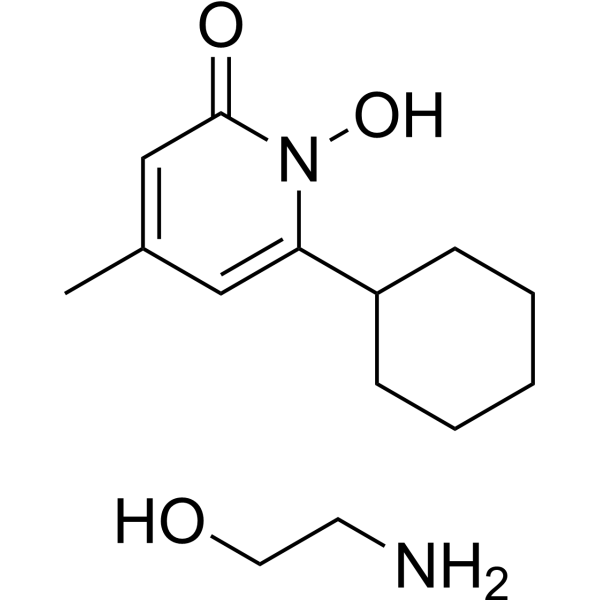
Ciclopirox olamine (Ciclopirox ethanolamine) is a synthetic and orally active antifungal agent that can be used for superficial mycoses reseaech. Ciclopirox olamine has a very broad spectrum of activity and inhibits dermatophytes, yeasts, molds, and many Gram-positive and Gram-negative species pathogenic. Ciclopirox olamine also has anticancer and anti-inflammatory effect .
|
-
-
- HY-15660
-
|
KP-103
|
Fungal
|
Infection
|
|
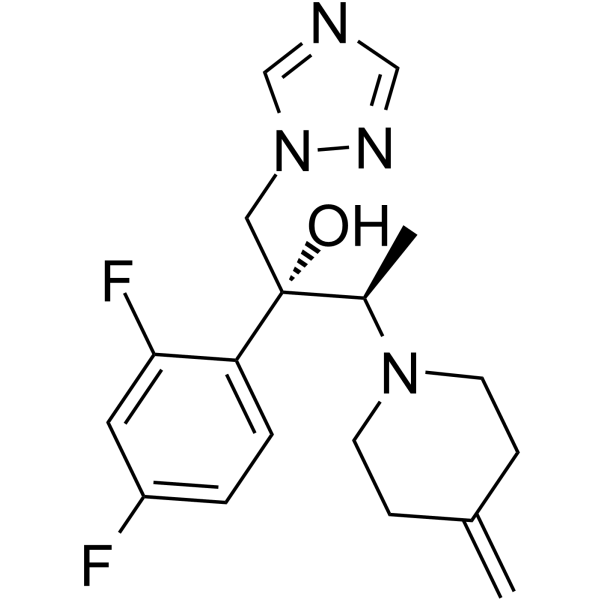
Efinaconazole (KP-103) is a triazole antifungal agent and againsts T. mentagrophytes SM-110 and C. albicans ATCC 10231 with MICs of 0.0039 μg/mL and 0.00098 μg/mL, respectively . Efinaconazole has a potent in vitro activity against fungal pathogens including dermatophytes, Candida and Malassezia species .
|
-
-
- HY-B0518A
-
|
|
Fungal
Antibiotic
|
Infection
|
|
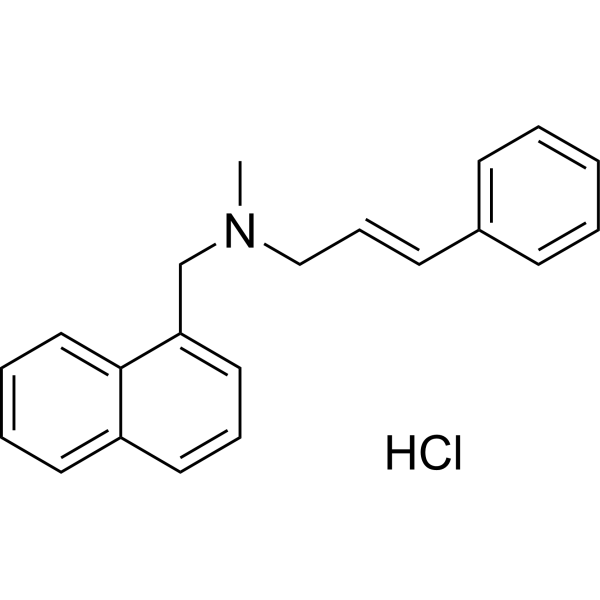
Naftifine hydrochloride is an antibiotic. Naftifine hydrochloride has antifungal activity against dermatophytes, aspergilli, Sporothrix schenckii, and yeasts of the genus Candida. Naftifine hydrochloride can be used for the research of superficial dermatomycoses inhibition .
|
-
-
- HY-B0319
-
|
UK-20349
|
Fungal
Antibiotic
Parasite
Akt
PI3K
mTOR
Autophagy
|
Infection
Cancer
|
|
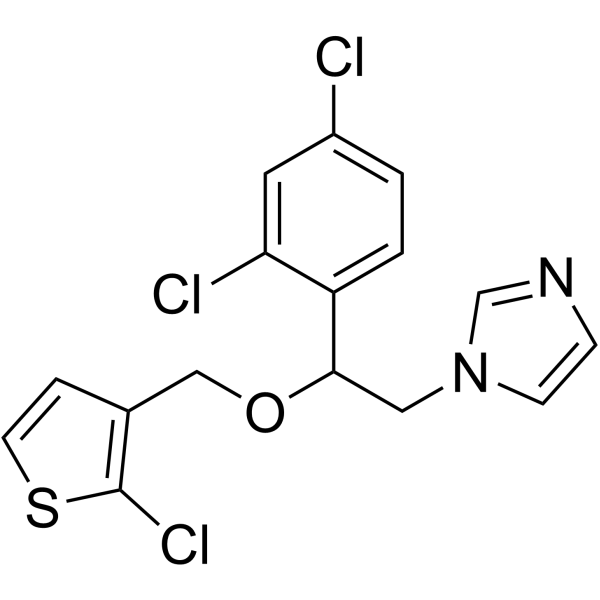
Tioconazole (UK-20349) is a broad-spectrum antifungal imidazole derivative. Tioconazole inhibits several dermatophytes and yeasts, with MIC50 values of less than 3.12 mg/L and 9 mg/L, respectively. Additionally, Tioconazole exhibits anti-parasitic activity. Tioconazole exerts anticancer activity by inhibiting the PI3K/AKT/mTOR signaling pathway and blocking autophagy. Tioconazole is applicable for research in the fields of anti-infection and anticancer therapy .
|
-
-
- HY-119847
-
|
BAY-W-6341
|
Fungal
|
Infection
|
|
Abafungin (BAY-W-6341) is a broad-spectrum fungicidal arylguanidine compound and a selective inhibitor of sterol-C-24-methyltransferase. Abafungin blocks the transmethylation reaction at the C-24 position of the sterol side chain during the ergosterol biosynthesis pathway. Abafungin directly disrupts fungal cell membrane integrity, and diminishes fungal viability independent of the fungal growth state. Abafungin can be applied to the research of fungal infections, particularly dermatomycoses .
|
-
-
- HY-B0348
-
|
Piritetrate; M-732
|
Fungal
|
Infection
|
|
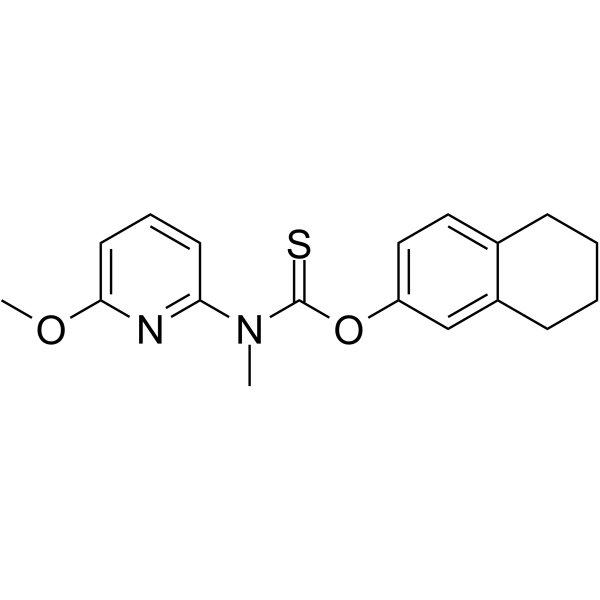
Liranaftate (Piritetrate) is a squalene epoxidase inhibitor with anti-fungicidal activities. Liranaftate can be used for the research of dermatophytes. Liranaftate also suppresses fungal element-promoted production of IL-8 and experimental inflammation .
|
-
-
- HY-N2472
-
|
Castanogenin
|
Bacterial
Xanthine Oxidase
|
Infection
|
|
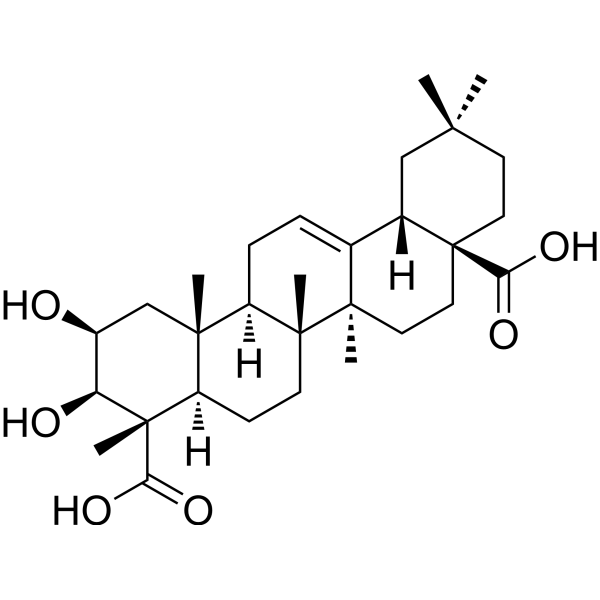
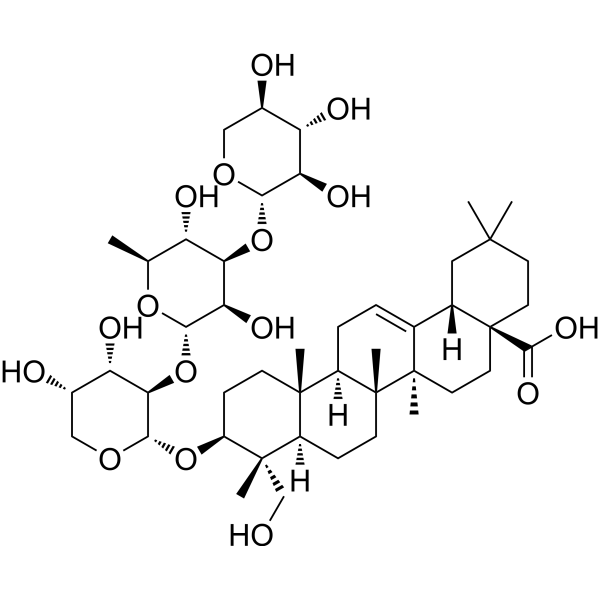
Medicagenic acid (Castanogenin) is isolated from the roots of Herniaria glabra, exhibits potent fungistatic effects against several plant pathogens and human dermatophytes . Medicagenic acid (Castanogenin) has low enzyme inhibitory activities, the target enzymes are xanthine oxidase, collagenase, elastase, tyrosinase, ChE .
|
-
-
- HY-W984782
-
|
|
GLUT
Bacterial
Fungal
AMPK
PPAR
Reactive Oxygen Species (ROS)
Apoptosis
SOD
|
Infection
Metabolic Disease
Cancer
|
|
Flindersine is an alkaloid with multiple activities including antibacterial, antifungal, antitumor, and antidiabetic properties. Flindersine increases the activity of antioxidant enzymes, restores the levels of renal biomarkers, and reduces blood glucose, blood lipid, and insulin levels in diabetic rats. Flindersine inhibits the growth of Gram-positive bacteria, Gram-negative bacteria, drug-resistant bacteria, as well as dermatophytes, filamentous fungi, and yeasts. Flindersine reduces the viability of cancer cells and induces apoptosis. Flindersine can be used in research related to breast cancer, type 2 diabetes, bacterial infections, and fungal infections .
|
-
-
- HY-108012
-
|
|
Fungal
|
Infection
|
|
ME1111 is an antifungal agent that is active against dermatophytes. ME1111 is an inhibitor of the succinate dehydrogenase of Trichophyton species. ME1111 has an excellent ability to penetrate human nails and is used for onychomycosis research .
|
-
-
- HY-B1133
-
|
Dibenzthione
|
Fungal
|
Infection
|
|
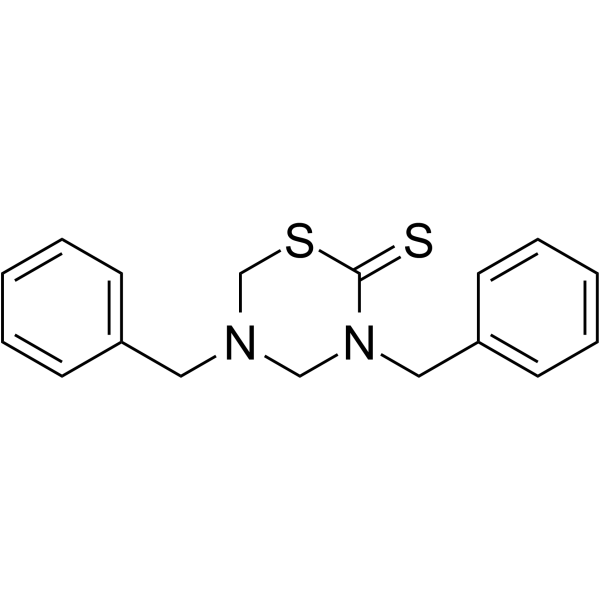
Sulbentine (Dibenzthione) is a thiadiazine-class antifungal agent. Sulbentine exhibits fungicidal and fungistatic activity against Trichophyton mentagrophytes. Sulbentine can be used for the research of dermatophyte infection .
|
-
-
- HY-136767
-
|
|
Antibiotic
Fungal
Bacterial
Parasite
DNA/RNA Synthesis
|
Infection
|
|
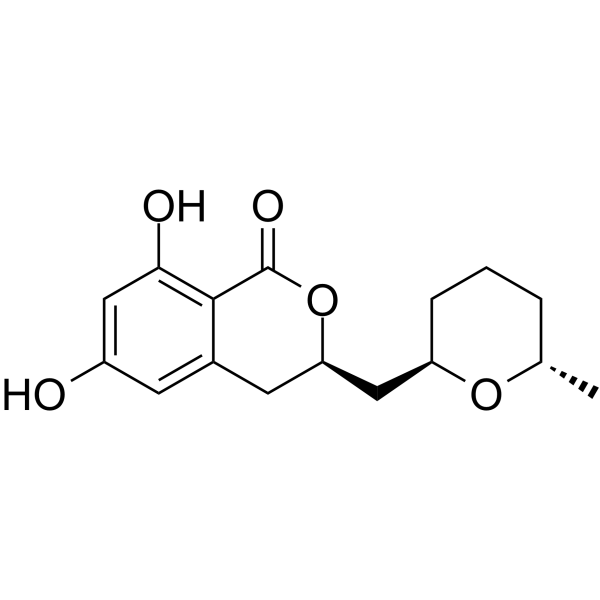
Cladosporin is an antibiotic and an an antifungal metabolite that can be produced in good yield in the mycelium of Cladosporium cladosporioid. Cladosporin exhibits inhibitory activity against various dermatophytes, plant pathogens, and bacteria. Cladosporin also exhibits antimalarial activity through inhibition of cytoplasmic lysine-tRNA synthetase of Plasmodium (PfKrs1) .
|
-
-
- HY-16246
-
|
|
Fungal
|
Infection
|
|
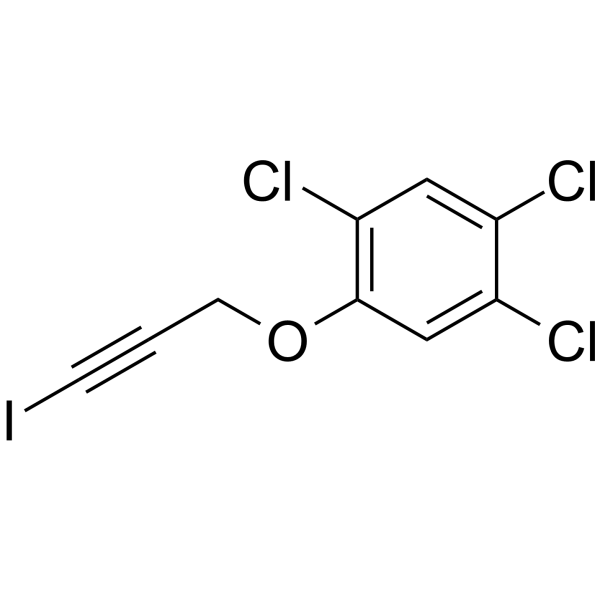
Haloprogin is a potent antifungal agent. Haloprogin has activity against dermatophytes, Candida spp and a limited number of Gram-positive bacteria .
|
-
-
- HY-15660S
-
|
KP-103-d4
|
Isotope-Labeled Compounds
Fungal
|
Infection
|
|
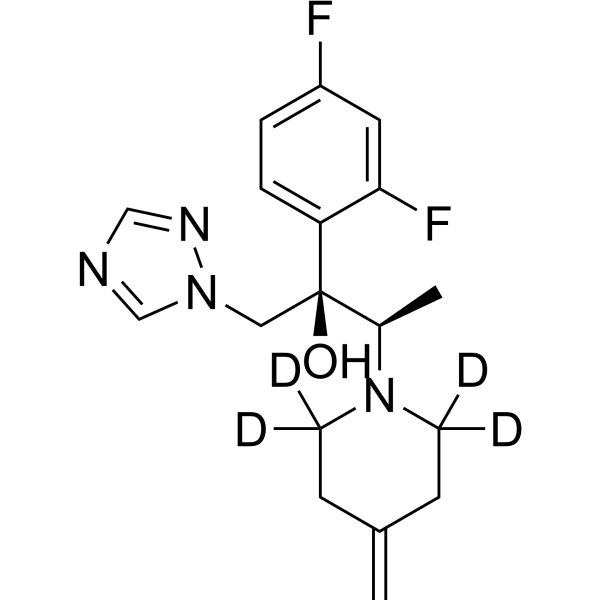
Efinaconazole-d4 is the deuterium labeled Efinaconazole. Efinaconazole (KP-103) is a triazole antifungal agent and againsts T. mentagrophytes SM-110 and C. albicans ATCC 10231 with MICs of 0.0039 μg/mL and 0.00098 μg/mL, respectively . Efinaconazole has a potent in vitro activity against fungal pathogens including dermatophytes, Candida and Malassezia species .
|
-
-
- HY-114518
-
|
KP363
|
Fungal
|
Infection
|
|
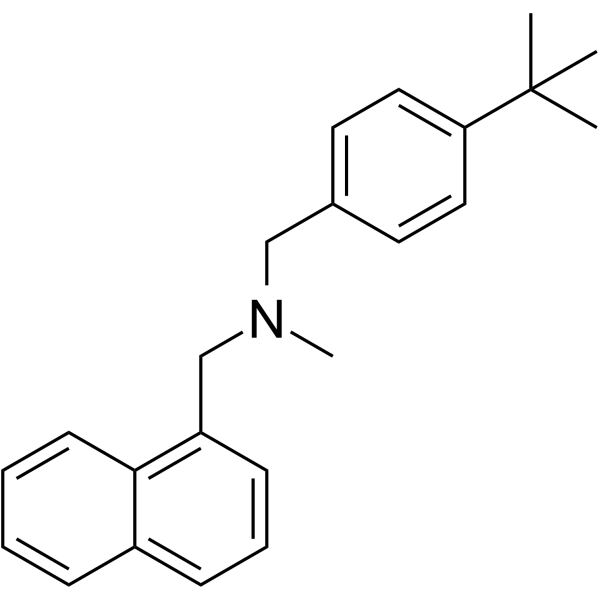
Butenafine (KP363) is a potent and broad spectrum benzylamine antifungal agent . Butenafine inhibits fungal ergosterol biosynthesis at the point of squalene epoxidation, leading to a deficiency of the fungal cell membranes. Butenafine is effective against dermatophytes infections, such as tinea pedis, tinea cruris, tinea versicolor .
|
-
-
- HY-N11546
-
|
|
Cytochrome P450
Bacterial
Fungal
|
Infection
Cancer
|
|
Sapindoside B is a substance with hepatoprotective activity, and also acts as a cytochrome P-450 (cytochrome P-450) inhibitor, antibacterial agent and membrane-disrupting agent. Sapindoside B reversibly inhibits the content of cytochrome P-450 in liver microsomes, suppresses the phenobarbital-induced increase in enzyme content, reduces the production of active metabolites mediated by cytochrome P-450, and alleviates hepatotoxic injury. Sapindoside B binds to Cutibacterium acnes lipase, reduces lipase activity, inhibits biofilm formation, and decreases bacterial adhesion. Sapindoside B exhibits cytotoxicity against human cancer, liver cancer, leukemia and glioblastoma cells. Sapindoside B inhibits mycelial growth of phytopathogenic fungal strains, possesses antibacterial activity against dermatophytes, and also has hemolytic/membrane-lytic activity. Sapindoside B can be used in research related to liver injury, Cutibacterium acnes biofilm-associated infections, gastric cancer, carcinoma, promyelocytic leukemia, glioblastoma, apple scab and grape gray mold .
|
-
-
- HY-139903
-
|
|
Fungal
Calcineurin
p38 MAPK
|
Infection
|
|
Antifungal agent 18 is an antifungal agent. Antifungal agent 18 shows a broad-spectrum antifungal activity against major human fungal pathogens. Antifungal agent 18 compromises fungal cell wall integrity by targeting the unfolded protein response (UPR), calcineurin, and MAPK pathways. Antifungal agent 18 shows antifungal activity in virto and vivo. Antifungal agent 18 can be used for the research of invasive fungal pathogens and cutaneous dermatophytes .
|
-
-
- HY-171796
-
|
|
Fungal
|
Infection
|
|
Bromomonilicin is a selective fungal cell membrane inhibitor. Bromomonilicin exerts antifungal activity by disrupting fungal cell membrane integrity. Bromomonilicin is promising for research of plant pathogenic fungal infections (e.g., Monilinia fructicola-induced brown rot) and superficial mycoses (e.g., dermatophyte infections) .
|
-
-
- HY-B0450S1
-
|
|
Isotope-Labeled Compounds
Fungal
Bacterial
Ferroptosis
Autophagy
|
Infection
Cancer
|
|
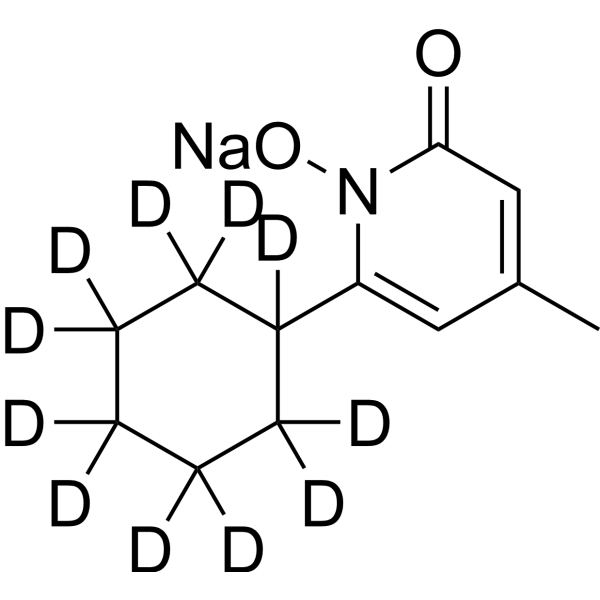
Ciclopirox-d11 (sodium) is deuterium labeled Ciclopirox. Ciclopirox (HOE296b) is a synthetic antifungal agent that can be used for superficial mycoses reseaech. Ciclopirox olamine has a very broad spectrum of activity and inhibits dermatophytes, yeasts, molds, and many Gram-positive and Gram-negative species pathogenic .
|
-
-
- HY-N2472R
-
|
Castanogenin (Standard)
|
Xanthine Oxidase
Reference Standards
Bacterial
|
Infection
|
|
Medicagenic acid (Standard) is the analytical standard of Medicagenic acid. This product is intended for research and analytical applications. Medicagenic acid (Castanogenin) is isolated from the roots of Herniaria glabra, exhibits potent fungistatic effects against several plant pathogens and human dermatophytes . Medicagenic acid (Castanogenin) has low enzyme inhibitory activities, the target enzymes are xanthine oxidase, collagenase, elastase, tyrosinase, ChE .
|
-
-
- HY-B0450R
-
|
HOE296b (Standard)
|
Reference Standards
Fungal
Bacterial
Ferroptosis
Autophagy
|
Infection
Inflammation/Immunology
Cancer
|
|
Ciclopirox (Standard) is the analytical standard of Ciclopirox. This product is intended for research and analytical applications. Ciclopirox (HOE296b) is a synthetic and orally active antifungal agent that can be used for superficial mycoses reseaech. Ciclopirox olamine has a very broad spectrum of activity and inhibits dermatophytes, yeasts, molds, and many Gram-positive and Gram-negative species pathogenic. Ciclopirox also has anticancer and anti-inflammatory effect .
|
-
-
- HY-162296
-
|
|
Fungal
|
Infection
|
|
Antibacterial agent 188 (compound 2d) is an antibacterial agent that inhibits dermatophyte activity .
|
-
-
- HY-118451
-
|
|
Fungal
|
Infection
|
|
Lanomycin is an antifungal compound with activity against Candida and dermatophytes .
|
-
-
- HY-16246R
-
|
|
Fungal
Reference Standards
|
Infection
|
|
Haloprogin (Standard) is the analytical standard of Haloprogin. This product is intended for research and analytical applications. Haloprogin is a potent antifungal agent. Haloprogin has activity against dermatophytes, Candida spp and a limited number of Gram-positive bacteria .
|
-
-
- HY-N3041
-
|
Agoniadin; NSC 609065
|
Fungal
|
Infection
Cancer
|
|
Plumieride is an antifungal agent. Plumieride has strong fungitoxicity against some dermatophytes. Plumieride has little cytotoxic activity against the P388 leukaemia cell line with an IC50 of 85 μg/mL .
|
-
-
- HY-B0348R
-
|
Piritetrate (Standard); M-732 (Standard)
|
Reference Standards
Fungal
|
Infection
|
|
Liranaftate (Standard) is the analytical standard of Liranaftate. This product is intended for research and analytical applications. Liranaftate (Piritetrate) is a squalene epoxidase inhibitor with anti-fungicidal activities. Liranaftate can be used for the research of dermatophytes. Liranaftate also suppresses fungal element-promoted production of IL-8 and experimental inflammation .
|
-
-
- HY-17643R
-
|
VT-1161 (Standard)
|
Reference Standards
Fungal
Cytochrome P450
|
Infection
|
|
Oteseconazole (Standard) is the analytical standard of Oteseconazole. This product is intended for research and analytical applications. Oteseconazole (VT-1161) is a potent and orally active anti-fungal agent. Oteseconazole potently binds to and inhibits Candida albicans cytochrome P45051 (CYP51) activity (Kd ≤39 nM), shows no obvious effect on human CYP51. Oteseconazole also can be used for the research of dermatophytes .
|
-
-
- HY-106923
-
|
|
Fungal
Drug Derivative
|
Infection
|
|
BMS-181184 is a new Pradimicin derivative and fungicide. BMS-181184 exhibits fungicidal activity against yeasts, dermatophytes, and most Aspergillus fumigatus strains. BMS-181184 is active against Sporothrix schenckii, dematiaceous fungi, and some members of the non-Aspergillus hyaline hyphomycetes .
|
-
-
- HY-B0518AR
-
|
|
Reference Standards
Fungal
Antibiotic
|
Infection
|
|
Naftifine (hydrochloride) (Standard) is the analytical standard of Naftifine (hydrochloride). This product is intended for research and analytical applications. Naftifine hydrochloride is an antibiotic. Naftifine hydrochloride has antifungal activity against dermatophytes, aspergilli, Sporothrix schenckii, and yeasts of the genus Candida. Naftifine hydrochloride can be used for the research of superficial dermatomycoses inhibition .
|
-
-
- HY-114518S2
-
|
KP363-d4
|
Fungal
Isotope-Labeled Compounds
|
Infection
|
|
Butenafine-d4 (KP363-d4) is the deuterium labeled Butenafine (HY-114518). Butenafine (KP363) is a potent and broad spectrum benzylamine antifungal agent . Butenafine inhibits fungal ergosterol biosynthesis at the point of squalene epoxidation, leading to a deficiency of the fungal cell membranes. Butenafine is effective against dermatophytes infections, such as ?tinea pedis, ?tinea cruris, tinea versicolor .
|
-
-
- HY-121924
-
|
|
Bacterial
|
Infection
|
|
Chloracetophos is a fungicide with potential to inhibit dermatophytes .
|
-
-
- HY-40284A
-
|
|
Fungal
|
Infection
|
|
3-Piperidinopropiophenone (hydrochloride) (Compound 2) is a mono Mannich base derived from acetophenone and has antifungal activity .
|
-
-
- HY-19584
-
|
|
Fungal
|
Infection
|
|
Variotin is an Anti-Fungal Agent. Variotin has a strong antibiotic activity on dermatophytes such as Trichophyton, Microsporum, and Epidermophyton, and also pathogenic fungi in internal mycosis such as Blastomyces and Cryptococcus .
|
-
-
- HY-17583S
-
-
-
- HY-N14176
-
|
|
Bacterial
|
Infection
|
|
Cyathin A3 has weak activity against Gram-positive bacteria, negative bacteria, actinomycetes and dermatophytes, and has anti-ischemia effect (improving cerebral ischemia in rat model) .
|
-
-
- HY-10445
-
|
Azoline; R126638
|
Fungal
|
Infection
|
|
Pramiconazole is a broad-spectrum antifungal agent with oral activity. Pramiconazole has a good affinity for 14α-demethylase. Pramiconazole can be used in the study of fungal infections in the local skin, hair, nails, oral cavity, and genital mucosa .
|
-
-
- HY-B0518AS
-
|
|
Isotope-Labeled Compounds
Fungal
Antibiotic
|
Infection
|
|
Naftifine-d3 (hydrochloride) is the deuterium labeled Naftifine hydrochloride. Naftifine hydrochloride is an antibiotic. Naftifine hydrochloride has antifungal activity against dermatophytes, aspergilli, Sporothrix schenckii, and yeasts of the genus Candida. Naftifine hydrochloride can be used for the research of superficial dermatomycoses inhibition .
|
-
-
- HY-B0450S
-
|
HOE296b-d11
|
Fungal
Bacterial
Ferroptosis
Autophagy
|
Infection
Cancer
|
|
Ciclopirox-d11 is the deuterium labeled Ciclopirox. Ciclopirox (HOE296b) is a synthetic antifungal agent that can be used for superficial mycoses reseaech. Ciclopirox olamine has a very broad spectrum of activity and inhibits dermatophytes, yeasts, molds, and many Gram-positive and Gram-negative species pathogenic .
|
-
-
- HY-106546
-
|
KC 9147
|
Fungal
|
Infection
|
|
Tolciclate (KC 9147) is an antifungal agent with in vitro inhibitory activity against dermatophytes, effective at concentrations of 0.01-0.1 μg/mL. Tolciclate is colorless and soluble in well-tolerated excipients, and it is more lipophilic than Tolnaftate (HY-B0370). Tolciclate can be used in research related to antifungal infections .
|
-
-
- HY-B0319R
-
|
UK-20349 (Standard)
|
Reference Standards
Fungal
Antibiotic
|
Infection
|
|
Tioconazole (Standard) is the analytical standard of Tioconazole. This product is intended for research and analytical applications. Tioconazole (UK-20349) is an antifungal imidazole derivative with broad spectrum activity. Tioconazole has inhibitory active aginst several dermatophytes and several yeasts with MIC50s <3.12 mg/L and <9 mg/L, respectively .
|
-
-
- HY-111333
-
|
Dioxapyrrolomycin; LL-F42248α; AL-R2081
|
Bacterial
|
Infection
|
|
Pyrroxamycin is a novel antibiotic produced by Streptomyces, whose chemical structure was determined by chemical properties and X-ray crystallography and 13C NMR spectroscopy analysis. It is active against Gram-positive bacteria and dermatophytes. In this paper, the authors discuss the taxonomy, fermentation, isolation, physicochemical properties, chemical structure, and biological activity of the strain producing Pyrroxamycin.
|
-
-
- HY-169684
-
|
|
Fungal
|
Infection
Cancer
|
|
Vaccarin C (Compound VIII) is a cycloheptapeptide with good antifungal activity against pathogenic fungi and dermatophytes M. audouinii and T. mentagrophytes with MIC values of 6 µg/mL. Vaccarin C also has high cytotoxicity against Dalton's lymphoma ascites (DLA) and Ehrlich's ascites carcinoma (EAC) cell lines with IC50 values of 3.35 and 5.72 μM, respectively .
|
-
-
- HY-B0450AG
-
|
Ciclopirox ethanolamine; HOE 296
|
Bacterial
Fungal
Ferroptosis
|
Infection
|
|
Ciclopirox (olamine) (GMP) is Ciclopirox olamine (HY-B0450A) produced by using GMP guidelines. GMP small molecules work appropriately as an auxiliary reagent for cell therapy manufacture. Ciclopirox (HOE296b) is a synthetic antifungal agent that can be used for superficial mycoses reseaech. Ciclopirox olamine has a very broad spectrum of activity and inhibits dermatophytes, yeasts, molds, and many Gram-positive and Gram-negative species pathogenic .
|
-
-
- HY-B0450AR
-
|
Ciclopirox ethanolamine (Standard); HOE 296 (Standard)
|
Reference Standards
Fungal
Bacterial
Ferroptosis
|
Infection
Cancer
|
|
Ciclopirox (olamine) (Standard) is the analytical standard of Ciclopirox (olamine). This product is intended for research and analytical applications. Ciclopirox olamine (Ciclopirox ethanolamine) is a synthetic and orally active antifungal agent that can be used for superficial mycoses reseaech. Ciclopirox olamine has a very broad spectrum of activity and inhibits dermatophytes, yeasts, molds, and many Gram-positive and Gram-negative species pathogenic. Ciclopirox olamine also has anticancer and anti-inflammatory effect .
|
-
-
- HY-108012R
-
|
|
Reference Standards
Fungal
|
Infection
|
|
ME1111 (Standard) is the analytical standard of ME1111 (HY-108012). This product is intended for research and analytical applications. ME1111 is an antifungal agent that is active against dermatophytes. ME1111 is an inhibitor of the succinate dehydrogenase of Trichophyton species. ME1111 has an excellent ability to penetrate human nails and is used for onychomycosis research .
|
-
-
- HY-N19757
-
|
|
Fungal
|
Infection
|
|
3-O-(2-Acetamido-2-deoxy-β-D-glucopyranosyl) echinocystic acid is an oleanane-type triterpenoid saponin. 3-O-(2-Acetamido-2-deoxy-β-D-glucopyranosyl) echinocystic acid acts as a dermatophyte growth inhibitor with a MIC range of 6.25-25 μg/mL. 3-O-(2-Acetamido-2-deoxy-β-D-glucopyranosyl) echinocystic acid can be used in the research of dermatophyte infections, bacterial infections and yeast infections .
|
-
-
- HY-129585
-
|
|
Fungal
|
Infection
|
|
SM-4470 is an orally active antifungal compound. SM-4470 has inhibitory activity against yeast, Aspergillus, and dermatophytes in vitro .
|
-
-
- HY-N14177
-
|
|
Bacterial
|
Infection
|
|
Cyathin A4 has weak activity against Gram-positive bacteria, negative bacteria, actinomycetes and dermatophytes, and has anti-ischemia effect (improving cerebral ischemia in rat model) .
|
-
-
- HY-N19881
-
|
|
Fungal
|
Infection
|
|
Drimenal is a pimarane-type natural sesquiterpene with antifungal activity. Drimenal inhibits the growth of yeasts and dermatophytes. Drimenal can be used for the development of pesticide candidates and in research related to fungal infections .
|
-
- HY-B0518S1
-
|
|
Isotope-Labeled Compounds
|
Infection
|
|
Naftifine-d3 is the deuterium labeled Naftifine. Naftifine hydrochloride is an antibiotic. Naftifine hydrochloride has antifungal activity against dermatophytes, aspergilli, Sporothrix schenckii, and yeasts of the genus Candida. Naftifine hydrochloride can be used for the research of superficial dermatomycoses inhibition .
|
-
- HY-B0518S3
-
|
|
Isotope-Labeled Compounds
Antibiotic
Fungal
|
Infection
|
|
Naftifine- 13C,d3 is the 13C- and deuterium labeled Naftifine. Naftifine hydrochloride is an antibiotic. Naftifine hydrochloride has antifungal activity against dermatophytes, aspergilli, Sporothrix schenckii, and yeasts of the genus Candida. Naftifine hydrochloride can be used for the research of superficial dermatomycoses inhibition .
|
-
- HY-W069116
-
|
|
Fungal
|
Infection
|
|
Antifungal agent 146 (Compound 19l) is a broad-spectrum antifungal agent. Antifungal agent 146 has inhibitory effects on the main dermatophytes that cause onychomycosis (Trichophyton rubrum, Trichophyton mentagrophytes) and other fungi (Candida albicans, Cryptococcus neoformans and Aspergillus fumigatus) with MIC values of 16, 16, 64, 32, and 32 μg/mL. Antifungal agent 146 can be used for the research of infection .
|
-
| Cat. No. |
Product Name |
Type |
-
- HY-B0450AG
-
|
Ciclopirox ethanolamine; HOE 296
|
Fluorescent Dye
|
|
Ciclopirox (olamine) (GMP) is Ciclopirox olamine (HY-B0450A) produced by using GMP guidelines. GMP small molecules work appropriately as an auxiliary reagent for cell therapy manufacture. Ciclopirox (HOE296b) is a synthetic antifungal agent that can be used for superficial mycoses reseaech. Ciclopirox olamine has a very broad spectrum of activity and inhibits dermatophytes, yeasts, molds, and many Gram-positive and Gram-negative species pathogenic .
|
| Cat. No. |
Product Name |
Type |
-
- HY-B0450AG
-
|
Ciclopirox ethanolamine; HOE 296
|
Biochemical Assay Reagents
|
|
Ciclopirox (olamine) (GMP) is Ciclopirox olamine (HY-B0450A) produced by using GMP guidelines. GMP small molecules work appropriately as an auxiliary reagent for cell therapy manufacture. Ciclopirox (HOE296b) is a synthetic antifungal agent that can be used for superficial mycoses reseaech. Ciclopirox olamine has a very broad spectrum of activity and inhibits dermatophytes, yeasts, molds, and many Gram-positive and Gram-negative species pathogenic .
|
| Cat. No. |
Product Name |
Target |
Research Area |
-
- HY-169684
-
|
|
Fungal
|
Infection
Cancer
|
|
Vaccarin C (Compound VIII) is a cycloheptapeptide with good antifungal activity against pathogenic fungi and dermatophytes M. audouinii and T. mentagrophytes with MIC values of 6 µg/mL. Vaccarin C also has high cytotoxicity against Dalton's lymphoma ascites (DLA) and Ehrlich's ascites carcinoma (EAC) cell lines with IC50 values of 3.35 and 5.72 μM, respectively .
|
| Cat. No. |
Product Name |
Category |
Target |
Chemical Structure |
-
- HY-N2472
-
-
-
- HY-W984782
-
|
|
Structural Classification
Alkaloids
Rutaceae
Quinoline Alkaloids
Plants
Haplophyllum tuberculatum (Forssk.) A.Juss.
Source Classification
|
GLUT
Bacterial
Fungal
AMPK
PPAR
Reactive Oxygen Species (ROS)
Apoptosis
SOD
|
|
Flindersine is an alkaloid with multiple activities including antibacterial, antifungal, antitumor, and antidiabetic properties. Flindersine increases the activity of antioxidant enzymes, restores the levels of renal biomarkers, and reduces blood glucose, blood lipid, and insulin levels in diabetic rats. Flindersine inhibits the growth of Gram-positive bacteria, Gram-negative bacteria, drug-resistant bacteria, as well as dermatophytes, filamentous fungi, and yeasts. Flindersine reduces the viability of cancer cells and induces apoptosis. Flindersine can be used in research related to breast cancer, type 2 diabetes, bacterial infections, and fungal infections .
|
-
-
- HY-136767
-
-
-
- HY-N11546
-
|
|
Structural Classification
Eleutherococcus sieboldianus Makino
Terpenoids
Diterpenoids
Plants
Araliaceae
Source Classification
|
Cytochrome P450
Bacterial
Fungal
|
|
Sapindoside B is a substance with hepatoprotective activity, and also acts as a cytochrome P-450 (cytochrome P-450) inhibitor, antibacterial agent and membrane-disrupting agent. Sapindoside B reversibly inhibits the content of cytochrome P-450 in liver microsomes, suppresses the phenobarbital-induced increase in enzyme content, reduces the production of active metabolites mediated by cytochrome P-450, and alleviates hepatotoxic injury. Sapindoside B binds to Cutibacterium acnes lipase, reduces lipase activity, inhibits biofilm formation, and decreases bacterial adhesion. Sapindoside B exhibits cytotoxicity against human cancer, liver cancer, leukemia and glioblastoma cells. Sapindoside B inhibits mycelial growth of phytopathogenic fungal strains, possesses antibacterial activity against dermatophytes, and also has hemolytic/membrane-lytic activity. Sapindoside B can be used in research related to liver injury, Cutibacterium acnes biofilm-associated infections, gastric cancer, carcinoma, promyelocytic leukemia, glioblastoma, apple scab and grape gray mold .
|
-
-
- HY-N2472R
-
-
-
- HY-N3041
-
-
-
- HY-19584
-
-
-
- HY-N14176
-
-
-
- HY-111333
-
|
Dioxapyrrolomycin; LL-F42248α; AL-R2081
|
Microorganisms
Antibiotics
Source Classification
|
Bacterial
|
|
Pyrroxamycin is a novel antibiotic produced by Streptomyces, whose chemical structure was determined by chemical properties and X-ray crystallography and 13C NMR spectroscopy analysis. It is active against Gram-positive bacteria and dermatophytes. In this paper, the authors discuss the taxonomy, fermentation, isolation, physicochemical properties, chemical structure, and biological activity of the strain producing Pyrroxamycin.
|
-
-
- HY-N19757
-
-
-
- HY-N14177
-
-
-
- HY-N19881
-
-
| Cat. No. |
Product Name |
Chemical Structure |
-
- HY-15660S
-
|
|
|
Efinaconazole-d4 is the deuterium labeled Efinaconazole. Efinaconazole (KP-103) is a triazole antifungal agent and againsts T. mentagrophytes SM-110 and C. albicans ATCC 10231 with MICs of 0.0039 μg/mL and 0.00098 μg/mL, respectively . Efinaconazole has a potent in vitro activity against fungal pathogens including dermatophytes, Candida and Malassezia species .
|
-
-
- HY-B0450S1
-
|
|
|
Ciclopirox-d11 (sodium) is deuterium labeled Ciclopirox. Ciclopirox (HOE296b) is a synthetic antifungal agent that can be used for superficial mycoses reseaech. Ciclopirox olamine has a very broad spectrum of activity and inhibits dermatophytes, yeasts, molds, and many Gram-positive and Gram-negative species pathogenic .
|
-
-
- HY-114518S2
-
|
|
|
Butenafine-d4 (KP363-d4) is the deuterium labeled Butenafine (HY-114518). Butenafine (KP363) is a potent and broad spectrum benzylamine antifungal agent . Butenafine inhibits fungal ergosterol biosynthesis at the point of squalene epoxidation, leading to a deficiency of the fungal cell membranes. Butenafine is effective against dermatophytes infections, such as ?tinea pedis, ?tinea cruris, tinea versicolor .
|
-
-
- HY-17583S
-
|
|
|
Griseofulvin-d3 is the deuterium labeled Griseofulvin. Griseofulvin (Gris-PEG) is a spirocyclic fungal natural product used in treatment of fungal dermatophytes; Antifungal agent .
|
-
-
- HY-B0518AS
-
|
|
|
Naftifine-d3 (hydrochloride) is the deuterium labeled Naftifine hydrochloride. Naftifine hydrochloride is an antibiotic. Naftifine hydrochloride has antifungal activity against dermatophytes, aspergilli, Sporothrix schenckii, and yeasts of the genus Candida. Naftifine hydrochloride can be used for the research of superficial dermatomycoses inhibition .
|
-
-
- HY-B0450S
-
|
|
|
Ciclopirox-d11 is the deuterium labeled Ciclopirox. Ciclopirox (HOE296b) is a synthetic antifungal agent that can be used for superficial mycoses reseaech. Ciclopirox olamine has a very broad spectrum of activity and inhibits dermatophytes, yeasts, molds, and many Gram-positive and Gram-negative species pathogenic .
|
-
-
- HY-B0518S1
-
|
|
|
Naftifine-d3 is the deuterium labeled Naftifine. Naftifine hydrochloride is an antibiotic. Naftifine hydrochloride has antifungal activity against dermatophytes, aspergilli, Sporothrix schenckii, and yeasts of the genus Candida. Naftifine hydrochloride can be used for the research of superficial dermatomycoses inhibition .
|
-
-
- HY-B0518S3
-
|
|
|
Naftifine- 13C,d3 is the 13C- and deuterium labeled Naftifine. Naftifine hydrochloride is an antibiotic. Naftifine hydrochloride has antifungal activity against dermatophytes, aspergilli, Sporothrix schenckii, and yeasts of the genus Candida. Naftifine hydrochloride can be used for the research of superficial dermatomycoses inhibition .
|
-
| Cat. No. |
Product Name |
Target |
Research Areas |
Chemical Structure |
-
- HY-B0450AG
-
|
Ciclopirox ethanolamine; HOE 296
|
Bacterial
Fungal
Ferroptosis
|
Infection
|
|
Ciclopirox (olamine) (GMP) is Ciclopirox olamine (HY-B0450A) produced by using GMP guidelines. GMP small molecules work appropriately as an auxiliary reagent for cell therapy manufacture. Ciclopirox (HOE296b) is a synthetic antifungal agent that can be used for superficial mycoses reseaech. Ciclopirox olamine has a very broad spectrum of activity and inhibits dermatophytes, yeasts, molds, and many Gram-positive and Gram-negative species pathogenic .
|
-
Your information is safe with us. * Required Fields.
Inquiry Information
- Product Name:
- Cat. No.:
- Quantity:
- MCE Japan Authorized Agent:

