Search Result
Results for "
dioxygenases
" in MedChemExpress (MCE) Product Catalog:
1
Biochemical Assay Reagents
11
Isotope-Labeled Compounds
| Cat. No. |
Product Name |
Target |
Research Areas |
Chemical Structure |
-
- HY-16724
-
|
1-Methyl-D-tryptophan; NLG-8189
|
Indoleamine 2,3-Dioxygenase (IDO)
|
Cancer
|
|
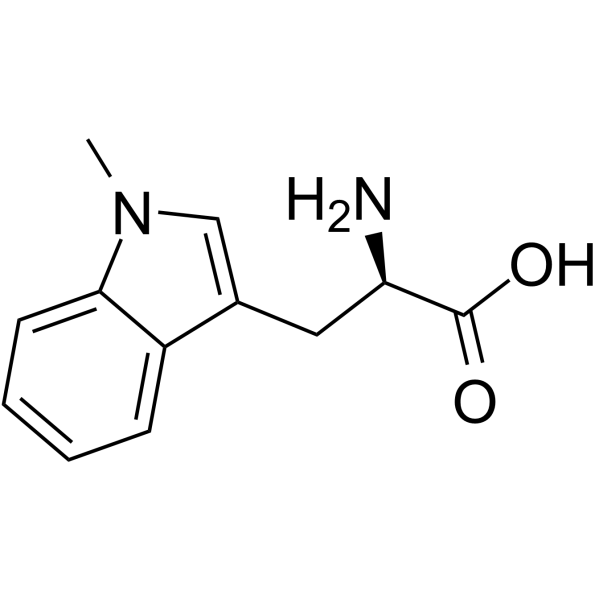
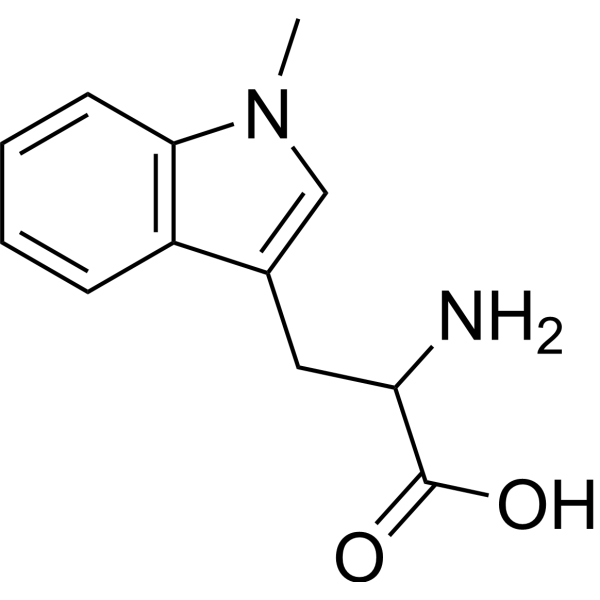
Indoximod (1-Methyl-D-tryptophan) is an orally active indoleamine 2,3-dioxygenase (IDO) pathway inhibitor. Indoximod acts as a Trp mimetic in regulating mTOR. Indoximod is an immunometabolic adjuvant used for the research of cancer .
|
-
-
- HY-108331
-
-
-
- HY-N0110
-
-
-
- HY-113038B
-
|
2-Hydroxyglutarate; 2-Hydroxyglutaric acid; 2-Hydroxypentanedioic acid
|
Histone Demethylase
Endogenous Metabolite
|
Cancer
|
|
α-Hydroxyglutaric acid (2-Hydroxyglutarate) is an α-hydroxy acid form of glutaric acid. α-Hydroxyglutaric acid is a competitive inhibitor of multiple α-ketoglutarate-dependent dioxygenases, including histone demethylases and the TET family of 5-methlycytosine (5mC) hydroxylases .
|
-
-
- HY-33298
-
LM10
1 Publications Verification
|
Indoleamine 2,3-Dioxygenase (IDO)
|
Cancer
|
|
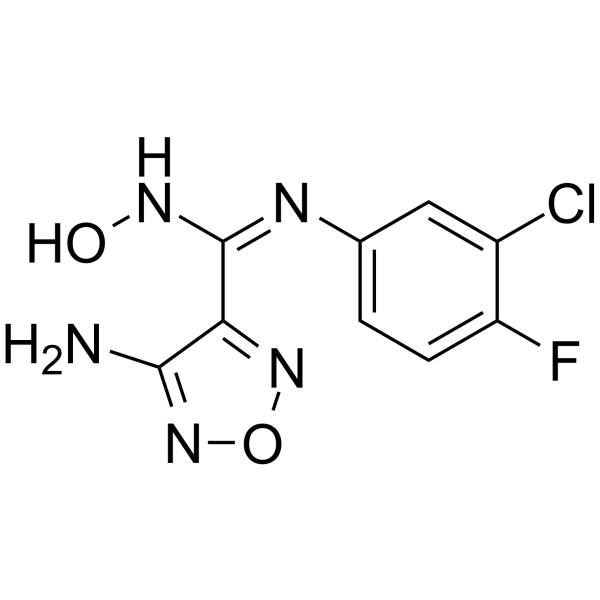
LM10 is a potent inhibitor of tryptophan 2,3-dioxygenase (TDO). Tryptophan 2,3-dioxygenase (TDO) is an unrelated hepatic enzyme that also degrades tryptophan along the kynurenine pathway. LM10 has the potential for the research of cancer diseases .
|
-
-
- HY-108681
-
680C91
2 Publications Verification
|
Collagen
|
Neurological Disease
Inflammation/Immunology
Cancer
|
|
680C91 is an orally active, selective tryptophan 2,3-dioxygenase (TDO) inhibitor with a Ki of 51 nM. TDO is the key enzyme of tryptophan catabolism. 680C91 can be used for the research of cancer immunotherapy and Alzheimer’s Disease .
|
-
-
- HY-101560
-
|
BMS-986205; ONO-7701
|
Indoleamine 2,3-Dioxygenase (IDO)
|
Cancer
|
|
Linrodostat (BMS-986205) is a selective and irreversible indoleamine 2,3-dioxygenase 1 (IDO1) inhibitor with an IC50 value of 1.1 nM in IDO1-HEK293 cells. Linrodostat is well tolerated with potent pharmacodynamic activity in advanced cancers .
|
-
-
- HY-N0707
-
-
-
- HY-131911
-
|
|
PROTACs
Indoleamine 2,3-Dioxygenase (IDO)
|
Inflammation/Immunology
|
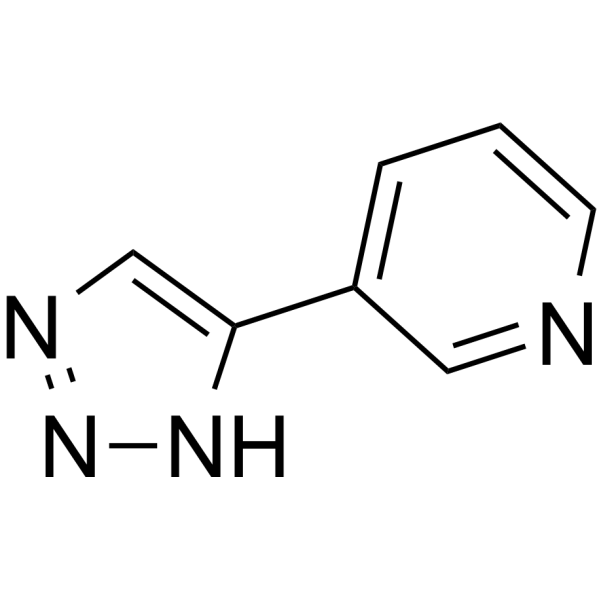
|
PROTAC IDO1 Degrader-1 is the first potent IDO1 (indoleamine 2,3-dioxygenase 1) degrader that hijacks IDO1 to Cereblon E3 ligase to introduce IDO1 into UPS and eventually achieve ubiquitination and degradation (DC50=2.84 μM). PROTAC IDO1 Degrader-1 moderately improves the tumor-killing activity of H ER2 CAR-T cells .
|
-
-
- HY-W012814
-
|
|
Endogenous Metabolite
Apoptosis
Reactive Oxygen Species (ROS)
|
Cardiovascular Disease
Inflammation/Immunology
Cancer
|
|
4-Methylcatechol is an intermediate in the degradation of some alkylbenzenes and an orally active suicide inhibitor of catechol 2,3-dioxygenase (C23O). 4-Methylcatechol induces apoptosis in melanoma cells through oxidative stress, but some studies have also shown that 4-Methylcatechol is carcinogenic. In addition, 4-Methylcatechol has antiplatelet and blood pressure-lowering activities. 4-Methylcatechol can also inhibit protein oxidation in beef but does not disulfide formation .
|
-
-
- HY-113038A
-
|
2-Hydroxyglutarate disodium; 2-Hydroxyglutaric acid disodium; 2-Hydroxypentanedioic acid disodium
|
Histone Demethylase
Endogenous Metabolite
|
Cancer
|
|
α-Hydroxyglutaric acid (2-Hydroxyglutarate) disodium is an α-hydroxy acid form of glutaric acid. α-Hydroxyglutaric acid disodium is a competitive inhibitor of multiple α-ketoglutarate-dependent dioxygenases, including histone demethylases and the TET family of 5-methlycytosine (5mC) hydroxylases .
|
-
-
- HY-W010040
-
|
|
Endogenous Metabolite
|
Cardiovascular Disease
Metabolic Disease
|
|
4-Hydroxyphenylpyruvic acid is an intermediate in the metabolism of the amino acid phenylalanine. 4-Hydroxyphenylpyruvic acid is a substrate of 4-hydroxyphenylpyruvic acid dioxygenase (HPPA). 4-Hydroxyphenylpyruvic acid can be used in the study of HPD-related diseases, such as type III tyrosinemia and hawkinsinuria .
|
-
-
- HY-15683
-
-
-
- HY-151886
-
|
|
PROTACs
Indoleamine 2,3-Dioxygenase (IDO)
|
Neurological Disease
Cancer
|
|
NU223612 is a potent PROTAC (PROTACs) that degrades indoleamine 2,3-dioxygenase 1 (IDO1) (Indoleamine 2,3-Dioxygenase (IDO)) with a Kd of 640 nM. NU223612 potently degrades the IDO1 protein through CRBN-mediated proteasomal degradation. NU223612 is bound to CRBN with an affinity of 290 nM. NU223612 can cross the blood-brain barrier (BBB) .
|
-
-
- HY-18770B
-
-
-
- HY-107368
-
-
-
- HY-133897
-
|
1-Methyl-DL-tryptophan; (Rac)-NLG-8189
|
Indoleamine 2,3-Dioxygenase (IDO)
Apoptosis
|
Inflammation/Immunology
Cancer
|
|
(Rac)-Indoximod (1-Methyl-DL-tryptophan) is an indoleamine 2,3-dioxygenase (IDO) inhibitor. Co-treatment with IFN-γ and (Rac)-Indoximod markedly reduces the activity of human cardiac myofibroblasts (hCMs) expressing α-SMA and induces apoptosis through up-regulating the IRF-1, Fas, and FasL genes .
|
-
-
- HY-28247
-
|
|
Endogenous Metabolite
|
Metabolic Disease
|
|
N-Formylkynurenine is an intermediate in the catabolism of tryptophan. It is a formylated derivative of kynurenine. The formation of N-formylkynurenine is catalyzed by heme dioxygenases.
|
-
-
- HY-N0110A
-
-
-
- HY-P2915
-
|
|
Biochemical Assay Reagents
Bacterial
|
Infection
|
|
Protocatechuate 3,4-dioxygenase is a dioxygenase. Protocatechuate 3,4-dioxygenase belongs to the non-heme iron dioxygenase class. Protocatechuate 3,4-dioxygenase catalyzes the cleavage of the aromatic ring of 3,4-dihydroxybenzoate, attaching two atoms of molecular oxygen to the compound to generate β-carboxy-cis,cis-muconate. Protocatechuate 3,4-dioxygenase is a key enzyme in the β-ketoadipic acid pathway. It is found in marine bacteria associated with Roseobacter. Protocatechuate 3,4-dioxygenase can be isolated from Pseudomonas aeruginosa .
|
-
-
- HY-100687
-
-
-
- HY-135767
-
-
-
- HY-133597
-
|
|
Drug Derivative
|
Others
|
|
4-Chlorocatechol is a major degradation product of 4-chloro-2-aminophenol (4C2AP). 4-Chlorocatechol is also a substrate for catechol 1,2-dioxygenases and chlorocatechol dioxygenase .
|
-
-
- HY-79531
-
-
-
- HY-145346
-
-
-
- HY-151425
-
|
|
Indoleamine 2,3-Dioxygenase (IDO)
|
Cancer
|
|
TDO-IN-1 is an orally active and selective inhibitor of tryptophan 2,3-dioxygenase (TDO), shows excellent selectivity over indoleamine-2,3-dioxygenase (IDO), with an IC50 value of 0.62 μM (IDO). TDO-IN-1 reverse the local immune tolerance of tumor tissue to inhibit tumor growth in vivo .
|
-
-
- HY-137910
-
|
|
Environmental Pollutants
HPPD
Herbicide
|
Infection
|
|
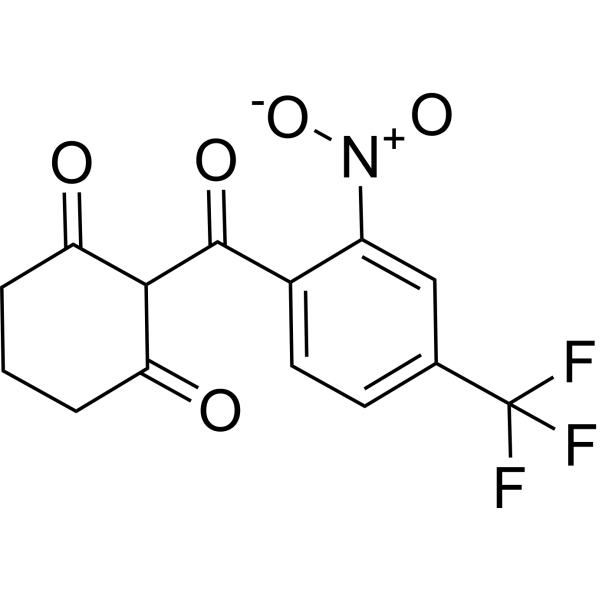
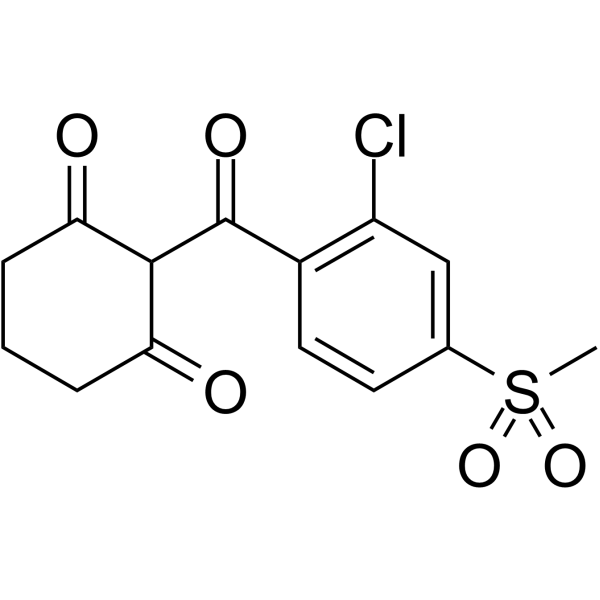
Tembotrione is a herbicide belonging to the HPPD (dioxygenase) inhibitor class with crop selectivity. Tembotrione effectively controls a variety of weeds including broadleaf and gramineous species by disrupting carotenoid synthesis, which leads to chlorophyll degradation and leaf whitening. Mixing Tembotrione with isoxaflutole or adding surfactants optimizes its efficacy and reduces phytotoxicity, with no residual impact on subsequent cruciferous crops, thus helping to increase maize grain yield. The activity of Tembotrione decreases under drought conditions, and under specific conditions (such as double-dose treatment), it may cause reversible yellowing and even yield reduction in crops such as poppy .
|
-
-
- HY-148383
-
-
-
- HY-177086
-
|
|
Indoleamine 2,3-Dioxygenase (IDO)
|
Cancer
|
|
IDO1/TDO-IN-9 (Compound 66) is a potent dual inhibitor targeting indoleamine 2,3-dioxygenase 1 (IDO1) and tryptophan 2,3-dioxygenase (TDO) with IC50s of <1 μM. IDO1/TDO-IN-9 inhibits the activity of IDO1 and TDO, blocking tryptophan degradation to kynurenine, restoring immune activity in the tumor microenvironment, and suppressing tumor growth. IDO1/TDO-IN-9 is promising for research of cancers .
|
-
-
- HY-139204
-
-
-
- HY-W725385
-
|
Huanbifucaotong
|
HPPD
|
Others
|
|
Cypyrafluone is a 4-hydroxyphenylpyruvate dioxygenase (4-HPPD) inhibitor that prevents the homogentisic acid (HGA) production. Cypyrafluone can control weed in wheat fields .
|
-
-
- HY-114991
-
|
|
HPPD
|
Others
|
|
Leptospermone is a competitive, reversible inhibitor for p-Hydroxyphenylpyruvate dioxygenase (HPPD), with an IC50 of 12.1 μM. Leptospermone exhibits herbicidal activity for its bleaching effect .
|
-
-
- HY-111957
-
|
|
HPPD
|
Others
|
|
Fenquinotrione is a 4-hydroxyphenylpyruvate dioxygenase (HPPD) inhibitor with IC50s of 27.2 and 44.7nM against rice and Arabidopsis thaliana HPPD, respectively. Fenquinotrione is an herbicide that can control a wide range of broadleaf and sedge weeds with excellent rice selectivity .
|
-
-
- HY-144900
-
-
-
- HY-128355
-
|
|
Indoleamine 2,3-Dioxygenase (IDO)
|
Cancer
|
|
IDO/TDO-IN-1 (compound 25) is a highly potent and orally active dual indoleamine-2,3-dioxygenase (IDO) and tryptophan 2,3-dioxygenase (TDO) inhibitor with IC50s of 9.7 and 47 nM, respectively .
|
-
-
- HY-N2463
-
|
|
Indoleamine 2,3-Dioxygenase (IDO)
|
Cancer
|
|
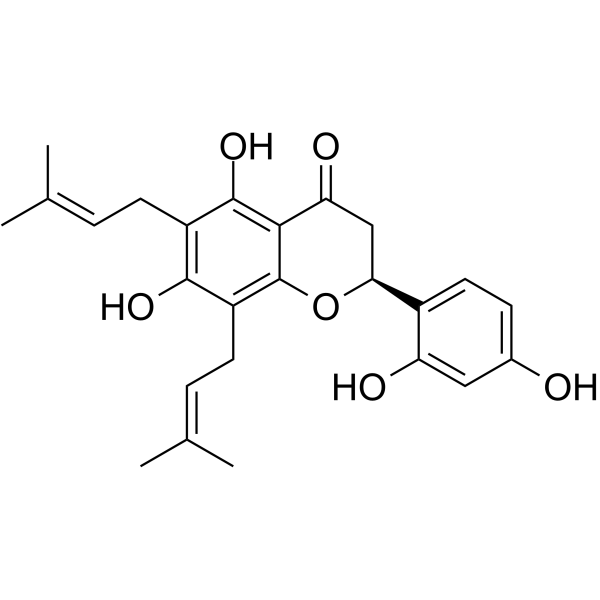
Kushenol E is a class of flavonoids isolated from Sophora flavescens and is a non-competitive indoleamine 2,3-dioxygenase 1 (IDO1) inhibitor with an IC50 of 7.7 µM and a Ki of 9.5 µM, has anti-tumor activity .
|
-
-
- HY-161308
-
|
|
HPPD
|
Others
|
|
HPPD-IN-3 (compound 25) is a potent inhibitor of 4-Hydroxyphenylpyruvate dioxygenase (HPPD), with IC50 of 10 nM, more potency than Mesotrione (HY-12853) .
|
-
-
- HY-119989
-
|
|
Herbicide
|
Infection
|
|
Cyclopyrimorate, a highly effective bleaching herbicide for weed control in rice fields, targets homogentisate solanesyltransferase (HST). HST is a downstream enzyme of 4-hydroxyphenylpyruvate dioxygenase in the plastoquinone (PQ) biosynthesis pathway .
|
-
-
- HY-N0110B
-
-
-
- HY-115122
-
-
-
- HY-112867
-
-
-
- HY-111540B
-
|
(S)-IDO1-IN-5
|
Indoleamine 2,3-Dioxygenase (IDO)
|
Cancer
|
|
(S)-LY-3381916 ((S)-IDO1-IN-5; Example 1B) is an active S-isomer of LY-3381916. (S)-LY-3381916 binds to IDOL with an IC50 value less than 1.5 µΜ . LY-3381916 is a potent, selective and brain penetrated inhibitor of Indoleamine 2,3-Dioxygenase 1 (IDO1) activity, binds to apo-IDO1 lacking heme rather than mature heme-bound IDO1 .
|
-
-
- HY-P2976
-
|
LOX
|
Endogenous Metabolite
|
Others
|
|
Lipoxygenase, general (LOX) is a dioxygenase, is often used in biochemical studies. Lipoxygenase, general catalyzes the formation of corresponding hydroperoxides from polyunsaturated fatty acids such as linoleic acid and arachidonic acid .
|
-
-
- HY-151093
-
-
-
- HY-163559
-
|
|
HPPD
|
Others
|
|
HPPD-IN-4 (Compound III-29) is a selective inhibitor of HPPD with anIC50 of 0.19 μM. HPPD-IN-4 is primarily used in the study of high-efficiency herbicides .
|
-
-
- HY-W103225
-
|
|
Bacterial
|
Infection
|
|
Dihydroanthracene (9,10-Dihydroanthracene) is a substrate for toluene dioxygenase (TDO) expressed by Pseudomonas putida UV4. Toluene dioxygenase (TDO) expressed by Pseudomonas putida UV4 catalyzes the benzylic monooxygenation of Dihydroanthracene to 9-hydroxy-9,10-DHA as the only product .
|
-
-
- HY-133609
-
-
-
- HY-18769
-
|
IDO-IN-4
|
Indoleamine 2,3-Dioxygenase (IDO)
|
Cancer
|
|
BMS-978587 (IDO-IN-4) is an indoleamine 2,3-dioxygenase 1 (IDO-1) inhibitor, extracted from patent WO2014150677A1, Compound example 1 enantiomer 1.
|
-
-
- HY-18770A
-
|
NLG-1486
|
Indoleamine 2,3-Dioxygenase (IDO)
|
Cancer
|
|
IDO-IN-6 (NLG-1486) is an indoleamine 2,3-dioxygenase (IDO) inhibitor extracted from patent WO WO2012142237A1, Compound 1486, has an IC50 of <1 μM.
|
-
-
- HY-18770
-
|
NLG-1489
|
Indoleamine 2,3-Dioxygenase (IDO)
|
Cancer
|
|
IDO-IN-5 (NLG-1489) is an indoleamine 2,3-dioxygenase (IDO) inhibitor extracted from patent WO WO2012142237A1, compound 1489, has an IC50 of 1-10 μM.
|
-
- HY-N12125
-
|
|
Others
|
Infection
|
|
Entadamide A (compound 1) is a tryptophan derivative. Entadamide A prevents tryptophan depletion by inhibiting indoleamine 2, 3-dioxygenase (IDO), thereby inhibiting HIV replication. Entadamide A can be used in drug and neuropsychiatric studies of redesivir [1].
|
-
- HY-W025799
-
|
N-Benzalaniline; N-Phenylbenzylimine
|
Histone Demethylase
|
Cancer
|
|
N-Benzylideneaniline is an inhibitor of xylinostilbene-α,β-dioxygenase (LSD) .
|
-
- HY-175500
-
|
|
HPPD
Herbicide
|
Others
|
|
HPPD-IN-5 (compound IV-45) is a 4-hydroxyphenylpyruvate dioxygenase (HPPD) inhibitor with an IC50 of 0.21 μM. HPPD-IN-5 is used as a herbicide .
|
-
- HY-W012814R
-
|
|
Reference Standards
Endogenous Metabolite
Apoptosis
Reactive Oxygen Species (ROS)
|
Cardiovascular Disease
Inflammation/Immunology
Cancer
|
|
4-Methylcatechol (Standard) is the analytical standard of 4-Methylcatechol. This product is intended for research and analytical applications. 4-Methylcatechol is an intermediate in the degradation of some alkylbenzenes and an orally active suicide inhibitor of catechol 2,3-dioxygenase (C23O). 4-Methylcatechol induces apoptosis in melanoma cells through oxidative stress, but some studies have also shown that 4-Methylcatechol is carcinogenic. In addition, 4-Methylcatechol has antiplatelet and blood pressure-lowering activities. 4-Methylcatechol can also inhibit protein oxidation in beef but does not disulfide formation[1][2][3][4][5][6].
|
-
- HY-144900R
-
|
|
Reference Standards
Reactive Oxygen Species (ROS)
|
Others
|
|
Topramezone (Standard) is the analytical standard of Topramezone. This product is intended for research and analytical applications. Topramezone is a potent 4-hydroxyphenylpyruvate dioxygenase (4-HPPD) inhibitor. Topramezone is a herbicide, used for the post-emergence control of broadleaf and grass weeds in corn .
|
-
- HY-18770C
-
|
NLG-1487
|
Indoleamine 2,3-Dioxygenase (IDO)
|
Cancer
|
|
IDO-IN-8 (NLG-1487) is an indoleamine 2,3-dioxygenase (IDO) inhibitor extracted from patent WO WO2012142237A1, compound 1487, has an IC50 of 1-10 μM.
|
-
- HY-W012814S
-
|
|
Endogenous Metabolite
|
Others
|
|
4-Methylcatechol-d3 is the deuterium labeled 4-Methylcatechol . 4-Methylcatechol, a metabolite of p-toluate, is a substrate as well as a suicide inhibitor of Catechol 2,3-Dioxygenase .
|
-
- HY-W012814S1
-
|
|
Endogenous Metabolite
|
Others
|
|
4-Methylcatechol-d8 is the deuterium labeled 4-Methylcatechol . 4-Methylcatechol, a metabolite of p-toluate, is a substrate as well as a suicide inhibitor of Catechol 2,3-Dioxygenase .
|
-
- HY-P4149
-
-
- HY-N0707S
-
|
1-Methyl-L-tryptophan-d3; (S)-NLG-8189-d3
|
Indoleamine 2,3-Dioxygenase (IDO)
|
Cancer
|
|
(S)-Indoximod-d3 is the deuterium labeled (S)-Indoximod. (S)-Indoximod (1-Methyl-L-tryptophan) is an inhibitor of indoleamine 2,3-dioxygenase (IDO). (S)-Indoximod can be used for the research of cancer .
|
-
- HY-101560A
-
|
BMS-986205 mesylate; ONO-7701 mesylate
|
Indoleamine 2,3-Dioxygenase (IDO)
|
Cancer
|
|
Linrodostat (BMS-986205) mesylate is a selective irreversible inhibitor of indoleamine 2,3-dioxygenase 1 (IDO1), which effectively inhibits IDO1-HEK293 mesylate cells with an IC50 value of 1.1 nM. Linrodostat mesylate demonstrates good pharmacological activity in advanced cancer .
|
-
- HY-135767R
-
|
|
HPPD
Reference Standards
|
Metabolic Disease
|
Bicyclopyrone (Standard) is the analytical standard of Bicyclopyrone. This product is intended for research and analytical applications. Bicyclopyrone is an inhibitor of 4-hydroxyphenylpyruvate dioxygenase (Hpd) .
|
-
- HY-N16372
-
-
- HY-107368R
-
|
|
Reference Standards
Reactive Oxygen Species (ROS)
|
Others
|
|
Sulcotrione (Standard) is the analytical standard of Sulcotrione. This product is intended for research and analytical applications. Sulcotrione is a β-triketone herbicide which can inhibit hydroxyphenylpyruvate dioxygenase (HPPD).
|
-
- HY-W002114
-
|
|
Bacterial
|
Infection
|
|
4-Amino-3-hydroxybenzoic acid is an aromatic substrate degradable by Bordetella sp. strain 10d. 4-Amino-3-hydroxybenzoic acid can serve as a carbon source, nitrogen source and energy source for the growth of Bordetella sp. strain 10d. 4-Amino-3-hydroxybenzoic acid acts as a substrate for 2-amino-5-carboxymuconate-6-semialdehyde deaminase and 4-amino-3-hydroxybenzoate 2,3-dioxygenase .
|
-
- HY-N0110R
-
-
- HY-E70583
-
|
|
TET Protein
|
Others
|
|
Recombinant Ten-Eleven Translocase is a recombinant Fe(II)- and α-ketoglutarate-dependent dioxygenase. Recombinant Ten-Eleven Translocase converts 5-methylcytosine (5mC) to 5-hydroxymethylcytosine (5hmC), and then to 5-formylcytosine (5fC) and 5-carboxycytosine (5caC) through a series of oxidation reactions. Then, 5caC is further converted into uracil (U) through the action of a conversion agent or enzyme, and uracil (U) is converted into thymine (T) through PCR, thereby achieving single-base resolution and high-accuracy identification of DNA methylation sites .
|
-
- HY-W016584
-
|
|
Others
|
Infection
|
|
4,5-Dichlorocatechol is a substrate of the broad-spectrum chlorocatechol 1,2-dioxygenase of pseudomonas chlororaphis RW71. The Ki values for 4,5-dichlorocatechol is 30 nM for the dioxygenase of the Chlorobenzoate-degrading strain Pseudomonas putida AC27 and 4 nM for the dioxygenase of Acidovorax sp. strain PS14 .
|
-
- HY-16987
-
-
- HY-D0033
-
-
- HY-176099
-
|
|
Drug Isomer
|
Others
|
|
Epibenzomalvin E is an isomer of Benzmalvin E. Benzomalvin E is an indoleamine 2,3-dioxygenase inhibitor .
|
-
- HY-133612
-
-
- HY-15683R
-
|
|
Indoleamine 2,3-Dioxygenase (IDO)
|
Cancer
|
|
IDO5L (Standard) is the analytical standard of IDO5L. This product is intended for research and analytical applications. IDO5L is a potent indoleamine 2,3-dioxygenase (IDO) inhibitor with an IC50 of 67 nM.
|
-
- HY-129749
-
-
- HY-110387
-
|
|
Indoleamine 2,3-Dioxygenase (IDO)
|
Cancer
|
|
IDO-IN-9 is an indoleamine-2,3-dioxygenase (IDO) inhibitor with IC50s of 0.011 μM (Kinase) and 0.0018 μM (Hela Cell), extracted from patent WO 2016041489 A1, compound 6.
|
-
- HY-111234
-
|
|
Indoleamine 2,3-Dioxygenase (IDO)
|
Cancer
|
|
IDO-IN-11 is an indoleamine-2,3-dioxygenase (IDO) inhibitor with IC50s of 0.18 μM (Kinase) and 0.014 μM (Hela Cell), extracted from patent WO 2016041489 A1, compound 13.
|
-
- HY-16724R
-
|
1-Methyl-D-tryptophan (Standard); NLG-8189 (Standard)
|
Indoleamine 2,3-Dioxygenase (IDO)
Reference Standards
|
Cancer
|
|
Indoximod (Standard) is the analytical standard of Indoximod. This product is intended for research and analytical applications. Indoximod (1-Methyl-D-tryptophan) is an orally active indoleamine 2,3-dioxygenase (IDO) pathway inhibitor. Indoximod acts as a Trp mimetic in regulating mTOR. Indoximod is an immunometabolic adjuvant used for the research of cancer .
|
-
- HY-134583
-
|
|
Indoleamine 2,3-Dioxygenase (IDO)
|
Cancer
|
|
IDO1-IN-7 is a highly potent and selective indoleamine-2,3-dioxygenase-1 (IDO1) inhibitor, with an IC50 of 6.1 nM in in the cellular assay (SKOV3). IDO1-IN-7 has immunomodulatory effects. IDO1-IN-7 can be used for the research of cancer .
|
-
- HY-111540A
-
|
(Rac)-IDO1-IN-5
|
Indoleamine 2,3-Dioxygenase (IDO)
|
Cancer
|
|
(Rac)-LY-3381916 ((Rac)-IDO1-IN-5; Example 1) is a racemate of LY-3381916 . LY-3381916 is a potent, selective and brain penetrated inhibitor of Indoleamine 2,3-Dioxygenase 1 (IDO1) activity, binds to apo-IDO1 lacking heme rather than mature heme-bound IDO1 .
|
-
- HY-128355A
-
|
|
Indoleamine 2,3-Dioxygenase (IDO)
|
Others
Cancer
|
|
(R)-IDO/TDO-IN-1 (compound 25) is an indoleamine-2,3-dioxygenase (IDO) inhibitor, with good pharmacokinetic properties. (R)-IDO/TDO-IN-1 exhibits anti-tumor activity in MC38 xenograft model. (R)-IDO/TDO-IN-1 shows synergistic effect with anti-PD-1 monoclonal antibody (SHR-1210) .
|
-
- HY-177557
-
|
|
Indoleamine 2,3-Dioxygenase (IDO)
|
Infection
Neurological Disease
Inflammation/Immunology
Cancer
|
|
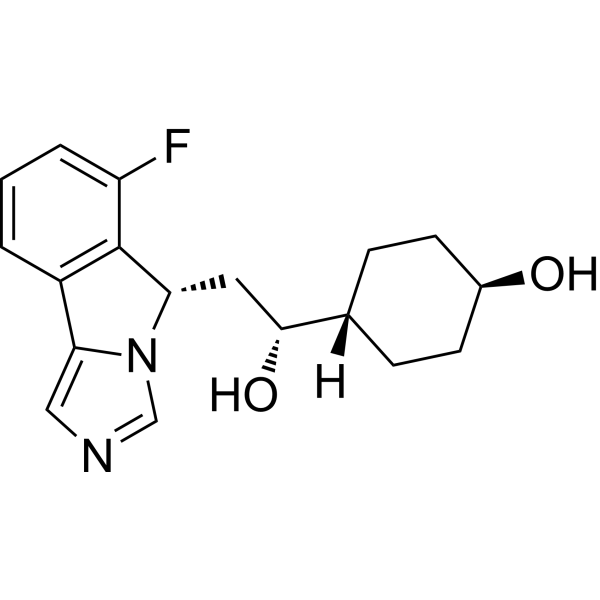
IDO-IN-19 (Compound I) is a free base of an imidazole-isoindole derivative. IDO-IN-19 can inhibit the activity of Indoleamine 2,3-Dioxygenase (IDO). IDO-IN-19 can block the decomposition of tryptophan and restore the function of T cells. IDO-IN-19 can be used for the researches of cancer, immunology, infection and neurological disease, such as breast cancer and Alzheimer's disease .
|
-
- HY-116620
-
|
|
Neurokinin Receptor
|
Infection
|
|
Benzomalvin C is a weak antagonist of the neurokinin-1 (NK1) receptor inhibiting binding of substance P by 46% when used at 100 μg/mL in vitro. It is also a weak inhibitor of indolamine 2,3-dioxygenase (IDO) with an IC50 value of 130 μM for recombinant IDO. It is isolated from Penicillium and contains an epoxide group at C-19 and C-20, which is not present in benzomalvins A, B, or E.
|
-
- HY-W745979
-
|
|
Reactive Oxygen Species (ROS)
|
Others
|
|
Sulcotrione-d7 is the deuterium labeled Sulcotrione (HY-107368). Sulcotrione is a β-triketone herbicide which can inhibit hydroxyphenylpyruvate dioxygenase (HPPD).
|
-
- HY-113038AR
-
|
2-Hydroxyglutarate disodium (Standard); 2-Hydroxyglutaric acid disodium (Standard); 2-Hydroxypentanedioic acid disodium (Standard)
|
Reference Standards
Histone Demethylase
Endogenous Metabolite
|
Cancer
|
|
Ophiopogonin D (Standard) is the analytical standard of Ophiopogonin D. This product is intended for research and analytical applications. Ophiopogonin D, isolated from the tubers of Ophiopogon japonicus, is a rare naturally occurring C29 steroidal glycoside . Ophiopogonin D is a CYP2J3 inducer that significantly inhibits Ang II induced NF-κB nuclear translocation, IκBα down-regulation, intracellular Ca2+ overload and activation of pro-inflammatory cytokines by increasing the expression of CYP2J2/EETs and PPARα in human umbilical vein endothelial cells (HUVECs). Ophiopogonin D has been used to treat inflammatory and cardiovascular diseases for thousands of years .
|
-
- HY-175182
-
|
|
Indoleamine 2,3-Dioxygenase (IDO)
TNF Receptor
Interleukin Related
|
Inflammation/Immunology
Cancer
|
|
IDO1-IN-27 (Compound I-1) is a Indoleamine 2,3-Dioxygenase 1 (IDO1) inhibitor with an IC50 of 0.3951 μM for recombinant hIDO1. IDO1-IN-27 also inhibits hIDO1 expression in HeLa cells (EC50: 62 nM). IDO1-IN-27 effectively stimulates T cell proliferation by reducing the mRNA expression of pro-inflammatory factors (TNF-α, IL-6, and IL-1β) while concurrently inhibiting LLC cells growth .
|
-
- HY-29268
-
|
|
Bacterial
Indoleamine 2,3-Dioxygenase (IDO)
NF-κB
Phosphodiesterase (PDE)
|
Infection
Inflammation/Immunology
Cancer
|
|
β-Carboline 1-carboxylic acid is a β-carboline alkaloid with anti-inflammatory, antifibrotic, antitumor and antibacterial activities. β-Carboline 1-carboxylic acid is the cAMP phosphodiesterase (IC50: 96 µM) and indoleamine 2, 3-dioxygenase (IDO) inhibitor. β-Carboline 1-carboxylic acid is cytotoxic to tumor cells. β-Carboline 1-carboxylic acid inhibits inflammation through the NF-κb/p65 pathway and can reverse epithelial-mesenchymal transition (EMT). In addition, β-Carboline 1-carboxylic acid has strong inhibitory activity against S. aureus (IC50: 47.70 μg/mL) and E. coli (IC50: 19.17 μg/mL) .
|
-
- HY-133597R
-
|
|
Drug Derivative
Reference Standards
|
Others
|
|
4-Chlorocatechol (Standard) is the analytical standard of 4-Chlorocatechol. This product is intended for research and analytical applications. 4-Chlorocatechol is a major degradation product of 4-chloro-2-aminophenol (4C2AP). 4-Chlorocatechol is also a substrate for catechol 1,2-dioxygenases and chlorocatechol dioxygenase .
|
-
- HY-P2915A
-
|
|
Biochemical Assay Reagents
Bacterial
|
Infection
|
|
Protocatechuate 3,4-Dioxygenase, Bacteria is a dioxygenase. Protocatechuate 3,4-Dioxygenase, Bacteria belongs to the non-heme iron dioxygenase class. Protocatechuate 3,4-Dioxygenase, Bacteria catalyzes the cleavage of the aromatic ring of 3,4-dihydroxybenzoate, attaching two atoms of molecular oxygen to the compound to generate β-carboxy-cis,cis-muconate. Protocatechuate 3,4-Dioxygenase, Bacteria is a key enzyme in the β-ketoadipic acid pathway. Protocatechuate 3,4-Dioxygenase, Bacteria is found in marine bacteria associated with Roseobacter. Protocatechuate 3,4-Dioxygenase, Bacteria can be isolated from Pseudomonas aeruginosa .
|
-
- HY-W705486
-
|
|
HPPD
|
Infection
|
|
RPA 202248 is a p-hydroxy phenyl pyruvate dioxygenase (HPPD) inhibitor and degradation product of Isoxaflutole (HY-116139). RPA 202248 demonstrates environmental persistence and undergoes transport through soil matrix and macropores to subsurface drain flow in agricultural field settings .
|
-
- HY-W727532
-
|
|
HPPD
Herbicide
|
Others
|
|
Fenpyrazone is a 4-hydroxyphenylpyruvate dioxygenase (HPPD) inhibitor as well as a post-emergence herbicide. By inhibiting the activity of HPPD, Fenpyrazone indirectly blocks carotenoid biosynthesis in plants, causing bleaching of new tissues in sensitive plants, followed by necrosis and eventual death. Fenpyrazone is used in studies on controlling annual monocotyledonous and dicotyledonous weeds in summer maize fields .
|
-
- HY-E70905
-
|
|
Endogenous Metabolite
|
Metabolic Disease
|
|
Taurine Dioxygenase, E. coli (EC 1.14.11.17) is a Fe(II) and α-ketoglutaric aciddependent dioxygenase, which enables E.coli to use taurine as a sulfur source. Taurine Dioxygenase catalyzes the conversion of the amino acid taurine (2-aminoethane-1-sulfonic acid) to sulfite and aminoacetaldehyde.
|
-
- HY-E71099
-
|
|
Biochemical Assay Reagents
|
Others
|
|
(R)-Dichlorprop dioxygenase (2-oxoglutarate) (EC 1.14.11.44) is a Fe2+-dependent enzyme. (R)-Dichlorprop dioxygenase (2-oxoglutarate) (EC 1.14.11.44) is involved in the degradation of the (R)-enantiomer of the phenoxyalkanoic acid herbicides mecoprop and dichlorprop.
|
-
- HY-N19001
-
|
|
Drug Metabolite
|
Metabolic Disease
|
|
(rac)-5-Hydroxykynurenine is a urinary metabolite. (rac)-5-Hydroxykynurenine is generated via indole ring oxidative cleavage of 5-hydroxytryptophan (HY-N0122) catalyzed by indoleamine 2,3-dioxygenase .
|
-
- HY-E71332
-
-
- HY-E71143
-
-
- HY-100687R
-
|
8-Nitrotryptanthrin (Standard)
|
Indoleamine 2,3-Dioxygenase (IDO)
Reference Standards
|
Neurological Disease
|
|
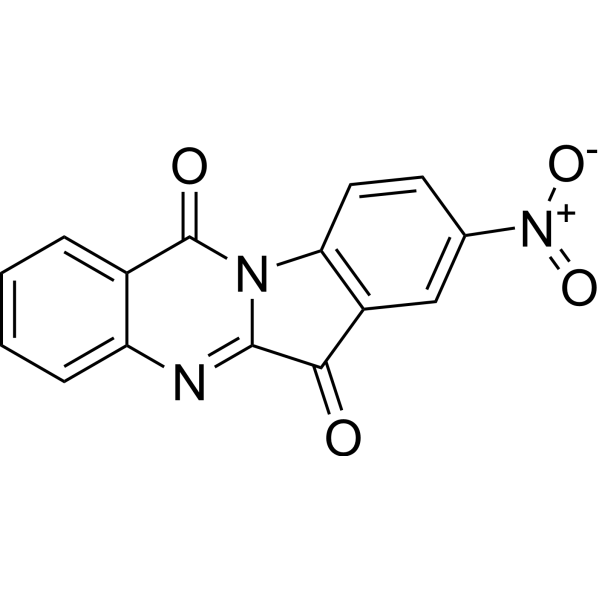
GNF-PF-3777 (Standard) is the analytical standard of GNF-PF-3777 (HY-100687). This product is intended for research and analytical applications. GNF-PF-3777 (8-Nitrotryptanthrin) is a potent human indoleamine 2,3-dioxygenase 2 (hIDO2) inhibitor which significantly reduces IDO2 activity with Ki of 0.97 μM.
|
-
- HY-108681R
-
|
|
Collagen
Reference Standards
|
Neurological Disease
Inflammation/Immunology
Cancer
|
|
680C91 (Standard) is the analytical standard of 680C91 (HY-108681). This product is intended for research and analytical applications. 680C91 is an orally active, selective tryptophan 2,3-dioxygenase (TDO) inhibitor with a Ki of 51 nM. TDO is the key enzyme of tryptophan catabolism. 680C91 can be used for the research of cancer immunotherapy and Alzheimer’s Disease .
|
-
- HY-101560R
-
|
BMS-986205 (Standard); ONO-7701 (Standard)
|
Indoleamine 2,3-Dioxygenase (IDO)
Reference Standards
|
Cancer
|
|
Linrodostat (Standard) is the analytical standard of Linrodostat (HY-101560). This product is intended for research and analytical applications. Linrodostat (BMS-986205) is a selective and irreversible indoleamine 2,3-dioxygenase 1 (IDO1) inhibitor with an IC50 value of 1.1 nM in IDO1-HEK293 cells. Linrodostat is well tolerated with potent pharmacodynamic activity in advanced cancers .
|
-
- HY-108331R
-
|
|
Reference Standards
Sirtuin
Methionine Adenosyltransferase (MAT)
Indoleamine 2,3-Dioxygenase (IDO)
|
Cancer
|
|
3-TYP (Standard) is the analytical standard of 3-TYP (HY-108331). This product is intended for research and analytical applications. 3-TYP is an inhibitor of SIRT3 (IC50of 38 μM) and an inhibitor of Methionine Adenosyltransferase (MAT) 2 and Indoleamine 2,3-Dioxygenase (IDO). There may be many off-target sites for 3-TYP that need to be examined, such as NAD-dependent enzymes, including dehydrogenases .
|
-
- HY-E71278
-
|
|
Biochemical Assay Reagents
|
Others
|
|
β-Carotene 15,15'-dioxygenase (EC 1.13.11.63) requires Fe2+. The enzyme cleaves β-Carotene symmetrically, producing two molecules of all-trans-retinal. Both atoms of the oxygen molecule are incorporated into the products. The enzyme can also process β-cryptoxanthin, 8'-apo-β-carotenal, 4'-apo-β-carotenal, α-carotene and γ-carotene in decreasing order. The presence of at least one unsubstituted β-ionone ring in a substrate greater than C30 is mandatory.
|
-
- HY-N12196
-
|
|
Cytochrome P450
|
Infection
|
|
Terretonin is a fungal terpenoid isolated from Aspergillus terreus. The complete biosynthetic pathway of terretonin includes: cytochrome P450 Trt6 catalyzes the oxidation of terrenoid to obtain an unstable intermediate; then it is catalyzed by isomerase Trt14 and processed by non-heme iron-dependent dioxygenase Trt7 to complete the biosynthesis of terretonin .
|
-
- HY-136923
-
|
|
Lipoxygenase
|
Inflammation/Immunology
|
|
BW A4C is a selective 5-lipoxygenase (5-LO) inhibitor. BW A4C is also an inhibitor of linoleic acid 8R-dioxygenase in Gaeumannomyces graminis, with an IC50 value of 0.2 μM. BW A4C can be used in research on diseases such as asthma .
|
-
- HY-B0607
-
|
NTBC; Nitisone; SC0735
|
HPPD
|
Metabolic Disease
|
|
Nitisinone is an orally active, competitive and reversible 4-hydroxyphenylpyruvate dioxygenase (4-HPPD) inhibitor with an IC50 of 173 nM. Nitisinone promotes tyrosine accumulation in a dose-dependent manner. nitisinone can be used in studies of hereditary tyrosinemia type 1 (HT-1) (a rare genetic disorder) and albinism .
|
-
- HY-174423
-
|
NC-656
|
Herbicide
|
Others
|
|
Iptriazopyrid (NC-656) is an azole carboxamide herbicide targeting 4-hydroxyphenylpyruvate dioxygenase (HPPD) with a Ki value of 24.3 nM for Arabidopsis HPPD and 33.3 nM for rice HPPD. Iptriazopyrid blocks plastoquinone and carotenoid synthesis, leading to weed chlorosis and death. Iptriazopyrid is promising for research of controlling weeds such as Echinochloa crus-galli in paddy fields .
|
-
- HY-160525
-
|
|
Molecular Glues
|
Cancer
|
|
NVS-VHL720 is a selective VHL-based cysteine dioxygenase (CDO1) molecular glue degrader. NVS-VHL720 recruits CDO1 to the VHL E3 ligase complex, driving ubiquitin-dependent proteasomal degradation of CDO1. NVS-VHL720 can be used for the research of cancer .
|
-
- HY-13495
-
ML281
2 Publications Verification
|
STK33
PKA
Aurora Kinase
Bcl-2 Family
Apoptosis
|
Metabolic Disease
Cancer
|
|
ML281 is a highly selective inhibitor of serine/threonine kinase 33 (STK33) with an IC50 value of 14 nM. ML281 shows 700-fold selectivity over PKA and 550-fold over AurB. ML281 exerts core mechanism by inhibiting STK33: in small cell lung cancer, ML281 downregulates RPS6/BAD signaling phosphorylation, induces apoptosis, and suppresses proliferation, invasion . ML281 reduces STK33-mediated 4-hydroxyphenylpyruvate dioxygenase (HPD) phosphorylation in tyrosinemia . ML281 is suitable for research on STK33 function, KRAS mutation-related cancers (pancreatic cancer, colon cancer, lung adenocarcinoma, etc.), small cell lung cancer, and tyrosinemia-related damage
|
-
- HY-113038AS
-
|
2-Hydroxyglutarate-13C5 disodium; 2-Hydroxyglutaric acid-13C5 disodium; 2-Hydroxypentanedioic acid-13C5 disodium
|
Histone Demethylase
Endogenous Metabolite
|
Cancer
|
|
α-Hydroxyglutaric acid- 13C5 (sodium) is the 13C labeled α-Hydroxyglutaric acid sodium . α-Hydroxyglutaric acid (2-Hydroxyglutarate) sodium is an α-hydroxy acid form of glutaric acid. α-Hydroxyglutaric acid sodium is a competitive inhibitor of multiple α-ketoglutarate-dependent dioxygenases, including histone demethylases and the TET family of 5-methlycytosine (5mC) hydroxylases .
|
-
- HY-W010040R
-
|
|
Reference Standards
Endogenous Metabolite
|
Cardiovascular Disease
Metabolic Disease
|
|
4-Hydroxyphenylpyruvic acid (Standard) is the analytical standard of 4-Hydroxyphenylpyruvic acid (HY-W010040). This product is intended for research and analytical applications. 4-Hydroxyphenylpyruvic acid is an intermediate in the metabolism of the amino acid phenylalanine. 4-Hydroxyphenylpyruvic acid is a substrate of 4-hydroxyphenylpyruvic acid dioxygenase (HPPA). 4-Hydroxyphenylpyruvic acid can be used in the study of HPD-related diseases, such as type III tyrosinemia and hawkinsinuria .
|
-
- HY-B0607R
-
|
NTBC (Standard); Nitisone (Standard); SC0735 (Standard)
|
HPPD
Reference Standards
|
Metabolic Disease
|
|
Nitisinone (Standard) is the analytical standard of Nitisinone. This product is intended for research and analytical applications. Nitisinone is an orally active, competitive and reversible 4-hydroxyphenylpyruvate dioxygenase (4-HPPD) inhibitor with an IC50 of 173 nM. Nitisinone promotes tyrosine accumulation in a dose-dependent manner. nitisinone can be used in studies of hereditary tyrosinemia type 1 (HT-1) (a rare genetic disorder) and albinism .
|
-
- HY-113038AS1
-
|
2-Hydroxyglutarate-d4 disodium; 2-Hydroxyglutaric acid-d4 disodium; 2-Hydroxypentanedioic acid-d4 disodium
|
Histone Demethylase
Endogenous Metabolite
|
Cancer
|
|
α-Hydroxyglutaric acid-d4 (disodium) is the deuterium labeled α-Hydroxyglutaric acid disodium . α-Hydroxyglutaric acid (2-Hydroxyglutarate) disodium is an α-hydroxy acid form of glutaric acid. α-Hydroxyglutaric acid disodium is a competitive inhibitor of multiple α-ketoglutarate-dependent dioxygenases, including histone demethylases and the TET family of 5-methlycytosine (5mC) hydroxylases .
|
-
- HY-B0607S
-
|
NTBC-d3; Nitisone-d3; SC0735-d3
|
Isotope-Labeled Compounds
HPPD
|
Metabolic Disease
|
|
Nitisinone-d3 (NTBC-d3) is deuterium labeled Nitisinone. Nitisinone is an orally active, competitive and reversible 4-hydroxyphenylpyruvate dioxygenase (4-HPPD) inhibitor with an IC50 of 173 nM. Nitisinone promotes tyrosine accumulation in a dose-dependent manner. nitisinone can be used in studies of hereditary tyrosinemia type 1 (HT-1) (a rare genetic disorder) and albinism .
|
-
- HY-W777526
-
|
|
Isotope-Labeled Compounds
|
Others
|
|
Nitisinone- 13C6 is a 13C-labeled Nitisinone (HY-B0607). Nitisinone is an orally active, competitive and reversible 4-hydroxyphenylpyruvate dioxygenase (4-HPPD) inhibitor with an IC50 of 173 nM. Nitisinone promotes tyrosine accumulation in a dose-dependent manner. nitisinone can be used in studies of hereditary tyrosinemia type 1 (HT-1) (a rare genetic disorder) and albinism .
|
-
- HY-W704805
-
|
|
Isotope-Labeled Compounds
Histone Demethylase
Endogenous Metabolite
|
Cancer
|
|
Sodium 2-hydroxypentanedioate-2,3,3-d3 is the deuterium labeled α-Hydroxyglutaric acid disodium (HY-113038A). α-Hydroxyglutaric acid (2-Hydroxyglutarate) disodium is an α-hydroxy acid form of glutaric acid. α-Hydroxyglutaric acid disodium is a competitive inhibitor of multiple α-ketoglutarate-dependent dioxygenases, including histone demethylases and the TET family of 5-methlycytosine (5mC) hydroxylases .
|
-
- HY-113038
-
|
(R)-2-Hydroxyglutarate; (R)-2-Hydroxyglutaric acid; (R)-2-Hydroxypentanedioic acid
|
Reactive Oxygen Species (ROS)
ATP Synthase
mTOR
Endogenous Metabolite
|
Neurological Disease
Inflammation/Immunology
Cancer
|
|
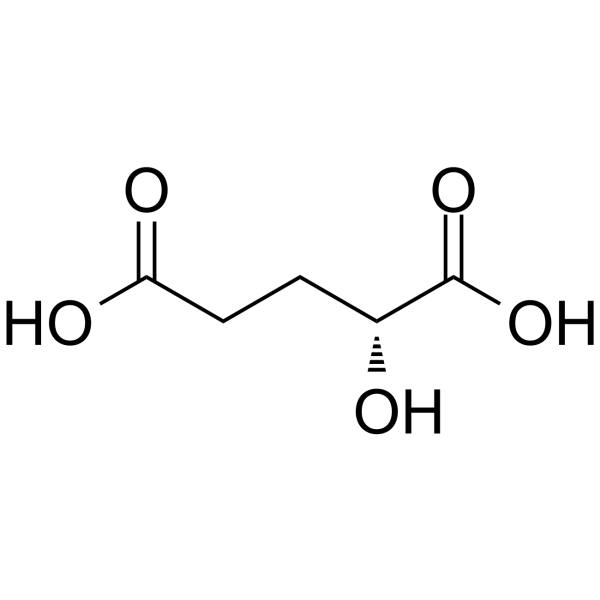
D-α-Hydroxyglutaric acid ((R)-2-Hydroxyglutarate) is the principal metabolite accumulating in neurometabolic disease D-2-hydroxyglutaric aciduria. D-α-Hydroxyglutaric acid is a weak competitive antagonist of α-ketoglutarate (α-KG) and inhibits multiple α-KG-dependent dioxygenases with a Ki of 10.87 mM. D-α-Hydroxyglutaric acid increases reactive oxygen species (ROS) production. D-α-Hydroxyglutaric acid binds and inhibits ATP synthase and inhibits mTOR signaling .
|
-
- HY-129079
-
-
- HY-100542
-
|
Disodium (R)-2-hydroxyglutarate
|
Reactive Oxygen Species (ROS)
ATP Synthase
mTOR
Endogenous Metabolite
|
Neurological Disease
Inflammation/Immunology
Cancer
|
|
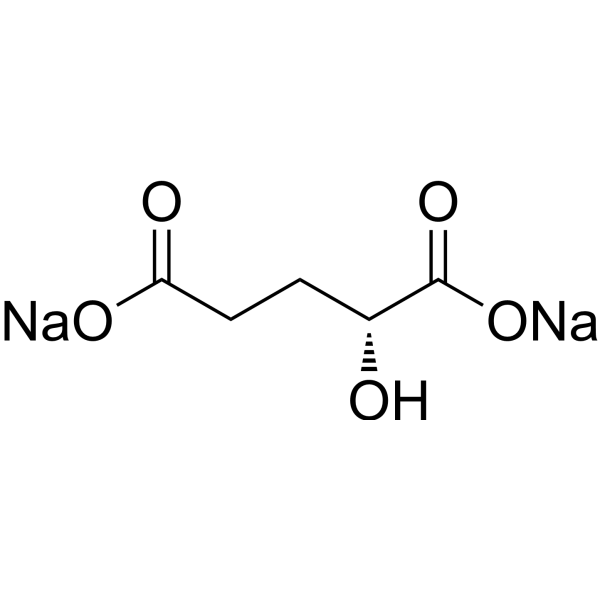
D-α-Hydroxyglutaric acid disodium (Disodium (R)-2-hydroxyglutarate) is the principal metabolite accumulating in neurometabolic disease D-2-hydroxyglutaric aciduria. D-α-Hydroxyglutaric acid disodium is a weak competitive antagonist of α-ketoglutarate (α-KG) and inhibits multiple α-KG-dependent dioxygenases with a Ki of 10.87 mM. D-α-Hydroxyglutaric acid disodium increases reactive oxygen species (ROS) production. D-α-Hydroxyglutaric acid disodium binds and inhibits ATP synthase and inhibits mTOR signaling .
|
-
- HY-W779800
-
|
|
Isotope-Labeled Compounds
Endogenous Metabolite
Reactive Oxygen Species (ROS)
mTOR
ATP Synthase
|
Neurological Disease
|
|
D-α-Hydroxyglutaric acid- 13C5 disodium is the 13C-labeled D-α-Hydroxyglutaric acid (HY-113038). D-α-Hydroxyglutaric acid ((R)-2-Hydroxyglutarate) is the principal metabolite accumulating in neurometabolic disease D-2-hydroxyglutaric aciduria. D-α-Hydroxyglutaric acid is a weak competitive antagonist of α-ketoglutarate (α-KG) and inhibits multiple α-KG-dependent dioxygenases with a Ki of 10.87 mM. D-α-Hydroxyglutaric acid increases reactive oxygen species (ROS) production. D-α-Hydroxyglutaric acid binds and inhibits ATP synthase and inhibits mTOR signaling .
|
-
- HY-100542R
-
|
Disodium (R)-2-hydroxyglutarate (Standard)
|
Reference Standards
Reactive Oxygen Species (ROS)
ATP Synthase
mTOR
Endogenous Metabolite
|
Neurological Disease
Inflammation/Immunology
Cancer
|
|
D-α-Hydroxyglutaric acid (disodium) (Standard) is the analytical standard of D-α-Hydroxyglutaric acid (disodium). This product is intended for research and analytical applications. D-α-Hydroxyglutaric acid disodium (Disodium (R)-2-hydroxyglutarate) is the principal metabolite accumulating in neurometabolic disease D-2-hydroxyglutaric aciduria. D-α-Hydroxyglutaric acid disodium is a weak competitive antagonist of α-ketoglutarate (α-KG) and inhibits multiple α-KG-dependent dioxygenases with a Ki of 10.87 mM. D-α-Hydroxyglutaric acid disodium increases reactive oxygen species (ROS) production. D-α-Hydroxyglutaric acid disodium binds and inhibits ATP synthase and inhibits mTOR signaling .
|
-
- HY-W1115537
-
|
|
HPPD
Herbicide
|
Others
|
|
Flusulfinam is a HPPD inhibitor and herbicide, with an IC50 of 0.0181 μM against Arabidopsis thaliana HPPD. Flusulfinam inhibits the catalytic activity of recombinant Arabidopsis thaliana HPPD. Flusulfinam exhibits potent herbicidal activity against barnyard grass (Echinochloa crus-galli). Flusulfinam inhibits the growth of Digitaria sanguinalis .
|
-
- HY-W654003
-
|
Disodium (R)-2-hydroxyglutarate-d5
|
Reactive Oxygen Species (ROS)
|
Neurological Disease
Inflammation/Immunology
Cancer
|
|
D-α-Hydroxyglutaric acid-d5 disodium (Disodium (R)-2-hydroxyglutarate-d5) is the deuterium labeled D-α-Hydroxyglutaric acid disodium (HY-100542). D-α-Hydroxyglutaric acid disodium (Disodium (R)-2-hydroxyglutarate) is the principal metabolite accumulating in neurometabolic disease D-2-hydroxyglutaric aciduria. D-α-Hydroxyglutaric acid disodium is a weak competitive antagonist of α-ketoglutarate (α-KG) and inhibits multiple α-KG-dependent dioxygenases with a Ki of 10.87 mM. D-α-Hydroxyglutaric acid disodium increases reactive oxygen species (ROS) production. D-α-Hydroxyglutaric acid disodium binds and inhibits ATP synthase and inhibits mTOR signaling .
|
-
- HY-CE02017A
-
|
Feruloyl-coenzyme A
|
Drug Intermediate
|
Others
|
|
Feruloyl-CoA (Feruloyl-coenzyme A) is a cinnamoyl-CoA ester substrate involved in the biosynthesis of lignin and coumarin in plants. Feruloyl-CoA acts as a substrate for cinnamoyl-CoA reductase 1-dependent reduction reaction with NADPH to produce cinnamaldehyde. Feruloyl-CoA is a precursor that generates Scopoletin (HY-N0342) via spontaneous trans/cis isomerization and lactonization of its side chain .
|
-
- HY-W753209
-
|
|
Herbicide
HPPD
|
Others
|
|
Tolpyralate is a selective post-emergence herbicide and corn Herbicide. Tolpyralate inhibits 4-HPPD. Tolpyralate exhibits herbicidal activity against a variety of weeds, including the glyphosate-resistant weed Amaranthus tuberculatus .
|
-
- HY-137910R
-
|
|
Reference Standards
Herbicide
HPPD
|
Others
|
|
Tembotrione (Standard) is the analytical standard of Tembotrione. This product is intended for research and analytical applications. Tembotrione is a drug that may reduce the
productivity of carrots. Tembotrione has the activity of reducing carrot stem
mass. Tembotrione can be used to study the total productivity of carrot
. Tembotrione is a herbicide belonging to the HPPD (dioxygenase) inhibitor class with crop selectivity. Tembotrione effectively controls a variety of weeds including broadleaf and gramineous species by disrupting carotenoid synthesis, which leads to chlorophyll degradation and leaf whitening. Mixing Tembotrione with isoxaflutole or adding surfactants optimizes its efficacy and reduces phytotoxicity, with no residual impact on subsequent cruciferous crops, thus helping to increase maize grain yield. The activity of Tembotrione decreases under drought conditions, and under specific conditions (such as double-dose treatment), it may cause reversible yellowing and even yield reduction in crops such as poppy .
|
-
| Cat. No. |
Product Name |
Type |
-
- HY-W002114
-
|
|
Biochemical Assay Reagents
|
|
4-Amino-3-hydroxybenzoic acid is an aromatic substrate degradable by Bordetella sp. strain 10d. 4-Amino-3-hydroxybenzoic acid can serve as a carbon source, nitrogen source and energy source for the growth of Bordetella sp. strain 10d. 4-Amino-3-hydroxybenzoic acid acts as a substrate for 2-amino-5-carboxymuconate-6-semialdehyde deaminase and 4-amino-3-hydroxybenzoate 2,3-dioxygenase .
|
| Cat. No. |
Product Name |
Target |
Research Area |
| Cat. No. |
Product Name |
Category |
Target |
Chemical Structure |
| Cat. No. |
Product Name |
Chemical Structure |
-
- HY-113038AS
-
|
|
|
α-Hydroxyglutaric acid- 13C5 (sodium) is the 13C labeled α-Hydroxyglutaric acid sodium . α-Hydroxyglutaric acid (2-Hydroxyglutarate) sodium is an α-hydroxy acid form of glutaric acid. α-Hydroxyglutaric acid sodium is a competitive inhibitor of multiple α-ketoglutarate-dependent dioxygenases, including histone demethylases and the TET family of 5-methlycytosine (5mC) hydroxylases .
|
-
-
- HY-113038AS1
-
|
|
|
α-Hydroxyglutaric acid-d4 (disodium) is the deuterium labeled α-Hydroxyglutaric acid disodium . α-Hydroxyglutaric acid (2-Hydroxyglutarate) disodium is an α-hydroxy acid form of glutaric acid. α-Hydroxyglutaric acid disodium is a competitive inhibitor of multiple α-ketoglutarate-dependent dioxygenases, including histone demethylases and the TET family of 5-methlycytosine (5mC) hydroxylases .
|
-
-
- HY-W654003
-
|
|
|
D-α-Hydroxyglutaric acid-d5 disodium (Disodium (R)-2-hydroxyglutarate-d5) is the deuterium labeled D-α-Hydroxyglutaric acid disodium (HY-100542). D-α-Hydroxyglutaric acid disodium (Disodium (R)-2-hydroxyglutarate) is the principal metabolite accumulating in neurometabolic disease D-2-hydroxyglutaric aciduria. D-α-Hydroxyglutaric acid disodium is a weak competitive antagonist of α-ketoglutarate (α-KG) and inhibits multiple α-KG-dependent dioxygenases with a Ki of 10.87 mM. D-α-Hydroxyglutaric acid disodium increases reactive oxygen species (ROS) production. D-α-Hydroxyglutaric acid disodium binds and inhibits ATP synthase and inhibits mTOR signaling .
|
-
-
- HY-W012814S
-
|
|
|
4-Methylcatechol-d3 is the deuterium labeled 4-Methylcatechol . 4-Methylcatechol, a metabolite of p-toluate, is a substrate as well as a suicide inhibitor of Catechol 2,3-Dioxygenase .
|
-
-
- HY-W012814S1
-
|
|
|
4-Methylcatechol-d8 is the deuterium labeled 4-Methylcatechol . 4-Methylcatechol, a metabolite of p-toluate, is a substrate as well as a suicide inhibitor of Catechol 2,3-Dioxygenase .
|
-
-
- HY-N0707S
-
|
|
|
(S)-Indoximod-d3 is the deuterium labeled (S)-Indoximod. (S)-Indoximod (1-Methyl-L-tryptophan) is an inhibitor of indoleamine 2,3-dioxygenase (IDO). (S)-Indoximod can be used for the research of cancer .
|
-
-
- HY-W745979
-
|
|
|
Sulcotrione-d7 is the deuterium labeled Sulcotrione (HY-107368). Sulcotrione is a β-triketone herbicide which can inhibit hydroxyphenylpyruvate dioxygenase (HPPD).
|
-
-
- HY-B0607S
-
|
|
|
Nitisinone-d3 (NTBC-d3) is deuterium labeled Nitisinone. Nitisinone is an orally active, competitive and reversible 4-hydroxyphenylpyruvate dioxygenase (4-HPPD) inhibitor with an IC50 of 173 nM. Nitisinone promotes tyrosine accumulation in a dose-dependent manner. nitisinone can be used in studies of hereditary tyrosinemia type 1 (HT-1) (a rare genetic disorder) and albinism .
|
-
-
- HY-W777526
-
|
|
|
Nitisinone- 13C6 is a 13C-labeled Nitisinone (HY-B0607). Nitisinone is an orally active, competitive and reversible 4-hydroxyphenylpyruvate dioxygenase (4-HPPD) inhibitor with an IC50 of 173 nM. Nitisinone promotes tyrosine accumulation in a dose-dependent manner. nitisinone can be used in studies of hereditary tyrosinemia type 1 (HT-1) (a rare genetic disorder) and albinism .
|
-
-
- HY-W704805
-
|
|
|
Sodium 2-hydroxypentanedioate-2,3,3-d3 is the deuterium labeled α-Hydroxyglutaric acid disodium (HY-113038A). α-Hydroxyglutaric acid (2-Hydroxyglutarate) disodium is an α-hydroxy acid form of glutaric acid. α-Hydroxyglutaric acid disodium is a competitive inhibitor of multiple α-ketoglutarate-dependent dioxygenases, including histone demethylases and the TET family of 5-methlycytosine (5mC) hydroxylases .
|
-
-
- HY-W779800
-
|
|
|
D-α-Hydroxyglutaric acid- 13C5 disodium is the 13C-labeled D-α-Hydroxyglutaric acid (HY-113038). D-α-Hydroxyglutaric acid ((R)-2-Hydroxyglutarate) is the principal metabolite accumulating in neurometabolic disease D-2-hydroxyglutaric aciduria. D-α-Hydroxyglutaric acid is a weak competitive antagonist of α-ketoglutarate (α-KG) and inhibits multiple α-KG-dependent dioxygenases with a Ki of 10.87 mM. D-α-Hydroxyglutaric acid increases reactive oxygen species (ROS) production. D-α-Hydroxyglutaric acid binds and inhibits ATP synthase and inhibits mTOR signaling .
|
-
Your information is safe with us. * Required Fields.
Inquiry Information
- Product Name:
- Cat. No.:
- Quantity:
- MCE Japan Authorized Agent:

