232 Results for "

drug screening

" in MedChemExpress (MCE) Product Catalog:
Products (232)

232 Results for "drug screening" in MCE Product Catalog:

15
15 Publications Verification
Cat. No.: HY-103248
CAS No.: 606-58-6
Purity:  99.78%
Synonyms: Vengicide
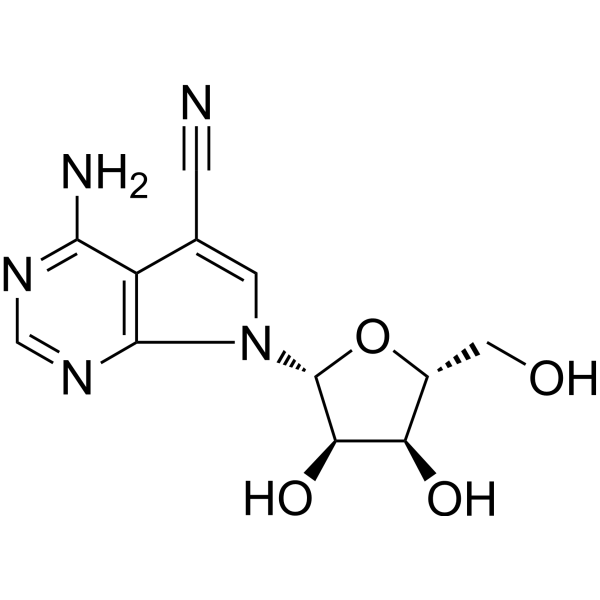
Toyocamycin (Vengicide) is an adenosine analog produced by Streptomyces diastatochromogenes, acts as an XBP1 inhibitor. Toyocamycin blocks RNA synthesis and ribosome function, and induces apoptosis. Toyocamycin affects IRE1α-XBP1 pathway, and inhibits XBP1 mRNA cleavage with an IC50 value of 80 nM with affecting IRE1α auto-phosphorylation. Toyocamycin specifically inhibits CDK9 with an IC50 value of 79 nM .
loading...
    loading...
3
3 Cited Publications
Cat. No.: HY-K1099

MCE Endotoxin Detection Kit (Recombinant Factor C) is suitable for the detection of endotoxins in therapeutic injectable drugs for human use (such as chemical drugs, antibiotics, and biologics), as well as in medical devices including dialysis fluids and implantable devices. It can be applied throughout raw material screening, process development, manufacturing, and commercialization stages.

loading...
    loading...
3
3 Cited Publications
Cat. No.: HY-W010991
CAS No.: 64967-39-1
Synonyms: FAPGG
Research Areas:  

Others

N-[3-(2-Furyl)acryloyl]-Phe-Gly-Gly (FAPGG) is a specific substrate of angiotensin converting enzyme (ACE) with a Ki of 2.546×10 -4 M. It is used as a chromogenic probe for quantitative detection of ACE activity. N-[3-(2-Furyl)acryloyl]-Phe-Gly-Gly can be hydrolyzed by ACE to generate N-[3-(2-furyl)acryloyl]-Phe (FAP) and Gly-Gly, and the ACE inhibitory effect is monitored by photometry. FAPGG competitively binds to the active center of ACE and is a key tool for screening ACE inhibitors such as Captopril (HY-B0368) and Dioscorin. Its reversible mechanism of action supports hypertension research and drug development targeting the renin-angiotensin system .
loading...
    loading...
3
3 Cited Publications
Cat. No.: HY-103430A
CAS No.: 99295-33-7
Purity:  99.82%
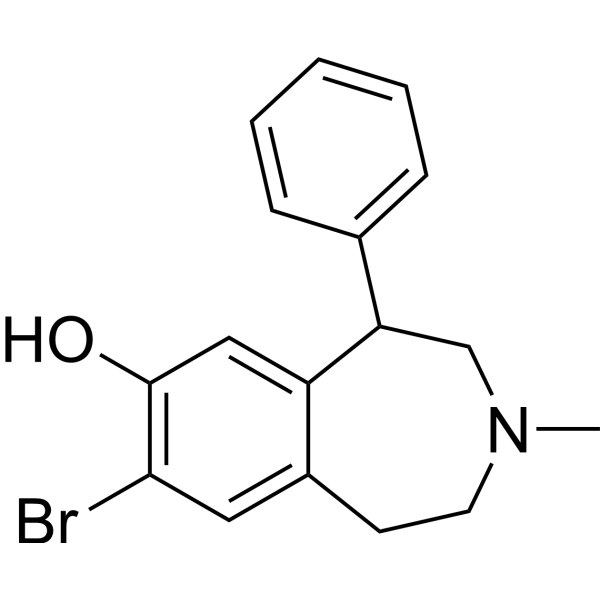
SKF-83566 is an orally active, blood-brain barrier-permeable D1/D5 dopamine receptor antagonist with a Ki value of approximately 0.4-0.56 nM. SKF-83566 modulates locomotor behavior and spatial memory by blocking D1 receptors and inhibits glioblastoma progression by targeting the DRD1/c-Myc/UHRF1 pathway. SKF-83566 acts as an inhibitor of the dopamine transporter (DAT) and adenylyl cyclase 2 (AC2). SKF-83566 competitively binds to DAT to inhibit dopamine reuptake and non-competitively inhibits AC2 activity, thereby reducing cAMP accumulation. SKF-83566 is used in research areas such as dopaminergic system mechanisms, learning and memory, targeted intervention for glioblastoma, AC2 pathophysiology, antiparasitic drug screening, and synaptic plasticity (the "gating effect") .
loading...
    loading...
2
2 Cited Publications
Cat. No.: HY-W019823
CAS No.: 76204-02-9
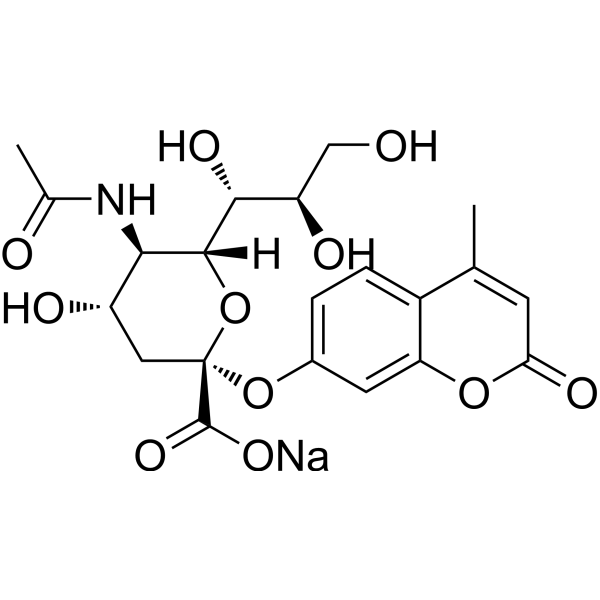
4-MUNANA is a substrate of influenza virus neuraminidase (NA) with high selectivity and irreversible reaction. In the enzymatic reaction, 4-MUNANA is hydrolyzed by NA to generate fluorescent 4-methylumbelliferone (4-MU). By detecting the fluorescence intensity of 4-MU, quantitative analysis of NA activity can be achieved. 4-MUNANA can be used in influenza-related research, such as screening NA inhibitors, developing new anti-influenza drugs, and studying the infection mechanism of influenza viruses .
loading...
    loading...
Cat. No.: HY-D0860
CAS No.: 5704-04-1
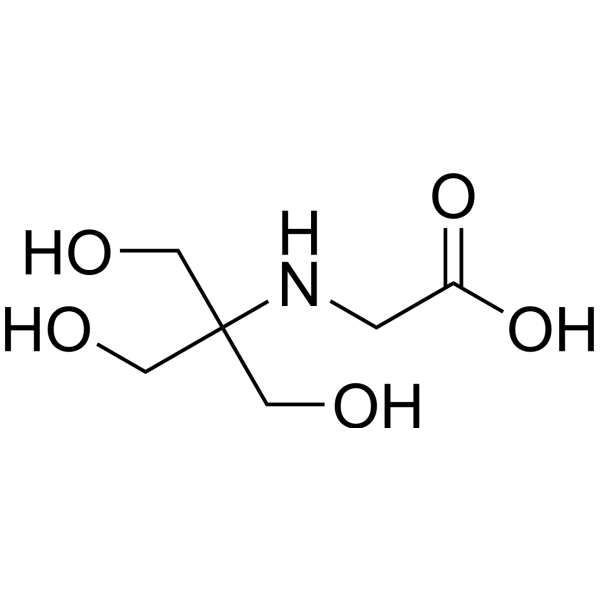
Tricine is widely used as a buffer in protein electrophoresis, nucleic acid analysis, and immunology, which can help adjust pH and stabilize chemical reactions. In addition, the compound can also be used in research in certain medical fields, such as in antibody detection and drug screening.
loading...
    loading...
Cat. No.: HY-141591
CAS No.: 1799392-31-6
Purity:  99.80%
Research Areas:  

Others

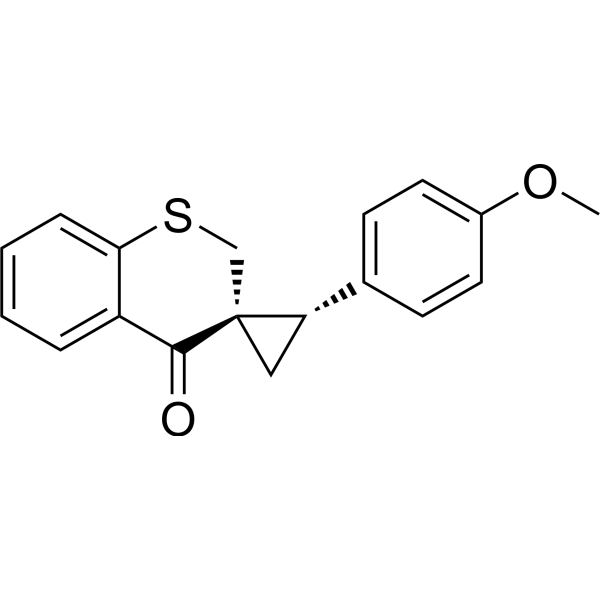
CYT296 is a target chromatin de-condensation compound. CYT296 can improve the induction of induced pluripotent stem cell (iPSCs) mediated by defined factors (OSKM) and induce an open chromatin state in Mouse Embryonic Fibroblast (MEFs) to facilitate somatic cell reprogramming. CYT296 can be used for cell replacement therapies and drug screening research .
loading...
    loading...
Cat. No.: HY-107620
CAS No.: 212631-61-3
Purity:  99.75%
Target:  

MEK

Research Areas:  

Neurological Disease

PD 198306 is a selective MAPK/ERK-kinase (MEK) inhibitor. PD 198306 results in an observable reduction in the Streptozocin induced increase in the level of active ERK1 and 2. Antihyperalgesic effects .
loading...
    loading...
Cat. No.: HY-DY1034
CAS No.: 76204-02-9
4-MUNANA (solution) is a substrate of influenza virus neuraminidase (NA) with high selectivity and irreversible reaction. In the enzymatic reaction, 4-MUNANA is hydrolyzed by NA to generate fluorescent 4-methylumbelliferone (4-MU). By detecting the fluorescence intensity of 4-MU, quantitative analysis of NA activity can be achieved. 4-MUNANA can be used in influenza-related research, such as screening NA inhibitors, developing new anti-influenza drugs, and studying the infection mechanism of influenza viruses .
Solvent and Concentration: Sterile water: 10 mM
loading...
    loading...
Cat. No.: HY-137115
CAS No.: 334658-24-1
Target:  

Smo

Research Areas:  

Cancer

BODIPY-Cyclopamine is a fluorescently labeled ligand for the Smoothened (SMO) receptor. The activation of SMO is regulated by Patch protein, and over-activated SMO signaling pathways are associated with tumorigenesis. The NanoBRET (Nanofluorescein bioluminescence resonance energy transfer) technique used in the study can sensitively detect the resonance energy transfer between SMO and BODIPY-Cyclopamine, which can be used for high-throughput screening and kinetic analysis. Studying the binding site of BODIPY-Cyclopamine on SMO can also further explore SMO-targeted drugs .
loading...
    loading...
Cat. No.: HY-176734
Research Areas:  

Cancer

CZL-S092 is a PLK4 inhibitor with an IC50 value of 0.9 nM and excellent selectivity over other PLK4 family members (PLK1, PLK2, and PLK3). CZL-S092 exhibits anti-neuroblastoma activity in vitro (IMR-32 cells, IC50 = 1.143 μM). CZL-S092 inhibits cell migration and halts the cell cycle and induces apoptosis. CZL-S092 can be used in studies of various cancers including neuroblastoma cancer .
loading...
    loading...
Cat. No.: HY-P6299
CAS No.: 944792-75-0
Research Areas:  

Neurological Disease Cancer

MAX8 is a synthetic β-hairpin peptide that folds rapidly and self-assembles into a β-sheet-rich fibrous hydrogel network via non-covalent crosslinking. MAX8 hydrogel exhibits excellent shear-thinning and self-healing properties, enabling precise delivery via syringe and maintaining local retention after implantation. MAX8 hydrogel can uniformly encapsulate cells while preserving their viability and morphology, and protect growth factors (e.g., NGF) and chemotherapeutic drugs from degradation. MAX8 is applicable for spinal cord injury repair, medulloblastoma treatment, and three-dimensional high-throughput drug screening .
loading...
    loading...
Cat. No.: HY-P10699
CAS No.: 487036-63-5
Research Areas:  

Neurological Disease Cancer

MAX1 is a synthetic β-hairpin peptide that folds rapidly and self-assembles into a β-sheet-rich fibrous hydrogel network via non-covalent crosslinking. MAX1 hydrogel exhibits excellent shear-thinning and self-healing properties, enabling precise delivery via syringe and maintaining local retention after implantation. MAX1 hydrogel can uniformly encapsulate cells while preserving their viability and morphology, and protect growth factors (e.g., NGF) and chemotherapeutic drugs from degradation. MAX1 is applicable for spinal cord injury repair, medulloblastoma treatment, and three-dimensional high-throughput drug screening .
loading...
    loading...
Cat. No.: HY-155407
CAS No.: 6621-92-7
Target:  

FLAP

Research Areas:  

Inflammation/Immunology

ALR-6 is an antagonist of the 5-lipoxygenase (5-LOX) activating protein FLAP and has anti-inflammatory activity. ALR-6 potently inhibits 5-LOX product formation (>80%) in pro-inflammatory M1-MDM and has no significant effect on direct inhibition of 5-LOX .
loading...
    loading...
Cat. No.: HY-155408
CAS No.: 903639-13-4
Target:  

FLAP

Research Areas:  

Inflammation/Immunology

ALR-27 is an antagonist of the 5-lipoxygenase (5-LOX) activating protein FLAP and has anti-inflammatory activity. ALR-27 potently inhibits 5-LOX product formation (>80%) in pro-inflammatory M1-MDM, with no significant direct inhibition of 5-LOX. ALR-27 not only reduces prostaglandin and leukotriene (LT) production in neutrophils but also increases the production of specialized prolytic mediators in specific human macrophage phenotypes .
loading...
    loading...
Cat. No.: HY-155409
CAS No.: 241127-61-7
Target:  

Lipoxygenase

Research Areas:  

Inflammation/Immunology

ALR-38 is a 5-lipoxygenase (5-LOX) inhibitor (IC50: 1.1 μM) with anti-inflammatory activity. ALR-38 effectively reduces ROS levels in neutrophils .
loading...
    loading...
Cat. No.: HY-L052
1,379 compounds

COVID-19 poses a serious threat to people's health, and it is urgent to develop drugs to treat COVID-19 quickly. The screening of anti-COVID-19 drugs by using the clinical and approved compounds can greatly shorten the research and development cycle. In addition, the virtual screening technology can effectively narrow the scope of screening and improve the screening efficiency in the pre-screening of new drugs.

Taking advantage of our virtual screening, we conduct virtual screening of approved compound library and clinical compound library based on the 3CL protease (PDB ID: 6LU7), Spike Glycoprotein (PDB ID: 6VSB), NSP15 (PDB ID: 6VWW), RDRP, PLPro and ACE2 (Angiotensin Converting Enzyme 2) structure. We design a unique collection of 1,379 compounds which may have anti-COVID-19 activity. Anti-COVID-19 Compound Library will be a powerful tool for screening new anti-COVID-19 activity drugs.

Cat. No.: HY-L001V
34,209 compounds
A unique collection of 34,209 bioactive compounds including natural products, enzyme inhibitors, receptor ligands, and drugs for high throughput screening (HTS) and high content screening (HCS).
Cat. No.: HY-L938
8350 compounds

Currently,the incidence and mortality rates of clinical fungal infections remain high. Existing antifungal drugs are limited in variety and associated with numerous adverse effects, creating an urgent demand for the development of novel antifungal agents. Antifungal compound libraries can support the screening and development of new antifungal drugs.

The mechanisms of action of antifungal drugs cover key processes such as fungal cell membrane synthesis, cell wall synthesis, and cell division. They exert fungicidal or fungistatic effects by specifically targeting different molecular pathways. This library includes a variety of core analogs of antifungal drugs, making it adaptable to antifungal research in diverse scenarios. It can be used for the high-throughput screening of novel antifungal drug candidates, enabling the rapid identification of compounds with potential antifungal activity and facilitating the elucidation of drug-target interactions and resistance mechanisms. Additionally, it supports the screening of compounds and combinations that reverse drug resistance, thereby uncovering the novel antifungal potential of existing compounds.

The library comprises 8350 compounds with a well-defined screening strategy. The core sources of the compounds include analogs of known antifungal active moleculeswith a similarity score of ≥ 0.6 MCE has collected more than 500 antifungal molecules.All screened compounds conform to lead-like physicochemical properties, exhibiting both structural diversity and drug-like characteristics, and providing valuable support for the research and development of novel antifungal drugs.

Cat. No.: HY-L904
1,388 compounds

The MCE 1K Drug Fragment Library consists of 1,388 drug fragments. These drug fragments are derived from 2,946 FDA-approved drug molecules, and fragments from one drug can appear in other drugs, so these fragments are somewhat correlated with good PK/PD properties. Fragment-based screening can reserve enough chemical space for subsequent structural optimization. This compound library is an essential tool for drug screening based on FBDD (Fragment-Based Drug Discovery).