
1. Search Result
Search Result
Results for "

estrogenic

" in MedChemExpress (MCE) Product Catalog:

828

Inhibitors & Agonists

1

Screening Libraries

3

Fluorescent Dyes

11

Biochemical Assay Reagents

11

Peptides

1

Inhibitory Antibodies

164

Natural
Products

142

Isotope-Labeled Compounds

16

Click Chemistry

5

Oligonucleotides

1

GMP Molecules

Cat. No. Product Name Target Research Areas Chemical Structure
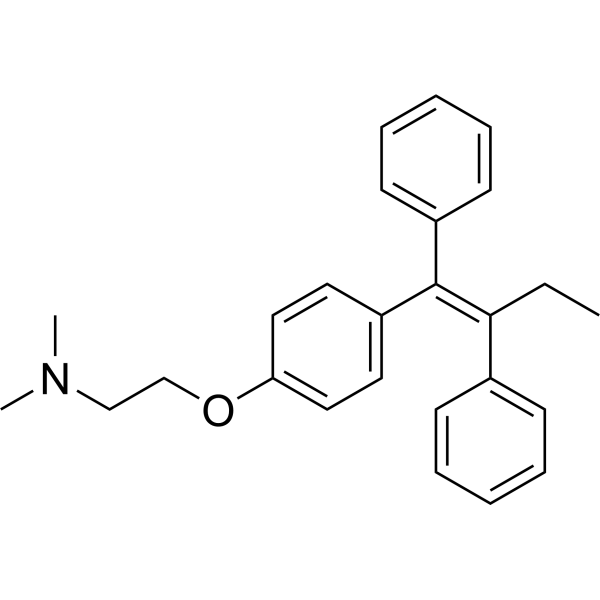
  • HY-13757A
    Tamoxifen
    225+ Cited Publications

    ICI 47699; (Z)-Tamoxifen; trans-Tamoxifen

    Estrogen Receptor/ERR HSP Autophagy Apoptosis Infection Neurological Disease Metabolic Disease Inflammation/Immunology Cancer
    Tamoxifen (ICI 47699) is an orally active, selective estrogen receptor modulator (SERM) which blocks estrogen action in breast cells and can activate estrogen activity in other cells, such as bone, liver, and uterine cells. Tamoxifen is a potent Hsp90 activator and enhances the Hsp90 molecular chaperone ATPase activity. Tamoxifen also potent inhibits infectious EBOV Zaire and Marburg (MARV) with IC50 of 0.1 μM and 1.8 μM, respectively. Tamoxifen activates autophagy and induces apoptosis. Tamoxifen can also be dissolved in corn oil (HY-Y1888) for use in inducing gene knockout in CreER transgenic mice. Tamoxifen has better solubility in corn oil compared to Tamoxifen Citrate (HY-13757) .
    Tamoxifen
  • HY-16950
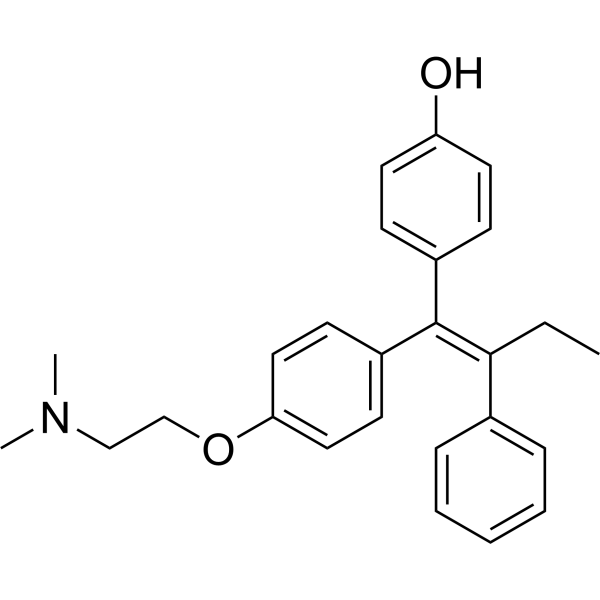
    4-Hydroxytamoxifen
    50+ Cited Publications

    (Z)-4-Hydroxytamoxifen; trans-4-Hydroxytamoxifen; (Z)-Afimoxifene

    Estrogen Receptor/ERR Cancer
    4-Hydroxytamoxifen ((Z)-4-Hydroxytamoxifen) is an orally active, selective estrogen receptor modulator (SERM). 4-Hydroxytamoxifen ((Z)-4-Hydroxytamoxifen) is also the active metabolic form of Tamoxifen (HY-13757A) in vivo and can be used to induce gene knockout in transgenic mice expressing CreER .
    4-Hydroxytamoxifen
  • HY-14248
    Letrozole
    15+ Cited Publications

    CGS 20267

    Cytochrome P450 Autophagy Cancer
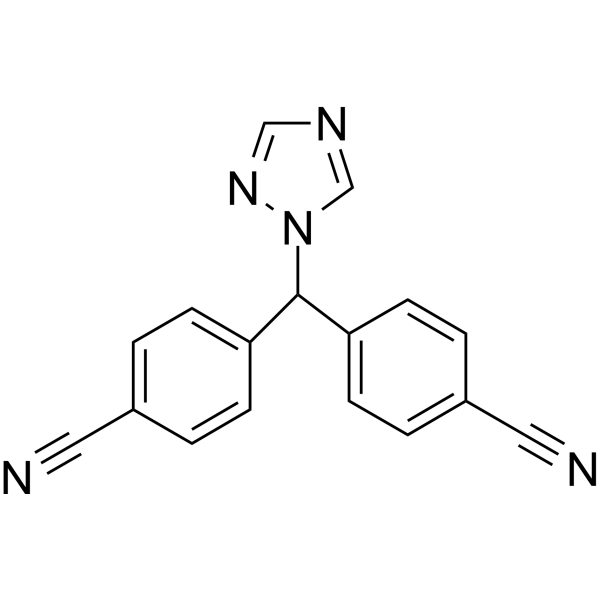
    Letrozole (CGS 20267) is a potent, selective, reversible and orally active non-steroidal inhibitor of aromatase, with an IC50 of 11.5 nM. Letrozole selective inhibits estrogen biosynthesis, and can be used for the research of breast cancer .
    Letrozole
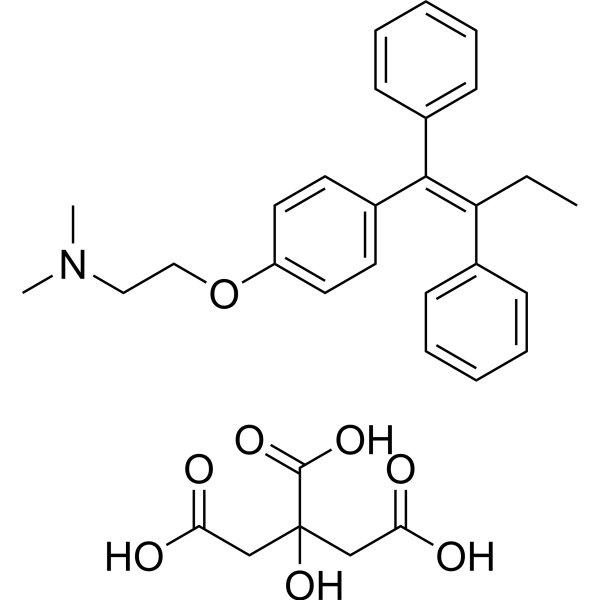
  • HY-13757
    Tamoxifen Citrate
    225+ Cited Publications

    ICI 46474; (Z)-Tamoxifen Citrate; trans-Tamoxifen Citrate

    Estrogen Receptor/ERR HSP Autophagy Apoptosis Infection Neurological Disease Inflammation/Immunology Cancer
    Tamoxifen Citrate (ICI 46474) is an orally active, selective estrogen receptor modulator (SERM) which blocks estrogen action in breast cells and can activate estrogen activity in other cells, such as bone, liver, and uterine cells.Tamoxifen Citrate is a potent Hsp90 activator and enhances the Hsp90 molecular chaperone ATPase activity. Tamoxifen Citrate also potent inhibits infectious EBOV Zaire and Marburg (MARV) with IC50 of 0.1 μM and 1.8 μM, respectively. Tamoxifen Citrate activates autophagy and induces apoptosis. Tamoxifen Citrate can also be used to induce gene knockout in CreER transgenic mice .
    Tamoxifen Citrate
  • HY-138642
    Vepdegestrant
    5+ Cited Publications

    ARV-471

    PROTACs Estrogen Receptor/ERR Cancer
    Vepdegestrant (ARV-471) is an orally active PROTAC estrogen receptor degrader against breast cancer. Vepdegestrant is a hetero-bifunctional molecule that facilitates the interactions between estrogen receptor alpha and an intracellular E3 ligase complex. Vepdegestrant leads to the ubiquitylation and subsequent degradation of estrogen receptors via the proteasome. Vepdegestrant robustly degrades ER in ER-positive breast cancer cell lines with a half-maximal degradation concentration (DC50) of about 2 nM .
    Vepdegestrant
  • HY-B0234
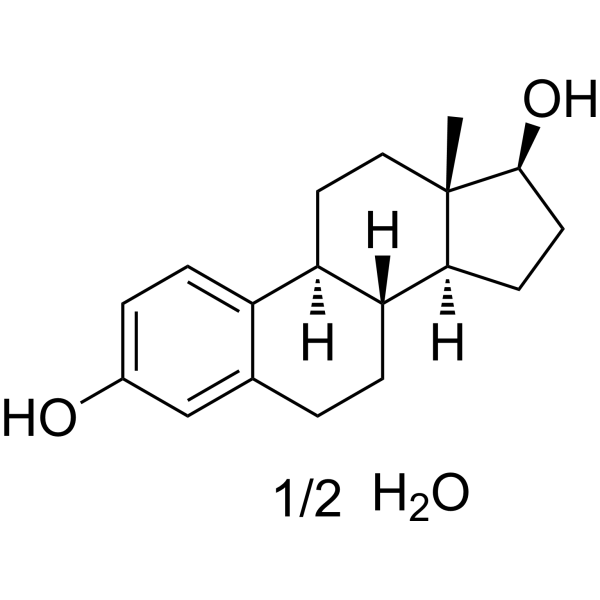
    Estrone
    5+ Cited Publications

    E1; Oestrone

    Estrogen Receptor/ERR Endogenous Metabolite Endocrinology Cancer
    Estrone (E1) is a natural estrogenic hormone. Estrone is the main representative of the endogenous estrogens and is produced by several tissues, especially adipose tissue. Estrone is the result of the process of aromatization of androstenedione that occurs in fat cells .
    Estrone
  • HY-B0216
    Ethinylestradiol
    5 Publications Verification

    Ethynyl estradiol; 17α-Ethynylestradiol

    Environmental Pollutants Endogenous Metabolite Estrogen Receptor/ERR Endocrinology Cancer
    Ethinylestradiol is an orally active steroidal estrogen. Ethinylestradiol is widely used in research on menopausal symptoms, gynecological conditions, and certain hormone-sensitive cancers .
    Ethinylestradiol
  • HY-15731

    Estrogen Receptor/ERR Endogenous Metabolite NO Synthase Cardiovascular Disease Cancer
    Estetrol, an orally active estrogen synthesized exclusively during pregnancy by the human fetal liver, is a selective nuclear estrogen receptor modulator. Estetrol binds ERα as well as ERβ (with a fourfold lower affinity). Estetrol increases eNOS expression/activity and NO synthesis in endothelial cells. Estetrol exerts estrogenic actions on the endometrium or the central nervous system but presents antagonistic effects on the breast. Estetrol can be used in contraception and menopausal hormone research .
    Estetrol
  • HY-B1662
    Hexestrol
    2 Publications Verification

    Estrogen Receptor/ERR Endocrinology
    Hexestrol is a nonsteroidal synthetic estrogen, with a Ki of 0.06 and 0.06 nM for estrogen receptor alpha (ERα) and ERβ. Hexestrol can be used for the research of the diseases caused by estrogen deficiencym, and it also can increase the weight of cattle .
    Hexestrol
  • HY-B1830

    E2EN

    Estrogen Receptor/ERR Endocrinology
    Estradiol enanthate (E2EN) is a shorter-acting estrogen. Estradiol enanthate is an injectable contraceptive in combination with Dihydroxyprogesterone acetophenide. Estradiol enanthate promotes withdrawal bleeding, in a pattern similar to menstruation .
    Estradiol enanthate
  • HY-B1403

    Estrogen Receptor/ERR Endocrinology
    Dienestrol is an orally active nonsteroidal estrogen. Dienestrol prevents the formation of implantation swellings in the uterus by inhibiting ovum discharge .
    Dienestrol
  • HY-N1581

    Nigakilactone D

    Parasite Infection Endocrinology
    Quassin (Nigakilactone D) is a bioactive triterpenoid from stem bark extract of Quassia amara. Quassin inhibits P. falciparum with an IC50 of 0.15 μM. Quassin possesses reversible antifertility, anti-estrogenic and anti-plasmodial activity .
    Quassin
  • HY-123047

    Progesterone Receptor Androgen Receptor Estrogen Receptor/ERR Endocrinology
    Tibolone is a broad spectrum gonadal steroid agonist with progestagenic, androgenic, and estrogenic activities. Tibolone can be used for postmenopausal osteoporosis research .
    Tibolone
  • HY-119437
    FLTX1
    2 Publications Verification

    Estrogen Receptor/ERR Cancer
    FLTX1 is a fluorescent Tamoxifen derivative that can specifically label intracellular Tamoxifen-binding sites (estrogen receptors) under permeabilized and non-permeabilized conditions. FLTX1 exhibits the potent antiestrogenic properties of Tamoxifen in breast cancer cells. FLTX1 is devoid of the estrogenic agonistic effect on the uterus .
    FLTX1
  • HY-W654077

    BPAF-d4; 4,4'-(Perfluoropropane-2,2-diyl)diphenol-d4

    Estrogen Receptor/ERR Endocrinology
    Bisphenol AF-d4 is the isotope labelled analog of Bisphenol AF (HY-W013782). Bisphenol AF is a full agonist for the estrogen receptor. Bisphenol AF acts as an endocrine-disrupting chemical (EDC), activating estrogen through the estrogen receptor Era. Bisphenol AF-d4 can be used for the research of endocrinology and cancer .
    Bisphenol AF-d4
  • HY-125703

    Estrogen Receptor/ERR Apoptosis Infection Inflammation/Immunology Endocrinology Cancer
    Ferutinin, a natural terpenoid compound, is an estrogen receptor ERα agonist and estrogen ERβ-receptor agonist/antagonist with IC50s of 33.1 nM and 180.5 nM, respectively. Ferutinin acts as an electrogenic Ca 2+-ionophore that increases calcium permeability of lipid bilayer membranes, mitochondria. Ferutinin possesses estrogenic, antitumor, antibacterial and antiinflammatory activities .
    Ferutinin
  • HY-W116007

    Environmental Pollutants DNA/RNA Synthesis Endocrinology
    Octamethylcyclotetrasiloxane promotes the anchorage-independent growth of MCF-10A and MCF-10F cells. Octamethylcyclotetrasiloxane induces DNA damage, inhibits the expression of DNA-repairing protein BRCA1 under long-term and high-concentration exposure. Octamethylcyclotetrasiloxane exhibits intrinsic estrogenic activity .
    Octamethylcyclotetrasiloxane
  • HY-B1353

    4'-Hydroxypropiophenone

    Estrogen Receptor/ERR Endocrinology
    Paroxypropione (4'-Hydroxypropiophenone) is a manufactured, nonsteroidal estrogen and can be used for endocrine research .
    Paroxypropione
  • HY-14248R

    CGS 20267 (Standard)

    Cytochrome P450 Reference Standards Autophagy Cancer
    Letrozole (Standard) is the analytical standard of Letrozole. This product is intended for research and analytical applications. Letrozole (CGS 20267) is a potent, selective, reversible and orally active non-steroidal inhibitor of aromatase, with an IC50 of 11.5 nM. Letrozole selective inhibits estrogen biosynthesis, and can be used for the research of breast cancer .
    Letrozole (Standard)
  • HY-137099A

    Fluorescent Dye Endocrinology
    Genistein 7-sulfate sodium is a metabolite of genistein that can reduce the activity of estrogen agonists in MCF-7 cells. Genistein 7-sulfate sodium can promote the growth of MCF-7 cells at concentrations of 10 μM and above .
    Genistein 7-sulfate sodium
  • HY-110157

    Estrogen Receptor/ERR Neurological Disease
    AC-186 is a selective non-steroidal estrogen receptor β (ERβ) agonist with EC50s of 6 nM and 5000 nM for ERβ and ERα, respectively. AC-186 shows gender selective neuroprotective effects in a male rat model of Parkinson's disease .
    AC-186
  • HY-13757AS

    ICI 47699-​d5; (Z)-Tamoxifen-d5; trans-Tamoxifen-d5

    Isotope-Labeled Compounds Estrogen Receptor/ERR HSP Autophagy Apoptosis Cancer
    Tamoxifen-d5 is a deuterium labeled Tamoxifen. Tamoxifen (ICI 47699) is an orally active, selective estrogen receptor modulator (SERM). Tamoxifen is a potent Hsp90 activator and enhances the Hsp90 molecular chaperone ATPase activity .
    Tamoxifen-​d5
  • HY-13724

    ERA-923

    Estrogen Receptor/ERR Cancer
    Pipendoxifene is a selective estrogen receptor modulator (SERM).
    Pipendoxifene
  • HY-N11707

    Others Others
    Piscidic acid is an ester compound derived from Cimicifuga racemosa. Piscidic acid has in vitro estrogen activity .
    Piscidic acid
  • HY-145341

    Estrogen Receptor/ERR Cancer
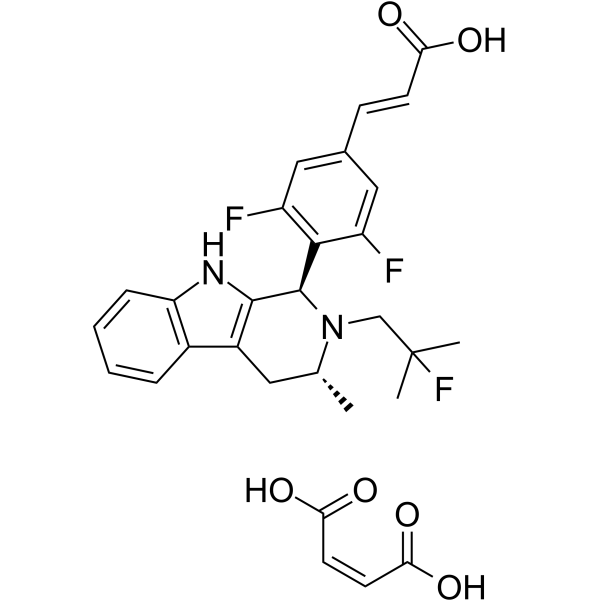
    GNE-149 is an orally bioavailable full antagonist of estrogen receptor α (ERα; IC50=0.053 nM). GNE-149 is a selective estrogen receptor degrader (SERD). GNE-149 can be used for the research of breast cancer .
    GNE-149
  • HY-P5464

    Estrogen Receptor/ERR Others
    SRC-1 NR box peptide is a biological active peptide (This peptide is a 14-amino acid fragment from the steroid receptor cofactor SRC-1 NR II). SRC-1 NR box peptide can be used to study the regulatory mechanisms of estrogen receptor ligands .
    SRC-1 NR box peptide
  • HY-164764

    Estrogen Receptor/ERR Endocrinology
    ADX61623 is a potent follicle stimulating hormone (FSH) receptor (FSHR) negative allosteric modulator (NAM). ADX61623 shows luteinizing hormone receptor (LH-R) activity and is not active on thyroid-stimulating hormone (TSH) receptors. ADX61623 can be used for the study of estrogen dependent disease .
    ADX61623
  • HY-79576

    Oestrone methyl ether; 3-O-Methylestrone

    Drug Intermediate Cancer
    Estrone 3-methyl ether (Oestrone methyl ether; 3-O-Methylestrone) is a synthetic intermediate useful for synthesis of estrogen receptor modulator .
    Estrone 3-methyl ether
  • HY-13556

    LY353381; SERM III

    Estrogen Receptor/ERR Metabolic Disease Cancer
    Arzoxifene (LY353381) is an orally active selective estrogen receptor modulator with a fixed ring structure similar to raloxifene. Arzoxifene has minimal side effects with powerful antiestrogenic effects on breast cancer and endometrium, with equally strong favorable estrogenic effects on bone and lipid profile .
    Arzoxifene
  • HY-B1234R

    Octyl methoxycinnamate (Standard)

    Reference Standards Androgen Receptor Estrogen Receptor/ERR Others
    Octinoxate (Standard) is the analytical standard of Octinoxate. This product is intended for research and analytical applications. Octinoxate (Octyl methoxycinnamate) is an organic compound that is an ingredient in some sunscreens and lip balms, primarily used is in sunscreens and other cosmetics to absorb UV-B rays from the sun, protecting the skin from damage and can be used to reduce the appearance of scars. Octinoxate also has a complex androgenic and estrogenic effect .
    Octinoxate (Standard)
  • HY-105184

    Cytochrome P450 Endocrinology
    YM511 is a highly specific non-steroidal aromatase inhibitor. YM511 inhibits aromatase activities in microsomes from rat ovary and human placenta competitively (IC50s of 0.4 and 0.12 nM, respectively). YM511 slightly inhibits production of other steroid hormones. YM511 has the potential for suppressing estrogen-dependent action research without affecting serum levels of other steroid hormones .
    YM511
  • HY-A0287

    Clomifene; (Z/E)-Enclomiphene; (Z/E)-Enclomifene

    Estrogen Receptor/ERR Metabolic Disease Cancer
    Clomiphene (Clomifene; (Z/E)-Enclomiphene; (Z/E)-Enclomifene) is an orally active ovulation-inducing agent. Clomiphene binds to hypothalamic estrogen receptors to elevate FSH levels, and exhibits antiestrogenic or estrogenic properties. Clomiphene can induce erturbations during meiotic maturation and cytogenetic abnormalities in mouse oocytes. Clomiphene ameliorates memory impairment in PCOS models. Clomiphene mobilizes cytosolic calcium and reduces viability in prostate cancer cells. Clomiphene can be used for the research of polycystic ovary syndrome (PCOS) and prostate cancer .
    Clomiphene
  • HY-151230

    Estrogen Receptor/ERR Cancer
    (-)-Erteberel is a selective estrogen receptor beta (ERβ) agonist. (-)-Erteberel can be utilized in the study of diseases mediated by estrogen receptor beta (ERβ), such as prostate cancer .
    (-)-Erteberel
  • HY-14247B
    Fadrozole hydrochloride hemihydrate
    2 Publications Verification

    CGS 16949A hemihydrate; (Rac)-FAD286 hydrochloride hemihydrate

    Cytochrome P450 Endocrinology Cancer
    Fadrozole hydrochloride hemihydrate is an orally active, potent, selective and nonsteroidal aromatase inhibitor, with an IC50 of 6.4 nM. Fadrozole hydrochloride hemihydrate inhibits the production of estrogen and progesterone, with IC50 values of 0.03 and 120 μM. Fadrozole hydrochloride hemihydrate shows prevention of spontaneous tumours. Fadrozole hydrochloride hemihydrate can be used for the research of estrogen-dependent disease and cancer .
    Fadrozole hydrochloride hemihydrate
  • HY-B1830R

    E2EN (Standard)

    Reference Standards Estrogen Receptor/ERR Endocrinology
    Estradiol enanthate (Standard) is the analytical standard of Estradiol enanthate. Estradiol enanthate (E2EN) is a shorter-acting estrogen. Estradiol enanthate is an injectable contraceptive in combination with Dihydroxyprogesterone acetophenide. Estradiol enanthate promotes withdrawal bleeding, in a pattern similar to menstruation .
    Estradiol enanthate (Standard)
  • HY-137099

    Fluorescent Dye Endocrinology
    Genistein 7-sulfate is a metabolite of genistein that can reduce the activity of estrogen agonists in MCF-7 cells. Genistein 7-sulfate can promote the growth of MCF-7 cells at concentrations of 10 μM and above .
    Genistein 7-sulfate
  • HY-P5464A

    Estrogen Receptor/ERR Endocrinology
    SRC-1 NR box peptide acetate is a biological active peptide (This peptide is a 14-amino acid fragment from the steroid receptor cofactor SRC-1 NR II). SRC-1 NR box peptide acetate can be used to study the regulatory mechanisms of estrogen receptor ligands .
    SRC-1 NR box peptide acetate
  • HY-W091820

    4HDPM

    Drug Derivative Others
    4-Benzylphenol (4HDPM), a structural analog of Bisphenol F (HY-W014901), has estrogenic activity in vitro and in vivo. 4-Benzylphenol can be used in plastics as a germicide, antiseptic, preservative, and antioxidant, and can be used in during organic synthesis .
    4-Benzylphenol
  • HY-B1234A

    (E)-Octyl methoxycinnamate

    Estrogen Receptor/ERR Androgen Receptor Endocrinology
    (E)-Octinoxate is the isomer of Octinoxate (HY-B1234). Octinoxate is an organic compound that is an ingredient in some sunscreens and lip balms, primarily used is in sunscreens and other cosmetics to absorb UV-B rays from the sun, protecting the skin from damage and can be used to reduce the appearance of scars. Octinoxate also has a complex androgenic and estrogenic effect .
    (E)-Octinoxate
  • HY-116865

    Endogenous Metabolite Endocrinology Cancer
    Equilenin is a B-ring unsaturated estrogen and one of the main ingredients in Premarin, a drug commonly used in estrogen replacement therapy. Equilenin can bind to estrogen receptors in the body and exert effects similar to endogenous estrogen. Equilenin can be used in estrogen replacement therapy and breast cancer research .
    Equilenin
  • HY-124114

    4-OH-TOR

    Estrogen Receptor/ERR Endocrinology
    4-Hydroxytoremifene (4-OH-TOR) is an estrogen receptor antagonist that blocks the uterus's ability to absorb estradiol .
    4-Hydroxytoremifene
  • HY-135588

    Drug Metabolite Metabolic Disease
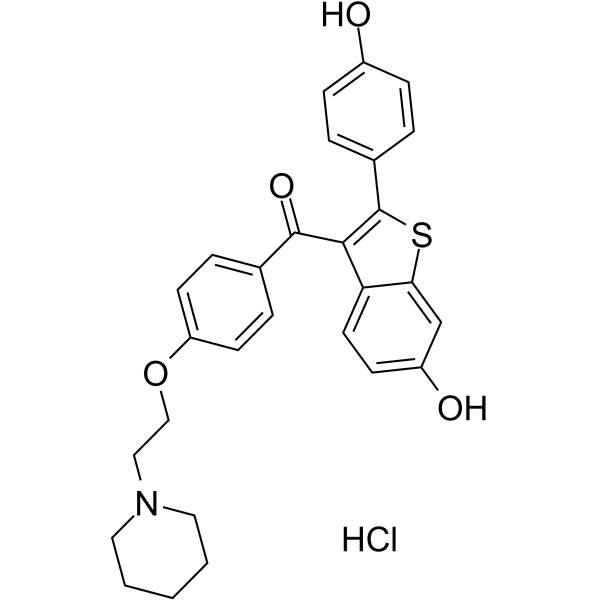
    Raloxifene 6,4'-Bis-β-D-glucuronide (compound IV) is a metabolite of Raloxifene. Raloxifene is a selective estrogen receptor antagonist for the prevention of osteoporosis .
    Raloxifene 6,4'-Bis-β-D-glucuronide
  • HY-W554614

    Fosfestrol

    Estrogen Receptor/ERR Cancer
    Diethylstilbestrol diphosphate (Fosfestrol) is a diphosphate of diethylstilbestrol and an agonist of estrogen receptors. Diethylstilbestrol diphosphate is a prodrug of diethylstilbestrol and has a powerful anti-gonadotropin effect. Diethylstilbestrol diphosphate can be used in the research of prostate cancer .
    Diethylstilbestrol diphosphate
  • HY-138642A

    (Rac)-ARV-471

    Estrogen Receptor/ERR PROTACs Cancer
    (Rac)-Vepdegestrant is the isomer of Vepdegestrant (HY-138642). Vepdegestrant ((R)-Lavandulol) is an orally active PROTAC estrogen receptor degrader against breast cancer. Vepdegestrant is a hetero-bifunctional molecule that facilitates the interactions between estrogen receptor alpha and an intracellular E3 ligase complex. Vepdegestrant leads to the ubiquitylation and subsequent degradation of estrogen receptors via the proteasome. Vepdegestrant robustly degrades ER in ER-positive breast cancer cell lines with a half-maximal degradation concentration (DC50) of about 2 nM .
    (Rac)-Vepdegestrant
  • HY-160264

    PROTACs Estrogen Receptor/ERR Cancer
    PROTAC ER Degrader-12 (Compound 70) is an estrogen receptor PROTAC degrader (DC50: <10 nM), and inhibits MCF-7 proliferation (DC50: <10 nM). PROTAC ER Degrader-12 has anticancer effect. Pink: ER ligand (HY-169978); Blue: E3 ligase ligand (HY-138793); Black: linker (HY-30756) .
    PROTAC ER Degrader-12
  • HY-108028

    Estrogen Receptor/ERR DNA/RNA Synthesis Cancer
    NDC 1308 is an estradiol analogue. NDC 1308 can bind estrogen receptor beta and inhibit cancer cell proliferation by blocking chromosome replication. NDC 1308 can be used for the research of cancer, such as breast cancer .
    NDC 1308
  • HY-13757S

    ICI 46474-d3 hydrochloride; (Z)-Tamoxifen-d3 hydrochloride; trans-Tamoxifen-d3 hydrochloride

    Apoptosis Estrogen Receptor/ERR Autophagy HSP Isotope-Labeled Compounds Cancer
    Tamoxifen-d3 hydrochloride is deuterated labeled Tamoxifen (Citrate) (HY-13757). Tamoxifen Citrate (ICI 46474) is an orally active, selective estrogen receptor modulator (SERM) which blocks estrogen action in breast cells and can activate estrogen activity in other cells, such as bone, liver, and uterine cells .Tamoxifen Citrate is a potent Hsp90 activator and enhances the Hsp90 molecular chaperone ATPase activity. Tamoxifen Citrate also potent inhibits infectious EBOV Zaire and Marburg (MARV) with IC50 of 0.1 μM and 1.8 μM, respectively . Tamoxifen Citrate activates autophagy and induces apoptosis .Tamoxifen Citrate also can induce gene knockout of CreER(T2) transgenic mouse .
    Tamoxifen-d3 hydrochloride
  • HY-13757R

    ICI 46474 (Standard); (Z)-Tamoxifen Citrate (Standard); trans-Tamoxifen Citrate (Standard)

    Reference Standards Estrogen Receptor/ERR HSP Autophagy Apoptosis Cancer
    Tamoxifen (Citrate) (Standard) is the analytical standard of Tamoxifen (Citrate). This product is intended for research and analytical applications. Tamoxifen Citrate (ICI 46474) is an orally active, selective estrogen receptor modulator (SERM) which blocks estrogen action in breast cells and can activate estrogen activity in other cells, such as bone, liver, and uterine cells .Tamoxifen Citrate is a potent Hsp90 activator and enhances the Hsp90 molecular chaperone ATPase activity. Tamoxifen Citrate also potent inhibits infectious EBOV Zaire and Marburg (MARV) with IC50 of 0.1 μM and 1.8 μM, respectively . Tamoxifen Citrate activates autophagy and induces apoptosis .Tamoxifen Citrate also can induce gene knockout of CreER(T2) transgenic mouse .
    Tamoxifen Citrate (Standard)
  • HY-16950R

    (Z)-4-Hydroxytamoxifen (Standard); trans-4-Hydroxytamoxifen (Standard); (Z)-Afimoxifene (Standard)

    Estrogen Receptor/ERR Reference Standards Cancer
    4-Hydroxytamoxifen (Standard) is the analytical standard of 4-Hydroxytamoxifen. This product is intended for research and analytical applications. 4-Hydroxytamoxifen ((Z)-4-Hydroxytamoxifen) is an orally active, selective estrogen receptor modulator (SERM). 4-Hydroxytamoxifen ((Z)-4-Hydroxytamoxifen) is also the active metabolic form of Tamoxifen (HY-13757A) in vivo and can be used to induce gene knockout in transgenic mice expressing CreER .
    4-Hydroxytamoxifen (Standard)
  • HY-125037

    Estrogen Receptor/ERR HSP Cancer
    Diptoindonesin G is a 2-arylbenzofuran derivative and a modulator of estrogen receptor and HSP90 middle domain. Diptoindonesin G exhibits strong cytotoxicity against mouse leukemia P-388 cells with an IC50 of 13.2 μM. Diptoindonesin G has antitumor activity and can be used in the research of tumors such as breast cancer .
    Diptoindonesin G

Inquiry Online

Your information is safe with us. * Required Fields.

Salutation


Country or Region *

Applicant Name *


Organization Name *

Department *


Email Address *


Product Name *

Cat. No.


Requested quantity *

Phone Number *


Remarks

Inquiry Online

Inquiry Information

Product Name:
Cat. No.:
Quantity:
MCE Japan Authorized Agent:

