

1. Search Result
Search Result
Results for "

human κ-opioid receptor

" in MedChemExpress (MCE) Product Catalog:

16

Inhibitors & Agonists

5

Peptides

3

Natural
Products

1

Isotope-Labeled Compounds

Cat. No. Product Name Target Research Areas Chemical Structure
  • HY-N0164
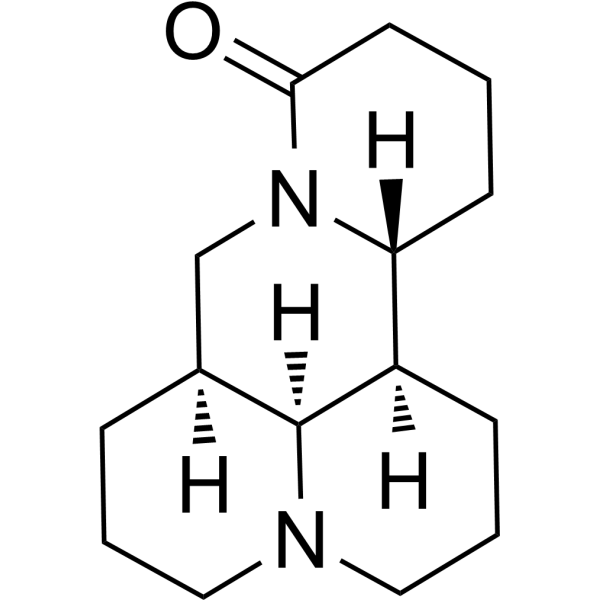
    Matrine
    15+ Cited Publications

    Matridin-15-one; Vegard; α-Matrine

    PINK1/Parkin Opioid Receptor Autophagy Mitophagy Ferroptosis Apoptosis Inflammation/Immunology Cancer
    Matrine (Matridin-15-one) is an alkaloid found in plants from the Sophora genus that can act as a kappa opioid receptor and u-receptor agonist. Matrine has a variety of pharmacological effects, including anti-cancer, anti-oxidative stress, anti-inflammation and anti-apoptosis effects. Matrine is potential in the research of disease like human non-small cell lung cancer, hepatoma, papillary thyroid cancer and acute kidney injury (AKI) .
    Matrine
  • HY-19627A
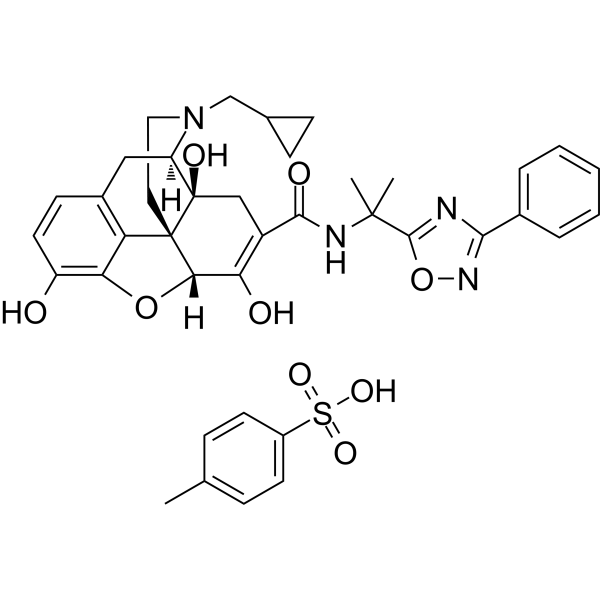
    Naldemedine tosylate
    1 Publications Verification

    S-297995 tosylate

    Opioid Receptor Neurological Disease Metabolic Disease
    Naldemedine (S-297995) tosylate is an orally active μ-opioid receptor antagonist (PAMORA) . Naldemedine tosylate shows potent binding affinities (Ki=0.34, 0.43, 0.94 nM, respectively) and antagonist activities (IC50=25.57, 7.09, 16.1 nM, respectively) for recombinant human μ-, δ-, and κ- opioid receptors . Naldemedine can be used in opioid-induced constipation (OIC) research . Naldemedine tosylate is predicted to bind to 3CL pro encoded by SARS-CoV2 genome .
    Naldemedine tosylate
  • HY-P2159

    Opioid Receptor Endogenous Metabolite Neurological Disease
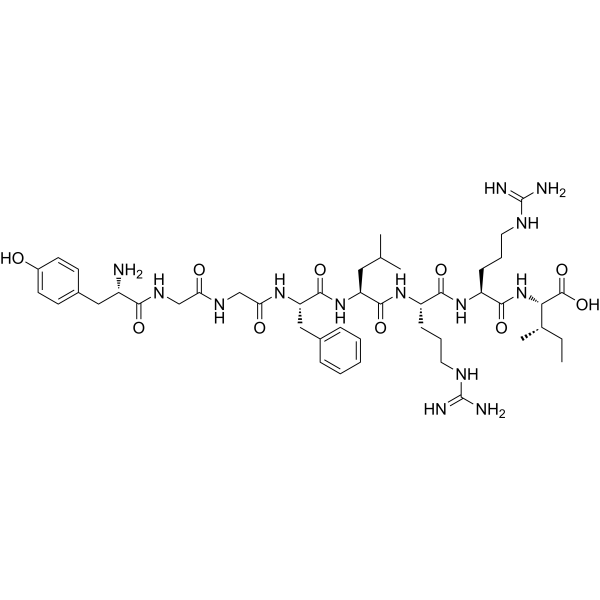
    Dynorphin A (1-8) is a ligand with preference for the κ-opioid receptor, and its IC50 value against human placental κ-opioid receptor is 330 nM. Dynorphin A (1-8) mediates neuroprotective effects by inhibiting oxidative stress, suppressing apoptosis, and competitively displacing the binding of κ partial agonists. Dynorphin A (1-8) is the dominant opioid peptide in human placental villi and tissue extracts; it undergoes rapid hydrolysis and can enter the central nervous system via intranasal administration. Dynorphin A (1-8) can be used in studies related to ischemic stroke .
    Dynorphin A (1-8)
  • HY-107748

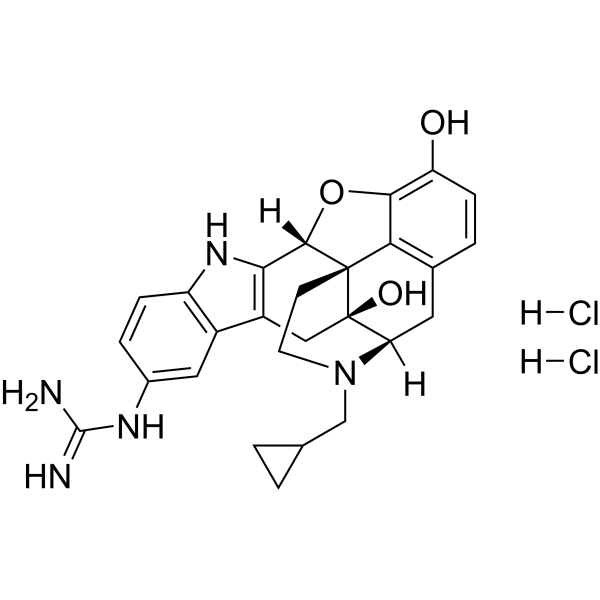
    5'-GNTI hydrochloride

    Opioid Receptor Neurological Disease
    5'-Guanidinonaltrindole (5'-GNTI) hydrochloride is a highly selective and potent κ-opioid receptor antagonist with a Ki of 0.18 nM for human κ-opioid receptor .
    5'-Guanidinonaltrindole hydrochloride
  • HY-19627

    S-297995

    Opioid Receptor Neurological Disease Metabolic Disease
    Naldemedine (S-297995) is an orally active μ-opioid receptor antagonist (PAMORA) . Naldemedine shows potent binding affinities (Ki=0.34, 0.43, 0.94 nM, respectively) and antagonist activities (IC50=25.57, 7.09, 16.1 nM, respectively) for recombinant human μ-, δ-, and κ- opioid receptors . Naldemedine can be used in opioid-induced constipation (OIC) research . Naldemedine is predicted to bind to 3CL pro encoded by SARS-CoV2 genome .
    Naldemedine
  • HY-W019787

    Opioid Receptor CXCR Neurological Disease
    BAM-12P, an endogenous opioid peptide, is a novel pro-Met-enkephalin. BAM-12P can activate human κ-opioid receptor (hKOR) with an EC50 of 101 nM and a pEC50 of 6.99. BAM-12P is a ligand for CXCR7 with an EC50 of 175 nM .
    BAM-12P
  • HY-170973

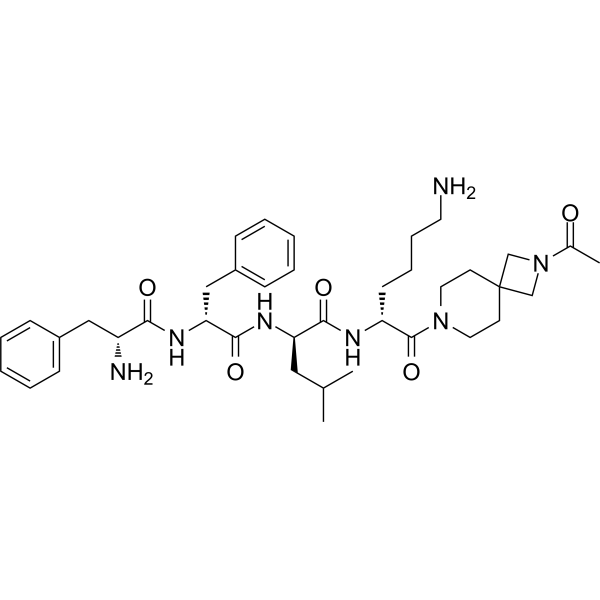
    Opioid Receptor
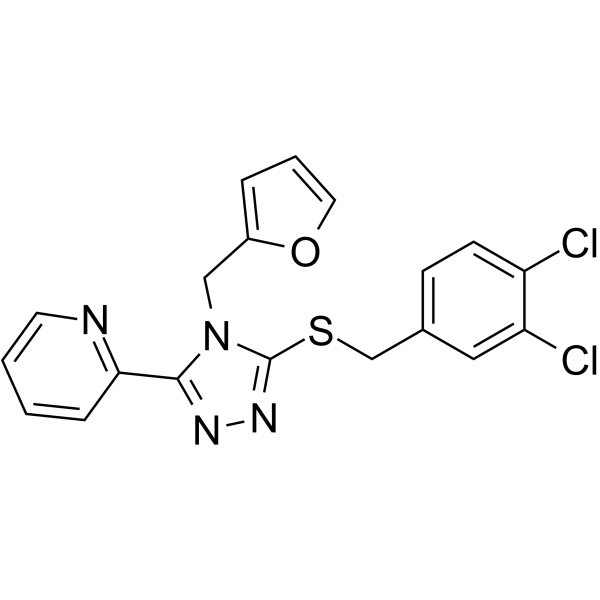
    KOR agonist 4 (compound 39) is an agonist of Kappa Opioid Receptor. KOR agonist 4 is an activator of G-protein signaling. KOR agonist 4 binds with GTPγS with an EC50 of 14 nM and with an Emax of 83 %. KOR agonist 4 demonstrates moderate to high intrinsic clearance in human hepatocytes. KOR agonist 4 exhibits 60- and 810-fold selectivities versus the related mu (MOR) and delta (DOR) opioid receptors. KOR agonist 4 is potential for central nervous system (CNS) disorders research .
    KOR agonist 4
  • HY-122189

    (-)-Akuammine; Vincamajoridine

    Others Neurological Disease
    Akuammine is an indole alkaloid that has been found in Picralima nitida and has analgesic activity. It selectively binds to the μ- and κ-opioid receptors over the δ-opioid receptor (Kis=0.3, 1.68, and 10.4 μM for the human receptors, respectively). Akuammine inhibits forskolin-induced cAMP production in HEK293 cells expressing human μ- or κ-opioid receptors (IC50s=2.6 and 0.073 μM, respectively). It increases the latency to withdrawal in the tail-flick or hot plate test in mice when administered at a dose of 60 mg/kg.
    Akuammine
  • HY-108043

    Opioid Receptor Neurological Disease
    AZD-2327 is a potent and selective δ-opioid receptor agonist. AZD-2327 binds to the human opioid receptor (Ki of 0.49 and 0.75 nM and EC50 of 24 and 9.2 nM at the C27 and F27 isoforms, respectively). AZD-2327 shows selectivity of >1000-fold over the human μ- and κ-opioid receptor subtypes as well as >130 other receptors and channels. AZD-2327 exhibits antidepressant and anxiolytic activities and can be used for the research of neurological disease .
    AZD-2327
  • HY-W654256

    Matridin-15-one-d3; Vegard-d3; α-Matrine-d3

    Isotope-Labeled Compounds PINK1/Parkin Opioid Receptor Autophagy Mitophagy Ferroptosis Apoptosis Inflammation/Immunology Cancer
    Matrine-d3 (Matridin-d3) is a deuterium labeled Matrine (HY-N0164). Matrine (Matridin-15-one) is an alkaloid found in plants from the Sophora genus that can act as a kappa opioid receptor and u-receptor agonist. Matrine has a variety of pharmacological effects, including anti-cancer, anti-oxidative stress, anti-inflammation and anti-apoptosis effects. Matrine is potential in the research of disease like human non-small cell lung cancer, hepatoma, papillary thyroid cancer and acute kidney injury (AKI) .
    Matrine-d3
  • HY-P11642A

    Enteropeptidase Aminopeptidase Opioid Receptor ERK mTOR Androgen Receptor Inflammation/Immunology
    Sialorphin TFA is a neutral endopeptidase (NEP) and aminopeptidase N (APN) inhibitor that responds to androgen signals. Sialorphin TFA blocks the degradation of endogenous opioid peptides and interacts with μ-, δ-, κ-opioid receptors. Sialorphin TFA regulates the ERK/mTOR signaling pathway by inducing cell cycle arrest, enhancing ERK1/2 activity, and reducing the phosphorylation levels of mTOR, 4E-BP1, p70S6K; accordingly, Sialorphin TFA exhibits antiproliferative activity against colorectal cancer, glioma and prostate cancer cells without cytotoxicity. In addition, Sialorphin TFA also produces antinociceptive responses, regulates sexual behavior, relaxes corpus cavernosum smooth muscle, and alleviates experimental colitis. Sialorphin TFA is also a copper (II) ion-binding ligand. Sialorphin TFA has been used in mechanistic studies related to cancer, pain management and inflammatory bowel disease .
    Sialorphin TFA
  • HY-P10006

    Opioid Receptor Neurological Disease
    Leumorphin, human is a potent kappa opioid receptor (κ opioid receptor) agonist. Leumorphin, human inhibits the contraction of the myenteric plexus-longitudinal muscle preparation of the guinea pig ileum .
    Leumorphin, human
  • HY-P5892

    Opioid Receptor Neurological Disease
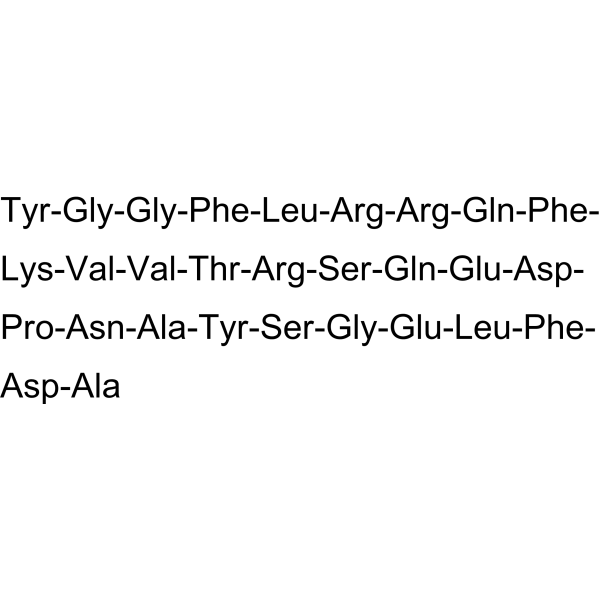
    β-Endorphin (1-27) (human) is an opioid antagonist that binds μ-, δ-, and κ-opioid receptors with Kis of 5.31, 6.17, and 39.82 nM, respectively. β-Endorphin (1-27) (human) inhibits β-Endorphin (HY-P1502)-induced and etorphine-induced analgesia .
    β-Endorphin (1-27) (human)
  • HY-10672

    Urotensin Receptor Cytochrome P450 Sodium Channel Opioid Receptor Cardiovascular Disease
    Urotensin-II receptor antagonist-1 (compound 1) is a low oral bioavailability (F=0-3%, rat) selective human Urotensin II receptor antagonist, Ki=16 nM (test on HEK293 cells expressing recombinant human UT receptor). Urotensin-II receptor antagonist-1 inhibits cytochrome P450 (IC50=0.75 μM, CYP2D6; 1.4 μM, CYP3A4), inhibits κ-opioid receptor (EC50=3.2 μM), targets cardiac sodium channels (Ki=2.5 μM) .
    Urotensin-II receptor antagonist-1
  • HY-N0164R

    Matridin-15-one (Standard); Vegard (Standard); α-Matrine (Standard)

    PINK1/Parkin Reference Standards Opioid Receptor Autophagy Mitophagy Ferroptosis Apoptosis Inflammation/Immunology Cancer
    Matrine (Standard) is the analytical standard of Matrine. This product is intended for research and analytical applications. Matrine (Matridin-15-one) is an alkaloid found in plants from the Sophora genus that can act as a kappa opioid receptor and u-receptor agonist. Matrine has a variety of pharmacological effects, including anti-cancer, anti-oxidative stress, anti-inflammation and anti-apoptosis effects. Matrine is potential in the research of disease like human non-small cell lung cancer, hepatoma, papillary thyroid cancer and acute kidney injury (AKI) .
    Matrine (Standard)
  • HY-181515

    Opioid Receptor Neurological Disease
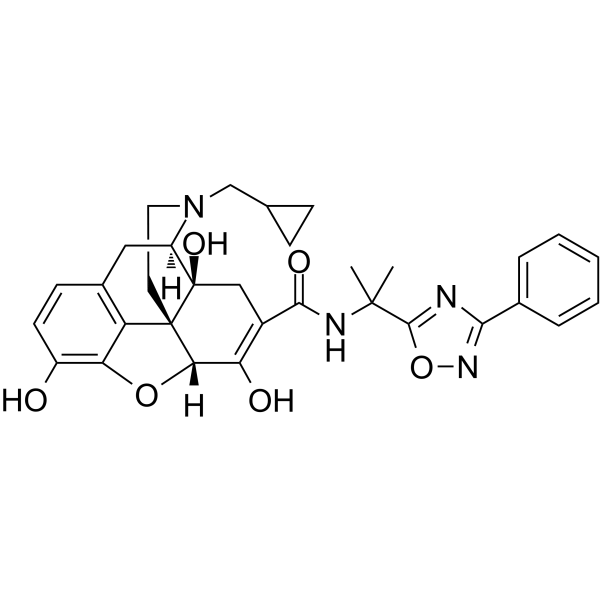
    KOR agonist 8 (Compound 8a) is a κ-opioid receptor (KOR) agonist and an analgesic agent, with a Ki value of 5.3 nM for human KOR, and EC50 values of 43.1 nM and 9236 nM for human KOR. It exhibits subtype selectivity for MOR/KOR and DOR/KOR. KOR agonist 8 is applicable for pain-related research .
    KOR agonist 8

Inquiry Online

Your information is safe with us. * Required Fields.

Salutation


Country or Region *

Applicant Name *


Organization Name *

Department *


Email Address *


Product Name *

Cat. No.


Requested quantity *

Phone Number *


Remarks

Inquiry Online

Inquiry Information

Product Name:
Cat. No.:
Quantity:
MCE Japan Authorized Agent:

