3 Results for "

hypothalamus-pituitary-gonadal axis

" in MedChemExpress (MCE) Product Catalog:
Products (3)

3 Results for "hypothalamus-pituitary-gonadal axis" in MCE Product Catalog:

Cat. No.: HY-W041308
CAS No.: 64359-81-5
Synonyms: Kathon 930
Research Areas:  

Endocrinology

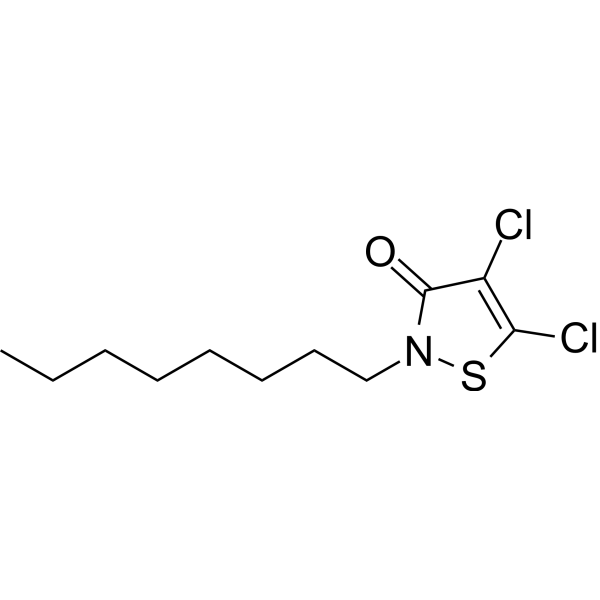
DCOIT (Kathon 930) is an isothiazolinone biocide and environmental pollutant that directly binds to G protein α subunits, with KD values of 0.92 mM and 0.4 mM for Gαs and Gαi, respectively. Binding of DCOIT to Gαi enhances the interaction between Gαi and mitochondrial calcium uniporter (MCU), alters the subcellular distribution of intracellular Ca 2+, and activates PKC/MEK/ERK signaling. DCOIT upregulates CYP19a transcription and aromatase activity, thereby disrupting steroid hormone homeostasis. DCOIT is used in studies of reproductive endocrine disruption and environmental toxicology .
loading...
    loading...
Cat. No.: HY-W041308R
CAS No.: 64359-81-5
Synonyms: Kathon 930 (Standard)
DCOIT (Standard) (Kathon 930 (Standard)) is the analytical standard of DCOIT (HY-W041308). This product is intended for research and analytical applications. DCOIT (Kathon 930) is an isothiazolinone biocide and environmental pollutant that directly binds to G protein α subunits, with KD values of 0.92 mM and 0.4 mM for Gαs and Gαi, respectively. Binding of DCOIT to Gαi enhances the interaction between Gαi and mitochondrial calcium uniporter (MCU), alters the subcellular distribution of intracellular Ca 2+, and activates PKC/MEK/ERK signaling. DCOIT upregulates CYP19a transcription and aromatase activity, thereby disrupting steroid hormone homeostasis. DCOIT is used in studies of reproductive endocrine disruption and environmental toxicology .
loading...
    loading...
Cat. No.: HY-W714200
CAS No.: 555-37-3
Research Areas:  

Others

Neburon is a phenylurea herbicide whose main mechanism of action is to inhibit photosynthetic electron transport, thereby disrupting algal growth. Neburon activates the Ahr and Notch1 signaling pathways, and induces oxidative stress and apoptosis. Long-term exposure causes significant male reproductive toxicity and cardiotoxicity in zebrafish .
loading...
    loading...

