17 Results for "

inositol monophosphate

" in MedChemExpress (MCE) Product Catalog:
Products (17)

17 Results for "inositol monophosphate" in MCE Product Catalog:

1
1 Cited Publications
Cat. No.: HY-107664
CAS No.: 184162-64-9
Purity:  99.16%
Research Areas:  

Neurological Disease

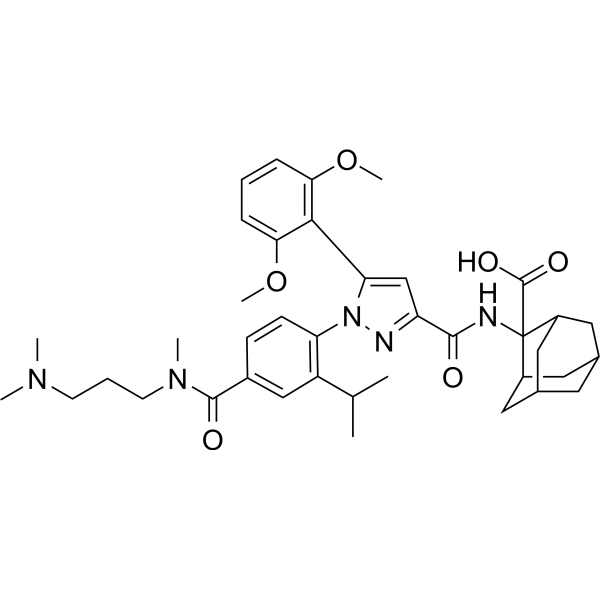
SR 142948 is an orally active and selective non-peptide neurotensin receptor (NT) antagonist with IC50s of 1.19 nM, 0.32 nM, 3.96 nM in h-NTR1-CHO cells, HT-29 cells, and adult rat brain, respectively. SR 142948 antagonizes NT-induced inositol monophosphate formation in HT-29 cells with an IC50 of 3.9 nM. SR 142948 blocks hypothermia, analgesia and steering behavior induced by NT in vivo. SR 142948 shows blood-brain permeability and can be used in study of psychiatric disorders .
loading...
    loading...
1
1 Cited Publications
Cat. No.: HY-107664A
Purity:  98.6%
Target:  

Neurotensin Receptor

Research Areas:  

Neurological Disease

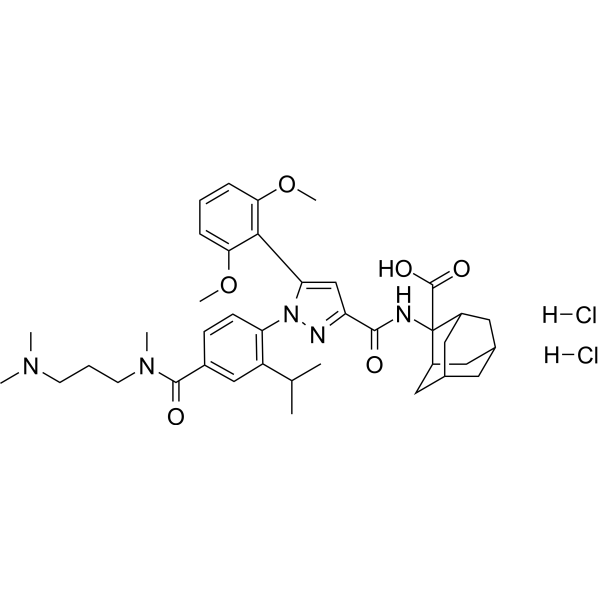
SR 142948 dihydrochloride is an orally active and selective non-peptide neurotensin receptor (NT) antagonist with IC50s of 1.19 nM, 0.32 nM, 3.96 nM in h-NTR1-CHO cells, HT-29 cells, and adult rat brain, respectively. SR 142948 dihydrochloride antagonizes NT-induced inositol monophosphate formation in HT-29 cells with an IC50 of 3.9 nM. SR 142948 dihydrochloride blocks hypothermia, analgesia and steering behavior induced by NT in vivo. SR 142948 dihydrochloride shows blood-brain permeability and can be used in study of psychiatric disorders .
loading...
    loading...
Cat. No.: HY-W010178
CAS No.: 54947-74-9
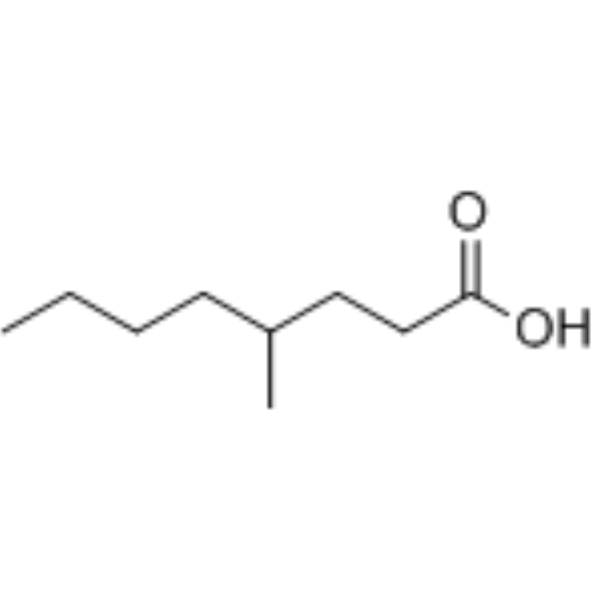
4-Methyloctanoic acid is an endogenous branched-chain medium-chain fatty acid and a negative regulator of the cAMP/PKA signaling pathway. 4-Methyloctanoic acid exerts antiepileptic effects by inhibiting epileptiform discharges and terminating behavioral and electroencephalographic seizures. 4-Methyloctanoic acid has neuroprotective effects; its polar metabolites can cross the blood-brain barrier, repair presynaptic release defects, improve motor function and alleviate neuromuscular degeneration in ALS models. 4-Methyloctanoic acid regulates phosphatidylinositol metabolism, reduces PIP/PIP2 levels and increases inositol levels. 4-Methyloctanoic acid can be used in studies related to epilepsy and amyotrophic lateral sclerosis .
loading...
    loading...
Cat. No.: HY-112603
CAS No.: 1623194-37-5
Research Areas:  

Metabolic Disease

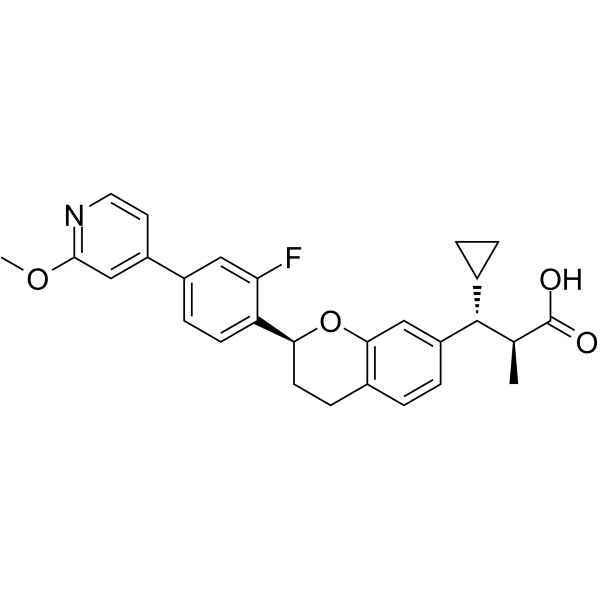
AP5 is a potent, orlly active, and selective GPR40 receptor agonist with a positive allosteric modulation of endogenous ligand (AgoPAM). AP5 demonstrates rat and human inositol monophosphate (IP1) EC50 values of 0.49 nM and 0.8 nM against the GPR40 receptor, respectively. AP5 has the potential for type II diabetes research .
loading...
    loading...
Cat. No.: HY-W145699
CAS No.: 69256-52-6
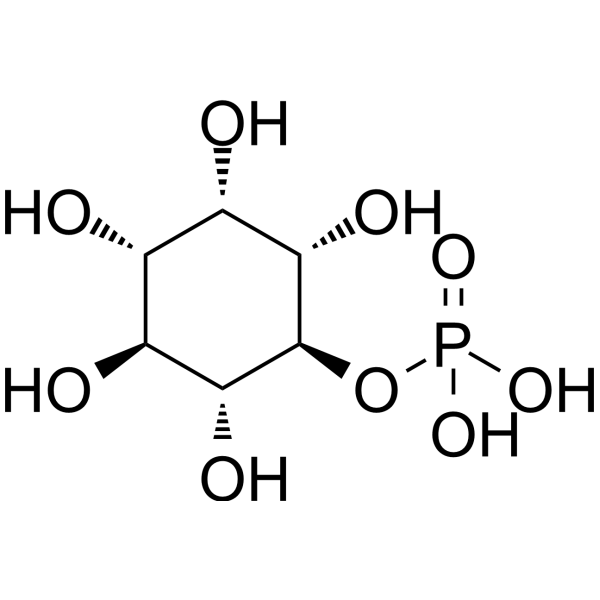
D-myo-Inositol 4-mono-phosphate, also known as IMP, is a phosphorylated form of inositol that is commonly found in various metabolic pathways, especially in the biosynthesis of phospholipids and cell signaling molecules. D-myo-Inositol 4-mono-phosphate has unique chemical properties that make it an important intermediate in the production of second messengers, such as inositol triphosphate (IP3) and diacylglycerol (DAG), which signal in cells plays a key role in. D-myo-Inositol 4-mono-phosphate is also used in dietary supplements and pharmaceuticals because of its potential health benefits, including improved insulin sensitivity and cognitive function.
loading...
    loading...
Cat. No.: HY-P3799
CAS No.: 61123-13-5
Target:  

Neurokinin Receptor

Research Areas:  

Neurological Disease

[Glp6] Substance P (6-11) is an analogue of substance P (6-11). Substance P (6-11) stimulates [3H]-inositol monophosphate ([3H]-IP1) formation in rat urinary bladder by acting on the 'septide-sensitive' tachykinin receptors .
loading...
    loading...
Cat. No.: HY-107664B
Target:  

Neurotensin Receptor

Research Areas:  

Neurological Disease

SR 142948 TFA is an orally active and selective non-peptide neurotensin receptor (NT) antagonist with IC50s of 1.19 nM, 0.32 nM, 3.96 nM in h-NTR1-CHO cells, HT-29 cells, and adult rat brain, respectively. SR 142948 TFA antagonizes NT-induced inositol monophosphate formation in HT-29 cells with an IC50 of 3.9 nM. SR 142948 TFA blocks hypothermia, analgesia and steering behavior induced by NT in vivo. SR 142948 TFA shows blood-brain permeability and can be used in study of psychiatric disorders .
loading...
    loading...
Cat. No.: HY-W794205
CAS No.: 16006-20-5
D-myo-Inositol 4-monophosphate (biscyclohexylammonium) is a biochemical reagent.
loading...
    loading...
Cat. No.: HY-W793477
CAS No.: 313263-16-0
D-myo-Inositol 1-monophosphate (dipotassium) is a biochemical reagent .
loading...
    loading...
Cat. No.: HY-112603A
CAS No.: 1623143-67-8
Research Areas:  

Metabolic Disease

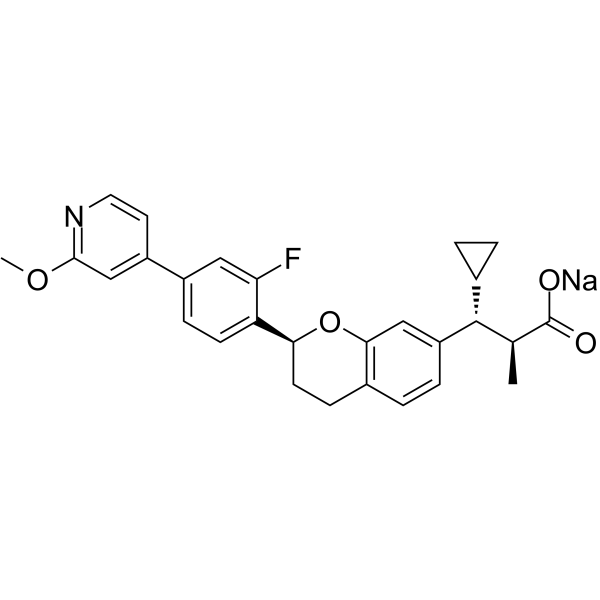
AP5 sodium is a potent, orall active, and selective GPR40 receptor agonist with a positive allosteric modulation of endogenous ligand (AgoPAM). AP5 sodium demonstrates rat and human inositol monophosphate (IP1) EC50 values of 0.49 nM and 0.8 nM against the GPR40 receptor, respectively. AP5 sodium has the potential for type II diabetes research .
loading...
    loading...
Cat. No.: HY-184442
Target:  

G2A (GPR132)

Research Areas:  

Neurological Disease

GPR132 antagonist-2 is a G2A (GPR132) antagonist with an IC50 of 0.69 μM. GPR132 antagonist-2 exerts weak stabilizing effects on the bromodomain of BRD2 and exhibits selectivity for non-olfactory GPCRs. GPR132 antagonist-2 inhibits G2A activation, blocks downstream inositol monophosphate accumulation, reverses G2A-mediated TRPV1 sensitization, suppresses 9-HODE-mediated capsaicin-induced TRPV1 responses, and activates FPR3. GPR132 antagonist-2 can be used in studies related to neuropathic pain .
loading...
    loading...
Cat. No.: HY-183050
CAS No.: 3036387-75-1
Research Areas:  

Others

HEP-50768 is an orally active and selective MRGPRX4 (hX4) antagonist. HEP-50768 suppresses basal and bile-acid-stimulated hX4 activity. HEP-50768 binds the receptor’s transmembrane pocket and induces extracellular loop rearrangements. HEP-50768 modulates GPCR microswitch motifs and reduces bile-acid-induced pruritic scratching behaviors. HEP-50768 can be used for the research of cholestatic pruritus .
loading...
    loading...
Cat. No.: HY-118760
CAS No.: 137031-56-2
Research Areas:  

Cardiovascular Disease

Litebamine is a phenanthrene alkaloid with antiplatelet activity. Litebamine potently targets arachidonic acid- and collagen-induced platelet aggregation, but shows no activity against thrombin-induced aggregation. Litebamine inhibits arachidonic acid- and collagen-induced ATP release and thromboxane B2 production in rabbit platelets, without altering cyclic AMP levels or phosphoinositide breakdown in rabbit platelets. Litebamine has no effect on platelet-activating factor- or U46619 (HY-108566)-induced aggregation, nor does it affect [ 3H] inositol monophosphate production in rabbit platelets induced by collagen, platelet-activating factor or thrombin .
loading...
    loading...
Cat. No.: HY-185287
CAS No.: 2101952-37-6
Research Areas:  

Others

TUG-1609 is a fluorescent tracer targeting free fatty acid receptor 2 (FFA2/GPR43) with a Kd value of 65.1 nM .
loading...
    loading...
Cat. No.: HY-165397
CAS No.: 120925-60-2
Target:  

PKC

Research Areas:  

Cardiovascular Disease

NA 0345 is a PKC inhibitor with IC50 values of 70 nM and 110 nM in the presence and absence of 12-O-tetradecanoyl-13-acetate, respectively. NA 0345 inhibits PKC and selectively suppresses the positive inotropic effect mediated by α1-adrenergic receptors .
loading...
    loading...
Cat. No.: HY-107664R
CAS No.: 184162-64-9
SR 142948 (Standard) is the analytical standard of SR 142948 (HY-107664). This product is intended for research and analytical applications. SR 142948 is an orally active and selective non-peptide neurotensin receptor (NT) antagonist with IC50s of 1.19 nM, 0.32 nM, 3.96 nM in h-NTR1-CHO cells, HT-29 cells, and adult rat brain, respectively. SR 142948 antagonizes NT-induced inositol monophosphate formation in HT-29 cells with an IC50 of 3.9 nM. SR 142948 blocks hypothermia, analgesia and steering behavior induced by NT in vivo. SR 142948 shows blood-brain permeability and can be used in study of psychiatric disorders .
loading...
    loading...
Cat. No.: HY-W010178R
CAS No.: 54947-74-9
4-Methyloctanoic acid (Standard) is the analytical standard of 4-Methyloctanoic acid (HY-W010178). This product is intended for research and analytical applications. 4-Methyloctanoic acid is an endogenous branched-chain medium-chain fatty acid and a negative regulator of the cAMP/PKA signaling pathway. 4-Methyloctanoic acid exerts antiepileptic effects by inhibiting epileptiform discharges and terminating behavioral and electroencephalographic seizures. 4-Methyloctanoic acid has neuroprotective effects; its polar metabolites can cross the blood-brain barrier, repair presynaptic release defects, improve motor function and alleviate neuromuscular degeneration in ALS models. 4-Methyloctanoic acid regulates phosphatidylinositol metabolism, reduces PIP/PIP2 levels and increases inositol levels. 4-Methyloctanoic acid can be used in studies related to epilepsy and amyotrophic lateral sclerosis .
loading...
    loading...
  • 1