1. Search Result
Search Result
Pathways Recommended: Membrane Transporter/Ion Channel
Results for "

ion indicator

" in MedChemExpress (MCE) Product Catalog:

44

Inhibitors & Agonists

30

Fluorescent Dye

10

Biochemical Assay Reagents

Cat. No. Product Name Target Research Areas Chemical Structure
  • HY-101896
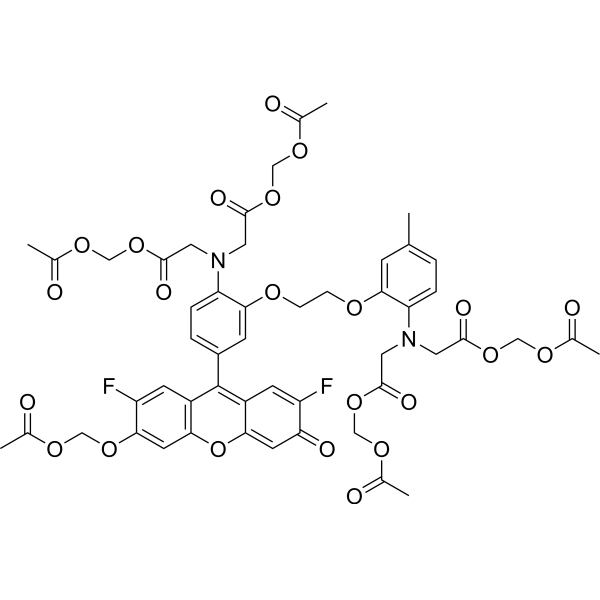
    Fluo-4 AM
    Maximum Cited Publications
    56 Publications Verification

    Fluorescent Dye Others
    Fluo-4 AM is a cell-permeable Ca 2+ (calcium ion) indicator (Ex/Em = 485/526 nm) .
    Fluo-4 AM
  • HY-D0040
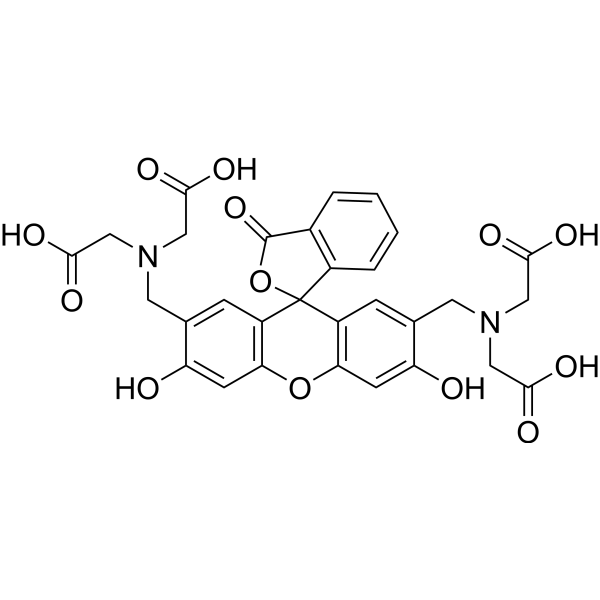
    Calcein
    10+ Cited Publications

    Fluorexon

    Fluorescent Dye Others
    Calcein is a fluorescent dye and self-quenching probe, used as an indicator of lipid vesicle leakage, and also as a complexometric indicator for titration of calcium ions with EDTA, and for fluorometric determination of calcium. Calcein cannot directly cross the intact cell membrane of a living cell, unlike Calcein-AM (HY-D0041) which is cell-permeable. Calcein can also be used as a model drug for evaluating efficiency and bioavailability of drug delivery systems .
    Calcein
  • HY-101897
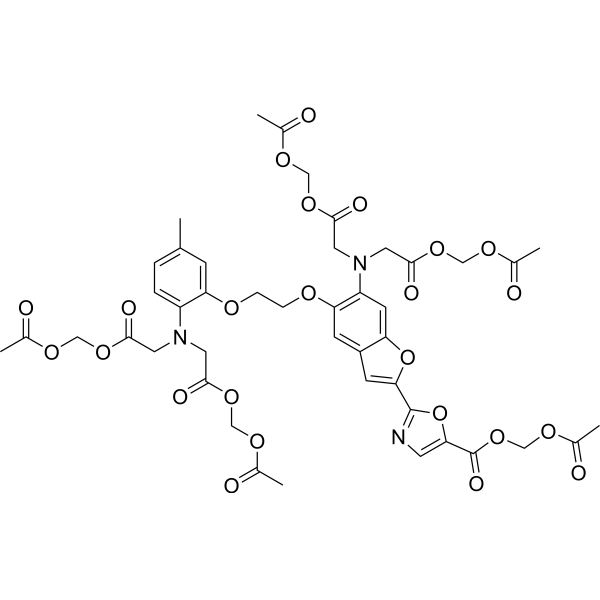
    Fura-2 AM
    5+ Cited Publications

    Fura-2 Acetoxymethyl ester

    Fluorescent Dye Others
    Fura-2 AM is a membrane permeable, intracellular, UV light-excitable and ratiometric fluorescent Ca 2+ (calcium ion) indicator. Fura-2 AM crosses cell membranes and is converted to Fura-2 (HY-D0110A) via cellular esterases. Fura-2 AM can be used to detect calcium in cells.
    Fura-2 AM
  • HY-D0720
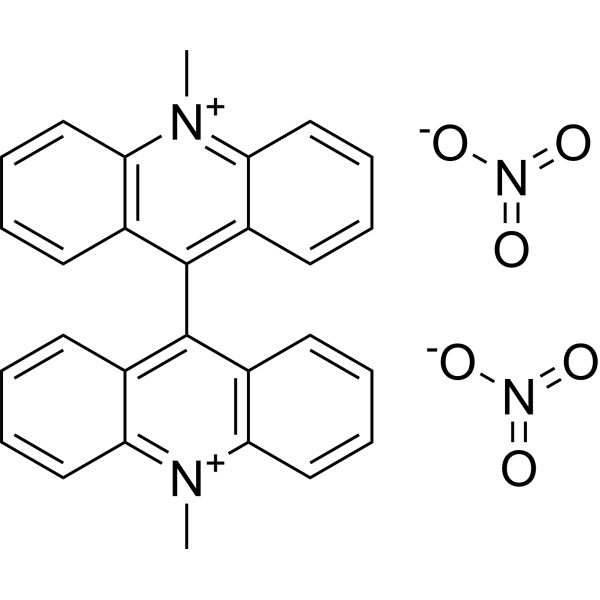
    Lucigenin
    5+ Cited Publications

    NSC-151912; L-6868

    Fluorescent Dye Reactive Oxygen Species (ROS) Others
    Lucigenin is a chemiluminescence probe. Lucigenin can be used to detect the production of endogenous superoxide anion radical (O 2-). Lucigenin is extremely sensitive to chloride ions, while it combined with chloride ions, the fluorescence will be quenched. Lucigenin also can be used as a chloride indicator. Ex/Em=455/505 nm .
    Lucigenin
  • HY-D0023
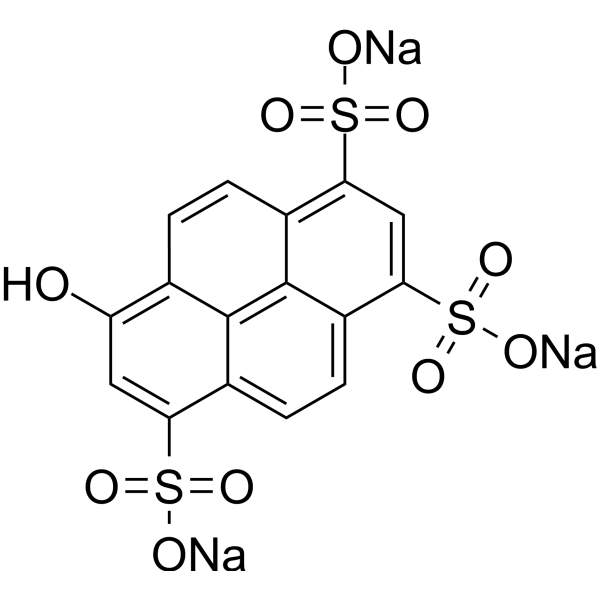
    Pyranine
    2 Publications Verification

    HPTS; Solvent Green 7

    Environmental Pollutants Fluorescent Dye Others
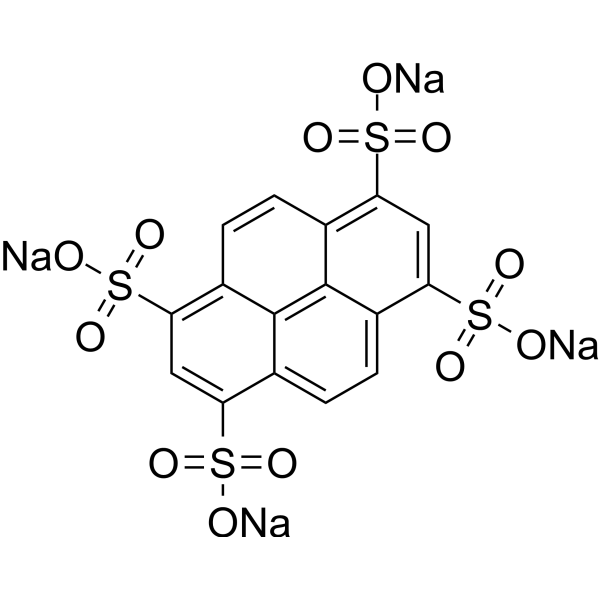
    Pyranine (HPTS; Solvent Green 7) is a cell-impermeant pH-sensitive fluorescent indicator. Pyranine acts as a class of fluorescent chemosensor for the Cu + ion. Pyranine is used as a coloring agent, biological stain, optical detecting reagent, and pH indicator (Ex/Em = 450/510 nm) .
    Pyranine
  • HY-D0155
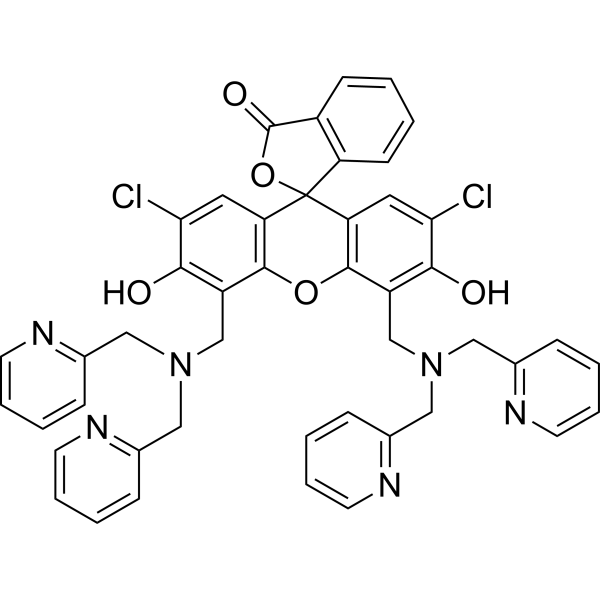
    Zinpyr-1
    4 Publications Verification

    Fluorescent Dye Others
    Zinpyr-1 is a zinc-responsive fluorescent indicator and a membrane-permeable metal-binding probe. Zinpyr-1 forms a complex with Mn 2+ ions and generates a fluorescence turn-on signal. Zinpyr-1 binds to free zinc ions in serum, enabling quantitative detection of free zinc concentration. Zinpyr-1 produces fluorescence signals reflecting the relative zinc concentration in plant root cells, localizes to specific layers of plant root cells, and can be used to support analyses related to plant zinc transporter mutations and homeostasis .
    Zinpyr-1
  • HY-D1247

    Biochemical Assay Reagents Others
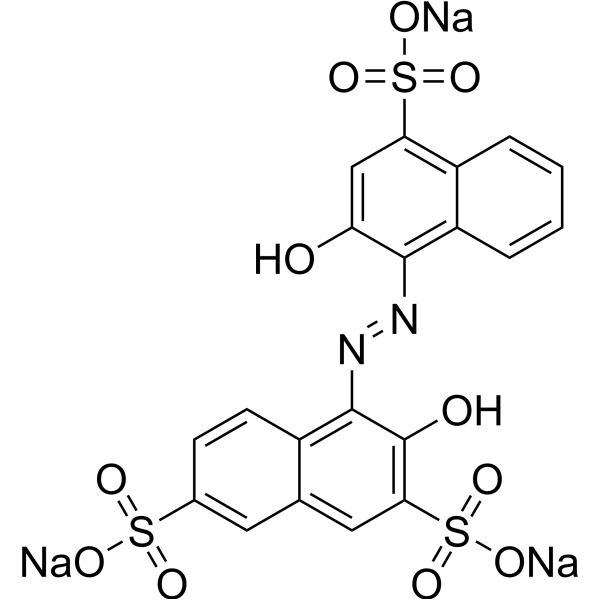
    Hydroxynaphthol Blue is an azo dye and serves as a metal indicator. Hydroxynaphthol Blue binds to specific metal ions to form stable complexes with distinct color and fluorescence properties. Hydroxynaphthol Blue is used for the visual monitoring of isothermal nucleic acid amplification results. A visible color difference appears between positive and negative nucleic acid amplification reactions, allowing result discrimination by the naked eye without opening the reaction tube .
    Hydroxynaphthol Blue
  • HY-W129633

    DCIP sodium hydrate; DPIP sodium hydrate

    Biochemical Assay Reagents Others
    2,6-Dichlorophenolindophenol (DCIP; DPIP) sodium hydrate is a redox chromogenic indicator with a redox potential of +217 mV relative to SHE, and it acts as a substrate for reduction reactions. During the metabolic process of nutrient consumption by Saccharomyces cerevisiae, 2,6-Dichlorophenolindophenol sodium hydrate is reduced from dark blue to colorless, resulting in a decrease in absorbance. 2,6-Dichlorophenolindophenol sodium hydrate is widely used in spectrophotometric biochemical oxygen demand determination and preclinical colorimetric toxicity analysis for heavy metal ion detection based on Saccharomyces cerevisiae .
    2,6-Dichlorophenolindophenol sodium hydrate
  • HY-D0215

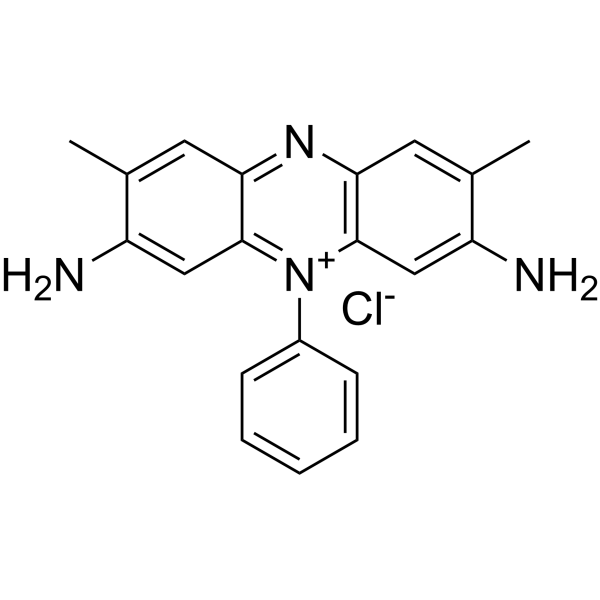
    Safranine T

    Fluorescent Dye Bacterial Infection Metabolic Disease
    Safranin (Safranin T) is an important and classical phenazinium dye. Safranin has been extensively used in the academic field as a spectroscopic probe and indicator. Safranin possesses a planar structure and cationic charge. Safranin can readily intercalate into biological macromolecules, including DNA and proteins. Safranin has antibacterial effects against gram-positive bacteria (S. aureus). Safranin can be used as a redox indicator in the determination of metal ion concentration .
    Safranin
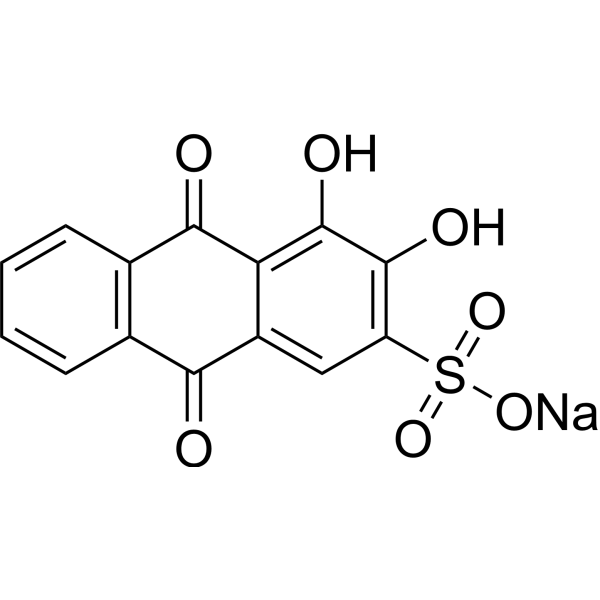
  • HY-W110927

    Biochemical Assay Reagents Fluorescent Dye Others
    Alizarin red S indicator (C.I. 58005) is a reductively active (quinone-based) anthraquinone dye that forms complexes with metal ions (such as zirconium, calcium) or boric acid to label calcium deposition and perform electrochemical sensing functions. Alizarin Red S undergoes reversible redox reactions (for electrochemical detection) and irreversible chelation (for bone staining). Alizarin Red S is mainly used in bone metabolism research (labeling mineralized tissue), sugar detection (boric acid-sugar competition system) and metal ion sensing (such as zirconium ion detection), and can be used in osteoporosis and metabolic disease research .
    Alizarin Red S Indicator (4.3-6.3), IND
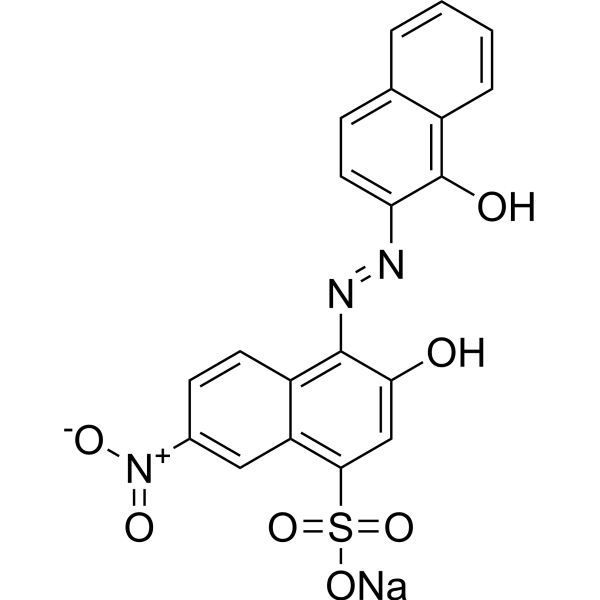
  • HY-W110910

    Biochemical Assay Reagents Infection
    Eriochrome black T, Indicator is a complexing agent for metal ions (e.g., Ca 2+, Mg 2+) and is used as an indicator in complexometric titrations. Eriochrome black T, Indicator forms colored complexes with metal ions through covalent coordination bonds, and indicates the endpoint of the titration by color change. Eriochrome black T, Indicator can be used as an anionic azo dye in photocatalytic degradation studies to evaluate the performance of photocatalysts. The reaction solution of Eriochrome black T, Indicator combined with Mg 2+ is initially purple. During loop-mediated isothermal amplification (LAMP), the color changes from purple to sky blue due to the consumption of Mg 2+ by the formation of magnesium pyrophosphate, indicating a positive reaction. The optimal concentration of Eriochrome black T, Indicator in LAMP is 60 μM, and the detection limit for Mycobacterium tuberculosis is 1 pg DNA/reaction .
    Eriochrome black T, Indicator
  • HY-DY1028

    Fluorescent Dye Others
    Fluo-4 AM (solution) is a cell-permeable Ca 2+ (calcium ion) indicator (Ex/Em = 485/526 nm) .
    Solvent and concentration: DMSO: 1 mM
    Fluo-4 AM (solution)
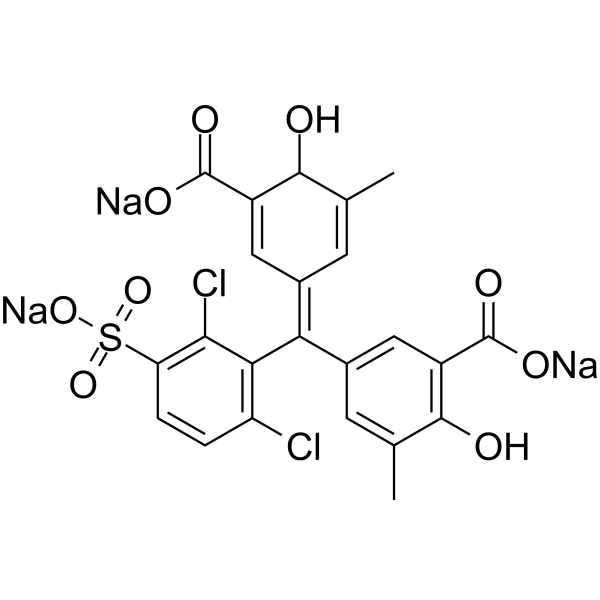
  • HY-D0800

    Biochemical Assay Reagents Others
    Chromeazurol S is a compound belonging to the class of azo dyes. It is often used as an indicator in analytical chemistry to detect metal ions such as copper, nickel, and cobalt. Chromeazurol S turns from yellow to blue in the presence of metal ions, allowing them to be detected and quantified. It can be applied to a test strip or added directly to a solution for analysis.
    Mordant Blue 29
  • HY-W110793

    Diphenylthiocarbazone

    Biochemical Assay Reagents Metabolic Disease
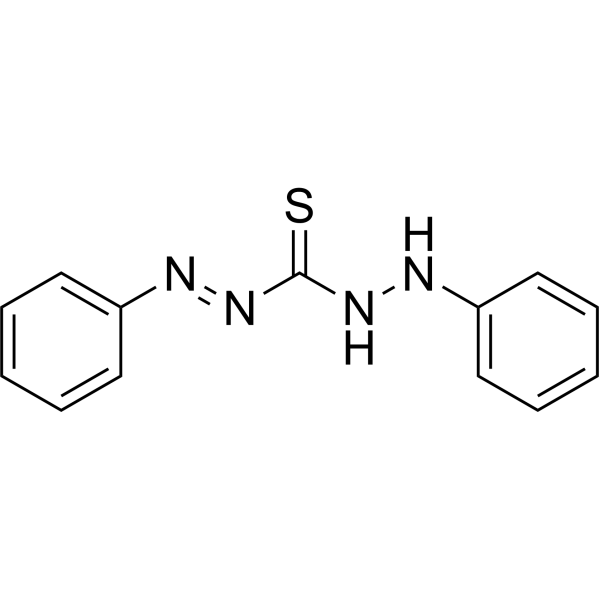
    Dithizone can be toxic to pancreatic islet cells and cause experimental diabetes. Dithizone can be used for in vitro in vivo staining of transplanted islets and cytoplasmic granules of bone marrow cells. Dithizone can be used as a chelating agent and colorimetric indicator for the detection and extraction of various heavy metals, including lead and mercury, in analytical and biochemical applications. Dithizone forms stable colored complexes with metal ions and can be quantitatively analyzed by methods such as spectrophotometry .
    Dithizone
  • HY-W151206

    Fluorescent Dye Others
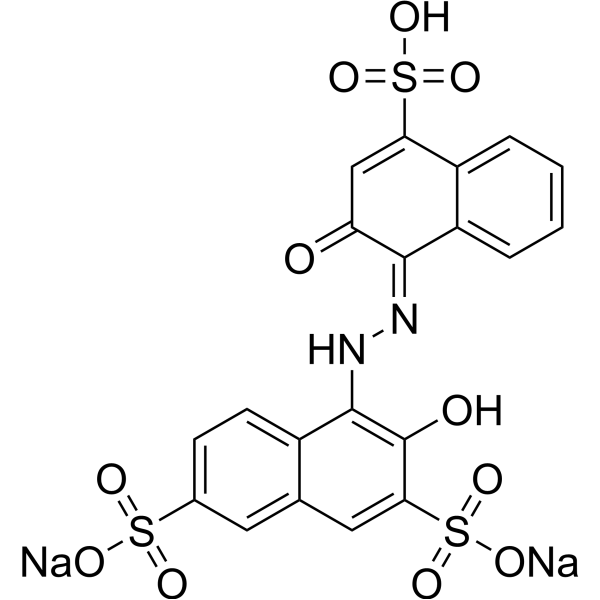
    Hydroxy naphthol blue disodium is an azo dye compound commonly used as an acid-base indicator (λmax = 650 nm). Within the pH range of 12 to 13, the indicator solution of Hydroxy naphthol blue disodium appears pale red in the presence of calcium ions and dark blue in the presence of disodium EDTA .
    Hydroxy naphthol blue disodium
  • HY-109116

    Leukomethylene blue

    Biochemical Assay Reagents Others
    Hydromethylthionine (Leukomethylene blue) has a very active photochemically active reagent, especially in its interaction with dissolved oxygen. The photochemical activity of Hydromethylthionine is mainly regulated by the reaction of its triplet state with dissolved oxygen, which reacts with dissolved oxygen to form Methylene Blue (HY-14536) and hydronium ions under ultraviolet light. Hydromethylthionine can be used for the photodegradation of model pollutants in semiconductor photocatalysis and for the study of indicators in chemical analysis .
    Hydromethylthionine
  • HY-D2482

    APG-1 AM

    Fluorescent Dye Neurological Disease
    Asante potassium green-1 AM (APG-1 AM) is a cell-permeable K +-sensitive fluorescent indicator and potassium ion indicator that exhibits minimal interference from Na + and pH at physiologically relevant intracellular levels. Asante potassium green-1 AM enables non-invasive monitoring and quantitative analysis of intracellular potassium ion concentration (ᵢ) . Its excitation/emission maxima are 525/545 nm, respectively.
    Asante potassium green-1 AM
  • HY-D2481

    APG-2 (TMA)

    Fluorescent Dye Neurological Disease
    Asante potassium green-2 (APG-2) TMA is a cell-impermeable K + (potassium ion) fluorescent indicator that produces a fluorescent response to changes in extracellular potassium ion concentration. Its excitation/emission maxima are 525/545 nm , respectively.
    Asante potassium green-2 (TMA)
  • HY-D1760

    Fluorescent Dye Others
    SBFI is a cell-impermeant, fluorescent Na + indicator dye. SBFI is excited at 340 nm and the fluorophore emission is collected at 450 nm . SBFI selective for Na + over K + with Kd values of 20 and 120 mM for these ions, respectively. .
    Sodium-binding benzofuran isophthalate
  • HY-158741

    APG-2 Acetoxymethyl ester

    Fluorescent Dye Potassium Channel Others
    IPG-2 AM (APG-2 Acetoxymethyl ester) is a membrane-permeant acetoxymethyl ester derivative and selective fluorescent potassium ion indicator. IPG-2 AM exhibits fluorescence increases proportional to extracellular potassium ion concentrations. IPG-2 AM enables real-time monitoring of cytosolic free potassium ion fluxes in human platelets and macrophages. IPG-2 AM can be used for the research of intracellular potassium concentration dynamics .
    IPG-2 AM
  • HY-D0228

    Azo Violet; Magneson I

    Fluorescent Dye Others
    4-(4-Nitrophenylazo)resorcinol (Azo Violet) is an azo purple dye used experimentally as a pH indicator, showing yellow when the pH value is lower than 11 and purple when the pH value is higher than 13. In slightly alkaline or alkaline environments, it also turns dark blue in the presence of magnesium salts. Azo Violet can also be used to test for the presence of ammonium ions. The color of the ammonium chloride or ammonium hydroxide solution will change depending on the concentration of azo violet used .
    4-(4-Nitrophenylazo)resorcinol
  • HY-W110917

    Biochemical Assay Reagents Others
    Dimethylsulfonazo III is a potent sulfate indicator. Dimethylsulfonazo III can be used as indicator to test those samples contaminated with potassium or phosphate ions .
    Dimethylsulfonazo III
  • HY-168377

    Fluorescent Dye Others
    Fluo-4 potassium is a cell-impermeable Ca 2+ (calcium ion) indicatorex=494 nm, λem=516 nm). Fluo-4 potassium can be introduced into cells using methods such as patch clamping and microinjection .
    Fluo-4 potassium
  • HY-W110896

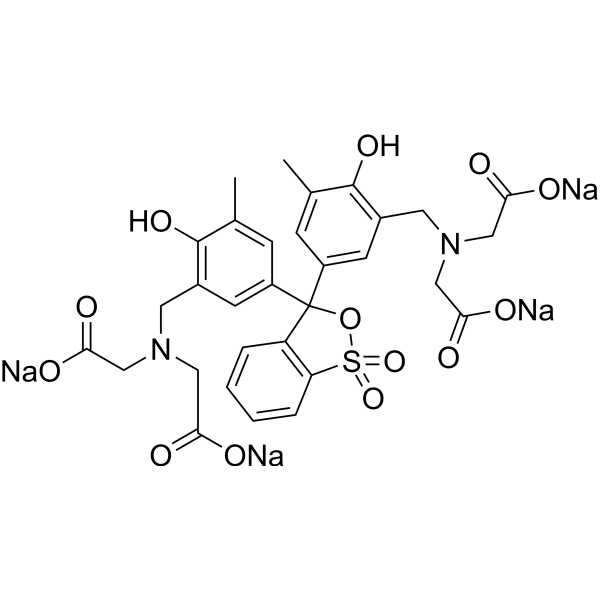
    Phthalein Purple

    Biochemical Assay Reagents Others
    Phthalate complexing agent [Chelation indicator] is a class of organic compounds belonging to the category of chelation indicators. It is commonly used in analytical chemistry to detect and quantify metal ions in aqueous solutions, especially in complexometric titration. Phthalate complexing agent [Chelation indicator] works by forming stable complexes with metal ions, which can then be measured using various spectroscopic or electrochemical techniques. In addition, it also has potential applications in wastewater treatment and environmental monitoring.
    Phthalate complexing agent [Chelation indicator]
  • HY-126821

    Fluorescent Dye Others
    Fluo-3 is a cell-impermeable calcium ion (Ca 2+) indicator. Fluo-3 itself is not fluorescent, but it becomes fluorescent after binding to calcium ions (Ex/Em = 488/525 nm) .
    Fluo-3
  • HY-129547

    Fluorescent Dye Others
    Fluo-3 pentapotassium is a cell-impermeable calcium ion (Ca 2+) indicator. Fluo-3 pentapotassium itself is not fluorescent, but it becomes fluorescent after binding to calcium ions (Ex/Em = 488/525 nm) .
    Fluo-3 pentapotassium
  • HY-172627

    Fluorescent Dye Calcium Channel Others
    Rhod-FF tripotassium is a Rhod-2 derivative and cell-impermeant calcium indicator (Kd of 320 μM). Rhod-FF tripotassium indicates calcium concentration by fluorescence upon binding to calcium ions, with excitation at 552 nm and emission at 580 nm .
    Rhod-FF tripotassium
  • HY-D1620

    Fluorescent Dye Others
    H2TPTBP is a small molecule ion indicator .
    H2TPTBP
  • HY-W351340

    Fluorescent Dye Others
    4-(Benzyloxy)-2-nitrophenol is a synthetic building block that can be used in the synthesis of fluorescent ion indicators .
    4-(Benzyloxy)-2-nitrophenol
  • HY-D1536

    Fluorescent Dye Neurological Disease
    Glycine cresol red is a complexometric indicator. Glycine cresol red forms coloured complexes with Al 3+, Ga 3+ and In 3+ ions in aqueous solutions. Glycine cresol red can been used for the spectrophotometric determination of inorganic ions. Glycine cresol red can be used as a stain in neurohistology .
    Glycine cresol red
  • HY-W134020

    Semixylenol orange

    Biochemical Assay Reagents Others
    Semixylenol orange is a metallochromic indicator that can complex with various metal ions and is used for the testing and analysis of metal ions such as zinc and zirconium .
    Semixylenol orange
  • HY-D1761

    Fluorescent Dye Others
    Fura-4F pentapotassium is a cell-impermeant fluorescent indicator for intracellular calcium ion measurement.
    Fura-4F pentapotassium
  • HY-126821A

    Fluorescent Dye Others
    Fluo-3 pentaammonium is a cell-impermeable calcium ion (Ca 2+) indicator. Fluo-3 pentaammonium itself is not fluorescent, but it becomes fluorescent after binding to calcium ions (Ex/Em = 488/525 nm) .
    Fluo-3 pentaammonium
  • HY-W127795

    Fluorescent Dye Others
    Fluo-3 ammonium is a cell-impermeable calcium ion (Ca 2+) indicator. Fluo-3 ammonium itself is not fluorescent, but it becomes fluorescent after binding to calcium ions (Ex/Em = 488/525 nm) .
    Fluo-3 ammonium
  • HY-D0023A

    HPTS hydrate; Solvent Green 7 hydrate

    Fluorescent Dye Others
    Pyranine (HPTS; Solvent Green 7) hydrate is a cell-impermeant pH-sensitive fluorescent indicator. Pyranine hydrate acts as a class of fluorescent chemosensor for the Cu + ion. Pyranine hydrate is used as a coloring agent, biological stain, optical detecting reagent, and pH indicator (Ex/Em = 450/510 nm) .
    Pyranine hydrate
  • HY-D0116

    HPTS free acid; Solvent Green 7 free acid

    Fluorescent Dye Others
    Pyranine (HPTS; Solvent Green 7) free acid is a pH-sensitive fluorescent indicator. Pyranine free acid acts as a class of fluorescent chemosensor for the Cu + ion. Pyranine free acid is used as a coloring agent, biological stain, optical detecting reagent, and pH indicator (Ex/Em = 450/510 nm) .
    Pyranine free acid
  • HY-W419044A

    Fluorescent Dye Others
    Calcein calcium potassium is a fluorescent dye and self-quenching probe, used as an indicator of lipid vesicle leakage, and also as a complexometric indicator for titration of calcium ions with EDTA, and for fluorometric determination of calcium. Calcein cannot directly cross the intact cell membrane of a living cell, unlike Calcein-AM (HY-D0041) which is cell-permeable. Calcein can also be used as a model drug for evaluating efficiency and bioavailability of drug delivery systems .
    Calcein calcium potassium
  • HY-W329161

    Fluorescent Dye Others
    Calcein sodium is a fluorescent dye and self-quenching probe, used as an indicator of lipid vesicle leakage, and also as a complexometric indicator for titration of calcium ions with EDTA, and for fluorometric determination of calcium. Calcein cannot directly cross the intact cell membrane of a living cell, unlike Calcein-AM (HY-D0041) which is cell-permeable. Calcein can also be used as a model drug for evaluating efficiency and bioavailability of drug delivery systems .
    Calcein sodium salt
  • HY-D0121B

    Fluorescent Dye Others
    INDO 1 pentasodium is a cell-impermeant ratiometric, free calcium ion (Ca 2+) fluorescent indicator that can quantitatively monitor dynamic changes in intracellular free Ca 2+ concentrations. When unbound to Ca 2+ (free state), INDO 1 pentasodium exhibits a peak emission wavelength of 485 nm under UV excitation (350 nm). Upon binding to Ca 2+ (bound state), the emission peak shifts to 405 nm. INDO 1 pentasodium is highly photolabile and susceptible to photobleaching, and its emission spectrum may overlap with the autofluorescence of NADH .
    INDO 1 pentasodium
  • HY-172577

    ion potassium green-4 (TMA)

    Fluorescent Dye Potassium Channel Others
    IPG-4 (Ion potassium green-4) TMA is an extracellular potassium ion fluorescence indicator with an Ex/Em ratio of 525/545 nm. IPG-4 TMA can be used for real-time monitoring and quantitative analysis of the transport of the biological electrochemical ion pump K⁺ .
    IPG-4 (TMA)
  • HY-126821B

    Fluorescent Dye Others
    Fluo-3 sodium is a cell-impermeable calcium ion (Ca 2+) indicator. Fluo-3 sodium itself is not fluorescent, but it becomes fluorescent after binding to calcium ions (Ex/Em = 488/525 nm) .
    Fluo-3 sodium
  • HY-D3151

    Fluorescent Dye Cancer
    RHBCu is a rhodamine-based azophenol derivative and a fluorescent indicator for Cu 2+. RHBCu exhibits high selectivity for Cu 2+ ions and enables fluorescent imaging of Cu 2+ in cancer cells .
    RHBCu
  • HY-DY1091

    Fluorexon (solution)

    Fluorescent Dye Others
    Calcein (solution) (Fluorexon (solution)) is a fluorescent dye and self-quenching probe, used as an indicator of lipid vesicle leakage, and also as a complexometric indicator for titration of calcium ions with EDTA, and for fluorometric determination of calcium. Calcein cannot directly cross the intact cell membrane of a living cell, unlike Calcein-AM (HY-D0041) which is cell-permeable. Calcein can also be used as a model drug for evaluating efficiency and bioavailability of drug delivery systems .
    Solvent and concentration: DMSO: 2 mM
    The 1 mL volume is defined as the base specification. All larger sizes correspond to incremental volumes of this base.
    Calcein (solution)
  • HY-DY1101

    Fura-2 Acetoxymethyl ester (solution)

    Fluorescent Dye Others
    Fura-2 AM (solution) (Fura-2 Acetoxymethyl ester (solution)) is a membrane permeable, intracellular, UV light-excitable and ratiometric fluorescent Ca 2+ (calcium ion) indicator. Fura-2 AM crosses cell membranes and is converted to Fura-2 (HY-D0110A) via cellular esterases. Fura-2 AM can be used to detect calcium in cells.
    Solvent and concentration: DMSO: 1 mM
    Fura-2 AM (solution)

Inquiry Online

Your information is safe with us. * Required Fields.

Salutation


Country or Region *

Applicant Name *


Organization Name *

Department *


Email Address *


Product Name *

Cat. No.


Requested quantity *

Phone Number *


Remarks

Inquiry Online

Inquiry Information

Product Name:
Cat. No.:
Quantity:
MCE Japan Authorized Agent:

