1. Search Result
Search Result
Results for "

kidney podocyte

" in MedChemExpress (MCE) Product Catalog:

11

Inhibitors & Agonists

1

Peptides

2

Natural
Products

Cat. No. Product Name Target Research Areas Chemical Structure
  • HY-112879
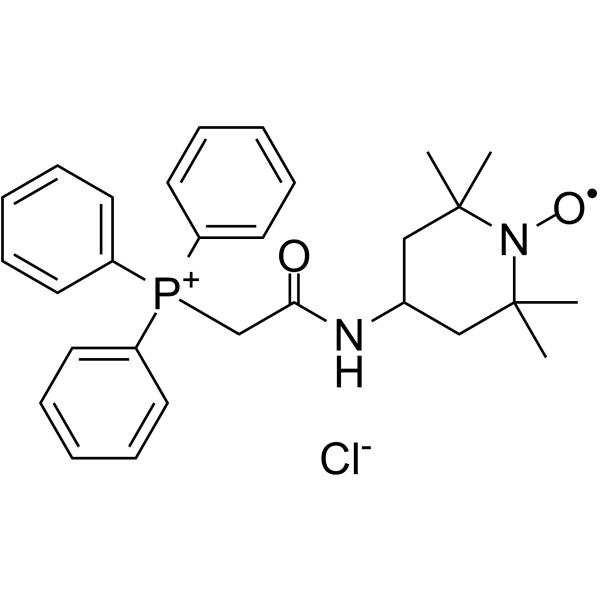
    Mito-TEMPO
    Maximum Cited Publications
    164 Publications Verification

    Calcium Channel PINK1/Parkin Mitochondrial Metabolism Apoptosis Autophagy NOD-like Receptor (NLR) Cardiovascular Disease Neurological Disease Metabolic Disease Inflammation/Immunology
    Mito-TEMPO is a mitochondria-targeted antioxidant. Mito-TEMPO induces mitophagy by activating the PINK1/Parkin pathway, inhibits NLRP3 inflammasome activation, restores mitochondrial membrane potential, and improves renal function and podocyte injury. Mito-TEMPO regulates Ca 2+ homeostasis, inhibits Bnip3 overexpression, shortens action potential duration, and exerts antiarrhythmic effects. Mito-TEMPO reverses premature senescence, reduces trabecular bone loss, and decreases cell apoptosis. Mito-TEMPO can be used in studies of chronic kidney disease, age-related cardiac dysfunction, postmenopausal osteoporosis, and ischemic stroke .
    Mito-TEMPO
  • HY-122051
    AC1903
    1 Publications Verification

    TRP Channel Metabolic Disease
    AC1903 is a specific and selective inhibitor of TRPC5 and has podocyte-protective properties. AC1903 does no effects on TRPC4 or TRPC6 currents and shows no off-target effects in kinase profiling assays. AC1903 suppresses severe proteinuria and prevents podocyte loss in focal segmental glomerulosclerosis (FSGS) rat model .
    AC1903
  • HY-125944
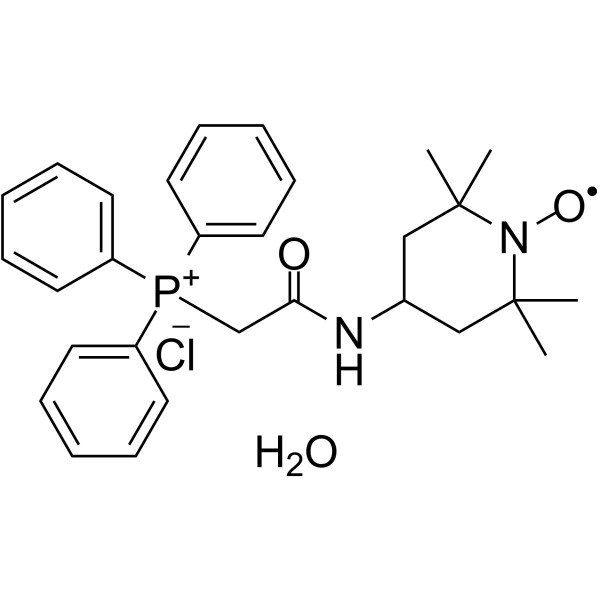
    MitoTEMPO hydrate
    Maximum Cited Publications
    164 Publications Verification

    Mitochondrial Metabolism PINK1/Parkin NOD-like Receptor (NLR) Autophagy Calcium Channel Apoptosis Cardiovascular Disease Neurological Disease Metabolic Disease Endocrinology
    MitoTEMPO hydrate is a mitochondria-targeted antioxidant . MitoTEMPO hydrate induces mitophagy by activating the PINK1/Parkin pathway, inhibits NLRP3 inflammasome activation, restores mitochondrial membrane potential, and improves renal function and podocyte injury. MitoTEMPO hydrate regulates Ca 2+ homeostasis, inhibits Bnip3 overexpression, shortens action potential duration, and exerts antiarrhythmic effects. MitoTEMPO hydrate reverses premature senescence, reduces trabecular bone loss, and decreases cell apoptosis. MitoTEMPO hydrate can be used in studies of chronic kidney disease, age-related cardiac dysfunction, postmenopausal osteoporosis, and ischemic stroke .
    MitoTEMPO hydrate
  • HY-P11178

    Apoptosis SARS-CoV Infection Metabolic Disease Inflammation/Immunology
    Corisin is a pro-apoptotic small peptide produced by Staphylococcus species. Corisin binds to serum albumin to target organs such as the lungs and kidneys, induces cellular senescence, apoptosis and epithelial-mesenchymal transition, and accelerates the progression of organ fibrosis including pulmonary fibrosis and diabetic renal fibrosis. Corisin levels are closely associated with coronavirus disease 2019 (COVID-19), diabetic chronic kidney disease (CKD), non-diabetic CKD, and idiopathic pulmonary fibrosis (IPF) .
    Corisin
  • HY-128442

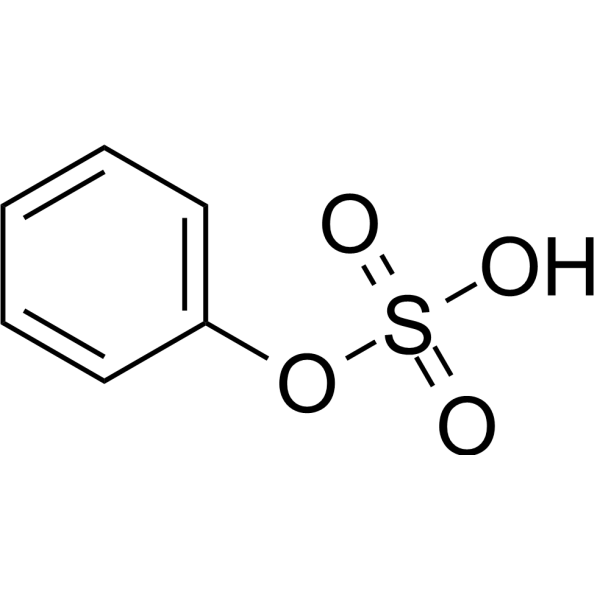
    Phenyl hydrogen sulfate

    Endogenous Metabolite Metabolic Disease
    Phenyl sulfate is an orally active gut microbiota-derived metabolite. Phenyl sulfate induces albuminuria and podocyte damage in experimental models of diabetes. Phenyl sulfate can be used as a disease marker in diabetic kidney disease .
    Phenyl sulfate
  • HY-133012

    TRP Channel Neurological Disease
    GFB-8438 is a potent and subtype selective TRPC5 inhibitor, with IC50s of 0.18 and 0.29 μM of hTRPC5 and hTRPC4, respectively. GFB-8438 shows excellent selectivity against TRPC6, other TRP family members, NaV 1.5, as well as limited activity against the hERG channel. GFB-8438 protects mouse podocytes from injury induced by protamine sulfate model .
    GFB-8438
  • HY-176236

    LXR Autophagy Metabolic Disease
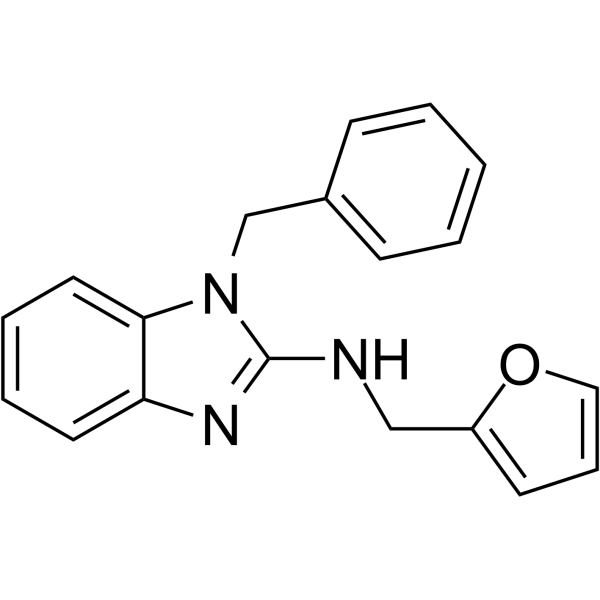
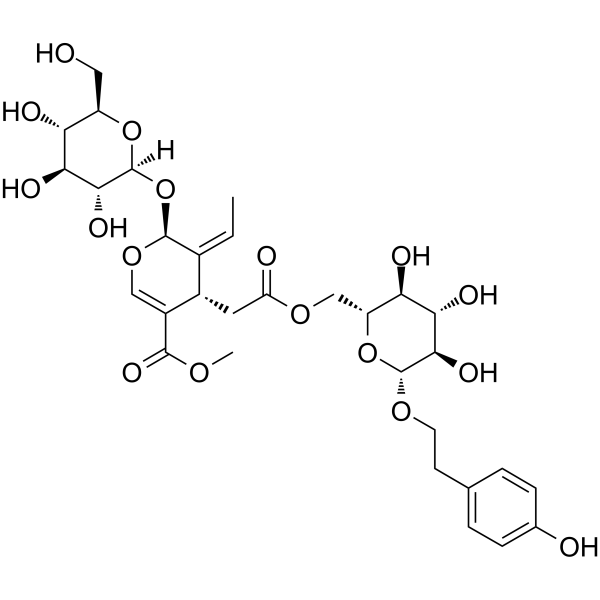
    Lipophagy inducer 1 is a lipophagy inducer. Lipophagy inducer 1 has activity of reducing lipid droplet accumulation and rescuing cell death. Lipophagy inducer 1 exerts its effects by activating lipophagy, increasing steady-state autophagosome and regulating the LXR signaling pathway. Lipophagy inducer 1 can be used in the study of diabetic nephropathy (DKD) and other diseases related to lipid metabolism disorders .
    Lipophagy inducer 1
  • HY-128442R

    Phenyl hydrogen sulfate (Standard)

    Endogenous Metabolite Reference Standards Metabolic Disease
    Phenyl sulfate (Standard) is the analytical standard of Phenyl sulfate. This product is intended for research and analytical applications. Phenyl sulfate is an orally active gut microbiota-derived metabolite. Phenyl sulfate induces albuminuria and podocyte damage in experimental models of diabetes. Phenyl sulfate can be used as a disease marker in diabetic kidney disease .
    Phenyl sulfate (Standard)
  • HY-144429

    TRP Channel Metabolic Disease
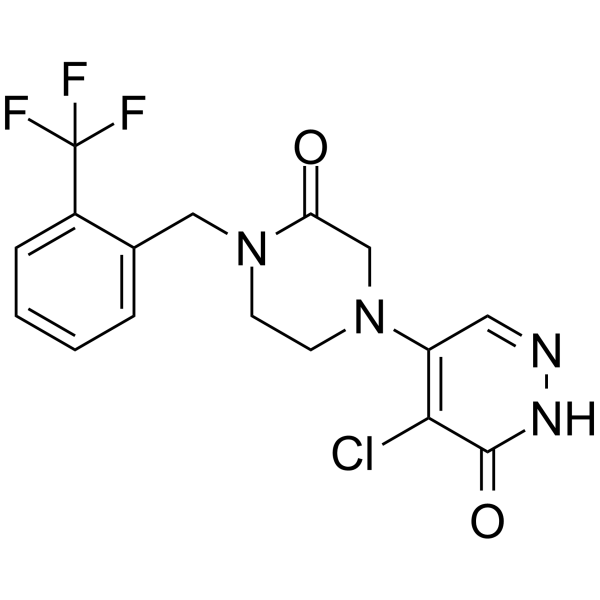
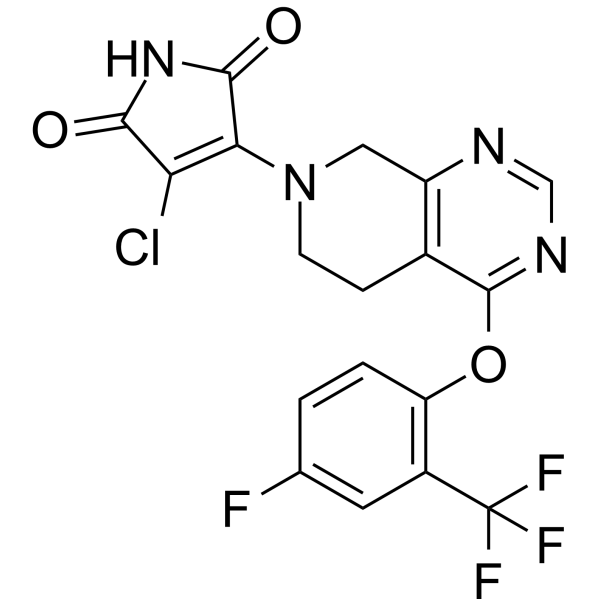
    TRPC5-IN-4 is potent and safe TRPC inhibitor with IC50 value of 14.07 nM and 65 nM for TRPC5 and TRPC4, respectively. TRPC5-IN-4 shows no damage on the cellular component of liver and kidney. TRPC5-IN-4 can be used for the research of chronic kidney disease (CKD) .
    TRPC5-IN-4
  • HY-181993

    JNK Cadherin Collagen PAI-1 Endocrinology
    JNK3-IN-11 is a selective JNK3 inhibitor with an IC50 of 2.08 nM. JNK3-IN-11 binds to the JNK3 ATP-binding pocket, forming conserved hydrogen bonds with Met149 and a water-mediated hydrogen bond with Lys93. JNK3-IN-11 suppresses TGF-β1-induced c-Jun phosphorylation, reduces profibrotic markers COL1A1 and PAI-1, restores E-cadherin expression, and has protection against podocyte injure. JNK3-IN-11 can be used for the research of chronic kidney disease .
    JNK3-IN-11
  • HY-181556

    JNK TGF-beta/Smad Cadherin Inflammation/Immunology
    JNK3-IN-10 is a blood-brain barrier-impermeable JNK3 inhibitor (IC50=0.257 nM) with over 400-fold selectivity over JNK1. JNK3-IN-10 blocks the JNK3-mediated signaling pathway downstream of TGF-β1, inhibits TGF-β1-induced phosphorylation of c-Jun, reduces the expression of pro-fibrotic markers, and restores the expression of the epithelial protein E-cadherin. JNK3-IN-10 exhibits low cytotoxicity, anti-fibrotic, cytoprotective and renoprotective effects, and alleviates albuminuria, glomerulosclerosis and podocyte foot process fusion. JNK3-IN-10 can be used for the research of chronic kidney disease, glomerulosclerosis and adriamycin-induced nephropathy .
    JNK3-IN-10

Inquiry Online

Your information is safe with us. * Required Fields.

Salutation


Country or Region *

Applicant Name *


Organization Name *

Department *


Email Address *


Product Name *

Cat. No.


Requested quantity *

Phone Number *


Remarks

Inquiry Online

Inquiry Information

Product Name:
Cat. No.:
Quantity:
MCE Japan Authorized Agent:

