14 Results for "

marine organisms

" in MedChemExpress (MCE) Product Catalog:
Products (14)

14 Results for "marine organisms" in MCE Product Catalog:

1
1 Cited Publications
Cat. No.: HY-N7819
CAS No.: 1921-70-6
Synonyms: Norphytane
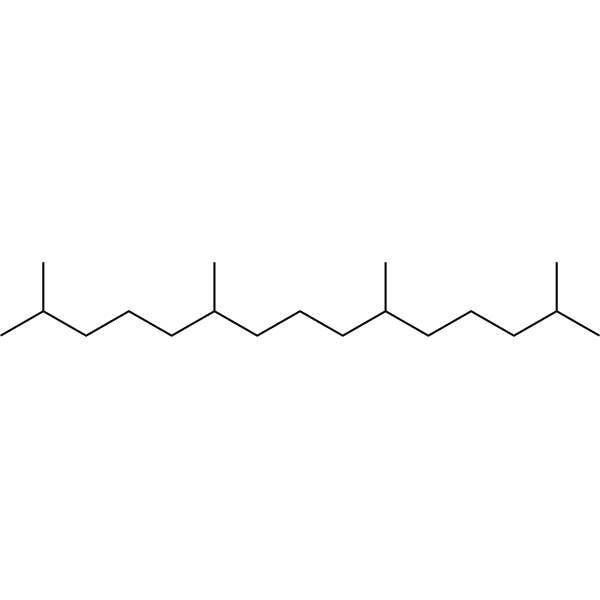
Pristane (Norphytane) is a naturally occurring hydrocarbon oil found in small quantities in many plants, in various marine organisms, and as the most active component of mineral oil . Pristane is a non-antigenic adjuvant, and induces MHC class II-restricted, arthritogenic T cells in the rat .
loading...
    loading...
Cat. No.: HY-N7819S
CAS No.: 16416-35-6
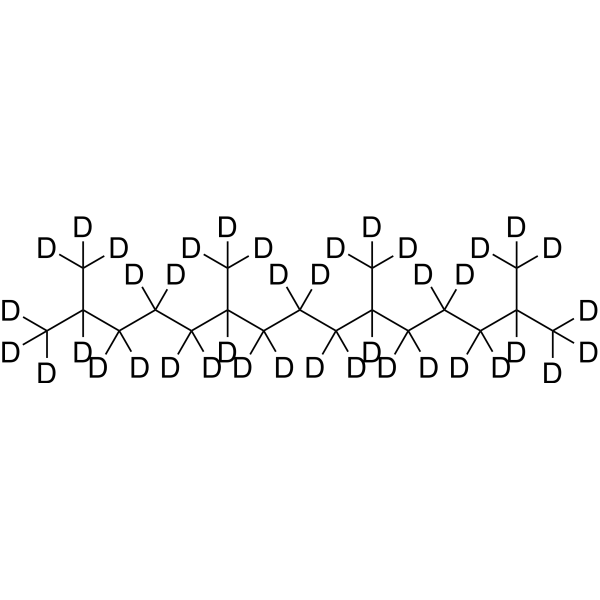
Pristane-d40 is the deuterium labeled Pristane . Pristane (Norphytane) is a naturally occurring hydrocarbon oil found in small quantities in many plants, in various marine organisms, and as the most active component of mineral oil . Pristane is a non-antigenic adjuvant, and induces MHC class II-restricted, arthritogenic T cells in the rat .
loading...
    loading...
Cat. No.: HY-N7819R
CAS No.: 1921-70-6
Synonyms: Norphytane (Standard)
Pristane (Norphytane) is a naturally occurring hydrocarbon oil found in small quantities in many plants, in various marine organisms, and as the most active component of mineral oil . Pristane is a non-antigenic adjuvant, and induces MHC class II-restricted, arthritogenic T cells in the rat .
loading...
    loading...
Cat. No.: HY-W011786
CAS No.: 84946-20-3
Target:  

Aldose Reductase

Research Areas:  

Metabolic Disease

2-Chloro-1-(4-fluorobenzyl)-1H-benzo[d]imidazole is an inhibitor of larval settlement in marine organisms, demonstrating low toxicity while effectively inhibiting the metamorphosis of species such as barnacles, bryozoans, and polychaetes. 2-Chloro-1-(4-fluorobenzyl)-1H-benzo[d]imidazole also exhibits activity as an aldose reductase (ALR2) inhibitor, indicating potential therapeutic applications in diabetes-related complications.
loading...
    loading...
Cat. No.: HY-W419643
CAS No.: 155633-54-8
Research Areas:  

Others

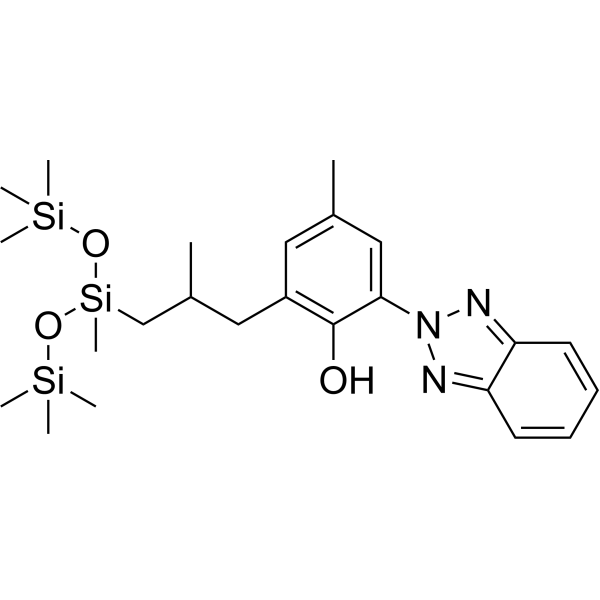
Drometrizole trisiloxane is an oil-soluble broad-spectrum sunscreen and ultraviolet filter belonging to the benzotriazole class. Drometrizole trisiloxane absorbs UVA and UVB radiation and prevents skin pigmentation. Drometrizole trisiloxane can be used in sunscreen-related research .
loading...
    loading...
Cat. No.: HY-W795031
CAS No.: 64436-13-1
Target:  

Bacterial

Research Areas:  

Infection

Arsenobetaine is an organoarsenical and a compatible solute that has been found in various marine animals, such as lobsters and crabs, as well as terrestrial organisms, including earthworms and lichens. Arsenobetaine is protective against B. subtilis cell death induced by high osmolarity or extreme temperatures when used at a concentration of 1 mM .
loading...
    loading...
Cat. No.: HY-165052
CAS No.: 197016-86-7
Synonyms: 1,3-Didocosahexaenoin-2-palmitin; DPD; TG(22:6/16:0/22:6)
Target:  

Others

Research Areas:  

Others

1,3-Didocosahexaenoyl-2-palmitoyl glycerol (1,3-Didocosahexaenoin-2-palmitin) is a compound that is being studied as a triglyceride positional isomer in fish and marine mammals. The fatty acid binding position of 1,3-Didocosahexaenoyl-2-palmitoyl glycerol varies in different organisms, which may be related to the substrate preference of related enzymes.
loading...
    loading...
Cat. No.: HY-W414697
CAS No.: 40289-37-0
Synonyms: D-Ribo-phytosphingosine (C17 base)
Target:  

Bacterial

Research Areas:  

Others

4-Hydroxysphinganine C17 base (D-Ribo-phytosphingosine C17 base), also known as D-ribo-phytosphingosine or PHS, is a crucial compound present in the membranes of fungi, plants, bacteria, marine organisms, and mammalian tissues. It plays a vital role in preserving the structural integrity of membranes, regulating cellular growth, and mediating the heat stress response in yeast. Additionally, PHS serves as a precursor for the synthesis of important lipid mediators such as PHS 1-phosphate, inositol phosphorylceramide, and KRN7000 (the α-anomer of galactosylceramide). Furthermore, this phospholipid promotes keratinocyte differentiation, making it a valuable active ingredient in cosmetic formulations.
loading...
    loading...
Cat. No.: HY-187020
CAS No.: 78916-50-4
Research Areas:  

Others

3,5-Dimethoxybibenzyl (compound 5) is a dihydrostilbene-derived marine Antibacterial Agent. 3,5-Dimethoxybibenzyl exhibits antifouling activity against marine microfouling organisms, macrofouling organisms, marine microalgae and specific marine bacteria. 3,5-Dimethoxybibenzyl can be used in studies of marine biofouling and antibacterial agents .
loading...
    loading...
Cat. No.: HY-L143
60 compounds

Oceans cover more than 70% of the Earth’s surface and host a huge species diversity. Marine organisms are considered the most recent source of bioactive natural products after terrestrial plants and nonmarine microorganisms. Marine biological sources are taxonomically diverse and include sponges, tunicates, corals, mollusks, fungi, and sediment-derived bacteria.

Marine organisms can produce a plethora of small molecules with novel chemical structures and potent biological properties, being a rich source for the discovery of pharmacologically active compounds, already with several marine-derived agents approved as drugs. Ziconotide, a peptide originally discovered in a tropical cone snail, was the first marine-derived compound to be approved in the United States in December 2004 for the treatment of pain. Then, in October 2007, Trabectedin became the first marine anticancer drug to be approved in the European Union.

MCE offers a unique collection of 60 marine-sourced natural products which can be used for drug discovery for high throughput screening (HTS) and high content screening (HCS). MCE marine-sourced natural product library is an important source for drug discovery and development.

Cat. No.: HY-W714898
CAS No.: 14852-31-4
2-Hexadecanol is a fatty acid based compound. 2-Hexadecanol can be isolated from marine organism Sea pen. 2-Hexadecanol induces Apoptosis, elevates the expression of caspase-3 and caspase-8. 2-Hexadecanol exhibits anticancer activity against breast cancer and cervical cancer .
loading...
    loading...
Cat. No.: HY-W008583
CAS No.: 4627-22-9
Synonyms: DBDPA
Research Areas:  

Others

Bis (4-tert-butylphenyl) amine (DBDPA) is a C4 alkyl-substituted diphenylamine-based amino antioxidant. Bis (4-tert-butylphenyl) amine serves as a polymer additive in car seats. Bis (4-tert-butylphenyl) amine acts as a synthetic precursor for donor-acceptor-donor (D-A-D) type π-conjugated fluorophores .
loading...
    loading...
Cat. No.: HY-N12630
CAS No.: 65318-21-0
Synonyms: Mycosporine-Gly
Mycosporine glycine (Mycosporine-Gly) is a mycosporine-like amino acid derived from marine organisms, which possesses free radical scavenging, antioxidant, anti-inflammatory and photoprotective activities . Mycosporine glycine inhibits the UV-induced upregulation of COX-2 mRNA and gene expression levels, scavenges free radicals, ROS and peroxyl radicals, and inhibits free radical chain lipid peroxidation and phosphatidylcholine peroxidation. Mycosporine glycine restores PCOLCE and elastin levels suppressed by ultraviolet radiation, alleviates photooxidative stress and UV-mediated skin cell damage. Mycosporine glycine can be used in studies related to UV-induced skin inflammation, skin photoaging and skin damage .
loading...
    loading...
Cat. No.: HY-L107
2,020 compounds

With features of enormous scaffold diversity and structural complexity, natural products (NPs) are the main sources of lead compounds and new drugs and play a highly significant role in the drug discovery and development process, especially for cancer and infectious diseases. A large number of natural products have been proven to have potential anti-tumor effects, mainly from plants, animals, Marine organisms and microorganisms. At present, derived than 60% of anti-tumor drugs come from natural sources, and they are widely used in breast, prostate and colon cancers.

MCE offers a unique collection of 2,020 natural products with validated anti-cancer activity. MCE anti-cancer natural product library is a useful tool for anti-tumor drugs screening and other related research.

  • 1