


1. Search Result
Search Result
Results for "

metal toxicity

" in MedChemExpress (MCE) Product Catalog:

23

Inhibitors & Agonists

1

Fluorescent Dyes

5

Biochemical Assay Reagents

6

Peptides

6

Natural
Products

2

Oligonucleotides

Targets Recommended:
Cat. No. Product Name Target Research Areas Chemical Structure
  • HY-Y1365

    Environmental Pollutants Biochemical Assay Reagents Metabolic Disease Cancer
    Gelatins is a non-toxic, non carcinogenic, biodegradable, and non irritating natural polymer derived from partial hydrolysis of collagen. Due to its strong liquid absorption and swelling ability, Gelatins has excellent hemostatic properties and can be used as a matrix material for the reduction, growth, and stability of metal nanoparticles. Gelatins can also be used for tumor cell culture and tumor therapy .
    Gelatins
  • HY-B1285
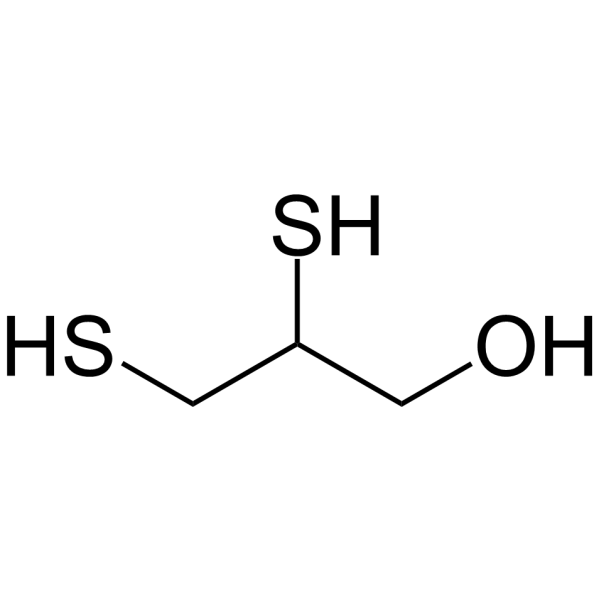
    Dimercaprol
    1 Publications Verification

    2,3-Dimercapto-1-propanol; Dithioglycerol

    HIV Infection
    Dimercaprol (2,3-Dimercapto-1-propanol) is an anti-heavy metal-poisoning agent, which exhibits anti-HIV activity. Dimercaprol can be used for the study for arsenic, mercury, gold, lead, antimony, and other toxic metal poisoning .
    Dimercaprol
  • HY-N0513

    Reactive Oxygen Species (ROS) Phosphatase NF-κB Keap1-Nrf2 Metabolic Disease Inflammation/Immunology
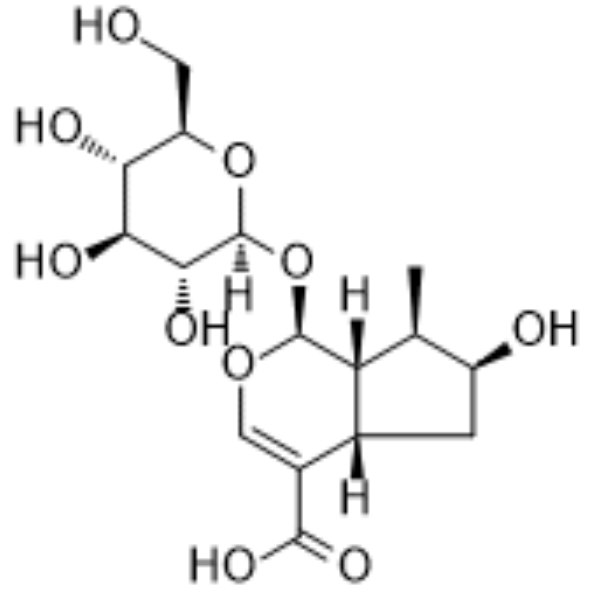
    Loganic acid is an iridoid isolated from cornelian cherry fruits. Loganic acid inhibits NF-κB signaling pathway, activates Nrf2 signaling pathway, exhibits anti-inflammatory activity. Loganic acid can modulate diet-induced atherosclerosis and redox status. Loganic acid has strong free radical scavenging activity and remarkable cyto-protective effect against heavy metal mediated toxicity. Loganic acid is orally active .
    Loganic acid
  • HY-D0261
    Tiron
    1 Publications Verification

    Biochemical Assay Reagents Apoptosis Metabolic Disease Inflammation/Immunology Cancer
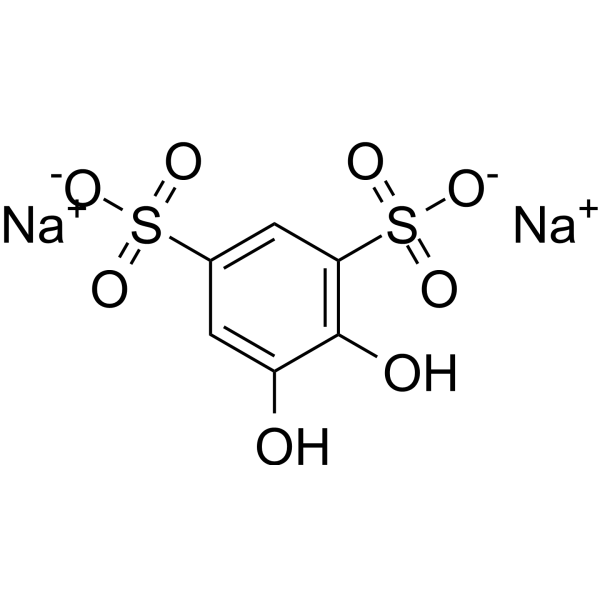
    Tiron is a non-toxic chelator of a variety of metals. Tiron is cell permeable analog of vitamin E and function as hydroxyl radical and superoxide scavenger. Tiron is an orally active antioxidant. Tiron can be used to alleviate acute metal overload in animals .
    Tiron
  • HY-W129633

    DCIP sodium hydrate; DPIP sodium hydrate

    Biochemical Assay Reagents Others
    2,6-Dichlorophenolindophenol (DCIP; DPIP) sodium hydrate is a redox chromogenic indicator with a redox potential of +217 mV relative to SHE, and it acts as a substrate for reduction reactions. During the metabolic process of nutrient consumption by Saccharomyces cerevisiae, 2,6-Dichlorophenolindophenol sodium hydrate is reduced from dark blue to colorless, resulting in a decrease in absorbance. 2,6-Dichlorophenolindophenol sodium hydrate is widely used in spectrophotometric biochemical oxygen demand determination and preclinical colorimetric toxicity analysis for heavy metal ion detection based on Saccharomyces cerevisiae .
    2,6-Dichlorophenolindophenol sodium hydrate
  • HY-W012683

    Biochemical Assay Reagents Cancer
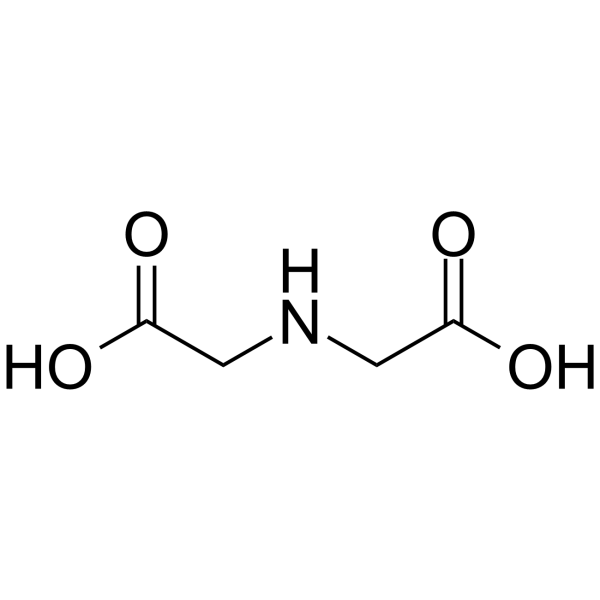
    Iminodiacetic acid is a metal ion chelator targeting Cr 6+, Cd 2+, Ni 2+, and Pb 2+. Iminodiacetic acid selectively and irreversibly binds metal ions through the coordination of carboxyl and imino groups, reduces the toxicity of metal ions and promotes their adsorption and separation. Iminodiacetic acid has the functions of heavy metal ion removal and coordination complex stabilization. Iminodiacetic acid is often used in environmental pollution control (such as heavy metal adsorption in water) and coordination chemistry (such as metal ion detection and separation) research .
    Iminodiacetic acid
  • HY-W110793

    Diphenylthiocarbazone

    Biochemical Assay Reagents Metabolic Disease
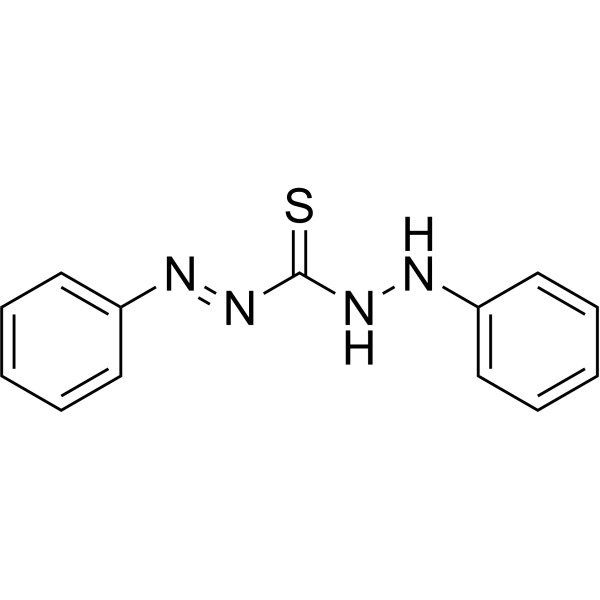
    Dithizone can be toxic to pancreatic islet cells and cause experimental diabetes. Dithizone can be used for in vitro in vivo staining of transplanted islets and cytoplasmic granules of bone marrow cells. Dithizone can be used as a chelating agent and colorimetric indicator for the detection and extraction of various heavy metals, including lead and mercury, in analytical and biochemical applications. Dithizone forms stable colored complexes with metal ions and can be quantitatively analyzed by methods such as spectrophotometry .
    Dithizone
  • HY-P3322

    PC 5

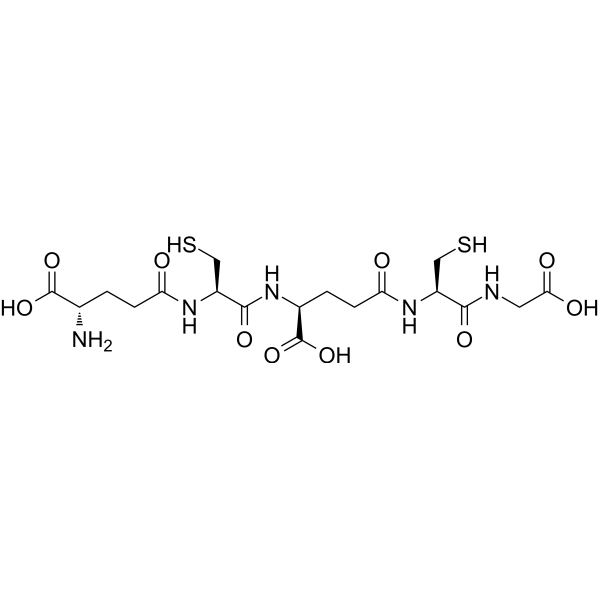
    Biochemical Assay Reagents Others
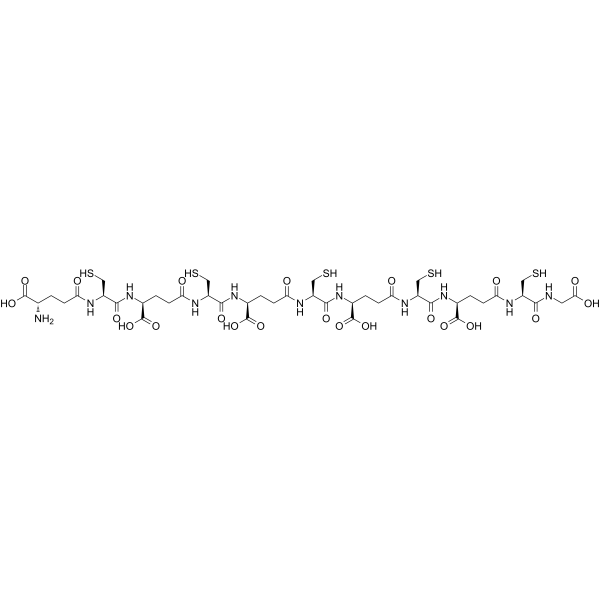
    Phytochelatin 5 is metal-binding compound produced by plants. Phytochelatin 5 may reduce bioavailability of dietary toxic metals such as cadmium .
    Phytochelatin 5
  • HY-119635

    Others Cancer
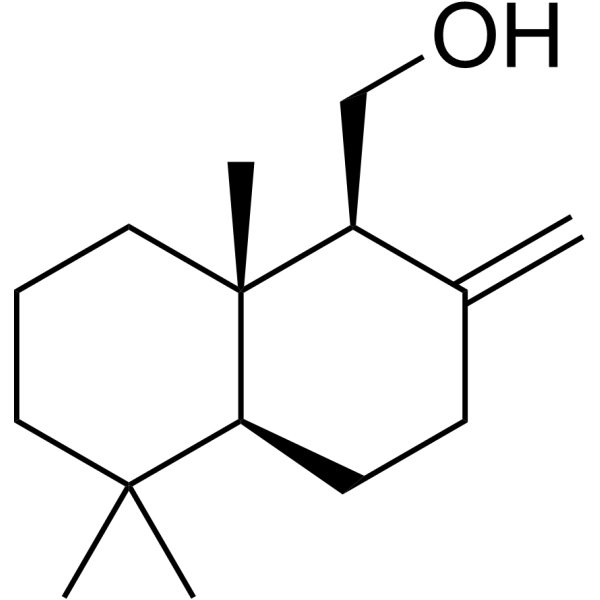
    Albicanol is a sesquiterpenoid with potent antioxidant and antagonistic activities against heavy metal toxicity. Albicanol shows cytotoxicity. Albicanol suppress Profenofos (HY-B0832) induced genotoxicity in grass carp hepatocytes .
    Albicanol
  • HY-W116336B

    Biochemical Assay Reagents Fungal Bacterial Infection Cancer
    Zinc oxide, 99.99% metals basis is a versatile wide-bandgap semiconductor with superior comprehensive properties. Zinc oxide, 99.99% metals basis serves as raw material for Schottky diodes, functional nanostructures, sensors, energy harvesters and photocatalysts for hydrogen production. Zinc oxide, 99.99% metals basis acts as a non-toxic antibacterial agent and selective cytotoxin against multiple bacteria, fungi and spores. Zinc oxide, 99.99% metals basis induces cancer cell death. Zinc oxide, 99.99% metals basis is applicable to drug delivery, biosensing, bioimaging and researches on cancer, microbial infections and skin diseases .
    Zinc oxide, 99.99% metals basis
  • HY-W008992

    8-Hydroxyquinoline sulfate hydrate

    Biochemical Assay Reagents Others
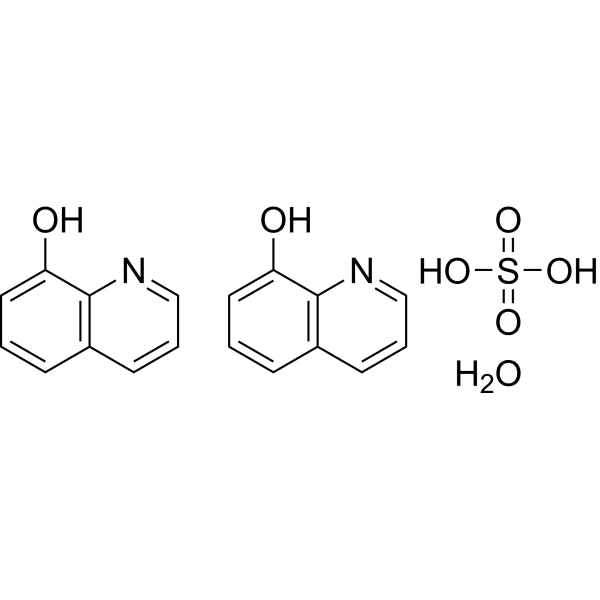
    Quinolin-8-ol sulfate hydrate is an organic compound commonly used in dyes and as a raw material for chemical analysis. It can cooperate with metal ions to form dyes, and is widely used in the fields of dyes, printing and textile manufacturing. In addition, the compound also has good toxicity and biocompatibility, and is also used in some medical fields.
    Quinolin-8-ol sulfate hydrate
  • HY-W250148

    Spirit nigrosine

    Biochemical Assay Reagents Others
    Solvent black 5 (Spirit nigrosine) is a synthetic dye belonging to the family of azo dyes. Also known as oil black or naphthol black, it is dark blue-black and has excellent solubility in organic solvents. Solvent black 5 is commonly used as a colorant in various industrial applications such as printing inks, coatings and plastics. It can also be used as an indicator dye to detect the presence of metals in solution. Furthermore, due to its high absorption and emission properties in the near-infrared region, it has been used in scientific research as a fluorescent biomarker for tissues and cells. However, Solvent black 5 has been reported to have potentially toxic effects on human health and the environment and its use is therefore regulated in some countries.
    Solvent black 5
  • HY-W099569

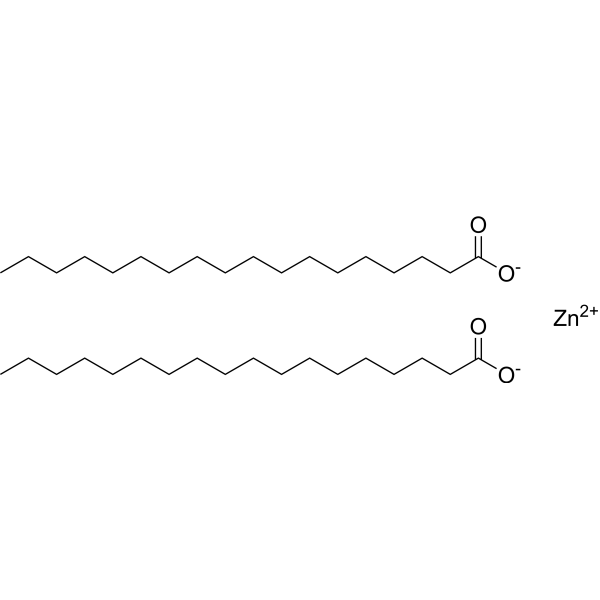
    Zinc octadecanoate

    Biochemical Assay Reagents Fungal Bacterial Parasite Infection
    Zinc stearate is a metal stearate that acts as a preservative, bactericide, fungicide, and larvicide. Zinc stearate inhibits larval reproduction in animal feces. Zinc stearate exhibits extremely low systemic toxicity. Zinc stearate is a common component of pharmaceutical excipients, lubricants, mold release agents, polymer stabilizers, and coating matting agents .
    Zinc stearate
  • HY-W129230

    2-Hydroxybenzoic acid diethylamine

    Reactive Oxygen Species (ROS) Others
    Salicylic acid diethylamine (2-Hydroxybenzoic acid diethylamine) is a hormone involved in plant signaling. Salicylic acid diethylamine antagonizes the oxidative damaging effect of metal toxicity directly by acting as an antioxidant to scavenge the ROS and by activating the antioxidant systems of plants and indirectly by reducing uptake of metals from their medium of growth .
    Salicylic acid diethylamine
  • HY-W012683R

    Biochemical Assay Reagents Reference Standards Cancer
    Iminodiacetic acid is a metal ion chelator targeting Cr6+, Cd2+, Ni2+, and Pb2+. Iminodiacetic acid selectively and irreversibly binds metal ions through the coordination of carboxyl and imino groups, reduces the toxicity of metal ions and promotes their adsorption and separation. Iminodiacetic acid has the functions of heavy metal ion removal and coordination complex stabilization. Iminodiacetic acid is often used in environmental pollution control (such as heavy metal adsorption in water) and coordination chemistry (such as metal ion detection and separation) research .
    Iminodiacetic acid (Standard)
  • HY-B1285R

    2,3-Dimercapto-1-propanol (Standard); Dithioglycerol (Standard)

    Reference Standards HIV Infection
    Dimercaprol (Standard) is the analytical standard of Dimercaprol. This product is intended for research and analytical applications. Dimercaprol (2,3-Dimercapto-1-propanol) is an anti-heavy metal-poisoning agent, which exhibits anti-HIV activity. Dimercaprol can be used for the study for arsenic, mercury, gold, lead, antimony, and other toxic metal poisoning .
    Dimercaprol (Standard)
  • HY-P3323

    PC 6

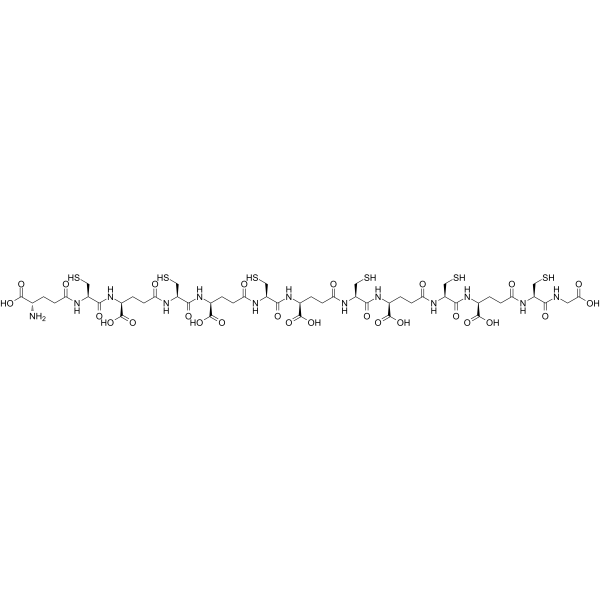
    Biochemical Assay Reagents Others
    Phytochelatin 6 is metal-binding compound produced by plants. Phytochelatin 6 may reduce bioavailability of dietary toxic metals such as cadmium .
    Phytochelatin 6
  • HY-P3322A

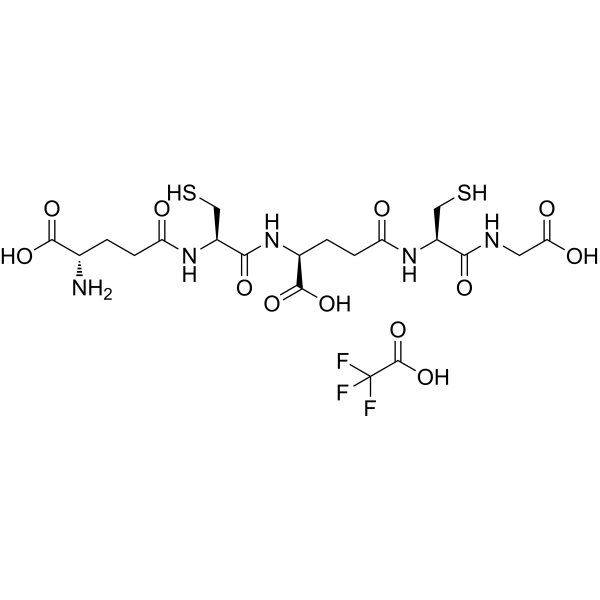
    PC 5 TFA

    Endogenous Metabolite Others
    Phytochelatin 5 TFA is metal-binding compound produced by plants. Phytochelatin 5 TFA may reduce bioavailability of dietary toxic metals such as cadmium .
    Phytochelatin 5 TFA
  • HY-P3323A

    PC 6 TFA

    Biochemical Assay Reagents Others
    Phytochelatin 6 TFA is metal-binding compound produced by plants. Phytochelatin 6 TFA may reduce bioavailability of dietary toxic metals such as cadmium .
    Phytochelatin 6 TFA
  • HY-N0513R

    Reference Standards Reactive Oxygen Species (ROS) Phosphatase NF-κB Keap1-Nrf2 Metabolic Disease Inflammation/Immunology
    Loganic acid (Standard) is the analytical standard of Loganic acid. This product is intended for research and analytical applications. Loganic acid is an iridoid isolated from cornelian cherry fruits. Loganic acid inhibits NF-κB signaling pathway, activates Nrf2 signaling pathway, exhibits anti-inflammatory activity. Loganic acid can modulate diet-induced atherosclerosis and redox status. Loganic acid has strong free radical scavenging activity and remarkable cyto-protective effect against heavy metal mediated toxicity. Loganic acid is orally active .
    Loganic acid (Standard)
  • HY-W722245

    Endogenous Metabolite Bacterial Infection
    Pyochelin is a salicylate-based nonribosomal peptide siderophore produced by Pseudomonas aeruginosa. Pyochelin chelates Fe 3+ and transports it back into bacterial cells, providing the iron essential for bacterial survival. Pyochelin can also chelate other metals such as Zn 2+, Co 2+, and Ni 2+, which helps bacteria maintain intracellular metal ion homeostasis by chelating and excreting excess metals in response to toxic metal stress. Pyochelin can be used in studies related to Pseudomonas aeruginosa infection .
    Pyochelin
  • HY-156939

    Biochemical Assay Reagents Cancer
    ZnDTPA is an orally effective chelating agent, which belongs to the class of amino carboxylic acid chelating agents and is mainly used to form stable complexes with metal ions. DTPA (diethylenetriaminepentaacetic acid) itself is a polydentate ligand that can form stable cyclic or chain-like complexes with a variety of metal ions. ZnDTPA can be used to reduce the long-term toxicity of 239Pu to rats and reduce the incidence of osteosarcoma, breast cancer, etc. in rats .
    ZnDTPA
  • HY-W783351

    Coppersensor 790 acetoxymethyl ester

    Fluorescent Dye Metabolic Disease
    CS790AM (Coppersensor 790 acetoxymethyl ester) is a cell-permeable, Cu +-targeted near-infrared fluorescent probe (λabs=760 nm, λem=790 nm) applicable to live cells. CS790AM can cross lipophilic cell membranes, and is converted into negatively charged CS790 under the action of intracellular esterases to be retained, thus enabling highly sensitive, reversible "turn-on" detection of labile Cu + pools in live cells and mice. CS790AM possesses excellent biocompatibility and selectivity, avoids interference from other metal ions, shows no obvious toxicity, and can be rapidly cleared. CS790AM allows long-term longitudinal monitoring of individual mice, visualizes copper levels in internal organs and isolated livers, and effectively evaluates abnormal copper accumulation in Wilson's disease models (Atp7b -/-) as well as dynamic changes after chelator treatment. CS790AM can be used for research on Wilson's disease and related copper metabolic disorders .
    CS790AM

Inquiry Online

Your information is safe with us. * Required Fields.

Salutation


Country or Region *

Applicant Name *


Organization Name *

Department *


Email Address *


Product Name *

Cat. No.


Requested quantity *

Phone Number *


Remarks

Inquiry Online

Inquiry Information

Product Name:
Cat. No.:
Quantity:
MCE Japan Authorized Agent:

