



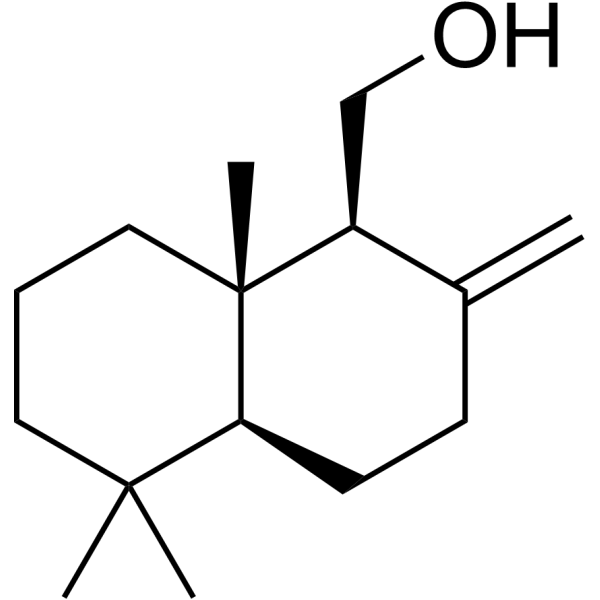
Albicanol
Albicanol is a sesquiterpenoid with potent antioxidant and antagonistic activities against heavy metal toxicity. Albicanol shows cytotoxicity. Albicanol suppress Profenofos (HY-B0832) induced genotoxicity in grass carp hepatocytes.
For research use only. We do not sell to patients.
- CAS No.: 54632-04-1
- Formula: C15H26O
- Molecular Weight:222.37
-
Storage:
Please store the product under the recommended conditions in the Certificate of Analysis.

To place orders, for customer services and technical support, please contact: MedChemExpress USA
Tel: 609-228-6898 E-mail: [email protected] [email protected]


-
 Biological Activity
-
Chemical Information
- Protocols
- Purity & Documentation
- References
-
 Help & FAQs




Biological Activity
Description
In Vitro
Albicanol (compound 6) (0-30 µM; 48 h) shows cytotoxicity with IC50s of >30, 24.14, >30 µM for A549, MCF7, HepG2 cells, respectively[1].
Albicanol (0.00005 µg/mL; 24 h) significantly inhibits the genotoxicity of L8824 cells resulted from PFF exposure[2].
MedChemExpress (MCE) has not independently confirmed the accuracy of these methods. They are for reference only.
-
Cell Line:A549, MCF7, HepG2 cells
-
Concentration:0-30 µM
-
Incubation Time:48 h
-
Result:Showed cytotoxicity with IC50s of >30, 24.14, >30 µM for A549, MCF7, HepG2 cells, respectively.


Chemical Information
-
CAS No. 54632-04-1
-
Molecular Weight 222.37
-
Formula C15H26O
-
SMILES
CC(C)(CCC[C@@]1([C@H]2CO)C)[C@@H]1CCC2=C
-
Structure Classification
-
Initial Source
-
Shipping
Room temperature in continental US; may vary elsewhere.
-
Storage
Please store the product under the recommended conditions in the Certificate of Analysis.


Purity & Documentation
References
[1]. Zhao DD, et al. Compounds from Dryopteris fragrans (L.) Schott with cytotoxic activity. Molecules. 2014 Mar 18;19(3):3345-55. [Content Brief]
[2]. Lihui X, et al. Albicanol modulates oxidative stress and the p53 axis to suppress profenofos induced genotoxicity in grass carp hepatocytes. Fish Shellfish Immunol. 2022 Mar;122:325-333. [Content Brief]

Calculators
Concentration (start) × Volume (start) = Concentration (final) × Volume (final)


Albicanol Related Classifications
HY-119635 Related Classifications
 Powered by Bioz