1. Search Result
Search Result
Results for "

murine fibroblast

" in MedChemExpress (MCE) Product Catalog:

31

Inhibitors & Agonists

2

Biochemical Assay Reagents

1

Peptides

5

Inhibitory Antibodies

10

Natural
Products

2

Isotope-Labeled Compounds

3

Antibodies

1

Oligonucleotides

Targets Recommended:
Cat. No. Product Name Target Research Areas Chemical Structure
  • HY-B1777
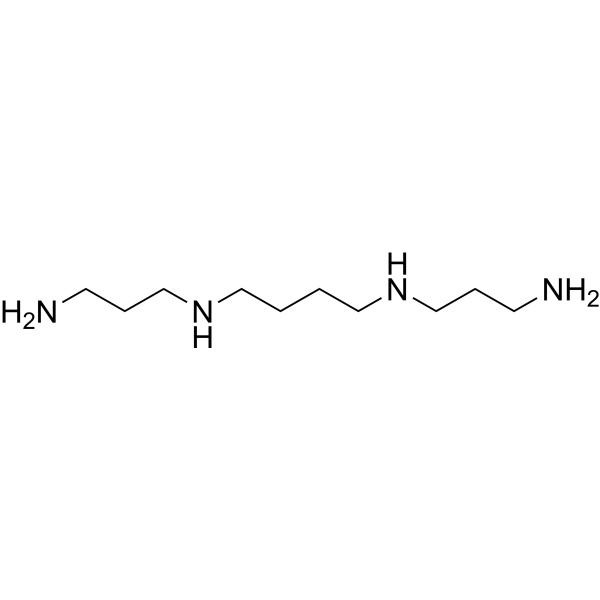
    Spermine
    Maximum Cited Publications
    8 Publications Verification

    NSC 268508; Neuridine

    Endogenous Metabolite Bacterial Reactive Oxygen Species (ROS) DNA/RNA Synthesis Infection Neurological Disease Inflammation/Immunology
    Spermine is a natural antioxidant and anti-inflammatory agent. Spermine is known to inhibit some bacterial cultures, especially strains of Staphylococcus aureus. Spermine induces neurotoxicity in the striarum dose-dependently. Spermine can reversibly inhibits DNA synthetic response, mixed lymphocyte response and the induction of cytolytic lymphocyte response in primary cultures of murine spleen cells. Spermine tetrahydrochloride is a polyamine nitric oxide donor that can provide nitric oxide to platelets and inhibit platelet activation to a certain extent concentration-dependently. Spermine tetrahydrochloride occurs in mammalian tissues, plants, bacteria, ribosomes and bacteriophage. Spermine tetrahydrochloride inhibits primary human embryo lung fibroblasts in vitro .
    Spermine
  • HY-145446

    Epigenetic Reader Domain Metabolic Disease
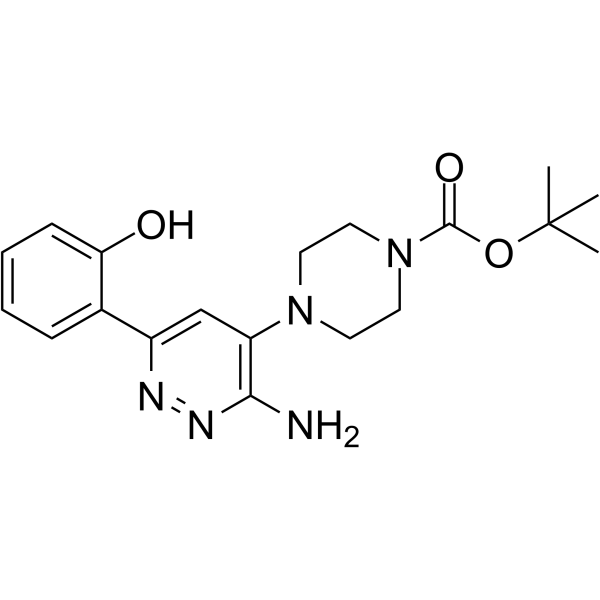
    SGC-SMARCA-BRDVIII, a chemical probe, is a potent and selective inhibitor of SMARCA2/4 and PB1(5), with Kds of 35 nM, 36 nM, and 13 nM, respectively. SGC-SMARCA-BRDVIII also inhibits PB1(2) and PB1(3), with Kds of 3.7 and 2.0 μM, respectively. SGC-SMARCA-BRDVIII can block adipogenesis of 3T3-L1 murine fibroblasts .
    SGC-SMARCA-BRDVIII
  • HY-136386
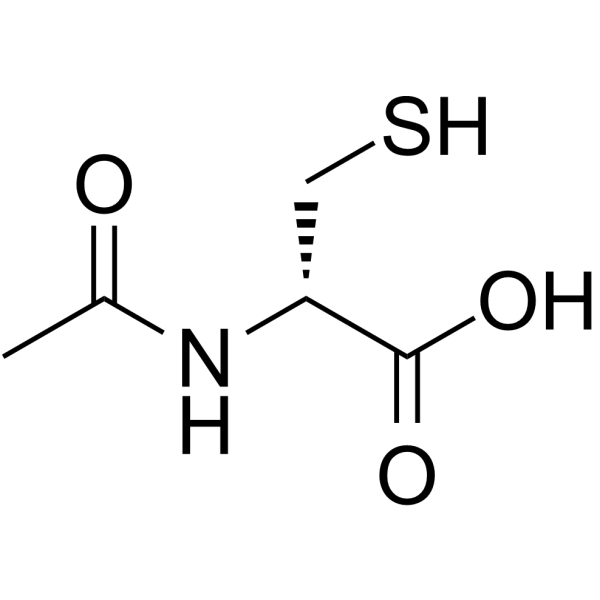
    N-Acetyl-D-cysteine
    3 Publications Verification

    Reactive Oxygen Species (ROS) Others
    N-Acetyl-D-cysteine has antioxidant activities and scavenges ROS through the reaction with its thiol group, but cannot enter the glutathione metabolic pathway .
    N-Acetyl-D-cysteine
  • HY-P990794

    TNF Receptor Dengue Virus Infection Inflammation/Immunology Cancer
    Anti-Mouse TNF-alpha/TNFSF2 Antibody (XT3.11) is a rat-derived IgG1 antibody inhibitor, targeting to TNF-alpha/TNFSF2. Anti-Mouse TNF-alpha/TNFSF2 Antibody (XT3.11) neutralizes of TNF-alpha. Anti-Mouse TNF-alpha/TNFSF2 Antibody (XT3.11) can be used for the researches of cancer, infection and immunology, such as dengue virus and B16K1 tumor .
    Anti-Mouse TNF-alpha/TNFSF2 Antibody (XT3.11)
  • HY-B1777AS

    Isotope-Labeled Compounds Endogenous Metabolite Reactive Oxygen Species (ROS) Bacterial DNA/RNA Synthesis Metabolic Disease
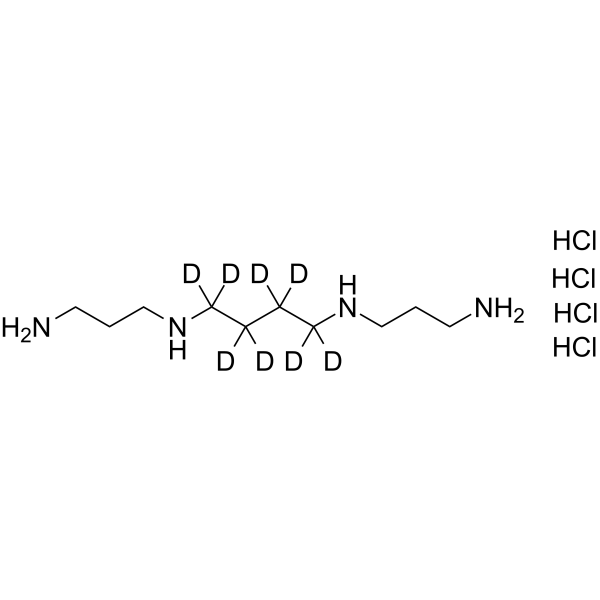
    Spermine-d8 (tetrahydrochloride) is the deuterium labeled Spermine tetrahydrochloride. Spermine tetrahydrochloride is a polyamine nitric oxide donor that can provide nitric oxide to platelets and inhibit platelet activation to a certain extent concentration-dependently. Spermine tetrahydrochloride occurs in mammalian tissues, plants, bacteria, ribosomes and bacteriophage. Spermine tetrahydrochloride inhibits primary human embryo lung fibroblasts in vitro. Spermine is a natural antioxidant and anti-inflammatory agent. Spermine is known to inhibit some bacterial cultures, especially strains of Staphylococcus aureus. Spermine induces neurotoxicity in the striarum dose-dependently. Spermine can reversibly inhibits DNA synthetic response, mixed lymphocyte response and the induction of cytolytic lymphocyte response in primary cultures of murine spleen cells .
    Spermine-d8 tetrahydrochloride
  • HY-B1777A
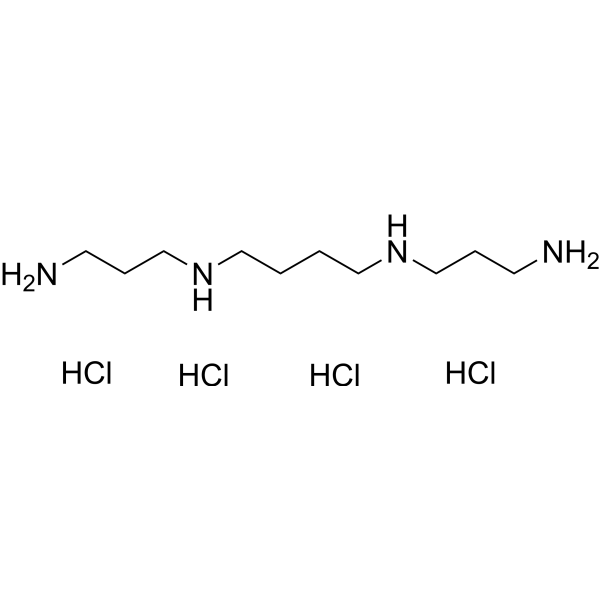
    Spermine tetrahydrochloride
    Maximum Cited Publications
    8 Publications Verification

    Endogenous Metabolite Bacterial Reactive Oxygen Species (ROS) DNA/RNA Synthesis Infection Neurological Disease Inflammation/Immunology
    Spermine tetrahydrochloride is a polyamine nitric oxide donor that can provide nitric oxide to platelets and inhibit platelet activation to a certain extent concentration-dependently. Spermine tetrahydrochloride occurs in mammalian tissues, plants, bacteria, ribosomes and bacteriophage. Spermine tetrahydrochloride inhibits primary human embryo lung fibroblasts in vitro. Spermine is a natural antioxidant and anti-inflammatory agent. Spermine is known to inhibit some bacterial cultures, especially strains of Staphylococcus aureus. Spermine induces neurotoxicity in the striarum dose-dependently. Spermine can reversibly inhibits DNA synthetic response, mixed lymphocyte response and the induction of cytolytic lymphocyte response in primary cultures of murine spleen cells .
    Spermine tetrahydrochloride
  • HY-N9480
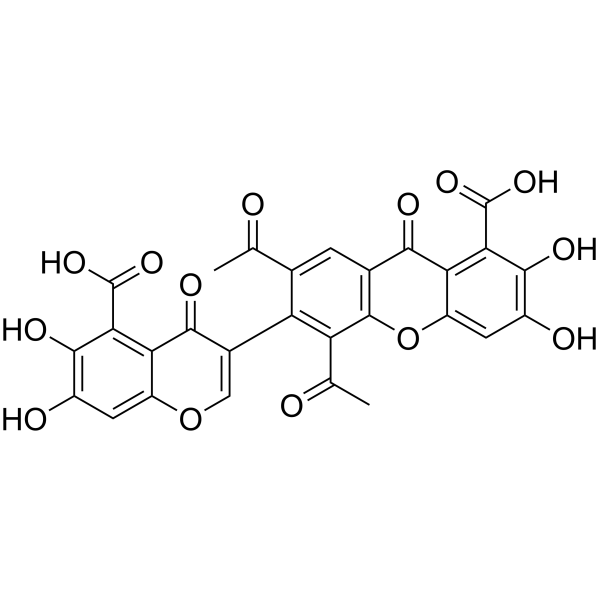
    Vinaxanthone
    3 Publications Verification

    SM-345431

    Phospholipase Bacterial Infection Cancer
    Vinaxanthone (SM-345431) is a potent and selective semaphorin3A, phospholipase C (PLC) and FabI inhibitor, with IC50s of 0.1-0.2 μM and 0.9 mM for semaphorin3A and FabI. Vinaxanthone inhibits the substrate (t-o-NAC thioester) and the cofactor (NADPH) with Kis of 3.1 μM and 1.0 μM, respectively. Vinaxanthone can be used to handle infections caused by multidrug-resistant pathogens .
    Vinaxanthone
  • HY-168034

    STING Integrin NF-κB SARS-CoV Infection Inflammation/Immunology
    diABZI-4 is a STING activator and broad-spectrum antiviral agent with immunostimulatory activity. diABZI-4 triggers the TBK1-IRF3 and NF-κB signaling cascades by inducing STING oligomerization, thereby promoting the production of type I/III interferons and various proinflammatory cytokines. diABZI-4 exhibits broad-spectrum antiviral activity and effectively inhibits the replication of influenza A virus, SARS-CoV-2, herpes simplex virus, and other viruses. diABZI-4 also activates lymphocytes and macrophages to provide significant pre- and post-exposure protection in viral disease models. diABZI-4 can be used to study COVID-19, respiratory viral infections, and related immunopathological mechanisms .
    diABZI-4
  • HY-P991267

    Interleukin Related Inflammation/Immunology
    CAN10 is is a humanized monoclonal antibody inhibitor targeting interleukin 1RAP (IL1RAP). CAN10 blocks IL-1, IL-33, and IL-36 signalling by targeting IL1RAP, preventing downstream proinflammatory and profibrotic responses. CAN10 reduces dermal and pulmonary fibrosis. CAN10 can be used for the research of immune system diseases, such as systemic sclerosis .
    CAN10
  • HY-173189A

    2′,5′-ApApA pentasodium; 2′,5′-trioligoadenylate pentasodium; 5'-O-Triphosphoryladenylyl-(2'→5')-adenylyl-(2'→5')-adenosine pentasodium

    RSV DNA/RNA Synthesis Infection Cancer
    2-5A (2′,5′-ApApA) pentasodium solution 100 mM is a high-affinity (Ka=0.04 nM) RNase L binder. 2-5A pentasodium solution 100 mM activates the nuclease activity of latent RNase L to cleave single-stranded RNA by inducing conformational changes and dimerization of latent RNase L, thereby mediating critical antiviral responses and enhancing interferon effects. 2-5A pentasodium solution 100 mM not only effectively inhibits Rauscher murine leukemia virus replication, reduces viremia and splenomegaly, but also enhances antileukemic efficacy when combined with amphotericin B and exhibits favorable high-dose tolerance. 2-5A pentasodium solution 100 mM is an important tool molecule for investigating the pathological mechanisms of viral infection, hereditary prostate cancer and leukemia .
    2-5A pentasodium solution (100 mM)
  • HY-N2217

    Akt mTOR p38 MAPK Apoptosis Phosphatase Interleukin Related NF-κB PI3K Keap1-Nrf2 Heme Oxygenase (HO) Toll-like Receptor (TLR) Reactive Oxygen Species (ROS) Metabolic Disease Inflammation/Immunology Cancer
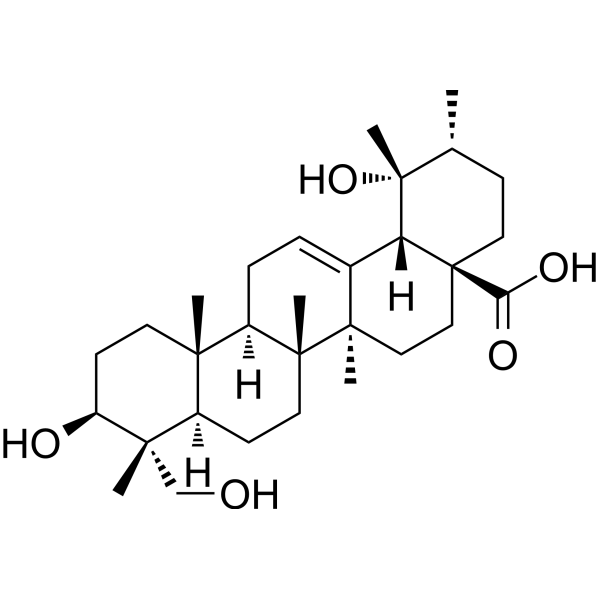
    Rotundic acid is an orally effective triterpenoid with a Kd value of 51.3 µM for PTP1B. Rotundic acid downregulates the AKT/mTOR pro-survival pathway and modulates the MAPK pathway. Rotundic acid induces cell cycle S-phase arrest, DNA damage and apoptosis; it inhibits migration, invasion, angiogenesis and proliferation of cancer cells. Rotundic acid improves leptin sensitivity, regulates gut microbiota and reduces cellular senescence. Rotundic acid can be used in research related to hepatocellular carcinoma, obesity, aging, acute lung injury and type 2 diabetes .
    Rotundic acid
  • HY-160222

    HSV STING IFNAR NF-κB Infection
    HSV-60mer sodium is a 60 bp double-stranded DNA oligonucleotide derived from the HSV-1 genome, and also an IFNβ inducer. HSV-60mer sodium colocalizes with endogenous cytoplasmic IFI16 in immune cells. HSV-60mer sodium activates the transcription factors IRF3 and NF-κB, induces the production of proinflammatory cytokines, and inhibits HSV-1 replication in immune cells. HSV-60mer sodium can be used in studies related to herpes simplex virus type 1 infection .
    HSV-60mer sodium
  • HY-W177546

    Phosphodiesterase (PDE) Apoptosis Caspase DNA/RNA Synthesis Cancer
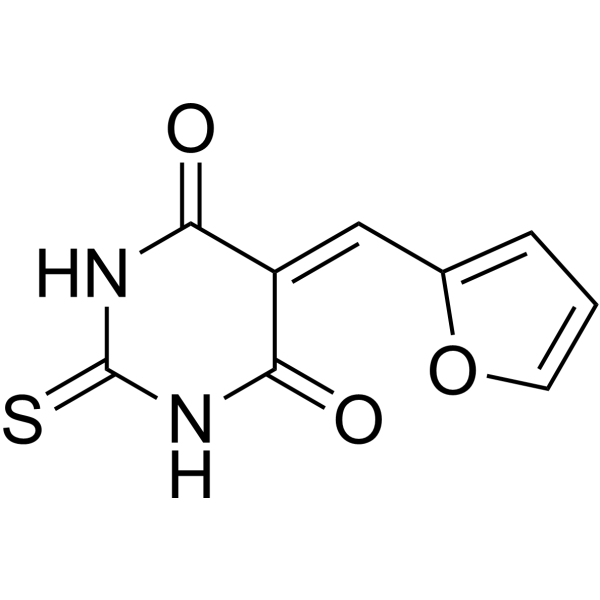
    CD00509 is a tyrosyl-DNA phosphodiesterase (PDE) Tdp1 inhibitor with an IC50 of 0.71 μM. CD00509 increases DNA damage and promotes apoptosis of MCF-7 cells. CD00509 can sensitize breast cancer cells and wild-type murine embryonic fibroblasts (MEFs) to Camptothecin (CPT) (HY-16560). CD00509 can be used for the study of cancers such as breast cancer .
    CD00509
  • HY-125987

    Ras Cancer
    RBC6 is an inhibitor of GTPases RalA. RBC6 inhibits binding of Ral to its effector RALBP1. RBC6 also inhibits Ral-mediated cell spreading of murine embryonic fibroblasts, as well as anchorage-independent growth of human cancer celllines .
    RBC6
  • HY-134467

    Parasite NO Synthase Infection
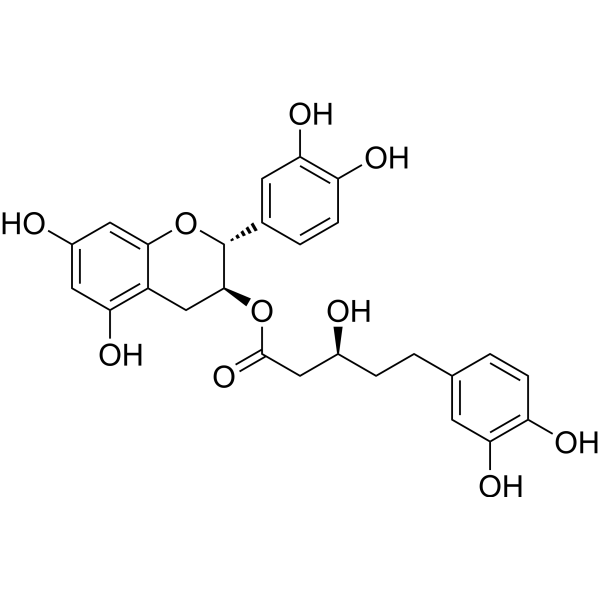
    Phylloflavan is an antileishmanial (Antileishmanial) agent with an EC50 of 3.2 nM against intracellular amastigotes of Leishmania donovani. Phylloflavan is isolated from Phyllocldus plants. Phylloflavan induces moderate levels of NO release. Phylloflavan also inhibits the cytopathic effect of encephalomyocarditis virus on L929 fibroblasts (38 U/mL) .
    Phylloflavan
  • HY-W001939

    Biochemical Assay Reagents Cancer
    4-Acetylbenzoic acid is a Zn(II) complex. 4-Acetylbenzoic acid is a derivative of benzoic acid that is commonly used in chemical synthesis. 4-Acetylbenzoic acid has an IC50 of 331.3 μM in murine L929 fibroblasts and an IC50 of 176 μM in metastatic melanoma B16 F10 cell lines .
    4-Acetylbenzoic acid
  • HY-N16535

    Apoptosis Caspase Mitochondrial Metabolism Reactive Oxygen Species (ROS) Cancer
    Stigmalactam is an aristolactam-type alkaloid extracted from Orophea enterocarpa with anticancer effects. Stigmalactam induces apoptosis via the mitochondrial pathway, with the activation of caspase-3/9, and a decrease in mitochondrial membrane potential (MTP). Stigmalactam exhibits antioxidant activity by decreasing ROS production. Stigmalactam can be used for liver and breast cancer research .
    Stigmalactam
  • HY-B1777S

    NSC 268508-15N2; Neuridine-15N2

    Isotope-Labeled Compounds Endogenous Metabolite Bacterial Reactive Oxygen Species (ROS) DNA/RNA Synthesis Infection Neurological Disease Inflammation/Immunology
    Spermine- 15N2 (NSC 268508- 15N2) is the 15N-labeled Spermine (HY-B1777). Spermine is a natural antioxidant and anti-inflammatory agent. Spermine is known to inhibit some bacterial cultures, especially strains of Staphylococcus aureus. Spermine induces neurotoxicity in the striarum dose-dependently. Spermine can reversibly inhibits DNA synthetic response, mixed lymphocyte response and the induction of cytolytic lymphocyte response in primary cultures of murine spleen cells. Spermine tetrahydrochloride is a polyamine nitric oxide donor that can provide nitric oxide to platelets and inhibit platelet activation to a certain extent concentration-dependently. Spermine tetrahydrochloride occurs in mammalian tissues, plants, bacteria, ribosomes and bacteriophage. Spermine tetrahydrochloride inhibits primary human embryo lung fibroblasts in vitro .
    Spermine-15N2
  • HY-161921

    Fungal Infection
    Antifungal agent 108 (compound 14d), an original imidazo[1,2-b]pyridazine derivative, shows potent antifungal activity against Madurella mycetomatis (MM55 strain) with an IC50 of 0.9 μM. Antifungal agent 108 exhibits an IC50 of 14.3 μM on cell viability of NIH-3T3 murine fibroblast .
    Antifungal agent 108
  • HY-123464

    Ras Cancer
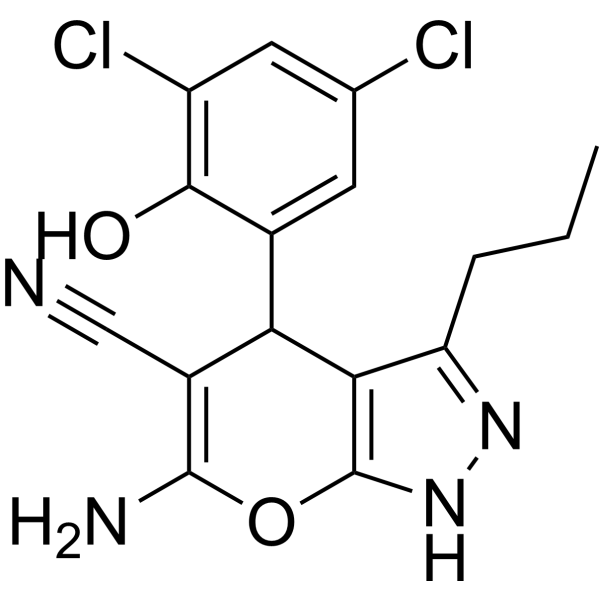
    RBC10 is an anti-cancer agent. RBC10 inhibits the binding of Ral to its effector RALBP1. RBC10 also inhibits Ral-mediated cell spreading of murine embryonic fibroblasts and anchorage-independent growth of human cancer cell lines .
    RBC10
  • HY-136386R

    Reference Standards Reactive Oxygen Species (ROS) Others
    N-Acetyl-D-cysteine (Standard) is the analytical standard of N-Acetyl-D-cysteine. This product is intended for research and analytical applications. N-Acetyl-D-cysteine has antioxidant activities and scavenges ROS through the reaction with its thiol group, but cannot enter the glutathione metabolic pathway .
    N-Acetyl-D-cysteine (Standard)
  • HY-W001939R

    Biochemical Assay Reagents Reference Standards Cancer
    4-Acetylbenzoic acid (Standard) is the analytical standard of 4-Acetylbenzoic acid. This product is intended for research and analytical applications. 4-Acetylbenzoic acid is a Zn(II) complex. 4-Acetylbenzoic acid is a derivative of benzoic acid that is commonly used in chemical synthesis. 4-Acetylbenzoic acid has an IC50 of 331.3 μM in murine L929 fibroblasts and an IC50 of 176 μM in metastatic melanoma B16 F10 cell lines .
    4-Acetylbenzoic acid (Standard)
  • HY-B1777AR

    Reference Standards Endogenous Metabolite Bacterial Reactive Oxygen Species (ROS) DNA/RNA Synthesis Infection Neurological Disease Inflammation/Immunology
    Spermine (tetrahydrochloride) (Standard) is the analytical standard of Spermine (tetrahydrochloride). This product is intended for research and analytical applications. Spermine tetrahydrochloride is a polyamine nitric oxide donor that can provide nitric oxide to platelets and inhibit platelet activation to a certain extent concentration-dependently. Spermine tetrahydrochloride occurs in mammalian tissues, plants, bacteria, ribosomes and bacteriophage. Spermine tetrahydrochloride inhibits primary human embryo lung fibroblasts in vitro. Spermine is a natural antioxidant and anti-inflammatory agent. Spermine is known to inhibit some bacterial cultures, especially strains of Staphylococcus aureus. Spermine induces neurotoxicity in the striarum dose-dependently. Spermine can reversibly inhibits DNA synthetic response, mixed lymphocyte response and the induction of cytolytic lymphocyte response in primary cultures of murine spleen cells .
    Spermine tetrahydrochloride (Standard)
  • HY-P991815

    Transmembrane Glycoprotein Inflammation/Immunology
    Anti-Mouse CD90.1 Antibody (OX-7) reacts with the mouse and rat CD90.1. CD90 is present on a variety of cell types in murine and rat, including lymphatic vessels, T cells, neurons and fibroblasts. Recommend Isotype Controls: Mouse IgG1 kappa, Isotype Control (HY-P99977) .
    Anti-Mouse CD90.1 Antibody (OX-7)
  • HY-N19294

    Others Cancer
    Hancockiamide A is a compound found in the Australian soil fungus Aspergillus hancockii. Hancockiamide A inhibits tumor cell viability and inactivity against fibroblasts. Hancockiamide A can be used for the research of myeloma .
    Hancockiamide A
  • HY-183789

    CDK Apoptosis Cancer
    CDK2-IN-59 is a CDK2 inhibitor with a IC50 of 66.33 μM. CDK2-IN-59 stably interacts within the CDK2 active site and induces apoptosis in breast cancer cells. CDK2-IN-59 can be used for the research of breast cancer .
    CDK2-IN-59
  • HY-P992076

    TGF-β Receptor TGF-beta/Smad Cholinesterase (ChE) Fungal Infection Cancer
    Anti-Candida auris β-1,3-glucans Antibody (2G8) is an antibody targeting Candida auris β-1,3-glucans, and also acts as an inhibitor of AChE and TGF-β receptor 2. Anti-Candida auris β-1,3-glucans Antibody (2G8) also targets fungal cell wall components, effectively inhibits fungal growth and interferes with capsule formation, thereby significantly reducing the fungal load in mouse tissues. Anti-Candida auris β-1,3-glucans Antibody (2G8) not only blocks TGF-β receptor binding to inhibit the Smad signaling pathway, reduces fibroblast activation and collagen deposition, but also induces epithelial differentiation of tumor cells and reduces pancreatic tumor metastasis. Anti-Candida auris β-1,3-glucans Antibody (2G8) specifically binds to the conserved N-linked glycoepitope on AChE to inhibit its activity without interfering with BChE, and can be used in studies of cryptococcosis and related tumor mechanisms .The isotype control is Human IgG1 kappa, Isotype Control (HY-P99001).
    Anti-Candida auris β-1, 3 glucans Antibody (2G8)
  • HY-W353842

    Bacterial Interleukin Related Infection
    Octyl decyldimethyl ammonium chloride, a quaternary ammonium salt, is an antibacterial agent. Octyl decyldimethyl ammonium chloride disrupts cell membranes, leading to cytotoxicity. Octyl decyldimethyl ammonium chloride has risk of skin irritation and increases pro-inflammatory IL-1α secretion .
    Octyl decyldimethyl ammonium chloride
  • HY-P992379

    BAG3-H2L4

    Bcl-2 Family Cancer
    IB001 is a humanized anti-BAG3 antibody that inhibits BAG3, with a KD value of 14.4 nM for human BAG3. IB001 blocks BAG3-dependent monocyte/macrophage activation, interferes with the interaction between BAG3 and IFITM-2, and disrupts tumor microenvironment signaling pathways. IB001 inhibits tumor growth, reduces α-SMA-positive fibroblasts, and blocks BAG3-dependent IL-6 release. IB001 accumulates in a time-dependent manner in pancreatic ductal adenocarcinoma tumors. IB001 can be used for research related to pancreatic ductal adenocarcinoma .
    IB001
  • HY-183308

    Fungal Infection
    Antifungal agent-161 (Compound 7) is an Antifungal agent. Antifungal agent-161 potently inhibits Candida albicans ATCC 36082 (with a MIC of 1.32 μM) and Candida glabrata ATCC 2001 (with a MIC of 1.66 μM). Antifungal agent-161 reduces fungal loads in infected mice and eliminates Candida albicans and Candida glabrata infections. Antifungal agent-161 can be used for the research of candidiasis .
    Antifungal agent-161
  • HY-W701798

    (S)-Tritopin; D-Laudanine

    Drug Derivative Others
    (+)-Laudanidine ((S)-Tritopin) is a benzyltetrahydroisoquinoline alkaloid found in Stephania species .
    (+)-Laudanidine

Inquiry Online

Your information is safe with us. * Required Fields.

Salutation


Country or Region *

Applicant Name *


Organization Name *

Department *


Email Address *


Product Name *

Cat. No.


Requested quantity *

Phone Number *


Remarks

Inquiry Online

Inquiry Information

Product Name:
Cat. No.:
Quantity:
MCE Japan Authorized Agent:

