

1. Search Result
Search Result
Results for "

neuroblastoma model

" in MedChemExpress (MCE) Product Catalog:

32

Inhibitors & Agonists

1

Fluorescent Dyes

2

Inhibitory Antibodies

2

Oligonucleotides

Targets Recommended:
Cat. No. Product Name Target Research Areas Chemical Structure
  • HY-P9933

    APN-311; Ch14.18; MAb-14.18

    Apoptosis PERK mTOR Cancer
    Dinutuximab (APN-311) is a chimeric human-mouse anti-GD2 monoclonal antibody. Dinutuximab can bind to GD2 on the cell surface, triggering antibody-dependent cell-mediated cytotoxicity and complement-dependent cytotoxicity, and promoting tumor regression. Dinutuximab can inhibit the growth, invasion, and migration and induce apoptosis of tumor cells. Dinutuximab can be used in the research of tumors such as neuroblastoma and breast cancer .
    Dinutuximab
  • HY-107643

    CBLC4H10

    P-glycoprotein Cancer
    Reversan (CBLC4H10) inhibits drug efflux mediated by P-glycoprotein (Pgp) and multidrug resistance protein 1 (MRP1), and exhibits oral activity. Reversan shows activity against glioblastoma multiforme and neuroblastoma models .
    Reversan
  • HY-164285

    IMP1320

    ADC Payload N-myristoyltransferase Cancer
    MYX1715 is an inhibitor of N-Myristoyltransferase (NMT) with a KD value of 0.09 nM. MYX1715 inhibits the proliferation of LU0884 and LU2511 with IC50 values of 44 nM and 9 nM. MYX1715 exhibits antitumor efficacy against neuroblastoma and gastric cancer in mouse models. MYX1715 can be used as ADC toxin .
    MYX1715
  • HY-145729

    AZD9150

    STAT Apoptosis Cancer
    Danvatirsen (AZD9150) is an antisense oligonucleotide targeting STAT3. Danvatirsen reduces the viability and promotes apoptosis of leukemia cell lines. Danvatirsen inhibits the expression of endogenous STAT3 and its downstream target genes, and reduces the proliferation and tumorigenicity of neuroblastoma and lymphoma cells. Danvatirsen inhibited tumor growth in mouse models of neuroblastoma, lymphoma, and non-small cell lung cancer. Danvatirsen achieves STAT3 mRNA and protein depletion in a mouse model of epidermoid carcinoma. Danvatirsen can be used in research related to lymphoma, myelodysplastic syndrome, acute myeloid leukemia, neuroblastoma and non-small cell lung cancer .
    Danvatirsen
  • HY-17493
    MI-773
    5+ Cited Publications

    MDM-2/p53 Apoptosis Neurological Disease Cancer
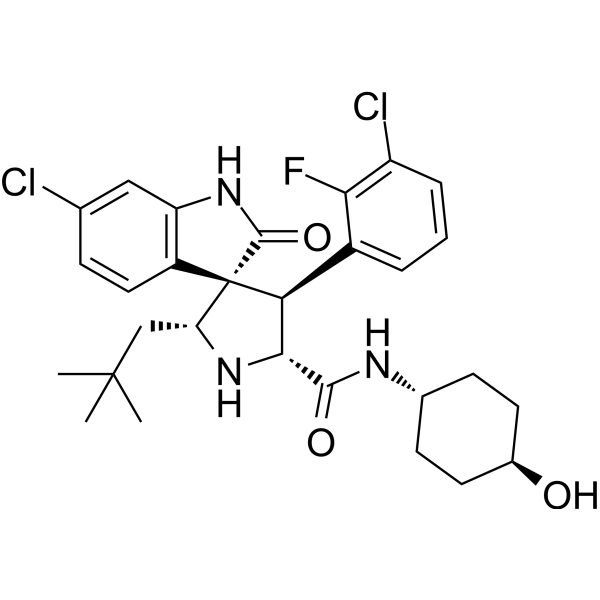
    MI-773 is an orally active, selective MDM2-p53 interaction inhibitor with a Ki of 0.88 nM for MDM2. MI-773 blocks the MDM2-TP53 interaction. MI-773 potently activates p53. MI-773 induces Apoptosis. MI-773 causes tumor regression in xenograft models of adenoid cystic carcinoma. MI-773 exhibits anticancer effects in neuroblastoma. MI-773 TFA can be used for the research of adenoid cystic carcinoma .
    MI-773
  • HY-119357

    Microtubule/Tubulin Apoptosis Autophagy Neurological Disease Cancer
    TN-16 is a Microtubule polymerization inhibitor. TN-16 induces G2/M cell cycle arrest, metaphase mitotic arrest and Apoptotic cell death in cells, and blocks late Autophagic flux by inhibiting autophagosome-lysosome fusion. TN-16 suppresses tumor growth in syngeneic mouse breast cancer models. TN-16 can be used in research related to neuroblastoma, cervical cancer, breast cancer and other tumors .
    TN-16
  • HY-145729A

    AZD9150 sodium

    STAT Apoptosis Cancer
    Danvatirsen sodium (AZD9150 sodium) is an antisense oligonucleotide targeting STAT3. Danvatirsen sodium reduces the viability and promotes apoptosis of leukemia cell lines. Danvatirsen sodium inhibits the expression of endogenous STAT3 and its downstream target genes, and reduces the proliferation and tumorigenicity of neuroblastoma and lymphoma cells. Danvatirsen sodium inhibited tumor growth in mouse models of neuroblastoma, lymphoma, and non-small cell lung cancer. Danvatirsen sodium achieves STAT3 mRNA and protein depletion in a mouse model of epidermoid carcinoma. Danvatirsen sodium can be used in research related to lymphoma, myelodysplastic syndrome, acute myeloid leukemia, neuroblastoma and non-small cell lung cancer .
    Danvatirsen sodium
  • HY-172609

    Phosphatase Apoptosis MDM-2/p53 Caspase Metabolic Disease Cancer
    SL-176 is a PPM1D (Wip1) inhibitor. SL-176 inhibits lipid droplet formation, downregulates the mRNA and protein expression of PPARγ and C/EBPα, and blocks adipocyte differentiation. SL-176 induces G2/M cell cycle arrest, apoptosis and inhibits cell proliferation in breast cancer cells overexpressing PPM1D, and activates components of the p53 pathway. SL-176 suppresses tumor growth in a zebrafish model of neuroblastoma. SL-176 is applicable to research related to obesity, breast cancer and neuroblastoma .
    SL-176
  • HY-130495

    CDDO-Trifluoethyl amide; RTA 404; TP-500

    Keap1-Nrf2 Apoptosis Cancer
    CDDO-TFEA (RTA 404; TP-500) is a trifluoroacetamide derivative of CDDO with enhanced ability to cross the blood-brain barrier. CDDO is an Nrf2 activator that inhibits proliferation and induces differentiation and apoptosis in various cancer cells. CDDO-TFEA can enhance Nrf2 expression and signaling in various neurodegenerative disease models, including those mimicking multiple sclerosis, amyotrophic lateral sclerosis, and Huntington's disease. CDDO-TFEA induces apoptosis and blocks colony formation in Ewing's sarcoma and neuroblastoma cell lines with IC50 values ranging from 85-170 nM.
    CDDO-TFEA
  • HY-157169

    AMU302

    Pim mTOR Akt PI3K Cancer
    IBL-302 (AMU302) is an orally available dual-signaling inhibitor of PIM and PI3K/AKT/mTOR with activity against breast cancer and neuroblastoma. IBL-302 demonstrated in vivo efficacy in a nude mouse xenograft model, inhibiting trastuzumab (HY-P9907) resistance challenges. IBL-302 also enhances the effects of common cytotoxic chemotherapy drugs cisplatin (HY-17394), doxorubicin (HY-15142A), and etoposide (HY-13629) .
    IBL-302
  • HY-176869

    Drug Derivative Cancer
    EMC-AANL-DOX is a legumain-activated prodrug conjugate of Doxorubicin (DOX) (HY-15142A). EMC-AANL-DOX shows antitumor activity in mouse models of neuroblastoma (NB), breast cancer (4T1), fibrosarcoma (HT1080), and colorectal cancer liver metastases (CT26). EMC-AANL-DOX can be used for cancer research .
    EMC-AANL-DOX
  • HY-P990257

    c-Fms Cancer
    Anti-Mouse CSF1 Antibody (5A1) is a rat-derived anti-mouse CSF1 IgG1 κ type antibody inhibitor. Anti-Mouse CSF1 Antibody (5A1) can inhibit cells proliferation and macrophage-induced invasion. Anti-Mouse CSF1 Antibody (5A1) shows potent anti-tumor effect in various tumor models, such as neuroblastoma .
    Anti-Mouse CSF1 Antibody (5A1)
  • HY-18030A

    Anaplastic lymphoma kinase (ALK) Cancer
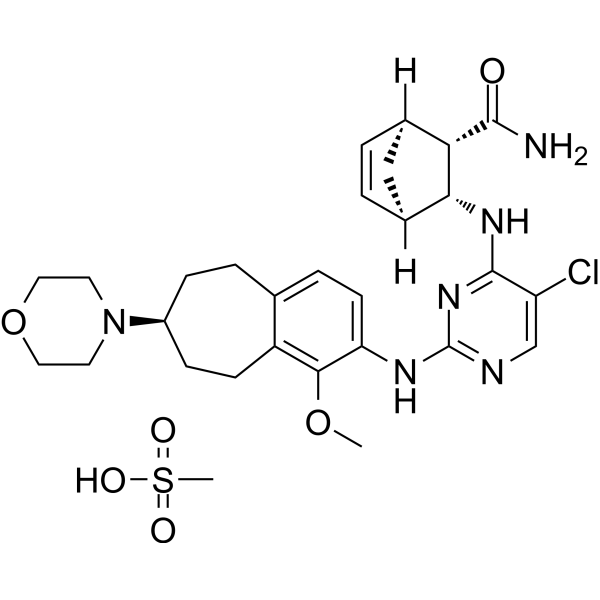
    CEP-28122 mesylate salt, a diaminopyrimidine derivative, is a potent, selective, and orally active ALK inhibitor with an IC50 value of 1.9 nM. CEP-28122 mesylate salt has antitumor activity in experimental models of ALK-positive human cancers. CEP-28122 mesylate salt has good pharmacodynamic and pharmacokinetic activity. CEP-28122 mesylate salt can be used for the study of ALK-positive anaplastic large-cell lymphoma (ALCL), non-small cell lung cancer (NSCLC), and neuroblastoma cells .
    CEP-28122 mesylate salt
  • HY-18030

    Anaplastic lymphoma kinase (ALK) Cancer
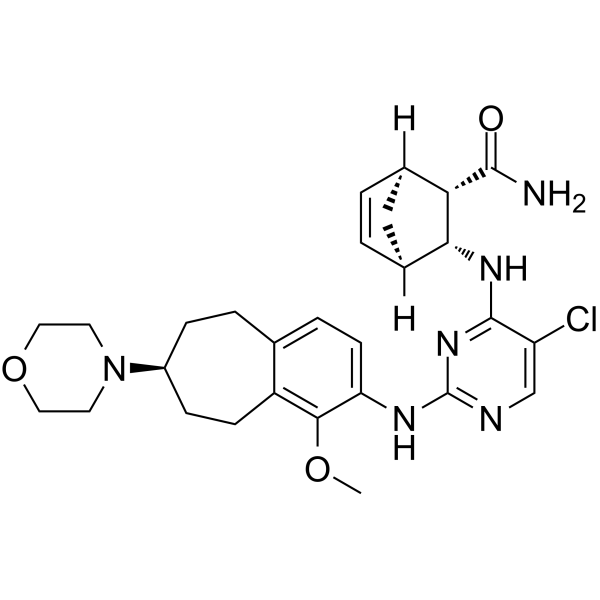
    CEP-28122, a diaminopyrimidine derivative, is a potent, selective, and orally active ALK inhibitor with an IC50 value of 1.9 nM. CEP-28122 has antitumor activity in experimental models of ALK-positive human cancers. CEP-28122 has good pharmacodynamic and pharmacokinetic activity. CEP-28122 can be used for the study of ALK-positive anaplastic large-cell lymphoma (ALCL), non-small cell lung cancer (NSCLC), and neuroblastoma cells .
    CEP-28122
  • HY-116861

    MetAP Cancer
    A-357300 is a reversible and selective MetAP2 inhibitor with IC50s of 0.12 and 57 μM against MetAP2 and MetAP1. A-357300 induces cytostasis by cell cycle arrest at the G1 phase selectively in endothelial cells and in a subset of tumor cells. A-357300 inhibits angiogenesis both in vitro and in vivo and shows potent antitumor efficacy in carcinoma, sarcoma, and neuroblastoma murine models. A-357300 can be used for the studies of neuroblastoma, fibrosarcoma and breast cancer .
    A-357300
  • HY-105369

    Anaplastic lymphoma kinase (ALK) Apoptosis Cancer
    KF-20444 is an orally active ALK inhibitor with blood-brain barrier penetration. KF-20444 exhibits strong inhibitory activity against ALK fusion proteins (EML4-ALK) and ALK resistance mutations (including L1196M, G1202R, and F1174L). KF-20444 effectively suppresses the phosphorylation of ALK in ALK-driven cancer cell lines, thereby inhibiting cancer cell proliferation and inducing apoptosis. KF-20444 demonstrates anti-tumor efficacy in mouse models bearing ALK-positive non-small cell lung cancer (NSCLC) or neuroblastoma. KF-20444 can be used for the study of ALK-driven malignancies .
    KF-20444
  • HY-175236

    PD-1/PD-L1 Apoptosis ERK JNK Cadherin p38 MAPK GSK-3 IFNAR Caspase Bcl-2 Family Cancer
    SF-9-2 is a PD-L1/PD-1 binding inhibitor (IC50 = 24.9 nM). SF-9-2 inhibits epithelial-mesenchymal transition, migration, invasion, and proliferation of SK-N-SH cells, and also induces apoptosis and cell cycle arrest. SF-9-2 blocks PD-L1-induced SK-N-SH cell growth through the MAPK signaling pathway. SF-9-2 restores GSK-3β activity and enhances PD-L1 degradation through the ubiquitin-proteasome pathway. SF-9-2 inhibits tumor growth in the SK-N-SH NOG mouse model without significant toxicity. SF-9-2 also acts as an immune checkpoint inhibitor, blocking PD-L1 to restore T cell function. SF-9-2 can be used in neuroblastoma research .
    SF-9-2
  • HY-174418

    Biochemical Assay Reagents Neurological Disease Inflammation/Immunology Cancer
    NM600 is an alkylphosphocholine mimetic RPT agent. NM600 demonstrates an antitumor activity against a second GD2+ neuroblastoma xenograft model with SY5Y cells. NM600 can enhance suboptimal CAR T cell efficacy against solid tumors. NM600 can be studied in research for neuroblastoma .
    NM600
  • HY-18030B

    Anaplastic lymphoma kinase (ALK) Others
    CEP-28122 mesylate hydrochloride, a diaminopyrimidine derivative, is a potent, selective, and orally active ALK inhibitor with an IC50 value of 1.9 nM. CEP-28122 mesylate hydrochloride has antitumor activity in experimental models of ALK-positive human cancers. CEP-28122 mesylate hydrochloride has good pharmacodynamic and pharmacokinetic activity. CEP-28122 mesylate hydrochloride can be used for the study of ALK-positive anaplastic large-cell lymphoma (ALCL), non-small cell lung cancer (NSCLC), and neuroblastoma cells .
    CEP-28122 mesylate hydrochloride
  • HY-150772

    Microtubule/Tubulin HDAC Apoptosis Mitochondrial Metabolism Cancer
    Tubulin/HDAC-IN-1 is a dual tubulin and HDAC-IN-1 inhibitor through CH/π interaction with tubulin and hydrogen bond interaction with HDAC8. Tubulin/HDAC-IN-1 inhibits tubulin polymerization and selectively inhibits HDAC8 (IC50: 150 nM). Tubulin/HDAC-IN-1 has cytotoxicity against various human cancer cells, also arrests cell cycle in the G2/M phase and induces cell apoptosis. Tubulin/HDAC-IN-1 can be used in the research of hematologic and solid tumors such as neuroblastoma, leukemia .
    Tubulin/HDAC-IN-1
  • HY-159945

    α-synuclein Neurological Disease
    Tau Protein/α-synuclein-IN-2 (Compound 14T) is a blood-brain barrier penetrating tau and α-syn inhibitor. Through its thiourea linker structure, Tau Protein/α-synuclein-IN-2 dose-dependently reduces α-syn oligomerization. In biosensor cells, Tau Protein/α-synuclein-IN-2 prevents the seeding effect of tau aggregation. In the M17D neuroblastoma model, Tau Protein/α-synuclein-IN-2 exhibits anti-inclusion effects. Additionally, Tau Protein/α-synuclein-IN-2 reduces plaque formation. Tau Protein/α-synuclein-IN-2 holds promise for Alzheimer's disease and Parkinson's disease research.
    tau Protein/α-synuclein-IN-2
  • HY-181167

    Cholinesterase (ChE) SOD Neurological Disease
    AChE/BChE-IN-34 is an acetylcholinesterase (AChE) and butyrylcholinesterase (BChE) inhibitor with IC50s of 5.97 μM and 4.57 μM, respectively. AChE/BChE-IN-34 functions as an antioxidant, oxidative stress inhibitor, reduces MDA levels, and elevates SOD and catalase in hippocampal tissue. AChE/BChE-IN-34 acts as a cognitive function enhancer, improves learning and memory in a Scopolamine (HY-N0296)-induced animal model. AChE/BChE-IN-34 is non-toxic in neuroblastoma cells across a specified concentration range. AChE/BChE-IN-34 can be used for the research of Alzheimer's disease .
    AChE/BChE-IN-34
  • HY-17493A
    MI-773 TFA
    5+ Cited Publications

    MDM-2/p53 Apoptosis Neurological Disease Cancer
    MI-773 TFA is an orally active, selective MDM2-p53 interaction inhibitor with a Ki of 0.88 nM for MDM2. MI-773 TFA blocks the MDM2-TP53 interaction. MI-773 TFA potently activates p53. MI-773 TFA induces Apoptosis. MI-773 TFA causes tumor regression in xenograft models of adenoid cystic carcinoma. MI-773 TFA exhibits anticancer effects in neuroblastoma. MI-773 TFA can be used for the research of adenoid cystic carcinoma .
    MI-773 TFA
  • HY-179375

    CDK Aurora Kinase Cancer
    LCI133 is afirst-in-class,nanomolar-potent, selective multikinase inhibitor targeting CDK4/6/9 and AURKA/B (IC50 = 4.7/10.2/4.1 nM and 2.8/10.6 nM). LCI133 induces S/G2 cell-cycle arrest and robust apoptosis in MYCN-amplified neuroblastoma BE(2)-C cells. LCI133 demonstrates significant antitumor efficacy in a BE(2)-C neuroblastoma xenograft model .
    LCI133
  • HY-107643R

    CBLC4H10 (Standard)

    Reference Standards P-glycoprotein Cancer
    Reversan (Standard) is the analytical standard of Reversan (HY-107643). This product is intended for research and analytical applications. Reversan (CBLC4H10) inhibits drug efflux mediated by P-glycoprotein (Pgp) and multidrug resistance protein 1 (MRP1), and exhibits oral activity. Reversan shows activity against glioblastoma multiforme and neuroblastoma models .
    Reversan (Standard)
  • HY-183632

    Microtubule/Tubulin Apoptosis Neurological Disease Cancer
    QW-5-70 is a potent colchicine‑site tubulin inhibitor that blocks tubulin polymerization. QW-5-70 induces mitotic and G2/M cell cycle arrest, triggers mitochondrial apoptosis, and suppresses cancer cell colony formation and migration. QW-5-70 overcomes P‑glycoprotein‑mediated multidrug resistance and inhibits drug‑resistant tumor growth. QW-5-70 demonstrates strong in vitro and in vivo antitumor efficacy in neuroblastoma and prostate cancer models. QW-5-70 can be used for the research of high-risk neuroblastoma and castration-resistant prostate cancer .
    QW-5-70
  • HY-185056

    Ferroptosis Fluorescent Dye Cardiovascular Disease Neurological Disease
    Ferfluor-1 is a Ferroptosis inhibitor (EC50 of 57 nM in HT108 cells; EC50 of 75 nM in OS-RC-2 cells; EC50 of 2.3 nM in SH-SY5Y neuroblastoma cells), and ratiometric photoluminescent probe with blood-brain barrier permeability. Ferfluor-1 is a specific indicator for the fluctuation of Ferroptosis. Ferfluor-1 alleviates brain disorder diseases of in vivo stroke and PD models .
    Ferfluor-1
  • HY-170515A

    E1/E2/E3 Enzyme SARS-CoV Infection Neurological Disease Cancer
    (E),(Z)-RNF5 agonist 1 (Compound Analog-1) is a RNF5 agonist that can enhance the ubiquitination and degradation of SARS-CoV-2 E protein by RNF5. (E),(Z)-RNF5 agonist 1 effectively inhibits the replication of SARS-CoV-2 and significantly alleviates pulmonary pathological damage and systemic inflammatory response in mouse infection models. (E),(Z)-RNF5 agonist 1 has a strong cytotoxic effect on neuroblastoma and melanoma. (E),(Z)-RNF5 agonist 1 can be used for research on anti-cancer and anti-viral purposes .
    (E),(Z)-RNF5 agonist 1
  • HY-181911

    Drug-Linker Conjugates for ADC NAMPT Neurological Disease
    L2-FK866 is an ADC payload-linker conjugate (Drug-linker conjugate for ADC). L2-FK866 contains the ADC linker (Val-Cit-p-aminobenzyl) and the NAMPT inhibitor FK866 (HY-50876). L2-FK866 can be conjugated with Dinutuximab (HY-P9933) to form an ADC. L2-FK866 is applicable to neuroblastoma research .
    L2-FK866
  • HY-182328

    Amyloid-β Neurological Disease
    BTA-EG6 is a brain-penetrant aggregated amyloid-β () peptide binder with a Kd of 290 nM for Aβ1-42. BTA-EG6 binds to aggregated Aβ and forms protein-resistive coatings that block interactions between Aβ and catalase. BTA-EG6 protects neuroblastoma cells from Aβ-induced toxicity and oxidative stress, and inhibits Aβ-induced increases in cellular hydrogen peroxide (H2O2) levels. BTA-EG6 can be used for the research of alzheimer’s disease (AD) .
    BTA-EG6
  • HY-D3250

    Fluorescent Dye NO Synthase Cardiovascular Disease
    PYSNO is a lysosome-targeted fluorescent probe based on a pyridazinone skeleton (λem=515-565 nm, λex=405 nm) that can be used to track nitric oxide (NO) production in vivo. PYSNO exhibits a rapid, highly sensitive and highly selective "turn-on" response to endogenous and exogenous NO by blocking photoinduced electron transfer and regulating radiative decay rates. PYSNO enables precise in vivo monitoring in a mouse model of myocardial fibrosis and can be applied to the research of related diseases .
    PYSNO
  • HY-182351

    Calcium Channel Neurological Disease
    ONO-2921 is an orally active and selective N-type calcium channel blocker. ONO-2921 functionally blocks N-type calcium channels. ONO-2921 reduces paw withdrawal responses during persistent nociception and hyperalgesia to heat in neuropathic pain models. ONO-2921 can be used for research on neuropathic pain and nociceptive pain .
    ONO-2921

Inquiry Online

Your information is safe with us. * Required Fields.

Salutation


Country or Region *

Applicant Name *


Organization Name *

Department *


Email Address *


Product Name *

Cat. No.


Requested quantity *

Phone Number *


Remarks

Inquiry Online

Inquiry Information

Product Name:
Cat. No.:
Quantity:
MCE Japan Authorized Agent:

