
1. Search Result
Search Result
Results for "

neuromuscular disease

" in MedChemExpress (MCE) Product Catalog:

19

Inhibitors & Agonists

1

Biochemical Assay Reagents

3

Inhibitory Antibodies

1

Natural
Products

1

Isotope-Labeled Compounds

1

Oligonucleotides

Cat. No. Product Name Target Research Areas Chemical Structure
  • HY-14946

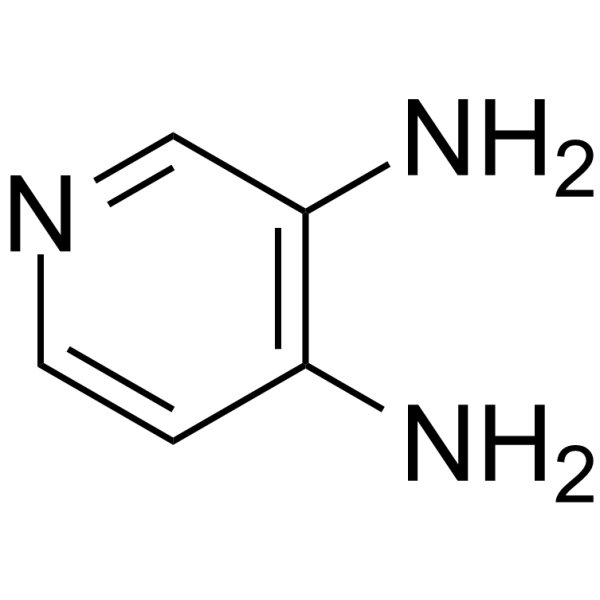
    3,4-Diaminopyridine

    Potassium Channel Neurological Disease
    Amifampridine (3,4-Diaminopyridine) is an orally active, potent and cell permeable voltage-gated potassium (Kv) channel blocker (PCB). Amifampridine is efficacy in the reversal of BoNT/A (HY-P79153) intoxication. Amifampridine increases transmitter release from neuromuscular junctions (NMJs). Amifampridine can be used for Lambert-Eaton myasthenic syndrome (LEMS) research .
    Amifampridine
  • HY-P99441

    SRK-015

    TGF-beta/Smad Neurological Disease
    Apitegromab (SRK-015) is an anti-promyostatin monoclonal antibody. Apitegromab can be used for the research of neuromuscular disease including spinal muscular atrophy .
    Apitegromab
  • HY-N6018
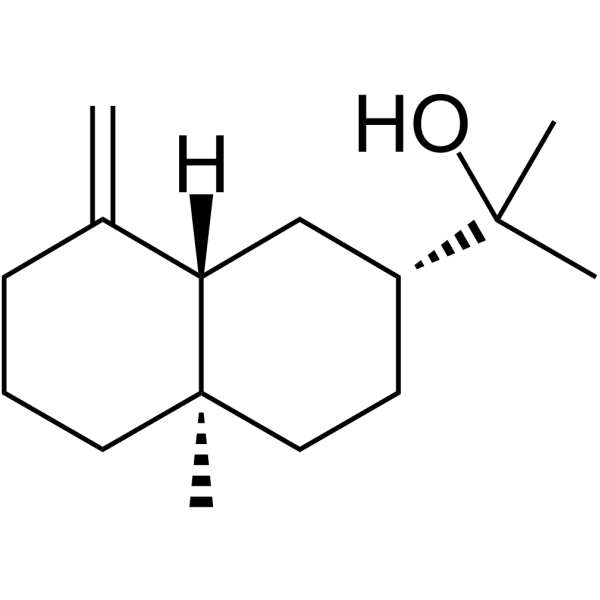
    β-Eudesmol
    1 Publications Verification

    Caspase TNF Receptor SOD Reactive Oxygen Species (ROS) Inflammation/Immunology Cancer
    β-Eudesmol has anticancer and anti-inflammatory activities. Beta-Eudesmol can induce apoptosis. β-Eudesmol is a neostigmine antagonist. β-Eudesmol can antagonize neostigmine-induced neuromuscular failure. β-Eudesmoll can be used in the study of sepsis diseases. β-Eudesmol is a sesquiterpene-like compound that can be extracted from the rhizome of Atractylodes lancea .
    β-Eudesmol
  • HY-P991066

    ARGX-119

    nAChR Neurological Disease
    ARGX-119 is a first-in-class humanized agonist monoclonal antibody specific for muscle-specific kinase (MuSK). ARGX-119 can be used for the study of neuromuscular diseases. The isotype control for ARGX-119 can refer to Human IgG1 lambda1, Isotype Control (HY-P99992) .
    Adimanebart
  • HY-170794

    Acyltransferase Ceramidase Metabolic Disease
    ALT-007 is an orally active serine palmitoyltransferase (SPT) inhibitor that selectively reduces the levels of toxic very-long-chain deoxysphingolipids to enhance protein homeostasis. ALT-007 restores aging-related loss of muscle mass in a mouse model of sarcopenia. ALT-007 enhances protein homeostasis in both mouse and C. elegans models of aging and disease. ALT-007 can be used for age-related neuromuscular diseases research .
    ALT-007
  • HY-W027553

    NIK-247 free base; Amiridine free base

    Cholinesterase (ChE) Potassium Channel Sodium Channel Neurological Disease Metabolic Disease
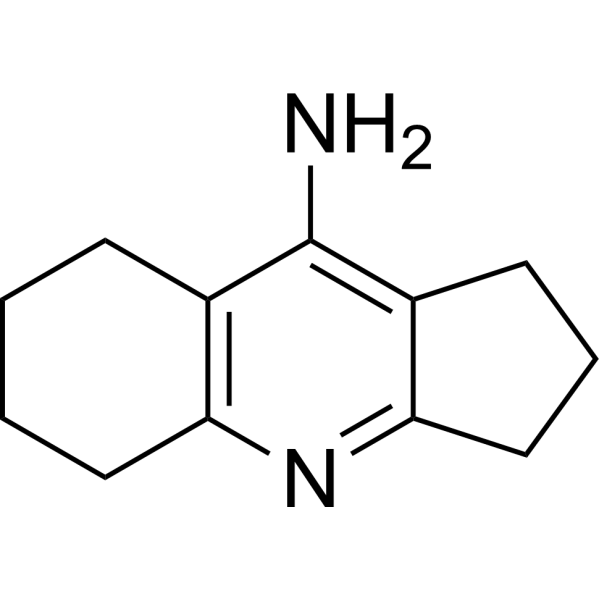
    Ipidacrine is orally active and brain-penetrant AChE and BuChE inhibitors with IC50 values of 1 μM and 1.9 μM, respectively, which is also a partial agonist of M2-cholinergic receptors and a reversible cholinesterase inhibitor. Ipidacrine has a stimulating effect on neuromuscular transmission and excitation along the nerve fibres with a moderately anti-pain effect. Ipidacrine is an aminopyridines and is structurally similar to Tacrine (HY-111338). Ipidacrine is effective in various amnesia models, improves erectile function and inhibits K + and Na +-channels in the neuronal membrane in diabetic rats. Ipidacrine is promising for research of Alzheimer’s disease, ischaemic stroke, idiopathic neuropathy of the facial nerve, diabetes mellitus-induced erectile dysfunction and other deficits in central or peripheral cholinergic deseases .
    Ipidacrine
  • HY-147332

    Liposome Neurological Disease
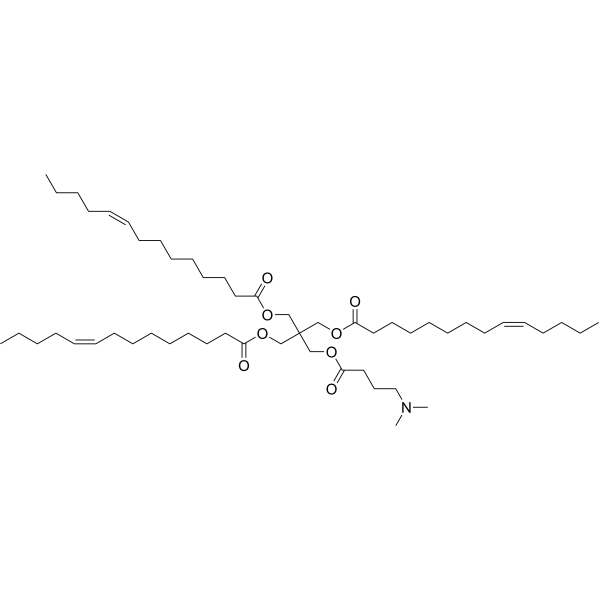
    TCL053 is an ionizable lipid carrier and used to introduce active components, in particular nucleic acids, into cells with excellent efriciency. TCL053, together with DPPC (Dipalmitoylphosphatidylcholine), PEG-DMG (Polyethylene glycoldimyristoyl glycerol), and cholesterol, forms lipid nanoparticle (LNP) which is able to deliver Cas9 mRNA and sgRNA into skeletal muscle .
    TCL053
  • HY-148629

    JNK Neurological Disease
    GDC-0134 (RG6000) is a modulator targeting dual leucine zipper kinase (DLK) that can cross the blood-brain barrier. By inhibiting the kinase activity of DLK, GDC-0134 blocks the activation of the downstream JNK signaling pathway, suppresses DLK-dependent retrograde signal transduction of axon-to-soma degeneration, and exerts neuroprotective activity. GDC-0134 reduces TDP-43 protein aggregation and decreases the degree of neuromuscular junction denervation in motor neurons. GDC-0134 can be used in the research of amyotrophic lateral sclerosis (ALS), Alzheimer's disease and other DLK-related neurodegenerative diseases .
    GDC-0134
  • HY-P991158

    TGF-β Receptor Neurological Disease
    Rinvatercept, a fusion protein, is a glycyl (1)-chimeric N-terminal (1-108)-peptide (2-109) combined from the sequences of the extracellular domains of the human ACVR2A/B, and is fused via a G3 peptide linker (110-112) to an immunoglobulin G1 (IgG1) Fc fragment. Rinvatercept can be used for research of neuromuscular disease .
    Rinvatercept
  • HY-172152

    FKBP Calcium Channel Neurological Disease
    MP-010 is a FKBP12 ligand that regulates cytosolic calcium by stabilizing RyR channel activity. MP-010 promotes functional improvement in SOD1 G93A amyotrophic lateral sclerosis (ALS) mice, as evidenced by improved motor coordination, increased integrity of neuromuscular junctions, and significantly enhanced survival of spinal motor neurons. MP-010 can be used for research in the field of neurological diseases .
    MP-010
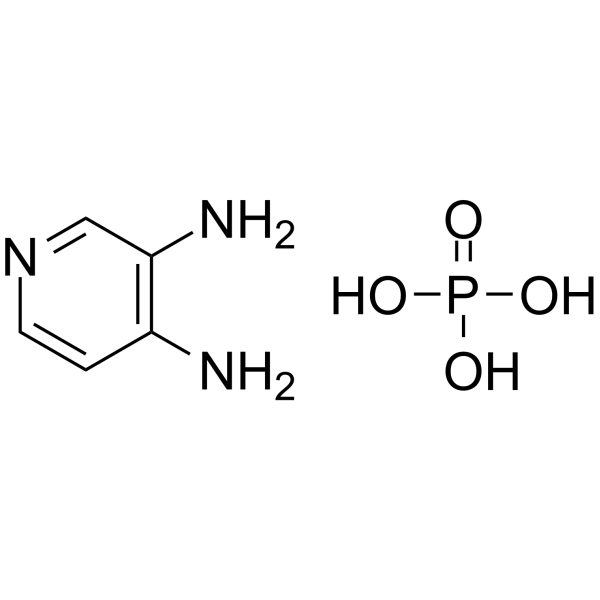
  • HY-14946A

    3,4-Diaminopyridine phosphate

    Potassium Channel Neurological Disease
    Amifampridine (3,4-Diaminopyridine) phosphate is an orally active, potent and cell permeable voltage-gated potassium (Kv) channel blocker (PCB). Amifampridine phosphate is efficacy in the reversal of BoNT/A (HY-P79153) intoxication. Amifampridine phosphate increases transmitter release from neuromuscular junctions (NMJs). Amifampridine phosphate can be used for Lambert-Eaton myasthenic syndrome (LEMS) research .
    Amifampridine phosphate
  • HY-W027553R

    NIK-247 free base (Standard); Amiridine free base (Standard)

    Reference Standards Cholinesterase (ChE) Potassium Channel Sodium Channel Neurological Disease Metabolic Disease
    Ipidacrine (Standard) is the analytical reference standard of Ipidacrine. This product is used for research and analytical applications. Ipidacrine is orally active and blood-brain-barrier-penetrant AChE and BuChE inhibitors with IC50 values of 1 μM and 1.9 μM, respectively, which is also a partial agonist of M2-cholinergic receptors and a reversible cholinesterase inhibitor. Ipidacrine has a stimulating effect on neuromuscular transmission and excitation along the nerve fibres with a moderately anti-pain effect. Ipidacrine is an aminopyridines and is structurally similar to Tacrine (HY-111338). Ipidacrine is effective in various amnesia models, improves erectile function and inhibits K + and Na +-channels in the neuronal membrane in diabetic rats. Ipidacrine is promising for research of Alzheimer’s disease, ischaemic stroke, idiopathic neuropathy of the facial nerve, diabetes mellitus-induced erectile dysfunction and other deficits in central or peripheral cholinergic deseases .
    Ipidacrine (Standard)
  • HY-113981

    mGluR Neurological Disease
    LY459477 is a potent, selective and orally active metabotropic glutamate 2/3 receptor (mGluR2/3) agonist. LY459477 can effectively suppress Phencyclidine-evoked locomotor activity at doses that do not impair neuromuscular coordination. LY459477 can be used for the research of neurological disease .
    LY459477
  • HY-U00310

    Others Neurological Disease
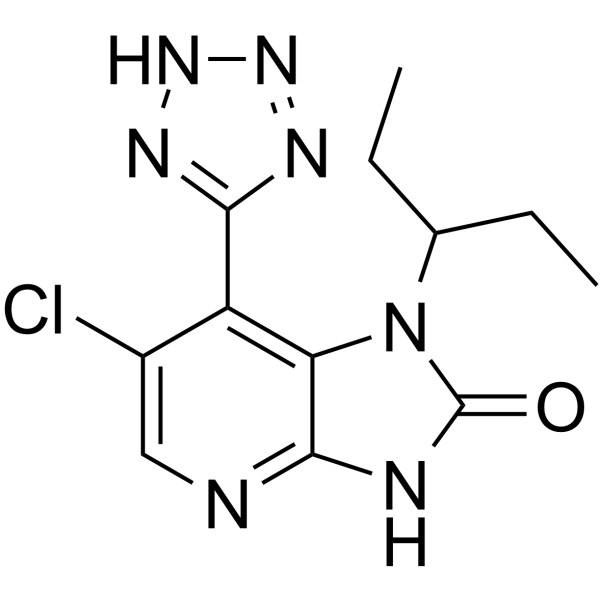
    Neuromuscular-targeting compound 1, extracted from patent WO2009099594 A1, Paragraph 0100, is useful in treatment of neuromuscular diseases.
    Neuromuscular-targeting compound 1
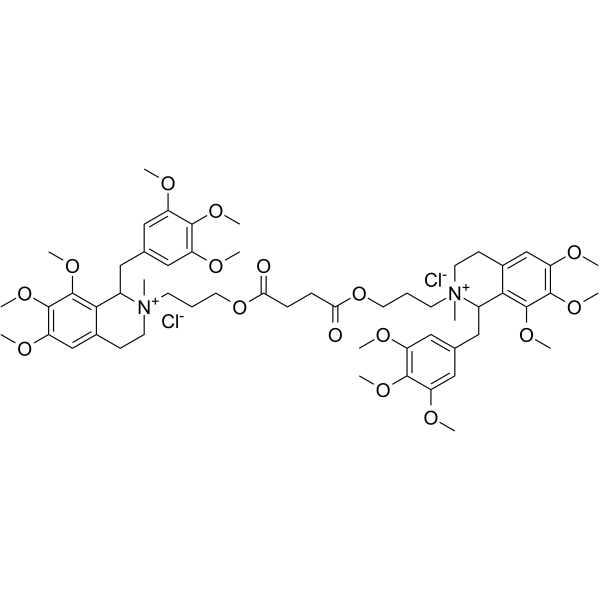
  • HY-A0215

    BW-A 938U; Nuromax

    nAChR Neurological Disease
    Doxacurium chloride (BW A938U) is a potent non-depolarizing neuromuscular blocking agent. Doxacurium chloride binds to cholinergic receptors to antagonize acetylcholine, resulting in a block of neuromuscular transmission. Doxacurium chloride can be used for the research of neurological diseases .
    Doxacurium chloride
  • HY-14946R

    3,4-Diaminopyridine (Standard)

    Reference Standards Potassium Channel Neurological Disease
    Amifampridine (Standard) is the analytical standard of Amifampridine. This product is intended for research and analytical applications. Amifampridine (3,4-Diaminopyridine) is an orally active, potent and cell permeable voltage-gated potassium (Kv) channel blocker (PCB). Amifampridine is efficacy in the reversal of BoNT/A (HY-P79153) intoxication. Amifampridine increases transmitter release from neuromuscular junctions (NMJs). Amifampridine can be used for Lambert-Eaton myasthenic syndrome (LEMS) research .
    Amifampridine (Standard)
  • HY-W027553S1

    NIK-247-d9 free base

    Isotope-Labeled Compounds Cholinesterase (ChE) Potassium Channel Sodium Channel Metabolic Disease
    Ipidacrine-d9 (NIK-247-d9 (free base)) is the deuterium labeled Ipidacrine (HY-W027553). Ipidacrine is orally active and brain-penetrant AChE and BuChE inhibitors with IC50 values of 1 μM and 1.9 μM, respectively, which is also a partial agonist of M2-cholinergic receptors and a reversible cholinesterase inhibitor. Ipidacrine has a stimulating effect on neuromuscular transmission and excitation along the nerve fibres with a moderately anti-pain effect. Ipidacrine is an aminopyridines and is structurally similar to Tacrine (HY-111338). Ipidacrine is effective in various amnesia models, improves erectile function and inhibits K+ and Na+-channels in the neuronal membrane in diabetic rats. Ipidacrine is promising for research of Alzheimer’s disease, ischaemic stroke, idiopathic neuropathy of the facial nerve, diabetes mellitus-induced erectile dysfunction and other deficits in central or peripheral cholinergic deseases .
    Ipidacrine-d9
  • HY-W683409

    1064 Th

    Adrenergic Receptor Cardiovascular Disease Neurological Disease
    Dimorpholamine (1064 Th) is a central nervous system stimulant. Dimorpholamine can increase the excitatory and inhibitory junction potentials at the neuromuscular junctions of crayfish. Dimorpholamine can also exert epinephrine-like pressor effects by promoting the release of catecholamines (mainly epinephrine) from the adrenal medulla. Dimorpholamine can be used in the research of respiratory failure as well as neurological and cardiovascular system diseases .
    Dimorpholamine
  • HY-19689

    NIK-247; Amiridine

    Cholinesterase (ChE) Potassium Channel Sodium Channel Cardiovascular Disease Neurological Disease Endocrinology
    Ipidacrine (NIK-247; Amiridine) hydrochloride is orally active and blood-brain-barrier-penetrant AChE and BuChE inhibitors with IC50 values of 1 μM and 1.9 μM, respectively, which is also a partial agonist of M2-cholinergic receptors and a reversible cholinesterase inhibitor. Ipidacrine hydrochloride has a stimulating effect on neuromuscular transmission and excitation along the nerve fibres with a moderately anti-pain effect. Ipidacrine hydrochloride is an aminopyridines and is structurally similar to Tacrine (HY-111338). Ipidacrine hydrochloride is effective in various amnesia models, improves erectile function and inhibits K + and Na +-channels in the neuronal membrane in diabetic rats. Ipidacrine hydrochloride is promising for research of Alzheimer’s disease, ischaemic stroke, idiopathic neuropathy of the facial nerve, diabetes mellitus-induced erectile dysfunction and other deficits in central or peripheral cholinergic deseases .
    Ipidacrine hydrochloride

Inquiry Online

Your information is safe with us. * Required Fields.

Salutation


Country or Region *

Applicant Name *


Organization Name *

Department *


Email Address *


Product Name *

Cat. No.


Requested quantity *

Phone Number *


Remarks

Inquiry Online

Inquiry Information

Product Name:
Cat. No.:
Quantity:
MCE Japan Authorized Agent:

