1. Search Result
Search Result
Results for "

neuropsychiatric diseases

" in MedChemExpress (MCE) Product Catalog:
Cat. No. Nombre del producto Target Áreas de investigación Chemical Structure
  • HY-148104
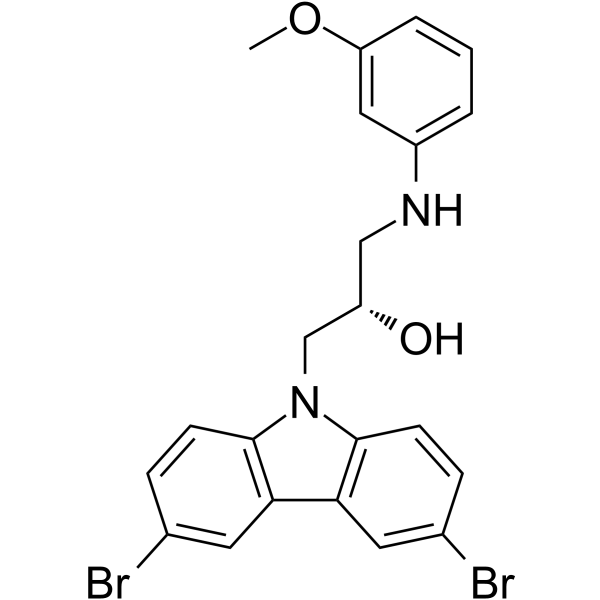
    ACSS2-IN-2
    1 Publications Verification

    Acetyl-CoA synthetase Infection Neurological Disease Metabolic Disease Inflammation/Immunology Cancer
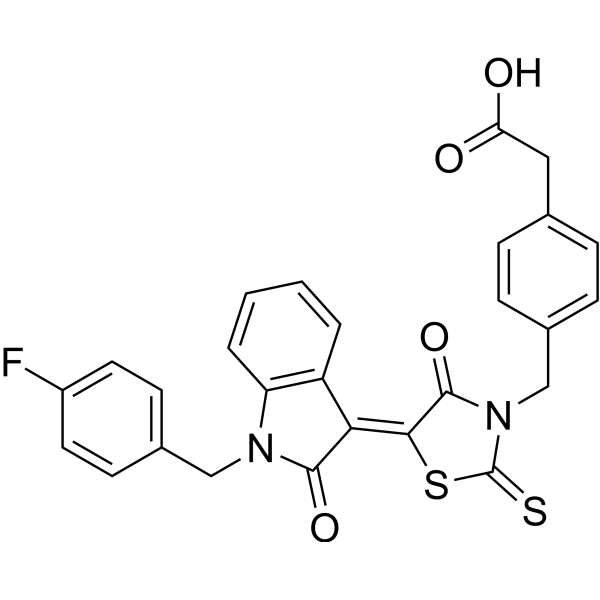
    ACSS2-IN-2 is an acyl-CoA synthetase short-chain family member 2 (ACSS2) inhibitor. ACSS2-IN-2 can inhibit ACSS2 activity with an IC50 value of 3.8 nM. ACSS2-IN-2 can be used for the research of several diseases, such as viral infection, metabolic disorders, neuropsychiatric diseases, inflammatory/autoimmune conditions and cancer .
    ACSS2-IN-2
  • HY-117516

    REV-ERB Neurological Disease Metabolic Disease
    SR10067 is a potent, selective and brain penetrant REV-ERB agonist. SR10067 has high affinity for Rev-Erbβ and Rev-Erbα with IC50 values of 160 nM and 170 nM, respectively. SR10067 can be used for the research of metabolic diseases and neuropsychiatric disorders .
    SR10067
  • HY-109112

    RP5063

    Dopamine Receptor 5-HT Receptor Neurological Disease Inflammation/Immunology
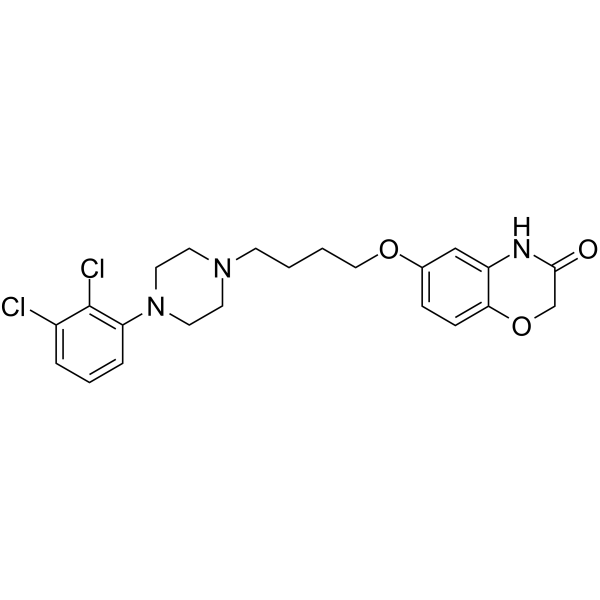
    Brilaroxazine (RP5603) is a potent and orally active multimodal dopamine (DA)/serotonin (5-HT) modulator. Brilaroxazine is a partial agonist of dopamine (DA) D2, D3, and D4 receptors, 5-HT1A (Ki=1.5 nM) and 5-HT2A (Ki=2.5 nM), and has antagonist activity at 5-HT2B (Ki=0.19 nM), and 5-HT7 (Ki=2.7 nM) receptors . Brilaroxazine is an atypical antipsychotic agent, and has the potential to improve cognitive impairments in neuropsychiatric and neurological diseases in vivo .
    Brilaroxazine
  • HY-19348
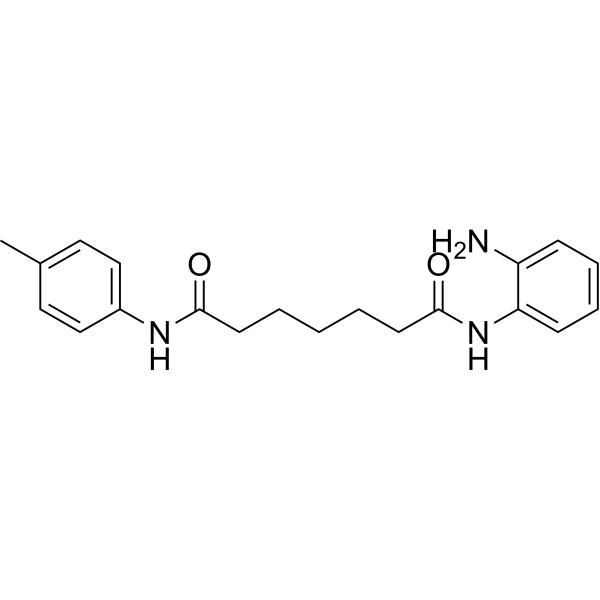
    Pimelic Diphenylamide 106
    5 Publications Verification

    RGFA-8; TC-H 106; Histone Deacetylase Inhibitor VII

    HDAC Monoamine Transporter Neurological Disease Cancer
    Pimelic Diphenylamide 106 (TC-H 106) is a slow, tight binding class I HDAC inhibitor (inhibits HDAC1, 2, and 3 with IC50 values of 150 nM, 760 nM, and 370 nM, respectively), with no activity against class II HDACs. Pimelic Diphenylamide 106 modulates dopamine concentration and protects dopamine cells by inducing VMAT2 expression. Pimelic Diphenylamide 106 can be used in the study of neuropsychiatric diseases such as attention deficit hyperactivity disorder (ADHD) .
    Pimelic Diphenylamide 106
  • HY-157521

    Acyltransferase Neurological Disease Metabolic Disease
    AANAT-IN-1 is an arylalkylamine N-acetyltransferase (AANAT) inhibitor with a sheep AANAT IC50 of 9.9 μM. AANAT-IN-1 binds to the active site of sheep AANAT, interacting with amino acid residues via hydrogen bonds, hydrophobic interactions, ionic interactions, and water bridges, inhibiting the enzyme's catalytic activity. AANAT-IN-1 can be used for the researches of circadian rhythm-associated neuropsychiatric conditions, seasonal affective disorder, and other diseases associated with abnormally elevated melatonin levels .
    AANAT-IN-1
  • HY-125751
    UCSF924
    1 Publications Verification

    Dopamine Receptor Neurological Disease
    UCSF924, a chemical probe, is a potent and specific dopamine D4 receptor (DRD4) partial agonist with a EC50 of 4.2 nM. UCSF924 has no off-target effects on more than 320 non-olfactory GPCRs. UCSF924 can be used for research in the field of neuropsychiatric diseases .
    UCSF924
  • HY-176900

    GPR52 Neurological Disease
    GPR52 agonist-4 (Compound 65) is a highly selective G-protein-coupled receptor GPR52 modulator. GPR52 agonist-4 is promising for research of neuropsychiatric diseases .
    GPR52 agonist-4
  • HY-163671

    GPR52 Arrestin Neurological Disease
    PW0729 is a selective GPR52 agonist. PW0729 activates G protein/cAMP signaling pathway, with bias toward this pathway over β-arrestin recruitment, and induces GPR52 desensitization. PW0729 can be used for the research of neuropsychiatric and neurological diseases .
    PW0729
  • HY-179291

    5-HT Receptor Neurological Disease
    5-HT2A agonist 8 (Compound 67) is a 5-HT2A agonist, with an EC50 of 4 nM. 5-HT2A agonist 8 can be used in the research of neuropsychiatric and neurodegenerative diseases .
    5-HT2A agonist 8
  • HY-128856

    Drug Derivative Neurological Disease
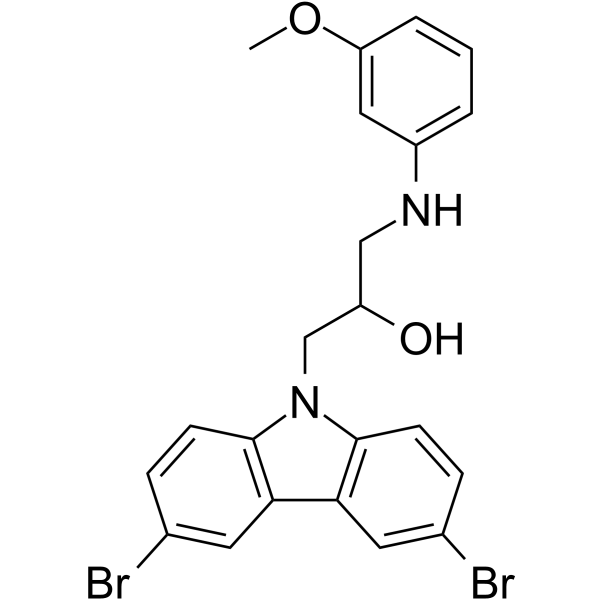
    P7C3-OMe is a pro-neurogenic compound, has therapeutic benefits in neuropsychiatric and/or neurodegenerative disease. The R-enantiomer of P7C3-OMe is far more active than the S-enantiomer .
    P7C3-OMe
  • HY-103522

    GABA Receptor Neurological Disease
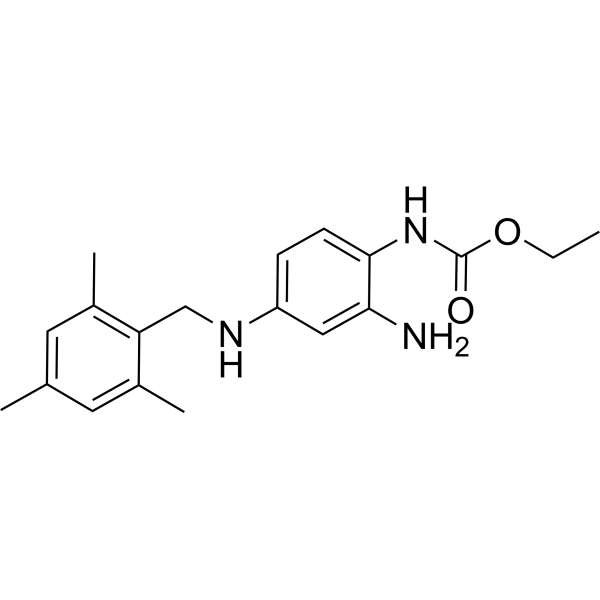
    AA29504 is a ethyl carbamate with γ-aminobutyric acid (GABAA(HY-L120) receptor activity. AA29504 inhibits the delivery of the neurotransmitter gamma-aminobutyric acid in the central nervous system. AA29504 can be used to research anxiety, insomnia and other neuropsychiatric diseases .
    AA29504
  • HY-169951

    iGluR Neurological Disease
    Lu AF90103 (Compound 42e) is a methyl ester prodrug of compound 42d capable of penetrating the blood-brain barrier. Compound 42d acts as a partial agonist of the GluN1/GluN2B complex, exhibiting 24% efficacy, and has an EC50 value of 78 nM. Lu AF90103 plays an important role in neuropsychiatric diseases research .
    Lu AF90103
  • HY-15977

    Drug Isomer Neurological Disease
    (S)-P7C3-OMe, P7C3-A20 hydroxylated analog, is the (S)-enantiomer of P7C3-OMe. P7C3-OMe is a pro-neurogenic compound, can be used for the research of neuropsychiatric and/or neurodegenerative disease .
    (S)-P7C3-OMe
  • HY-174152

    GABA Receptor Neurological Disease
    GABAB receptor antagonist 5 (Compound 23) is a competitive GABAB receptor antagonist. GABAB receptor antagonist 5 is promising for research of neuropsychiatric diseases, such as epilepsy, depression, and addiction .
    GABAB receptor antagonist 5
  • HY-W909149

    Trace Amine-associated Receptor (TAAR) Adrenergic Receptor Neurological Disease
    TAAR1 agonist 3 is a trace amine-associated receptor 1 (TAAR1) agonist (pEC50=7.6). TAAR1 agonist 3 is also a full agonist of the α2A receptor (pEC50=6). TAAR1 agonist 3 can be used in the study of neuropsychiatric diseases .
    TAAR1 agonist 3
  • HY-W909173

    Trace Amine-associated Receptor (TAAR) Histamine Receptor mAChR Neurological Disease
    TAAR1 agonist 2 (compound 30) is a full agonist of trace amine-associated receptor 1 (TAAR1) (pEC50=7.5). TAAR1 agonist 2 also exhibits agonist activity at H1 receptors and activates several members of the muscarinic acetylcholine receptor family, such as the M2 receptor (pEC50=5). TAAR1 agonist 2 can be used in the study of neuropsychiatric diseases .
    TAAR1 agonist 2
  • HY-120662

    mGluR Neurological Disease
    GSK1331268 is a selective, orally active agonist for mGluR2 with a pEC50 of 6.9. GSK1331268 exhibits good blood-brain barrier penetration. GSK1331268 regulates glutamate signaling, and can be used in research of neurodegenerative and neuropsychiatric diseases .
    GSK1331268
  • HY-E70395

    PE; PEP

    Biochemical Assay Reagents Neurological Disease
    Prolyl Endopeptidase, highly active in brain and other tissues, catabolizes proline-containing peptides such as substance P, neurotensin, luteinizing hormone-releasing hormone, thyrotropin releasing hormone, bradykinin and angiotensin II. Prolyl Endopeptidase can be used for study of neuropsychiatric diseases such as stress disorder, depression, and schizophrenia .
    Prolyl endopeptidase
  • HY-178103

    Dopamine Receptor Arrestin Neurological Disease
    D1R antagonist 2 (Compound 13a) is a BBB-penetrable D1R antagonist with IC50s of 35.6 and 70 nM for cAMP-based D1R and β-arrestin-based D1R, respectively. D1R antagonist 2 effectively antagonizes D1R-mediated cAMP and β-arrestin recruitment. D1R antagonist 2 can be used for neurodegenerative and neuropsychiatric diseases such as schizophrenia, Parkinson’s disease and Alzheimer’s disease research .
    D1R antagonist 2
  • HY-169163

    Carbonic Anhydrase Cholinesterase (ChE) Neurological Disease
    hBChE-IN-4 (compound 40) is a potent hCA activator and BChE inhibitor with KA values of 266, 76.9, 918, 893, 98.0 nM for hCA I, hCA II, hCA IV, hCA VB, hCA VII, IC50 values of 72.1, 4.2 nM for eeAChE, eqBChE, respectively. hBChE-IN-4 shows no cytotoxicity. hBChE-IN-4 shows potent procognitive effects. hBChE-IN-4 has the potential for the research of neurodegenerative diseases and other neuropsychiatric disorders .
    BChE-IN-36
  • HY-174146

    5-HT Receptor Neurological Disease
    5-HT1A agonist 1 (Compound Ex.37) is a highly selective 5-HT1a receptor agonist (EC50=0.18 nM). 5-HT1A agonist 1 mimicks serotonin binding to the receptor, promotes postsynaptic membrane hyperpolarization, inhibits neuronal hyperexcitability, and reduces the release of anxiety-related neurotransmitters. 5-HT1A agonist 1 is promising for research of neuropsychiatric diseases .
    5-HT1A agonist 1
  • HY-176717

    5-HT Receptor Neurological Disease
    5-HT1AR agonist 3 (Compound 77) is a 5-HT1A agonist. 5-HT1AR agonist 3 has 5-HT1A receptor agonist activity (EC50: 1.3 nM). 5-HT1AR agonist 3 mainly exerts its effects by activating 5-HT1A receptors and can be used in the study of neuropsychiatric diseases such as anxiety, depression and sleep disorders .
    5-HT1AR agonist 3
  • HY-109112R

    RP5063 (Standard)

    Reference Standards Dopamine Receptor 5-HT Receptor Neurological Disease Inflammation/Immunology
    Brilaroxazine (Standard) is the analytical standard of Brilaroxazine. This product is intended for research and analytical applications. Brilaroxazine (RP5603) is a potent and orally active multimodal dopamine (DA)/serotonin (5-HT) modulator. Brilaroxazine is a partial agonist of dopamine (DA) D2, D3, and D4 receptors, 5-HT1A (Ki=1.5 nM) and 5-HT2A (Ki=2.5 nM), and has antagonist activity at 5-HT2B (Ki=0.19 nM), and 5-HT7 (Ki=2.7 nM) receptors . Brilaroxazine is an atypical antipsychotic agent, and has the potential to improve cognitive impairments in neuropsychiatric and neurological diseases in vivo .
    Brilaroxazine (Standard)
  • HY-160637

    Phospholipase Cardiovascular Disease Neurological Disease Metabolic Disease Inflammation/Immunology
    Lp-PLA2-IN-17 (Compound 39) is an inhibitor of Lp-PLA2. Lp-PLA2-IN-17 can be used to study disorders involving the hydrolysis of oxidized lipids into two inflammatory substances with the participation of Lp-PLA2 .
    Lp-PLA2-IN-17
  • HY-123446

    Phosphodiesterase (PDE) Neurological Disease
    JNJ-42259152 is a phosphodiesterase 10A (PDE10A) positron emission tomography (PET) tracer that is specific for PDE10A activity. JNJ-42259152 can be dynamically scanned in healthy volunteers to assess its kinetic properties in the brain. The half-life of JNJ-42259152 in the blood is an average of 90 minutes. JNJ-42259152 has demonstrated reliable binding potential (BPND) in different target areas (such as the lentiform nucleus, caudate nucleus, ventral striatum, etc.), providing an important tool for studying neuropsychiatric diseases .
    JNJ-42259152
  • HY-182944

    GABA Receptor Neurological Disease
    GATT-44 is a blood-brain barrier-permeable, selective GABA transporter 1 (GAT-1) ligand with an IC50 of 126 nM. GATT-44 shows selectivity for GAT-2, GAT-3 and BGT-1 subtypes, and undergoes copper-mediated 18F-radiofluorination. The radiolabeled GATT-44 ([ 18F]GATT-44) exhibits brain uptake, metabolic stability and high GAT-1 binding specificity in non-human primates. GATT-44 is applicable for research on neurodegenerative and neuropsychiatric diseases .
    GATT-44

Consulta en línea

Your information is safe with us. * Required Fields.

Saludo


Country or Region *

Nombre del solicitante *


Nombre de la Organizaciòn *

Department *


Direcciòn del E-mail *


Nombre del producto *

Cat. No.


Requested quantity *

Número de teléfono *


Observaciones

Consulta en línea

Inquiry Information

Nombre del producto:
Cat. No.:
Cantidad:
MCE Japan Authorized Agent:

