10 Results for "

pH gradients

" in MedChemExpress (MCE) Product Catalog:
Products (10)

10 Results for "pH gradients" in MCE Product Catalog:

4
4 Cited Publications
Cat. No.: HY-B1422
CAS No.: 90-45-9
Synonyms: Aminacrine
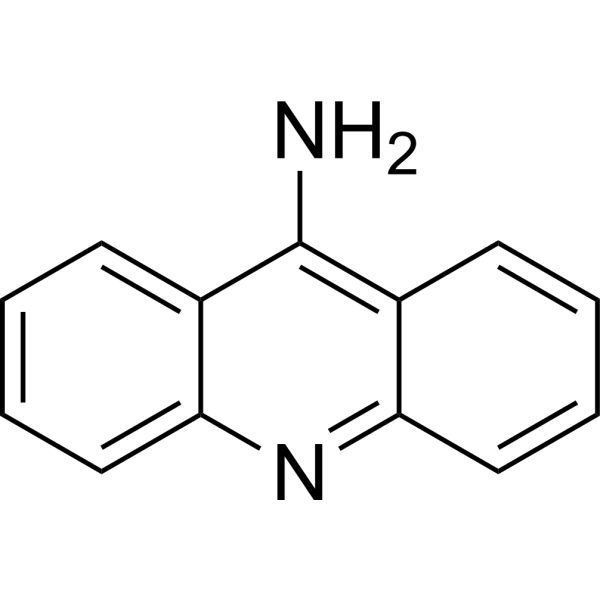
9-Aminoacridine, a fluorescent probe, acts as an indicator of pH for quantitative determination of transmembrane pH gradients (inside acidic). 9-Aminoacridine is an antimicrobial. 9-Aminoacridine exerts its antimicrobial activity by interacting with specific bacterial DNA and disrupting the proton motive force in K. pneumoniae. 9-Aminoacridine is a HIV-1 inhibitor and inhibits HIV LTR transcription highly dependent on the presence and location of the amino moiety. 9-Aminoacridine inhibits virus replication in HIV-1 infected cell lines. 9-Aminoacridine is used as a Rifampin (RIF; HY-B0272) adjuvant for the multidrug-resistant K. pneumoniae infections .
loading...
    loading...
1
1 Cited Publications
Cat. No.: HY-Y0756
CAS No.: 144-55-8
Synonyms: Sodium hydrogen carbonate
Target:  

Bacterial

Research Areas:  

Infection Cancer

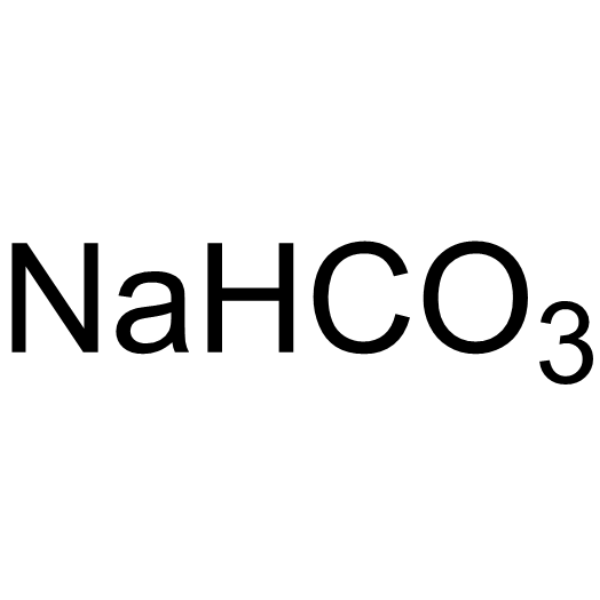
Sodium bicarbonate (Sodium hydrogen carbonate; Soda bicarbonate) is an inorganic salt that is neutral to slightly alkaline and easily decomposes when exposed to moisture in the air. Sodium bicarbonate can maintain the pH of the culture medium, thereby affecting the expression of inducible nitric oxide synthase (iNOS) and nitric oxide (NO) production in macrophages and reversing the acidosis of the tumor microenvironment. Sodium bicarbonate is widely used in the fields of food, medicine, cosmetics, etc. Its main uses include buffers, flavoring agents, disinfectants, pharmaceuticals, and proton gradient regulators. Sodium bicarbonate is also commonly used as an antacid to inhibit gastrointestinal diseases, neutralize gastric acid, and reduce gastric discomfort .
loading...
    loading...
Cat. No.: HY-W251598C
CAS No.: 144-55-8
Synonyms: Sodium hydrogen carbonate for cell culture; Soda bicarbonate for cell culture
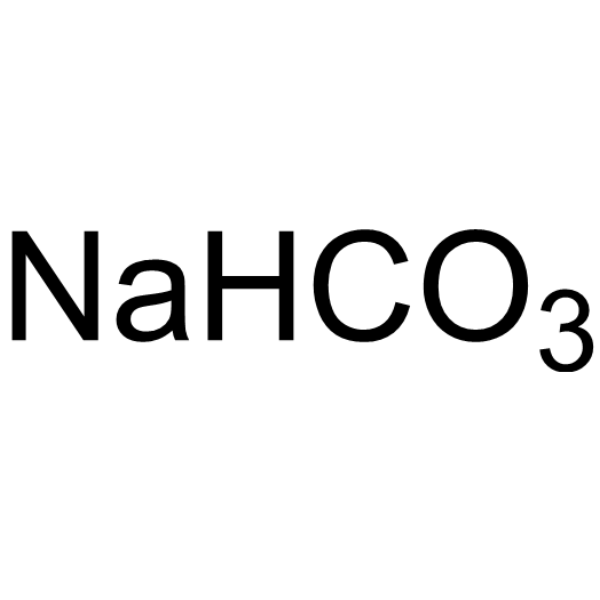
Sodium bicarbonate, for cell culture (Sodium hydrogen carbonate for cell culture; Soda bicarbonate for cell culture) is an inorganic salt that is neutral to slightly alkaline and easily decomposes when exposed to moisture in the air. Sodium bicarbonate, for cell culture can maintain the pH of the culture medium, thereby affecting the expression of inducible nitric oxide synthase (iNOS) and nitric oxide (NO) production in macrophages and reversing the acidosis of the tumor microenvironment. Sodium bicarbonate is widely used in the fields of food, medicine, cosmetics, etc. Its main uses include buffers, flavoring agents, disinfectants, pharmaceuticals, and proton gradient regulators. Sodium bicarbonate is also commonly used as an antacid to inhibit gastrointestinal diseases, neutralize gastric acid, and reduce gastric discomfort .
loading...
    loading...
Cat. No.: HY-W251598B
CAS No.: 144-55-8
Synonyms: Sodium hydrogen carbonate for molecular biology; Soda bicarbonate for molecular biology
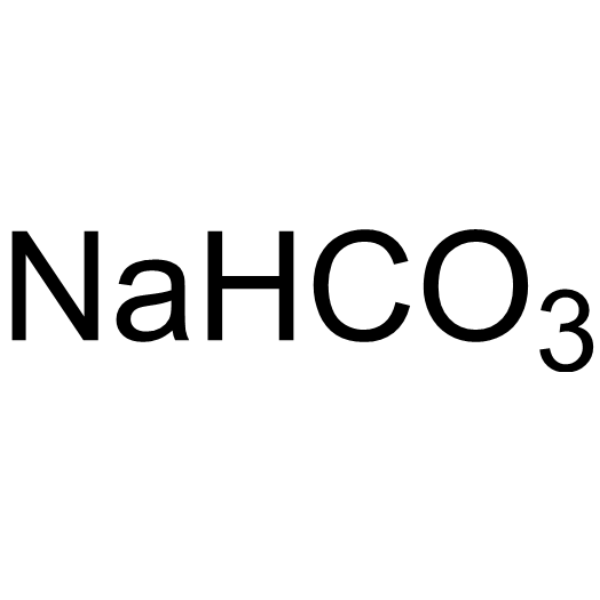
Sodium bicarbonate, for molecular biology (Sodium hydrogen carbonate for molecular biolog; Soda bicarbonate for molecular biolog) is an inorganic salt. Sodium bicarbonate can maintain the pH of the culture medium, thereby affecting the expression of inducible nitric oxide synthase (iNOS) and nitric oxide (NO) production in macrophages and reversing the acidosis of the tumor microenvironment. Sodium bicarbonate is widely used in the fields of food, cosmetics, etc. Its main uses include buffers, flavoring agents, disinfectants, pharmaceuticals, and proton gradient regulators. Sodium bicarbonate is also commonly used as an antacid to inhibit gastrointestinal diseases, neutralize gastric acid, and reduce gastric discomfort .
loading...
    loading...
Cat. No.: HY-W251598S
CAS No.: 87081-58-1
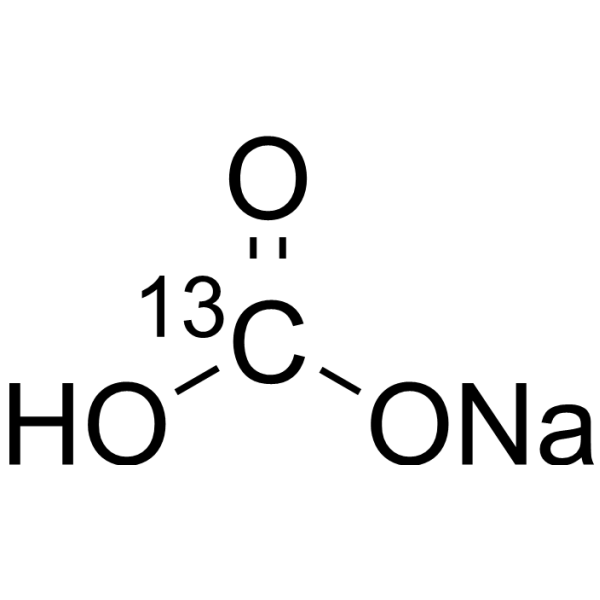
Bicarbonate- 13C sodium is the 13C-labeled Sodium bicarbonate (HY-Y0756). Sodium bicarbonate is an inorganic salt that is neutral to slightly alkaline and easily decomposes when exposed to moisture in the air. Sodium bicarbonate can maintain the pH of the culture medium, thereby affecting the expression of inducible nitric oxide synthase (iNOS) and nitric oxide (NO) production in macrophages and reversing the acidosis of the tumor microenvironment. Sodium bicarbonate is widely used in the fields of food, medicine, cosmetics, etc. Its main uses include buffers, flavoring agents, disinfectants, pharmaceuticals, and proton gradient regulators. Sodium bicarbonate is also commonly used as an antacid to inhibit gastrointestinal diseases, neutralize gastric acid, and reduce gastric discomfort .
loading...
    loading...
Cat. No.: HY-W251598I
CAS No.: 144-55-8
Synonyms: Sodium hydrogen carbonate, meets analytical specification of pH. Eur., BP, USP, FCC, E500
Sodium bicarbonate, meets analytical specification of Ph. Eur., BP, USP, FCC, E500 is an inorganic salt that is neutral to slightly alkaline and easily decomposes when exposed to moisture in the air. Sodium bicarbonate can maintain the pH of the culture medium, thereby affecting the expression of inducible nitric oxide synthase (iNOS) and nitric oxide (NO) production in macrophages and reversing the acidosis of the tumor microenvironment. Sodium bicarbonate is widely used in the fields of food, medicine, cosmetics, etc. Its main uses include buffers, flavoring agents, disinfectants, pharmaceuticals, and proton gradient regulators. Sodium bicarbonate is also commonly used as an antacid to inhibit gastrointestinal diseases, neutralize gastric acid, and reduce gastric discomfort .
loading...
    loading...
Cat. No.: HY-N11882
CAS No.: 4299-57-4
Synonyms: PQ-9
Plastoquinone (PQ-9) is a photosynthetic electron carrier as well as a redox sensor capable of regulating state transitions and gene expression. Plastoquinone transfers electrons to the cytochrome b6/f complex via the Q cycle, and participates in the establishment of the thylakoid transmembrane pH gradient. Plastoquinone can react with ROS. Plastoquinone is used in plant photosynthesis research .
loading...
    loading...
Cat. No.: HY-W251598J
CAS No.: 144-55-8
Synonyms: Sodium hydrogen carbonate (pHarmaceutical primary standard, USP); Soda bicarbonate (pHarmaceutical primary standard, USP)
Sodium bicarbonate, United States Pharmacopeia (USP) Reference Standard is an inorganic salt. Sodium bicarbonate, United States Pharmacopeia (USP) Reference Standard can maintain the pH of the culture medium, thereby affecting the expression of inducible nitric oxide synthase (iNOS) and nitric oxide (NO) production in macrophages and reversing the acidosis of the tumor microenvironment. Sodium bicarbonate, United States Pharmacopeia (USP) Reference Standard is widely used in the fields of food, cosmetics, etc. Its main uses include buffers, flavoring agents, disinfectants, pharmaceuticals, and proton gradient regulators. Sodium bicarbonate, United States Pharmacopeia (USP) Reference Standard is also commonly used as an antacid to inhibit gastrointestinal diseases, neutralize gastric acid, and reduce gastric discomfort .
loading...
    loading...
Cat. No.: HY-B1422R
CAS No.: 90-45-9
Synonyms: Aminacrine (Standard)
9-Aminoacridine (Standard) is the analytical standard of 9-Aminoacridine. This product is intended for research and analytical applications. 9-Aminoacridine, a fluorescent probe, acts as an indicator of pH for quantitative determination of transmembrane pH gradients (inside acidic). 9-Aminoacridine is an antimicrobial. 9-Aminoacridine exerts its antimicrobial activity by interacting with specific bacterial DNA and disrupting the proton motive force in K. pneumoniae. 9-Aminoacridine is a HIV-1 inhibitor and inhibits HIV LTR transcription highly dependent on the presence and location of the amino moiety. 9-Aminoacridine inhibits virus replication in HIV-1 infected cell lines. 9-Aminoacridine is used as a Rifampin (RIF; HY-B0272) adjuvant for the multidrug-resistant K. pneumoniae infections .
loading...
    loading...
Cat. No.: HY-B1422S
Synonyms: Aminacrine-13C6
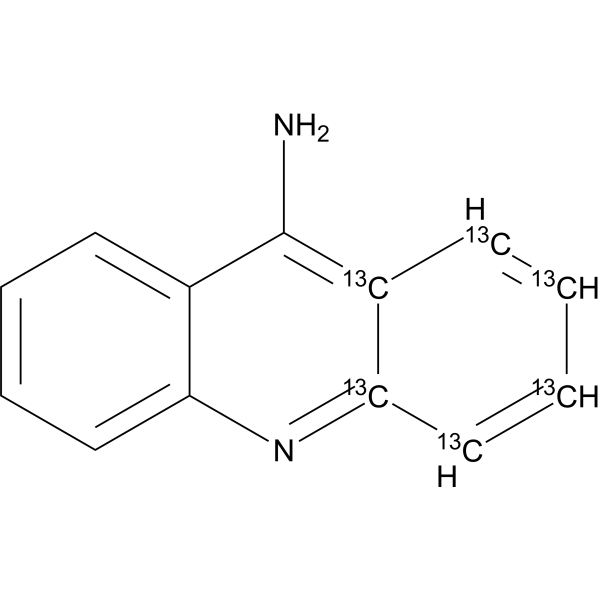
9-Aminoacridine-13C6 is the 13C-labeled 9-Aminoacridine(HY-B1422). 9-Aminoacridine, a fluorescent probe, acts as an indicator of pH for quantitative determination of transmembrane pH gradients (inside acidic). 9-Aminoacridine is an antimicrobial. 9-Aminoacridine exerts its antimicrobial activity by interacting with specific bacterial DNA and disrupting the proton motive force in K. pneumoniae. 9-Aminoacridine is a HIV-1 inhibitor and inhibits HIV LTR transcription highly dependent on the presence and location of the amino moiety. 9-Aminoacridine inhibits virus replication in HIV-1 infected cell lines. 9-Aminoacridine is used as a Rifampin (RIF; HY-B0272) adjuvant for the multidrug-resistant K. pneumoniae infections .
loading...
    loading...

