



Beta vulgaris Linn.
Alias: beet
-
Beta vulgaris Linn. (8)

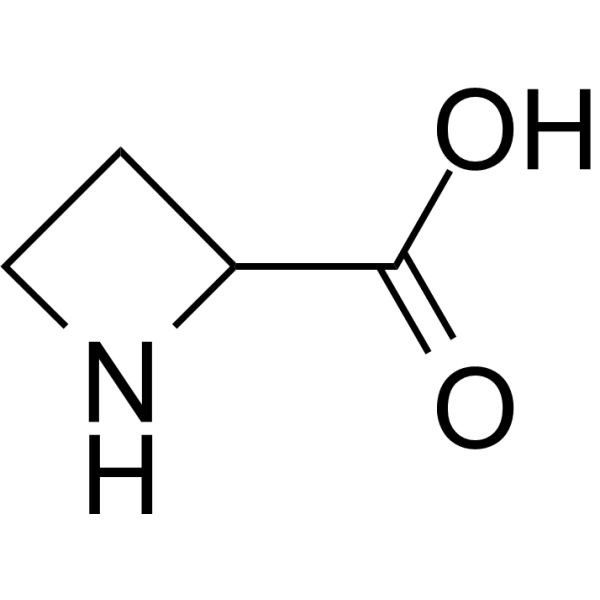
- Formula: C4H7NO2
- Molecular Weight: 101.10
Azetidine-2-carboxylic acid is a non proteinogenic amino acid homologue of proline. Found in common beets. Azetidine-2-carboxylic acid can be misincorporated into proteins in place of proline in many species, including humans. Toxic and teratogenic agent.


- Formula: C5H12ClNO2
- Molecular Weight: 153.61
Betaine (chloride) (Standard) is the analytical standard of Betaine (chloride). This product is intended for research and analytical applications. Betaine hydrochloride is a natural compound found in many foods and also an active methyl-donor which can maintain normal DNA methylation patterns.

- Formula: C12H12
- Molecular Weight: 156.22
1-Ethylnaphthalene is an organic micropollutant.

- Formula: C47H72O20
- Molecular Weight: 957.06
Betavulgaroside III is a triterpene seco-glycoside plant saponin. Betavulgaroside III exhibits anti-inflammatory activity.

- Formula: C17H12O6
- Molecular Weight: 312.27
Betavulgarin is an anticancer agent. Betavulgarin can be isolated from Sugar Beet (Beta vulgaris). Betavulgarin suppresses the proliferation, migration, colony formation, and mammosphere formation of breast cancer cells, and reduces the size of the CD44+/CD24− subpopulation and the expression of the self-renewal- related genes C-Myc, Nanog and Oct4. Betavulgarin promotes BCSCs death through the regulation of Stat3/Sox2 signaling.

- Formula: C53H80O2
- Molecular Weight: 749.20
Plastoquinone (PQ-9) is a photosynthetic electron carrier as well as a redox sensor capable of regulating state transitions and gene expression. Plastoquinone transfers electrons to the cytochrome b6/f complex via the Q cycle, and participates in the establishment of the thylakoid transmembrane pH gradient. Plastoquinone can react with ROS. Plastoquinone is used in plant photosynthesis research.



