1. Search Result
Search Result
Results for "

peptidyl transferase center

" in MedChemExpress (MCE) Product Catalog:

8

Inhibitors & Agonists

1

Natural
Products

1

Oligonucleotides

Cat. No. Product Name Target Research Areas Chemical Structure
  • HY-16908A
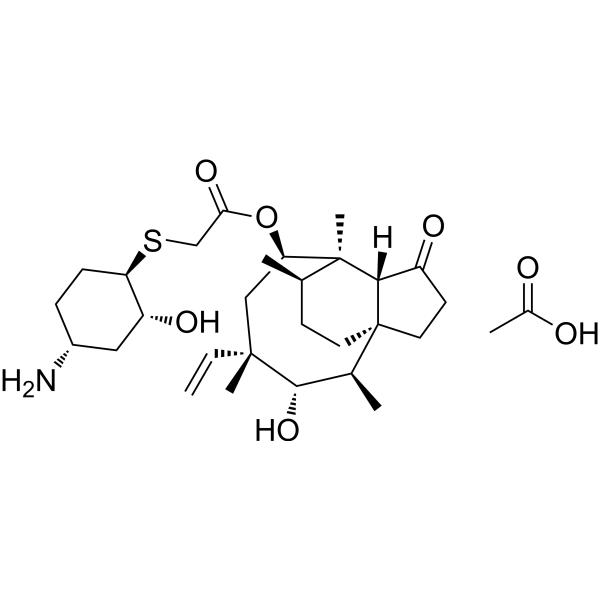
    Lefamulin acetate
    4 Publications Verification

    BC-3781 acetate

    Bacterial Antibiotic Infection Inflammation/Immunology
    Lefamulin (BC-3781) acetate is an orally active antibiotic. Lefamulin acetate inhibits protein synthesis by binding to the peptidyl transferase center of the 50S bacterial ribosome. Lefamulin acetate has anti-inflammatory activity. Lefamulin acetate can be used in the research of bacterial infections, such as bacterial pneumonia .
    Lefamulin acetate
  • HY-172815

    JNK Eukaryotic Initiation Factor (eIF) p38 MAPK Cancer
    IDB-001 is a human ribosomal peptidyl transferase center (PTC) inhibitor that induces conformational changes and blocks translational elongation in specific sequence contexts through complementary interactions with Asp/Glu residues in nascent polypeptides. IDB-001 preferentially stalls ribosomes at positions containing acidic peptide motifs, thereby inhibiting cancer cell proliferation, and activates the integrated stress response via eIF2α phosphorylation at high concentrations. In addition, IDB-001 mildly triggers ribotoxic stress responses through phosphorylation of JNK and p38. IDB-001 has been applied to mechanistic studies of triple-negative breast cancer .
    IDB-001
  • HY-16908
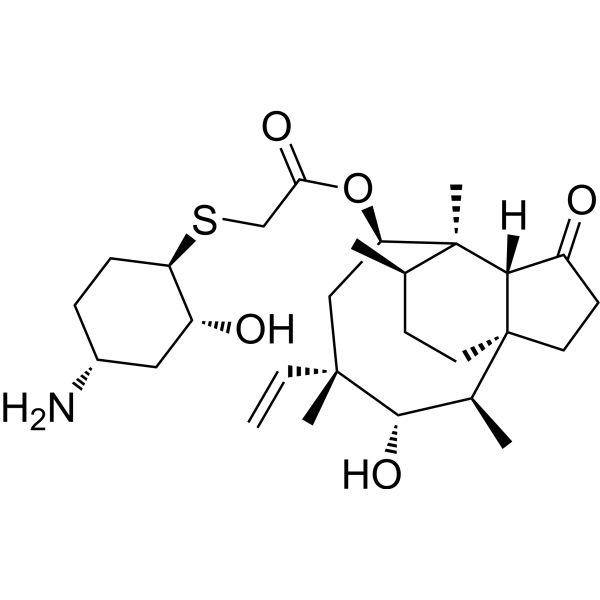
    Lefamulin
    4 Publications Verification

    BC-3781

    Bacterial Antibiotic Infection
    Lefamulin (BC-3781) is an orally active antibiotic. Lefamulin inhibits protein synthesis by binding to the peptidyl transferase center of the 50S bacterial ribosome. Lefamulin has anti-inflammatory activity. Lefamulin can be used in the research of bacterial infections, such as bacterial pneumonia .
    Lefamulin
  • HY-152296

    Nucleoside Antimetabolite/Analog Bacterial Infection
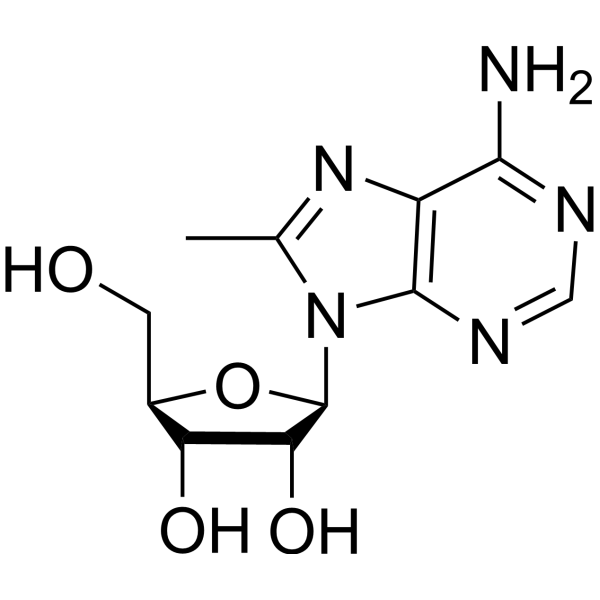
    8-Methyladenosine is a modified adenosine nucleoside. Through methylation at the 8-position, 8-Methyladenosine confers bacterial resistance to five classes of antibiotics that bind to the ribosomal peptidyl transferase center. 8-Methyladenosine can be used in studies of antibiotic-resistant bacterial infections .
    8-Methyladenosine
  • HY-118593

    Madumycin II; Antibiotic A 2315A

    Antibiotic Infection
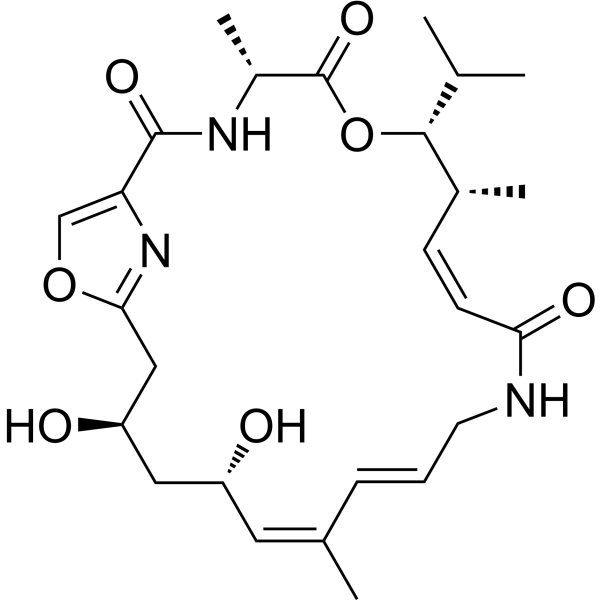
    A2315A (Madumycin II) is an alanine-containing streptogramin A antibiotic. A2315A is a potent peptidyl transferase center (PTC) inhibitor. A2315A inhibits the ribosome prior to the first cycle of peptide bond formation .
    A2315A
  • HY-16908AR

    BC-3781 acetate (Standard)

    Reference Standards Bacterial Antibiotic Infection Inflammation/Immunology
    Lefamulin (acetate) (Standard) is the analytical standard of Lefamulin (acetate). This product is intended for research and analytical applications. Lefamulin (BC-3781) acetate is an orally active antibiotic. Lefamulin acetate inhibits protein synthesis by binding to the peptidyl transferase center of the 50S bacterial ribosome. Lefamulin acetate has anti-inflammatory activity. Lefamulin acetate can be used in the research of bacterial infections, such as bacterial pneumonia[1].
    Lefamulin acetate (Standard)
  • HY-168705

    Bacterial Infection
    Anti-MRSA agent 20 (Compound a4) is an anti-microbial agent (MIC: < 0.03125 μg/mL) against MRSA). Anti-MRSA agent 20 binds to the ribosomal peptidyl transferase center and inhibits bacterial survival by inhibiting MRSA toxin synthesis and bacterial division. Anti-MRSA agent 20 significantly reduces the MRSA load in the lungs and attenuates lung injury in the MRSA-infected mice (ED50 = 6.48 mg/kg) .
    Anti-MRSA agent 20
  • HY-179405

    Bacterial Infection
    Antibacterial agent 301 (compound 14c) is a pyridine-amide pleuromutilin derivative with broad-spectrum antibacterial and pronounced antimycoplasmal activity. Antibacterial agent 301 inhibits peptidyl transferase center (PTC), breaks down biofilms, and disrupts cell membranes in multidrug-resistant (MDR) bacteria. Antibacterial agent 301 exhibits activity in a systemic methicillin-resistant Staphylococcus aureus (MRSA) infection mouse model. Antibacterial agent 301 can be used for MDR bacterial infection research .
    Antibacterial agent 301

Inquiry Online

Your information is safe with us. * Required Fields.

Salutation


Country or Region *

Applicant Name *


Organization Name *

Department *


Email Address *


Product Name *

Cat. No.


Requested quantity *

Phone Number *


Remarks

Inquiry Online

Inquiry Information

Product Name:
Cat. No.:
Quantity:
MCE Japan Authorized Agent:

