10 Results for "

peroxisome proliferation

" in MedChemExpress (MCE) Product Catalog:
Products (10)

10 Results for "peroxisome proliferation" in MCE Product Catalog:

  • Targets Recommended:
85
85 Cited Publications
Cat. No.: HY-15372
CAS No.: 880635-03-0
Purity:  99.64%
Target:  

PPAR Apoptosis

Research Areas:  

Cancer

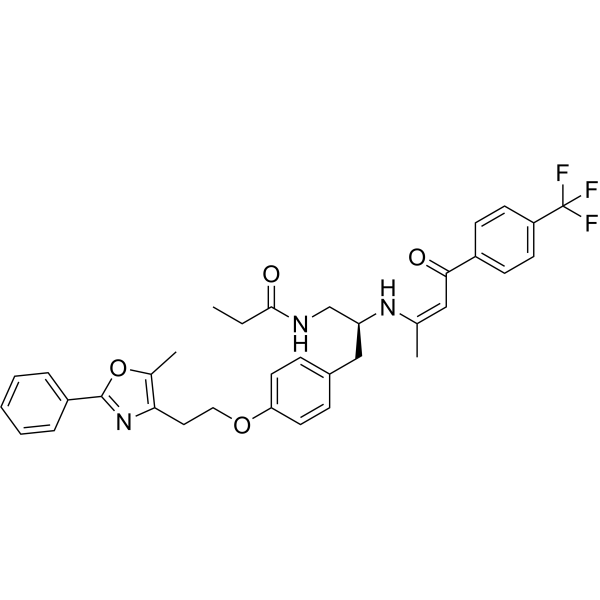
GW6471 is a selective peroxisome proliferator-activated receptor α (PPARα) antagonist. GW6471 reduces cancer stem cell viability, proliferation, and spheroid formation. GW6471 induces apoptosis and causes metabolic impairment including energy imbalance. GW6471 can be used for the research of paragangliomas and triple-negative breast cancer .
loading...
    loading...
1
1 Cited Publications
Cat. No.: HY-W081067
CAS No.: 13252-13-6
Synonyms: HFPO-DA
Target:  

PPAR

Research Areas:  

Infection

Perfluoro (2-methyl-3-oxahexanoic) acid (HFPO-DA) is an orally active PPARα agonist with an EC50 of 2.1 μM for human PPARα. Perfluoro (2-methyl-3-oxahexanoic) acid induces peroxisome proliferation and increases the levels of proinflammatory mediators. It impairs intestinal barrier function and disrupts cecal flora balance. Perfluoro (2-methyl-3-oxahexanoic) acid is applicable to research related to developmental toxicity, hepatotoxicity and intestinal toxicity .
loading...
    loading...
Cat. No.: HY-77278
CAS No.: 39932-44-0
Research Areas:  

Others

25-Hydroxytachysterol3 is the metabolite of Vitamin D3 (HY-15398). 25-Hydroxytachysterol3 inhibits the proliferation of epidermal keratinocytes and dermal fibroblasts, stimulates the expression of differentiation- and antioxidant-related genes in keratinocytes. 25-Hydroxytachysterol3 activates vitamin D receptor (VDR) and aryl hydrocarbon receptor (AhR), liver X receptor α/β (LXR α/β) and peroxisome proliferator-activated receptor γ (PPARγ), stimulates the expression of CYP24A1 .
loading...
    loading...
Cat. No.: HY-P2040
CAS No.: 118399-22-7
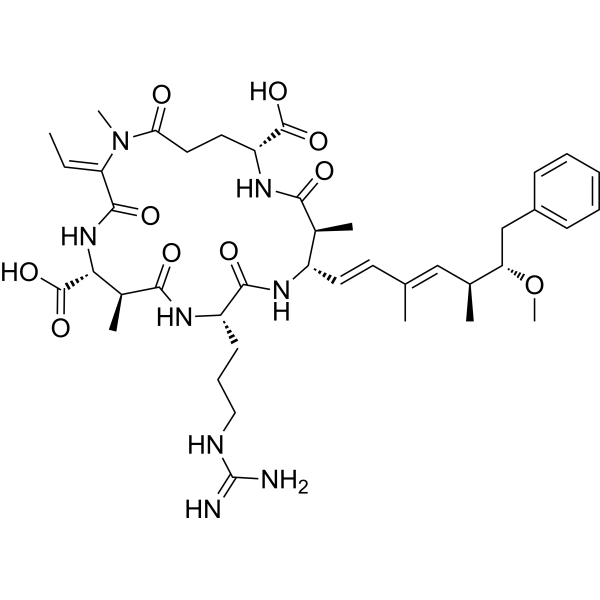
Nodularin is a hepatotoxin, tumor promoter, and protein phosphatase inhibitor. Nodularin induces apoptosis (apoptosis) in normal cells (including caspase activation, upregulation of Bcl-XS, and upregulation of BAX/P53), triggers hyperphosphorylation of the MAPK/ERK, mTOR/S6K and p38 MAPK signaling pathways, and induces oxidative stress, endoplasmic reticulum membrane instability, peroxisome proliferation and increased lysosomal enzyme activity. Nodularin promotes DEN (HY-N7434)-initiated hepatocyte proliferation and adenoma formation, and inhibits proliferation, phagocytosis and chemotaxis of normal lymphocytes, oocyte maturation and vitellogenesis, as well as angiogenesis. Nodularin exhibits hepatotoxicity, reproductive and endocrine toxicity, and embryonic developmental toxicity in various animal models. Nodularin can be used in studies related to liver cancer, hepatotoxicity and reproductive endocrine toxicity .
loading...
    loading...
Cat. No.: HY-164082
CAS No.: 21340-68-1
Synonyms: Clofenapate methyl ester; MCP
Target:  

PPAR

Research Areas:  

Metabolic Disease Cancer

Methyl clofenapate (Clofenapate methyl ester; MCP) is a peroxisome proliferator, which can induce hypolipidemia, peroxisome proliferation, and hepatocarcinogenesis .
loading...
    loading...
Cat. No.: HY-113631
CAS No.: 78916-42-4
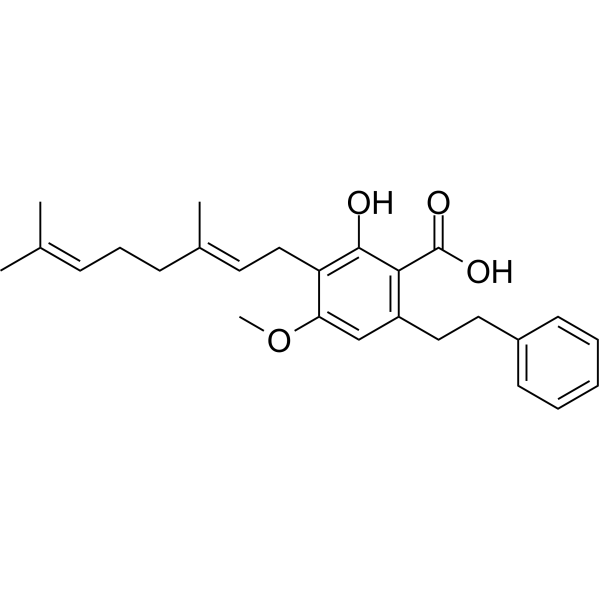
Amorfrutin B is a highly potent natural peroxisome proliferation-activated receptor γ (PPARγ) agonist with oral activity with Ki values of 19 nM and EC50 values of 73 nM, respectively. Amorfrutin B has hypoglycemic and neuroprotective activities .
loading...
    loading...
Cat. No.: HY-127055
CAS No.: 6964-20-1
Target:  

Apolipoprotein

Research Areas:  

Metabolic Disease

Tiadenol is an orally effective lipid-lowering compound and peroxisome proliferator. Tiadenol promotes peroxisome-associated fatty acid metabolism, and its induction of the activities of enzymes such as palmitoyl-CoA hydrolase, carnitine acetyl-transferase and catalase is mainly associated with de novo protein synthesis. The triglyceride-lowering effect of Tiadenol is not accompanied by increased activities of lipoprotein lipase (LPL) and hepatic lipase (HL), and it reduces VLDL Apo E. Tiadenol can be used in studies related to lipid metabolism, peroxisome proliferation and hyperlipoproteinemia .
loading...
    loading...
Cat. No.: HY-100189
CAS No.: 72678-30-9
Research Areas:  

Metabolic Disease

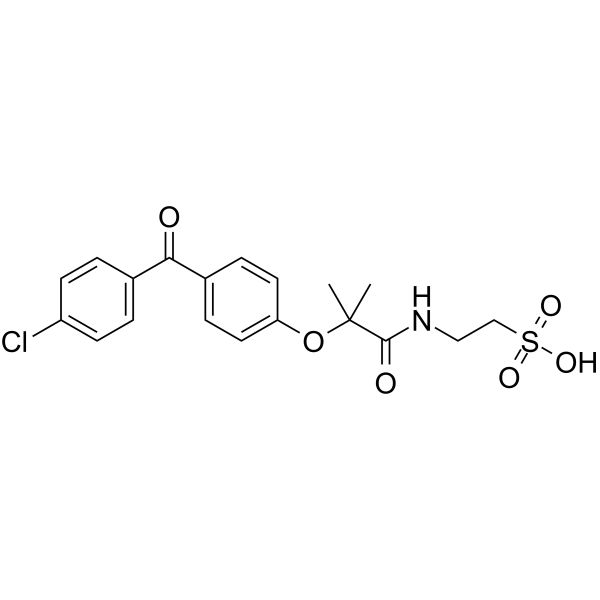
LS2265 is a taurine derivative of fenofibrate and can induce proliferation of peroxisomes in liver cells of rats.
loading...
    loading...
Cat. No.: HY-19227
CAS No.: 153655-35-7
Target:  

PPAR

Research Areas:  

Cardiovascular Disease

BM 170249 is a peroxisome proliferator, particularly in the perivenous region of the central acini in the liver. BM 170249 significantly reduces serum triglyceride and cholesterol levels in rats. BM 170249 strongly induces the activity of key enzymes in the peroxisome fatty acid β-oxidation system (such as acyl-CoA oxidase AOX, multifunctional enzyme PH, and thiolase PT), but leads to decreased activity of catalase and uricase in peroxisome components. BM 170249 could be used in lipid-lowering studies .
loading...
    loading...
Cat. No.: HY-W563489
CAS No.: 88431-47-4
Synonyms: POCA
Clomoxir (POCA) is a carnitine palmitoyltransferase I (CPT I) inhibitor with hypoglycemic activity. Clomoxir mediates the inhibition of CPT I via its active form POCA-CoA. Clomoxir inhibits long-chain fatty acid oxidation, ketogenesis, gluconeogenesis, de novo synthesis of cholesterol and fatty acids, and also mildly inhibits acetyl-CoA carboxylase. Clomoxir reduces blood glucose levels in various rodent and porcine models, alters plasma NEFA and cholesterol concentrations, induces hepatic lipid accumulation, peroxisome proliferation and mild myocardial hypertrophy in rats, and stimulates the pentose phosphate pathway in cultured human fibroblasts. Clomoxir can be used in diabetes-related research .
loading...
    loading...

