1. Search Result
Search Result
Results for "

proliferation arrest

" in MedChemExpress (MCE) Product Catalog:

447

Inhibitors & Agonists

1

Fluorescent Dyes

1

Biochemical Assay Reagents

4

Peptides

1

Inhibitory Antibodies

90

Natural
Products

8

Isotope-Labeled Compounds

6

Click Chemistry

2

Oligonucleotides

Cat. No. Product Name Target Research Areas Chemical Structure
  • HY-N0623
    L-Tryptophan
    10+ Cited Publications

    Tryptophan; Tryptophane

    Environmental Pollutants Metabolic Disease Cancer
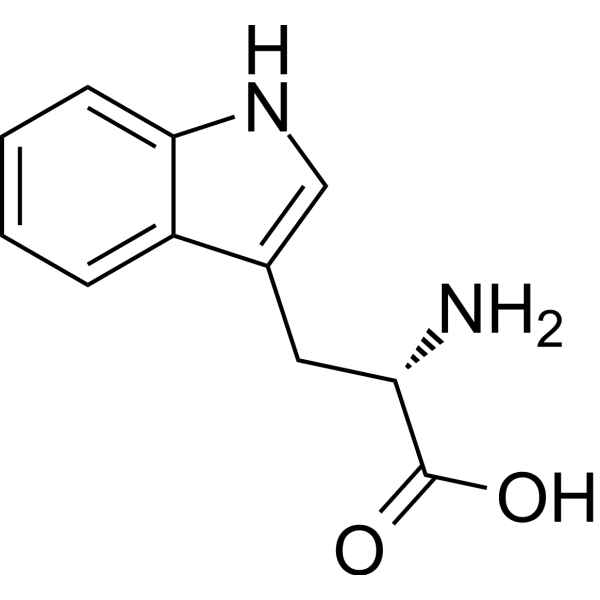
    L-Tryptophan (Tryptophan) is an orally active and essential amino acid that is the precursor of serotonin, melatonin, and vitamin B3. L-Tryptophan can promote an increase in stemness and osteogenic ability of BMSCs in vitro and in vivo. L-Tryptophan inhibits cell proliferation and induced cell cycle arrest with high levels .
    L-Tryptophan
  • HY-13442A
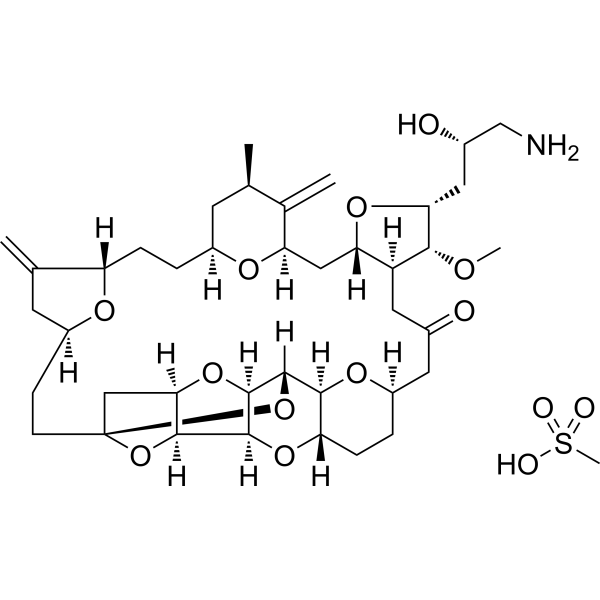
    Eribulin mesylate
    5+ Cited Publications

    B1939 mesylate; E7389 mesylate; ER-086526 mesylate

    Microtubule/Tubulin Apoptosis Cancer
    Eribulin mesylate is an inhibitor for microtubule. Eribulin mesylate inhibits the proliferation of cancer cell LM8 and Dunn, inhibits the cell migration of LM8, arrests the cell cycle at G2/M phase, and induces apoptosis in LM8. Eribulin mesylate exhibits antitumor efficacy in mouse model .
    Eribulin mesylate
  • HY-N0636
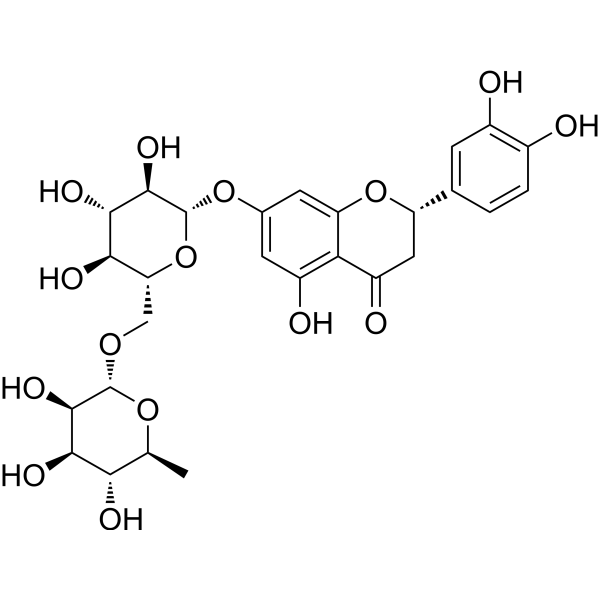
    Eriocitrin
    5 Publications Verification

    Eriodictyol 7-rutinoside; Eriodictyol 7-O-rutinoside

    Apoptosis Cancer
    Eriocitrin is a flavonoid isolated from lemons that is a powerful antioxidant. Eriocitrin inhibits the proliferation of liver cancer cells by arresting the cell cycle in the S phase by upregulating p53, cyclin A, cyclin D3 and CDK6. Eriocitrin triggers apoptosis by activating intrinsic signaling pathways involving mitochondria .
    Eriocitrin
  • HY-14521
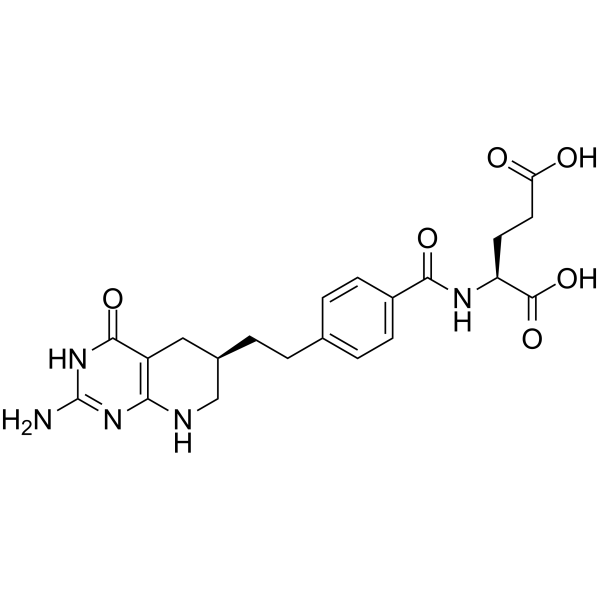
    Lometrexol
    3 Publications Verification

    DDATHF

    Antifolate Apoptosis Caspase Bcl-2 Family Cancer
    Lometrexol (DDATHF), an antipurine antifolate, can inhibit the activity of glycinamide ribonucleotide formyltransferase (GARFT) but do not induce detectable levels of DNA strand breaks. Lometrexol can further inhibit de novo purine synthesis, causing abnormal cell proliferation and apoptosis, even cell cycle arrest. Lometrexol has anticancer activity. Lometrexol also is a potent human Serine hydroxymethyltransferase1/2 (hSHMT1/2) inhibitor .
    Lometrexol
  • HY-B1029
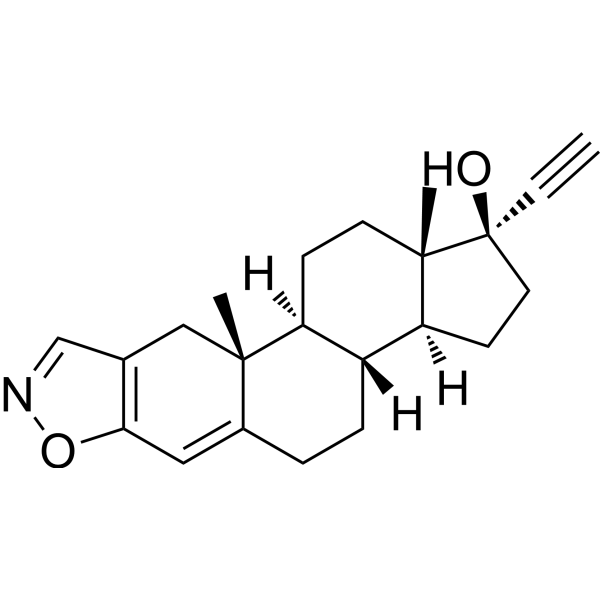
    Danazol
    4 Publications Verification

    PKC Apoptosis Tyrosinase Endocrinology Cancer
    Danazol inhibits the proliferation of cancer cell MDA-MB-231 and MCF-7 with IC50 of 65 µg/mL and 31 µg/mL. Danazol arrests the cell cycle at G1 phase, induces apoptosis in MDA-MB-231 through PKCα signaling pathway .
    Danazol
  • HY-157122
    VJDT
    3 Publications Verification

    TREM receptor Transmembrane Glycoprotein Akt PI3K Interleukin Related NF-κB Inflammation/Immunology Cancer
    VJDT is a TREM1 inhibitor that can effectively block TREM1 signaling. VJDT inhibits tumor cell proliferation and migration and induces cell cycle arrest. VJDT has immunomodulatory and antitumor activities, and can be used for the research of tumors such as melanoma .
    VJDT
  • HY-N0623R
    L-Tryptophan (standard)
    10+ Cited Publications

    Tryptophan (standard); Tryptophane (standard)

    Others Reference Standards Metabolic Disease
    L-Tryptophan (standard) is the analytical standard of L-Tryptophan. L-Tryptophan (Tryptophan) is an orally active and essential amino acid that is the precursor of serotonin, melatonin, and vitamin B3. L-Tryptophan can promote an increase in stemness and osteogenic ability of BMSCs in vitro and in vivo. L-Tryptophan inhibits cell proliferation and induced cell cycle arrest with high levels .
    L-Tryptophan (standard)
  • HY-N0211
    Cyasterone
    2 Publications Verification

    EGFR Apoptosis Cancer
    Cyasterone, a natural EGFR inhibitor, mainly isolated from Ajuga decumbens Thunb (Labiatae). Cyasterone manifests anti-proliferation effect by induced apoptosis and cell cycle arrests. Cyasterone may serves as a therapeutic anti-tumor agent against human tumors .
    Cyasterone
  • HY-18643
    TZ9
    2 Publications Verification

    E1/E2/E3 Enzyme Apoptosis Cancer
    TZ9 is a selective Rad6 inhibitor. TZ9 inhibits Rad6B-induced histone H2A ubiquitination, downregulates intracellular β-catenin, induces G2-M arrest and apoptosis, and inhibits the proliferation and migration of metastatic human breast cancer cells .
    TZ9
  • HY-101029

    NEKs Apoptosis Cancer
    MBM-55 is a potent NIMA-related kinase 2 (Nek2) inhibitor with an IC50 of 1 nM. MBM-55 shows a 20-fold or greater selectivity in most kinases with the exception of RSK1 (IC50=5.4 nM) and DYRK1a (IC50=6.5 nM). MBM-55 effectively inhibits the proliferation of cancer cells by inducing cell cycle arrest and apoptosis. MBM-55 shows antitumor activities, and no obvious toxicity to mice .
    MBM-55
  • HY-163786

    PROTACs CDK Apoptosis Cancer
    PROTAC CDK4/6 degrader 1 is a CDK4/CDK6 PROTAC degrader, with DC50 values of 10.5 nM and 2.5 nM, respectively. PROTAC CDK4/6 degrader 1 inhibits the proliferation of Jurkat cells (IC50 = 0.18 μM), arrests the cell cycle at the G1 phase, and induces apoptosis. PROTAC CDK4/6 degrader 1 can be used for cancer research.
    PROTAC CDK4/6 degrader 1
  • HY-N1925
    Tea polyphenol
    2 Publications Verification

    Apoptosis Autophagy Neurological Disease Inflammation/Immunology Cancer
    Tea polyphenol is the floorboard of phenolic compounds in tea. Tea polyphenol exhibits biological activity including antioxidant and anti-cancer activities, inhibition of cell proliferation, induction of apoptosis, cell cycle arrest and modulation of carcinogen metabolism .
    Tea polyphenol
  • HY-159480

    Src ATM/ATR Apoptosis mTOR AMPK Cancer
    AD1058 is an orally active, selective, and BBB-permeable inhibitor of ATR (IC50: 1.6 nM). AD1058 exhibits anticancer activity by inhibiting tumor cell proliferation, inducing cell cycle arrest, and promoting apoptosis. AD1058 is suitable for research on advanced malignancies and brain metastases .
    AD1058
  • HY-103036

    Epigenetic Reader Domain Apoptosis Cancer
    BET bromodomain-IN-5 is an orally active BET inhibitor with an IC50 of 14 nM against BRD4 (1). BET bromodomain-IN-5 can inhibit the proliferation of tumor cells and induce cell cycle arrest and apoptosis. BET bromodomain-IN-5 can be used in the research of tumors .
    BET bromodomain-IN-5
  • HY-N3181

    Apoptosis Wnt β-catenin c-Myc Survivin GSK-3 Ferroptosis Keap1-Nrf2 Heme Oxygenase (HO) NF-κB Interleukin Related Cardiovascular Disease Neurological Disease Metabolic Disease Inflammation/Immunology Cancer
    Nodosin is an orally active diterpenoid compound that can be isolated from Isodon serra. Nodosin can inhibit the proliferation and induce cell cycle arrest and apoptosis of tumor cells. Nodosin can also inhibit oxidative stress, inflammatory responses, and ferroptosis. Nodosin has anti-inflammatory and anti-tumor activities .
    Nodosin
  • HY-N1196

    NF-κB Inflammation/Immunology
    Suberosin, isolated from Plumbago zeylanica, exhibits anti-inflammatory and anticoagulant activity. Suberosin suppresses PHA-induced PBMC proliferation and arrested cell cycle progression from the G1 transition to the S phase through the modulation of the transcription factors NF-AT and NF-κB .
    Suberosin
  • HY-101030A

    NEKs Apoptosis Cancer
    MBM-17S is a potent NIMA-related kinase 2 (Nek2) inhibitor, with an IC50 of 3 nM. MBM-17S effectively inhibits the proliferation of cancer cells by inducing cell cycle arrest and apoptosis. MBM-17S shows antitumor activities, and no obvious toxicity to mice .
    MBM-17S
  • HY-14521B
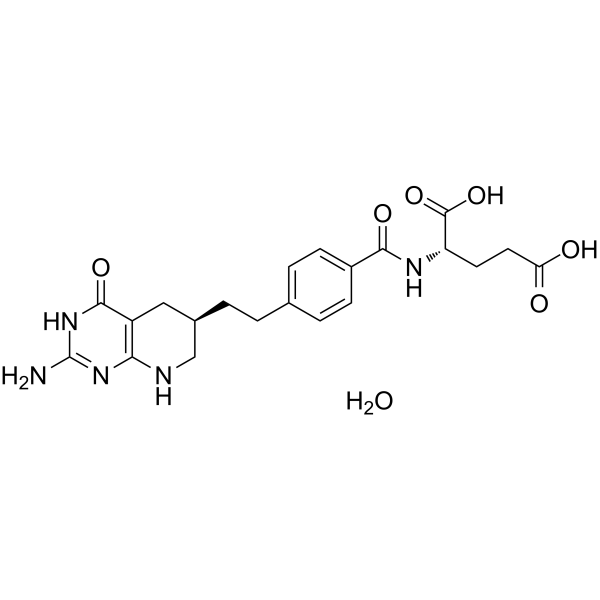
    Lometrexol hydrate
    3 Publications Verification

    DDATHF hydrate

    Antifolate Apoptosis Caspase Bcl-2 Family Cancer
    Lometrexol (DDATHF) hydrate, an antipurine antifolate, can inhibit the activity of glycinamide ribonucleotide formyltransferase (GARFT) but do not induce detectable levels of DNA strand breaks. Lometrexol hydrate can further inhibit de novo purine synthesis, causing abnormal cell proliferation and apoptosis, even cell cycle arrest. Lometrexol hydrate has anticancer activity. Lometrexol hydrate also is a potent human Serine hydroxymethyltransferase1/2 (hSHMT1/2) inhibitor .
    Lometrexol hydrate
  • HY-159147

    PROTACs ROS Kinase Apoptosis Cancer
    SIAIS039 is an orally active c-ros oncogene 1 (ROS1)-specific PROTAC with DC50s of 154.46 nM, 126.47 nM, 143.69 nM for HCC78 cells, Ba/F3 expressing the CD74-ROS1 fusion and Ba/F3 expressing the SDC4-ROS1 fusion, respectively. SIAIS039 suppresses cell proliferation, induces cell cycle arrest and apoptosis, and inhibits clonogenicity against ROS1-positive cells. SIAIS039 demonstrates anti-tumour effects against ROS1-driven tumor growth vivo. SIAIS039 is composed of the ALK inhibitor Brigatinib (HY-12857), a linker EM-12 (HY-138793), and a VHL ligand E3 ubiquitin ligase 1-Butyne (Red: Brigatinib; Blue: VHL ligand; Black: linker) .
    SIA​​IS039
  • HY-118034
    MTBT
    1 Publications Verification

    p38 MAPK Apoptosis Cancer
    MTBT is an anticancer agent and p38 MAPK activator. MTBT can inhibit tumor cell proliferation, induce cell cycle arrest and apoptosis. MTBT increases the phosphorylation of histone H3 serine in cancer cells, thereby arresting the cell cycle in the M phase. The specific inhibitor of p38 MAPK, Adezmapimod (HY-10256), can abrogate the cell cycle arrest induced by MTBT .
    MTBT
  • HY-N1516

    Apoptosis Cancer
    Ganoderenic acid D is a triterpene identified from the effective compounds of Ganoderma lucidum extract (GLE). Ganoderenic acid D inhibits the proliferation of cancer cells by inducing cell cycle arrest and apoptosis .
    Ganoderenic acid D
  • HY-134333

    Apoptosis Cancer
    ICCB280 is a potent inducer of C/EBPα. ICCB280 exhibits anti-leukemic properties including terminal differentiation, proliferation arrest, and apoptosis through activation of C/EBPα and affecting its downstream targets (such as C/EBPε, G-CSFR and c-Myc) .
    ICCB280
  • HY-163622

    Apoptosis Deubiquitinase Cancer
    USP10-IN-3 (compound D1) is a potent USP10 inhibitor with an IC50 value of 7.2 µM. USP10-IN-3 inhibits cell proliferation. USP10-IN-3 induces apoptosis and cell cycle arrest at S-phase .
    USP10-IN-3
  • HY-139054

    Apoptosis Cancer
    4'-Methoxyflavone is a flavonoid with antioxidant properties and anti-proliferative activity against cancer cells. 4'-Methoxyflavone can inhibit cycle-dependent kinases leading to cell cycle arrest and regulate cell signaling pathways to influence cell proliferation and apoptosis. 4'-Methoxyflavone can be used in cancer chemoprevention research .
    4'-Methoxyflavone
  • HY-Q04764

    Thyroid Hormone Receptor Apoptosis Cancer
    TI17 is an inhibitor of the thyroid hormone receptor-interacting protein Trip13 and has anticancer activity. TI17 effectively inhibits multiple myeloma (MM) cell proliferation and induces cell cycle arrest and apoptosis. Trip13 is an AAA-ATPase that mediates double-strand break (DSB) repair; TI17 inhibits Trip13 function and increases DNA damage .
    TI17
  • HY-171825

    PROTACs Anaplastic lymphoma kinase (ALK) Cancer
    SIAIS001 is a CRBN-dependent ALK PROTAC degrader with a DC50 of 3.9 nM. SIAIS001 induces ALK protein degradation via the ubiquitin-proteasome system. SIAIS001 induces G1/S phase cell cycle arrest and inhibits proliferation of cancer cells. SIAIS001 can be used for the research of anaplastic large-cell lymphomas .
    SIAIS001
  • HY-168556

    CDK PROTACs DNA/RNA Synthesis Cancer
    YJ9069 is a selective CDK12/CDK13 PROTAC degrader with an IC50 of 22.22 nM for in VCaP cells. CDK12/13 degradation rapidly triggers gene-length-dependent transcriptional elongation defects, leading to DNA damage and cell-cycle arrest. YJ9069 effectively inhibits proliferation in subsets of prostate cancer cells and significantly suppresses prostate tumor growth. (Pink: CDK12/CDK13 degradation agent (HY-168658); Black: Linker (HY-W015967); Blue: ligand for E3 ligase (HY-103596)) .
    YJ9069
  • HY-146999

    Histone Methyltransferase Epigenetic Reader Domain Apoptosis Cancer
    YM458 is a potent EZH2 and BRD4 dual inhibitor with IC50s of 490 nM and 34 nM, respectively. YM458 inhibits cell proliferation and colony formation and induces cell cycle arrest and apoptosis in solid cancer cells. YM458 can be used for researching anticancer .
    YM458
  • HY-14521A
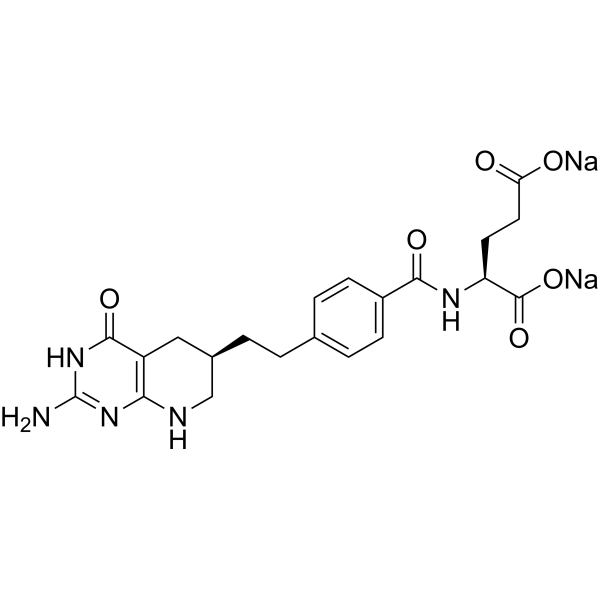
    Lometrexol disodium
    3 Publications Verification

    DDATHF disodium

    Antifolate Apoptosis Caspase Bcl-2 Family Cancer
    Lometrexol (DDATHF) disodium, an antipurine antifolate, can inhibit the activity of glycinamide ribonucleotide formyltransferase (GARFT) but do not induce detectable levels of DNA strand breaks. Lometrexol disodium can further inhibit de novo purine synthesis, causing abnormal cell proliferation and apoptosis, even cell cycle arrest. Lometrexol disodium has anticancer activity. Lometrexol disodium also is a potent human Serine hydroxymethyltransferase1/2 (hSHMT1/2) inhibitor .
    Lometrexol disodium
  • HY-18969

    CDK Cancer
    LDC3140 is a selective CDK7 inhibitor (IC50<5 nM). By inhibiting the activity of CDK7, LDC3140 affects the regulation of the cell cycle, leading to cell cycle arrest and thus inhibiting the proliferation of tumor cells. LDC3140 can be used in the research of cancer treatment .
    LDC3140
  • HY-162352

    Epigenetic Reader Domain Apoptosis Cancer
    SDU-071 is a potent and orally active inhibitor of BRD4-p53 inhibitor. SDU-071 inhibits MDA-MB-231 cells proliferation with an IC50 of 10.5 μM. SDU-071 induces cell cycle arrest and apoptosis .
    SDU-071
  • HY-161268

    Apoptosis NEDD8-activating Enzyme Reactive Oxygen Species (ROS) Cancer
    NAE-IN-1 (compound X-10) is a potent NAE1 inhibitor. NAE-IN-1 induces apoptosis and cell cycle arrest at the G2/M phase. NAE-IN-1 increases ROS levels and prevents cell migration. NAE-IN-1 shows anti-proliferation activity .
    NAE-IN-1
  • HY-N12677

    Caflanone; FBL-03G

    SARS-CoV Apoptosis Autophagy Akt Infection Cancer
    Isocannflavin B (Caflanone) is a flavonoid compound. Isocannflavin B exhibits anti-tumor and anti-viral activities. Isocannflavin B induces apoptosis, autophagy and cell cycle arrest in tumor cells, and inhibits cell proliferation. Isocannflavin B inhibits HCoV-OC43. Isocannflavin B can be used in research related to cancer and COVID-19 .
    Isocannflavin B
  • HY-149086

    RAR/RXR Apoptosis PARP Bcl-2 Family Cancer
    BPA-B9 is a RXRα ligand and antagonist targeting the pRXRα-PLK1 interaction. BPA-B9 has excellent RXRα-binding affinity (KD=39.29 ± 1.12 nM). BPA-B9 inhibits the proliferation of cancer cells by inducing mitotic arrest and cell apoptosis .
    BPA-B9
  • HY-101030

    NEKs Apoptosis Cancer
    MBM-17 is a potent NIMA-related kinase 2 (Nek2) inhibitor with an IC50 of 3 nM. It effectively inhibits the proliferation of cancer cells by inducing cell cycle arrest and apoptosis. MBM-55 shows antitumor activities, and no obvious toxicity to mice .
    MBM-17
  • HY-130588A

    GSAO TFA

    Mitochondrial Metabolism Cancer
    Glutathione arsenoxide (GSAO) TFA is a potential anticancer agent and a tumour metabolism inhibitor. Glutathione arsenoxide TFA targets Mitochondrial endomycin nucleotide transferase (ANT). Glutathione arsenoxide TFA causes cell proliferation arrest and cell death. Glutathione arsenoxide TFA can be used to identify cell-surface proteins, such as Protein disulphide isomerase .
    Glutathione arsenoxide TFA
  • HY-126412

    Apoptosis Cancer
    Neochamaejasmine A is a biflavonoid that can be isolated from the roots of Stellera chamaejasme L.. Neochamaejasmine A inhibits proliferation, induces cell cycle arrest and apoptosis in tumor cells. Neochamaejasmine A can be used in the research of cancers such as prostate cancer, hepatoma cancer .
    Neochamaejasmine A
  • HY-151939

    DNA/RNA Synthesis Apoptosis Cancer
    BLM-IN-2 is a Bloom's Syndrome Protein (BLM) inhibitor with an IC50 value of 0.8 μM. BLM-IN-2 effectively suppresses the proliferation, invasion, cell cycle arrest and apoptosis of CRC cells. BLM-IN-2 can be used for the reserarch of colorectal cancer (CRC) .
    BLM-IN-2
  • HY-130588

    GSAO

    Mitochondrial Metabolism Cancer
    Glutathione arsenoxide (GSAO) is a potential anticancer agent and a tumour metabolism inhibitor. Glutathione arsenoxide targets Mitochondrial endomycin nucleotide transferase (ANT). Glutathione arsenoxide causes cell proliferation arrest and cell death. Glutathione arsenoxide can be used to identify cell-surface proteins, such as Protein disulphide isomerase .
    Glutathione arsenoxide
  • HY-N16418

    Bacterial Reactive Oxygen Species (ROS) Infection Cancer
    Epanorin is a secondary metabolite of the Acarospora lichenic species Epanorin can inhibit cancer cells proliferation, ROS production and induce G0/G1 phase arrest. Epanorin shows antibacterial activity. Epanorin can be used for the researches of cancer and infection, such as breast cancer and S. pneumonia infection .
    Epanorin
  • HY-101990

    VEGFR Others
    IMS2186 is an anti-choroidal neovascularization (CNV) agent that inhibits angiogenesis upstream of VEGF. IMS2186 can arrest cancer cell cycle in G2/M phase, thus exerting anti-proliferation and anti-angiogenesis effects. IMS2186 has no intraocular toxicity and reduces the amount of eye leakage and diseased cells .
    IMS2186
  • HY-145670

    Akt MDM-2/p53 Cancer
    cis,trans-Germacrone is a isomer of Germacrone (HY-N0440). Germacrone exhibits a wide range of antitumor, antioxidant and anti-inflammatory effects. Germacrone inhibits lung cancer cell proliferation and alters the Akt/MDM2/p53. Germacrone also arrests cell cycle at G1/S phase .
    cis,trans-Germacrone
  • HY-101029A

    NEKs Ribosomal S6 Kinase (RSK) DYRK Apoptosis Cancer
    MBM-55S is a potent NIMA-related kinase 2 (Nek2) inhibitor with an IC50 of 1 nM. MBM-55S shows a 20-fold or greater selectivity in most kinases with the exception of RSK1 (IC50=5.4 nM) and DYRK1a (IC50=6.5 nM). MBM-55S effectively inhibits the proliferation of cancer cells by inducing cell cycle arrest and apoptosis. MBM-55S shows antitumor activities, and no obvious toxicity to mice .
    MBM-55S
  • HY-105293

    DNA/RNA Synthesis Topoisomerase Cancer
    NSC 727357 is a DNA intercalator and topoisomerase inhibitor with antitumor activity. NSC 727357 can inhibit cells proliferation and induce G1 phase arrest. NSC 727357 can be used for the research of cancer, such as melanoma .
    NSC 727357
  • HY-18626

    Topoisomerase Cancer
    NK 314 is an inhibitor for topoisomerase IIα, which generates the break of DNA double-strand. NK 314 arrests the cell cycle at G2 phase in human acute myeloid leukemia cells, inhibits the proliferation of CEM with IC90 of 55 nM .
    NK 314
  • HY-N0291R

    Reference Standards Apoptosis Inflammation/Immunology Cancer
    (±)-Norcantharidin (Standard) is the analytical standard of (±)-Norcantharidin. This product is intended for research and analytical applications. (±)-Norcantharidin ((±)-NCTD) is a compound possessing anti-angiogenetic activity with potential use in anti-cancertherapy. (±)-Norcantharidin could prevent tumorigenesis by inhibiting cell proliferation, inducing apoptosis and the cell cycle arrest, and anti-angiogenic effects .
    (3aR,4S,7R,7aS)-Hexahydro-4,7-epoxyisobenzofuran-1,3-dione (Standard)
  • HY-161141

    c-Met/HGFR Cancer
    EGFR/ C-Met-in-2 (Compound H-22) is a dual inhibitor of EGFR/c-Met. EGFR/c-Met-IN-2 inhibits cell proliferation by arresting G2/M phase. EGFR/c-Met-IN-2 has antitumor activity .
    EGFR/c-Met-IN-2
  • HY-168263

    Histone Methyltransferase Apoptosis Cancer
    PRMT5-IN-45 (compound 36) is a potent and selective PRMT5 inhibitor with an IC50 of 3 nM. PRMT5-IN-45 potently reduces the level of symmetric dimethylarginines (sDMA) and inhibits the proliferation of MOLM-13 cell lines by inducing apoptosis and cell cycle arrest .
    PRMT5-IN-45
  • HY-178224

    Apoptosis DNA/RNA Synthesis Cancer
    Morindone is an anthraquinone found in Morinda citrifolia L. Morindone can inhibit cancer cells proliferation, induce apoptosis and cause G1 phase arrest. Morindone can inhibit activities of DNA polymerase and downregulate mutated TP53 and KRAS gene expression. Morindone can be used for the research of cancer, such as colon cancer .
    Morindone
  • HY-P10421

    ERK Cancer
    PKCδ substrate acts as a nuclear transporter of ERK2 and is involved in ERK2 mediated gene activation. PKCδ is involved in the regulation of cell growth, proliferation, cell cycle arrest, and apoptosis by phosphorylating hBVR and other proteins. PKCδ substrate can be used to study the development of diseases, especially cancer biology .
    PKCδ substrate

Inquiry Online

Your information is safe with us. * Required Fields.

Salutation


Country or Region *

Applicant Name *


Organization Name *

Department *


Email Address *


Product Name *

Cat. No.


Requested quantity *

Phone Number *


Remarks

Inquiry Online

Inquiry Information

Product Name:
Cat. No.:
Quantity:
MCE Japan Authorized Agent:

