11 Results for "

radiation-induced damage;

" in MedChemExpress (MCE) Product Catalog:
Products (11)

11 Results for "radiation-induced damage;" in MCE Product Catalog:

1
1 Cited Publications
Cat. No.: HY-W019894
CAS No.: 7773-01-5
Synonyms: Manganese dichloride
Manganese chloride is an orally active MRI liver contrast agent. Manganese chloride induces Apoptosis and activates the mTOR signaling pathway. Manganese chloride induces cognitive impairment, promotes hematopoietic recovery, and reduces radiation-induced bone marrow and brain damage. It can be used for the study of renal impairment .
loading...
    loading...
1
1 Cited Publications
Cat. No.: HY-N0307
CAS No.: 114902-16-8
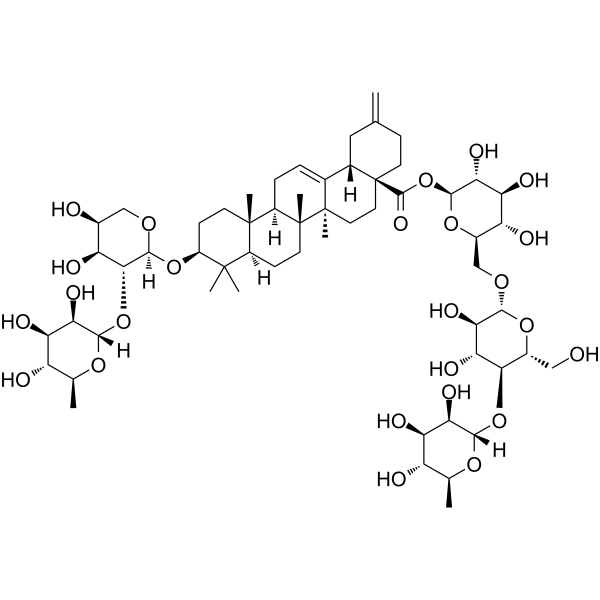
Ciwujianoside B is an orally active, blood-brain barrier penetrable radioprotective agent and memory enhancer. Ciwujianoside B reduces radiation-induced DNA damage, cell cycle arrest and apoptosis, downregulates NF-κB and the Bax/Bcl-2 ratio, and enhances the proliferative capacity of bone marrow cells. Ciwujianoside B enhances object recognition memory in normal mice and induces dendritic extension in primary cultured cortical neurons. Ciwujianoside B can be used in studies related to hematopoietic system radiation injury and memory enhancement .
loading...
    loading...
Cat. No.: HY-N0507
CAS No.: 84954-92-7
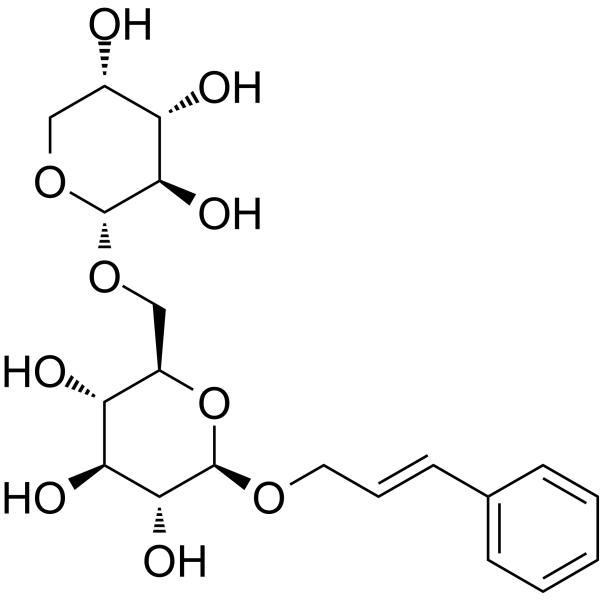
Rosavin, an orally bioactive phenylpropanoid from Rhodiola rosea L. (RRL), is an adaptogen that enhances the body’s response to environmental stress. Rosavin significantly influences bone tissue metabolism by inhibiting osteoclastogenesis and promoting osteoblast differentiation, also impacts various diseases, demonstrating antidepressant, adaptogenic, and anxiolytic effects in mouse models. Additionally, Rosavin improves survival, reducing intestinal damage in irradiated rats and Ischemia-reperfusion(I/R)-induced cerebral injury in vivo by regulating inflammation and oxidative stress, making it a promising candidate for research in radiation-induced intestinal injury, I/R-induced cerebral injury and osteoporosis .
loading...
    loading...
Cat. No.: HY-N12124
CAS No.: 1011244-19-1
Synonyms: Monascinol
Monascuspiloin (Monascinol) is an orally active compound extracted from red mold-fermented rice, with multiple biological activities including anti-androgenic, anti-inflammatory, hypolipidemic, and anti-cancer properties. Monascuspiloin attenuates the PI3K/Akt/mTOR signaling pathway, enhances AMPK phosphorylation, downregulates FASN/SREBP2, induces apoptosis, G2/M phase arrest and autophagy in prostate cancer cells, interferes with dihydrotestosterone-receptor binding, enhances radiation-induced DNA damage, stimulates endoplasmic reticulum stress, and alleviates hepatic oxidative stress. Monascuspiloin regulates hepatic metabolic pathways and modulates the expression of genes and proteins related to hepatic lipid metabolism. Monascuspiloin can be used in studies related to prostate cancer and alcoholic liver injury .
loading...
    loading...
Cat. No.: HY-106055
CAS No.: 74817-61-1
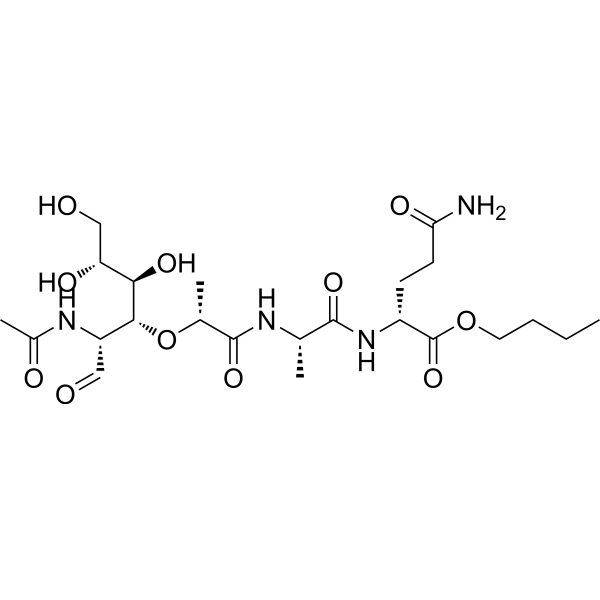
Murabutide is an immunomodulator and also a NOD2 receptor agonist . Murabutide enhances the signal transduction of ATR and NOD2, mediates the activation of the DDR pathway, and thereby repairs radiation-induced DNA double-strand breaks. Murabutide inhibits radiation-induced cell apoptosis and protects cells and mice from radiation-induced toxic damage. Murabutide induces the expression and DNA-binding activity of Oct-1 in macrophages, thereby inhibiting the transcription and replication of HIV-1. Murabutide reduces the expression levels of CD4 and CCR5 on the surface of macrophages, and induces the secretion of β-chemokines, TNF-α and IL-6. Murabutide enhances non-specific viral resistance and targets reticuloendothelial cells. Murabutide can be used in research related to radiation-induced damage and human immunodeficiency virus type 1 infection .
loading...
    loading...
Cat. No.: HY-155801
CAS No.: 216014-14-1
CRX 527 is a TLR4 agonist. CRX 527 activates the MyD88-dependent, TRIF-dependent, and TRAF6/NF-κB signaling pathways downstream of TLR4, mimics lipid A, and regulates antigen processing and presentation by dendritic cells. CRX 527 stimulates innate immune responses and enhances vaccine efficacy. CRX 527 maintains the structural integrity of hematopoietic tissues, spleen and intestine, alleviates radiation-induced damage, preserves intestinal homeostasis, and inhibits apoptosis, inflammatory responses, oxidative stress and DNA damage. CRX 527 can be used in the research of acute radiation syndrome, melanoma, HPV-related tumors and intracerebral hemorrhage .
loading...
    loading...
Cat. No.: HY-W740088
CAS No.: 4009-68-1
Synonyms: S-Adchnone
Target:  

Adrenergic Receptor

Research Areas:  

Cardiovascular Disease

Adrenochrome monoguanylhydrazone methanesulfonate (S-Adchnone) is an adrenochrome derivative that has a protective effect against radiation-induced damage of hematopoietic organs .
loading...
    loading...
Cat. No.: HY-105069A
CAS No.: 875455-82-6
Purity:  98.14%
Synonyms: TP508 amide acetate
Target:  

Thrombin

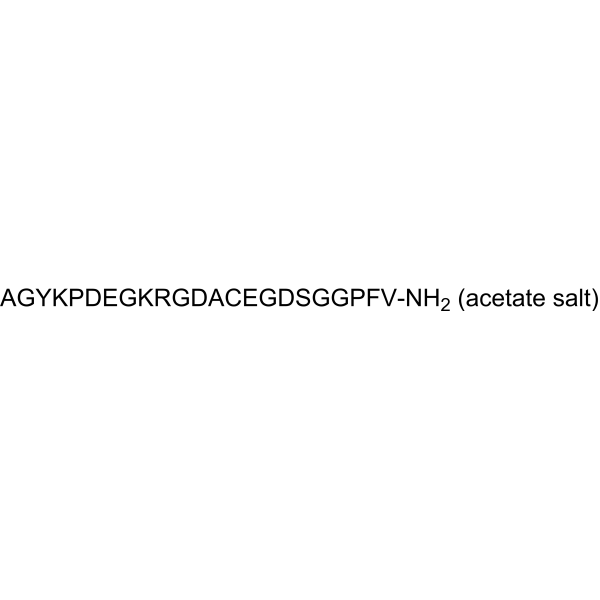
Rusalatide acetate (TP508 amide acetate), a regenerative peptide, mitigates radiation-induced gastrointestinal damage by activating stem cells and preserving crypt integrity .
loading...
    loading...
Cat. No.: HY-N0507R
CAS No.: 84954-92-7
Rosavin (Standard) is the analytical standard of Rosavin. This product is intended for research and analytical applications. Rosavin, an orally bioactive phenylpropanoid from Rhodiola rosea L. (RRL), is an adaptogen that enhances the body’s response to environmental stress. Rosavin significantly influences bone tissue metabolism by inhibiting osteoclastogenesis and promoting osteoblast differentiation, also impacts various diseases, demonstrating antidepressant, adaptogenic, and anxiolytic effects in mouse models. Additionally, Rosavin improves survival, reducing intestinal damage in irradiated rats and Ischemia-reperfusion(I/R)-induced cerebral injury in vivo by regulating inflammation and oxidative stress, making it a promising candidate for research in radiation-induced intestinal injury, I/R-induced cerebral injury and osteoporosis .
loading...
    loading...
Cat. No.: HY-N0307R
CAS No.: 114902-16-8
Ciwujianoside B (Standard) is the analytical standard of Ciwujianoside B. This product is intended for research and analytical applications. Ciwujianoside B is an orally active, blood-brain barrier penetrable radioprotective agent and memory enhancer. Ciwujianoside B reduces radiation-induced DNA damage, cell cycle arrest and apoptosis, downregulates NF-κB and the Bax/Bcl-2 ratio, and enhances the proliferative capacity of bone marrow cells. Ciwujianoside B enhances object recognition memory in normal mice and induces dendritic extension in primary cultured cortical neurons. Ciwujianoside B can be used in studies related to hematopoietic system radiation injury and memory enhancement.
loading...
    loading...
Cat. No.: HY-173309
P53/TLR2 modulator-1 (Compound Z9) is a modulator that targets both the P53 pathway and TLR2 simultaneously, exhibiting anti-radiation activity. P53/TLR2 modulator-1 reduces apoptosis by inhibiting the radiation-induced expression of P53 and Bax. At the same time, it activates the TLR2 pathway, upregulates the expression of downstream proteins MyD88 and P65, and promotes the secretion of cytokines such as IL-6, thus exerting an anti-radiation effect. P53/TLR2 modulator-1 shows significant anti-radiation activity against both AHH-1 cells and HUVECs. It can also increase the survival rate of C57BL/6J mice irradiated with a lethal dose of radiation and reduce the damage to their hematopoietic system, the villous structure of the small intestine, and the spleen caused by radiation. P53/TLR2 modulator-1 can be used in the research of radiation injury-related diseases .
loading...
    loading...
  • 1

