
1. Search Result
Search Result
Results for "

rat striatum

" in MedChemExpress (MCE) Product Catalog:

26

阻害剤およびアゴニスト

1

生化学アッセイ試薬

3

ペプチド

1

クリックケミストリー

製品番号 製品名 Target 研究分野 構造式
  • HY-14197A
    Clorgyline hydrochloride
    5+ Cited Publications

    Monoamine Oxidase Metabolic Disease
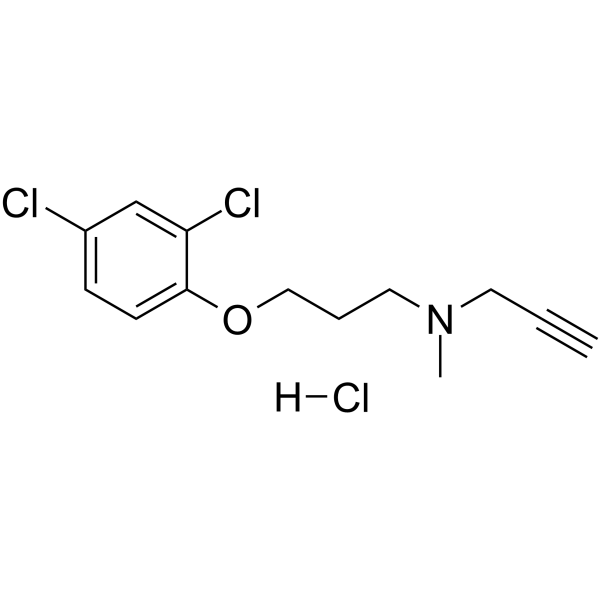
    Clorgyline hydrochloride is an irreversible and selective inhibitor of monoamine oxidase A (MAO-A) that is used in scientific research, structurally related to Pargyline (HY-A0091A). Clorgyline hydrochloride has little effect on the amounts of conjugated dopamine (DA) present in superfusate of slices from rat striatum. Clorgyline hydrochloride contains an Alkyne group and can undergo copper-catalyzed azide-alkyne cycloaddition (CuAAc) with molecules containing Azide groups .
    Clorgyline hydrochloride
  • HY-12363
    U-69593
    1 Publications Verification

    Opioid Receptor Neurological Disease
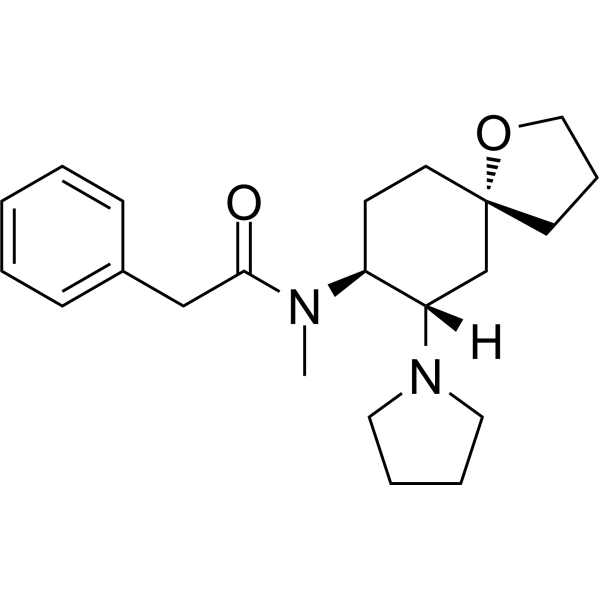
    U-69593 is a potent and selective κ1-opioid receptor agonist . U-69593 attenuates addictive agent-induced behavioral sensitization in the rat . U-69593 reduces anxiety and enhances spontaneous alternation memory in mice . U-69593 reduces calcium-dependent dialysate levels of dopamine and glutamate in the ventral striatum .
    U-69593
  • HY-145512

    NLT

    Dopamine Receptor Neurological Disease
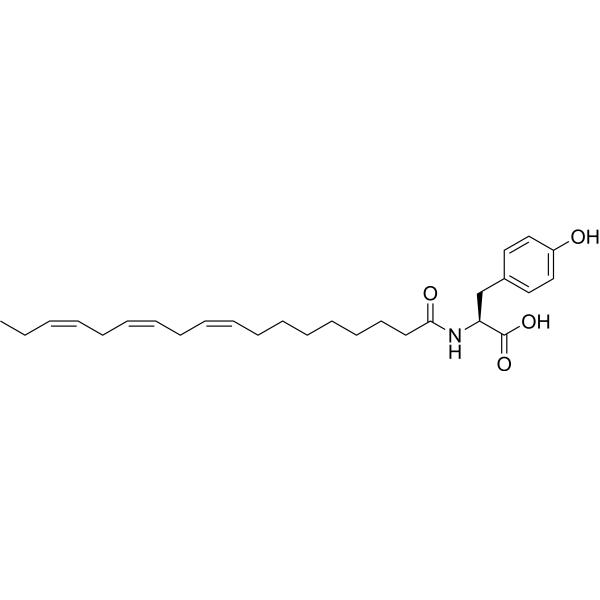
    N-(α-Linolenoyl) tyrosine (NLT) is a dopaminergic agonist capable of crossing the blood-brain barrier. N-(α-Linolenoyl) tyrosine increases the level, turnover rate and release amount of dopamine in the striatum. N-(α-Linolenoyl) tyrosine modulates rotational behavior in a rat model with unilateral striatal injury and alleviates excessive blinking symptoms in models induced by dopamine-depleting agents. N-(α-Linolenoyl) tyrosine can be used for research on Parkinson's disease and idiopathic blepharospasm .
    N-(α-Linolenoyl) tyrosine
  • HY-E70199

    APN/CD13

    Aminopeptidase Cardiovascular Disease
    Aminopeptidase N (rat) (APN/CD13) is a Zn 2+-dependent membrane-bound exopeptidase that preferentially degrades proteins and peptides with N-terminal neutral amino acids. Aminopeptidase N (rat) is inhibited by angiotensin IV and participates in the regulation of angiotensin IV half-life in the rat striatum .
    Aminopeptidase N (rat)
  • HY-P1764

    Dopamine Receptor Neurological Disease
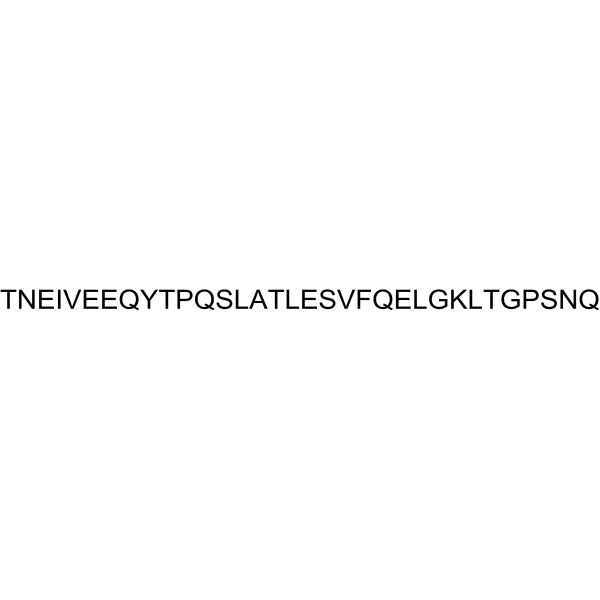
    Secretoneurin, rat, a 33-amino acid polypeptide, is generated by proteolytic processing of secretogranin II (SgII). Secretoneurin, rat induces dopamine release in the rat striatum in vivo and in vitro, and it exerts a very strong chemotactic effect on monocytes and eosinophils but not on granulocytes .
    Secretoneurin, rat
  • HY-160959

    nAChR Neurological Disease
    AN317 is a selective agonist for α6β2-containing nicotinic acetylcholine receptor (nAChR) with Ki of 6.2 nM and 4.1 nM, for α6/α3β2β3 receptor and α4β2 receptor, respectively. AN317 induces dopamine release in the synaptosomes of the rat striatum, enhances dopaminergic neuronal activity in substantia nigra, and exhibits protective efficacy to rat neurons against dopamine neurotoxin MPP +. AN317 exhibits good pharmacokinetic characteristics in rats. AN317 penetrates the blood-brain barrier (BB) .
    AN317
  • HY-NP180

    Calcium Channel Metabolic Disease
    Progesterone/BSA is a conjugate of Progesterone (HY-N0437) and bovine serum albumin (BSA). Progesterone/BSA cannot penetrate the plasma membrane of human sperm, but still rapidly elevates intracellular free calcium and induces the acrosome reaction. Progesterone/BSA can also act as a probe to specifically bind to progesterone-binding proteins on the membrane of rat brain synaptosomes .
    Progesterone/BSA
  • HY-106584

    Clospipramine

    Drug Derivative Dopamine Receptor 5-HT Receptor Neurological Disease
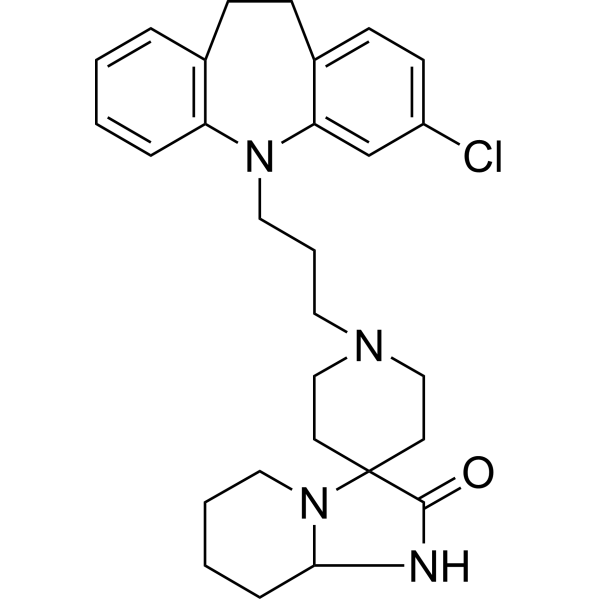
    Mosapramine (Clospipramine) is an orally active antipsychotic agent and one of the metabolites of Clocapramine (HY-B2073) after oral absorption. Mosapramine exerts its effects by specifically binding to striatal dopamine D2 receptors and frontal lobe 5-HT2 receptors, with a D2/5-HT2 receptor occupancy ratio of 7.4. Mosapramine induces typical neuropharmacological responses in rat brain regions, including extrapyramidal symptoms, hyperprolactinemia, increased salivation, constipation, and upregulated Fos protein expression. Mosapramine also features a reduced incidence of weight loss. Mosapramine is applicable to research related to schizophrenia .
    Mosapramine
  • HY-A0151
    Thioproperazine
    2 Publications Verification

    RP 7843; SKF 5883; Thioperazine

    Dopamine Receptor Neurological Disease
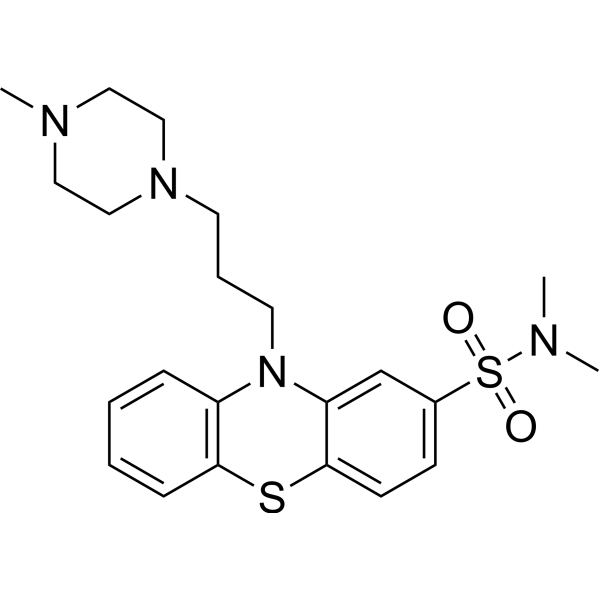
    Thioproperazine (RP 7843) is an orally active antipsychotic agent with calming, antiemetic activity. Thioproperazine is effective in promoting the release of dopamine in rat striatum. Thioproperazine can be used in studies of schizophrenia and bipolar disorder .
    Thioproperazine
  • HY-P3800

    Neurokinin Receptor Neurological Disease Endocrinology
    [Glp5] Substance P (5-11) is an octapeptide. [Glp5] Substance P (5-11) is one of the main substance P fragments in rat central nervous system (CNS). [Glp5] Substance P (5-11) locally modulates dopamine release in rat striatum .
    [Glp5] Substance P (5-11)
  • HY-B0884

    Monoamine Oxidase Cholinesterase (ChE) Neurological Disease
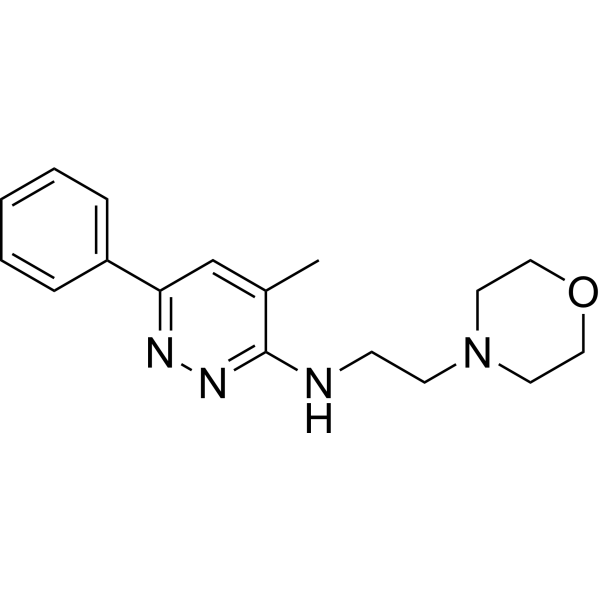
    Minaprine is a brain-penetrant monoamine oxidase inhibitor. Minaprine also weakly inhibits acetylcholinesterase (AChE) activity. Minaprine reduces intraneuronal dopamine metabolism, lowers striatal homovanillic acid and dihydroxyphenylacetic acid levels, and raises striatal 3-methoxytyramine and 5-hydroxytryptamine levels. Minaprine exhibits convulsant, antidepressant properties .
    Minaprine
  • HY-12520

    Dopamine Receptor Neurological Disease Cancer
    SKF 38393 is a selective dopamine D1 receptor agonist. SKF 38393 activates the cAMP signaling pathway and promotes dopamine release in the developing rat striatum. SKF 38393 inhibits MCF-7 breast cancer cell proliferation (IC50=0.1 μM). SKF 38393 is promising for research of neurodevelopmental disorders, dopamine-related diseases (e.g., Parkinson’s, dopamine deficiency), and cancers .
    SKF 38393
  • HY-14197AR

    Monoamine Oxidase Reference Standards Metabolic Disease
    Clorgyline hydrochloride (Standard) is the analytical standard of Clorgyline hydrochloride. This product is intended for research and analytical applications. Clorgyline hydrochloride is an irreversible and selective inhibitor of monoamine oxidase A (MAO-A) that is used in scientific research, structurally related to Pargyline (HY-A0091A). Clorgyline hydrochloride has little effect on the amounts of conjugated dopamine (DA) present in superfusate of slices from rat striatum. Clorgyline hydrochloride contains an Alkyne group and can undergo copper-catalyzed azide-alkyne cycloaddition (CuAAc) with molecules containing Azide groups .
    Clorgyline hydrochloride (Standard)
  • HY-19845A

    ACR-325 hydrochloride

    Dopamine Receptor Neurological Disease
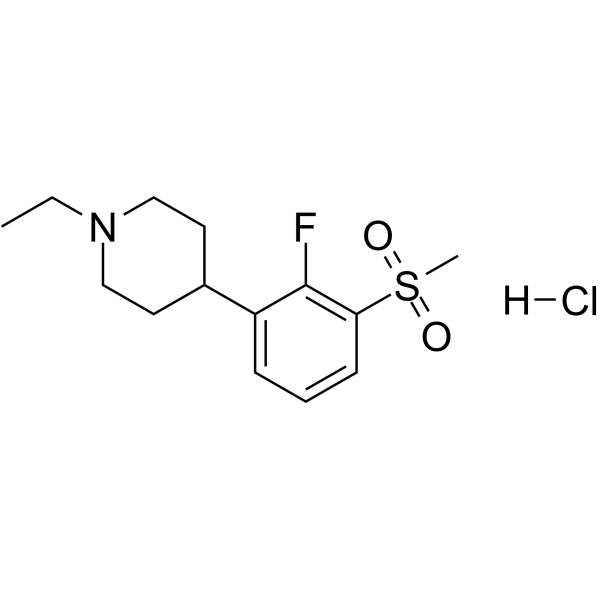
    Ordopidine hydrochloride is a modulator of dopamine receptor extracted from patent WO/2005/121087A1, compound example 2; exhibits an ED50 of 68 μmol/kg on increase of DOPAC in the rat striatum.
    Ordopidine hydrochloride
  • HY-113726

    GYKI52322; EGIS-6775

    GABA Receptor Neurological Disease
    Nerisopam is an orally active gamma-aminobutyric acid (GABA) receptor agonist. Nerisopam is an anxiolytic and antipsychotic homophthalazine. Nerisopam induces rapid, intense expression of Fos-like immunoreactivity in the rostral, dorsomedial and lateral parts of the striatum in the rat .
    Nerisopam
  • HY-119409

    Phacetoperane free base

    Dopamine Transporter Neurological Disease
    Levophacetoperane (Phacetoperane free base) competitively inhibits the uptake of norepinephrin and dopamine .
    Levophacetoperane
  • HY-114578

    Dopamine Receptor 5-HT Receptor Neurological Disease
    PD 118717 is a selective dopamine (DA) D-2 autoreceptor agonist. PD 118717 has significant affinity for 5-HT1A but not 5-HT1B and 5-HT2 receptors. PD 118717 is active in antagonizing the tau-Butyrolactone-induced accumulation of dopa in rat striatum and mesolimbic regions. PD 118717 exhibits an antipsychotic-like profile .
    PD 118717
  • HY-171328

    Dopamine Receptor Neurological Disease
    RG-15 is the orally active antagonist for dopamine receptor that exhibits goof affinity to human D2 receptor and human D3 receptor with pKi of 8.23 and 10.49. RG-15 inhibits dopamine-stimulated [ 35S]GTPγS binding with IC50 of 21.2 nM (rat striatal membranes), 36.7 nM (mouse A9 cells expressing human D2L receptors) and 7.2 nM (CHO cells expressing human D3 receptors). RG-15 increases the turnover and biosynthesis of dopamine in mouse striatum and olfactory bulb, exhibiting antipsychotic activity .
    RG-15
  • HY-14835

    SSR240600

    Others Others
    Burapitant (SSR240600) is a compound that modulates cholinergic transmission and regulates acetylcholine release in the limbic/prefrontal region of the rat striatum, with its effects being influenced by the interaction of 5-HT? and 5-HT? receptors.
    Burapitant
  • HY-168167

    Endogenous Metabolite Neurological Disease
    BuChE-IN-14 is a novel compound that selectively inhibits acetylcholinesterase (AChE) activity. BuChE-IN-14 showed a concentration-dependent inhibitory effect on AChE in rat brain in vitro experiments. BuChE-IN-14 can increase the extracellular acetylcholine (ACh) concentration in the rat hippocampus and striatum at a certain dose. BuChE-IN-14 may help improve memory impairment caused by cholinergic dysfunction .
    BuChE-IN-14
  • HY-12520C

    Drug Isomer Dopamine Receptor Neurological Disease
    (S)-SKF 38393 (Compound 7) is the S-enantiomer of SKF 38393 (HY-12520). (S)-SKF 38393 shows no activity against the D1 dopamine receptor, with an IC50 of 10700 nM. (S)-SKF 38393 can be used in the research of neurological diseases .
    (S)-SKF 38393
  • HY-W415753

    VUFB-15754

    Drug Derivative Neurological Disease Inflammation/Immunology
    Alaptide, a spirocyclic synthetic dipeptide and a derivative of melanocyte-stimulating hormone release-inhibiting factor (MIF), is a transdermal permeation modifier. Alaptide loaded on nanofibrous membranes accelerates the healing of skin incisions, particularly the healing of skin burns. Alaptide is a nootropic agent, that influences the dopaminergic system and increases homovanillic acid level in the striatum of rat models. Alaptide can be used for wound healing with large damaged areas and neurological diseases research .
    Alaptide
  • HY-182504

    Dopamine Receptor 5-HT Receptor Adrenergic Receptor Neurological Disease
    NRA‑0562 is a dopamine antagonist with high affinities for dopamine D1/D2/D3/D4, 5‑HT2A and α1‑adrenoceptors. NRA-0562 dose‑dependently reverses induced suppression of firing activity in rat A9 and A10 midbrain dopamine neurons, with preferential potency at A10 neurons (ED50 = 0.3 mg/kg). NRA-0562 elevates Fos-like immunoreactivity in rat nucleus accumbens and dorsolateral striatum. NRA-0562 can be used for preclinical research on schizophrenia . .
    NRA-0562
  • HY-116244

    iGluR Cardiovascular Disease Neurological Disease
    Ro 48-8587 is a selective AMPA receptor antagonist with an IC50 of 8 nM. Ro 48-8587 functionally inhibits AMPA receptor activity, blocks AMPA-induced depolarization of rat cortical wedges. Ro 48-8587 can be used for the research of ischaemia and seizures .
    Ro 48-8587
  • HY-182518

    Adenosine Receptor Neurological Disease
    MDL-102234 is a potent and selective adenosine A1 receptor antagonist with a Ki value of 23.2 nM at the adenosine A1 receptor. MDL-102234 can be used for the study of cognition enhancement-related neural functions .
    MDL-102234
  • HY-183927

    Dopamine Receptor Neurological Disease
    Spectramide is a blood-brain barrier-permeable, reversible, and selective dopamine D2 receptor ligand. Spectramide shows no strong interactions with dopamine D1 receptors, dopamine uptake sites, adrenergic receptor systems, cholinergic receptor systems, or 5-HTR systems. Spectramide can be labeled with 11C or 123I isotopes for use in PET or SPECT. Spectramide preferentially accumulates in the striatum with low uptake in other brain regions, and its accumulation can be blocked by pre-administration of Haloperidol (HY-14538) .
    Spectramide

オンラインお問い合わせ

入力情報は安全に管理されます. 必須入力項目.

タイトル


国或いは地域 *

お名前 *


組纖名 *

デパートメント *


メールアドレス *


製品名 *

製品番号


カスタマ需要量 *

電話番号 *


必ず会社名を記載ください。個人への返信は行いません。

備考

バルクお問い合わせ

Inquiry Information

製品名:
製品番号:
数量:
MCE 日本正規代理店: