



Clorgyline hydrochloride (Standard)
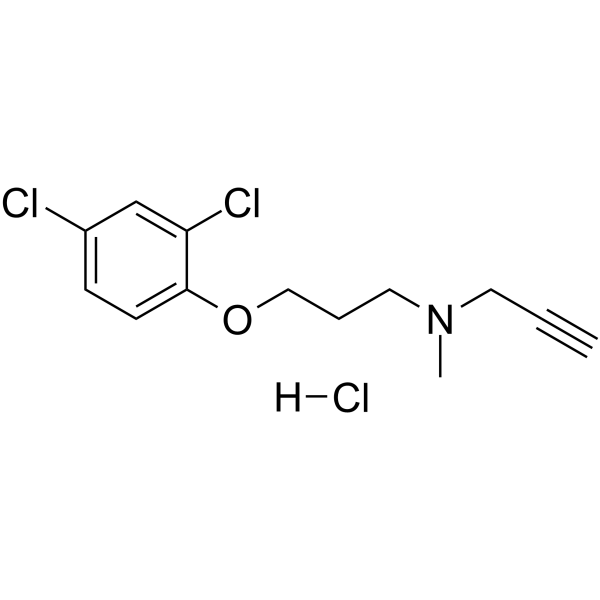
Clorgyline hydrochloride (Standard) (M&B 9302 hydrochloride (Standard)) is the analytical standard of Clorgyline hydrochloride (HY-14197A). This product is intended for research and analytical applications. Clorgyline hydrochloride (M&B 9302 hydrochloride) is a selective, irreversible monoamine oxidase A (MAO-A) inhibitor that can cross the blood-brain barrier and exhibits activity against the 5-HT Receptor at very high doses. Clorgyline hydrochloride regulates monoamine neurotransmitter levels, the release of dopamine and acetylcholine, the uptake and effects of Tyramine (HY-W007606), noradrenergic function, circadian locomotor activity rhythms, feeding behavior, and body weight. Clorgyline hydrochloride induces tumor-suppressive transcriptional programs, secretory differentiation, androgen signaling regulation, Bcl-2 expression, and radioprotective effects in non-malignant cells. Clorgyline hydrochloride is used in the research of high-grade prostate cancer, Huntington's disease, major affective disorder, radiation-induced normal tissue toxicity, and obesity.
For research use only. We do not sell to patients.
- Purity : 98%
- CAS No.: 17780-75-5
- Formula: C13H16Cl3NO
- Molecular Weight:308.63
-
Storage:
Please store the product under the recommended conditions in the Certificate of Analysis.


To place orders, for customer services and technical support, please contact: MedChemExpress USA
Tel: 609-228-6898 E-mail: [email protected] [email protected]


-
 Product Information
-
Chemical Information
- Purity & Documentation
-
 Help & FAQs


-
HY-14197A
Clorgyline hydrochloride -
HY-A0091
Pargyline hydrochloride -
HY-B0534
Moclobemide -
HY-Y0265
Isatin -
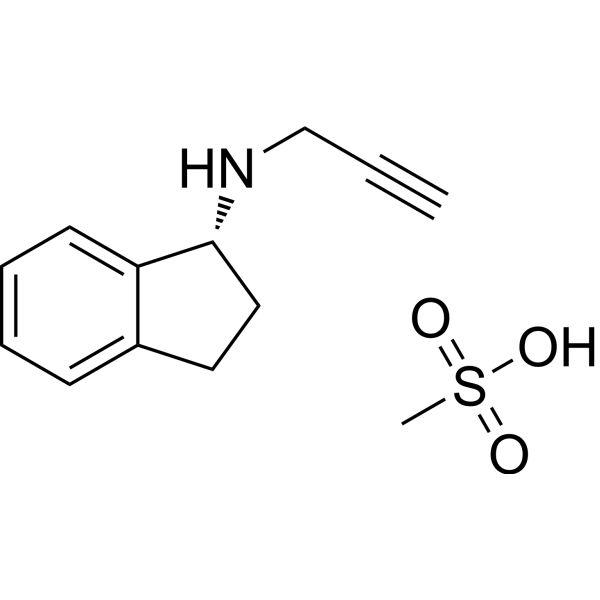
HY-14605
Rasagiline mesylate -
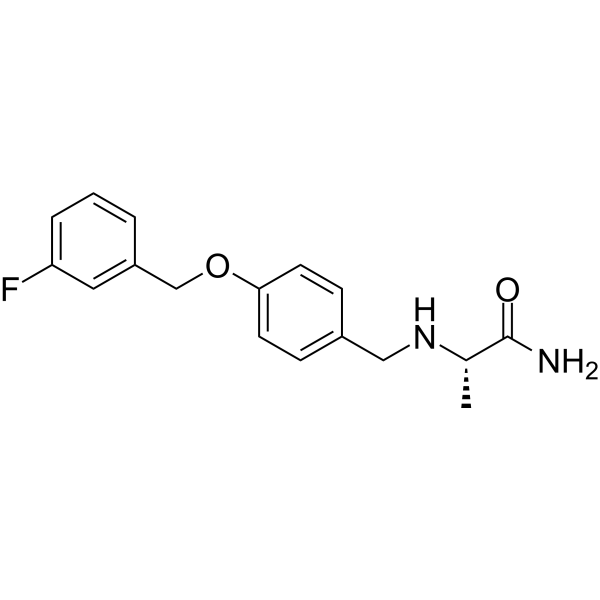
HY-70057
Safinamide -
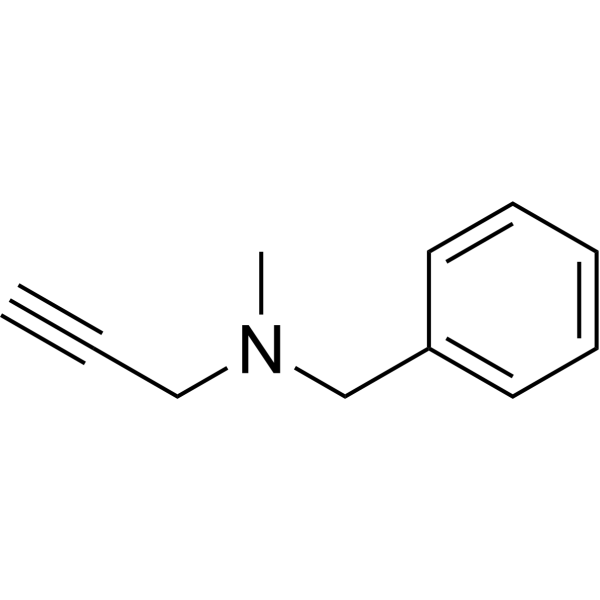
HY-A0091A
Pargyline -
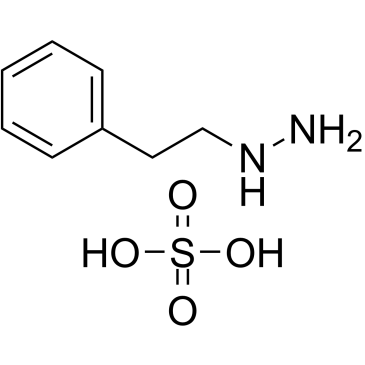
HY-B1018A
Phenelzine sulfate -
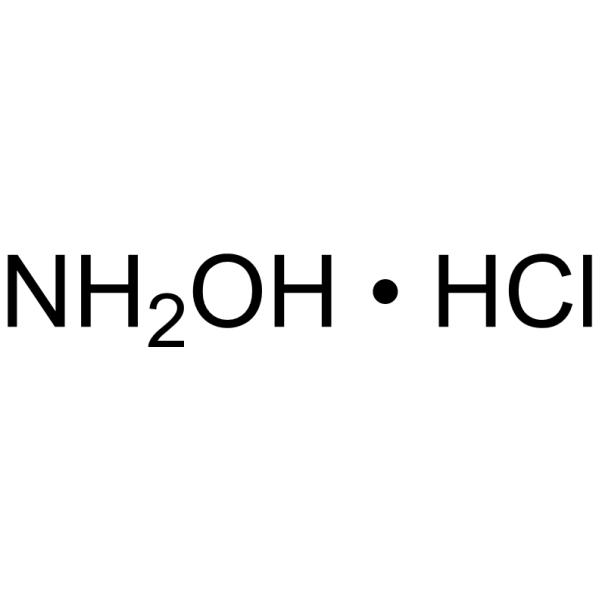
HY-Y0882
Hydroxylamine hydrochloride -
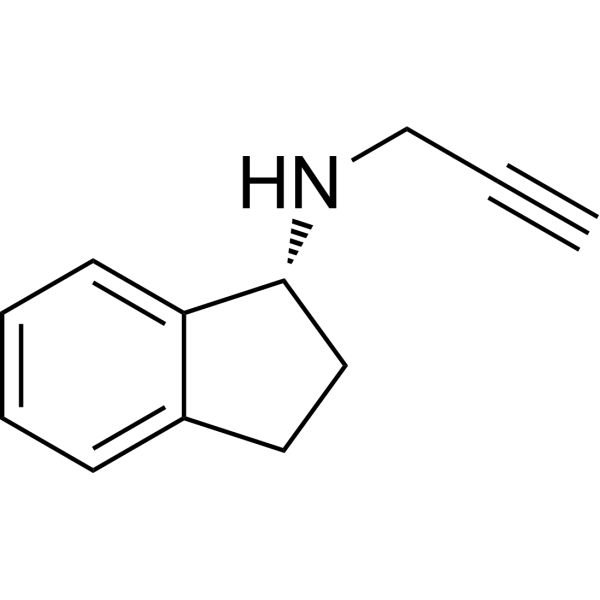
HY-14605A
Rasagiline -
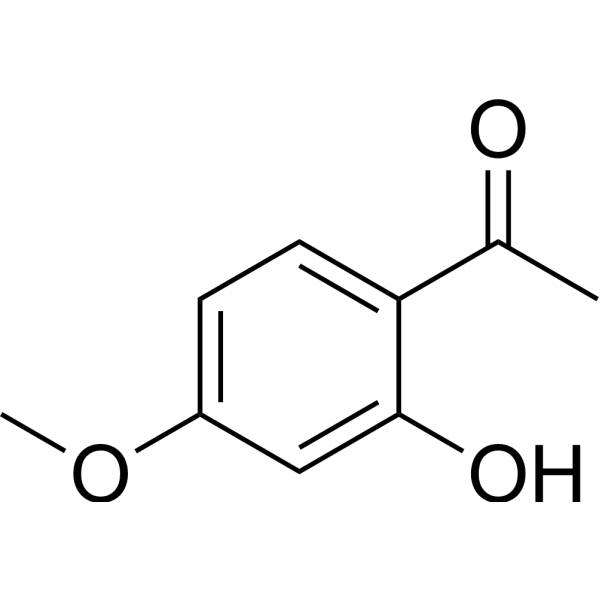
HY-N0159
Paeonol -
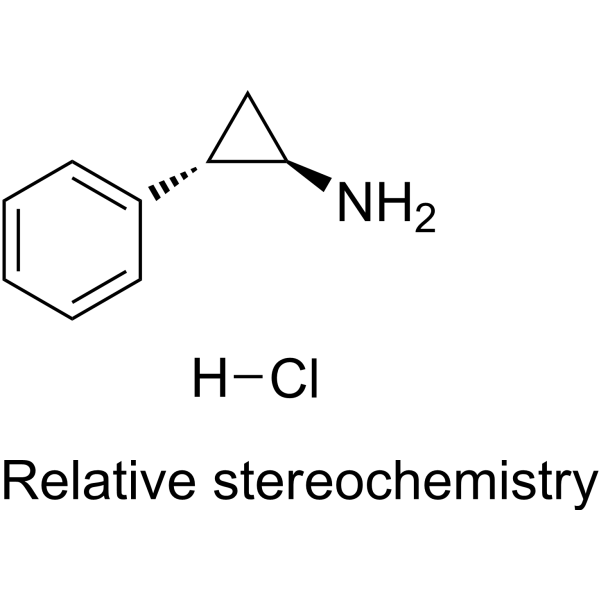
HY-17447A
Tranylcypromine hydrochloride


Product Information
Information
Application
The compound is the grade of analytical standard, which is the reference standard supplied assay. It is commonly used in qualitative, quantitative and methodological research experiments in HPLC, GC and MS.


Chemical Information
-
CAS No. 17780-75-5
-
Molecular Weight 308.63
-
Formula C13H16Cl3NO
-
SMILES
C#CCN(CCCOC1=CC=C(Cl)C=C1Cl)C.[H]Cl
-
Synonyms
M&B 9302 hydrochloride (Standard)
-
Shipping
Room temperature in continental US; may vary elsewhere.
-
Storage
Please store the product under the recommended conditions in the Certificate of Analysis.


Purity & Documentation
References

Calculators
Concentration (start) × Volume (start) = Concentration (final) × Volume (final)


Clorgyline hydrochloride (Standard) Related Classifications
HY-14197AR Related Classifications
 Powered by Bioz
Keywords
- Clorgyline hydrochloride (Standard)
- 17780-75-5
- M&B 9302 hydrochloride (Standard)
- Reference Standards
- Monoamine Oxidase
- 5-HT Receptor
- Bcl-2 Family
- dopamine
- Huntington disease
- E-CA-90
- acetylcholine
- serotonin receptors
- monoamine oxidase A
- high grade prostate cancer
- HaCaT cells
- E-CA-88
- Syrian hamsters
- Inhibitor
- inhibitor
- inhibit