
96 Results for "

real

" in MedChemExpress (MCE) Product Catalog:
Products (96)

96 Results for "real" in MCE Product Catalog:

74
74 Publications Verification
Cat. No.: HY-116215
CAS No.: 186689-07-6
Pureté:  99.74%
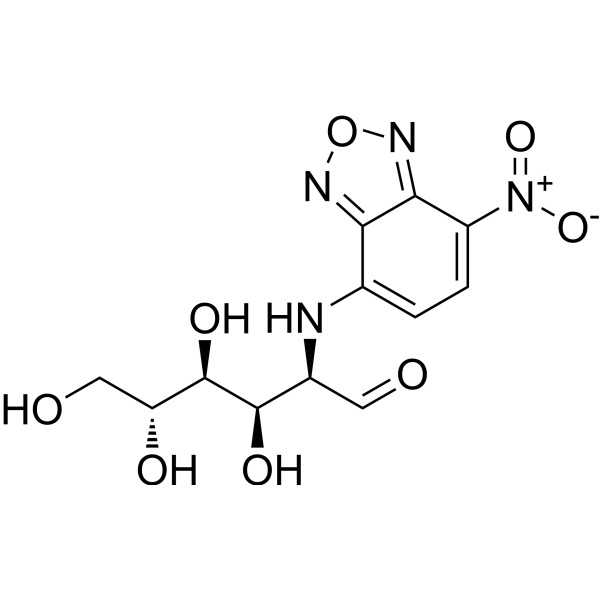
2-NBDG is a fluorescently-labeled deoxyglucose analog that is used primarily to directly monitor glucose uptake by living cells and tissues. It is also used as a topical contrast reagent for the detection of neoplasia. 2-NBDG can be used in real-time confocal, high-resolution, or wide-field fluorescence microscopy as well as in flow cytometry. The probe can be excited by the Argon laser at 488 nm to give the environment-sensitive fluorescence. It has lower photostability than the rhodamine-based fluorescent probes.
23
23 Cited Publications
Cat. No.: HY-108717
CAS No.: 39450-01-6
Synonyms: Protease K
Target:  

Ser/Thr Protease

Domaines de recherche:  

Others

Proteinase K (Protease K) is a nonspecific serine protease that is useful for general digestion of proteins. Proteinase K is active in the presence of SDS or urea and over a wide range of pH (4-12), salt concentrations, and temperatures. Proteinase K can be use for promoting methods of viral nucleic acid extraction, and detection .
18
18 Cited Publications
Cat. No.: HY-W854659
CAS No.: 72984-36-2
Synonyms: Ce6 trisodium
Chlorin e6 Ce6 (trisodium) is a water-soluble derivative of chlorophyll, belonging to the chlorin class of photosensitizers with an absorption wavelength range of 600-670 nm. Chlorin e6 trisodium emits characteristic red fluorescence upon light excitation, enabling real-time identification of tumor boundaries and progression. Chlorin e6 trisodium can be used for the study of photodynamic therapy (PDT) of cancers (bladder cancer) and fluorescence diagnosis of neoplastic lesions .
10
10 Cited Publications
Cat. No.: HY-W074143
CAS No.: 36309-88-3
Synonyms: [Ru(DPP)3]Cl2
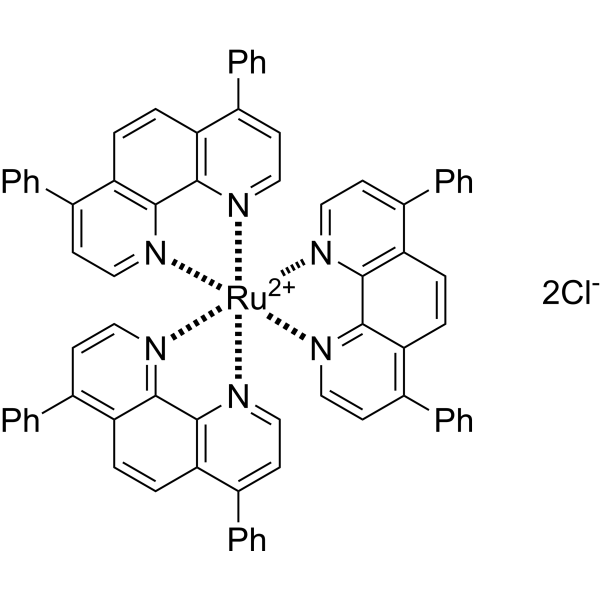
Tris(4,7-diphenyl-1,10-phenanthroline)ruthenium(II) dichloride ([Ru(dpp)3] 2+) is an electrochemiluminescent (ECL) probe and oxygen-sensitive sensor. Tris(4,7-diphenyl-1,10-phenanthroline)ruthenium(II) dichloride can be used to modify electrode surfaces for the detection of sulfates (S2O8 2-) and oxalates, based on electrochemical reactions that generate excited-state species, releasing photons through irreversible redox reactions. Tris(4,7-diphenyl-1,10-phenanthroline)ruthenium(II) dichloride utilizes the oxygen quenching of fluorescence mechanism, where fluorescence intensity reflects the metabolic rate of living microorganisms or oxygen levels within cells/tumors, allowing for real-time detection. Tris(4,7-diphenyl-1,10-phenanthroline)ruthenium(II) dichloride's main applications include microbial detection, antibacterial activity studies, and tumor microenvironment research .
3
3 Cited Publications
Cat. No.: HY-D1191
CAS No.: 2225748-05-8
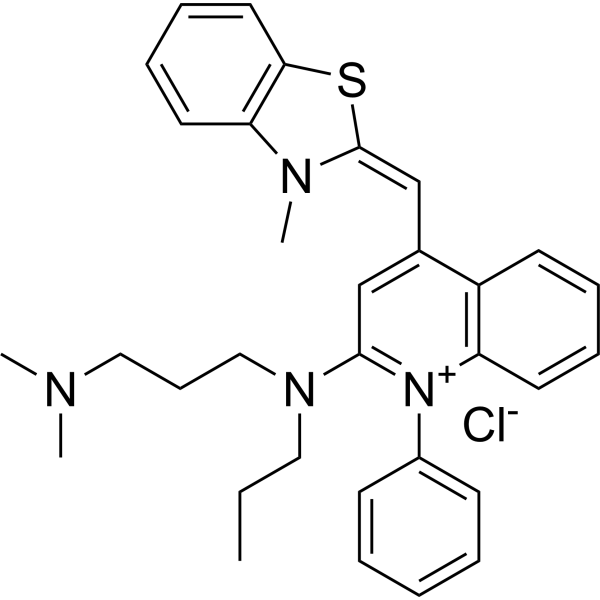
SYBR Green I chloride is a highly sensitive fluorescent nucleic acid dye that binds specifically to the minor groove of double-stranded DNA or intercalates between base pairs. SYBR Green I chloride exhibits weak fluorescence in the unbound state but emits bright fluorescence upon binding, and it preferentially binds to large-fragment DNA and DNA with high G+C content. SYBR Green I chloride is suitable for real-time PCR technology; its fluorescence intensity correlates with the amount and size of amplification products, enabling accurate quantification of gene expression and discrimination of amplicons via melting curve analysis without additional post-processing. SYBR Green I chloride is widely used in preclinical in vitro nucleic acid detection .
2
2 Cited Publications
Cat. No.: HY-P4931
CAS No.: 720710-69-0
Target:  

MMP

Domaines de recherche:  

Cancer

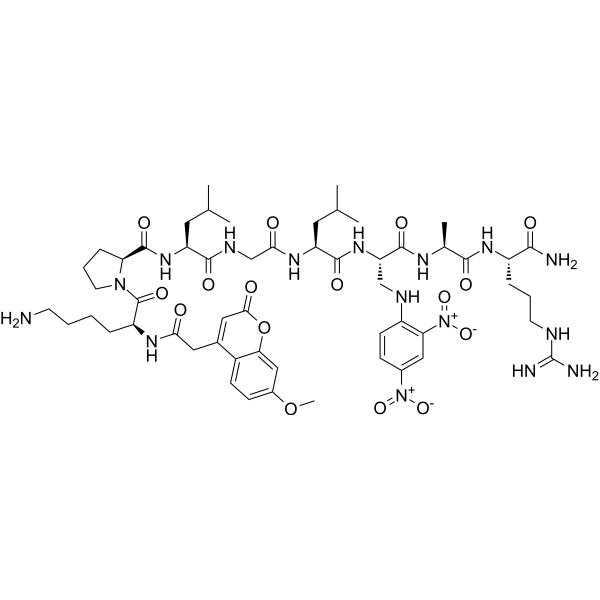
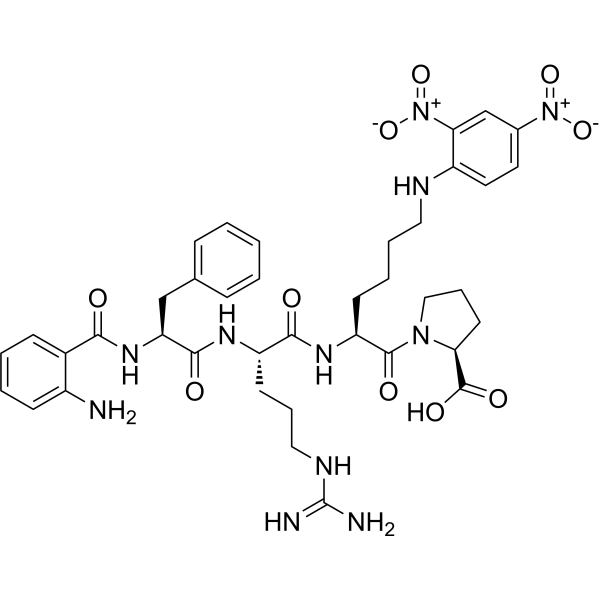
Mca-Lys-Pro-Leu-Gly-Leu-Dap(Dnp)-Ala-Arg-NH2 (FS-6) is a fluorescent peptide that is a quenched MMP peptide substrate. Mca-Lys-Pro-Leu-Gly-Leu-Dap(Dnp)-Ala-Arg-NH2 can be used for real-time quantification of MMP enzymatic activity. Mca-Lys-Pro-Leu-Gly-Leu-Dap(Dnp)-Ala-Arg-NH2 is an elongated peptide of MMP substrate (FS-1) and is active against collagenases (MMP-1, MMP-8, MMP-13 ) and MT1-MMP with higher specificity constants than FS-1 . (Ex/Em=325 nm/400 nm)
1
1 Cited Publications
Cat. No.: HY-D0043
CAS No.: 198978-94-8
Synonyms: 5(6)-Carboxy-X-rhodamine
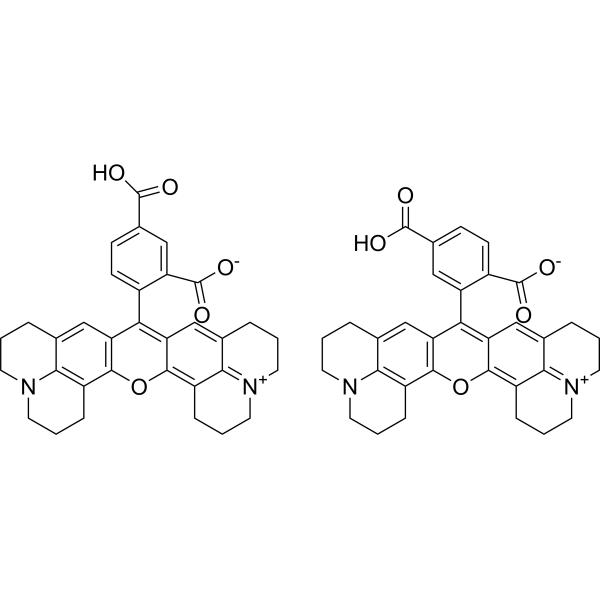
5(6)-ROX (5(6)-Carboxy-X-rhodamine) is a nucleic acid fluorescent label which can be used as a reference dye for real-time polymerase chain reaction (Em/Ex = 605/585 nm) .
1
1 Cited Publications
Cat. No.: HY-101400A
CAS No.: 109909-44-6
Pureté:  99.46%
Synonyms: dCTP trisodium solution (100 mM); 2′-Deoxycytidine-5′-triphosphate trisodium solution (100 mM)
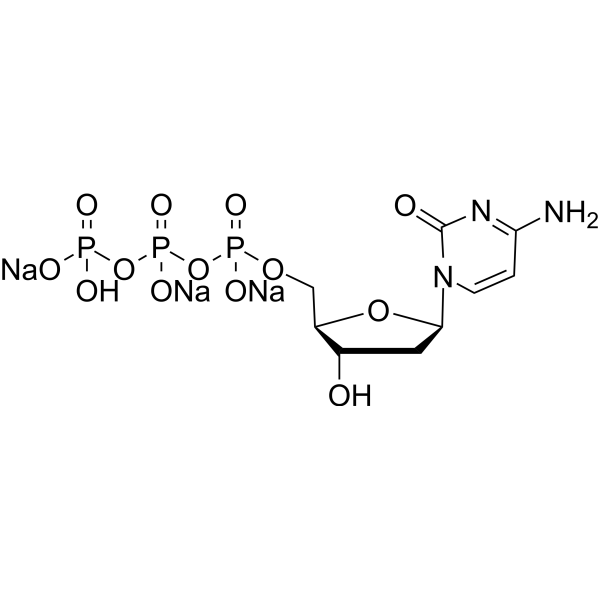
Deoxycytidine triphosphate trisodium (dCTP trisodium) solution (100 mM) is a nucleoside triphosphate that can be used for DNA synthesis. Deoxycytidine triphosphate trisodium salt has many applications, such as real-time PCR, cDNA synthesis, and DNA sequencing .
1
1 Cited Publications
Cat. No.: HY-118667
CAS No.: 516-85-8
Pureté:  ≥99.0%
Target:  

Liposome

Domaines de recherche:  

Others

Dehydroergosterolis a naturally occurring fluorescent sterol analog (Ex/Em=325/375 nm), which mimics the properties of cholesterol in cell membranes. DehydroergosterolEasily conjugated by cholesterol-binding proteins for real-time imaging in live cells. DehydroergosterolThe sterol environment and intracellular sterol transport in vivo can be probed/elucidated in real time .
Cat. No.: HY-P4154
CAS No.: 2276787-79-0
Synonyms: ALM-488
Target:  

Fluorescent Dye

Domaines de recherche:  

Neurological Disease Cancer

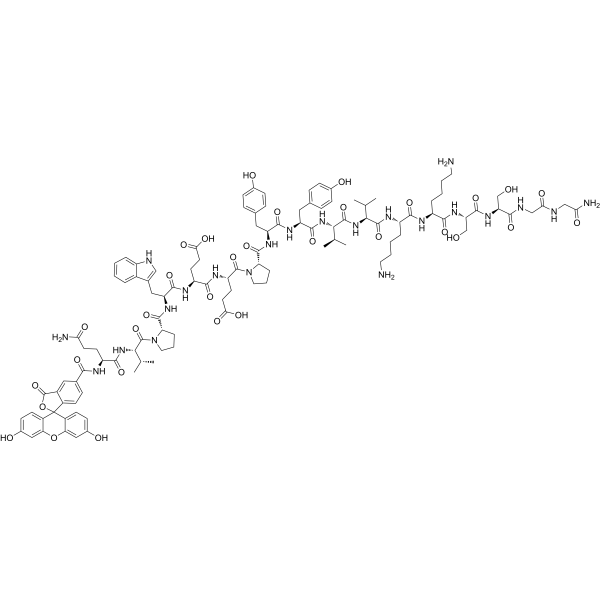
Bevonescein (ALM-488) is a fluorescein-conjugated peptide that facilitates the targeted delivery of a fluorescent moiety (5-FAM (HY-66022)) to nerves after intravenous (IV) administration. Bevonescein binds nerve-associated connective tissue, labels peripheral nerves under real-time fluorescence imaging (FL) in living mice and human ex vivo nerve tissue. Bevonescein is a peptide-linked tracer which fluorescently labeled both intact and degenerated nerves (Ex/Em = 480/530 nm) .
Cat. No.: HY-W116606
CAS No.: 1357078-03-5
Target:  

Fluorescent Dye

Domaines de recherche:  

Others

Coumarin boronic acid is a fluorescent probe. The excitation and emission wavelengths of coumarin boronic acid are set to 360 nm and 430 nm, respectively. Coumarin boronic acid can be used to monitor the formation of amino acid and protein hydroxyl peroxides in real time, which is beneficial for understanding the mechanisms of oxidative stress and protein post-translational modification .
Cat. No.: HY-D1244
CAS No.: 1043865-37-7
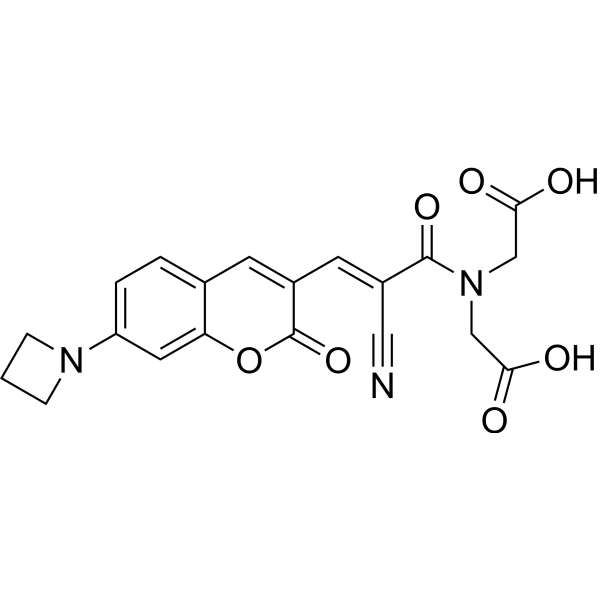
CO probe 1 (probe 2) is a highly efficient fluorescent CO probe (Ex=493 nm) with an allyl ether reaction site. In the presence of PdCl₂, CO reduces Pd 2+ to Pd 0, triggering a Tsuji-Trost reaction that removes the allyl protecting group, releases fluorescein, and generates a significant fluorescence signal. CO probe 1 has high selectivity, rapid response (fluorescence enhancement of 150 times within 20 minutes), and low cytotoxicity, and can be used for real-time imaging of CO in living cells. CO probe 1 may be used to study pathological mechanisms involving CO signaling regulation, such as inflammation, vascular disease, or cancer .
Cat. No.: HY-108715A
CAS No.: 2280796-94-1
Pureté:  98.07%
Target:  

Fluorescent Dye

Domaines de recherche:  

Neurological Disease

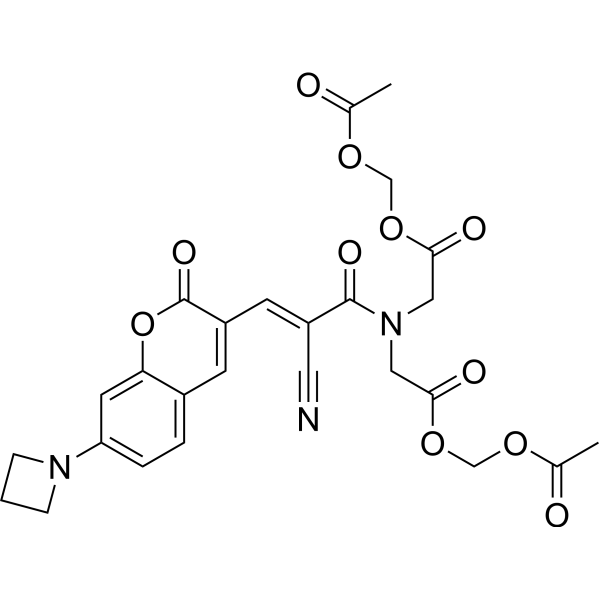
RT-AM is a pro-agent real thiol. Real Thiol is a reversible reaction-based fluorescent probe which can quantitatively monitor the real-time glutathione dynamics in living cells.
Cat. No.: HY-131924
CAS No.: 4090-29-3
Pureté:  98.99%
Synonyms: Thio-NAD
Domaines de recherche:  

Others

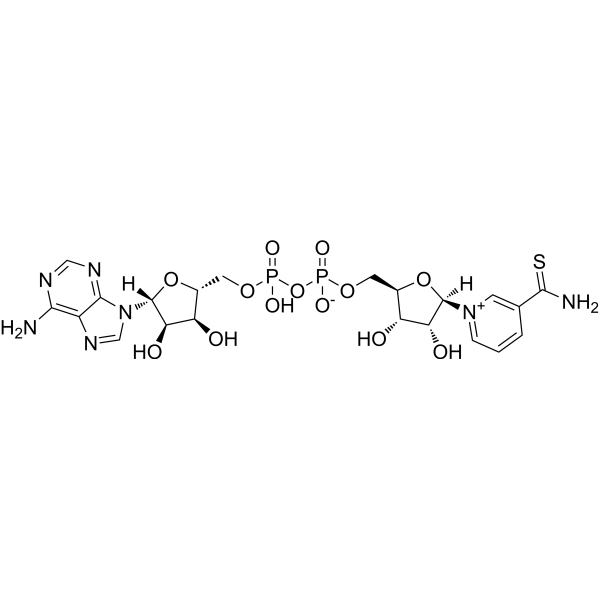
Thionicotinamide adenine dinucleotide (Thio-NAD) is a thione-modified analog of the coenzyme nicotinamide adenine dinucleotide (NAD +). Thionicotinamide adenine dinucleotide can replace NAD + in enzymatic reactions and shift the absorption peak to 405 nM, enabling sensitive, real-time kinetic detection of enzyme activity, which is particularly suitable for high-sensitivity diagnostic cyclic detection systems .
Cat. No.: HY-D2381
AF 488 maleimide is a thiol-reactive dye used to label SH groups of proteins, which can attach the AF 488 fluorophore to cysteine residue-containing proteins and peptides as well as other thiolated molecules. AF 488 maleimide enables real-time visualization of dynamic pilus extension and retraction in live bacterial cells via epifluorescence microscopy (Ex/Em = 470/520 nm) .
Cat. No.: HY-108715
CAS No.: 2280796-90-7
Pureté:  98.37%
Real Thiol is a reversible reaction-based fluorescent probe which can quantitatively monitor the real-time glutathione dynamics in living cells.
Cat. No.: HY-DY1019
CAS No.: 186689-07-6
2-NBDG (solution) is a fluorescently-labeled deoxyglucose analog that is used primarily to directly monitor glucose uptake by living cells and tissues. It is also used as a topical contrast reagent for the detection of neoplasia. 2-NBDG can be used in real-time confocal, high-resolution, or wide-field fluorescence microscopy as well as in flow cytometry. The probe can be excited by the Argon laser at 488 nm to give the environment-sensitive fluorescence. It has lower photostability than the rhodamine-based fluorescent probes.
Solvent and Concentration: Sterile PBS: 5 mM
Cat. No.: HY-W115721
CAS No.: 523-21-7
Synonyms: Sodium rhodizonate dibasic
Rhodizonic acid disodium (Sodium rhodizonate dibasic) is a transition metal-dependent pro-oxidant and lead detection agent that induces reactive oxygen species generation, DNA damage, and inhibits Aconitase activity. Rhodizonic acid disodium generates superoxide anion radicals in an iron (II)-dependent manner, leading to aconitase inactivation. Rhodizonic acid disodium also triggers hydroxyl radical-mediated DNA strand breaks and 8-OHdG formation via copper ion reduction. Rhodizonic acid disodium reacts with lead to form a scarlet precipitate, with the color intensity proportional to lead content, enabling qualitative or quantitative analysis of lead. Rhodizonic acid disodium can also be used for real-time visualization of the dynamic process of lead sequestration in the plant rhizosphere and evaluation of the effects of environmental factors such as soil type on the stability of lead-sequestering structures .
Cat. No.: HY-P10605
CAS No.: 496856-73-6
Target:  

Akt GSK-3

Domaines de recherche:  

Cancer

GSK3β-peptide is a substrate mimetic peptide of glycogen synthase kinase 3-β (GSK3-β) that can bind to the active site of GSK3-β and mimic the behavior of a real substrate. GSK3β-peptide can be used to develop substrate mimetic inhibitors of Akt as potential anticancer drugs .
Cat. No.: HY-D1422
CAS No.: 1445108-32-6
Synonyms: BDNCA-346
ER Tracker Yellow is an endoplasmic reticulum-targeted temperature-visible fluorescent probe. ER Tracker Yellow has high temperature sensitivity (3.9%/°C) and is not affected by pH and Ca 2+ interference. ER Tracker Yellow can be used for real-time monitoring of local temperature changes in the ER area. ER Tracker Yellow maintains its function in fixed cells. ER Tracker Yellow is suitable for various cell lines and primary cells, such as HeLa cells, MEF cells, and other cells .

