
Search Result
Results for "
red dye
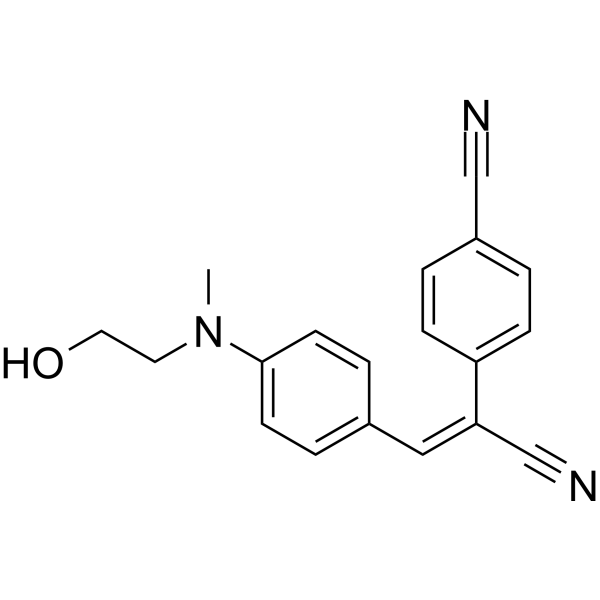
" in MedChemExpress (MCE) Product Catalog:
15
Biochemical Assay Reagents
4
Isotope-Labeled Compounds
| Cat. No. |
Product Name |
Target |
Research Areas |
Chemical Structure |
-
- HY-D1783
-
|
MTDR FM
|
Fluorescent Dye
|
Others
|
MitoTracker Deep Red (MTDR) FM fluorescent dye that selectively accumulates in the mitochondrial matrix. MitoTracker Deep Red FM covalently binds mitochondrial proteins by reacting with free mercaptan of cysteine residues, allowing staining of mitochondrial membrane potential independent of membrane potential. Excitation/emission wavelength 644/665 nm . MitoTracker Deep Red dyes have an excitation/emission wavelength of 633/650-750 nm . The Ex/Em of MitoTracker Deep Red (MTDR) FM is 644/665 nm.
|
-
-
- HY-D1068
-
|
DBCO-Sulfo-Cy5
|
Fluorescent Dye
|
Others
|
|
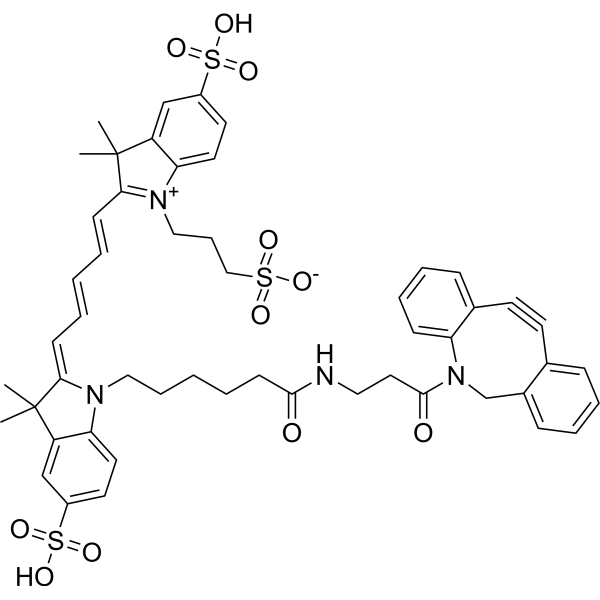
Cy5-DBCO (DBCO-Sulfo-Cy5) is a near-infrared (NIR)red fluorescent dye with λabsand λem of 646nm and 670 nm, respectively. Cy5-DBCO (DBCO-Sulfo-Cy5) is not suitable for staining intracellular components of permeabilezed cell, it may exhibits a high background. Cy5-DBCO is a click chemistry reagent, it contains a DBCO group that can undergo strain-promoted alkyne-azide cycloaddition (SPAAC) with molecules containing Azide groups.
|
-
-
- HY-D0236
-
|
|
Fluorescent Dye
|
Others
|
|
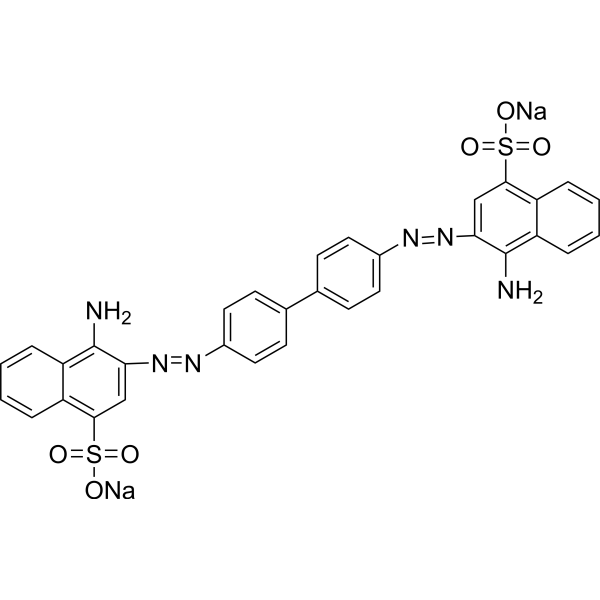
Congo Red is an azo dye. Congo Red (CR) binding been used as a diagnostic test for the presence of amyloid in tissue sections.
|
-
-
- HY-12489
-
|
Acid red 112
|
Fluorescent Dye
|
Others
|
|
Ponceau S (Acid Red 112) is a non-specific protein dye commonly used as a stain for Western blot. Ponceau S is used in an acidic aqueous solution that is compatible with antibody-antigen binding and dyes the proteins on the membrane red .
|
-
-
- HY-135414
-
|
|
Fluorescent Dye
|
Others
|
|
Cyanine5 NHS ester chloride is a red emitting fluorescent dye for labeling of amino-groups in peptides, proteins, and oligonucleotides .
|
-
-
- HY-D0505
-
Eosin Y
3 Publications Verification
Acid red 87 free base
|
Fluorescent Dye
|
Others
|
|
Eosin Y (Acid Red 87 free base) is a soluble acid red dye molecule. Eosin Y has a wide application in organic synthesis as a photoredox catalyst .
|
-
-
- HY-130533
-
|
|
Fluorescent Dye
|
Others
|
|
ReAsH-EDT2 is a red fluorescent dye that marks proteins. ReAsH-EDT2 is a membrane-permeable biarsenical compound that binds covalently to tetracysteine sequences which allows the protein to be imaged. ReAsH-EDT2 can be used for protein localization and trafficking. (λex=530 nm, λem=592 nm) .
|
-
-
- HY-D0333
-
|
Sirius red
|
Amyloid-β
|
Others
|
|
Direct Red 80 (Sirius Red) is a polyazo dye used principally in staining methods for collagen and amyloid. Direct Red 80 does not release benzidine upon degradation and is safer than many traditional direct dyes .
|
-
-
- HY-D0505A
-
|
Acid red 87
|
Fluorescent Dye
|
Others
|
|
Eosin Y disodium (Acid Red 87) is a soluble acid red dye molecule. Eosin Y disodium has a wide application in organic synthesis as a photoredox catalyst .
|
-
-
- HY-D0307A
-
-
-
- HY-D0342
-
|
|
Fluorescent Dye
|
Others
|
|
Disperse Red 1, an azobenzene derivative, is an azo textile dye extensively used for dyeing polyester fabrics in textile industry .
|
-
-
- HY-D0917
-
|
|
DNA Stain
|
Cancer
|
|
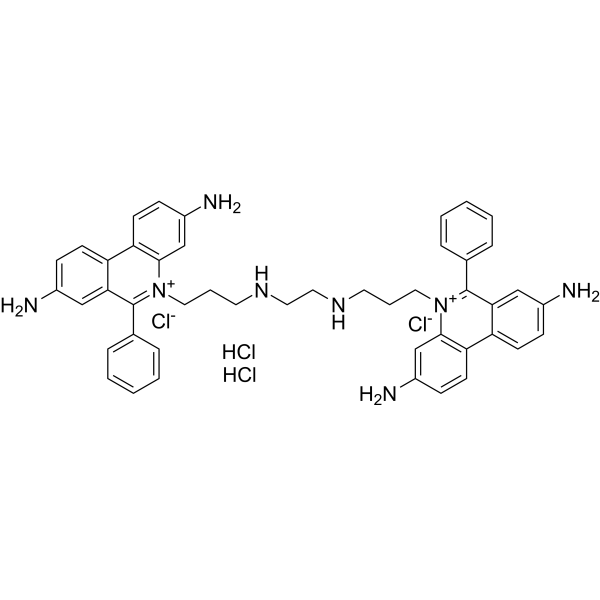
NIR-Red Dead Cell-1 Dye is a DNA-binding fluorescent dye for non-living cells (Ex/Em=515 nm/531 nm). NIR-Red Dead Cell-1 Dye can intercalate into base pairs of double-stranded DNA and produce stronger fluorescence. NIR-Red Dead Cell-1 Dye is suitable for necrotic cells or late apoptotic cells with damaged cell membranes, showing green fluorescence under fluorescence microscopy or flow cytometry. NIR-Red Dead Cell-1 Dye can be used to distinguish live cells from dead cells and distinguish cell membrane integrity. NIR-Red Dead Cell-1 Dye can be attached to the surface of Feraheme (FH) nanoparticles (NPs) to obtain fluorescent dye-functionalized NPs for drug delivery studies .
|
-
-
- HY-117468
-
|
|
Fluorescent Dye
|
Others
|
|
Lissamine rhodamine B is a red-fluorescent dye, it is a derivative of rhodamine. Lissamine rhodamine B can be used as a fluorescent probe to develop competitive aptamer fluorescence anisotropy/polarization (FA/FP) assays .
|
-
-
- HY-D0024
-
|
Solvent Yellow 14
|
Environmental Pollutants
Bacterial
|
Others
|
|
Sudan I (Solvent Yellow 14) is a diazo-conjugate red dye and can be used as an additive to products such as oils, solvents or polishes. Sudan I inhibits growth of bacterial strains Clostridium perfringens and L. rhamnosus .
|
-
-
- HY-D0165
-
|
1,3-Dihydroxynaphthalene
|
Fluorescent Dye
|
Others
|
|
Naphthoresorcinol (1,3-Dihydroxynaphthalene) is a fluorescent dye (λex=330 nm, λem=380 nm) that can react with the NPPD (a tracer) and concentrated HCl and develop a red color. Naphthoresorcinol could be used as a background electrolyte (BGE) to determine the carbohydrates .
|
-
-
- HY-D1379
-
-
-
- HY-D1116
-
|
|
Fluorescent Dye
|
Others
|
|
MitoMark Red I is a fluorescent mitochondrial marker. MitoMark Red I is a red fluorescent dye which accumulates in mitochondria in viable cells and has an excitation wavelength of 578 nm and emission of 599 nm .
|
-
-
- HY-131026
-
|
JF635, SE; JF635, NHS
|
Fluorescent Dye
|
Others
|
|
Janelia Fluor 635, SE (JF635, SE) is a red fluorogenic fluorescent dye containing an NHS ester that can be conjugated with primary amine groups. JF635, SE can be used for live cell imaging . Janelia Fluor products are licensed under U.S. Pat. Nos. 9,933,417, 10,018,624 and 10,161,932 and other patents from Howard Hughes Medical Institute.
|
-
-
- HY-D1490
-
-
-
- HY-D0854
-
|
Acid Violet 19; Acid fuchsin sodium
|
Environmental Pollutants
Biochemical Assay Reagents
|
Others
|
|
Acid Red is a class of synthetic dyes commonly used in the textile, paper and ink industries. They are in the category of acid dyes, which means they are water soluble and have acidic properties. Acid Red dye produces bright, vibrant colors that don't fade easily, but are not as durable as some other dyes. They can be used to dye a wide variety of fibers including wool, silk and nylon, as well as paper and leather.
|
-
-
- HY-107864
-
|
Tetraiodofluorescein
|
Fluorescent Dye
|
Infection
|
|
Erythrosine B free acid is a visibly red dye with colorimetric and fluorescent properties that serves as an important dye for many Gram-positive and -negative bacteria. Erythrosine B free acid can be used for live/dead determination in both colorimetric and fluorescence-based assays for low, medium and high-throughput experimentation .
|
-
-
- HY-D2872
-
|
|
Fluorescent Dye
|
Others
|
|
5-AF594 tyramide is a red fluorescent dye (Ex=590 nm, Em=618 nm). 5-AF594 tyramide is utilized as reporter fluorescent substrate of horseradish peroxidase (HRP)-catalyzed deposition for tyramide signal amplification (TSA). 5-AF594 tyramide can be used for multiplex immunohistochemistry (mIHC) .
|
-
-
- HY-D0245
-
-
-
- HY-135414B
-
|
|
Fluorescent Dye
|
Others
|
|
Cyanine5 NHS ester iodide is a red emitting fluorescent dye for labeling of amino-groups in peptides, proteins, and oligonucleotides .
|
-
-
- HY-D2205
-
|
Cy7 TSA
|
Fluorescent Dye
|
Others
|
|
Cy7 tyramide, a red fluorescent dye, is utilized as reporter fluorescent substrate for horseradish peroxidase (HRP)-catalyzed deposition that is signal amplification technique in immunoassay and in situ hybridization of nucleic acids.
|
-
-
- HY-D1480
-
|
|
Fluorescent Dye
|
Others
|
|
Crystal Ponceau 6R is a red azo dye. Crystal Ponceau 6R used in histology, for staining fibrin with the martius, scarlet and blue (MSB) Trichrome stain .
|
-
-
- HY-D2873
-
|
Sulfo Cy7(Et) tyramide
|
Fluorescent Dye
|
Others
|
|
Sulfo Cy7 tyramide, a red fluorescent dye (Ex=740 nm, Em=770 nm), is utilized as reporter fluorescent substrate of horseradish peroxidase (HRP)-catalyzed deposition for tyramide signal amplification (TSA). Sulfo Cy7 tyramide can be used for multiplex Immunohistochemistry (mIHC) .
|
-
-
- HY-D0702
-
|
|
Fluorescent Dye
|
|
|
Solvent red 195 is a red dye. Its series of products, such as Solvent orange 60 (HY-D1177), has been used in dyeing applications of plastic materials.
|
-
-
- HY-172174
-
|
|
Fluorescent Dye
|
Others
|
|
Red Fluorescent PLGA nanoparticles, 100nm is a nanoparticle made from the polymer PLGA and labeled with a red fluorescent dye. Red Fluorescent PLGA nanoparticles, 100nm can be used for drug delivery and for tracing .
|
-
-
- HY-D0307AR
-
|
Acid red 27 (Standard); Azorubin S (Standard); FD & C red dye No. 2 (Standard)
|
Fluorescent Dye
Reference Standards
|
Others
|
|
Amaranth (Standard) is the analytical standard of Amaranth. This product is intended for research and analytical applications. Amaranth is a dark red to purple azo dye used as a food dye and cosmetics. Amaranth is an anionic dye that can be applied to natural and synthetic fibers, leather, paper, and phenol-formaldehyde resins.
|
-
-
- HY-D2444
-
|
|
Fluorescent Dye
|
Cancer
|
|
AF555 NHS is a red fluorescent dye with excellent fluorescence properties and light stability. The excitation wavelength is 556 nm and the emission wavelength is 571 nm, which can be used for protein labeling, antibody labeling, and cell imaging .
|
-
-
- HY-D0430
-
-
-
- HY-W127722
-
-
-
- HY-D1596
-
|
Cy3.5 NHS ester chloride; Cy 3.5 chloride
|
Fluorescent Dye
|
Others
|
|
Cyanine 3.5 (Cy3.5 NHS ester) chloride is an analog of Cy3.5 fluorophore. Cyanine 3.5 chloride is a reactive, red fluorescent dye. Cyanine 3.5 chloride is used for labeling of amino-groups in peptides, proteins, and oligonucleotides. (λex=591 nm, λem=604 nm) .
|
-
-
- HY-110212
-
|
BODIPY TR-X NHS Ester
|
Fluorescent Dye
|
Others
|
|
BODIPY TR-X (BODIPY TR-X NHS Ester) is a potent fluorescent dye. BODIPY TR-X can be used to label the primary amines (R-NH2) of proteins, amine-modified oligonucleotides, and other amine-containing molecules. BODIPY TR-X binds to protein or antibody and has bright, red fluorescent light. (λex=545 nm, λem=560 nm) .
|
-
-
- HY-D0242
-
-
-
- HY-D0322
-
-
-
- HY-D0508
-
|
|
Fluorescent Dye
|
|
|
C.I. Acid red 138 is an acid red dye that can be adsorbed and removed by bentone clay.
|
-
-
- HY-D0287
-
|
Fluorescent red H5B
|
Fluorescent Dye
|
|
|
Solvent red 52 is a red dye. Its series of products, such as Solvent orange 60 (HY-D1177), has been used in dyeing applications of plastic materials.
|
-
-
- HY-D0334
-
|
|
Fluorescent Dye
|
|
|
Direct Red 81 is a diazo dye with a very high water solubility. The dye adsorption efficiency of Direct Red 81 is increased by increasing the adsorbent dose and adsorption time .
|
-
-
- HY-D0341
-
|
Solvent Violet 26
|
Fluorescent Dye
|
|
|
Disperse Red 11 is a red dye derived from anthraquinone. It is used in plastics, textiles and cosmetics.
|
-
-
- HY-D0545
-
|
|
Fluorescent Dye
|
Others
|
|
Disperse red 91 is a red dye derived from anthraquinone. It is used in plastics, textiles and cosmetics.
|
-
-
- HY-D0687
-
|
|
Fluorescent Dye
|
|
|
Disperse red 324 is a red dye derived from anthraquinone. It is used in plastics, textiles and cosmetics.
|
-
-
- HY-D0673
-
|
|
Fluorescent Dye
|
|
|
Disperse red 311 is a red dye derived from anthraquinone. It is used in plastics, textiles and cosmetics.
|
-
-
- HY-D0015A
-
|
|
Fluorescent Dye
|
Others
|
|
Cresol Red sodium is a triarylmethane dye. Cresol Red sodium can be used for indicating pH, temperatures and salinities .
|
-
-
- HY-D0316
-
|
DR 167:1
|
Fluorescent Dye
|
|
|
Disperse red 167:1 is a red dye derived from anthraquinone. It is used in plastics, textiles and cosmetics.
|
-
-
- HY-D0314
-
|
Sudan R
|
Fluorescent Dye
|
|
|
Solvent Red 1 (C.I.) is a red dye. Its series of products, such as Solvent orange 60 (HY-D1177), has been used in dyeing applications of plastic materials.
|
-
-
- HY-D2424
-
|
|
Fluorescent Dye
|
Others
|
|
Disperse Red 343 is an azo dye widely used in the textile industry for dyeing polyester fabrics .
|
-
-
- HY-Y0699R
-
|
|
Fluorescent Dye
Reference Standards
|
Others
|
|
Methyl red (Standard) is the analytical standard of Methyl red. This product is intended for research and analytical applications. Methyl red is an azo dye that acts as a pH indicator. Methyl red is red and yellow at pH 4.4 and 6.0 respectively .
|
-
-
- HY-D0236R
-
|
|
Fluorescent Dye
Reference Standards
|
Others
|
|
Congo Red (Standard) is the analytical standard of Congo Red. This product is intended for research and analytical applications. Congo Red is an azo dye. Congo Red (CR) binding been used as a diagnostic test for the presence of amyloid in tissue sections.
|
-
- HY-D0651
-
|
|
Fluorescent Dye
|
|
|
Acid red 119 is an acid red dye that can be removed from aqueous solutions when polyaluminum chloride (PAC) and polyaluminum chloride sludge (PACS) are used as coagulants.
|
-
- HY-D0539
-
-
- HY-D0648
-
-
- HY-D0518
-
-
- HY-D0613
-
|
|
Fluorescent Dye
|
|
|
Acid Red 337 is an acid dye that can be decolorized when aluminum sulfate is used as a coagulant.
|
-
- HY-D0919
-
|
|
Fluorescent Dye
|
Others
|
|
NIR-Red Dead Cell-3 Dye is a multifunctional dye. Dyes are important tools in biological experiments. They can help researchers observe and analyze cell structures, track biomolecules, evaluate cell functions, distinguish cell types, detect biomolecules, study tissue pathology and monitor microorganisms. Their applications range from basic scientific research to clinical A wide range of diagnostics. Dyes are also widely used in traditional fields such as textile dyeing, as well as in emerging fields such as functional textile processing, food pigments and dye-sensitized solar cells.
|
-
- HY-D0307
-
|
Acid red 27 free acid; Azorubin S free acid; FD & C red dye No. 2 free acid
|
Fluorescent Dye
|
Others
|
|
Amaranth free acid (Acid Red 27 free acid; Azorubin S free acid; FD & C Red Dye No. 2 free acid) is a multifunctional dye. Dyes are important tools in biological experiments. They can help researchers observe and analyze cell structures, track biomolecules, evaluate cell functions, distinguish cell types, detect biomolecules, study tissue pathology and monitor microorganisms. Their applications range from basic scientific research to clinical A wide range of diagnostics. Dyes are also widely used in traditional fields such as textile dyeing, as well as in emerging fields such as functional textile processing, food pigments and dye-sensitized solar cells.
|
-
- HY-127154
-
|
|
Fluorescent Dye
|
Others
|
|
Carmine lithium is a natural red colorant, which belongs to the coccid dye family .
|
-
- HY-W019776
-
|
Solvent Yellow 14-d5
|
Bacterial
|
Infection
|
|
Sudan I-d5 is a the deuterated Sudan I. Sudan I is a diazo-conjugate red dye and can be used as an additive to products such as oils, solvents or polishes. Sudan I inhibits growth of bacterial strains Clostridium perfringens and L. rhamnosus .
|
-
- HY-D0024R
-
|
Solvent Yellow 14 (Standard)
|
Reference Standards
Bacterial
|
Others
|
|
Sudan I (Standard) is the analytical standard of Sudan I. This product is intended for research and analytical applications. Sudan I (Solvent Yellow 14) is a diazo-conjugate red dye and can be used as an additive to products such as oils, solvents or polishes. Sudan I inhibits growth of bacterial strains Clostridium perfringens and L. rhamnosus .
|
-
- HY-D0454
-
|
|
Fluorescent Dye
|
|
|
C.I. Disperse red 54 is a red dye commonly used for fiber dyeing.
|
-
- HY-D1036A
-
|
|
Fluorescent Dye
|
|
|
Basic red 18 is a basic red dye whose dyeing effect can be removed by nanoclay adsorbent.
|
-
- HY-D1230
-
|
|
Fluorescent Dye
|
|
|
Mordant red 15 is an azo dye commonly used for dyeing textiles.
|
-
- HY-D1283
-
|
|
Fluorescent Dye
|
|
|
Mordant red 19 is an azo dye commonly used for dyeing textiles.
|
-
- HY-D0438
-
|
|
Fluorescent Dye
|
|
|
C.I. Acid red 114 is an acid red dye that can be adsorbed and removed by bentone clay.
|
-
- HY-D0422
-
|
|
Fluorescent Dye
|
|
|
C.I. Acid red 183 is an acid red dye that can be adsorbed and removed by bentone clay.
|
-
- HY-D0413
-
|
|
Fluorescent Dye
|
|
|
C.I. Acid red 37 is an acid red dye that can be adsorbed and removed by bentone clay.
|
-
- HY-D1143
-
|
|
Fluorescent Dye
|
Others
|
|
Acid Red 4 is an azo dye. The wavelength of maximum absorbance for Acid Red 4 is 508 nm .
|
-
- HY-D0477
-
|
|
Fluorescent Dye
|
|
|
C.I. Acid red 57 is an acid red dye that can be adsorbed and removed by bentone clay.
|
-
- HY-D0447
-
|
|
Fluorescent Dye
|
|
|
C.I. Acid red 374 is an acid red dye that can be adsorbed and removed by bentone clay.
|
-
- HY-D0448
-
|
|
Fluorescent Dye
|
|
|
C.I. Acid red 154 is an acid red dye that can be adsorbed and removed by bentone clay.
|
-
- HY-D1170
-
|
|
Fluorescent Dye
|
|
|
Acid alizarin red B is a bright, scarlet, translucent red dye used for calcium determination.
|
-
- HY-D0420
-
|
|
Fluorescent Dye
|
Others
|
|
C.I. Acid red 151 is an acid red dye that can be adsorbed and removed by bentone clay.
|
-
- HY-D0458
-
|
|
Fluorescent Dye
|
|
|
C.I. Acid red 106 is an acid red dye that can be adsorbed and removed by bentone clay.
|
-
- HY-D1241
-
-
- HY-D0349
-
|
|
Fluorescent Dye
|
|
|
Disperse Red 13 is a red dye derived from anthraquinone. It is used in plastics, textiles and cosmetics.
|
-
- HY-D0315
-
|
|
Fluorescent Dye
|
|
|
Disperse red 74 is a red dye derived from anthraquinone. It is used in plastics, textiles and cosmetics.
|
-
- HY-D1037
-
|
|
Fluorescent Dye
|
|
|
Disperse red 50 is a red dye derived from anthraquinone. It is used in plastics, textiles and cosmetics.
|
-
- HY-D0594
-
|
|
Fluorescent Dye
|
|
|
Disperse Red 278 is a red dye derived from anthraquinone. It is used in plastics, textiles and cosmetics.
|
-
- HY-D0288
-
|
|
Fluorescent Dye
|
|
|
Disperse red 86 is a red dye derived from anthraquinone. It is used in plastics, textiles and cosmetics.
|
-
- HY-D0347
-
|
|
Fluorescent Dye
|
|
|
Disperse Red 17 is a red dye derived from anthraquinone. It is used in plastics, textiles and cosmetics.
|
-
- HY-D0393
-
|
|
Fluorescent Dye
|
|
|
Disperse red 54 is a red dye derived from anthraquinone. It is used in plastics, textiles and cosmetics.
|
-
- HY-D0625
-
|
|
Fluorescent Dye
|
|
|
Disperse Red 177 is a red dye derived from anthraquinone. It is used in plastics, textiles and cosmetics.
|
-
- HY-D0515
-
|
|
Fluorescent Dye
|
|
|
Disperse red 73 is a red dye derived from anthraquinone. It is used in plastics, textiles and cosmetics.
|
-
- HY-D0513
-
|
|
Fluorescent Dye
|
|
|
Disperse red 65 is a red dye derived from anthraquinone. It is used in plastics, textiles and cosmetics.
|
-
- HY-D1128
-
|
|
Fluorescent Dye
|
|
|
Disperse red 151 is a red dye derived from anthraquinone. It is used in plastics, textiles and cosmetics.
|
-
- HY-W145108
-
|
|
Biochemical Assay Reagents
|
Others
|
|
Methyl red hydrochloride is an azo dye that acts as a pH indicator. Methyl red is red and yellow at pH 4.4 and 6.0 respectively .
|
-
- HY-D0314R
-
|
Sudan R (Standard)
|
Fluorescent Dye
Reference Standards
|
Others
|
|
Solvent Red 1 (C.I.) (Standard) is the analytical standard of Solvent Red 1 (C.I.). This product is intended for research and analytical applications. Solvent Red 1 (C.I.) is a red dye. Its series of products, such as Solvent orange 60 (HY-D1177), has been used in dyeing applications of plastic materials.
|
-
- HY-D1495
-
-
- HY-D0597
-
-
- HY-D0361
-
-
- HY-D1165
-
-
- HY-D1238
-
-
- HY-172174B
-
|
|
Fluorescent Dye
|
Others
|
|
Red Fluorescent PLGA nanoparticles, 500nm is a nanoparticle made from the polymer PLGA and labeled with a red fluorescent dye. Red Fluorescent PLGA nanoparticles, 500nm can be used for drug delivery and for tracing .
|
-
- HY-172174A
-
|
|
Fluorescent Dye
|
Others
|
|
Red Fluorescent PLGA nanoparticles, 200nm is a nanoparticle made from the polymer PLGA and labeled with a red fluorescent dye. Red Fluorescent PLGA nanoparticles, 200nm can be used for drug delivery and for tracing .
|
-
- HY-D0745
-
|
|
Fluorescent Dye
|
|
|
Acid red 405 is an acid dye that can be decolorized when aluminum sulfate is used as a coagulant.
|
-
- HY-107864A
-
|
Tetraiodofluorescein aluminum
|
Fluorescent Dye
|
Infection
|
|
Erythrosine B aluminum is a visibly red dye with colorimetric and fluorescent properties that serves as an important dye for many Gram-positive and -negative bacteria. Erythrosine B aluminum can be used for live/dead determination in both colorimetric and fluorescence-based assays for low, medium and high-throughput experimentation .
|
-
- HY-107864R
-
|
Tetraiodofluorescein (Standard)
|
Reference Standards
Fluorescent Dye
|
Infection
|
|
Erythrosine B free acid (Standard) is the analytical standard of Erythrosine B (free acid) (HY-107864). This product is intended for research and analytical applications. Erythrosine B free acid is a visibly red dye with colorimetric and fluorescent properties that serves as an important dye for many Gram-positive and -negative bacteria. Erythrosine B free acid can be used for live/dead determination in both colorimetric and fluorescence-based assays for low, medium and high-throughput experimentation .
|
-
- HY-D0347R
-
|
|
Fluorescent Dye
Reference Standards
|
Others
|
|
Disperse Red 17 (Standard) is the analytical standard of Disperse Red 17. This product is intended for research and analytical applications. Disperse Red 17 is a red dye derived from anthraquinone. It is used in plastics, textiles and cosmetics.
|
-
- HY-D3059
-
-
- HY-D0398
-
|
|
Fluorescent Dye
|
|
|
Acid red 42 is an acid dye that can be decolorized when aluminum sulfate is used as a coagulant.
|
-
- HY-D0396
-
|
DR16
|
Fluorescent Dye
|
|
|
C.I. Direct red 16 is a good dyeing agent for cotton fabrics.
|
-
- HY-D0660
-
|
|
Fluorescent Dye
|
|
|
Acid red 131 is an acid dye that can be decolorized when aluminum sulfate is used as a coagulant.
|
-
- HY-D1209
-
|
|
Fluorescent Dye
|
|
|
Acid Red 35 is an acid dye that can be decolorized when aluminum sulfate is used as a coagulant.
|
-
- HY-D0425
-
-
- HY-D2155
-
|
|
Fluorescent Dye
|
Others
|
|
Texas red-X 4-succinimidyl ester is a derivative of Texas Red (HY-101878), an amphoteric rhodamine red fluorescent dye. Texas Red is widely used to study neuronal morphology and as a cell type-selective fluorescent marker for astrocytes, both in vivo and in slice preparations.
|
-
- HY-W775174
-
|
C.I. Solvent red 80
|
Fluorescent Dye
|
|
|
Citrus red 2 (CI Solvent red 80) is a synthetic dye with coloring power and antioxidant activity. Citrus red 2 can be used in food and cosmetics to provide a bright color to the product. Citrus red 2 is also used as a reference substance for testing and analysis in certain situations.
|
-
- HY-D0943
-
|
Kernechtrot
|
Fluorescent Dye
Photosensitizer
|
Others
|
|
Nuclear Fast Red, an anthraquinone dye, is commonly used in conjunction with an excess of aluminum ions as a red nuclear counterstain. Nuclear fast red has been used as a histochemical and colorimetric reagent for calcium . Nuclear fast red as highly sensitive "off/on" fluorescent probe for detecting guanine .
|
-
- HY-D2425
-
|
|
Fluorescent Dye
|
Others
|
|
Disperse Red 153 is an azo dye that can be used in plastics, textiles, and cosmetics .
|
-
- HY-D2449
-
|
|
Fluorescent Dye
|
Others
|
|
DQ-BSA-Red is a bovine serum albumin labeled with a red fluorescent dye that can be used to detect lysosomal activity. The excitation wavelength and emission wavelength of DQ-BSA-Red are 590 nm and 620 nm, respectively. The BSA molecule in DQ-BSA-Red is labeled with high concentration of red fluorescent dye in multiple sites, which shows high fluorescence self-inhibition. Once DQ-BSA-RED enters the lysosome, DQ-BSA is cleaved by lysosomal proteases, resulting in unquenched and released fluorescent fragments, emitting bright fluorescence. Inactivated lysosomes are unable to degrade the BSA protein and thus have a lower or even no fluorescent signal .
|
-
- HY-D1491
-
|
|
Fluorescent Dye
|
Others
|
|
Fast Red Violet LB is a dye for staining tartrate resistant acid phosphatase (TRAP). Fast Red Violet LB can be used for alkaline phosphatase (ALP) activity staining .
|
-
- HY-D0169A
-
|
Phenolsulfonephthalein sodium salt
|
Fluorescent Dye
Glutathione Peroxidase
|
Others
|
|
Phenol red (Phenolsulfonephthalein) sodium salt is a pH indicator dye. Phenol Red sodium salt is also an antagonist of rat P2X1R. Phenol Red sodium salt enhances the halogenating activity of myeloperoxidase. Phenol Red sodium salt shows a distinct color change from pink to yellow in a positive pH reaction .
|
-
- HY-D1225
-
|
|
Fluorescent Dye
|
|
|
Reactive red 180 is common textile dyes that can be adsorbed onto single-walled carbon nanotubes (SWCNTs) through electrostatic interactions, allowing the separation of residual dyes.
|
-
- HY-D1138
-
|
|
Fluorescent Dye
|
|
|
Reactive red 120 is common textile dyes that can be adsorbed onto single-walled carbon nanotubes (SWCNTs) through electrostatic interactions, allowing the separation of residual dyes.
|
-
- HY-D0661
-
|
|
Fluorescent Dye
|
|
|
Reactive red 45 is common textile dyes that can be adsorbed onto single-walled carbon nanotubes (SWCNTs) through electrostatic interactions, allowing the separation of residual dyes.
|
-
- HY-D0692
-
|
|
Fluorescent Dye
|
|
|
Reactive red 124 is common textile dyes that can be adsorbed onto single-walled carbon nanotubes (SWCNTs) through electrostatic interactions, allowing the separation of residual dyes.
|
-
- HY-D0269
-
|
|
Fluorescent Dye
|
|
|
1-Amino-4-hydroxyanthraquinone is a red dye used as a fluorescent indicator.
|
-
- HY-W750435
-
|
|
Fluorescent Dye
|
Others
|
|
New Red is a color additive that can be used to dye flour as well as meat products .
|
-
- HY-D1499
-
|
|
Fluorescent Dye
|
Others
|
|
Fluorescent red 610 is a fluorescent dye with an excitation peak at 590 nm and an emission peak at 610 nm .
|
-
- HY-101878
-
|
Sulforhodamine 101; SR101
|
Fluorescent Dye
|
Neurological Disease
|
|
Texas Red (Sulforhodamine 101) is an amphoteric rhodamine red fluorescent dye (excitation/emission: 586/605 nm). Texas Red is used extensively for investigating neuronal morphology and acts as acell type-selective fluorescent marker of astrocytes bothin vivoand in slice preparations .
|
-
- HY-D1497
-
|
|
Fluorescent Dye
|
Others
|
|
Fluorescent Red Mega 480 is a dye that is specifically designed for multicolor techniques. Fluorescent Red Mega 480 is characterized by an extremely large stoke′s shift between excitation and emission maxima .
|
-
- HY-D0700
-
|
|
Fluorescent Dye
|
|
|
Reactive red 24:1 is common textile dyes that can be adsorbed onto single-walled carbon nanotubes (SWCNTs) through electrostatic interactions, allowing the separation of residual dyes.
|
-
- HY-101878R
-
|
Sulforhodamine 101 (Standard); SR101 (Standard)
|
Fluorescent Dye
Reference Standards
|
Neurological Disease
|
|
Texas Red (Standard) is the analytical standard of Texas Red (HY-101878). This product is intended for research and analytical applications. Texas Red (Sulforhodamine 101) is an amphoteric rhodamine red fluorescent dye (excitation/emission: 586/605 nm). Texas Red is used extensively for investigating neuronal morphology and acts as acell type-selective fluorescent marker of astrocytes bothin vivoand in slice preparations .
|
-
- HY-N8407R
-
-
- HY-D0404
-
|
|
Fluorescent Dye
|
Neurological Disease
|
|
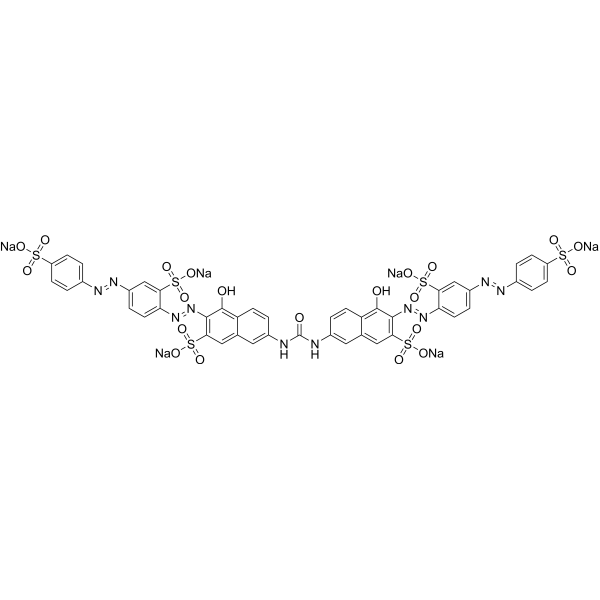
Direct Red 254 is a bisazo dye for textile applications. Direct Red 254 can be used for amyloid tissue staining in basic research on neurodegenerative diseases (e.g., Alzheimer's disease) .
|
-
- HY-W800832
-
|
|
Fluorescent Dye
|
Others
|
|
MB 660R DBCO is a bright and photostable far-red dye that emits fluorescence at about 685 nm in the borderline spectral region between far-red and near-IR. Although the absorption maximum is at around 665 nm, this dye can be sufficiently excited by the 633 or 635 nm laser. MB 660R DBCO is water soluble and pH-insensitive from pH 4 to pH 10. MB 660R DBCO is a rhodamine-based dye, and like rhodamine dyes in general, it is very bright and exceptionally photostable.
|
-
- HY-D1229
-
|
|
Fluorescent Dye
|
Others
|
|
Pigment Red 48:4 is a manganese-complex dye that can be used in printing ink applications and paint systems.
|
-
- HY-103311
-
|
Ammoniated ruthenium oxychloride
|
Calcium Channel
|
Cardiovascular Disease
|
|
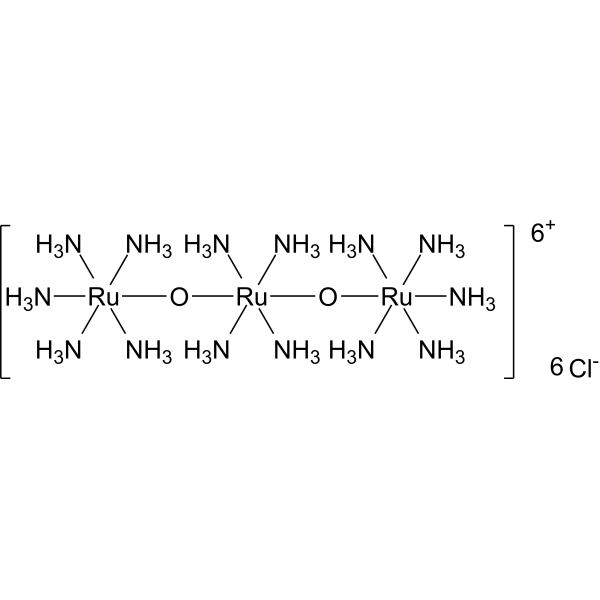
Ruthenium red (Ammoniated ruthenium oxychloride) is a polycationic dye widely used for electron microscopy (EM) of cells, tissues and vegetative bacteria. Ruthenium red strongly reacts with phospholipids and fatty acids and binds to acidic mucopolysaccharides. Ruthenium red is a L-type calcium current (ICa) blocker .
|
-
- HY-D1359
-
|
|
Fluorescent Dye
|
Others
|
|
Mito Red is a vital dye and mitochondrial stain that can be used to detect and evaluate mitochondrial function and status. Mito Red accumulates in mitochondria, and its fluorescence intensity is positively correlated with mitochondrial membrane potential. When the mitochondrial membrane potential increases, the fluorescence signal of Mito Red increases .
|
-
- HY-D0304
-
|
Solvent red 49
|
Fluorescent Dye
|
Others
|
|
Rhodamine B base (Solvent red 49) is a fluorescent dye (Ex=543 nM; Em=565 nM) .
|
-
- HY-104056
-
|
|
Fluorescent Dye
|
Others
|
|
Fura Red is a Ca 2+-sensitive fluorescent dye, which decreases in fluorescence with rising [Ca 2+] .
|
-
- HY-D0383
-
|
|
Fluorescent Dye
|
|
|
Pigment Red 146 is a commonly used commercial dye for bulk coloring of plastics and synthetic fibers and for surface coatings such as paints and inks.
|
-
- HY-D0384
-
|
|
Fluorescent Dye
|
|
|
Pigment Red 144 is a commonly used commercial dye for bulk coloring of plastics and synthetic fibers and for surface coatings such as paints and inks.
|
-
- HY-D1201
-
|
|
Fluorescent Dye
|
|
|
Pigment Red 245 is a commonly used commercial dye for bulk coloring of plastics and synthetic fibers and for surface coatings such as paints and inks.
|
-
- HY-D0596
-
|
|
Fluorescent Dye
|
|
|
Pigment Red 188 is a commonly used commercial dye for bulk coloring of plastics and synthetic fibers and for surface coatings such as paints and inks.
|
-
- HY-D0345
-
|
|
Fluorescent Dye
|
|
|
Pigment Red 178 is a commonly used commercial dye for bulk coloring of plastics and synthetic fibers and for surface coatings such as paints and inks.
|
-
- HY-D0697
-
|
|
Fluorescent Dye
|
|
|
Pigment red 95 is a commonly used commercial dye for bulk coloring of plastics and synthetic fibers and for surface coatings such as paints and inks.
|
-
- HY-D1064
-
|
|
Fluorescent Dye
|
|
|
Pigment red 57 is a commonly used commercial dye for bulk coloring of plastics and synthetic fibers and for surface coatings such as paints and inks.
|
-
- HY-D1215
-
|
|
Fluorescent Dye
|
Others
|
|
Pigment Red 31 is a commonly used commercial dye for bulk coloring of plastics and synthetic fibers and for surface coatings such as paints and inks.
|
-
- HY-D0566
-
|
|
Fluorescent Dye
|
|
|
Pigment Red 185 is a commonly used commercial dye for bulk coloring of plastics and synthetic fibers and for surface coatings such as paints and inks.
|
-
- HY-D1155
-
|
|
Fluorescent Dye
|
|
|
Pigment Red 176 is a commonly used commercial dye for bulk coloring of plastics and synthetic fibers and for surface coatings such as paints and inks.
|
-
- HY-D0337
-
|
|
Fluorescent Dye
|
|
|
Pigment Red 4 is a commonly used commercial dye for bulk coloring of plastics and synthetic fibers and for surface coatings such as paints and inks.
|
-
- HY-D0363
-
|
|
Fluorescent Dye
|
|
|
Pigment Red 166 is a commonly used commercial dye for bulk coloring of plastics and synthetic fibers and for surface coatings such as paints and inks.
|
-
- HY-D0568
-
|
|
Fluorescent Dye
|
|
|
Pigment Red 242 is a commonly used commercial dye for bulk coloring of plastics and synthetic fibers and for surface coatings such as paints and inks.
|
-
- HY-D1139
-
|
|
Fluorescent Dye
|
|
|
Pigment Red 177 is a commonly used commercial dye for bulk coloring of plastics and synthetic fibers and for surface coatings such as paints and inks.
|
-
- HY-D0549
-
|
|
Fluorescent Dye
|
|
|
Pigment Red 266 is a commonly used commercial dye for bulk coloring of plastics and synthetic fibers and for surface coatings such as paints and inks.
|
-
- HY-D0632
-
|
|
Fluorescent Dye
|
|
|
Pigment Red 147 is a commonly used commercial dye for bulk coloring of plastics and synthetic fibers and for surface coatings such as paints and inks.
|
-
- HY-D0278
-
-
- HY-D1233
-
|
Quinaridone magenta 202
|
Fluorescent Dye
|
|
|
Pigment Red 202 is a commonly used commercial dye for bulk coloring of plastics and synthetic fibers and for surface coatings such as paints and inks.
|
-
- HY-D1168
-
|
|
Environmental Pollutants
Fluorescent Dye
|
Metabolic Disease
|
|
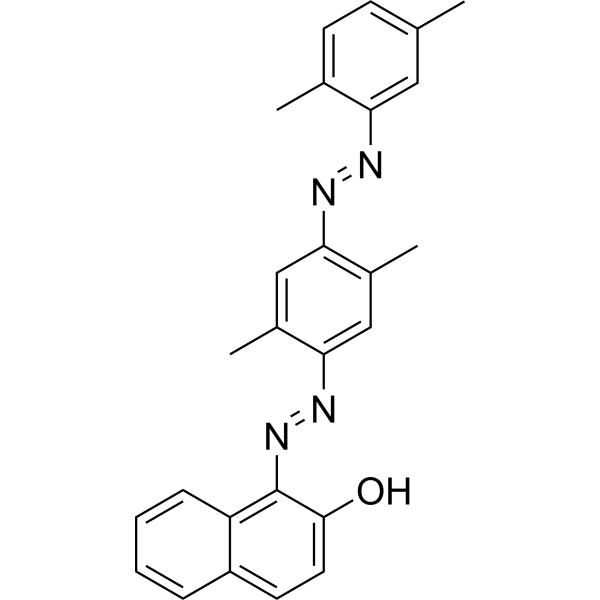
Oil Red O is a fat-soluble diazol dye, with a maximum absorption at 518 nm. Oil Red O stains neutral lipids and cholesteryl esters but not biological membranes. Oil Red O can be used for detecting and quantifying hepatic steatosis in mouse liver biopsies. Oil Red O staining efficiently helps to visualize the radical changes that occur in tissues as metabolic disease occurs and progresses .
|
-
- HY-DY1105
-
|
MTDR FM (solution)
|
Fluorescent Dye
|
Others
|
MitoTracker Deep Red FM (solution) (MTDR FM (solution)) selectively accumulates in the mitochondrial matrix. MitoTracker Deep Red FM covalently binds mitochondrial proteins by reacting with free mercaptan of cysteine residues, allowing staining of mitochondrial membrane potential independent of membrane potential. The Ex/Em of MitoTracker Deep Red (MTDR) FM is 644/665 nm. Solvent and concentration: DMSO: 1 mM
|
-
- HY-D0280
-
|
|
Fluorescent Dye
|
|
|
Pigment red 57-1 is a commonly used commercial dye for bulk coloring of plastics and synthetic fibers and for surface coatings such as paints and inks.
|
-
- HY-D1214
-
|
Cationic red X-GRL
|
Fluorescent Dye
|
|
|
Basic Red 46 is an alkaline dye that can be removed from aqueous solutions in intermittent adsorption systems using tree ferns as biosorbents.
|
-
- HY-D1036
-
|
|
Fluorescent Dye
|
|
|
Basic red 18 (acetate) is an alkaline dye that can be removed from aqueous solutions in intermittent adsorption systems using tree ferns as biosorbents.
|
-
- HY-D1132
-
|
|
Fluorescent Dye
|
|
|
Basic red 12 is an alkaline dye that can be removed from aqueous solutions in intermittent adsorption systems using tree ferns as biosorbents.
|
-
- HY-D1164
-
|
D&C red No. 34
|
Fluorescent Dye
|
|
|
Pigment red 63:1 is a commonly used commercial dye for bulk coloring of plastics and synthetic fibers and for surface coatings such as paints and inks.
|
-
- HY-W179417
-
-
- HY-D0579
-
|
|
Fluorescent Dye
|
|
|
Basic red 18:1 is an alkaline dye that can be removed from aqueous solutions in intermittent adsorption systems using tree ferns as biosorbents.
|
-
- HY-D0169
-
-
- HY-D0214R
-
|
|
Reference Standards
Influenza Virus
|
Others
|
|
Acid Red 94 sodium (Standard) is the analytical standard of Acid Red 94 sodium. This product is intended for research and analytical applications. Acid Red 94 sodium, a synthetic fluorescein derivative, and is a crimson-coloured dye with the principal component being 4,5,6,7-tetrachloro-2,4,5,7-tetraiodo fluorescein. Acid Red 94 sodium has been widely used as an ophthalmic diagnostic agents, and can detect desiccated or damaged cells on the ocular surface. Acid Red 94 sodium exhibits antiviral activities .
|
-
- HY-D2094
-
|
|
Fluorescent Dye
|
Inflammation/Immunology
Cancer
|
|
PerCP Maleimide is a fluorescent dye that reacts with free sulfhydryl groups on proteins. PerCP is a red fluorescence albuminous dye for immunostaining and Maleimide can be leveraged for the preparation of fluorogenic probe, which is mainly used for the specific detection of thiol analytes .
|
-
- HY-D2865
-
|
|
Fluorescent Dye
|
Others
|
|
Celltrack Deep Red is a fluorescent dye with a fluorescence signal that can be maintained for at least 72 h and has good stability. Celltrack Deep Red can be used for cell tracing and multi-generation cell movement tracking. Within a cell population, Celltrack Deep Red is only transferred to daughter cells and not to neighboring cells (Ex/Em = 630/650 nm) .
|
-
- HY-D2176
-
|
|
Fluorescent Dye
|
Others
|
|
AF 555 carboxylic acid is a derivative of the orange fluorescent dye AF 555. AF 555 carboxylic acid is widely used in cell dyes, biological dyes, biomolecules and particle fluorescent labeling. AF 555 exhibits average excitation wavelengths under green laser and red laser of 510 nm and 610 nm, respectively .
|
-
- HY-D1540
-
|
Cy 5.5 amine; Lumiprobe Cy 5.5 amine
|
Fluorescent Dye
|
Others
|
|
Cyanine5.5 amine (Cy 5.5 amine), a Cy5.5 Analogue, is a near-infrared (NIR) fluorescent dye (Ex=648 nm, Em=710 nm). Cyanine5.5 amine can be used in the preparation of Cy5.5-labeled nanoparticles, which can be tracked and imaged with low fluorescence background using confocal microscopy .
|
-
- HY-D0551
-
|
|
Fluorescent Dye
|
Others
|
|
C.I. Basic red 24 is an alkaline dye that can be removed from aqueous solutions in intermittent adsorption systems using tree ferns as biosorbents.
|
-
- HY-D1484
-
|
1,1'-Diethyl-2,4'-cyanine iodide
|
Fluorescent Dye
|
Others
|
|
Ethyl red (1,1'-Diethyl-2,4'-cyanine) iodide is an azo dye and acid–base indicator .
|
-
- HY-D0478
-
|
|
Fluorescent Dye
|
|
|
C.I. Basic red 14 is an alkaline dye that can be removed from aqueous solutions in intermittent adsorption systems using tree ferns as biosorbents.
|
-
- HY-N1389
-
|
Carmine red
|
Fluorescent Dye
|
Inflammation/Immunology
Cancer
|
|
Carmine (Carmine red), a natural red dye extracted from the dried females of the insect Dactylopius coccus var. Costa (cochineal). Carmine is a widely used food additive. Carmine provokes both an immediate hypersensitivity and a delayed systemic response with cutaneous expression .
|
-
- HY-D0714
-
|
2,3,5-Triphenyltetrazolium chloride; TPTZ; TTC
|
Biochemical Assay Reagents
|
Cardiovascular Disease
|
|
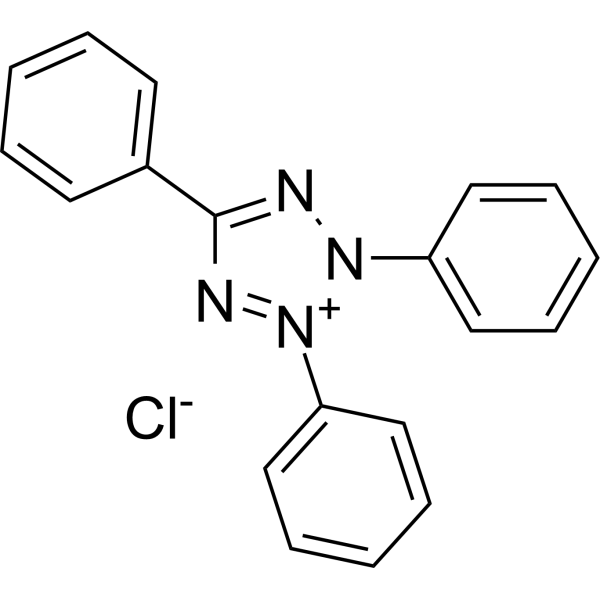
Tetrazolium Red (2,3,5-Triphenyltetrazolium chloride; TTC) is a not brain-penetrant, colorless, water-soluble dye that is reduced by mitochondrial enzymes to a deep red, water-insoluble compound (formazan) mainly in the mitochondria of living cells. Tetrazolium Red is used to observe the activity of dehydrogenase, and it turns colorless to red when exposed to hydrogen. Tetrazolium Red distinguishes between surviving and infarcted brain tissue after stroke. Tetrazolium Red has been used to stain heart tissue to measure the extent of acute lesions and also used to stain brain tissue to detect the size of the infarcted area. The absorption wavelength of Tetrazolium Red is 570 nm .
|
-
- HY-120601A
-
|
ARS
|
Fluorescent Dye
|
Others
|
|
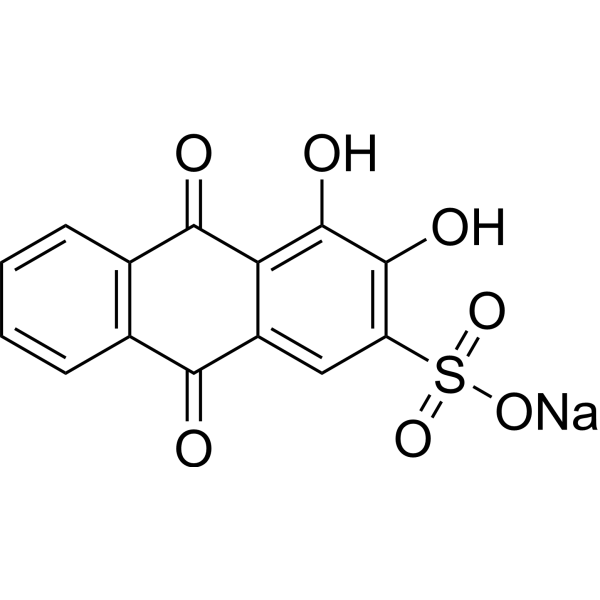
Alizarin Red S (ARS) is an anthraquinone derivative dye. When combined with cations such as calcium ions, the functional group of Alizarin Red S can form a coordination bond with the cation through the oxygen atom to show orange-red fluorescence. Alizarin Red S can be used for screening of calcium compounds in synovial fluid and detecting osteoblast differentiation, and can also be used for bone staining in mice. Excitation/emission wavelength: 500/570 nm .
|
-
- HY-120601
-
|
ARS sodium
|
Fluorescent Dye
|
Others
|
|
Alizarin Red S sodium is an anthraquinone derivative dye. When combined with cations such as calcium ions, the functional group of Alizarin Red S sodium can form a coordination bond with the cation through the oxygen atom to show orange-red fluorescence. Alizarin Red S sodium can be used for screening of calcium compounds in synovial fluid and detecting osteoblast differentiation, and can also be used for bone staining in mice. Excitation/emission wavelength: 500/570 nm .
|
-
- HY-DY1056
-
|
|
Fluorescent Dye
|
Neurological Disease
|
Texas Red (Sulforhodamine 101) (solution) is an amphoteric rhodamine red fluorescent dye (excitation/emission: 586/605 nm). Texas Red is used extensively for investigating neuronal morphology and acts as acell type-selective fluorescent marker of astrocytes bothin vivoand in slice preparations . Solvent and concentration: DMSO: 10 mM The 1 mL volume is defined as the base specification. All larger sizes correspond to incremental volumes of this base.
|
-
- HY-D1727
-
|
|
Fluorescent Dye
|
Others
|
|
CellTracker Red CMTPX is a cell-permeable fluorescent dye that can be used as a cell tracer for monitoring cell movement and location (Ex/Em=586/614 nm) .
|
-
- HY-D1451
-
|
|
Fluorescent Dye
|
Others
|
|
PKH 26 is a red fluorescent dye, PKH 26 can stably bind to the lipid region of cell membrane and emit red fluorescence (Ex/Em=551/567 nm), which is mainly used for in vitro cell labeling, in vitro cell proliferation studies and in vivo and in vitro cell tracing studies .
|
-
- HY-W206911
-
|
|
Environmental Pollutants
Biochemical Assay Reagents
|
Others
|
|
Erythrosin B sodium salt, is a synthetic azo dye commonly used as a food colorant and textile dye. It is a water-soluble compound that produces a bright red color and is often used to improve the appearance of products. Erythrosin B sodium salt is also used in the textile industry for dyeing wool, silk and leather. However, it has been linked to potentially negative health effects, such as allergic reactions and hyperactivity in children.
|
-
- HY-D1308
-
|
|
Fluorescent Dye
|
Others
|
|
Sulfo-Cyanine5.5 azide tripotassium, a near-infrared (NIR) fluorescent dye, is an azide-functionalized Sulfo-Cyanine5.5 (Ex=678 nm, Em=694 nm). Sulfo-Cyanine5.5 azide tripotassium can react with alkynes for Click Chemistry labeling . It contains an azide group and can undergo copper-catalyzed azide-alkyne cycloaddition (CuAAc) with molecules containing alkyne groups. It can also undergo ring strain-promoted alkyne-azide cycloaddition (SPAAC) with molecules containing DBCO or BCN groups.
|
-
- HY-D1541
-
|
|
Fluorescent Dye
|
Others
|
|
Sulfo-Cyanine5.5 alkyne, a near-infrared (NIR) fluorescent dye, is an alkyne modified Sulfo-Cyanine5.5 (Ex=67 8nm, Em=694 nm). Sulfo-Cyanine5.5 alkyne can react with azides for Click Chemistry labeling.
|
-
- HY-D1325
-
|
|
Fluorescent Dye
|
Others
|
|
Cyanine5.5 alkyne chloride is an alkynyl-modified near-infrared (NIR) fluorescent dye (Ex=678 nm, Em=694 nm). Cyanine5.5 alkyne chloride can react with azides for click chemistry labeling .
|
-
- HY-D1742
-
|
|
Fluorescent Dye
DNA Stain
|
Others
|
|
DeepRed Nucleus Dye is a novel cell permeant and far red-fluorescing DNA probe. DeepRed Nucleus Dye excites at a wavelength of 647 nm, close to the Ex, and produces a fluorescence spectrum extending from 665 nm out to beyond 780 nm wavelengths. DeepRed Nucleus Dye fluorescence reflects cellular DNA content. DeepRed Nucleus Dye can be used in combination with FITC and RPE-labelled antibodies, without the need for fluorescence compensation .
|
-
- HY-160277
-
|
|
Fluorescent Dye
|
Others
|
|
DSPE-PEG2000-Fluor 594 is a PEGylated lipid with a DSPE group and a Fluor 594 fluorophore. DSPE is a phospholipid. Fluor 594 is a red water-soluble dye .
|
-
- HY-D0796
-
|
|
Fluorescent Dye
|
Others
|
|
Propyl red is a multifunctional dye. Dyes are important tools in biological experiments. They can help researchers observe and analyze cell structures, track biomolecules, evaluate cell functions, distinguish cell types, detect biomolecules, study tissue pathology and monitor microorganisms. Their applications range from basic scientific research to clinical A wide range of diagnostics. Dyes are also widely used in traditional fields such as textile dyeing, as well as in emerging fields such as functional textile processing, food pigments and dye-sensitized solar cells.
|
-
- HY-D0214A
-
|
|
Fluorescent Dye
|
Others
|
|
Acid Red 94 lactone is a multifunctional dye. Dyes are important tools in biological experiments. They can help researchers observe and analyze cell structures, track biomolecules, evaluate cell functions, distinguish cell types, detect biomolecules, study tissue pathology and monitor microorganisms. Their applications range from basic scientific research to clinical A wide range of diagnostics. Dyes are also widely used in traditional fields such as textile dyeing, as well as in emerging fields such as functional textile processing, food pigments and dye-sensitized solar cells.
|
-
- HY-D1198
-
|
Acid red 91
|
Fluorescent Dye
|
Others
|
|
Eosin B (Acid Red 91) is a multifunctional dye. Dyes are important tools in biological experiments. They can help researchers observe and analyze cell structures, track biomolecules, evaluate cell functions, distinguish cell types, detect biomolecules, study tissue pathology and monitor microorganisms. Their applications range from basic scientific research to clinical A wide range of diagnostics. Dyes are also widely used in traditional fields such as textile dyeing, as well as in emerging fields such as functional textile processing, food pigments and dye-sensitized solar cells.
|
-
- HY-D0655
-
|
|
Fluorescent Dye
|
Others
|
|
Reactive red 24 is a multifunctional dye. Dyes are important tools in biological experiments. They can help researchers observe and analyze cell structures, track biomolecules, evaluate cell functions, distinguish cell types, detect biomolecules, study tissue pathology and monitor microorganisms. Their applications range from basic scientific research to clinical A wide range of diagnostics. Dyes are also widely used in traditional fields such as textile dyeing, as well as in emerging fields such as functional textile processing, food pigments and dye-sensitized solar cells.
|
-
- HY-D0501
-
|
|
Fluorescent Dye
|
Others
|
|
Cationic red GTL is a multifunctional dye. Dyes are important tools in biological experiments. They can help researchers observe and analyze cell structures, track biomolecules, evaluate cell functions, distinguish cell types, detect biomolecules, study tissue pathology and monitor microorganisms. Their applications range from basic scientific research to clinical A wide range of diagnostics. Dyes are also widely used in traditional fields such as textile dyeing, as well as in emerging fields such as functional textile processing, food pigments and dye-sensitized solar cells.
|
-
- HY-D0013
-
|
Dichlorophenolsulphonephthalein
|
Fluorescent Dye
|
Others
|
|
Chlorophenol red (Dichlorophenolsulphonephthalein) is a multifunctional dye. Dyes are important tools in biological experiments. They can help researchers observe and analyze cell structures, track biomolecules, evaluate cell functions, distinguish cell types, detect biomolecules, study tissue pathology and monitor microorganisms. Their applications range from basic scientific research to clinical A wide range of diagnostics. Dyes are also widely used in traditional fields such as textile dyeing, as well as in emerging fields such as functional textile processing, food pigments and dye-sensitized solar cells.
|
-
- HY-D0588
-
|
|
Fluorescent Dye
|
Others
|
|
Acid red 266 is a multifunctional dye. Dyes are important tools in biological experiments. They can help researchers observe and analyze cell structures, track biomolecules, evaluate cell functions, distinguish cell types, detect biomolecules, study tissue pathology and monitor microorganisms. Their applications range from basic scientific research to clinical A wide range of diagnostics. Dyes are also widely used in traditional fields such as textile dyeing, as well as in emerging fields such as functional textile processing, food pigments and dye-sensitized solar cells.
|
-
- HY-D0472
-
|
|
Fluorescent Dye
|
Others
|
|
C.I. Acid red 97 is a multifunctional dye. Dyes are important tools in biological experiments. They can help researchers observe and analyze cell structures, track biomolecules, evaluate cell functions, distinguish cell types, detect biomolecules, study tissue pathology and monitor microorganisms. Their applications range from basic scientific research to clinical A wide range of diagnostics. Dyes are also widely used in traditional fields such as textile dyeing, as well as in emerging fields such as functional textile processing, food pigments and dye-sensitized solar cells.
|
-
- HY-D0010
-
|
Dibromopyrogallolsulfonphthaleine
|
Fluorescent Dye
|
Others
|
|
Bromopyrogallol red (Dibromopyrogallolsulfonphthaleine) is a multifunctional dye. Dyes are important tools in biological experiments. They can help researchers observe and analyze cell structures, track biomolecules, evaluate cell functions, distinguish cell types, detect biomolecules, study tissue pathology and monitor microorganisms. Their applications range from basic scientific research to clinical A wide range of diagnostics. Dyes are also widely used in traditional fields such as textile dyeing, as well as in emerging fields such as functional textile processing, food pigments and dye-sensitized solar cells.
|
-
- HY-D0464
-
|
|
Fluorescent Dye
|
Others
|
|
Pigment red 48:1 is a multifunctional dye. Dyes are important tools in biological experiments. They can help researchers observe and analyze cell structures, track biomolecules, evaluate cell functions, distinguish cell types, detect biomolecules, study tissue pathology and monitor microorganisms. Their applications range from basic scientific research to clinical A wide range of diagnostics. Dyes are also widely used in traditional fields such as textile dyeing, as well as in emerging fields such as functional textile processing, food pigments and dye-sensitized solar cells.
|
-
- HY-D1218
-
|
|
Fluorescent Dye
|
Others
|
|
Fast Red TR (napadisylate) is a multifunctional dye. Dyes are important tools in biological experiments. They can help researchers observe and analyze cell structures, track biomolecules, evaluate cell functions, distinguish cell types, detect biomolecules, study tissue pathology and monitor microorganisms. Their applications range from basic scientific research to clinical A wide range of diagnostics. Dyes are also widely used in traditional fields such as textile dyeing, as well as in emerging fields such as functional textile processing, food pigments and dye-sensitized solar cells.
|
-
- HY-D0572
-
|
|
Fluorescent Dye
|
Others
|
|
Acid red 260 is a multifunctional dye. Dyes are important tools in biological experiments. They can help researchers observe and analyze cell structures, track biomolecules, evaluate cell functions, distinguish cell types, detect biomolecules, study tissue pathology and monitor microorganisms. Their applications range from basic scientific research to clinical A wide range of diagnostics. Dyes are also widely used in traditional fields such as textile dyeing, as well as in emerging fields such as functional textile processing, food pigments and dye-sensitized solar cells.
|
-
- HY-D0554
-
|
|
Fluorescent Dye
|
Others
|
|
Sumitone fast red b is a multifunctional dye. Dyes are important tools in biological experiments. They can help researchers observe and analyze cell structures, track biomolecules, evaluate cell functions, distinguish cell types, detect biomolecules, study tissue pathology and monitor microorganisms. Their applications range from basic scientific research to clinical A wide range of diagnostics. Dyes are also widely used in traditional fields such as textile dyeing, as well as in emerging fields such as functional textile processing, food pigments and dye-sensitized solar cells.
|
-
- HY-D1277
-
|
|
Fluorescent Dye
|
Others
|
|
Pigment red 21 is a multifunctional dye. Dyes are important tools in biological experiments. They can help researchers observe and analyze cell structures, track biomolecules, evaluate cell functions, distinguish cell types, detect biomolecules, study tissue pathology and monitor microorganisms. Their applications range from basic scientific research to clinical A wide range of diagnostics. Dyes are also widely used in traditional fields such as textile dyeing, as well as in emerging fields such as functional textile processing, food pigments and dye-sensitized solar cells.
|
-
- HY-D1376
-
|
|
Fluorescent Dye
|
|
|
Sulfo-Cyanine5.5 amine potassium is a water-soluble cyanine dye suitable for far-red/near-infrared applications such as in vivo imaging. The dye has four sulfonate groups, making it highly hydrophilic and water-soluble. Like other cyanines, sulfo-Cyanine5.5 has an excellent extinction coefficient, making it a bright fluorescent marker in the far-red region. This is an amine-containing fluorescent dye. The amine group is separated from the fluorophore by a relatively long linker that facilitates conjugation. Aliphatic primary amine groups can be coupled with various electrophiles (activated esters, epoxides, etc.) and can also be used for enzymatic transamination labeling.
|
-
- HY-12489A
-
|
Acid red 112, BS
|
Biochemical Assay Reagents
|
Others
|
|
Both Ponceau S and Ponceau BS are synthetic dyes commonly used in biological research. They are commonly used as protein stains to visualize proteins in western blots and other protein detection analyses. Ponceau S is a red dye, while Ponceau BS is a blue shade of the same dye. Both dyes bind to positively charged amino acid residues in proteins for easy visualization. However, Ponceau S is more commonly used due to its higher sensitivity.
|
-
- HY-D2755
-
|
|
Fluorescent Dye
|
Others
|
|
BP Light 650 carboxylic acid is an vibrant far-red fluorochrome with comparable or improved performance over other dyes, including BP Fluor 647 and Cy5 dye, for fluorescent applications. It is used to label antibodies and other proteins as molecular probes for cellular imaging and other fluorescence detection methods application.
|
-
- HY-D2737
-
|
BHQ-2 DMT amidite
|
Fluorescent Dye
|
Others
|
|
DMT-BH2 amidite (BHQ-2 DMT amidite) is a black quencher dye for the synthesis of dual-labeled oligonucleotide probes for qPCR bearing 5'-quencher. This quencher is ideal for HEX, JOE, ROX, Cyanine5, and other dyes with emissions in the orange and red parts of the spectrum.
|
-
- HY-D0214E
-
|
|
Influenza Virus
Photosensitizer
Amyloid-β
|
Infection
Neurological Disease
Cancer
|
|
Acid Red 94 sodium (80%), a synthetic fluorescein derivative, is a deep red dye primarily composed of 4,5,6,7-tetrachloro-2,4,5,7-tetraiodo fluorescein. Acid Red 94 sodium (80%) is widely used as an ophthalmic diagnostic agent to detect dry or damaged cells on the ocular surface. Acid Red 94 sodium (80%) exhibits antitumor activity and can inhibit Friend Leukemia Virus (FLV) infection through photodynamic action. Additionally, Acid Red 94 sodium (80%) can inhibit Aβ aggregation through light irradiation. Acid Red 94 sodium (80%) holds potential for use in cancer, viral infections, and neurodegenerative disease research .
|
-
- HY-D3384
-
|
|
Fluorescent Dye
|
Others
|
|
AM4-65 is a red fluorescing styryl dye. AM4-65 can incorporate int plasma membranes to outline cell periphery and nascent cell plates .
|
-
- HY-D0214
-
|
|
Influenza Virus
Photosensitizer
Amyloid-β
|
Infection
Neurological Disease
Cancer
|
|
Acid Red 94 sodium, a synthetic fluorescein derivative, is a deep red dye primarily composed of 4,5,6,7-tetrachloro-2,4,5,7-tetraiodo fluorescein. It is widely used as an ophthalmic diagnostic agent to detect dry or damaged cells on the ocular surface. Acid Red 94 sodium exhibits antitumor activity and can inhibit Friend Leukemia Virus (FLV) infection through photodynamic action. Additionally, Acid Red 94 sodium can inhibit Aβ aggregation through light irradiation. Acid Red 94 sodium holds potential for use in cancer, viral infections, and neurodegenerative disease research .
|
-
- HY-DY1011
-
|
|
Fluorescent Dye
|
Others
|
PKH 26 (solution) is a red fluorescent dye, PKH 26 can stably bind to the lipid region of cell membrane and emit red fluorescence (Ex/Em=551/567 nm) , which is mainly used for in vitro cell labeling, in vitro cell proliferation studies and in vivo and in vitro cell tracing studies . Solvent and concentration: DMSO: 5 mM
|
-
- HY-167255
-
|
|
Fluorescent Dye
|
Others
|
|
JC-10 is a lipophilic mitochondrial membrane potential indicator and is a fluorescent dye. JC-10 accumulates and aggregates in healthy mitochondria to emit red fluorescence; exists as a monomer emitting green fluorescence in the cytosol or apoptotic cells with collapsed mitochondrial membrane potential, enabling measurement of mitochondrial depolarization via the green/red fluorescence ratio .
|
-
- HY-D2743
-
|
|
Fluorescent Dye
|
Others
|
|
ROX alkyne, 6-isomer is an alkyne derivative of the bright red-emitting dye ROX (Rhodamine X, Rhodamine 101). Due to its quantum yield approaching unity, ROX is a popular dye for qPCR and microscopy applications. It is used for fluorescent labeling of azide-containing biomolecules via copper-catalyzed click reaction.
|
-
- HY-183137
-
|
|
Fluorescent Dye
|
Others
|
|
Neotetrazolium chloride is a photoreducible tetrazolium dye. Neotetrazolium chloride undergoes photoreduction to form a stable red monoformazan via a transient tetrazolinyl radical-tetrazolium intermediate upon UV exposure. Neotetrazolium chloride can be as a UV dosimeter .
|
-
- HY-D2223
-
|
|
Fluorescent Dye
|
Others
|
|
Sulfo-Cy5 dUTP is a modified nucleoside triphosphate used for DNase labeling. Sulfo-Cy5 dUTP is a bright far-red emitting dye for the Cy5 channel .
|
-
- HY-D1691
-
|
|
Fluorescent Dye
|
Others
|
|
BODIPY-581/591 NHS ester is a bright, red fluorescent dye (excitation: 581 nm; emission: 591 nm). BODIPY-581/591 NHS ester can be used for the labeling of amine containing biomolecules .
|
-
- HY-D1853
-
|
|
Fluorescent Dye
|
Others
|
|
Sulfo-Cy5 carboxylic acid is a Cy5 derivative that can be used for chemical synthesis. Cy5 is a red fluorescent label dye for imaging (Ex/Em=642/670 nm) .
|
-
- HY-D0585
-
|
|
Fluorescent Dye
|
Others
|
|
Procion red MX 8B is a multifunctional dye. Dyes are important tools in biological experiments. They can help researchers observe and analyze cell structures, track biomolecules, evaluate cell functions, distinguish cell types, detect biomolecules, study tissue pathology and monitor microorganisms. Their applications range from basic scientific research to clinical A wide range of diagnostics. Dyes are also widely used in traditional fields such as textile dyeing, as well as in emerging fields such as functional textile processing, food pigments and dye-sensitized solar cells.
|
-
- HY-D0590
-
|
|
Fluorescent Dye
|
Others
|
|
C.I. Pigment red 187 is a multifunctional dye. Dyes are important tools in biological experiments. They can help researchers observe and analyze cell structures, track biomolecules, evaluate cell functions, distinguish cell types, detect biomolecules, study tissue pathology and monitor microorganisms. Their applications range from basic scientific research to clinical A wide range of diagnostics. Dyes are also widely used in traditional fields such as textile dyeing, as well as in emerging fields such as functional textile processing, food pigments and dye-sensitized solar cells.
|
-
- HY-D0560
-
|
|
Fluorescent Dye
|
Others
|
|
C.I. Pigment red 247 is a multifunctional dye. Dyes are important tools in biological experiments. They can help researchers observe and analyze cell structures, track biomolecules, evaluate cell functions, distinguish cell types, detect biomolecules, study tissue pathology and monitor microorganisms. Their applications range from basic scientific research to clinical A wide range of diagnostics. Dyes are also widely used in traditional fields such as textile dyeing, as well as in emerging fields such as functional textile processing, food pigments and dye-sensitized solar cells.
|
-
- HY-D2754
-
|
|
Fluorescent Dye
|
Others
|
|
BP Light 550 acid is a vibrant orange-to-red fluorochrome with better performance t han other rhodamine derivatives, including BP Fluor 555, TRITC, and Cy3 dye for fluorescent applications. The high water solubility of BP Light Fluors means that a high dye-to-protein ratio can be attained without causing precipitation of the conjugates.
|
-
- HY-D2766
-
|
|
Fluorescent Dye
|
Others
|
|
BP Light 550 NHS ester is a vibrant orange-to-red fluorochrome with better performance than other rhodamine derivatives, including BP Fluor 555, TRITC, and Cy3 dye for fluorescent applications. The high water solubility of BP Light 550 means that a high dye-to-protein ratio can be attained without causing precipitation of the conjugates.
|
-
- HY-D1853A
-
|
|
Fluorescent Dye
|
Others
|
|
Sulfo-Cy5 carboxylic acid TEA is a Cy5 derivative that can be used for chemical synthesis. Cy5 is a red fluorescent label dye for imaging (Ex/Em=642/670 nm) .
|
-
- HY-131510
-
|
SNARF-DE
|
Fluorescent Dye
|
Others
|
|
Chromoionophore XIII (SNARF-DE) is a pH senor that enables excitation with red light. Chromoionophore XIII functionality renders the indicator molecule lipophilic and water-insoluble but also prevents lactonization of the dye in an apolar environment .
|
-
- HY-123533
-
|
NSC 12097
|
Reactive Oxygen Species (ROS)
Fluorescent Dye
|
Cancer
|
|
Resorufin (NSC 12097) is a highly fluorescent pink dye. Resorufin shows favorable properties such as water solubility, red-shifted absorption/emission signals. Resorufin is used for the detection of ROS/RNS and a second analyte .
|
-
- HY-123533A
-
|
NSC 12097 sodium salt
|
Reactive Oxygen Species (ROS)
|
Others
|
|
Resorufin sodium salt (NSC 12097) is a highly fluorescent pink dye. Resorufin sodium salt shows favorable properties such as water solubility, red-shifted absorption/emission signals. Resorufin sodium salt is used for the detection of ROS/RNS and a second analyte .
|
-
- HY-D0015
-
|
|
Fluorescent Dye
|
Others
|
|
Cresol red, 97% is an acidic phenolsulfonphthalein triphenylmethane dye. Cresol red, 97% generates reactive oxygen species and singlet oxygen under ultrasonic irradiation, interacts with bovine serum albumin, alters the structure of bovine serum albumin, and oxidizes the fluorescent amino acid residues of bovine serum albumin. Cresol red, 97% can be decolorized and biodegraded by *Absidia spinosa* M15, producing phenylacetic acid and benzoic acid metabolites. Cresol red, 97% serves as a pH indicator (orange at pH 1.8-yellow at pH 2.0, yellow at pH 7.0-purple at pH 8.8). Cresol red, 97% can be used to indicate pH, temperature and salinity .
|
-
- HY-118907
-
|
|
Fluorescent Dye
|
Others
|
|
Methyl Orange is a soluble azo dye commonly used as an acid-base indicator and for staining cells and tissue sections, as well as for dyeing textiles. Methyl Orange appears red at a pH of 3.1 and changes to bright yellow as the pH increases to 4.4. Methyl Orange (500 mg/L) exhibits cytotoxicity and can cause DNA damage .
|
-
- HY-136247
-
|
Tyramide-Cy5
|
DNA Stain
|
Others
|
|
Cyanine 5 Tyramide (Tyramide-Cy5), a red fluorescent dye, is utilized as reporter fluorescent substrate for horseradish peroxidase (HRP)-catalyzed deposition that is signal amplification technique in immunoassay and in situ hybridization of nucleic acids .
|
-
- HY-172717
-
|
|
Fluorescent Dye
|
Others
|
|
TAMRA-PEG4-t-butyl ester is a TAMRA red-fluorescent dye linker, with excitation/emission maximum 553/575 nm, containing a t-butyl protected carboxyl group which can be deprotected under acidic conditions.
|
-
- HY-W800808
-
|
|
Fluorescent Dye
|
Others
|
|
ROX azide, 5-isomer is a red-emitting rhodamine dye possessing high brightness and fluorescence quantum yield. The azide group can react with alkyne, BCN, DBCO via Click Chemistry to yield a stable triazole linkage.
|
-
- HY-D1366
-
|
|
Fluorescent Dye
|
|
|
Sulfo-Cyanine5.5 carboxylic acidCI Pigment violet 32 is a water-soluble, far-red emitting fluorophore. Due to its four sulfo groups, this dye has a negative charge at neutral pH and is very hydrophilic. As a cyanine dye, sulfo-Cyanine5.5 shows a very low dependence of fluorescence on pH and a very high extinction coefficient.
|
-
- HY-D1421
-
|
|
Fluorescent Dye
|
Others
|
|
PKH67 is a fluorescent cell binding dye with green fluorescence. PKH67 can stain the cell membrane and the Ex/Em is 490/502 nm. PKH67 is often used in combination with the non-specific red fluorescent dye PKH26 (Ex/Em=551/567 nm) to label cells, detect cell proliferation in vitro, and trace cells in vitro and in vivo .
|
-
- HY-D0791
-
TRITC
1 Publications Verification
5(6)-Tetramethylrhodamine isothiocyanate
|
Fluorescent Dye
|
Others
|
|
TRITC (5(6)-Tetramethylrhodamine isothiocyanate) is a commonly used fluorescent dye, belonging to the Rhodamine derivative family. It exhibits red fluorescence properties (Ex/Em ≈ 550/580 nm). TRITC can be used for cell labeling and imaging .
|
-
- HY-D2270
-
|
|
Fluorescent Dye
|
Others
|
|
Halo tag TMR is a red fluorescent dye composed of Halo tag ligand molecules and TMR (TAMRA). Halo tag can quickly and stably covalently bind to Halo protein with high specificity and affinity (Ex/Em = 550/576 nm) .
|
-
- HY-D3275
-
|
|
Fluorescent Dye
|
Others
|
|
PE-Cy5.5 is a far-red emitting tandem dye designed based on the principle of fluorescence resonance energy transfer (FRET), and is widely used in multicolor flow cytometry. PE-Cy5.5 consists of phycoerythrin (PE) as the energy donor and the cyanine dye Cy5.5 as the energy acceptor. Upon excitation by blue or green laser light, PE absorbs energy and transfers it to Cy5.5 via FRET, ultimately resulting in Cy5.5 emitting characteristic far-red fluorescence (Ex/Em = 450-500 nm/698 nm) .
|
-
- HY-D1692
-
|
|
Fluorescent Dye
|
Others
|
|
BODIPY 650/665 NHS ester is bright, far-red fluorescent dye that can be used to label the primary amines (R-NH2) of proteins, amine-modified oligonucleotides, and other amine-containing molecules . Ex / Em = 646 / 660 nm
|
-
- HY-W075603
-
|
2,6-Diiodo-Pyrromethene 546
|
Fluorescent Dye
|
Others
|
|
2,6-Diiodo-BODIPY 493/503 is an F-Bodipy fluorescent dye with diiodo substitution at the (pyrrole) 2,6 position. 2,6-Diiodo-BODIPY 493/503 has a pyrrole iodine substituent that turns it red .
|
-
- HY-D0193
-
|
Acid red 18; New Coccine
|
Environmental Pollutants
Fluorescent Dye
|
Others
|
|
Ponceau 4R is a synthetic colorant that can be used for food coloring. Ponceau 4R is a strawberry red azo dye that can be used in a variety of foods, usually synthesized from aromatic hydrocarbons, and is stable to light, heat, and acids .
|
-
- HY-D0931S
-
|
Sudan red III-d6; Tetrazobenzene-β-naphthol-d6; 111440 red-d6
|
Isotope-Labeled Compounds
Fluorescent Dye
|
Others
|
|
Sudan III-d6 (Sudan Red III-d6; Tetrazobenzene-β-naphthol-d6) is a deuterium labeled Sudan III (HY-D0931). Sudan III is a hydrophobic bisazo dye .
|
-
- HY-N0072
-
|
|
Apoptosis
Autophagy
|
Inflammation/Immunology
Cancer
|
|
Brazilin is a red dye precursor obtained from the heartwood of several species of tropical hardwoods. Brazilin inhibits the cells proliferation, promotes apoptosis, and induces autophagy through the AMPK/mTOR pathway. Brazilin shows chondroprotective and anti-inflammatory activities .
|
-
- HY-D3375
-
|
|
Fluorescent Dye
|
Neurological Disease
|
|
RAPID DiI is a cyanine dye with orange-red fluorescenc (EX≈550 nm; Em≈565 nm). RAPID DiI is a lipophilic dye that labels cell membranes by inserting its two long hydrocarbon (C18 carbon) chains into the lipid bilayer. RAPID DiI is weakly fluorescent until incorporated into membranes. RAPID DiI diffuses laterally to stain the entire cell, allowing it to be used as an anterograde and retrograde tracer of neurons.
|
-
- HY-D1607
-
|
|
Fluorescent Dye
|
Others
|
|
BODIPY FL SSE is a potent fluorescent dye. BODIPY FL SSE is used to label the primary amines (R-NH2) of proteins, amine-modified oligonucleotides, and other amine-containing molecules. BODIPY FL SSE can reactive with primary amines on biomolecules to emit green fluorescence. (λex=502 nm, λem=511 nm) .
|
-
- HY-W110927
-
|
|
Biochemical Assay Reagents
Fluorescent Dye
|
Others
|
|
Alizarin red S indicator (C.I. 58005) is a reductively active (quinone-based) anthraquinone dye that forms complexes with metal ions (such as zirconium, calcium) or boric acid to label calcium deposition and perform electrochemical sensing functions. Alizarin Red S undergoes reversible redox reactions (for electrochemical detection) and irreversible chelation (for bone staining). Alizarin Red S is mainly used in bone metabolism research (labeling mineralized tissue), sugar detection (boric acid-sugar competition system) and metal ion sensing (such as zirconium ion detection), and can be used in osteoporosis and metabolic disease research .
|
-
- HY-D1110
-
|
|
Fluorescent Dye
|
Others
|
|
TFAX 594,SE is a red fluorescent dye and exhibits pH-insensitivity over a very broad range (pH in the 4-10). TFAX 594,SE yields exceptionally bright, photostable conjugates with proteins or antibodies (such as goat anti-mouse IgG) .
|
-
- HY-D0166A
-
|
|
Biochemical Assay Reagents
|
Others
|
|
Neutral Red (IND) is an organic dye commonly used in biology and cytology laboratories. It can be used to stain living cells, secreted proteins and other molecular structures, etc., and has a wide range of applications in cell imaging and staining. In addition, Neutral Red (IND) is widely used in industrial fields such as water treatment, food processing and paper manufacturing, for example as an indicator or colorant. Although the compound has no direct medical application, it has important application value in the fields of biology, chemistry and industry.
|
-
- HY-NP059
-
|
OVA-AF647
|
Biochemical Assay Reagents
|
Others
|
|
Ovalbumin-AF647 is an ovalbumin conjugated with the far-red fluorescent dye AF647 (Ex=650 nm; Em=665 nm). Ovalbumin-AF647 can be used as a fluorescent label to label or detect specific antigens, molecules or cellular structures .
|
-
- HY-DY1107
-
|
|
Fluorescent Dye
|
Others
|
Halo tag TMR (solution) is a red fluorescent dye composed of Halo tag ligand molecules and TMR (TAMRA). Halo tag can quickly and stably covalently bind to Halo protein with high specificity and affinity (Ex/Em = 550/576 nm) . Solvent and concentration: DMSO: 5 mM
|
-
- HY-D1594
-
|
|
Fluorescent Dye
|
Others
|
|
BODIPY TR Cadaverine, a cadaverine derivative, is a red fluorescent dye. BODIPY TR Cadaverine can be used in a a highly sensitive and robust fluorescent displacement assay, which binds to native LPS strongly, specifically recognizing lipid A, and is competitively displaced by compounds displaying an affinity for lipid A .
|
-
- HY-173308
-
|
|
Fluorescent Dye
|
Others
|
|
QSY-21 is a fluorescence quencher. QSY-21 possesses broad absorption in far red and NIR range, and can quench fluorescence of dyes that emit in this region. This is a carboxylic acid derivative. QSY-21 has intense absorption maximum at 661 nm, making it useful as an acceptor in fluorescence resonance energy transfer (FRET) applications. It is a common quencher for Cyanine5, Cyanine5.5, AF 647, or other spectrally similar fluorescent dyes.
|
-
- HY-D2166
-
|
|
Fluorescent Dye
|
Others
|
|
AF 594 NHS ester is a derivative of the red fluorescent dye AF 594 with high fluorescence quantum yield and high photostability (Ex=594 nm, Em=615 nm). AF 594 NHS ester can form an ester bond by reacting the NHS group with ammonia, with maximum excitation wavelength of 594 nm .
|
-
- HY-D1710
-
|
|
Microtubule/Tubulin
|
Others
|
|
Anti-α-Tubulin Antibody, AF555 conjugate is a conjugate of mouse anti-α-tubulin monoclonal antibody and the red fluorescent dye Alexa Fluor 555. Anti-α-Tubulin Antibody, AF555 conjugate can be used for the detection of tubulin (Ex/Em: 554/567 nm) .
|
-
- HY-136247A
-
|
|
DNA Stain
|
Others
|
|
Cyanine 5 Tyramide (Tyramide-Cy5) methyl indole is a red fluorescent dye. Cyanine 5 Tyramide is utilized as reporter fluorescent substrate for horseradish peroxidase (HRP)-catalyzed deposition that is signal amplification technique in immunoassay and in situ hybridization of nucleic acids . Storage: protect from light.
|
-
- HY-D0723
-
|
5(6)-Carboxytetramethylrhodamine N-succinimidyl ester
|
Fluorescent Dye
|
Cancer
|
|
5(6)-TAMRA SE is a fluorescent dye that emits red fluorescence. 5(6)-TAMRA SE binds to oligonucleotides and is used in DNA sequencing. 5(6)-TAMRA SE can be used in cancer research (Ex/Em = 565/580 nm) .
|
-
- HY-151774
-
|
|
Fluorescent Dye
|
Others
|
|
TAMRA hydrazide (6-isomer) is a click chemistry reagent that can be coupled to carbonyl compounds. The dye hydrazide in TAMRA hydrazide (6-isomer) labels carbonyl compounds such as aldehydes and ketones. TAMRA in TAMRA hydrazide (6-isomer) is a xanthene red fluorophore that reacts with terminal alkynes .
|
-
- HY-118907R
-
|
|
Fluorescent Dye
Reference Standards
|
Others
|
|
Methyl Orange (Standard) is the analytical standard of Methyl Orange. This product is intended for research and analytical applications. Methyl Orange is a soluble azo dye commonly used as an acid-base indicator and for staining cells and tissue sections, as well as for dyeing textiles. Methyl Orange appears red at a pH of 3.1 and changes to bright yellow as the pH increases to 4.4. Methyl Orange (500 mg/L) exhibits cytotoxicity and can cause DNA damage .
|
-
- HY-D1585
-
|
|
Fluorescent Dye
|
Others
|
|
BODIPY TR methyl ester is a lipophilic GFP Counterstain. BODIPY TR methyl ester dye readily permeates cell membranes and localizes in endomembranous organelles but not localize strongly in plasma membranes. BODIPY TR methyl ester is an excellent red fluorescent vital dye (Ex=568 nm, Em=625 nm), can be used to reveal the location and shapes of cell nuclei, the shapes of cells within embryonic tissues, as well as the bound aries of organ-forming tissues within the whole embryo .
|
-
- HY-W151206
-
|
|
Fluorescent Dye
|
Others
|
|
Hydroxy naphthol blue disodium is an azo dye compound commonly used as an acid-base indicator (λmax = 650 nm). Within the pH range of 12 to 13, the indicator solution of Hydroxy naphthol blue disodium appears pale red in the presence of calcium ions and dark blue in the presence of disodium EDTA .
|
-
- HY-D1623
-
|
|
Fluorescent Dye
|
Others
|
|
Cyanine3 carboxylic acid chloride is a non-toxic red fluorescent dye with good solubility in organic solvents. Cyanine3 carboxylic acid chloride can be used as a non-reactive fluorophore for experimental control and calibration. Cyanine3 carboxylic acid chloride can also be synthesized with targeted agents as fluorescent probes for rapid detection of agent reactions .
|
-
- HY-D0024S1
-
|
|
Isotope-Labeled Compounds
Bacterial
|
Infection
|
|
Sudan I-d6 is the deuterium labeled Sudan I (HY-D0024). Sudan I (Solvent Yellow 14) is a diazo-conjugate red dye and can be used as an additive to products such as oils, solvents or polishes. Sudan I inhibits growth of bacterial strains Clostridium perfringens and L. rhamnosus.
|
-
- HY-D2579
-
|
|
Biochemical Assay Reagents
|
Others
|
|
Sulfo DBCO-UBQ-2 is a click chemistry reagent combining a dark quencher, UBQ-2, with a polyaromatic-azo backbone, offering no native emission. UBQ-2 effectively quenches fluorescence in the 560-670 nm range, ideal for qPCR probes and FRET applications with orange to far-red dyes .
|
-
- HY-D2880
-
|
|
Fluorescent Dye
|
Others
|
|
Sulfo-Cyanine5 DBCO is a near-infrared red (NIR) fluorescent dye. Sulfo-Cyanine5 DBCO is a click chemistry reagent, it contains a DBCO group that can undergo strain-promoted alkyne-azide cycloaddition (SPAAC) with molecules containing Azide groups (Ex/Em =646/670 nm) .
|
-
- HY-D2767
-
|
|
Fluorescent Dye
|
Others
|
|
MB 660R NHS Ester is a fluroescent agent with a terminal NHS ester group.MB 660R NHS Ester is a far-red fluorescent dye that has a maximal absorption of 665 nm and emission at 690 nm. The NHS ester can be applied to label the primary amines (-NH2) of proteins, amine-modified oligonucleotides, and other amine-containing molecules.
|
-
- HY-D2040
-
|
|
Fluorescent Dye
|
Others
|
|
ROX tetrazine is a derivative of ROX (Rhodamine X, Rhodamine 101) dye, a red-emitting fluorophore possessing high brightness and fluorescence quantum yield. This compound contains tetrazine moiety that reacts with trans-cycloalkenes and other strained olefins in inverse electron demand Diels-Alder reaction (IEDDA). The reaction is very quick and specific.
|
-
- HY-130735
-
|
JF646, SE; JF646, NHS
|
Fluorescent Dye
|
Others
|
|
Janelia Fluor 646, SE (JF646, SE) is a red fluorescent dye can be used in cellular imaging . Janelia Fluor products are licensed under U.S. Pat. Nos. 9,933,417, 10,018,624 and 10,161,932 and other patents from Howard Hughes Medical Institute.
|
-
- HY-110213
-
|
|
Fluorescent Dye
|
Others
|
|
BODIPY 630/650X is a red fluorescent dye that targets amine groups. BODIPY 630/650X displays excitation/emission maxima of 630/650 nm, respectively. BODIPY 630/650X can be used to covalently label proteins, antibodies, or other amine-containing biomolecules for detection and imaging .
|
-
- HY-DY1076
-
|
|
Fluorescent Dye
|
Others
|
BODIPY TR Cadaverine (solution) , a cadaverine derivative, is a red fluorescent dye. BODIPY TR Cadaverine can be used in a a highly sensitive and robust fluorescent displacement assay, which binds to native LPS strongly, specifically recognizing lipid A, and is competitively displaced by compounds displaying an affinity for lipid A . Solvent and concentration: DMSO: 2 mM
|
-
- HY-D2162
-
|
|
Fluorescent Dye
|
Others
|
|
AF 594 carboxylic acid is a carboxyl derivative of the red fluorescent dye AF 594, which has high fluorescence quantum yield and high photostability (Ex=594 nm, Em=615 nm). AF 594 carboxylic acid can form stable covalent bonds through the reaction of carboxylic acid groups with molecules with amino groups .
|
-
- HY-D1815
-
|
APC dye
|
Fluorescent Dye
|
Others
|
|
Allophycocyanin (APC Dye) is a light-harvesting protein, containing strongly coupled dimers of chromophores. Allophycocyanin serve as a minimal system to examine photosynthetic energy transfer. Allophycocyanin strongly absorbs far-red light (FRL), and expresses during acclimation to low light, likely associates with chlorophyll a-containing photosystem I .
|
-
- HY-133876
-
|
DiA
|
Fluorescent Dye
|
Others
|
|
4-Di-16-ASP is a green fluorescent membrane dye. 4-Di-16-ASP is a lipophilic aminostyryl probe with a broad emission spectrum (can be detected with green, orange or even red filters). It is commonly used for neuronal membrane tracing (it diffuses faster than DiO) .
|
-
- HY-W440936
-
|
|
Liposome
|
Others
|
|
Stearic acid-PEG5000-Rhodamine is a fatty acid containing PEG polymer which can self assemble in an aqueous solution to form micelles. The polymer can be used to prepare nanoparticles for drug encapsulation. The red dye rhodamine can be easily traced by fluorescence microscopy. Rhodamine has maximum absorption at 570 nm and emission around 595 nm.
|
-
- HY-D2161A
-
|
|
Fluorescent Dye
|
Others
|
|
AF 594 azide (triethylamine) is an azide derivative of the red fluorescent dye AF 594, which has high fluorescence quantum yield and high photostability (maximum absorption wavelength of 586 nm, maximum emission wavelength of 613 nm). AF 594 azide (triethylamine) forms stable adducts by reaction of the azide group with alkynyl derivatives (terminal alkynes and cyclooctyne) .
|
-
- HY-W440935
-
|
|
Liposome
|
Others
|
|
Stearic acid-PEG3400-Rhodamine is a fatty acid containing PEG polymer which can self assemble in an aqueous solution to form micelles. The polymer can be used to prepare nanoparticles for drug encapsulation. The red dye rhodamine can be easily traced by fluorescence microscopy. Rhodamine has maximum absorption at 570 nm and emission around 595 nm.
|
-
- HY-N0072R
-
|
|
Reference Standards
Apoptosis
Autophagy
|
Inflammation/Immunology
Cancer
|
|
Brazilin (Standard) is the analytical standard of Brazilin. This product is intended for research and analytical applications. Brazilin is a red dye precursor obtained from the heartwood of several species of tropical hardwoods. Brazilin inhibits the cells proliferation, promotes apoptosis, and induces autophagy through the AMPK/mTOR pathway. Brazilin shows chondroprotective and anti-inflammatory activities .
|
-
- HY-D2740
-
|
|
Fluorescent Dye
|
Others
|
|
ROX azide, 6-isomer is an alkyne-reactive derivative of ROX (Rhodamine X, Rhodamine 101) dye. ROX is a red-emitting fluorophore possessing high brightness and fluorescence quantum yield. This reagent is a pure 6-isomer. It is used for labeling alkyne and cycloalkyne-containing biomolecules via copper-catalyzed and copper-free click chemistry reactions.
|
-
- HY-D1596A
-
|
Cy3.5 NHS ester bromide; Cy 3.5 bromide
|
Fluorescent Dye
|
Others
|
|
Cyanine 3.5 bromide (Cy3.5 NHS ester bromide) is an analog of the Cy3.5 fluorophore. Cyanine 3.5 bromide is a red reactive fluorescent dye. Cyanine 3.5 bromide is used to label amino groups in peptides, proteins, and oligonucleotides. (λex=591 nm, λem=604 nm) .
|
-
- HY-133535
-
|
PA-JF646-NHS
|
Fluorescent Dye
|
Others
|
|
PA Janelia Fluor® 646, SE (PA-JF646-NHS) is a photo-activatable fluorescent dye. PA Janelia Fluor® 646, SE is a far-red light-excited, 405nm-activated NHS ester-based dye (λex/em = 650/664 nm). PA Janelia Fluor® 646, SE can achieve extremely low background and single-molecule-level ultra-high-resolution imaging through photo-controlled switching, making it a powerful tool for live cell super-resolution microscopy technology.
|
-
- HY-D1735
-
|
Golgi-red Tracke
|
Fluorescent Dye
|
Others
|
|
The Golgi apparatus is composed of flattened vesicles superimposed on each other by unit membranes. The flattened vesicles are round with expanded and perforated edges. The Golgi fluorescent probe is a BODIPY-labeled ceramide derivative, the synthesis of which occurs in the endoplasmic reticulum and can then be transported to the Golgi via ceramide transport protein (CERT) or vesicular translocation, allowing specific labeling of the dye. BODIPY TR Ceramide (Golgi-Red Tracke) is a Golgi-specific fluorescent dye, which can visualise individual cells . Ex/Em=589 nm/616 nm.
|
-
- HY-103466
-
|
|
Fluorescent Dye
|
Others
|
|
FM4-64 is a very lipophilic, water-soluble styrene dyes, can specifically bind to cell membranes and inner membrane organelles to produce fluorescence. FM4-64 is widely used in endocytic and exospic membrane structure markers.
|
-
- HY-DY1031
-
|
|
Fluorescent Dye
|
Others
|
FM4-64 (solution) is a very lipophilic, water-soluble styrene dyes, can specifically bind to cell membranes and inner membrane organelles to produce fluorescence. FM4-64 is widely used in endocytic and exospic membrane structure markers. Solvent and concentration: DMSO: 5 mM
|
-
- HY-D1119
-
|
|
Fluorescent Dye
|
Others
|
|
AF647-NHS ester is an analog of Alexa Fluor 647 (AF647). NHS ester can covalently bind to molecules with amino groups (such as proteins, antibodies, etc.). AF647 is a far-red fluorescent dye with an excitation wavelength (λex) of 635 nm (conventional fluorescence detection)/620 nm (instantaneous detection). Storage: Protect from light .
|
-
- HY-128369
-
|
Metanil Yellow
|
Environmental Pollutants
Cytochrome P450
|
Others
|
|
Acid Yellow 36 (Metanil Yellow) is an azo dye and a pH indicator. Acid Yellow 36 changes its color from red at pH 1.2 to yellow at pH 2.3. Acid Yellow 36 is used in the leather, paper and textile industries. Acid Yellow 36 acts as a bifunctional inducer of specific isozymes of P-450 and cytosolic enzymes .
|
-
- HY-D1671
-
|
|
Fluorescent Dye
|
Others
|
|
TRITC-DHPE is a rhodamine-labeled glycerophosphate ethanolamine lipid, with head groups marked with bright red fluorescent TRITC dye (λEx/λEm=514/580 nm). TRITC-DHPE can be used for membrane fusion assay to trace lipid processing in intracellular phagocytosis. TRITC-DHPE can serves as an energy transfer receptor for NBD, BODIPY and fluorescein lipid probes .
|
-
- HY-131029
-
|
JF646, Maleimide
|
Fluorescent Dye
|
Others
|
|
Janelia Fluor® 646, Maleimide (JF646, Maleimide) is a red fluorescent dye that contains a maleimide group. JF646, Maleimide can be used in cellular imaging . Janelia Fluor® products are licensed under U.S. Pat. Nos. 9,933,417, 10,018,624 and 10,161,932 and other patents from Howard Hughes Medical Institute.
|
-
- HY-N8407
-
-
- HY-D2165
-
|
|
Fluorescent Dye
|
Others
|
|
AF 594 streptavidin is a bioconjugating agent. It consists of AF 594 and streptomycin, a streptomycin derivative of the red fluorescent dye AF 594. AF 594 has high fluorescence quantum yield and high photostability (Ex=594 nm, Em=615 nm). AF 594 streptavidin can be selectively conjugated to streptavidin-modified molecules via a streptomycin-modifying group for fluorescent labeling and spectroscopic analysis .
|
-
- HY-D0016
-
|
CTC
|
Fluorescent Dye
|
Cancer
|
|
5-Cyano-2,3-di-(p-tolyl)tetrazolium chloride (CTC) is a redox-sensitive red fluorescent dye. 5-Cyano-2,3-di-(p-tolyl)tetrazolium chloride can be used for detecting metabolic activity in microorganisms. The emission maximum of 5-Cyano-2,3-di-(p-tolyl)tetrazolium chloride is 602 nm .
|
-
- HY-D1119A
-
|
|
Fluorescent Dye
|
Others
|
|
AF647-NHS ester tripotassium is an analogue of Alexa Fluor 647 (AF647) (HY-D1119). NHS ester can covalently bind to molecules with amino groups (such as proteins, antibodies, etc.). AF647 is a bright, far-red fluorescent dye with an excitation wavelength (λex) of 635 nm (conventional fluorescence detection)/620 nm (instantaneous detection). Storage: protect from light .
|
-
- HY-D1119B
-
|
|
Fluorescent Dye
|
Others
|
|
AF647-NHS ester (trisodium) is an analogue of Alexa Fluor 647 (AF647) (HY-D1119). NHS ester can covalently bind to molecules with amino groups (such as proteins, antibodies, etc.). AF647 is a bright, far-red fluorescent dye with an excitation wavelength (λex) of 635 nm (conventional fluorescence detection)/620 nm (instantaneous detection). Storage: protect from light .
|
-
- HY-D0992
-
|
Peridinin-chlorophyll-protein complex
|
Fluorescent Dye
|
Cancer
|
|
PerCP is a peridinin-chlorophyll protein complex derived from the dinoflagellate *Glenodinium*, suitable for immunofluorescence staining of formalin-fixed, paraffin-embedded human tumor sections. As a red fluorescent dye, PerCP enables clear differentiation between antibody-bound tumor regions and yellow-green autofluorescence of tissues. PerCP allows simultaneous observation of tissue morphology without counterstaining. PerCP can be used in cancer research (Ex/Em = 482/677 nm) .
|
-
- HY-D2906
-
|
|
Fluorescent Dye
|
Others
|
|
Alexa fluor 647 maleimide is a bright, far-red-emitting fluorescent dye for labeling of protein SH groups (Ex/Em = 656/670 nm). Alexa fluor 647 maleimide can be used to attach AF 647 fluorophore to proteins and peptides containing cysteine residues, as well as to other thiolated molecules (such as thiol-containing oligonucleotides). Alexa Fluor 647 maleimide is promising for research of cell biology, neuroscience, and disease diagnostics .
|
-
- HY-W088068
-
|
|
Fluorescent Dye
|
Others
|
|
Wright's stain is a composite cell stain that mainly binds to intracellular nucleic acids, proteins and other components through thiazine dyes (such as methylene blue) and eosin. Wright's stain is pH-dependent (optimal pH 6.4-6.7) and achieves cell morphology resolution by differentially staining the cytoplasm and nucleus. Under alkaline conditions, thiazine dyes bind to nucleic acids to form purple, and acidic eosin binds to cytoplasmic proteins to form red, which can form contrasting cell morphological features. Wright's stain can clearly display the fine structures of blood cells and bone marrow cells (such as nuclear chromatin and granules) and quickly evaluate cell morphological abnormalities .
|
-
- HY-D0812
-
|
|
Fluorescent Dye
Biochemical Assay Reagents
|
Others
|
|
Xylenol Blue is a sulfonephthalein dye. It exhibits observable color changes in response to variations in pH. Xylenol Blue undergoes two distinct color transitions across two specific pH ranges: an acidic range and an alkaline range. In a neutral solution, Xylenol Blue appears yellow (at pH 8); in a strongly acidic medium, its color shifts to red (at pH 2.8); and in an alkaline medium, the yellow hue transitions to blue (at pH 9.6) .
|
-
- HY-D2745
-
|
|
Fluorescent Dye
|
Others
|
|
BP Fluor 594 NHS ester is the most popular tool for modifying proteins or antibodies through the primary amines (Lys), amine-modified oligonucleotides, and other amine-containing biomolecules with BP Fluor 594 label. The labeling occurs most efficiently at pH 7-9 and forms a stable, covalent amide bond. BP Fluor 594 dye can be used for proteins labeling at high molar ratios without significant self-quenching, enabling brighter conjugates and more sensitive detection.
BP Fluor 594 is bright, water-soluble, and pH-insensitive from pH 4 to pH 10 red-fluorescent dye with absorption and emission maxima at 590 and 617 nm, respectively. It can be used with the 561 nm and 594 nm laser lines. BP Fluor 594 dye conjugated to a variety of antibodies, peptides, proteins, tracers, and amplification substrates often used for generation of stable signal in imaging and flow cytometry.
|
-
- HY-131028
-
|
JF646 TFA
|
Fluorescent Dye
|
Others
|
|
Janelia Fluor 646 TFA (JF646 TFA), a red fluorogenic fluorescent dye, can be used in the synthesis of Janelia Fluor 646 HaloTag and SNAP-Tag ligands. JF646 TFA is used in live cell imaging experiments . Janelia Fluor products are licensed under U.S. Pat. Nos. 9,933,417, 10,018,624 and 10,161,932 and other patents from Howard Hughes Medical Institute.
|
-
- HY-W400925
-
|
|
Fluorescent Dye
|
Others
|
|
Sulfo-Cy5-N3 is a click chemistry reagent containing an azide group. Cy5 is a red fluorescent label dye for imaging (Ex/Em=642/670 nm) . It contains an azide group and can undergo copper-catalyzed azide-alkyne cycloaddition (CuAAc) with molecules containing alkyne groups. It can also undergo ring strain-promoted alkyne-azide cycloaddition (SPAAC) with molecules containing DBCO or BCN groups.
|
-
- HY-D1376A
-
|
|
Fluorescent Dye
|
Others
|
|
Sulfo-Cyanine5.5 amine consists of four sulfonate groups and has highly hydrophilic. Sulfo-Cyanine5.5 amine is an amine-containing fluorescent dye, the aliphatic primary amine group can be coupled with various electrophiles (activated esters, epoxides, etc). Sulfo-Cyanine5.5 amine can be used for the research of far red/NIR applications (such as in vivo imaging) and also can be used for enzymatic transamination labeling .
|
-
- HY-125385
-
|
|
Endogenous Metabolite
|
Metabolic Disease
|
|
Sulforhodamine 101 DHPE is a fluorescent probe made from the conjugation of the phospholipid 1,2-dipalmitoyl-sn-glycero-3-PE to sulforhodamine 101, a red fluorescent dye that displays excitation/emission spectra of 586/605 nm, respectively. It integrates into phospholipid bilayers and has been used for imaging of solid supported lipid bilayers, detection of protein-ligand binding on bilayers, and to monitor colocalization of lipid probes in liposomes via resonance energy transfer (RET).
|
-
- HY-42984
-
|
|
Biochemical Assay Reagents
|
Others
|
|
BHQ-2 NHS is a dark quencher with no native emission due to the polyaromatic-azo backbone and a terminal NHS ester. UBHQ-2 NHS has a wide and intense quenching range from 560-670 nm, which makes it useful as an acceptor in fluorescence resonance energy transfer (FRET) applications in conjunction with orange to far-red emitting dyes. The NHS ester can be applied to label the primary amines (-NH2) of proteins, amine-modified oligonucleotides, and other amine-containing molecules.
|
-
- HY-D1373
-
HBC
3 Publications Verification
HBC 530
|
Fluorescent Dye
|
Others
|
|
HBC (HBC 530) is a GFP fluorophore-like synthetic dye, with a structurally rigid electron acceptor and a strong electron donor. HBC has a low fluorescence background, and when combined with Pepper (RNA aptamer), HBC forms a tight complex and activates and emits bright fluorescence (Kd of ~3.5 nM). HBC emission peaks vary in different complexes and covers the spectrum from cyan to red. HBC can be used in the live cell imaging of RNA (Em/Ex = 530/485 nm) .
|
-
- HY-D0932R
-
|
Solvent red 24 (Standard); C.I. 26105 (Standard)
|
Biochemical Assay Reagents
Aryl Hydrocarbon Receptor
Cytochrome P450
Reference Standards
|
Metabolic Disease
|
|
Sudan IV (Standard) (Solvent Red 24 (Standard)) is the analytical standard of Sudan IV (HY-D0932). This product is intended for research and analytical applications. Sudan IV is an agonist of the aryl hydrocarbon receptor (AhR) that activates downstream signaling pathways and induces CYP1A1 expression. Sudan IV promotes CYP1A1 gene transcription by activating AhR-ARNT heterodimers and binding to exogenous response elements (XREs) on DNA, thereby enhancing drug metabolizing enzyme activity. Sudan IV can be used to study the toxicity mechanisms of industrial dyes and the effects of interactions with serum proteins (such as bovine serum albumin (BSA)) on their distribution in vivo. Sudan IV is a fat-soluble diazo dye that can be used to stain lipids, triglycerides, and lipoproteins on frozen sections.
|
-
- HY-D3404
-
|
|
DNA Stain
|
Others
|
|
BODi-1 is a fluorescent modulator targeting dsDNA, which binds to dsDNA via a bis-intercalation mechanism (Ex=465 nm, Em=490 nm). BODi-1 exhibits a fluorescence enhancement effect upon binding to nucleic acids, but its fluorescence intensity, anisotropy and average lifetime decrease at higher dye/DNA ratios. When BODi-1 binds to DNA in liposome complexes, it also shows red-shifted emission spectra, along with reduced quantum yield and average lifetime. BODi-1 does not induce significant DNA conformational changes when the dye/DNA ratio is below 0.01. BODi-1 can be used as a fluorescent probe for the characterization of liposome complexes and FRET studies at this ratio .
|
-
- HY-131030
-
|
JF669, SE; JF669, NHS
|
Fluorescent Dye
|
Others
|
|
Janelia Fluor 669, SE (JF669, SE), a red fluorescent dye, can be directly reacted with the available thiol-containing HaloTag ligand under mild conditions (DIEA, DMF) to afford a JF669HaloTag ligand in a single step (Ex = 669 nm; Em = 682 nm) . Janelia Fluor products are licensed under U.S. Pat. Nos. 9,933,417, 10,018,624 and 10,161,932 and other patents from Howard Hughes Medical Institute.
|
-
- HY-112697
-
|
|
Biochemical Assay Reagents
|
Others
|
|
Rhodamine B isothiocyanate (RBITC) is a fluorescent dye commonly used in biological imaging and labeling applications. It has an isothiocyanate functional group that can be covalently attached to amino groups on proteins and other biomolecules, making it useful for fluorescent labeling of cells and tissues. RBITC fluoresces bright orange-red under green light excitation, which makes it easy to detect and track labeled molecules in complex samples. Due to its stability and sensitivity, RBITC has been widely used in various research fields, including cell biology, immunology, and neurobiology.
|
-
- HY-172309
-
|
|
Fluorescent Dye
|
Others
|
|
UBQ-3 NHS Ester is a fluroescent agent with a terminal NHS ester group. UBQ-3 NHS Ester has a wide quenching range from 620-730 nm, which makes the compound useful as an acceptor in fluorescence resonance energy transfer (FRET) applications in conjunction with far-red to near-IR emitting dyes such as Cy5, Cy5.5, Alexa Fluor 633, 647, 700. The NHS ester can be applied to label the primary amines (-NH2) of proteins, amine-modified oligonucleotides, and other amine-containing molecules.
|
-
- HY-D0932S
-
|
Solvent red 24-d6; C.I. 26105-d6
|
Isotope-Labeled Compounds
Biochemical Assay Reagents
Aryl Hydrocarbon Receptor
Cytochrome P450
|
Metabolic Disease
|
|
Sudan IV-d6 (Solvent Red 24-d6) is the deuterium labeled Sudan IV(HY-D0932). Sudan IV is an agonist of the aryl hydrocarbon receptor (AhR) that activates downstream signaling pathways and induces CYP1A1 expression. Sudan IV promotes CYP1A1 gene transcription by activating AhR-ARNT heterodimers and binding to exogenous response elements (XREs) on DNA, thereby enhancing drug metabolizing enzyme activity. Sudan IV can be used to study the toxicity mechanisms of industrial dyes and the effects of interactions with serum proteins (such as bovine serum albumin (BSA)) on their distribution in vivo. Sudan IV is a fat-soluble diazo dye that can be used to stain lipids, triglycerides, and lipoproteins on frozen sections .
|
-
- HY-W127770
-
|
Basic red 9
|
Fluorescent Dye
|
Infection
|
|
Pararosaniline hydrochloride (Basic red 9) is a pH-responsive basic dye, as a biological stain to track certain proteins. The pH of the acidified Pararosaniline hydrochloride reagent has a significant effect on the color and the maximum absorption wavelength (λmax) of the reaction system, with its optimum pH 0.48 and a λmax at 549 nm. Pararosaniline hydrochloride is also a strong modifier of RNA splicing. Pararosaniline hydrochloride has been used in the analysis of SO2 and formaldehyde and staining of bacteria or other organisms. Pararosaniline hydrochloride is extensively used in industries like textile, printing, paper, cosmetic, and leather .
|
-
- HY-D2161
-
|
|
Fluorescent Dye
|
Others
|
|
AF 594 azide is an azide derivative of the red fluorescent dye AF 594, which has high fluorescence quantum yield and high photostability (maximum absorption wavelength of 586 nm, maximum emission wavelength of 613 nm). AF 594 azide forms stable adducts by reaction of the azide group with alkynyl derivatives (terminal alkynes and cyclooctyne). It contains an azide group and can undergo copper-catalyzed azide-alkyne cycloaddition (CuAAc) with molecules containing alkyne groups. It can also undergo ring strain-promoted alkyne-azide cycloaddition (SPAAC) with molecules containing DBCO or BCN groups .
|
-
- HY-138659
-
|
JF646, Tetrazine
|
Fluorescent Dye
|
Others
|
|
Janelia Fluor 646, Tetrazine (JF646, Tetrazine) a red fluorescent dye that contains a tetrazine group. JF646, Tetrazine can be used in cellular imaging . Janelia Fluor products are licensed under U.S. Pat. Nos. 9,933,417, 10,018,624 and 10,161,932 and other patents from Howard Hughes Medical Institute. Janelia Fluor? 646, Tetrazine is a click chemistry reagent, it contains a Tetrazine group that can undergo an inverse electron demand Diels-Alder reaction (iEDDA) with molecules containing TCO groups.
|
-
- HY-D0952
-
|
|
Parasite
|
Others
|
|
Acridine Orange base is a cell-permeable fluorescent dye that stains organisms (bacteria, parasites, viruses, etc.) bright orange and, when used under appropriate conditions (pH=3.5, Ex=460 nm), distinguishes human cells in green for detection by fluorescence microscopy. Acridine Orange base fluoresces green when bound to dsDNA (Ex=488, Em=520-524) and red when bound to ssDNA (Ex=457, Em=630-644) or ssRNA (Ex=457, Em=630-644), also can be used in cell cycle assays .
|
-
- HY-D0093
-
|
EthD-1
|
DNA Stain
|
Others
|
|
Ethidium homodimer (EthD-1) is a high-affinity fluorescent nucleic acid dye commonly used to stain mammals, bacteria, yeast, and fungi. Ethidium homodimer binds to DNA or RNA, enhancing fluorescence more than 30 times. The Ethidium homodimer has a strong positive charge, so it cannot cross cell membranes and stain living cells; But the Ethidium homodimer can cross the disordered region of the dead cell membrane to reach the nucleus and embed the DNA double strand to produce red fluorescence. Therefore, Ethidium homodimer is a relatively sensitive nucleic acid stain that can accurately detect nucleic acids in solution or in decomposing cells. Ethidium homodimer binds DNA, Ex/Em=528/617 nm .
|
-
- HY-131027
-
|
JF646, Azide
|
Fluorescent Dye
|
Others
|
|
Janelia Fluor 646, Azide (JF646, Azide) is a red fluorogenic fluorescent dye containing a click chemistry group Azide. Janelia Fluor 646, Azide can be used for live-cell imaging experiments . Janelia Fluor products are licensed under U.S. Pat. Nos. 9,933,417, 10,018,624 and 10,161,932 and other patents from Howard Hughes Medical Institute. Janelia Fluor? 646, Azide is a click chemistry reagent, it contains an Azide group and can undergo copper-catalyzed azide-alkyne cycloaddition reaction (CuAAc) with molecules containing Alkyne groups. It can also undergo strain-promoted alkyne-azide cycloaddition (SPAAC) reactions with molecules containing DBCO or BCN groups.
|
-
- HY-Y0425
-
|
|
Drug Intermediate
Biochemical Assay Reagents
|
Others
|
|
Terephthalaldehyde is a crosslinking agent. Terephthalaldehyde forms a crosslinked structure inside the gelatin matrix by forming Schiff base imines with the amino groups of gelatin, thereby constructing a three-dimensional network. Terephthalaldehyde improves the hydrophobicity of the gelatin matrix, delays water vapor penetration and enhances the liquid water resistance of gelatin films. Terephthalaldehyde can be used as a crosslinking agent to prepare crosslinked chitosan hydrogel (CAAT) via ultrasound-induced synthesis. Terephthalaldehyde helps CAAT hydrogels selectively adsorb anionic dyes from aqueous media, including multi-component systems containing cationic dyes. Terephthalaldehyde serves as a starting material for the synthesis of bis-heterocyclic compounds (including bis-thiazole and bis-triazolopyrimidine compounds) .
|
-
- HY-D0996
-
|
|
DNA Stain
|
Others
|
|
Lds-751 is a nucleic acid stain that mainly detects DNA. Lds-751 is a nucleic acid stain that mainly detects DNA. Lds-751 has a high affinity for DNA and fluorescence is enhanced after binding, but the maximum emission wavelength is 670nm. Lds-751 and Thiazole orange can be used for the differentiation of red blood cells, platelets, reticulocytes, and nucleated cells and can be stimulated at 488nm. Studies have shown that LDS-751 binds almost exclusively to mitochondria when incubated with nucleated living cells. After nucleated Acridine Orange (HY-101879) staining and LDS-751 treatment of cells, confocal microscopy revealed almost no co-location of the cells. Staining with Rhodamine 123 (HY-D0816), a dye known to bind polarized mitochondria, was almost identical to the pattern observed with LDS-751 .
|
-
- HY-N10424
-
|
|
Na+/K+ ATPase
Apoptosis
Interleukin Related
NO Synthase
Bacterial
Parasite
|
Cardiovascular Disease
Infection
Neurological Disease
Inflammation/Immunology
|
|
Brazilein is a compound with anti-inflammatory and neuroprotective activities, with an IC50 of 500 μM against guinea pig Na +,K +-ATPase. Brazilein reduces iNOS mRNA expression, thereby inhibiting nitric oxide production in immune cells. Brazilein suppresses inflammatory responses by reducing the mRNA expression of TNF-α and IL-6, but has no effect on IL-1β expression. Brazilein reduces the cerebral infarction volume and improves the neurological function scores of rats with cerebral ischemia-reperfusion injury. Brazilein induces apoptosis of splenic lymphocytes in mice. Brazilein inhibits humoral immune responses in mice, and causes thymus and spleen atrophy as well as body weight loss in mice. Brazilein also possesses antimalarial and antibacterial activities. Brazilein is also a red dye. Brazilein can be used in studies related to the infection, nervous system, cardiovascular system and inflammatory diseases .
|
-
| Cat. No. |
Product Name |
Type |
-
- HY-D1068
-
|
DBCO-Sulfo-Cy5
|
Fluorescent Dyes
|
|
Cy5-DBCO (DBCO-Sulfo-Cy5) is a near-infrared (NIR)red fluorescent dye with λabsand λem of 646nm and 670 nm, respectively. Cy5-DBCO (DBCO-Sulfo-Cy5) is not suitable for staining intracellular components of permeabilezed cell, it may exhibits a high background. Cy5-DBCO is a click chemistry reagent, it contains a DBCO group that can undergo strain-promoted alkyne-azide cycloaddition (SPAAC) with molecules containing Azide groups.
|
-
- HY-D0236
-
|
|
Fluorescent Dyes
|
|
Congo Red is an azo dye. Congo Red (CR) binding been used as a diagnostic test for the presence of amyloid in tissue sections.
|
-
- HY-D2449
-
|
|
Fluorescent Dyes
|
|
DQ-BSA-Red is a bovine serum albumin labeled with a red fluorescent dye that can be used to detect lysosomal activity. The excitation wavelength and emission wavelength of DQ-BSA-Red are 590 nm and 620 nm, respectively. The BSA molecule in DQ-BSA-Red is labeled with high concentration of red fluorescent dye in multiple sites, which shows high fluorescence self-inhibition. Once DQ-BSA-RED enters the lysosome, DQ-BSA is cleaved by lysosomal proteases, resulting in unquenched and released fluorescent fragments, emitting bright fluorescence. Inactivated lysosomes are unable to degrade the BSA protein and thus have a lower or even no fluorescent signal .
|
-
- HY-12489
-
|
Acid red 112
|
Fluorescent Dyes
|
|
Ponceau S (Acid Red 112) is a non-specific protein dye commonly used as a stain for Western blot. Ponceau S is used in an acidic aqueous solution that is compatible with antibody-antigen binding and dyes the proteins on the membrane red .
|
-
- HY-135414
-
|
|
Fluorescent Dyes
|
|
Cyanine5 NHS ester chloride is a red emitting fluorescent dye for labeling of amino-groups in peptides, proteins, and oligonucleotides .
|
-
- HY-130533
-
|
|
Fluorescent Dyes
|
|
ReAsH-EDT2 is a red fluorescent dye that marks proteins. ReAsH-EDT2 is a membrane-permeable biarsenical compound that binds covalently to tetracysteine sequences which allows the protein to be imaged. ReAsH-EDT2 can be used for protein localization and trafficking. (λex=530 nm, λem=592 nm) .
|
-
- HY-D0333
-
|
Sirius red
|
Fluorescent Dyes
|
|
Direct Red 80 (Sirius Red) is a polyazo dye used principally in staining methods for collagen and amyloid. Direct Red 80 does not release benzidine upon degradation and is safer than many traditional direct dyes .
|
-
- HY-D0307A
-
|
Acid red 27; Azorubin S; FD & C red dye No. 2
|
Fluorescent Dyes
|
|
Amaranth is an organic azo dye. Amaranth inhibits cellular immune response. Amaranth can be used as a food additive .
|
-
- HY-D0342
-
|
|
Fluorescent Dyes
|
|
Disperse Red 1, an azobenzene derivative, is an azo textile dye extensively used for dyeing polyester fabrics in textile industry .
|
-
- HY-D0917
-
|
|
Fluorescent Dyes
|
|
NIR-Red Dead Cell-1 Dye is a DNA-binding fluorescent dye for non-living cells (Ex/Em=515 nm/531 nm). NIR-Red Dead Cell-1 Dye can intercalate into base pairs of double-stranded DNA and produce stronger fluorescence. NIR-Red Dead Cell-1 Dye is suitable for necrotic cells or late apoptotic cells with damaged cell membranes, showing green fluorescence under fluorescence microscopy or flow cytometry. NIR-Red Dead Cell-1 Dye can be used to distinguish live cells from dead cells and distinguish cell membrane integrity. NIR-Red Dead Cell-1 Dye can be attached to the surface of Feraheme (FH) nanoparticles (NPs) to obtain fluorescent dye-functionalized NPs for drug delivery studies .
|
-
- HY-D0024
-
|
Solvent Yellow 14
|
Fluorescent Dyes
|
|
Sudan I (Solvent Yellow 14) is a diazo-conjugate red dye and can be used as an additive to products such as oils, solvents or polishes. Sudan I inhibits growth of bacterial strains Clostridium perfringens and L. rhamnosus .
|
-
- HY-D0165
-
|
1,3-Dihydroxynaphthalene
|
Fluorescent Dyes
|
|
Naphthoresorcinol (1,3-Dihydroxynaphthalene) is a fluorescent dye (λex=330 nm, λem=380 nm) that can react with the NPPD (a tracer) and concentrated HCl and develop a red color. Naphthoresorcinol could be used as a background electrolyte (BGE) to determine the carbohydrates .
|
-
- HY-D0169A
-
|
Phenolsulfonephthalein sodium salt
|
Fluorescent Dyes
|
|
Phenol red (Phenolsulfonephthalein) sodium salt is a pH indicator dye. Phenol Red sodium salt is also an antagonist of rat P2X1R. Phenol Red sodium salt enhances the halogenating activity of myeloperoxidase. Phenol Red sodium salt shows a distinct color change from pink to yellow in a positive pH reaction .
|
-
- HY-D1116
-
|
|
Fluorescent Dyes
|
|
MitoMark Red I is a fluorescent mitochondrial marker. MitoMark Red I is a red fluorescent dye which accumulates in mitochondria in viable cells and has an excitation wavelength of 578 nm and emission of 599 nm .
|
-
- HY-D0943
-
|
Kernechtrot
|
Fluorescent Dyes
|
|
Nuclear Fast Red, an anthraquinone dye, is commonly used in conjunction with an excess of aluminum ions as a red nuclear counterstain. Nuclear fast red has been used as a histochemical and colorimetric reagent for calcium . Nuclear fast red as highly sensitive "off/on" fluorescent probe for detecting guanine .
|
-
- HY-131026
-
|
JF635, SE; JF635, NHS
|
Fluorescent Dyes
|
|
Janelia Fluor 635, SE (JF635, SE) is a red fluorogenic fluorescent dye containing an NHS ester that can be conjugated with primary amine groups. JF635, SE can be used for live cell imaging . Janelia Fluor products are licensed under U.S. Pat. Nos. 9,933,417, 10,018,624 and 10,161,932 and other patents from Howard Hughes Medical Institute.
|
-
- HY-D1490
-
|
|
Fluorescent Dyes
|
|
Fast red TR salt hemi (zinc chloride) is a diazonium dye with red color .
|
-
- HY-107864
-
|
Tetraiodofluorescein
|
Fluorescent Dyes
|
|
Erythrosine B free acid is a visibly red dye with colorimetric and fluorescent properties that serves as an important dye for many Gram-positive and -negative bacteria. Erythrosine B free acid can be used for live/dead determination in both colorimetric and fluorescence-based assays for low, medium and high-throughput experimentation .
|
-
- HY-D2872
-
|
|
Fluorescent Dyes
|
|
5-AF594 tyramide is a red fluorescent dye (Ex=590 nm, Em=618 nm). 5-AF594 tyramide is utilized as reporter fluorescent substrate of horseradish peroxidase (HRP)-catalyzed deposition for tyramide signal amplification (TSA). 5-AF594 tyramide can be used for multiplex immunohistochemistry (mIHC) .
|
-
- HY-D0245
-
-
- HY-D2155
-
|
|
Fluorescent Dyes
|
|
Texas red-X 4-succinimidyl ester is a derivative of Texas Red (HY-101878), an amphoteric rhodamine red fluorescent dye. Texas Red is widely used to study neuronal morphology and as a cell type-selective fluorescent marker for astrocytes, both in vivo and in slice preparations.
|
-
- HY-D1225
-
|
|
Fluorescent Dyes
|
|
Reactive red 180 is common textile dyes that can be adsorbed onto single-walled carbon nanotubes (SWCNTs) through electrostatic interactions, allowing the separation of residual dyes.
|
-
- HY-135414B
-
|
|
Fluorescent Dyes
|
|
Cyanine5 NHS ester iodide is a red emitting fluorescent dye for labeling of amino-groups in peptides, proteins, and oligonucleotides .
|
-
- HY-D2205
-
|
Cy7 TSA
|
Fluorescent Dyes
|
|
Cy7 tyramide, a red fluorescent dye, is utilized as reporter fluorescent substrate for horseradish peroxidase (HRP)-catalyzed deposition that is signal amplification technique in immunoassay and in situ hybridization of nucleic acids.
|
-
- HY-D2873
-
|
Sulfo Cy7(Et) tyramide
|
Fluorescent Dyes
|
|
Sulfo Cy7 tyramide, a red fluorescent dye (Ex=740 nm, Em=770 nm), is utilized as reporter fluorescent substrate of horseradish peroxidase (HRP)-catalyzed deposition for tyramide signal amplification (TSA). Sulfo Cy7 tyramide can be used for multiplex Immunohistochemistry (mIHC) .
|
-
- HY-D0702
-
|
|
Fluorescent Dyes
|
|
Solvent red 195 is a red dye. Its series of products, such as Solvent orange 60 (HY-D1177), has been used in dyeing applications of plastic materials.
|
-
- HY-D1138
-
|
|
Fluorescent Dyes
|
|
Reactive red 120 is common textile dyes that can be adsorbed onto single-walled carbon nanotubes (SWCNTs) through electrostatic interactions, allowing the separation of residual dyes.
|
-
- HY-D0307AR
-
|
Acid red 27 (Standard); Azorubin S (Standard); FD & C red dye No. 2 (Standard)
|
Fluorescent Dyes
|
|
Amaranth (Standard) is the analytical standard of Amaranth. This product is intended for research and analytical applications. Amaranth is a dark red to purple azo dye used as a food dye and cosmetics. Amaranth is an anionic dye that can be applied to natural and synthetic fibers, leather, paper, and phenol-formaldehyde resins.
|
-
- HY-D2444
-
|
|
Fluorescent Dyes
|
|
AF555 NHS is a red fluorescent dye with excellent fluorescence properties and light stability. The excitation wavelength is 556 nm and the emission wavelength is 571 nm, which can be used for protein labeling, antibody labeling, and cell imaging .
|
-
- HY-D0430
-
|
Tracid Brilliant red B
|
Fluorescent Dyes
|
|
Acid Red 249 (Tracid Brilliant Red B) is a kind of weak acid dye containing sulfate ion .
|
-
- HY-W127722
-
-
- HY-D1491
-
|
|
Fluorescent Dyes
|
|
Fast Red Violet LB is a dye for staining tartrate resistant acid phosphatase (TRAP). Fast Red Violet LB can be used for alkaline phosphatase (ALP) activity staining .
|
-
- HY-D1596
-
|
Cy3.5 NHS ester chloride; Cy 3.5 chloride
|
Fluorescent Dyes
|
|
Cyanine 3.5 (Cy3.5 NHS ester) chloride is an analog of Cy3.5 fluorophore. Cyanine 3.5 chloride is a reactive, red fluorescent dye. Cyanine 3.5 chloride is used for labeling of amino-groups in peptides, proteins, and oligonucleotides. (λex=591 nm, λem=604 nm) .
|
-
- HY-110212
-
|
BODIPY TR-X NHS Ester
|
Fluorescent Dyes
|
|
BODIPY TR-X (BODIPY TR-X NHS Ester) is a potent fluorescent dye. BODIPY TR-X can be used to label the primary amines (R-NH2) of proteins, amine-modified oligonucleotides, and other amine-containing molecules. BODIPY TR-X binds to protein or antibody and has bright, red fluorescent light. (λex=545 nm, λem=560 nm) .
|
-
- HY-D0242
-
-
- HY-D0322
-
-
- HY-D0508
-
|
|
Fluorescent Dyes
|
|
C.I. Acid red 138 is an acid red dye that can be adsorbed and removed by bentone clay.
|
-
- HY-D0287
-
|
Fluorescent red H5B
|
Fluorescent Dyes
|
|
Solvent red 52 is a red dye. Its series of products, such as Solvent orange 60 (HY-D1177), has been used in dyeing applications of plastic materials.
|
-
- HY-D0334
-
|
|
Fluorescent Dyes
|
|
Direct Red 81 is a diazo dye with a very high water solubility. The dye adsorption efficiency of Direct Red 81 is increased by increasing the adsorbent dose and adsorption time .
|
-
- HY-D0341
-
|
Solvent Violet 26
|
Fluorescent Dyes
|
|
Disperse Red 11 is a red dye derived from anthraquinone. It is used in plastics, textiles and cosmetics.
|
-
- HY-D0545
-
|
|
Fluorescent Dyes
|
|
Disperse red 91 is a red dye derived from anthraquinone. It is used in plastics, textiles and cosmetics.
|
-
- HY-D0687
-
|
|
Fluorescent Dyes
|
|
Disperse red 324 is a red dye derived from anthraquinone. It is used in plastics, textiles and cosmetics.
|
-
- HY-D0673
-
|
|
Fluorescent Dyes
|
|
Disperse red 311 is a red dye derived from anthraquinone. It is used in plastics, textiles and cosmetics.
|
-
- HY-D0015A
-
|
|
Fluorescent Dyes
|
|
Cresol Red sodium is a triarylmethane dye. Cresol Red sodium can be used for indicating pH, temperatures and salinities .
|
-
- HY-D0316
-
|
DR 167:1
|
Fluorescent Dyes
|
|
Disperse red 167:1 is a red dye derived from anthraquinone. It is used in plastics, textiles and cosmetics.
|
-
- HY-D0314
-
|
Sudan R
|
Fluorescent Dyes
|
|
Solvent Red 1 (C.I.) is a red dye. Its series of products, such as Solvent orange 60 (HY-D1177), has been used in dyeing applications of plastic materials.
|
-
- HY-D2424
-
|
|
Fluorescent Dyes
|
|
Disperse Red 343 is an azo dye widely used in the textile industry for dyeing polyester fabrics .
|
-
- HY-D0236R
-
|
|
Fluorescent Dyes
|
|
Congo Red (Standard) is the analytical standard of Congo Red. This product is intended for research and analytical applications. Congo Red is an azo dye. Congo Red (CR) binding been used as a diagnostic test for the presence of amyloid in tissue sections.
|
-
- HY-D0651
-
|
|
Fluorescent Dyes
|
|
Acid red 119 is an acid red dye that can be removed from aqueous solutions when polyaluminum chloride (PAC) and polyaluminum chloride sludge (PACS) are used as coagulants.
|
-
- HY-D0539
-
- HY-D0648
-
- HY-D0518
-
- HY-D0613
-
|
|
Fluorescent Dyes
|
|
Acid Red 337 is an acid dye that can be decolorized when aluminum sulfate is used as a coagulant.
|
- HY-D0398
-
|
|
Fluorescent Dyes
|
|
Acid red 42 is an acid dye that can be decolorized when aluminum sulfate is used as a coagulant.
|
- HY-D0660
-
|
|
Fluorescent Dyes
|
|
Acid red 131 is an acid dye that can be decolorized when aluminum sulfate is used as a coagulant.
|
- HY-D0661
-
|
|
Fluorescent Dyes
|
|
Reactive red 45 is common textile dyes that can be adsorbed onto single-walled carbon nanotubes (SWCNTs) through electrostatic interactions, allowing the separation of residual dyes.
|
- HY-D0269
-
|
|
Fluorescent Dyes
|
|
1-Amino-4-hydroxyanthraquinone is a red dye used as a fluorescent indicator.
|
- HY-D0919
-
|
|
Fluorescent Dyes
|
|
NIR-Red Dead Cell-3 Dye is a multifunctional dye. Dyes are important tools in biological experiments. They can help researchers observe and analyze cell structures, track biomolecules, evaluate cell functions, distinguish cell types, detect biomolecules, study tissue pathology and monitor microorganisms. Their applications range from basic scientific research to clinical A wide range of diagnostics. Dyes are also widely used in traditional fields such as textile dyeing, as well as in emerging fields such as functional textile processing, food pigments and dye-sensitized solar cells.
|
- HY-D0307
-
|
Acid red 27 free acid; Azorubin S free acid; FD & C red dye No. 2 free acid
|
Fluorescent Dyes
|
|
Amaranth free acid (Acid Red 27 free acid; Azorubin S free acid; FD & C Red Dye No. 2 free acid) is a multifunctional dye. Dyes are important tools in biological experiments. They can help researchers observe and analyze cell structures, track biomolecules, evaluate cell functions, distinguish cell types, detect biomolecules, study tissue pathology and monitor microorganisms. Their applications range from basic scientific research to clinical A wide range of diagnostics. Dyes are also widely used in traditional fields such as textile dyeing, as well as in emerging fields such as functional textile processing, food pigments and dye-sensitized solar cells.
|
- HY-D0024R
-
|
Solvent Yellow 14 (Standard)
|
Fluorescent Dyes
|
|
Sudan I (Standard) is the analytical standard of Sudan I. This product is intended for research and analytical applications. Sudan I (Solvent Yellow 14) is a diazo-conjugate red dye and can be used as an additive to products such as oils, solvents or polishes. Sudan I inhibits growth of bacterial strains Clostridium perfringens and L. rhamnosus .
|
- HY-D0454
-
|
|
Fluorescent Dyes
|
|
C.I. Disperse red 54 is a red dye commonly used for fiber dyeing.
|
- HY-D1036A
-
|
|
Fluorescent Dyes
|
|
Basic red 18 is a basic red dye whose dyeing effect can be removed by nanoclay adsorbent.
|
- HY-D1230
-
|
|
Fluorescent Dyes
|
|
Mordant red 15 is an azo dye commonly used for dyeing textiles.
|
- HY-D1283
-
|
|
Fluorescent Dyes
|
|
Mordant red 19 is an azo dye commonly used for dyeing textiles.
|
- HY-D0438
-
|
|
Fluorescent Dyes
|
|
C.I. Acid red 114 is an acid red dye that can be adsorbed and removed by bentone clay.
|
- HY-D0422
-
|
|
Fluorescent Dyes
|
|
C.I. Acid red 183 is an acid red dye that can be adsorbed and removed by bentone clay.
|
- HY-D0413
-
|
|
Fluorescent Dyes
|
|
C.I. Acid red 37 is an acid red dye that can be adsorbed and removed by bentone clay.
|
- HY-D1143
-
|
|
Fluorescent Dyes
|
|
Acid Red 4 is an azo dye. The wavelength of maximum absorbance for Acid Red 4 is 508 nm .
|
- HY-D0477
-
|
|
Fluorescent Dyes
|
|
C.I. Acid red 57 is an acid red dye that can be adsorbed and removed by bentone clay.
|
- HY-D0447
-
|
|
Fluorescent Dyes
|
|
C.I. Acid red 374 is an acid red dye that can be adsorbed and removed by bentone clay.
|
- HY-D0448
-
|
|
Fluorescent Dyes
|
|
C.I. Acid red 154 is an acid red dye that can be adsorbed and removed by bentone clay.
|
- HY-D1170
-
|
|
Fluorescent Dyes
|
|
Acid alizarin red B is a bright, scarlet, translucent red dye used for calcium determination.
|
- HY-D0420
-
|
|
Fluorescent Dyes
|
|
C.I. Acid red 151 is an acid red dye that can be adsorbed and removed by bentone clay.
|
- HY-D0458
-
|
|
Fluorescent Dyes
|
|
C.I. Acid red 106 is an acid red dye that can be adsorbed and removed by bentone clay.
|
- HY-D1241
-
- HY-D0349
-
|
|
Fluorescent Dyes
|
|
Disperse Red 13 is a red dye derived from anthraquinone. It is used in plastics, textiles and cosmetics.
|
- HY-D0315
-
|
|
Fluorescent Dyes
|
|
Disperse red 74 is a red dye derived from anthraquinone. It is used in plastics, textiles and cosmetics.
|
- HY-D1037
-
|
|
Fluorescent Dyes
|
|
Disperse red 50 is a red dye derived from anthraquinone. It is used in plastics, textiles and cosmetics.
|
- HY-D0594
-
|
|
Fluorescent Dyes
|
|
Disperse Red 278 is a red dye derived from anthraquinone. It is used in plastics, textiles and cosmetics.
|
- HY-D0288
-
|
|
Fluorescent Dyes
|
|
Disperse red 86 is a red dye derived from anthraquinone. It is used in plastics, textiles and cosmetics.
|
- HY-D0347
-
|
|
Fluorescent Dyes
|
|
Disperse Red 17 is a red dye derived from anthraquinone. It is used in plastics, textiles and cosmetics.
|
- HY-D0393
-
|
|
Fluorescent Dyes
|
|
Disperse red 54 is a red dye derived from anthraquinone. It is used in plastics, textiles and cosmetics.
|
- HY-D0625
-
|
|
Fluorescent Dyes
|
|
Disperse Red 177 is a red dye derived from anthraquinone. It is used in plastics, textiles and cosmetics.
|
- HY-D0515
-
|
|
Fluorescent Dyes
|
|
Disperse red 73 is a red dye derived from anthraquinone. It is used in plastics, textiles and cosmetics.
|
- HY-D0513
-
|
|
Fluorescent Dyes
|
|
Disperse red 65 is a red dye derived from anthraquinone. It is used in plastics, textiles and cosmetics.
|
- HY-D1128
-
|
|
Fluorescent Dyes
|
|
Disperse red 151 is a red dye derived from anthraquinone. It is used in plastics, textiles and cosmetics.
|
- HY-D0314R
-
|
Sudan R (Standard)
|
Fluorescent Dyes
|
|
Solvent Red 1 (C.I.) (Standard) is the analytical standard of Solvent Red 1 (C.I.). This product is intended for research and analytical applications. Solvent Red 1 (C.I.) is a red dye. Its series of products, such as Solvent orange 60 (HY-D1177), has been used in dyeing applications of plastic materials.
|
- HY-D0597
-
- HY-D0361
-
- HY-D1165
-
- HY-D1238
-
- HY-D0745
-
|
|
Fluorescent Dyes
|
|
Acid red 405 is an acid dye that can be decolorized when aluminum sulfate is used as a coagulant.
|
- HY-D0396
-
|
DR16
|
Fluorescent Dyes
|
|
C.I. Direct red 16 is a good dyeing agent for cotton fabrics.
|
- HY-D1209
-
|
|
Fluorescent Dyes
|
|
Acid Red 35 is an acid dye that can be decolorized when aluminum sulfate is used as a coagulant.
|
- HY-D0425
-
- HY-D2425
-
|
|
Fluorescent Dyes
|
|
Disperse Red 153 is an azo dye that can be used in plastics, textiles, and cosmetics .
|
- HY-D0692
-
|
|
Fluorescent Dyes
|
|
Reactive red 124 is common textile dyes that can be adsorbed onto single-walled carbon nanotubes (SWCNTs) through electrostatic interactions, allowing the separation of residual dyes.
|
- HY-107864R
-
|
Tetraiodofluorescein (Standard)
|
Fluorescent Dyes
|
|
Erythrosine B free acid (Standard) is the analytical standard of Erythrosine B (free acid) (HY-107864). This product is intended for research and analytical applications. Erythrosine B free acid is a visibly red dye with colorimetric and fluorescent properties that serves as an important dye for many Gram-positive and -negative bacteria. Erythrosine B free acid can be used for live/dead determination in both colorimetric and fluorescence-based assays for low, medium and high-throughput experimentation .
|
- HY-D0347R
-
|
|
Fluorescent Dyes
|
|
Disperse Red 17 (Standard) is the analytical standard of Disperse Red 17. This product is intended for research and analytical applications. Disperse Red 17 is a red dye derived from anthraquinone. It is used in plastics, textiles and cosmetics.
|
- HY-D3059
-
- HY-101878
-
|
Sulforhodamine 101; SR101
|
Fluorescent Dyes
|
|
Texas Red (Sulforhodamine 101) is an amphoteric rhodamine red fluorescent dye (excitation/emission: 586/605 nm). Texas Red is used extensively for investigating neuronal morphology and acts as acell type-selective fluorescent marker of astrocytes bothin vivoand in slice preparations .
|
- HY-D1497
-
|
|
Fluorescent Dyes
|
|
Fluorescent Red Mega 480 is a dye that is specifically designed for multicolor techniques. Fluorescent Red Mega 480 is characterized by an extremely large stoke′s shift between excitation and emission maxima .
|
- HY-D0700
-
|
|
Fluorescent Dyes
|
|
Reactive red 24:1 is common textile dyes that can be adsorbed onto single-walled carbon nanotubes (SWCNTs) through electrostatic interactions, allowing the separation of residual dyes.
|
- HY-101878R
-
|
Sulforhodamine 101 (Standard); SR101 (Standard)
|
Fluorescent Dyes
|
|
Texas Red (Standard) is the analytical standard of Texas Red (HY-101878). This product is intended for research and analytical applications. Texas Red (Sulforhodamine 101) is an amphoteric rhodamine red fluorescent dye (excitation/emission: 586/605 nm). Texas Red is used extensively for investigating neuronal morphology and acts as acell type-selective fluorescent marker of astrocytes bothin vivoand in slice preparations .
|
- HY-N8407R
-
|
|
Fluorescent Dyes
|
|
Carminic acid (Standard) is the analytical standard of Carminic acid (HY-N8407). This product is intended for research and analytical applications. Carminic acid is a widely used and orally active natural red pigment that can be used in industries such as food, cosmetics, and pharmaceuticals. In addition, carminic acid has anti-inflammatory and antioxidant activities .
|
- HY-D0404
-
|
|
Fluorescent Dyes
|
|
Direct Red 254 is a bisazo dye for textile applications. Direct Red 254 can be used for amyloid tissue staining in basic research on neurodegenerative diseases (e.g., Alzheimer's disease) .
|
- HY-103311
-
|
Ammoniated ruthenium oxychloride
|
Fluorescent Dyes
|
|
Ruthenium red (Ammoniated ruthenium oxychloride) is a polycationic dye widely used for electron microscopy (EM) of cells, tissues and vegetative bacteria. Ruthenium red strongly reacts with phospholipids and fatty acids and binds to acidic mucopolysaccharides. Ruthenium red is a L-type calcium current (ICa) blocker .
|
- HY-D1359
-
|
|
Fluorescent Dyes
|
|
Mito Red is a vital dye and mitochondrial stain that can be used to detect and evaluate mitochondrial function and status. Mito Red accumulates in mitochondria, and its fluorescence intensity is positively correlated with mitochondrial membrane potential. When the mitochondrial membrane potential increases, the fluorescence signal of Mito Red increases .
|
- HY-D0304
-
|
Solvent red 49
|
Fluorescent Dyes
|
|
Rhodamine B base (Solvent red 49) is a fluorescent dye (Ex=543 nM; Em=565 nM) .
|
- HY-104056
-
|
|
Fluorescent Dyes
|
|
Fura Red is a Ca 2+-sensitive fluorescent dye, which decreases in fluorescence with rising [Ca 2+] .
|
- HY-D0383
-
|
|
Fluorescent Dyes
|
|
Pigment Red 146 is a commonly used commercial dye for bulk coloring of plastics and synthetic fibers and for surface coatings such as paints and inks.
|
- HY-D0384
-
|
|
Fluorescent Dyes
|
|
Pigment Red 144 is a commonly used commercial dye for bulk coloring of plastics and synthetic fibers and for surface coatings such as paints and inks.
|
- HY-D1201
-
|
|
Fluorescent Dyes
|
|
Pigment Red 245 is a commonly used commercial dye for bulk coloring of plastics and synthetic fibers and for surface coatings such as paints and inks.
|
- HY-D0596
-
|
|
Fluorescent Dyes
|
|
Pigment Red 188 is a commonly used commercial dye for bulk coloring of plastics and synthetic fibers and for surface coatings such as paints and inks.
|
- HY-D0345
-
|
|
Fluorescent Dyes
|
|
Pigment Red 178 is a commonly used commercial dye for bulk coloring of plastics and synthetic fibers and for surface coatings such as paints and inks.
|
- HY-D0697
-
|
|
Fluorescent Dyes
|
|
Pigment red 95 is a commonly used commercial dye for bulk coloring of plastics and synthetic fibers and for surface coatings such as paints and inks.
|
- HY-D1064
-
|
|
Fluorescent Dyes
|
|
Pigment red 57 is a commonly used commercial dye for bulk coloring of plastics and synthetic fibers and for surface coatings such as paints and inks.
|
- HY-D1215
-
|
|
Fluorescent Dyes
|
|
Pigment Red 31 is a commonly used commercial dye for bulk coloring of plastics and synthetic fibers and for surface coatings such as paints and inks.
|
- HY-D0566
-
|
|
Fluorescent Dyes
|
|
Pigment Red 185 is a commonly used commercial dye for bulk coloring of plastics and synthetic fibers and for surface coatings such as paints and inks.
|
- HY-D1155
-
|
|
Fluorescent Dyes
|
|
Pigment Red 176 is a commonly used commercial dye for bulk coloring of plastics and synthetic fibers and for surface coatings such as paints and inks.
|
- HY-D0337
-
|
|
Fluorescent Dyes
|
|
Pigment Red 4 is a commonly used commercial dye for bulk coloring of plastics and synthetic fibers and for surface coatings such as paints and inks.
|
- HY-D0363
-
|
|
Fluorescent Dyes
|
|
Pigment Red 166 is a commonly used commercial dye for bulk coloring of plastics and synthetic fibers and for surface coatings such as paints and inks.
|
- HY-D0568
-
|
|
Fluorescent Dyes
|
|
Pigment Red 242 is a commonly used commercial dye for bulk coloring of plastics and synthetic fibers and for surface coatings such as paints and inks.
|
- HY-D1139
-
|
|
Fluorescent Dyes
|
|
Pigment Red 177 is a commonly used commercial dye for bulk coloring of plastics and synthetic fibers and for surface coatings such as paints and inks.
|
- HY-D0549
-
|
|
Fluorescent Dyes
|
|
Pigment Red 266 is a commonly used commercial dye for bulk coloring of plastics and synthetic fibers and for surface coatings such as paints and inks.
|
- HY-D0632
-
|
|
Fluorescent Dyes
|
|
Pigment Red 147 is a commonly used commercial dye for bulk coloring of plastics and synthetic fibers and for surface coatings such as paints and inks.
|
- HY-D0278
-
|
|
Fluorescent Dyes
|
|
Pigment Red 170 is a commonly used commercial dye for bulk coloring of plastics and synthetic fibers and for surface coatings such as paints and inks.
|
- HY-D1233
-
|
Quinaridone magenta 202
|
Fluorescent Dyes
|
|
Pigment Red 202 is a commonly used commercial dye for bulk coloring of plastics and synthetic fibers and for surface coatings such as paints and inks.
|
- HY-D1168
-
|
|
Fluorescent Dyes
|
|
Oil Red O is a fat-soluble diazol dye, with a maximum absorption at 518 nm. Oil Red O stains neutral lipids and cholesteryl esters but not biological membranes. Oil Red O can be used for detecting and quantifying hepatic steatosis in mouse liver biopsies. Oil Red O staining efficiently helps to visualize the radical changes that occur in tissues as metabolic disease occurs and progresses .
|
- HY-D0280
-
|
|
Fluorescent Dyes
|
|
Pigment red 57-1 is a commonly used commercial dye for bulk coloring of plastics and synthetic fibers and for surface coatings such as paints and inks.
|
- HY-D1214
-
|
Cationic red X-GRL
|
Fluorescent Dyes
|
|
Basic Red 46 is an alkaline dye that can be removed from aqueous solutions in intermittent adsorption systems using tree ferns as biosorbents.
|
- HY-D1036
-
|
|
Fluorescent Dyes
|
|
Basic red 18 (acetate) is an alkaline dye that can be removed from aqueous solutions in intermittent adsorption systems using tree ferns as biosorbents.
|
- HY-D1132
-
|
|
Fluorescent Dyes
|
|
Basic red 12 is an alkaline dye that can be removed from aqueous solutions in intermittent adsorption systems using tree ferns as biosorbents.
|
- HY-D1164
-
|
D&C red No. 34
|
Fluorescent Dyes
|
|
Pigment red 63:1 is a commonly used commercial dye for bulk coloring of plastics and synthetic fibers and for surface coatings such as paints and inks.
|
- HY-W179417
-
|
|
Fluorescent Dyes
|
|
Methacrolein-2,4-dinitrophenylhydrazone is a small molecule azo and nitro dye .
|
- HY-D0579
-
|
|
Fluorescent Dyes
|
|
Basic red 18:1 is an alkaline dye that can be removed from aqueous solutions in intermittent adsorption systems using tree ferns as biosorbents.
|
- HY-D0169
-
|
Phenolsulfonephthalein
|
Fluorescent Dyes
|
|
Phenol red (Phenolsulfonephthalein) is a pH indicator dye, relying on a distinct color change from pink to yellow in case of a positive reaction .
|
- HY-D0214R
-
|
|
Fluorescent Dyes
|
|
Acid Red 94 sodium (Standard) is the analytical standard of Acid Red 94 sodium. This product is intended for research and analytical applications. Acid Red 94 sodium, a synthetic fluorescein derivative, and is a crimson-coloured dye with the principal component being 4,5,6,7-tetrachloro-2,4,5,7-tetraiodo fluorescein. Acid Red 94 sodium has been widely used as an ophthalmic diagnostic agents, and can detect desiccated or damaged cells on the ocular surface. Acid Red 94 sodium exhibits antiviral activities .
|
- HY-D2094
-
|
|
Fluorescent Dyes
|
|
PerCP Maleimide is a fluorescent dye that reacts with free sulfhydryl groups on proteins. PerCP is a red fluorescence albuminous dye for immunostaining and Maleimide can be leveraged for the preparation of fluorogenic probe, which is mainly used for the specific detection of thiol analytes .
|
- HY-D2865
-
|
|
Fluorescent Dyes
|
|
Celltrack Deep Red is a fluorescent dye with a fluorescence signal that can be maintained for at least 72 h and has good stability. Celltrack Deep Red can be used for cell tracing and multi-generation cell movement tracking. Within a cell population, Celltrack Deep Red is only transferred to daughter cells and not to neighboring cells (Ex/Em = 630/650 nm) .
|
- HY-D2176
-
|
|
Fluorescent Dyes
|
|
AF 555 carboxylic acid is a derivative of the orange fluorescent dye AF 555. AF 555 carboxylic acid is widely used in cell dyes, biological dyes, biomolecules and particle fluorescent labeling. AF 555 exhibits average excitation wavelengths under green laser and red laser of 510 nm and 610 nm, respectively .
|
- HY-D1540
-
|
Cy 5.5 amine; Lumiprobe Cy 5.5 amine
|
Fluorescent Dyes
|
|
Cyanine5.5 amine (Cy 5.5 amine), a Cy5.5 Analogue, is a near-infrared (NIR) fluorescent dye (Ex=648 nm, Em=710 nm). Cyanine5.5 amine can be used in the preparation of Cy5.5-labeled nanoparticles, which can be tracked and imaged with low fluorescence background using confocal microscopy .
|
- HY-D0551
-
|
|
Fluorescent Dyes
|
|
C.I. Basic red 24 is an alkaline dye that can be removed from aqueous solutions in intermittent adsorption systems using tree ferns as biosorbents.
|
- HY-D1484
-
|
1,1'-Diethyl-2,4'-cyanine iodide
|
Fluorescent Dyes
|
|
Ethyl red (1,1'-Diethyl-2,4'-cyanine) iodide is an azo dye and acid–base indicator .
|
- HY-D0478
-
|
|
Fluorescent Dyes
|
|
C.I. Basic red 14 is an alkaline dye that can be removed from aqueous solutions in intermittent adsorption systems using tree ferns as biosorbents.
|
- HY-DY1056
-
|
|
Fluorescent Dyes
|
Texas Red (Sulforhodamine 101) (solution) is an amphoteric rhodamine red fluorescent dye (excitation/emission: 586/605 nm). Texas Red is used extensively for investigating neuronal morphology and acts as acell type-selective fluorescent marker of astrocytes bothin vivoand in slice preparations . Solvent and concentration: DMSO: 10 mM The 1 mL volume is defined as the base specification. All larger sizes correspond to incremental volumes of this base.
|
- HY-D1451
-
|
|
Fluorescent Dyes
|
|
PKH 26 is a red fluorescent dye, PKH 26 can stably bind to the lipid region of cell membrane and emit red fluorescence (Ex/Em=551/567 nm), which is mainly used for in vitro cell labeling, in vitro cell proliferation studies and in vivo and in vitro cell tracing studies .
|
- HY-W206911
-
|
|
Fluorescent Dyes
|
|
Erythrosin B sodium salt, is a synthetic azo dye commonly used as a food colorant and textile dye. It is a water-soluble compound that produces a bright red color and is often used to improve the appearance of products. Erythrosin B sodium salt is also used in the textile industry for dyeing wool, silk and leather. However, it has been linked to potentially negative health effects, such as allergic reactions and hyperactivity in children.
|
- HY-D1308
-
|
|
Fluorescent Dyes
|
|
Sulfo-Cyanine5.5 azide tripotassium, a near-infrared (NIR) fluorescent dye, is an azide-functionalized Sulfo-Cyanine5.5 (Ex=678 nm, Em=694 nm). Sulfo-Cyanine5.5 azide tripotassium can react with alkynes for Click Chemistry labeling . It contains an azide group and can undergo copper-catalyzed azide-alkyne cycloaddition (CuAAc) with molecules containing alkyne groups. It can also undergo ring strain-promoted alkyne-azide cycloaddition (SPAAC) with molecules containing DBCO or BCN groups.
|
- HY-D1541
-
|
|
Fluorescent Dyes
|
|
Sulfo-Cyanine5.5 alkyne, a near-infrared (NIR) fluorescent dye, is an alkyne modified Sulfo-Cyanine5.5 (Ex=67 8nm, Em=694 nm). Sulfo-Cyanine5.5 alkyne can react with azides for Click Chemistry labeling.
|
- HY-D1325
-
|
|
Fluorescent Dyes
|
|
Cyanine5.5 alkyne chloride is an alkynyl-modified near-infrared (NIR) fluorescent dye (Ex=678 nm, Em=694 nm). Cyanine5.5 alkyne chloride can react with azides for click chemistry labeling .
|
- HY-D1742
-
|
|
Fluorescent Dyes
|
|
DeepRed Nucleus Dye is a novel cell permeant and far red-fluorescing DNA probe. DeepRed Nucleus Dye excites at a wavelength of 647 nm, close to the Ex, and produces a fluorescence spectrum extending from 665 nm out to beyond 780 nm wavelengths. DeepRed Nucleus Dye fluorescence reflects cellular DNA content. DeepRed Nucleus Dye can be used in combination with FITC and RPE-labelled antibodies, without the need for fluorescence compensation .
|
- HY-D0796
-
|
|
Fluorescent Dyes
|
|
Propyl red is a multifunctional dye. Dyes are important tools in biological experiments. They can help researchers observe and analyze cell structures, track biomolecules, evaluate cell functions, distinguish cell types, detect biomolecules, study tissue pathology and monitor microorganisms. Their applications range from basic scientific research to clinical A wide range of diagnostics. Dyes are also widely used in traditional fields such as textile dyeing, as well as in emerging fields such as functional textile processing, food pigments and dye-sensitized solar cells.
|
- HY-D0214A
-
|
|
Fluorescent Dyes
|
|
Acid Red 94 lactone is a multifunctional dye. Dyes are important tools in biological experiments. They can help researchers observe and analyze cell structures, track biomolecules, evaluate cell functions, distinguish cell types, detect biomolecules, study tissue pathology and monitor microorganisms. Their applications range from basic scientific research to clinical A wide range of diagnostics. Dyes are also widely used in traditional fields such as textile dyeing, as well as in emerging fields such as functional textile processing, food pigments and dye-sensitized solar cells.
|
- HY-D1198
-
|
Acid red 91
|
Fluorescent Dyes
|
|
Eosin B (Acid Red 91) is a multifunctional dye. Dyes are important tools in biological experiments. They can help researchers observe and analyze cell structures, track biomolecules, evaluate cell functions, distinguish cell types, detect biomolecules, study tissue pathology and monitor microorganisms. Their applications range from basic scientific research to clinical A wide range of diagnostics. Dyes are also widely used in traditional fields such as textile dyeing, as well as in emerging fields such as functional textile processing, food pigments and dye-sensitized solar cells.
|
- HY-D0655
-
|
|
Fluorescent Dyes
|
|
Reactive red 24 is a multifunctional dye. Dyes are important tools in biological experiments. They can help researchers observe and analyze cell structures, track biomolecules, evaluate cell functions, distinguish cell types, detect biomolecules, study tissue pathology and monitor microorganisms. Their applications range from basic scientific research to clinical A wide range of diagnostics. Dyes are also widely used in traditional fields such as textile dyeing, as well as in emerging fields such as functional textile processing, food pigments and dye-sensitized solar cells.
|
- HY-D0501
-
|
|
Fluorescent Dyes
|
|
Cationic red GTL is a multifunctional dye. Dyes are important tools in biological experiments. They can help researchers observe and analyze cell structures, track biomolecules, evaluate cell functions, distinguish cell types, detect biomolecules, study tissue pathology and monitor microorganisms. Their applications range from basic scientific research to clinical A wide range of diagnostics. Dyes are also widely used in traditional fields such as textile dyeing, as well as in emerging fields such as functional textile processing, food pigments and dye-sensitized solar cells.
|
- HY-D0013
-
|
Dichlorophenolsulphonephthalein
|
Fluorescent Dyes
|
|
Chlorophenol red (Dichlorophenolsulphonephthalein) is a multifunctional dye. Dyes are important tools in biological experiments. They can help researchers observe and analyze cell structures, track biomolecules, evaluate cell functions, distinguish cell types, detect biomolecules, study tissue pathology and monitor microorganisms. Their applications range from basic scientific research to clinical A wide range of diagnostics. Dyes are also widely used in traditional fields such as textile dyeing, as well as in emerging fields such as functional textile processing, food pigments and dye-sensitized solar cells.
|
- HY-D0588
-
|
|
Fluorescent Dyes
|
|
Acid red 266 is a multifunctional dye. Dyes are important tools in biological experiments. They can help researchers observe and analyze cell structures, track biomolecules, evaluate cell functions, distinguish cell types, detect biomolecules, study tissue pathology and monitor microorganisms. Their applications range from basic scientific research to clinical A wide range of diagnostics. Dyes are also widely used in traditional fields such as textile dyeing, as well as in emerging fields such as functional textile processing, food pigments and dye-sensitized solar cells.
|
- HY-D0472
-
|
|
Fluorescent Dyes
|
|
C.I. Acid red 97 is a multifunctional dye. Dyes are important tools in biological experiments. They can help researchers observe and analyze cell structures, track biomolecules, evaluate cell functions, distinguish cell types, detect biomolecules, study tissue pathology and monitor microorganisms. Their applications range from basic scientific research to clinical A wide range of diagnostics. Dyes are also widely used in traditional fields such as textile dyeing, as well as in emerging fields such as functional textile processing, food pigments and dye-sensitized solar cells.
|
- HY-D0010
-
|
Dibromopyrogallolsulfonphthaleine
|
Fluorescent Dyes
|
|
Bromopyrogallol red (Dibromopyrogallolsulfonphthaleine) is a multifunctional dye. Dyes are important tools in biological experiments. They can help researchers observe and analyze cell structures, track biomolecules, evaluate cell functions, distinguish cell types, detect biomolecules, study tissue pathology and monitor microorganisms. Their applications range from basic scientific research to clinical A wide range of diagnostics. Dyes are also widely used in traditional fields such as textile dyeing, as well as in emerging fields such as functional textile processing, food pigments and dye-sensitized solar cells.
|
- HY-D0464
-
|
|
Fluorescent Dyes
|
|
Pigment red 48:1 is a multifunctional dye. Dyes are important tools in biological experiments. They can help researchers observe and analyze cell structures, track biomolecules, evaluate cell functions, distinguish cell types, detect biomolecules, study tissue pathology and monitor microorganisms. Their applications range from basic scientific research to clinical A wide range of diagnostics. Dyes are also widely used in traditional fields such as textile dyeing, as well as in emerging fields such as functional textile processing, food pigments and dye-sensitized solar cells.
|
- HY-D1218
-
|
|
Fluorescent Dyes
|
|
Fast Red TR (napadisylate) is a multifunctional dye. Dyes are important tools in biological experiments. They can help researchers observe and analyze cell structures, track biomolecules, evaluate cell functions, distinguish cell types, detect biomolecules, study tissue pathology and monitor microorganisms. Their applications range from basic scientific research to clinical A wide range of diagnostics. Dyes are also widely used in traditional fields such as textile dyeing, as well as in emerging fields such as functional textile processing, food pigments and dye-sensitized solar cells.
|
- HY-D0572
-
|
|
Fluorescent Dyes
|
|
Acid red 260 is a multifunctional dye. Dyes are important tools in biological experiments. They can help researchers observe and analyze cell structures, track biomolecules, evaluate cell functions, distinguish cell types, detect biomolecules, study tissue pathology and monitor microorganisms. Their applications range from basic scientific research to clinical A wide range of diagnostics. Dyes are also widely used in traditional fields such as textile dyeing, as well as in emerging fields such as functional textile processing, food pigments and dye-sensitized solar cells.
|
- HY-D0554
-
|
|
Fluorescent Dyes
|
|
Sumitone fast red b is a multifunctional dye. Dyes are important tools in biological experiments. They can help researchers observe and analyze cell structures, track biomolecules, evaluate cell functions, distinguish cell types, detect biomolecules, study tissue pathology and monitor microorganisms. Their applications range from basic scientific research to clinical A wide range of diagnostics. Dyes are also widely used in traditional fields such as textile dyeing, as well as in emerging fields such as functional textile processing, food pigments and dye-sensitized solar cells.
|
- HY-D1277
-
|
|
Fluorescent Dyes
|
|
Pigment red 21 is a multifunctional dye. Dyes are important tools in biological experiments. They can help researchers observe and analyze cell structures, track biomolecules, evaluate cell functions, distinguish cell types, detect biomolecules, study tissue pathology and monitor microorganisms. Their applications range from basic scientific research to clinical A wide range of diagnostics. Dyes are also widely used in traditional fields such as textile dyeing, as well as in emerging fields such as functional textile processing, food pigments and dye-sensitized solar cells.
|
- HY-D1376
-
|
|
Fluorescent Dyes
|
|
Sulfo-Cyanine5.5 amine potassium is a water-soluble cyanine dye suitable for far-red/near-infrared applications such as in vivo imaging. The dye has four sulfonate groups, making it highly hydrophilic and water-soluble. Like other cyanines, sulfo-Cyanine5.5 has an excellent extinction coefficient, making it a bright fluorescent marker in the far-red region. This is an amine-containing fluorescent dye. The amine group is separated from the fluorophore by a relatively long linker that facilitates conjugation. Aliphatic primary amine groups can be coupled with various electrophiles (activated esters, epoxides, etc.) and can also be used for enzymatic transamination labeling.
|
- HY-12489A
-
|
Acid red 112, BS
|
Fluorescent Dyes
|
|
Both Ponceau S and Ponceau BS are synthetic dyes commonly used in biological research. They are commonly used as protein stains to visualize proteins in western blots and other protein detection analyses. Ponceau S is a red dye, while Ponceau BS is a blue shade of the same dye. Both dyes bind to positively charged amino acid residues in proteins for easy visualization. However, Ponceau S is more commonly used due to its higher sensitivity.
|
- HY-D2755
-
|
|
Fluorescent Dyes
|
|
BP Light 650 carboxylic acid is an vibrant far-red fluorochrome with comparable or improved performance over other dyes, including BP Fluor 647 and Cy5 dye, for fluorescent applications. It is used to label antibodies and other proteins as molecular probes for cellular imaging and other fluorescence detection methods application.
|
- HY-D2737
-
|
BHQ-2 DMT amidite
|
Fluorescent Dyes
|
|
DMT-BH2 amidite (BHQ-2 DMT amidite) is a black quencher dye for the synthesis of dual-labeled oligonucleotide probes for qPCR bearing 5'-quencher. This quencher is ideal for HEX, JOE, ROX, Cyanine5, and other dyes with emissions in the orange and red parts of the spectrum.
|
- HY-D0214E
-
|
|
Fluorescent Dyes
|
|
Acid Red 94 sodium (80%), a synthetic fluorescein derivative, is a deep red dye primarily composed of 4,5,6,7-tetrachloro-2,4,5,7-tetraiodo fluorescein. Acid Red 94 sodium (80%) is widely used as an ophthalmic diagnostic agent to detect dry or damaged cells on the ocular surface. Acid Red 94 sodium (80%) exhibits antitumor activity and can inhibit Friend Leukemia Virus (FLV) infection through photodynamic action. Additionally, Acid Red 94 sodium (80%) can inhibit Aβ aggregation through light irradiation. Acid Red 94 sodium (80%) holds potential for use in cancer, viral infections, and neurodegenerative disease research .
|
- HY-D3384
-
|
|
Fluorescent Dyes
|
|
AM4-65 is a red fluorescing styryl dye. AM4-65 can incorporate int plasma membranes to outline cell periphery and nascent cell plates .
|
- HY-D0214
-
|
|
Fluorescent Dyes
|
|
Acid Red 94 sodium, a synthetic fluorescein derivative, is a deep red dye primarily composed of 4,5,6,7-tetrachloro-2,4,5,7-tetraiodo fluorescein. It is widely used as an ophthalmic diagnostic agent to detect dry or damaged cells on the ocular surface. Acid Red 94 sodium exhibits antitumor activity and can inhibit Friend Leukemia Virus (FLV) infection through photodynamic action. Additionally, Acid Red 94 sodium can inhibit Aβ aggregation through light irradiation. Acid Red 94 sodium holds potential for use in cancer, viral infections, and neurodegenerative disease research .
|
- HY-DY1011
-
|
|
Fluorescent Dyes
|
PKH 26 (solution) is a red fluorescent dye, PKH 26 can stably bind to the lipid region of cell membrane and emit red fluorescence (Ex/Em=551/567 nm) , which is mainly used for in vitro cell labeling, in vitro cell proliferation studies and in vivo and in vitro cell tracing studies . Solvent and concentration: DMSO: 5 mM
|
- HY-167255
-
|
|
Fluorescent Dyes
|
|
JC-10 is a lipophilic mitochondrial membrane potential indicator and is a fluorescent dye. JC-10 accumulates and aggregates in healthy mitochondria to emit red fluorescence; exists as a monomer emitting green fluorescence in the cytosol or apoptotic cells with collapsed mitochondrial membrane potential, enabling measurement of mitochondrial depolarization via the green/red fluorescence ratio .
|
- HY-D2743
-
|
|
Fluorescent Dyes
|
|
ROX alkyne, 6-isomer is an alkyne derivative of the bright red-emitting dye ROX (Rhodamine X, Rhodamine 101). Due to its quantum yield approaching unity, ROX is a popular dye for qPCR and microscopy applications. It is used for fluorescent labeling of azide-containing biomolecules via copper-catalyzed click reaction.
|
- HY-D2223
-
|
|
Fluorescent Dyes
|
|
Sulfo-Cy5 dUTP is a modified nucleoside triphosphate used for DNase labeling. Sulfo-Cy5 dUTP is a bright far-red emitting dye for the Cy5 channel .
|
- HY-D1691
-
|
|
Fluorescent Dyes
|
|
BODIPY-581/591 NHS ester is a bright, red fluorescent dye (excitation: 581 nm; emission: 591 nm). BODIPY-581/591 NHS ester can be used for the labeling of amine containing biomolecules .
|
- HY-D1853
-
|
|
Fluorescent Dyes
|
|
Sulfo-Cy5 carboxylic acid is a Cy5 derivative that can be used for chemical synthesis. Cy5 is a red fluorescent label dye for imaging (Ex/Em=642/670 nm) .
|
- HY-D0585
-
|
|
Fluorescent Dyes
|
|
Procion red MX 8B is a multifunctional dye. Dyes are important tools in biological experiments. They can help researchers observe and analyze cell structures, track biomolecules, evaluate cell functions, distinguish cell types, detect biomolecules, study tissue pathology and monitor microorganisms. Their applications range from basic scientific research to clinical A wide range of diagnostics. Dyes are also widely used in traditional fields such as textile dyeing, as well as in emerging fields such as functional textile processing, food pigments and dye-sensitized solar cells.
|
- HY-D0590
-
|
|
Fluorescent Dyes
|
|
C.I. Pigment red 187 is a multifunctional dye. Dyes are important tools in biological experiments. They can help researchers observe and analyze cell structures, track biomolecules, evaluate cell functions, distinguish cell types, detect biomolecules, study tissue pathology and monitor microorganisms. Their applications range from basic scientific research to clinical A wide range of diagnostics. Dyes are also widely used in traditional fields such as textile dyeing, as well as in emerging fields such as functional textile processing, food pigments and dye-sensitized solar cells.
|
- HY-D0560
-
|
|
Fluorescent Dyes
|
|
C.I. Pigment red 247 is a multifunctional dye. Dyes are important tools in biological experiments. They can help researchers observe and analyze cell structures, track biomolecules, evaluate cell functions, distinguish cell types, detect biomolecules, study tissue pathology and monitor microorganisms. Their applications range from basic scientific research to clinical A wide range of diagnostics. Dyes are also widely used in traditional fields such as textile dyeing, as well as in emerging fields such as functional textile processing, food pigments and dye-sensitized solar cells.
|
- HY-D2754
-
|
|
Fluorescent Dyes
|
|
BP Light 550 acid is a vibrant orange-to-red fluorochrome with better performance t han other rhodamine derivatives, including BP Fluor 555, TRITC, and Cy3 dye for fluorescent applications. The high water solubility of BP Light Fluors means that a high dye-to-protein ratio can be attained without causing precipitation of the conjugates.
|
- HY-D2766
-
|
|
Fluorescent Dyes
|
|
BP Light 550 NHS ester is a vibrant orange-to-red fluorochrome with better performance than other rhodamine derivatives, including BP Fluor 555, TRITC, and Cy3 dye for fluorescent applications. The high water solubility of BP Light 550 means that a high dye-to-protein ratio can be attained without causing precipitation of the conjugates.
|
- HY-D1853A
-
|
|
Fluorescent Dyes
|
|
Sulfo-Cy5 carboxylic acid TEA is a Cy5 derivative that can be used for chemical synthesis. Cy5 is a red fluorescent label dye for imaging (Ex/Em=642/670 nm) .
|
- HY-131510
-
|
SNARF-DE
|
Fluorescent Dyes
|
|
Chromoionophore XIII (SNARF-DE) is a pH senor that enables excitation with red light. Chromoionophore XIII functionality renders the indicator molecule lipophilic and water-insoluble but also prevents lactonization of the dye in an apolar environment .
|
- HY-123533
-
|
NSC 12097
|
Fluorescent Dyes
|
|
Resorufin (NSC 12097) is a highly fluorescent pink dye. Resorufin shows favorable properties such as water solubility, red-shifted absorption/emission signals. Resorufin is used for the detection of ROS/RNS and a second analyte .
|
- HY-123533A
-
|
NSC 12097 sodium salt
|
Fluorescent Dyes
|
|
Resorufin sodium salt (NSC 12097) is a highly fluorescent pink dye. Resorufin sodium salt shows favorable properties such as water solubility, red-shifted absorption/emission signals. Resorufin sodium salt is used for the detection of ROS/RNS and a second analyte .
|
- HY-D0015
-
|
|
Fluorescent Dyes
|
|
Cresol red, 97% is an acidic phenolsulfonphthalein triphenylmethane dye. Cresol red, 97% generates reactive oxygen species and singlet oxygen under ultrasonic irradiation, interacts with bovine serum albumin, alters the structure of bovine serum albumin, and oxidizes the fluorescent amino acid residues of bovine serum albumin. Cresol red, 97% can be decolorized and biodegraded by *Absidia spinosa* M15, producing phenylacetic acid and benzoic acid metabolites. Cresol red, 97% serves as a pH indicator (orange at pH 1.8-yellow at pH 2.0, yellow at pH 7.0-purple at pH 8.8). Cresol red, 97% can be used to indicate pH, temperature and salinity .
|
- HY-136247
-
|
Tyramide-Cy5
|
Fluorescent Dyes
|
|
Cyanine 5 Tyramide (Tyramide-Cy5), a red fluorescent dye, is utilized as reporter fluorescent substrate for horseradish peroxidase (HRP)-catalyzed deposition that is signal amplification technique in immunoassay and in situ hybridization of nucleic acids .
|
- HY-172717
-
|
|
Fluorescent Dyes
|
|
TAMRA-PEG4-t-butyl ester is a TAMRA red-fluorescent dye linker, with excitation/emission maximum 553/575 nm, containing a t-butyl protected carboxyl group which can be deprotected under acidic conditions.
|
- HY-W800808
-
|
|
Fluorescent Dyes
|
|
ROX azide, 5-isomer is a red-emitting rhodamine dye possessing high brightness and fluorescence quantum yield. The azide group can react with alkyne, BCN, DBCO via Click Chemistry to yield a stable triazole linkage.
|
- HY-D1366
-
|
|
Fluorescent Dyes
|
|
Sulfo-Cyanine5.5 carboxylic acidCI Pigment violet 32 is a water-soluble, far-red emitting fluorophore. Due to its four sulfo groups, this dye has a negative charge at neutral pH and is very hydrophilic. As a cyanine dye, sulfo-Cyanine5.5 shows a very low dependence of fluorescence on pH and a very high extinction coefficient.
|
- HY-D1421
-
|
|
Fluorescent Dyes
|
|
PKH67 is a fluorescent cell binding dye with green fluorescence. PKH67 can stain the cell membrane and the Ex/Em is 490/502 nm. PKH67 is often used in combination with the non-specific red fluorescent dye PKH26 (Ex/Em=551/567 nm) to label cells, detect cell proliferation in vitro, and trace cells in vitro and in vivo .
|
- HY-D0791
-
TRITC
1 Publications Verification
5(6)-Tetramethylrhodamine isothiocyanate
|
Fluorescent Dyes
|
|
TRITC (5(6)-Tetramethylrhodamine isothiocyanate) is a commonly used fluorescent dye, belonging to the Rhodamine derivative family. It exhibits red fluorescence properties (Ex/Em ≈ 550/580 nm). TRITC can be used for cell labeling and imaging .
|
- HY-D2270
-
|
|
Fluorescent Dyes
|
|
Halo tag TMR is a red fluorescent dye composed of Halo tag ligand molecules and TMR (TAMRA). Halo tag can quickly and stably covalently bind to Halo protein with high specificity and affinity (Ex/Em = 550/576 nm) .
|
- HY-D3275
-
|
|
Fluorescent Dyes
|
|
PE-Cy5.5 is a far-red emitting tandem dye designed based on the principle of fluorescence resonance energy transfer (FRET), and is widely used in multicolor flow cytometry. PE-Cy5.5 consists of phycoerythrin (PE) as the energy donor and the cyanine dye Cy5.5 as the energy acceptor. Upon excitation by blue or green laser light, PE absorbs energy and transfers it to Cy5.5 via FRET, ultimately resulting in Cy5.5 emitting characteristic far-red fluorescence (Ex/Em = 450-500 nm/698 nm) .
|
- HY-D1692
-
|
|
Fluorescent Dyes
|
|
BODIPY 650/665 NHS ester is bright, far-red fluorescent dye that can be used to label the primary amines (R-NH2) of proteins, amine-modified oligonucleotides, and other amine-containing molecules . Ex / Em = 646 / 660 nm
|
- HY-W075603
-
|
2,6-Diiodo-Pyrromethene 546
|
Fluorescent Dyes
|
|
2,6-Diiodo-BODIPY 493/503 is an F-Bodipy fluorescent dye with diiodo substitution at the (pyrrole) 2,6 position. 2,6-Diiodo-BODIPY 493/503 has a pyrrole iodine substituent that turns it red .
|
- HY-D0193
-
|
Acid red 18; New Coccine
|
Fluorescent Dyes
|
|
Ponceau 4R is a synthetic colorant that can be used for food coloring. Ponceau 4R is a strawberry red azo dye that can be used in a variety of foods, usually synthesized from aromatic hydrocarbons, and is stable to light, heat, and acids .
|
- HY-D3375
-
|
|
Fluorescent Dyes
|
|
RAPID DiI is a cyanine dye with orange-red fluorescenc (EX≈550 nm; Em≈565 nm). RAPID DiI is a lipophilic dye that labels cell membranes by inserting its two long hydrocarbon (C18 carbon) chains into the lipid bilayer. RAPID DiI is weakly fluorescent until incorporated into membranes. RAPID DiI diffuses laterally to stain the entire cell, allowing it to be used as an anterograde and retrograde tracer of neurons.
|
- HY-D1607
-
|
|
Fluorescent Dyes
|
|
BODIPY FL SSE is a potent fluorescent dye. BODIPY FL SSE is used to label the primary amines (R-NH2) of proteins, amine-modified oligonucleotides, and other amine-containing molecules. BODIPY FL SSE can reactive with primary amines on biomolecules to emit green fluorescence. (λex=502 nm, λem=511 nm) .
|
- HY-D1110
-
|
|
Fluorescent Dyes
|
|
TFAX 594,SE is a red fluorescent dye and exhibits pH-insensitivity over a very broad range (pH in the 4-10). TFAX 594,SE yields exceptionally bright, photostable conjugates with proteins or antibodies (such as goat anti-mouse IgG) .
|
- HY-D0166A
-
|
|
Fluorescent Dyes
|
|
Neutral Red (IND) is an organic dye commonly used in biology and cytology laboratories. It can be used to stain living cells, secreted proteins and other molecular structures, etc., and has a wide range of applications in cell imaging and staining. In addition, Neutral Red (IND) is widely used in industrial fields such as water treatment, food processing and paper manufacturing, for example as an indicator or colorant. Although the compound has no direct medical application, it has important application value in the fields of biology, chemistry and industry.
|
- HY-DY1107
-
|
|
Fluorescent Dyes
|
Halo tag TMR (solution) is a red fluorescent dye composed of Halo tag ligand molecules and TMR (TAMRA). Halo tag can quickly and stably covalently bind to Halo protein with high specificity and affinity (Ex/Em = 550/576 nm) . Solvent and concentration: DMSO: 5 mM
|
- HY-D1594
-
|
|
Fluorescent Dyes
|
|
BODIPY TR Cadaverine, a cadaverine derivative, is a red fluorescent dye. BODIPY TR Cadaverine can be used in a a highly sensitive and robust fluorescent displacement assay, which binds to native LPS strongly, specifically recognizing lipid A, and is competitively displaced by compounds displaying an affinity for lipid A .
|
- HY-173308
-
|
|
Fluorescent Dyes
|
|
QSY-21 is a fluorescence quencher. QSY-21 possesses broad absorption in far red and NIR range, and can quench fluorescence of dyes that emit in this region. This is a carboxylic acid derivative. QSY-21 has intense absorption maximum at 661 nm, making it useful as an acceptor in fluorescence resonance energy transfer (FRET) applications. It is a common quencher for Cyanine5, Cyanine5.5, AF 647, or other spectrally similar fluorescent dyes.
|
- HY-D2166
-
|
|
Fluorescent Dyes
|
|
AF 594 NHS ester is a derivative of the red fluorescent dye AF 594 with high fluorescence quantum yield and high photostability (Ex=594 nm, Em=615 nm). AF 594 NHS ester can form an ester bond by reacting the NHS group with ammonia, with maximum excitation wavelength of 594 nm .
|
- HY-D0723
-
|
5(6)-Carboxytetramethylrhodamine N-succinimidyl ester
|
Fluorescent Dyes
|
|
5(6)-TAMRA SE is a fluorescent dye that emits red fluorescence. 5(6)-TAMRA SE binds to oligonucleotides and is used in DNA sequencing. 5(6)-TAMRA SE can be used in cancer research (Ex/Em = 565/580 nm) .
|
- HY-151774
-
|
|
Fluorescent Dyes
|
|
TAMRA hydrazide (6-isomer) is a click chemistry reagent that can be coupled to carbonyl compounds. The dye hydrazide in TAMRA hydrazide (6-isomer) labels carbonyl compounds such as aldehydes and ketones. TAMRA in TAMRA hydrazide (6-isomer) is a xanthene red fluorophore that reacts with terminal alkynes .
|
- HY-D1585
-
|
|
Fluorescent Dyes
|
|
BODIPY TR methyl ester is a lipophilic GFP Counterstain. BODIPY TR methyl ester dye readily permeates cell membranes and localizes in endomembranous organelles but not localize strongly in plasma membranes. BODIPY TR methyl ester is an excellent red fluorescent vital dye (Ex=568 nm, Em=625 nm), can be used to reveal the location and shapes of cell nuclei, the shapes of cells within embryonic tissues, as well as the bound aries of organ-forming tissues within the whole embryo .
|
- HY-W151206
-
|
|
Fluorescent Dyes
|
|
Hydroxy naphthol blue disodium is an azo dye compound commonly used as an acid-base indicator (λmax = 650 nm). Within the pH range of 12 to 13, the indicator solution of Hydroxy naphthol blue disodium appears pale red in the presence of calcium ions and dark blue in the presence of disodium EDTA .
|
- HY-D1623
-
|
|
Fluorescent Dyes
|
|
Cyanine3 carboxylic acid chloride is a non-toxic red fluorescent dye with good solubility in organic solvents. Cyanine3 carboxylic acid chloride can be used as a non-reactive fluorophore for experimental control and calibration. Cyanine3 carboxylic acid chloride can also be synthesized with targeted agents as fluorescent probes for rapid detection of agent reactions .
|
- HY-D2579
-
|
|
Fluorescent Dyes
|
|
Sulfo DBCO-UBQ-2 is a click chemistry reagent combining a dark quencher, UBQ-2, with a polyaromatic-azo backbone, offering no native emission. UBQ-2 effectively quenches fluorescence in the 560-670 nm range, ideal for qPCR probes and FRET applications with orange to far-red dyes .
|
- HY-D2880
-
|
|
Fluorescent Dyes
|
|
Sulfo-Cyanine5 DBCO is a near-infrared red (NIR) fluorescent dye. Sulfo-Cyanine5 DBCO is a click chemistry reagent, it contains a DBCO group that can undergo strain-promoted alkyne-azide cycloaddition (SPAAC) with molecules containing Azide groups (Ex/Em =646/670 nm) .
|
- HY-D2767
-
|
|
Fluorescent Dyes
|
|
MB 660R NHS Ester is a fluroescent agent with a terminal NHS ester group.MB 660R NHS Ester is a far-red fluorescent dye that has a maximal absorption of 665 nm and emission at 690 nm. The NHS ester can be applied to label the primary amines (-NH2) of proteins, amine-modified oligonucleotides, and other amine-containing molecules.
|
- HY-D2040
-
|
|
Fluorescent Dyes
|
|
ROX tetrazine is a derivative of ROX (Rhodamine X, Rhodamine 101) dye, a red-emitting fluorophore possessing high brightness and fluorescence quantum yield. This compound contains tetrazine moiety that reacts with trans-cycloalkenes and other strained olefins in inverse electron demand Diels-Alder reaction (IEDDA). The reaction is very quick and specific.
|
- HY-130735
-
|
JF646, SE; JF646, NHS
|
Fluorescent Dyes
|
|
Janelia Fluor 646, SE (JF646, SE) is a red fluorescent dye can be used in cellular imaging . Janelia Fluor products are licensed under U.S. Pat. Nos. 9,933,417, 10,018,624 and 10,161,932 and other patents from Howard Hughes Medical Institute.
|
- HY-110213
-
|
|
Fluorescent Dyes
|
|
BODIPY 630/650X is a red fluorescent dye that targets amine groups. BODIPY 630/650X displays excitation/emission maxima of 630/650 nm, respectively. BODIPY 630/650X can be used to covalently label proteins, antibodies, or other amine-containing biomolecules for detection and imaging .
|
- HY-DY1076
-
|
|
Fluorescent Dyes
|
BODIPY TR Cadaverine (solution) , a cadaverine derivative, is a red fluorescent dye. BODIPY TR Cadaverine can be used in a a highly sensitive and robust fluorescent displacement assay, which binds to native LPS strongly, specifically recognizing lipid A, and is competitively displaced by compounds displaying an affinity for lipid A . Solvent and concentration: DMSO: 2 mM
|
- HY-D2162
-
|
|
Fluorescent Dyes
|
|
AF 594 carboxylic acid is a carboxyl derivative of the red fluorescent dye AF 594, which has high fluorescence quantum yield and high photostability (Ex=594 nm, Em=615 nm). AF 594 carboxylic acid can form stable covalent bonds through the reaction of carboxylic acid groups with molecules with amino groups .
|
- HY-D1815
-
|
APC dye
|
Fluorescent Dyes
|
|
Allophycocyanin (APC Dye) is a light-harvesting protein, containing strongly coupled dimers of chromophores. Allophycocyanin serve as a minimal system to examine photosynthetic energy transfer. Allophycocyanin strongly absorbs far-red light (FRL), and expresses during acclimation to low light, likely associates with chlorophyll a-containing photosystem I .
|
- HY-133876
-
|
DiA
|
Fluorescent Dyes
|
|
4-Di-16-ASP is a green fluorescent membrane dye. 4-Di-16-ASP is a lipophilic aminostyryl probe with a broad emission spectrum (can be detected with green, orange or even red filters). It is commonly used for neuronal membrane tracing (it diffuses faster than DiO) .
|
- HY-D2161A
-
|
|
Fluorescent Dyes
|
|
AF 594 azide (triethylamine) is an azide derivative of the red fluorescent dye AF 594, which has high fluorescence quantum yield and high photostability (maximum absorption wavelength of 586 nm, maximum emission wavelength of 613 nm). AF 594 azide (triethylamine) forms stable adducts by reaction of the azide group with alkynyl derivatives (terminal alkynes and cyclooctyne) .
|
- HY-D2740
-
|
|
Fluorescent Dyes
|
|
ROX azide, 6-isomer is an alkyne-reactive derivative of ROX (Rhodamine X, Rhodamine 101) dye. ROX is a red-emitting fluorophore possessing high brightness and fluorescence quantum yield. This reagent is a pure 6-isomer. It is used for labeling alkyne and cycloalkyne-containing biomolecules via copper-catalyzed and copper-free click chemistry reactions.
|
- HY-D1596A
-
|
Cy3.5 NHS ester bromide; Cy 3.5 bromide
|
Fluorescent Dyes
|
|
Cyanine 3.5 bromide (Cy3.5 NHS ester bromide) is an analog of the Cy3.5 fluorophore. Cyanine 3.5 bromide is a red reactive fluorescent dye. Cyanine 3.5 bromide is used to label amino groups in peptides, proteins, and oligonucleotides. (λex=591 nm, λem=604 nm) .
|
- HY-133535
-
|
PA-JF646-NHS
|
Fluorescent Dyes
|
|
PA Janelia Fluor® 646, SE (PA-JF646-NHS) is a photo-activatable fluorescent dye. PA Janelia Fluor® 646, SE is a far-red light-excited, 405nm-activated NHS ester-based dye (λex/em = 650/664 nm). PA Janelia Fluor® 646, SE can achieve extremely low background and single-molecule-level ultra-high-resolution imaging through photo-controlled switching, making it a powerful tool for live cell super-resolution microscopy technology.
|
- HY-D1735
-
|
Golgi-red Tracke
|
Fluorescent Dyes
|
|
The Golgi apparatus is composed of flattened vesicles superimposed on each other by unit membranes. The flattened vesicles are round with expanded and perforated edges. The Golgi fluorescent probe is a BODIPY-labeled ceramide derivative, the synthesis of which occurs in the endoplasmic reticulum and can then be transported to the Golgi via ceramide transport protein (CERT) or vesicular translocation, allowing specific labeling of the dye. BODIPY TR Ceramide (Golgi-Red Tracke) is a Golgi-specific fluorescent dye, which can visualise individual cells . Ex/Em=589 nm/616 nm.
|
- HY-103466
-
|
|
Fluorescent Dyes
|
|
FM4-64 is a very lipophilic, water-soluble styrene dyes, can specifically bind to cell membranes and inner membrane organelles to produce fluorescence. FM4-64 is widely used in endocytic and exospic membrane structure markers.
|
- HY-DY1031
-
|
|
Fluorescent Dyes
|
FM4-64 (solution) is a very lipophilic, water-soluble styrene dyes, can specifically bind to cell membranes and inner membrane organelles to produce fluorescence. FM4-64 is widely used in endocytic and exospic membrane structure markers. Solvent and concentration: DMSO: 5 mM
|
- HY-D1119
-
|
|
Fluorescent Dyes
|
|
AF647-NHS ester is an analog of Alexa Fluor 647 (AF647). NHS ester can covalently bind to molecules with amino groups (such as proteins, antibodies, etc.). AF647 is a far-red fluorescent dye with an excitation wavelength (λex) of 635 nm (conventional fluorescence detection)/620 nm (instantaneous detection). Storage: Protect from light .
|
- HY-128369
-
|
Metanil Yellow
|
Fluorescent Dyes
|
|
Acid Yellow 36 (Metanil Yellow) is an azo dye and a pH indicator. Acid Yellow 36 changes its color from red at pH 1.2 to yellow at pH 2.3. Acid Yellow 36 is used in the leather, paper and textile industries. Acid Yellow 36 acts as a bifunctional inducer of specific isozymes of P-450 and cytosolic enzymes .
|
- HY-D1671
-
|
|
Fluorescent Dyes
|
|
TRITC-DHPE is a rhodamine-labeled glycerophosphate ethanolamine lipid, with head groups marked with bright red fluorescent TRITC dye (λEx/λEm=514/580 nm). TRITC-DHPE can be used for membrane fusion assay to trace lipid processing in intracellular phagocytosis. TRITC-DHPE can serves as an energy transfer receptor for NBD, BODIPY and fluorescein lipid probes .
|
- HY-131029
-
|
JF646, Maleimide
|
Fluorescent Dyes
|
|
Janelia Fluor® 646, Maleimide (JF646, Maleimide) is a red fluorescent dye that contains a maleimide group. JF646, Maleimide can be used in cellular imaging . Janelia Fluor® products are licensed under U.S. Pat. Nos. 9,933,417, 10,018,624 and 10,161,932 and other patents from Howard Hughes Medical Institute.
|
- HY-N8407
-
|
|
Fluorescent Dyes
|
|
Carminic acid is a widely used and orally active natural red pigment that can be used in industries such as food, cosmetics, and pharmaceuticals. In addition, carminic acid has anti-inflammatory and antioxidant activities .
|
- HY-D2165
-
|
|
Fluorescent Dyes
|
|
AF 594 streptavidin is a bioconjugating agent. It consists of AF 594 and streptomycin, a streptomycin derivative of the red fluorescent dye AF 594. AF 594 has high fluorescence quantum yield and high photostability (Ex=594 nm, Em=615 nm). AF 594 streptavidin can be selectively conjugated to streptavidin-modified molecules via a streptomycin-modifying group for fluorescent labeling and spectroscopic analysis .
|
- HY-D0016
-
|
CTC
|
Fluorescent Dyes
|
|
5-Cyano-2,3-di-(p-tolyl)tetrazolium chloride (CTC) is a redox-sensitive red fluorescent dye. 5-Cyano-2,3-di-(p-tolyl)tetrazolium chloride can be used for detecting metabolic activity in microorganisms. The emission maximum of 5-Cyano-2,3-di-(p-tolyl)tetrazolium chloride is 602 nm .
|
- HY-D1119A
-
|
|
Fluorescent Dyes
|
|
AF647-NHS ester tripotassium is an analogue of Alexa Fluor 647 (AF647) (HY-D1119). NHS ester can covalently bind to molecules with amino groups (such as proteins, antibodies, etc.). AF647 is a bright, far-red fluorescent dye with an excitation wavelength (λex) of 635 nm (conventional fluorescence detection)/620 nm (instantaneous detection). Storage: protect from light .
|
- HY-D1119B
-
|
|
Fluorescent Dyes
|
|
AF647-NHS ester (trisodium) is an analogue of Alexa Fluor 647 (AF647) (HY-D1119). NHS ester can covalently bind to molecules with amino groups (such as proteins, antibodies, etc.). AF647 is a bright, far-red fluorescent dye with an excitation wavelength (λex) of 635 nm (conventional fluorescence detection)/620 nm (instantaneous detection). Storage: protect from light .
|
- HY-D0992
-
|
Peridinin-chlorophyll-protein complex
|
Fluorescent Dyes
|
|
PerCP is a peridinin-chlorophyll protein complex derived from the dinoflagellate *Glenodinium*, suitable for immunofluorescence staining of formalin-fixed, paraffin-embedded human tumor sections. As a red fluorescent dye, PerCP enables clear differentiation between antibody-bound tumor regions and yellow-green autofluorescence of tissues. PerCP allows simultaneous observation of tissue morphology without counterstaining. PerCP can be used in cancer research (Ex/Em = 482/677 nm) .
|
- HY-D2906
-
|
|
Fluorescent Dyes
|
|
Alexa fluor 647 maleimide is a bright, far-red-emitting fluorescent dye for labeling of protein SH groups (Ex/Em = 656/670 nm). Alexa fluor 647 maleimide can be used to attach AF 647 fluorophore to proteins and peptides containing cysteine residues, as well as to other thiolated molecules (such as thiol-containing oligonucleotides). Alexa Fluor 647 maleimide is promising for research of cell biology, neuroscience, and disease diagnostics .
|
- HY-W088068
-
|
|
Fluorescent Dyes
|
|
Wright's stain is a composite cell stain that mainly binds to intracellular nucleic acids, proteins and other components through thiazine dyes (such as methylene blue) and eosin. Wright's stain is pH-dependent (optimal pH 6.4-6.7) and achieves cell morphology resolution by differentially staining the cytoplasm and nucleus. Under alkaline conditions, thiazine dyes bind to nucleic acids to form purple, and acidic eosin binds to cytoplasmic proteins to form red, which can form contrasting cell morphological features. Wright's stain can clearly display the fine structures of blood cells and bone marrow cells (such as nuclear chromatin and granules) and quickly evaluate cell morphological abnormalities .
|
- HY-D0812
-
|
|
Fluorescent Dyes
|
|
Xylenol Blue is a sulfonephthalein dye. It exhibits observable color changes in response to variations in pH. Xylenol Blue undergoes two distinct color transitions across two specific pH ranges: an acidic range and an alkaline range. In a neutral solution, Xylenol Blue appears yellow (at pH 8); in a strongly acidic medium, its color shifts to red (at pH 2.8); and in an alkaline medium, the yellow hue transitions to blue (at pH 9.6) .
|
- HY-D2745
-
|
|
Fluorescent Dyes
|
|
BP Fluor 594 NHS ester is the most popular tool for modifying proteins or antibodies through the primary amines (Lys), amine-modified oligonucleotides, and other amine-containing biomolecules with BP Fluor 594 label. The labeling occurs most efficiently at pH 7-9 and forms a stable, covalent amide bond. BP Fluor 594 dye can be used for proteins labeling at high molar ratios without significant self-quenching, enabling brighter conjugates and more sensitive detection.
BP Fluor 594 is bright, water-soluble, and pH-insensitive from pH 4 to pH 10 red-fluorescent dye with absorption and emission maxima at 590 and 617 nm, respectively. It can be used with the 561 nm and 594 nm laser lines. BP Fluor 594 dye conjugated to a variety of antibodies, peptides, proteins, tracers, and amplification substrates often used for generation of stable signal in imaging and flow cytometry.
|
- HY-131028
-
|
JF646 TFA
|
Fluorescent Dyes
|
|
Janelia Fluor 646 TFA (JF646 TFA), a red fluorogenic fluorescent dye, can be used in the synthesis of Janelia Fluor 646 HaloTag and SNAP-Tag ligands. JF646 TFA is used in live cell imaging experiments . Janelia Fluor products are licensed under U.S. Pat. Nos. 9,933,417, 10,018,624 and 10,161,932 and other patents from Howard Hughes Medical Institute.
|
- HY-W400925
-
|
|
Fluorescent Dyes
|
|
Sulfo-Cy5-N3 is a click chemistry reagent containing an azide group. Cy5 is a red fluorescent label dye for imaging (Ex/Em=642/670 nm) . It contains an azide group and can undergo copper-catalyzed azide-alkyne cycloaddition (CuAAc) with molecules containing alkyne groups. It can also undergo ring strain-promoted alkyne-azide cycloaddition (SPAAC) with molecules containing DBCO or BCN groups.
|
- HY-D1376A
-
|
|
Fluorescent Dyes
|
|
Sulfo-Cyanine5.5 amine consists of four sulfonate groups and has highly hydrophilic. Sulfo-Cyanine5.5 amine is an amine-containing fluorescent dye, the aliphatic primary amine group can be coupled with various electrophiles (activated esters, epoxides, etc). Sulfo-Cyanine5.5 amine can be used for the research of far red/NIR applications (such as in vivo imaging) and also can be used for enzymatic transamination labeling .
|
- HY-42984
-
|
|
Fluorescent Dyes
|
|
BHQ-2 NHS is a dark quencher with no native emission due to the polyaromatic-azo backbone and a terminal NHS ester. UBHQ-2 NHS has a wide and intense quenching range from 560-670 nm, which makes it useful as an acceptor in fluorescence resonance energy transfer (FRET) applications in conjunction with orange to far-red emitting dyes. The NHS ester can be applied to label the primary amines (-NH2) of proteins, amine-modified oligonucleotides, and other amine-containing molecules.
|
- HY-D1373
-
HBC
3 Publications Verification
HBC 530
|
Fluorescent Dyes
|
|
HBC (HBC 530) is a GFP fluorophore-like synthetic dye, with a structurally rigid electron acceptor and a strong electron donor. HBC has a low fluorescence background, and when combined with Pepper (RNA aptamer), HBC forms a tight complex and activates and emits bright fluorescence (Kd of ~3.5 nM). HBC emission peaks vary in different complexes and covers the spectrum from cyan to red. HBC can be used in the live cell imaging of RNA (Em/Ex = 530/485 nm) .
|
- HY-D0932R
-
|
Solvent red 24 (Standard); C.I. 26105 (Standard)
|
Fluorescent Dyes
|
|
Sudan IV (Standard) (Solvent Red 24 (Standard)) is the analytical standard of Sudan IV (HY-D0932). This product is intended for research and analytical applications. Sudan IV is an agonist of the aryl hydrocarbon receptor (AhR) that activates downstream signaling pathways and induces CYP1A1 expression. Sudan IV promotes CYP1A1 gene transcription by activating AhR-ARNT heterodimers and binding to exogenous response elements (XREs) on DNA, thereby enhancing drug metabolizing enzyme activity. Sudan IV can be used to study the toxicity mechanisms of industrial dyes and the effects of interactions with serum proteins (such as bovine serum albumin (BSA)) on their distribution in vivo. Sudan IV is a fat-soluble diazo dye that can be used to stain lipids, triglycerides, and lipoproteins on frozen sections.
|
- HY-D3404
-
|
|
Fluorescent Dyes
|
|
BODi-1 is a fluorescent modulator targeting dsDNA, which binds to dsDNA via a bis-intercalation mechanism (Ex=465 nm, Em=490 nm). BODi-1 exhibits a fluorescence enhancement effect upon binding to nucleic acids, but its fluorescence intensity, anisotropy and average lifetime decrease at higher dye/DNA ratios. When BODi-1 binds to DNA in liposome complexes, it also shows red-shifted emission spectra, along with reduced quantum yield and average lifetime. BODi-1 does not induce significant DNA conformational changes when the dye/DNA ratio is below 0.01. BODi-1 can be used as a fluorescent probe for the characterization of liposome complexes and FRET studies at this ratio .
|
- HY-131030
-
|
JF669, SE; JF669, NHS
|
Fluorescent Dyes
|
|
Janelia Fluor 669, SE (JF669, SE), a red fluorescent dye, can be directly reacted with the available thiol-containing HaloTag ligand under mild conditions (DIEA, DMF) to afford a JF669HaloTag ligand in a single step (Ex = 669 nm; Em = 682 nm) . Janelia Fluor products are licensed under U.S. Pat. Nos. 9,933,417, 10,018,624 and 10,161,932 and other patents from Howard Hughes Medical Institute.
|
- HY-112697
-
|
|
Fluorescent Dyes
|
|
Rhodamine B isothiocyanate (RBITC) is a fluorescent dye commonly used in biological imaging and labeling applications. It has an isothiocyanate functional group that can be covalently attached to amino groups on proteins and other biomolecules, making it useful for fluorescent labeling of cells and tissues. RBITC fluoresces bright orange-red under green light excitation, which makes it easy to detect and track labeled molecules in complex samples. Due to its stability and sensitivity, RBITC has been widely used in various research fields, including cell biology, immunology, and neurobiology.
|
- HY-D2161
-
|
|
Fluorescent Dyes
|
|
AF 594 azide is an azide derivative of the red fluorescent dye AF 594, which has high fluorescence quantum yield and high photostability (maximum absorption wavelength of 586 nm, maximum emission wavelength of 613 nm). AF 594 azide forms stable adducts by reaction of the azide group with alkynyl derivatives (terminal alkynes and cyclooctyne). It contains an azide group and can undergo copper-catalyzed azide-alkyne cycloaddition (CuAAc) with molecules containing alkyne groups. It can also undergo ring strain-promoted alkyne-azide cycloaddition (SPAAC) with molecules containing DBCO or BCN groups .
|
- HY-138659
-
|
JF646, Tetrazine
|
Fluorescent Dyes
|
|
Janelia Fluor 646, Tetrazine (JF646, Tetrazine) a red fluorescent dye that contains a tetrazine group. JF646, Tetrazine can be used in cellular imaging . Janelia Fluor products are licensed under U.S. Pat. Nos. 9,933,417, 10,018,624 and 10,161,932 and other patents from Howard Hughes Medical Institute. Janelia Fluor? 646, Tetrazine is a click chemistry reagent, it contains a Tetrazine group that can undergo an inverse electron demand Diels-Alder reaction (iEDDA) with molecules containing TCO groups.
|
- HY-D0952
-
|
|
Fluorescent Dyes
|
|
Acridine Orange base is a cell-permeable fluorescent dye that stains organisms (bacteria, parasites, viruses, etc.) bright orange and, when used under appropriate conditions (pH=3.5, Ex=460 nm), distinguishes human cells in green for detection by fluorescence microscopy. Acridine Orange base fluoresces green when bound to dsDNA (Ex=488, Em=520-524) and red when bound to ssDNA (Ex=457, Em=630-644) or ssRNA (Ex=457, Em=630-644), also can be used in cell cycle assays .
|
- HY-D0093
-
|
EthD-1
|
Fluorescent Dyes
|
|
Ethidium homodimer (EthD-1) is a high-affinity fluorescent nucleic acid dye commonly used to stain mammals, bacteria, yeast, and fungi. Ethidium homodimer binds to DNA or RNA, enhancing fluorescence more than 30 times. The Ethidium homodimer has a strong positive charge, so it cannot cross cell membranes and stain living cells; But the Ethidium homodimer can cross the disordered region of the dead cell membrane to reach the nucleus and embed the DNA double strand to produce red fluorescence. Therefore, Ethidium homodimer is a relatively sensitive nucleic acid stain that can accurately detect nucleic acids in solution or in decomposing cells. Ethidium homodimer binds DNA, Ex/Em=528/617 nm .
|
- HY-131027
-
|
JF646, Azide
|
Fluorescent Dyes
|
|
Janelia Fluor 646, Azide (JF646, Azide) is a red fluorogenic fluorescent dye containing a click chemistry group Azide. Janelia Fluor 646, Azide can be used for live-cell imaging experiments . Janelia Fluor products are licensed under U.S. Pat. Nos. 9,933,417, 10,018,624 and 10,161,932 and other patents from Howard Hughes Medical Institute. Janelia Fluor? 646, Azide is a click chemistry reagent, it contains an Azide group and can undergo copper-catalyzed azide-alkyne cycloaddition reaction (CuAAc) with molecules containing Alkyne groups. It can also undergo strain-promoted alkyne-azide cycloaddition (SPAAC) reactions with molecules containing DBCO or BCN groups.
|
- HY-D0996
-
|
|
Fluorescent Dyes
|
|
Lds-751 is a nucleic acid stain that mainly detects DNA. Lds-751 is a nucleic acid stain that mainly detects DNA. Lds-751 has a high affinity for DNA and fluorescence is enhanced after binding, but the maximum emission wavelength is 670nm. Lds-751 and Thiazole orange can be used for the differentiation of red blood cells, platelets, reticulocytes, and nucleated cells and can be stimulated at 488nm. Studies have shown that LDS-751 binds almost exclusively to mitochondria when incubated with nucleated living cells. After nucleated Acridine Orange (HY-101879) staining and LDS-751 treatment of cells, confocal microscopy revealed almost no co-location of the cells. Staining with Rhodamine 123 (HY-D0816), a dye known to bind polarized mitochondria, was almost identical to the pattern observed with LDS-751 .
|
| Cat. No. |
Product Name |
Type |
-
- HY-D0714
-
|
2,3,5-Triphenyltetrazolium chloride; TPTZ; TTC
|
Biochemical Assay Reagents
|
|
Tetrazolium Red (2,3,5-Triphenyltetrazolium chloride; TTC) is a not brain-penetrant, colorless, water-soluble dye that is reduced by mitochondrial enzymes to a deep red, water-insoluble compound (formazan) mainly in the mitochondria of living cells. Tetrazolium Red is used to observe the activity of dehydrogenase, and it turns colorless to red when exposed to hydrogen. Tetrazolium Red distinguishes between surviving and infarcted brain tissue after stroke. Tetrazolium Red has been used to stain heart tissue to measure the extent of acute lesions and also used to stain brain tissue to detect the size of the infarcted area. The absorption wavelength of Tetrazolium Red is 570 nm .
|
-
- HY-D0304
-
-
- HY-W110927
-
|
|
Biochemical Assay Reagents
|
|
Alizarin red S indicator (C.I. 58005) is a reductively active (quinone-based) anthraquinone dye that forms complexes with metal ions (such as zirconium, calcium) or boric acid to label calcium deposition and perform electrochemical sensing functions. Alizarin Red S undergoes reversible redox reactions (for electrochemical detection) and irreversible chelation (for bone staining). Alizarin Red S is mainly used in bone metabolism research (labeling mineralized tissue), sugar detection (boric acid-sugar competition system) and metal ion sensing (such as zirconium ion detection), and can be used in osteoporosis and metabolic disease research .
|
-
- HY-D0854
-
|
Acid Violet 19; Acid fuchsin sodium
|
Biochemical Assay Reagents
|
|
Acid Red is a class of synthetic dyes commonly used in the textile, paper and ink industries. They are in the category of acid dyes, which means they are water soluble and have acidic properties. Acid Red dye produces bright, vibrant colors that don't fade easily, but are not as durable as some other dyes. They can be used to dye a wide variety of fibers including wool, silk and nylon, as well as paper and leather.
|
-
- HY-NP059
-
|
OVA-AF647
|
Biochemical Assay Reagents
|
|
Ovalbumin-AF647 is an ovalbumin conjugated with the far-red fluorescent dye AF647 (Ex=650 nm; Em=665 nm). Ovalbumin-AF647 can be used as a fluorescent label to label or detect specific antigens, molecules or cellular structures .
|
-
- HY-172174
-
|
|
Biochemical Assay Reagents
|
|
Red Fluorescent PLGA nanoparticles, 100nm is a nanoparticle made from the polymer PLGA and labeled with a red fluorescent dye. Red Fluorescent PLGA nanoparticles, 100nm can be used for drug delivery and for tracing .
|
-
- HY-Y0425
-
|
|
Biochemical Assay Reagents
|
|
Terephthalaldehyde is a crosslinking agent. Terephthalaldehyde forms a crosslinked structure inside the gelatin matrix by forming Schiff base imines with the amino groups of gelatin, thereby constructing a three-dimensional network. Terephthalaldehyde improves the hydrophobicity of the gelatin matrix, delays water vapor penetration and enhances the liquid water resistance of gelatin films. Terephthalaldehyde can be used as a crosslinking agent to prepare crosslinked chitosan hydrogel (CAAT) via ultrasound-induced synthesis. Terephthalaldehyde helps CAAT hydrogels selectively adsorb anionic dyes from aqueous media, including multi-component systems containing cationic dyes. Terephthalaldehyde serves as a starting material for the synthesis of bis-heterocyclic compounds (including bis-thiazole and bis-triazolopyrimidine compounds) .
|
-
- HY-160277
-
|
|
Biochemical Assay Reagents
|
|
DSPE-PEG2000-Fluor 594 is a PEGylated lipid with a DSPE group and a Fluor 594 fluorophore. DSPE is a phospholipid. Fluor 594 is a red water-soluble dye .
|
-
- HY-D0015
-
|
|
Biochemical Assay Reagents
|
|
Cresol red, 97% is an acidic phenolsulfonphthalein triphenylmethane dye. Cresol red, 97% generates reactive oxygen species and singlet oxygen under ultrasonic irradiation, interacts with bovine serum albumin, alters the structure of bovine serum albumin, and oxidizes the fluorescent amino acid residues of bovine serum albumin. Cresol red, 97% can be decolorized and biodegraded by *Absidia spinosa* M15, producing phenylacetic acid and benzoic acid metabolites. Cresol red, 97% serves as a pH indicator (orange at pH 1.8-yellow at pH 2.0, yellow at pH 7.0-purple at pH 8.8). Cresol red, 97% can be used to indicate pH, temperature and salinity .
|
-
- HY-Y0699R
-
|
|
Biochemical Assay Reagents
|
|
Methyl red (Standard) is the analytical standard of Methyl red. This product is intended for research and analytical applications. Methyl red is an azo dye that acts as a pH indicator. Methyl red is red and yellow at pH 4.4 and 6.0 respectively .
|
-
- HY-W145108
-
|
|
Biochemical Assay Reagents
|
|
Methyl red hydrochloride is an azo dye that acts as a pH indicator. Methyl red is red and yellow at pH 4.4 and 6.0 respectively .
|
-
- HY-172174B
-
|
|
Biochemical Assay Reagents
|
|
Red Fluorescent PLGA nanoparticles, 500nm is a nanoparticle made from the polymer PLGA and labeled with a red fluorescent dye. Red Fluorescent PLGA nanoparticles, 500nm can be used for drug delivery and for tracing .
|
-
- HY-172174A
-
|
|
Biochemical Assay Reagents
|
|
Red Fluorescent PLGA nanoparticles, 200nm is a nanoparticle made from the polymer PLGA and labeled with a red fluorescent dye. Red Fluorescent PLGA nanoparticles, 200nm can be used for drug delivery and for tracing .
|
-
- HY-W440936
-
|
|
Biochemical Assay Reagents
|
|
Stearic acid-PEG5000-Rhodamine is a fatty acid containing PEG polymer which can self assemble in an aqueous solution to form micelles. The polymer can be used to prepare nanoparticles for drug encapsulation. The red dye rhodamine can be easily traced by fluorescence microscopy. Rhodamine has maximum absorption at 570 nm and emission around 595 nm.
|
-
- HY-W440935
-
|
|
Biochemical Assay Reagents
|
|
Stearic acid-PEG3400-Rhodamine is a fatty acid containing PEG polymer which can self assemble in an aqueous solution to form micelles. The polymer can be used to prepare nanoparticles for drug encapsulation. The red dye rhodamine can be easily traced by fluorescence microscopy. Rhodamine has maximum absorption at 570 nm and emission around 595 nm.
|
-
- HY-K1092
-
|
|
|
MCE YO-PRO-1/PI Apoptosis and Necrosis Detection Kit is a dual-fluorescence method based on the green fluorescent dye YO-PRO-1 (YP1) and the red fluorescent dye Propidium Iodide (PI) for detecting cell apoptosis and necrosis.
|
-
- HY-K0614
-
|
|
|
MCE Oil Red O Staining Kit for Cell Smears effectively stains lipid droplets of various sizes, including smaller lipid droplets, and preferentially adsorbs dye from the solvent. It is suitable for staining oil red O in cell smears, bone marrow smears, fluid smears, blood smears, and other samples. When using the kit, specimens should not be fixed with fixatives containing ethanol. If fixation is required, 10% formalin can be used. The positive staining result for fat typically appears orange-yellow to red, with the exact color varying depending on the lipid concentration.
|
-
- HY-KD1106
-
|
|
|
Red Fluorescent Rapid Labelling Kit (AF647) enables red fluorescent labelling of proteins. Maximum excitation/ Emission Wavelength: 647/665 nm. Based on NHS ester chemistry, the NHS ester-activated fluorescent dye reacts with primary amines in the antibody/protein to be labelled at pH 7-9, forming stable amide bonds to achieve conjugation. Typically, one IgG molecule can bind 2-8 molecules of AF647. The entire procedure can be completed within two hours.
|
-
- HY-KD1103
-
|
|
|
Red Fluorescent Rapid Labelling Kit (CY3) enables red fluorescent labelling of proteins. Maximum excitation/ Emission Wavelength: 550/570 nm. Based on NHS ester chemistry, the NHS ester-activated fluorescent dye reacts with primary amines in the antibody/protein to be labelled at pH 7-9, forming stable amide bonds to achieve conjugation with the antibody/protein. Typically, one IgG molecule can bind 2–8 molecules of CY3. The entire experiment can be completed within 2 hours.
|
-
- HY-KD1107
-
|
|
|
Deep Red Fluorescent Rapid Labelling Kit (CY5) enables red fluorescent labelling of proteins. Maximum excitation/ emission wavelengths: 649/667 nm. Based on NHS ester chemistry, the NHS ester-activated fluorescent dye reacts with primary amines in the antibody/protein to be labelled at pH 7-9, forming stable amide bonds to achieve conjugation. Typically, one IgG molecule can bind 2–8 molecules of CY5. The entire experiment can be completed within 2 hours.
|
-
- HY-KD1105
-
|
|
|
Red Fluorescent Rapid Labelling Kit (AF594) enables red fluorescent labelling of proteins. Maximum excitation/ Emission Wavelength: 594/617 nm. Based on NHS ester chemistry, the NHS ester-activated fluorescent dye reacts with primary amines in pH 7-9 solutions to form stable amide bonds, thereby achieving conjugation with antibodies/proteins. Typically, one IgG molecule can bind 2-8 molecules of AF594. The entire procedure can be completed within two hours.
|
-
- HY-KD1104
-
|
|
|
Red Fluorescent Rapid Labelling Kit (AF555) enables red fluorescent labelling of proteins. Maximum excitation/ Emission Wavelength: 555/565 nm. Based on NHS ester chemistry, the NHS ester-activated fluorescent dye reacts with primary amines in pH 7-9 solutions to form stable amide bonds with the target antibody/protein, achieving conjugation. Typically, one IgG molecule can bind 2-8 molecules of AF555. The entire procedure can be completed within two hours.
|
-
- HY-KD1108
-
|
|
|
Deep Red Fluorescent Rapid Labelling Kit (CY5.5) enables red fluorescent labelling of proteins. Maximum excitation/ emission wavelengths: 678/695 nm. Based on NHS ester chemistry, the NHS ester-activated fluorescent dye reacts with primary amines in the antibody/protein to be labelled at pH 7-9, forming stable amide bonds to achieve conjugation. Typically, one IgG molecule can bind 2-8 molecules of CY5.5. The entire procedure can be completed within two hours.
|
-
- HY-KD1112
-
|
|
|
TheBlue Fluorescence Rapid Labelling Kit (AF350) enables red fluorescent labelling of proteins. Maximum excitation/ emission wavelengths: 346/442 nm. Based on NHS ester chemistry, the NHS ester-activated fluorescent dye reacts with primary amines in the antibody/protein to be labelled at pH 7-9, forming stable amide bonds to achieve conjugation. Typically, one IgG molecule can bind 2-8 molecules of AF350. The entire procedure can be completed within two hours.
|
-
- HY-KD1111
-
|
|
|
Near-infrared Fluorescent Rapid Labelling Kit (AF750) enables red fluorescent labelling of proteins. Maximum excitation/ Emission Wavelength: 750/775 nm. Based on NHS ester chemistry, the NHS ester-activated fluorescent dye reacts with primary amines in pH 7-9 solutions to form stable amide bonds, thereby achieving conjugation with antibodies/proteins. Typically, one IgG molecule can bind 2-8 molecules of AF750. The entire procedure can be completed within two hours.
|
-
- HY-KD1109
-
|
|
|
Near-infrared Fluorescent Rapid Labelling Kit (CY7) enables red fluorescent labelling of proteins. Maximum excitation/ emission wavelengths: 750/773 nm. Based on NHS ester chemistry, the NHS ester-activated fluorescent dye reacts with primary amines in the antibody/protein to be labelled at pH 7-9, forming stable amide bonds to achieve conjugation. Typically, one IgG molecule can bind 2–8 molecules of CY7. The entire experiment can be completed within 2 hours.
|
-
- HY-K0612
-
|
|
|
MCE Weigert Elastin Staining Kit combines Weigert Resorcinol Fuchsin Staining Solution with Van Gieson (VG) Staining Solution. Weigert Resorcinol Fuchsin Solution is mainly used for staining elastic fibers, Van Gieson (VG) Solution is used for collagen fiber staining. The principle of VG staining is based on differences in the size of anionic dye molecules and the permeability of tissues. Picric acid (PA) has the smallest molecular weight and preferentially enters dense structures. Ponceau Red or acid fuchsin has a relatively larger molecular weight and primarily binds to collagen fibers, while light green has the largest molecular weight and stains other tissue components. After VG staining, collagen fibers appear red, while muscle fibers and cytoplasm appear yellow, enabling a clear distinction between tissue components.
|
-
- HY-KD1110
-
|
|
|
The Near-Infrared Fluorescence Rapid Labelling Kit (CY7.5) enables red fluorescent labelling of proteins. Maximum excitation/ emission wavelengths: 788/814 nm. Based on NHS ester chemistry, the NHS ester-activated fluorescent dye reacts with primary amines in the antibody/protein to be labelled at pH 7-9, forming stable amide bonds to achieve conjugation. Typically, one IgG molecule can bind 2-8 molecules of CY7.5. The entire procedure can be completed within two hours.
|
| Cat. No. |
Product Name |
Category |
Target |
Chemical Structure |
| Cat. No. |
Product Name |
Chemical Structure |
-
- HY-W019776
-
|
|
|
Sudan I-d5 is a the deuterated Sudan I. Sudan I is a diazo-conjugate red dye and can be used as an additive to products such as oils, solvents or polishes. Sudan I inhibits growth of bacterial strains Clostridium perfringens and L. rhamnosus .
|
-
-
- HY-D0931S
-
|
|
|
Sudan III-d6 (Sudan Red III-d6; Tetrazobenzene-β-naphthol-d6) is a deuterium labeled Sudan III (HY-D0931). Sudan III is a hydrophobic bisazo dye .
|
-
-
- HY-D0932S
-
|
|
|
Sudan IV-d6 (Solvent Red 24-d6) is the deuterium labeled Sudan IV(HY-D0932). Sudan IV is an agonist of the aryl hydrocarbon receptor (AhR) that activates downstream signaling pathways and induces CYP1A1 expression. Sudan IV promotes CYP1A1 gene transcription by activating AhR-ARNT heterodimers and binding to exogenous response elements (XREs) on DNA, thereby enhancing drug metabolizing enzyme activity. Sudan IV can be used to study the toxicity mechanisms of industrial dyes and the effects of interactions with serum proteins (such as bovine serum albumin (BSA)) on their distribution in vivo. Sudan IV is a fat-soluble diazo dye that can be used to stain lipids, triglycerides, and lipoproteins on frozen sections .
|
-
-
- HY-D0024S1
-
|
|
|
Sudan I-d6 is the deuterium labeled Sudan I (HY-D0024). Sudan I (Solvent Yellow 14) is a diazo-conjugate red dye and can be used as an additive to products such as oils, solvents or polishes. Sudan I inhibits growth of bacterial strains Clostridium perfringens and L. rhamnosus.
|
-
| Cat. No. |
Product Name |
|
Classification |
-
- HY-D1068
-
|
DBCO-Sulfo-Cy5
|
|
DBCO
Labeling and Fluorescence Imaging
|
|
Cy5-DBCO (DBCO-Sulfo-Cy5) is a near-infrared (NIR)red fluorescent dye with λabsand λem of 646nm and 670 nm, respectively. Cy5-DBCO (DBCO-Sulfo-Cy5) is not suitable for staining intracellular components of permeabilezed cell, it may exhibits a high background. Cy5-DBCO is a click chemistry reagent, it contains a DBCO group that can undergo strain-promoted alkyne-azide cycloaddition (SPAAC) with molecules containing Azide groups.
|
-
- HY-131027
-
|
JF646, Azide
|
|
Labeling and Fluorescence Imaging
Azide
|
|
Janelia Fluor 646, Azide (JF646, Azide) is a red fluorogenic fluorescent dye containing a click chemistry group Azide. Janelia Fluor 646, Azide can be used for live-cell imaging experiments . Janelia Fluor products are licensed under U.S. Pat. Nos. 9,933,417, 10,018,624 and 10,161,932 and other patents from Howard Hughes Medical Institute. Janelia Fluor? 646, Azide is a click chemistry reagent, it contains an Azide group and can undergo copper-catalyzed azide-alkyne cycloaddition reaction (CuAAc) with molecules containing Alkyne groups. It can also undergo strain-promoted alkyne-azide cycloaddition (SPAAC) reactions with molecules containing DBCO or BCN groups.
|
-
- HY-W400925
-
|
|
|
Azide
|
|
Sulfo-Cy5-N3 is a click chemistry reagent containing an azide group. Cy5 is a red fluorescent label dye for imaging (Ex/Em=642/670 nm) . It contains an azide group and can undergo copper-catalyzed azide-alkyne cycloaddition (CuAAc) with molecules containing alkyne groups. It can also undergo ring strain-promoted alkyne-azide cycloaddition (SPAAC) with molecules containing DBCO or BCN groups.
|
-
- HY-138659
-
|
JF646, Tetrazine
|
|
Tetrazine
Labeling and Fluorescence Imaging
|
|
Janelia Fluor 646, Tetrazine (JF646, Tetrazine) a red fluorescent dye that contains a tetrazine group. JF646, Tetrazine can be used in cellular imaging . Janelia Fluor products are licensed under U.S. Pat. Nos. 9,933,417, 10,018,624 and 10,161,932 and other patents from Howard Hughes Medical Institute. Janelia Fluor? 646, Tetrazine is a click chemistry reagent, it contains a Tetrazine group that can undergo an inverse electron demand Diels-Alder reaction (iEDDA) with molecules containing TCO groups.
|
-
- HY-D2880
-
|
|
|
DBCO
|
|
Sulfo-Cyanine5 DBCO is a near-infrared red (NIR) fluorescent dye. Sulfo-Cyanine5 DBCO is a click chemistry reagent, it contains a DBCO group that can undergo strain-promoted alkyne-azide cycloaddition (SPAAC) with molecules containing Azide groups (Ex/Em =646/670 nm) .
|
-
- HY-D2161
-
|
|
|
Azide
|
|
AF 594 azide is an azide derivative of the red fluorescent dye AF 594, which has high fluorescence quantum yield and high photostability (maximum absorption wavelength of 586 nm, maximum emission wavelength of 613 nm). AF 594 azide forms stable adducts by reaction of the azide group with alkynyl derivatives (terminal alkynes and cyclooctyne). It contains an azide group and can undergo copper-catalyzed azide-alkyne cycloaddition (CuAAc) with molecules containing alkyne groups. It can also undergo ring strain-promoted alkyne-azide cycloaddition (SPAAC) with molecules containing DBCO or BCN groups .
|
-
- HY-D1325
-
|
|
|
Alkynes
|
|
Cyanine5.5 alkyne chloride is an alkynyl-modified near-infrared (NIR) fluorescent dye (Ex=678 nm, Em=694 nm). Cyanine5.5 alkyne chloride can react with azides for click chemistry labeling .
|
-
- HY-D1308
-
|
|
|
Azide
|
|
Sulfo-Cyanine5.5 azide tripotassium, a near-infrared (NIR) fluorescent dye, is an azide-functionalized Sulfo-Cyanine5.5 (Ex=678 nm, Em=694 nm). Sulfo-Cyanine5.5 azide tripotassium can react with alkynes for Click Chemistry labeling . It contains an azide group and can undergo copper-catalyzed azide-alkyne cycloaddition (CuAAc) with molecules containing alkyne groups. It can also undergo ring strain-promoted alkyne-azide cycloaddition (SPAAC) with molecules containing DBCO or BCN groups.
|
-
- HY-D2743
-
|
|
|
Alkynes
|
|
ROX alkyne, 6-isomer is an alkyne derivative of the bright red-emitting dye ROX (Rhodamine X, Rhodamine 101). Due to its quantum yield approaching unity, ROX is a popular dye for qPCR and microscopy applications. It is used for fluorescent labeling of azide-containing biomolecules via copper-catalyzed click reaction.
|
-
- HY-D2579
-
|
|
|
DBCO
|
|
Sulfo DBCO-UBQ-2 is a click chemistry reagent combining a dark quencher, UBQ-2, with a polyaromatic-azo backbone, offering no native emission. UBQ-2 effectively quenches fluorescence in the 560-670 nm range, ideal for qPCR probes and FRET applications with orange to far-red dyes .
|
-
- HY-D2040
-
|
|
|
Tetrazine
|
|
ROX tetrazine is a derivative of ROX (Rhodamine X, Rhodamine 101) dye, a red-emitting fluorophore possessing high brightness and fluorescence quantum yield. This compound contains tetrazine moiety that reacts with trans-cycloalkenes and other strained olefins in inverse electron demand Diels-Alder reaction (IEDDA). The reaction is very quick and specific.
|
-
- HY-D2740
-
|
|
|
Azide
|
|
ROX azide, 6-isomer is an alkyne-reactive derivative of ROX (Rhodamine X, Rhodamine 101) dye. ROX is a red-emitting fluorophore possessing high brightness and fluorescence quantum yield. This reagent is a pure 6-isomer. It is used for labeling alkyne and cycloalkyne-containing biomolecules via copper-catalyzed and copper-free click chemistry reactions.
|
| Cat. No. |
Product Name |
|
Classification |
-
- HY-160277
-
|
|
|
Pegylated Lipids
Fluorescent Lipids
|
|
DSPE-PEG2000-Fluor 594 is a PEGylated lipid with a DSPE group and a Fluor 594 fluorophore. DSPE is a phospholipid. Fluor 594 is a red water-soluble dye .
|
-
- HY-W440936
-
|
|
|
Pegylated Lipids
Fluorescent Lipids
|
|
Stearic acid-PEG5000-Rhodamine is a fatty acid containing PEG polymer which can self assemble in an aqueous solution to form micelles. The polymer can be used to prepare nanoparticles for drug encapsulation. The red dye rhodamine can be easily traced by fluorescence microscopy. Rhodamine has maximum absorption at 570 nm and emission around 595 nm.
|
-
- HY-W440935
-
|
|
|
Pegylated Lipids
Fluorescent Lipids
|
|
Stearic acid-PEG3400-Rhodamine is a fatty acid containing PEG polymer which can self assemble in an aqueous solution to form micelles. The polymer can be used to prepare nanoparticles for drug encapsulation. The red dye rhodamine can be easily traced by fluorescence microscopy. Rhodamine has maximum absorption at 570 nm and emission around 595 nm.
|
Your information is safe with us. * Required Fields.
Inquiry Information
- Product Name:
- Cat. No.:
- Quantity:
- MCE Japan Authorized Agent:

