1. Search Result
Search Result
Results for "

reproductive organs

" in MedChemExpress (MCE) Product Catalog:

13

Inhibitors & Agonists

1

Screening Libraries

2

Natural
Products

2

Isotope-Labeled Compounds

1

Click Chemistry

1

Oligonucleotides

Cat. No. Product Name Target Research Areas Chemical Structure
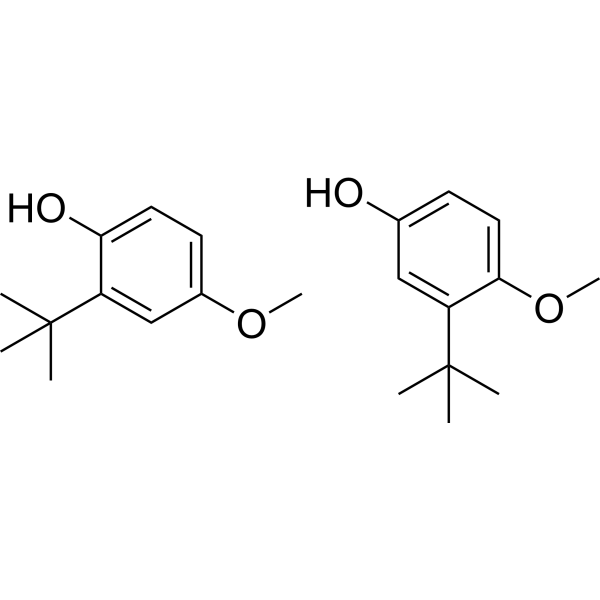
  • HY-B1066
    Butylhydroxyanisole
    5 Publications Verification

    Butylated hydroxyanisole; E320

    Environmental Pollutants Reactive Oxygen Species (ROS) Ferroptosis Neurological Disease Inflammation/Immunology
    Butylhydroxyanisole (Butylated hydroxyanisole) is an antioxidant used as a food additive preservative. Butylhydroxyanisole mediates liver toxicity, retardation in reproductive organ development and learning, and sleep deficit. Butylhydroxyanisole exerts neurotoxic effects and leads to disruption of the brain and nerve development . Butylhydroxyanisole is a ferroptosis inducer .
    Butylhydroxyanisole
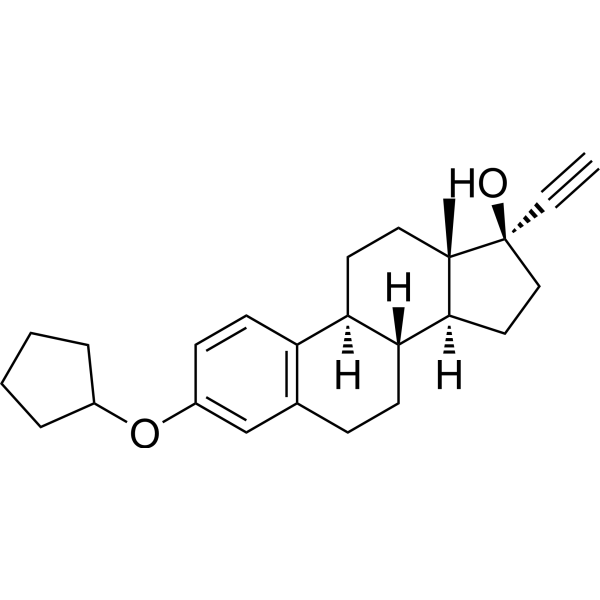
  • HY-B1012

    W-3566

    Estrogen Receptor/ERR Cytochrome P450 GnRH Receptor Metabolic Disease Endocrinology
    Quinestrol (W-3566) is an orally effective synthetic estrogen compound that acts on CYP3A4, CYP1A2, and GnRH. Quinestrol interferes with GnRH release and disrupts the hypothalamic-pituitary-ovarian axis. Quinestrol downregulates the gene expression of follicle-stimulating hormone β and luteinizing hormone β, induces oxidative stress, damages reproductive organs, reduces sperm density and motility, increases sperm malformation rate, and alters the levels of sex hormones such as testosterone, luteinizing hormone, estradiol, and progesterone. Quinestrol can be used in studies related to reproductive function regulation .
    Quinestrol
  • HY-W075770

    Nickel monoxide

    Environmental Pollutants Apoptosis Reactive Oxygen Species (ROS) Caspase TGF-beta/Smad p38 MAPK Akt PI3K Infection Metabolic Disease Cancer
    Nickel(II) oxide (nickel monoxide) is a chemical warfare agent that can enter the body through the respiratory tract and other routes, distributing to organs such as the lungs and testes. The nanoparticle form of nickel(II) oxide (NiO NPs) exhibits antibacterial, anti-leishmanial, anti-diabetic, and anti-cancer activities. NiO NPs can be activated by ultraviolet and visible light, generating reactive oxygen species (ROS). Nickel(II) oxide induces oxidative stress by generating reactive oxygen species, activating the TGF-β1-mediated MAPK and PI3K/AKT pathways, disrupting the MMPs/TIMPs balance, and upregulating the expression of inflammatory factors (IL-1β, IL-6) and apoptosis-related molecules (Bax, caspase-3, p53), while inhibiting the activity of the anti-apoptotic molecule Bcl-2. Nickel(II) oxide induces cytotoxicity, promotes fibrosis, triggers inflammatory responses, and causes apoptosis. Nickel(II) oxide can be applied in research on the safety assessment of nanomaterials, such as in the context of pulmonary fibrosis and reproductive system toxicity .
    Nickel(II) oxide
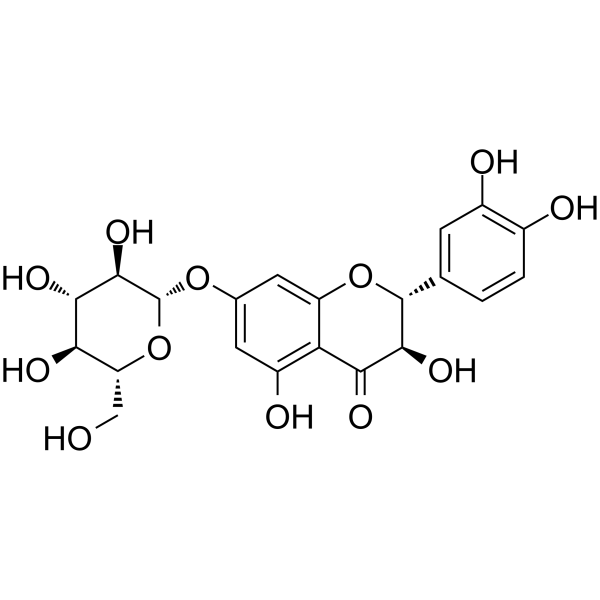
  • HY-N7681
    Taxifolin 7-O-β-D-glucoside
    1 Publications Verification

    Taxifolin 7-O-glucoside

    Biochemical Assay Reagents Inflammation/Immunology
    Taxifolin 7-O-β-D-glucoside (Taxifolin 7-O-glucoside) is a flavonol and active antioxidant that can be isolated from Scutellaria baicalensis. Taxifolin 7-O-β-D-glucoside participates in pathogen defense and ultraviolet damage protection in the seed coat during seed germination of Scutellaria baicalensis .
    Taxifolin 7-O-β-D-glucoside
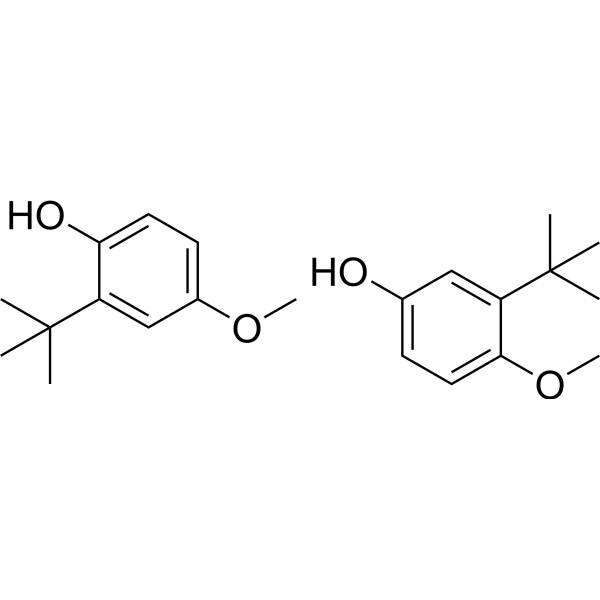
  • HY-B1066R

    Butylated hydroxyanisole (Standard); E320 (Standard)

    Reference Standards Reactive Oxygen Species (ROS) Ferroptosis Neurological Disease Inflammation/Immunology
    Butylhydroxyanisole (Standard) is the analytical standard of Butylhydroxyanisole. This product is intended for research and analytical applications. Butylhydroxyanisole (Butylated hydroxyanisole) is an antioxidant used as a food additive preservative. Butylhydroxyanisole mediates liver toxicity, retardation in reproductive organ development and learning, and sleep deficit. Butylhydroxyanisole exerts neurotoxic effects and leads to disruption of the brain and nerve development . Butylhydroxyanisole is a ferroptosis inducer .
    Butylhydroxyanisole (Standard)
  • HY-W585856

    Drug Intermediate Others
    Bisphenol A (3-chloro-2-hydroxypropyl) glycidyl ether is a chlorinated derivative that is released during heat treatment of food cans, bulk storage containers, and food containers. Bisphenol A (3-chloro-2-hydroxypropyl) glycidyl ether is an endocrine disruptor that affects reproductive organs and brain development.
    Bisphenol A (3-chloro-2-hydroxypropyl)glycidyl ether
  • HY-171248

    Anaplastic lymphoma kinase (ALK) Cardiovascular Disease Endocrinology
    CDD-1115 is a potent, selective inhibitor of BMPR2 with IC50 of 1.8 nM, Kiapp of 6.2 nM. CDD-1115 inhibits bone morphogenetic protein (BMP)-mediated gene expression. BMP controls cellular processes across many tissue types, including the kidney, skeletal muscle, heart, and reproductive organs. BMP induces ectopic bone formation .
    CDD-1115
  • HY-171249

    TGF-β Receptor Cardiovascular Disease Endocrinology
    CDD-1431 is a low-nanomolar selective kinase inhibitors of BMPR2, with Kiapp value of 20.6 nM. CDD-1431 suppresses BRE-reporter activity, with an IC50 of 4.87 μM. BMP controls cellular processes across many tissue types, including the kidney, skeletal muscle, heart, and reproductive organs. BMP induces ectopic bone formation .
    CDD-1431
  • HY-W102684

    Biochemical Assay Reagents Others
    N,N-Dicyclohexyl-2-benzothiazolesulfenamide is a compound with reproductive and developmental toxicity that can affect body weight gain, reproductive organ weight, and multiple reproductive and developmental indicators in rats.
    N,N-Dicyclohexyl-2-benzothiazolesulfenamide
  • HY-21191S

    PFBS-13C3 sodium

    Isotope-Labeled Compounds Biochemical Assay Reagents Parasite Metabolic Disease
    Perfluorobutanesulfonic acid- 13C3 (PFBS- 13C3) sodium is the 13C-labeled Perfluorobutanesulfonic acid (HY-21191). Perfluorobutanesulfonic acid is a surfactant that can disrupt the development of pancreatic organs and lipid metabolism regulation in zebrafish. Perfluorobutanesulfonic acid can harm the reproductive ability of nematodes (Caenorhabditis elegans) and alter the physiological functions of their offspring .
    Perfluorobutanesulfonic acid-13C3 sodium
  • HY-178425S

    Butylated hydroxyanisole-d24; E320-d24

    Isotope-Labeled Compounds Ferroptosis Reactive Oxygen Species (ROS) Neurological Disease Inflammation/Immunology
    Butylhydroxyanisole-d24 (Butylated hydroxyanisole-d24) is the deuterium labeled Butylhydroxyanisole (HY-B1066). Butylhydroxyanisole (Butylated hydroxyanisole) is an antioxidant used as a food additive preservative. Butylhydroxyanisole mediates liver toxicity, retardation in reproductive organ development and learning, and sleep deficit. Butylhydroxyanisole exerts neurotoxic effects and leads to disruption of the brain and nerve development . Butylhydroxyanisole is a ferroptosis inducer .
    Butylhydroxyanisole-d24
  • HY-B1012R

    W-3566 (Standard)

    Reference Standards Estrogen Receptor/ERR Metabolic Disease Endocrinology
    Quinestrol (Standard) is the analytical standard of Quinestrol (HY-B1012). This product is intended for research and analytical applications. Quinestrol (W-3566) is an orally effective synthetic estrogen compound that acts on CYP3A4, CYP1A2, and GnRH. Quinestrol interferes with GnRH release and disrupts the hypothalamic-pituitary-ovarian axis. Quinestrol downregulates the gene expression of follicle-stimulating hormone β and luteinizing hormone β, induces oxidative stress, damages reproductive organs, reduces sperm density and motility, increases sperm malformation rate, and alters the levels of sex hormones such as testosterone, luteinizing hormone, estradiol, and progesterone. Quinestrol can be used in studies related to reproductive function regulation .
    Quinestrol (Standard)
  • HY-N18905

    Apoptosis Bcl-2 Family Caspase SOD Endocrinology
    α-D-Glucosyl hesperidin is an orally effective structural modification derivative of Hesperidin (HY-15337) with anti-apoptotic (apoptosis) and antioxidant activities. α-D-Glucosyl hesperidin upregulates the expression of the Bcl-2 gene, while downregulating the expressions of the Bax and caspase-3 genes. α-D-Glucosyl hesperidin increases total antioxidant capacity, SOD and catalase levels, and decreases malondialdehyde and glutathione levels. α-D-Glucosyl hesperidin improves sperm motility, viability and plasma membrane function, while restoring reproductive organ weight and seminiferous tubule structure. α-D-Glucosyl hesperidin increases fertility index and exerts a synergistic protective effect with Proanthocyanidins (HY-N0794) in male rats with testicular ischemia-reperfusion injury. α-D-Glucosyl hesperidin can be used in the research of testicular ischemia-reperfusion injury .
    α-D-Glucosyl hesperidin

Inquiry Online

Your information is safe with us. * Required Fields.

Salutation


Country or Region *

Applicant Name *


Organization Name *

Department *


Email Address *


Product Name *

Cat. No.


Requested quantity *

Phone Number *


Remarks

Inquiry Online

Inquiry Information

Product Name:
Cat. No.:
Quantity:
MCE Japan Authorized Agent:

