

1. Search Result
Search Result
Results for "

respiratory

" in MedChemExpress (MCE) Product Catalog:

688

Inhibitors & Agonists

3

Screening Libraries

4

Fluorescent Dyes

13

Biochemical Assay Reagents

25

Peptides

35

Inhibitory Antibodies

88

Natural
Products

24

Recombinant Proteins

53

Isotope-Labeled Compounds

14

Antibodies

4

Click Chemistry

7

Oligonucleotides

Targets Recommended:
Cat. No. Product Name Target Research Areas Chemical Structure
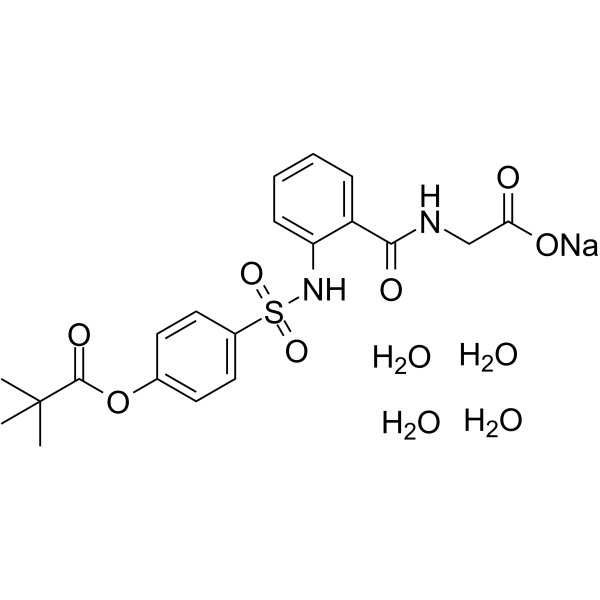
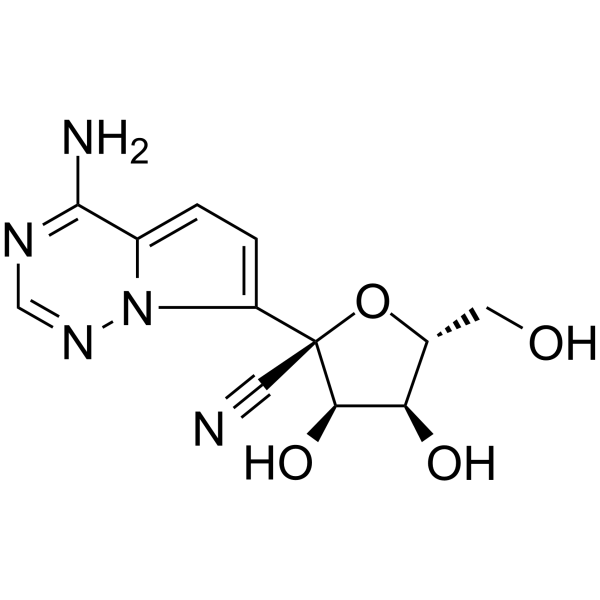
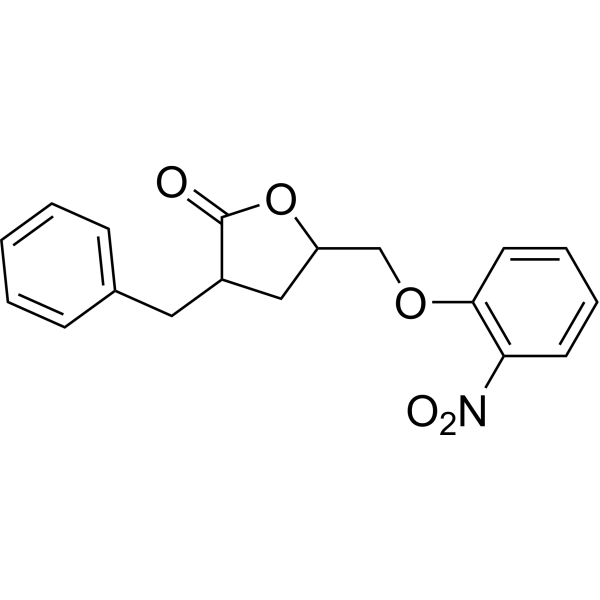
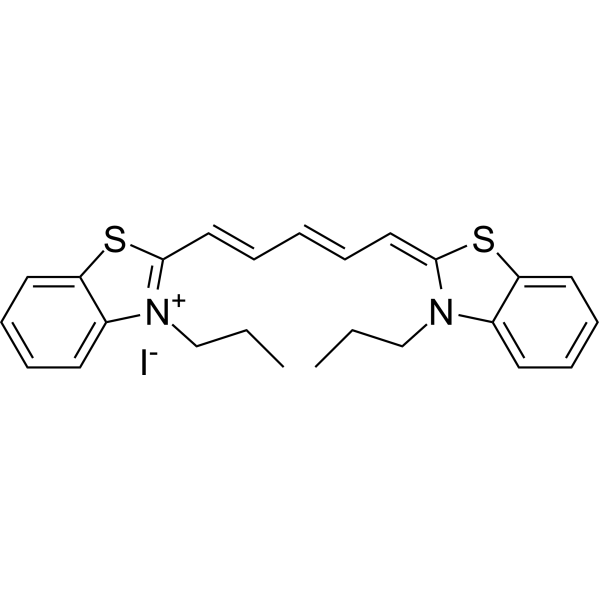
  • HY-104032
    Ac-CoA Synthase-IN-1
    5+ Cited Publications

    RSV Infection Metabolic Disease
    Ac-CoA Synthase-IN-1 is a potent, reversible acetate-dependent acetyl-CoA synthetase 2 (ACSS2) inhibitor with an IC50 of 0.6 μM . Ac-CoA Synthase-IN-1 inhibits the respiratory syncytial virus (RSV) .
    Ac-CoA Synthase-IN-1
  • HY-P9944
    Palivizumab
    3 Publications Verification

    MEDI 493

    RSV Infection Inflammation/Immunology Cancer
    Palivizumab (MEDI 493) is a humanized monoclonal antibody against respiratory syncytial virus (RSV). Palivizumab can bind to RSV F protein with a Kd value of 1.4 nM. Palivizumab can prevent respiratory syncytial virus infection in cotton mice .
    Palivizumab
  • HY-P99756
    Nirsevimab
    2 Publications Verification

    MEDI8897

    RSV Infection
    Nirsevimab (MEDI8897) is a recombinant monoclonal antibody against human respiratory syncytial virus (RSV). Nirsevimab has neutralizing activity against RSV A and RSV B viruses, with IC50 values of 5.42 ng/mL and 9.71 ng/mL, respectively. Nirsevimab can be used for research on respiratory infections .
    Nirsevimab
  • HY-19765
    GSK2798745
    5+ Cited Publications

    TRP Channel Cardiovascular Disease
    GSK2798745 is a potent, selective, and orally active transient receptor potential vanilloid 4 (TRPV4) ion channel blocker with IC50s of 1.8 and 1.6 nM for hTRPV4 and rTRPV4, respectively. GSK2798745 can be used in cardiac and respiratory diseases research .
    GSK2798745
  • HY-B1280

    N,N-Diethylnicotinamide

    Mitochondrial Metabolism Neurological Disease
    Nikethamide (N,N-Diethylnicotinamide), one of the respiratory central stimulants, has the potential for respiratory failure research .
    Nikethamide
  • HY-B0372A
    Bromhexine hydrochloride
    3 Publications Verification

    SARS-CoV Autophagy HIV Metabolic Disease
    Bromhexine hydrochloride is a potent and specific TMPRSS2 protease inhibitor with an IC50 of 0.75 μM. Bromhexine hydrochloride can prevent and manage SARS-CoV-2 infection. Bromhexine hydrochloride is an autophagy agonist. Bromhexine hydrochloride is a mucolytic cough suppressant and has the potential for a range of respiratory conditions .
    Bromhexine hydrochloride
  • HY-B0395C
    Sitafloxacin hydrate
    5+ Cited Publications

    DU6859a hydrate

    Bacterial Antibiotic Infection
    Sitafloxacin (DU6859a) hydrate is an orally active fluoroquinolone antibiotic (antibiotic) with in vitro activity against a wide range of Gram-positive and -negative bacteria, including anaerobic bacteria, as well as atypical pathogens. Sitafloxacin is used in the study of respiratory tract infections and urinary tract infections .
    Sitafloxacin hydrate
  • HY-P99804
    Clesrovimab
    3 Publications Verification

    MK1654

    RSV Infection
    Clesrovimab (MK1654) is a humanized IgG1 monoclonal antibody targeting the respiratory syncytial virus (RSV) protein F. Clesrovimab binds to pre-fusion and post-fusion forms of RSV-A fusion protein with high affinity, with corresponding KD values of 71 pM and 480 pM, respectively. Clesrovimab is applicable for the research of RSV infection .
    Clesrovimab
  • HY-P99209

    MEDI-524

    RSV Infection
    Motavizumab (MEDI-524) is an anti-human RSV (respiratory syncytial virus) monoclonal antibody. Motavizumab can be used in respiratory syncytial virus infection in high-risk infants research .
    Motavizumab
  • HY-123475A
    Sisunatovir hydrochloride
    4 Publications Verification

    RV521 hydrochloride

    RSV Infection
    Sisunatovir (RV521) hydrochloride is a potent and orally active respiratory syncytial virus (RSV) inhibitor with IC50 values of 1.4, 1.0 nM for RSV A, RSV B, respectively. Sisunatovir hydrochloride inhibits RSV infection and reduces virus titers in the lungs of mice .
    Sisunatovir hydrochloride
  • HY-123475
    Sisunatovir
    4 Publications Verification

    RV521

    RSV Infection
    Sisunatovir (RV521) is a potent and orally active respiratory syncytial virus (RSV) inhibitor with IC50 values of 1.4, 1.0 nM for RSV A, RSV B, respectively. Sisunatovir inhibits RSV infection and reduces virus titers in the lungs of mice .
    Sisunatovir
  • HY-14785

    NLX-112; F13640

    5-HT Receptor Neurological Disease
    Befiradol (NLX-112) is a highly selective 5-HT1A receptor agonist that acts on both presynaptic and postsynaptic sites. Befiradol attenuates fentanyl-induced respiratory depression in neonatal and adult rats. Befiradol reduces the duration of fentanyl-induced analgesia and sedation in adult rats. Befiradol can be used in studies related to opioid-induced respiratory depression .
    Befiradol
  • HY-105283

    Sodium Channel Neurological Disease
    PF 04531083 is an orally active and selective NaV1.8 blocker with an IC50 of 0.7 μM. PF 04531083 is a blood-brain barrier (BBB) penetrant compound. PF 04531083 can be used for the research of respiratory system and neuropathic/inflammatory pain .
    PF 04531083
  • HY-108402A

    Penicillin-binding protein (PBP) Bacterial Antibiotic Infection
    Cefodizime sodium is a third generation cephalosporin antibiotic with a broad spectrum of antibacterial activity. Cefodizime sodium has no renal toxic effect, good tolerance and immune regulation activity, and can be used for the research of severe infections of the respiratory and urinary tracts .
    Cefodizime sodium
  • HY-113285

    3-Ureidopropionic acid

    Oxidative Phosphorylation Metabolic Disease
    Ureidopropionic acid is a mitochondrial respiratory chain complex V inhibitor that selectively inhibits the activity of mitochondrial respiratory chain complex V, with no effect on respiratory chain complexes I-IV or mitochondrial fatty acid β-oxidation. Ureidopropionic acid induces the production of reactive oxygen species, delayed elevation of intracellular calcium concentration, secondary energy-dependent excitotoxicity and neurodegeneration in neurons. Ureidopropionic acid promotes neuropathological changes by impairing mitochondrial energy metabolism, oxidative stress and excitotoxicity pathways. Ureidopropionic acid can be used in studies related to 3-ureidopropionase deficiency and severe propionic aciduria .
    Ureidopropionic acid
  • HY-N0677A
    Kalii Dehydrographolidi Succinas
    1 Publications Verification

    Potassium dehydroandrographolide succinate

    Antibiotic Infection Inflammation/Immunology
    Kalii Dehydrographolidi Succinas (Potassium dehydroandrographolide succinate) is an antibiotic. Kalii Dehydrographolidi Succinas exerts immunostimulatory, anti-infective and anti-inflammatory effects . Kalii Dehydrographolidi Succinas shows potential for research on viral pneumonia and viral upper respiratory tract infections .
    Kalii Dehydrographolidi Succinas
  • HY-12993
    RSV604
    2 Publications Verification

    A-60444

    RSV Infection
    RSV604 (A-60444) is an inhibitor of respiratory syncytial virus (RSV) replication. RSV604 targets the nucleocapsid protein, with a Kd of 1.6 μM. RSV604 displays submicromolar activity against numerous clinical isolates of both the A and B subtypes of RSV (average EC50s=0.8 μM) .
    RSV604
  • HY-120384
    AZD-0284
    3 Publications Verification

    ROR Inflammation/Immunology
    AZD-0284 is a selective inverse agonist of the nuclear receptor RORγ. AZD-0284 has the potential for plaque psoriasis vulgaris and respiratory tract disorders treatment .
    AZD-0284
  • HY-B0395
    Sitafloxacin
    5+ Cited Publications

    DU6859a

    Bacterial Antibiotic Infection
    Sitafloxacin (DU6859a) is a potent, orally active fluoroquinolone antibiotic. Sitafloxacin shows antichlamydial activity and antibacterial activities against a broad range of gram-positive and gram-negative bacteria, including anaerobic bacteria, as well as against atypical pathogens. Sitafloxacin can be used for the research of respiratory tract infection and urinary tract infection .
    Sitafloxacin
  • HY-A0161A

    Clofedanol hydrochloride; Calmotusin hydrochloride; NSC 113595 hydrochloride

    Others Infection
    Chlophedianol (Clofedanol) hydrochloride is an orally active and potent antitussive agent. Chlophedianol hydrochloride can be used for the research of acute cough due to upper respiratory tract infections (URIs) .
    Chlophedianol hydrochloride
  • HY-B1042

    SKF-9976 citrate; AF-438 citrate

    Cytochrome P450 Inflammation/Immunology
    Oxolamine citrate (SKF-9976 citrate) is an orally active antitussive. Oxolamine citrate can inhibit CYP2B1/2. Oxolamine citrate has anti-inflammatory effects on the respiratory organs of guinea pigs. Oxolamine citrate increases the AUC of Warfarin (HY-B0687) and prolongs its terminal half-life. Oxolamine citrate can be used in respiratory disease research .
    Oxolamine citrate
  • HY-156684

    GDC-6599

    TRP Channel Neurological Disease
    GDC-6599 is an orally active TRPA1 inhibitor, with IC50 values of 5.3 nM in humans, 6.6 nM in rats, 9.3 nM in dogs, 7.2 nM in monkeys, and 15 nM in guinea pigs. GDC-6599 can be used in the research of neuropathic pain and respiratory diseases such as asthma and chronic cough .
    Nedizantrep
  • HY-P0012A
    Aviptadil acetate
    2 Publications Verification

    Vasoactive Intestinal Peptide acetate salt (human, rat, mouse, rabbit, canine, porcine)

    SARS-CoV Infection Inflammation/Immunology
    Aviptadil acetate is an analog vasoactive intestinal polypeptide (VIP) with potent vasodilatory effects. Aviptadil acetate induces pulmonary vasodilation and inhibits vascular SMCs proliferation, platelet aggregation. Aviptadil acetate can be used for the research of pulmonary fibrosis, pulmonary arterial hypertension (PAH) and SARS-CoV-2 caused respiratory failure, et al .
    Aviptadil acetate
  • HY-137452

    Orexin Receptor (OX Receptor) Neurological Disease
    Suntinorexton is an OX2R agonist. Suntinorexton is used to study respiratory function during sleep .
    Suntinorexton
  • HY-15280

    PI3K Inflammation/Immunology
    GSK2292767 is a potent and selective inhibitor of PI3Kδ, with a pIC50 of 10.1. GSK2292767 showing greater than 500-fold selective over the other PI3K isoforms. GSK2292767 can be used for the research of respiratory disease .
    GSK2292767
  • HY-136394
    Diafenthiuron
    2 Publications Verification

    Environmental Pollutants Mitochondrial Metabolism Oxidative Phosphorylation Parasite Others
    Diafenthiuron is a thiourea compound commonly used a broad-spectrum insecticide and acaricide. Diafenthiuron disturbs the insect respiratory system by inhibiting the oxidative phosphorylation and mitochondrial ATP synthesis .
    Diafenthiuron
  • HY-W013605A
    4-Methoxycinnamaldehyde
    2 Publications Verification

    p-Methoxycinnamaldehyde

    Environmental Pollutants RSV Infection
    4-Methoxycinnamaldehyde (p-Methoxycinnamaldehyde), an active constituent of Agastache rugosa, exhibits cytoprotective activity against respiratory syncytial virus (RSV) in human larynx carcinoma cell line. 4-Methoxycinnamaldehyde effectively inhibits cytopathic effect of RSV with an estimated IC50 of 0.055 μg/mL .
    4-Methoxycinnamaldehyde
  • HY-147240

    ADX-629

    Drug Derivative Infection Cardiovascular Disease Inflammation/Immunology
    Acloproxalap is a quinoline-based aldehyde scavenger that can be used in studies of diseases with toxic aldehyde accumulation, such as inflammatory diseases of the eye and skin, respiratory diseases such as pneumonia, organ diseases, and viral infection-related syndromes .
    Acloproxalap
  • HY-120632

    RSV Infection
    BMS-433771 is a potent orally active inhibitor of respiratory syncytial virus (RSV). BMS-433771 is active against both A and B groups of RSV, with an average EC50 of 20 nM. BMS-433771 can be used for the research of respiratory tract disease .
    BMS-433771
  • HY-P3870

    Opioid Receptor Neurological Disease
    DALDA is a potent and highly selective μ-opioid receptor agonist with a Ki of 1.69 nM. DALDA shows antinociceptive and respiratory effects .
    DALDA
  • HY-A0147A

    OPC-17116 hydrochloride; dl-Grepafloxacin hydrochloride

    Antibiotic Bacterial Infection
    Grepafloxacin (OPC-17116) hydrochloride is an oral actively fluoroquinolone antibiotic with potent activity against community-acquired respiratory pathogens including Streptococcus pneumonia. Grepafloxacin hydrochloride has high tissue penetration and a promising pharmacodynamic profile .
    Grepafloxacin hydrochloride
  • HY-150735

    IRAK Inflammation/Immunology
    IRAK4-IN-20 (Compound BAY-1834845) is an orally active IRAK4 inhibitor with an IC50 of 3.55 nM. IRAK4-IN-20 can be used for acute respiratory distress syndrome (ARDS) research .
    IRAK4-IN-20
  • HY-B0035S2

    Sulfadimidine-13C6; Sulfadimerazine-13C6

    Antibiotic Bacterial Isotope-Labeled Compounds Others
    Sulfamethazine- 13C6 is a 13C-labeled Sulfamethazine (HY-A0178). Sulfamethazine (Sulfadimidine) is an antimicrobial that is widely used to treat and prevent various animal diseases (such as gastrointestinal and respiratory tract infections) .
    Sulfamethazine-13C6
  • HY-146145

    Fungal Mitochondrial Metabolism Infection
    Metyltetraprole is a promising fungicide with EC50 values of both 0.002 ppm against sensitive wild-type and G143A mutant of Zymoseptoria tritici. Metyltetraprole is effective against QoI (quinone outside inhibitor) resistant strains. Metyltetraprole inhibits the respiratory chain via complex III .
    Metyltetraprole
  • HY-W709856

    Influenza Virus Infection
    Dodeca-2E,4E,8Z,10Z/E-N-tetraenoic acid isobutylamide is a brain-penetrant substance and the main alkamide in Echinacea preparations, which might be used for research of common cold and various upper respiratory infections .
    Dodeca-2E,4E,8Z,10Z/E-N-tetraenoic acid isobutylamide
  • HY-132282

    Bacterial Infection
    Thiamphenicol glycinate hydrochloride is a broad-spectrum antibacterial agent that can be used for respiratory tract infections research .
    Thiamphenicol glycinate hydrochloride
  • HY-109004

    BTA-C585

    RSV Infection
    Enzaplatovir (BTA-C585) is an orally bioavailable Inhibitor for respiratory syncytial virus (RSV) infection .
    Enzaplatovir
  • HY-P3870A

    Opioid Receptor Neurological Disease
    DALDA acetate is a potent and highly selective μ-opioid receptor agonist with a Ki of 1.69 nM. DALDA acetate shows antinociceptive and respiratory effects .
    DALDA acetate
  • HY-108402

    Penicillin-binding protein (PBP) Bacterial Antibiotic Infection
    Cefodizime is a third generation cephalosporin antibiotic with a broad spectrum of antibacterial activity. Cefodizime has no renal toxic effect, good tolerance and immune regulation activity, and has the potential for severe infections of the respiratory and urinary tracts .
    Cefodizime
  • HY-155556

    ClpP Cancer
    ZG36 is a human Caseinolytic protease P (ClpP) agonist. ZG36 non-selectively degrades respiratory chain complexes and reduces mitochondrial DNA, ultimately leading to mitochondrial dysfunction and leukemic cell death. ZG36 also inhibits the development of acute myeloid leukemia in a xenograft mouse model .
    ZG36
  • HY-W702027

    AL842

    Adrenergic Receptor Cardiovascular Disease
    Deterenol hydrochloride (AL842) is a selective beta-agonist. Deterenol hydrochloride causes vasodepressor, anxiety, increasing heart rate, hypotension palpitation and respiratory distress .
    Deterenol hydrochloride
  • HY-108971

    Antibiotic Bacterial Infection
    Demecycline, a tetracycline antibiotic, is the C6-demethylated derivative of Tetracycline (HY-A0107) against bacterial infections including pneumonia and other respiratory tract infections .
    Demecycline
  • HY-P5769

    Endothelin Receptor Cardiovascular Disease
    Endothelin (16-21) is a selective ETB receptor agonist (EC50=228 nM in guinea-pig bronchus). Endothelin (16-21) can induce smooth muscle contraction. Endothelin (16-21) is promising for research of respiratory (e.g., asthma) and cardiovascular (e.g., hypertension) diseases .
    Endothelin (16-21)
  • HY-N10581

    Influenza Virus Infection
    Flutimide is a novel endonuclease inhibitor of influenza virus. Flutimide selectively inhibits endonuclease with an IC50 value of 3 μM. Flutimide shows antiviral activity in cell culture. Flutimide can be used for the research of acute contagious respiratory disease, such as influenza .
    Flutimide
  • HY-108402AR

    Penicillin-binding protein (PBP) Reference Standards Bacterial Antibiotic Infection
    Cefodizime (sodium) (Standard) is the analytical standard of Cefodizime (sodium). This product is intended for research and analytical applications. Cefodizime sodium is a third generation cephalosporin antibiotic with a broad spectrum of antibacterial activity. Cefodizime sodium has no renal toxic effect, good tolerance and immune regulation activity, and can be used for the research of severe infections of the respiratory and urinary tracts[1][2].
    Cefodizime sodium (Standard)
  • HY-105762A

    Etamiphylline camsylate

    Adrenergic Receptor Cardiovascular Disease
    Etamiphyllin camsylate (Etamiphylline camsylate) is a cardiac stimulant with oral activity that increases cardiac output without increasing heart rate. Etamiphyllin camsylate is also a respiratory stimulant used for respiratory failure, as Etamiphyllin camsylate relaxes the smooth muscles of the bronchi and bronchioles, thereby opening up the airways to relieve chronic obstructive pulmonary disease .
    Etamiphyllin camsylate
  • HY-107355

    Reactive Oxygen Species (ROS) Inflammation/Immunology
    Letosteine is an orally active, potent and safe expectorant. Letosteine has the effect of scavenging reactive oxygen species (ROS). Letosteine dissolves bronchial mucus and reduces respiratory inflammation symptoms, and restores gas exchanges and natural defense mechanisms in the lung. Letosteine can be used for acute or chronic respiratory diseases (such as bronchopneumopathies) research .
    Letosteine
  • HY-A0147

    OPC-17116; dl-Grepafloxacin

    Antibiotic Bacterial Infection
    Grepafloxacin (OPC-17116) is an oral actively fluoroquinolone antibiotic with potent activity against community-acquired respiratory pathogens including Streptococcus pneumonia. Grepafloxacin has high tissue penetration and a promising pharmacodynamic profile .
    Grepafloxacin
  • HY-163773

    RSV Infection
    JNJ-7950 (compound 5c) exhibits antiviral activity against RSV with an EC50 value of 0.78 nM. JNJ-7950 can be used in the study of respiratory tract infections .
    JNJ-7950
  • HY-19874

    RSV Infection
    RFI-641 is a selective inhibitor of the respiratory syncytial virus (RSV), with an IC50 of 50 nM. RFI-641 inhibit binding and fusion of enveloped virus via interaction with the viral fusion protein .
    RFI-641

Inquiry Online

Your information is safe with us. * Required Fields.

Salutation


Country or Region *

Applicant Name *


Organization Name *

Department *


Email Address *


Product Name *

Cat. No.


Requested quantity *

Phone Number *


Remarks

Inquiry Online

Inquiry Information

Product Name:
Cat. No.:
Quantity:
MCE Japan Authorized Agent:

