
1. Search Result
Search Result
Results for "

ruthenium(II) complex

" in MedChemExpress (MCE) Product Catalog:

13

Inhibitors & Agonists

1

Biochemical Assay Reagents

2

Peptides

3

Isotope-Labeled Compounds

1

Oligonucleotides

Cat. No. Product Name Target Research Areas Chemical Structure
  • HY-59137

    Drug Intermediate Cancer
    1-Methylimidazole acts as a membrane performance regulator that promotes the formation of reverse osmosis membranes with a dense ultra-thin polyamide layer. Such membranes exhibit higher flux and salt rejection rate, while also conferring excellent pH stability to the membrane. 1-Methylimidazole can serve as a ligand for ruthenium (II) complexes to construct metal-based anticancer agents .
    1-Methylimidazole
  • HY-W127790

    Biochemical Assay Reagents Others
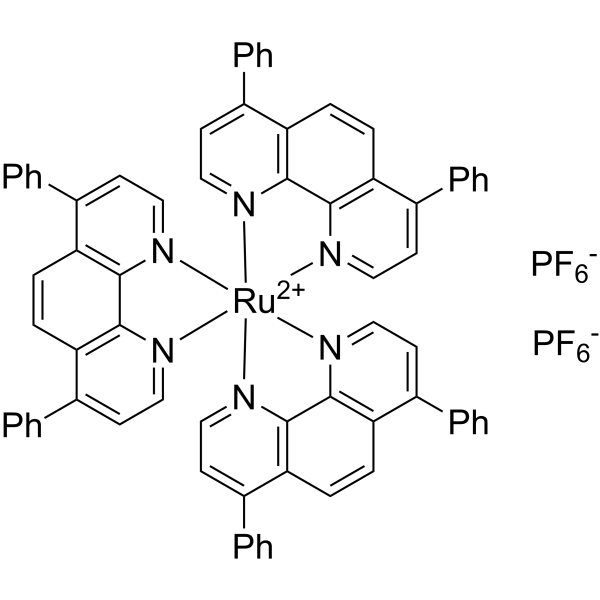
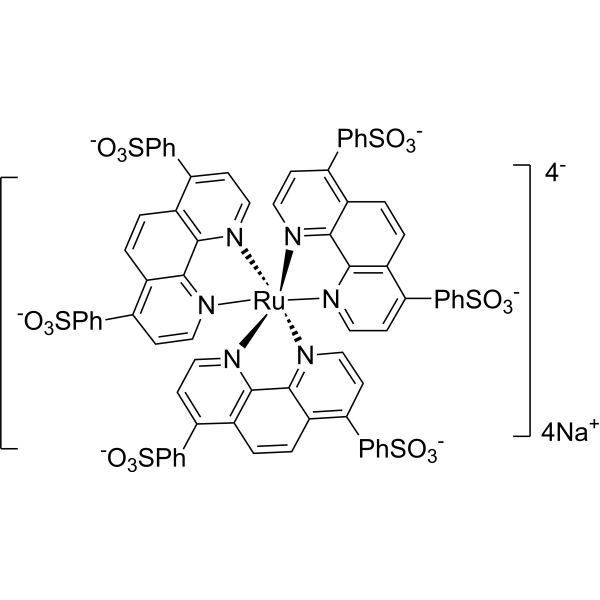
    Bathophenanthrolinedisulfonic acid disodium salt (BPS) is a colorimetric reagent for iron detection, with a wavelength of 535 nm for iron complex. It can be used for iron determination in aqueous solution systems without the need for extraction solvents. BPS can serve as a precursor to prepare Europium(III) tris(dibenzoylmethanate) bis(bathophenanthrolinedisulfonate) complex and ruthenium(II) tris(bathophenanthrolinedisulfonate), or participate in the catalytic oxidation of 2-hexanol by forming water-soluble complexes with palladium .
    Bathophenanthrolinedisulfonic acid disodium
  • HY-W140535

    Fluorescent Dye MOFs Others
    Tetrasodium, 4-(1,10-phenanthrolin-4-yl)benzenesulfonate,ruthenium((II)) is a luminescent ruthenium complex. Tetrasodium, 4-(1,10-phenanthrolin-4-yl)benzenesulfonate,ruthenium((II)) is used in biological and chemical fields as a fluorescent indicator dye and an electrochemiluminescent probe .
    Tetrasodium,4-(1,10-phenanthrolin-4-yl)benzenesulfonate,ruthenium((II))
  • HY-126060

    Nucleoside Antimetabolite/Analog Cancer
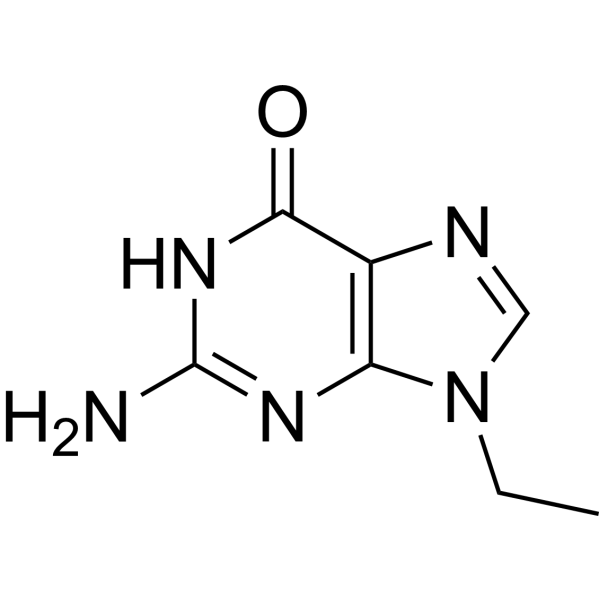
    9-Ethylguanine is a modified nucleobase derived from guanine that coordinates to azolato-bridged dinuclear platinum(II) complexes via its N7 nitrogen atom. 9-Ethylguanine forms adducts with a ruthenium(II) complex via the N7 position of its guanine moiety .
    9-Ethylguanine
  • HY-59137S

    Isotope-Labeled Compounds Drug Intermediate Cancer
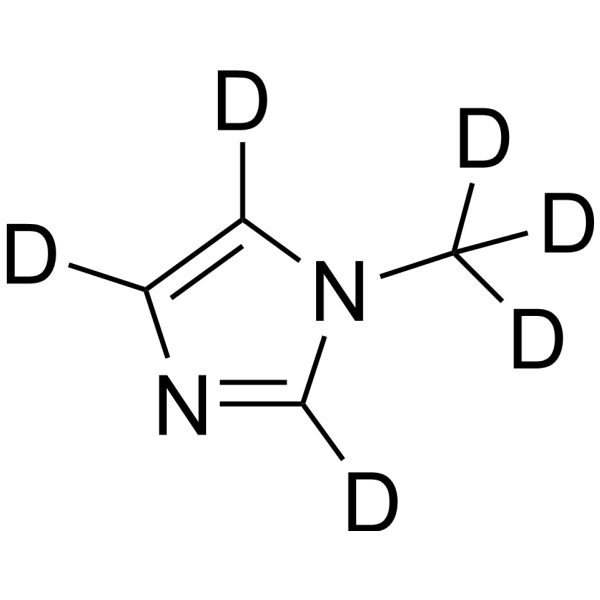
    1-Methylimidazole-d6 is the deuterium labeled 1-Methylimidazole. 1-Methylimidazole acts as a membrane performance regulator that promotes the formation of reverse osmosis membranes with a dense ultra-thin polyamide layer. Such membranes exhibit higher flux and salt rejection rate, while also conferring excellent pH stability to the membrane. 1-Methylimidazole can serve as a ligand for ruthenium (II) complexes to construct metal-based anticancer agents.
    1-Methylimidazole-d6
  • HY-W998790

    DNA/RNA Synthesis Phosphoramidites Others
    Ruthenium(II)Phosphoramidite complex is a phosphoramidite that can be used in the synthesis of oligonucleotides.
    Ruthenium(II)Phosphoramidite complex
  • HY-150966

    Mitochondrial Metabolism Cancer
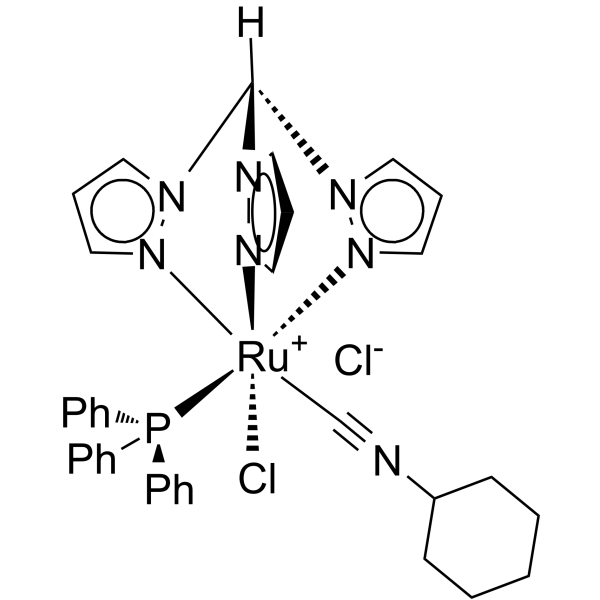
    Antiproliferative agent-10 (compound 8) is an anti-tumour ruthenium(II)-tris-pyrazolylmethane complex that inhibits the growth of cancer cells by inhibiting mitochondrial calcium uptake .
    Antiproliferative agent-10
  • HY-150969

    Mitochondrial Metabolism Cancer
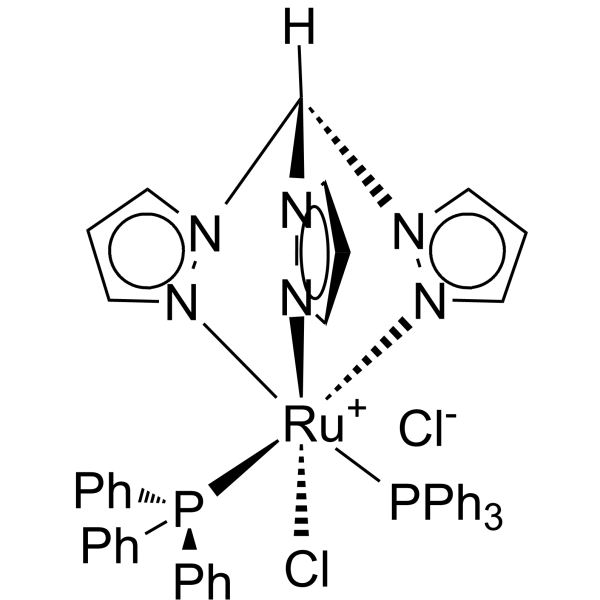
    Antiproliferative agent-10 (compound 1) is an anti-tumour ruthenium(II)-tris-pyrazolylmethane complex that inhibits the growth of cancer cells by inhibiting mitochondrial calcium uptake .
    Antiproliferative agent-12
  • HY-150968

    Apoptosis Cancer
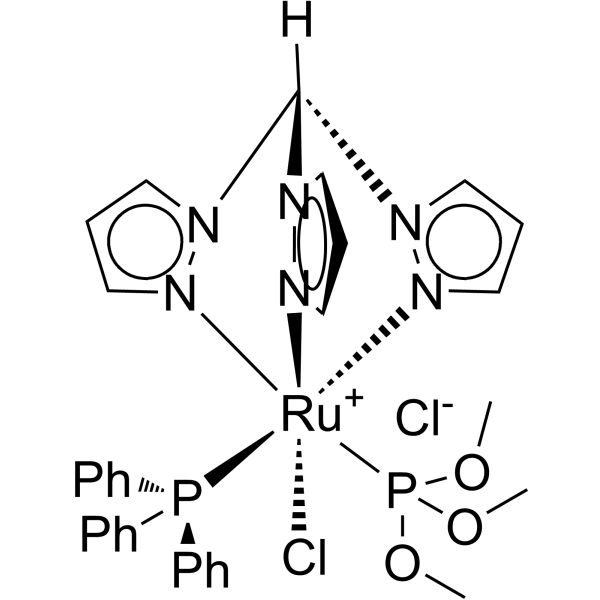
    Antiproliferative agent-11 (compound 7) is an antiproliferative and selective Ruthenium(II)-Tris-pyrazolylmethane complex. Antiproliferative agent-11 shows antiproliferative activity towards MCF-7, HeLa, 518A2, HCT116 and RD with IC50s of 6, 10, 6.8, 6.7 and 6 μM, respectively. Antiproliferative agent-11 can be used for the research of cancer .
    Antiproliferative agent-11
  • HY-59137S1

    Isotope-Labeled Compounds Drug Intermediate Cancer
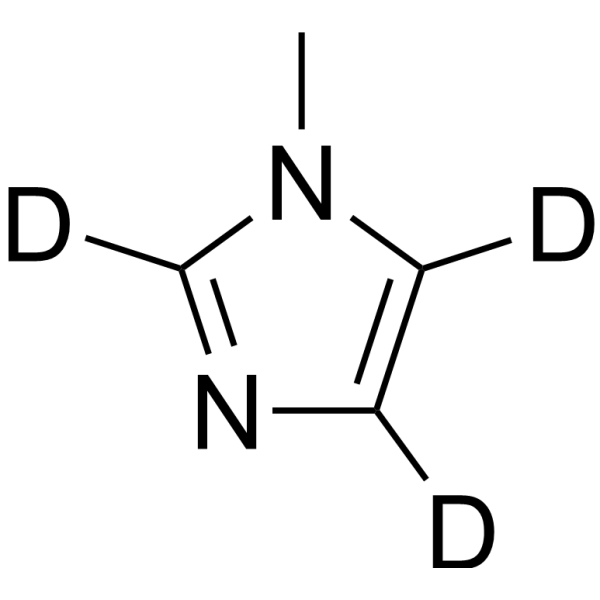
    1-Methylimidazole-d3 is the deuterium labeled 1-Methylimidazole. 1-Methylimidazole acts as a membrane performance regulator that promotes the formation of reverse osmosis membranes with a dense ultra-thin polyamide layer. Such membranes exhibit higher flux and salt rejection rate, while also conferring excellent pH stability to the membrane. 1-Methylimidazole can serve as a ligand for ruthenium (II) complexes to construct metal-based anticancer agents.
    1-Methyl-imidazole-d3
  • HY-59137S2

    Isotope-Labeled Compounds Drug Intermediate Cancer
    1-Methylimidazole-d3-1 is the deuterium labeled 1-Methylimidazole. 1-Methylimidazole acts as a membrane performance regulator that promotes the formation of reverse osmosis membranes with a dense ultra-thin polyamide layer. Such membranes exhibit higher flux and salt rejection rate, while also conferring excellent pH stability to the membrane. 1-Methylimidazole can serve as a ligand for ruthenium (II) complexes to construct metal-based anticancer agents.
    1-Methylimidazole-d3-1
  • HY-163034

    Apoptosis Reactive Oxygen Species (ROS) Cancer
    Antitumor photosensitizer-5 (Ru2) is a photosensitizer which effectively target tumor mitochondria with an IC50 of 0.3 μM for phototoxicity to A549 cells. Under 460 nm light irradiation, antitumor photosensitizer-5 induces the generation of reactive oxygen species and NADH depletion, causes mitochondrial damage and activation of caspase-3, inducing apoptosis and suppressing cell migration. Antitumor photosensitizer-5 has the potential to prevent the growth of malignant tumors, therefore, shows the potential to be applied to photodynamic therapy .
    Antitumor photosensitizer-5
  • HY-P11743

    Biochemical Assay Reagents Reactive Oxygen Species (ROS) Metabolic Disease
    Mitochondrial penetrating peptide is a peptide sequence (FrFKFrFK-CONH2) that selectively transports cargo into mitochondria. Mitochondrial penetrating peptide possesses special physicochemical properties, enabling it to selectively translocate dinuclear Ru (II) polypyridine complexes into mitochondria of living mammalian cells without the aid of solvents or membrane permeabilization treatments, thus achieving precise mitochondrial localization and enrichment of the complexes while excluding their distribution in the nucleus. Mitochondrial penetrating peptide enables dynamic monitoring of mitochondrial oxygen concentration and ROS production in living mammalian cells via changes in the luminescence lifetime of the coupled Ru (II) complex .
    Mitochondrial penetrating peptide

Inquiry Online

Your information is safe with us. * Required Fields.

Salutation


Country or Region *

Applicant Name *


Organization Name *

Department *


Email Address *


Product Name *

Cat. No.


Requested quantity *

Phone Number *


Remarks

Inquiry Online

Inquiry Information

Product Name:
Cat. No.:
Quantity:
MCE Japan Authorized Agent:

