7 Results for "

skincare products

" in MedChemExpress (MCE) Product Catalog:
Products (7)

7 Results for "skincare products" in MCE Product Catalog:

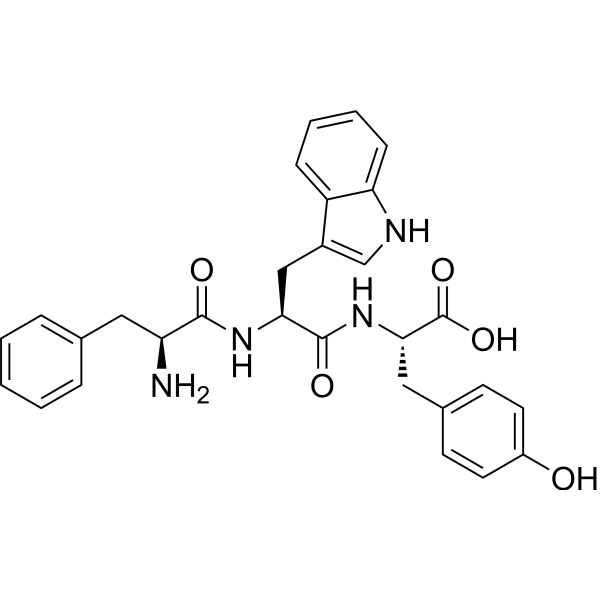
Cat. No.: HY-P5275
CAS No.: 1093241-16-7
Synonyms: CG-Lipoxyn
Research Areas:  

Metabolic Disease

Tripeptide-41 (CG-Lipoxyn) is a signal peptide. Tripeptide-41 activates the NF-kB signaling pathway, inhibits the expression of C/EBP and increases cAMP. Tripeptide-41 is an important intracellular signaling factor that causes lipolysis by promoting the hydrolysis of lipids into triglycerides. Tripeptide-41 can be used in cosmetics that targets fat accumulation .
loading...
    loading...
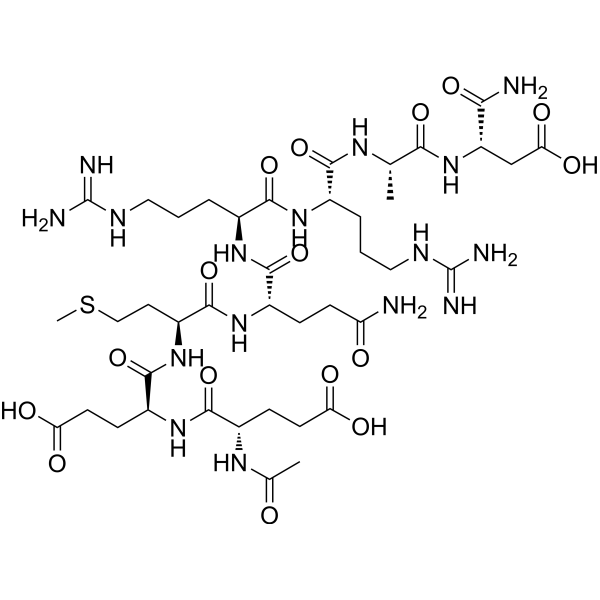
Cat. No.: HY-P0065
CAS No.: 868844-74-0
Research Areas:  

Neurological Disease

Acetyl octapeptide-1 is a competitive inhibitor of SNAP-25. Acetyl octapeptide-1 affects muscle contraction, thereby making the face (especially the forehead and periocular area) appear smoother and wrinkle-free. Acetyl octapeptide-1 can be used in research on muscle contraction and skincare products .
loading...
    loading...
Cat. No.: HY-107784R
CAS No.: 96702-03-3
Ectoine (Standard) is the analytical standard of Ectoine. This product is intended for research and analytical applications. Ectoine is a natural cell protectant, an amino acid derivate produced by bacteria living under extremely harsh environmental conditions. Ectoine serves as an osmoregulatory compatible solute, increasing the hydration of the skin surface and stabilizing lipid layers, which is useful in skincare. Ectoine demonstrates a good safety profile for the treatment of allergic rhinitis .
loading...
    loading...
Cat. No.: HY-Y0335R
CAS No.: 96-26-4
Synonyms: Dihydroxyacetone (Standard)
1,3-Dihydroxyacetone (Standard) is the analytical standard of 1,3-Dihydroxyacetone. This product is intended for research and analytical applications. 1,3-Dihydroxyacetone (DHA), the main active ingredient in sunless tanning skin-care preparations and an important precursor for the synthesis of various fine chemicals, is produced on an industrial scale by microbial fermentation of glycerol (HY-B1659) in Gluconobacter oxydans. 1,3-Dihydroxyacetone is also used for synthesis of new biodegradable polymers by combining with lactic acid (HY-B2227) .
loading...
    loading...
Cat. No.: HY-W133973
CAS No.: 8022-96-6
Synonyms: Jasmine oil Jasminum grandiflorum L
Jasmine absolute is an aromatic substance extracted from jasmine and is widely used in perfumes, skincare products, and aromatherapy.
loading...
    loading...
Cat. No.: HY-N19069
Category:  

Extract

Target:  

Bacterial

Eugenia jambolana extract is an extract from the Eugenia jambolana tree. The active compounds in jamun extract include anthocyanins, flavonoids, alkaloids, and tannins, which contribute to its antioxidant, anti-inflammatory, and antimicrobial properties. Jamun extract is most known for its blood sugar-lowering effects, making it popular in traditional medicine for managing diabetes. It is commonly used in supplements, traditional remedies, and skincare products due to its wide range of health benefits.
loading...
    loading...
Cat. No.: HY-L221
626 compounds

Cosmetics are complex mixtures formulated through the rational blending and processing of various natural, synthetic, or extracted raw materials. The ingredients used in cosmetics are diverse in type and functionality. Based on their properties and applications, cosmetic ingredients can generally be classified into two main categories: base materials and auxiliary ingredients. The former constitutes the primary component of cosmetics, accounting for a significant proportion in formulations and serving as the key functional substances. Auxiliary ingredients, on the other hand, play roles in shaping the product, ensuring stability, or imparting color, fragrance, and other specific characteristics.Establishing a systematic ingredient database is of great significance for cosmetic research and development. By analyzing the physicochemical properties (such as oil-water partition coefficients and molecular weight distribution), biological activity mechanisms (such as antioxidant pathways and cellular signaling regulation), and compatibility of ingredients, the database can provide precise guidance for formulation design. This approach helps shorten the development cycle of cosmetic/skincare products and reduces trial-and-error costs.

MCE offers 626 types of cosmetic ingredient compounds, including antioxidants, humectants, emulsifiers, film-forming agents, and more.

