1. Search Result
Search Result
Results for "

small molecule degradation

" in MedChemExpress (MCE) Product Catalog:

44

Inhibitors & Agonists

6

Bibliotecas de Screening

4

Fluorescent Dyes

3

Biochemical Assay Reagents

1

Natural
Products

3

Click Chemistry

3

GMP Molecules

Cat. No. Nombre del producto Target Áreas de investigación Chemical Structure
  • HY-156730

    Molecular Glues STAT Cancer
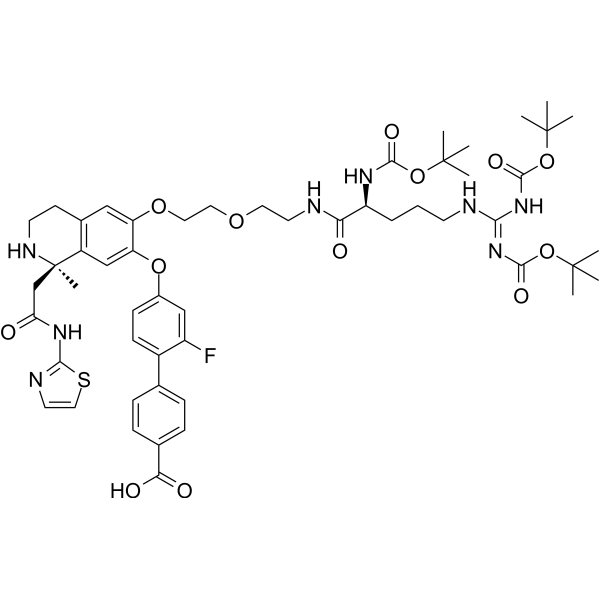
    KT-333 is a molecular glues that degrades STAT3 protein. KT-333 mediates the selective degradation of STAT3 through the ubiquitin-proteasome system by binding to STAT3 protein and E3 ubiquitin ligase von Hippel-Lindau protein (VHL). KT-333 has strong selectivity for STAT3 protein degradation and good antitumor activity. KT-333 can be used in the study of hematologic malignancies such as large granular lymphocytic leukemia (LGL-L), peripheral T-cell lymphoma (PTCL), and cutaneous T-cell lymphoma (CTCL) .
    KT-333
  • HY-148476

    LYTACs Metabolic Disease
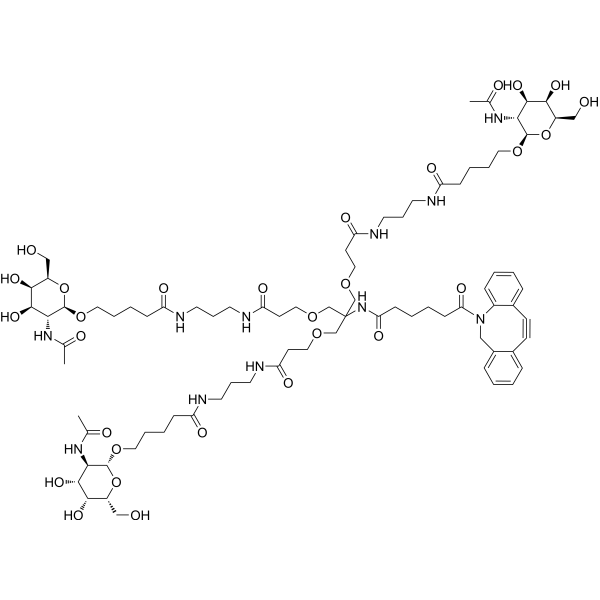
    Tri-GalNAc-DBCO is a synthetic ligand composed of three GalNAc units connected to DBCO. Tri-GalNAc-DBCO can act as a ligand for the sialic acid-degrading protein receptor (ASGPR), and can be coupled with targeting proteins or small molecules to form GalNAc-LYTACs. Tri-GalNAc-DBCO specifically binds to ASGPR and, through receptor-mediated endocytosis, guides the coupled molecules to lysosomes for degradation .
    Tri-GalNAc-DBCO
  • HY-170451

    KT-253

    PROTACs MDM-2/p53 Apoptosis Cancer
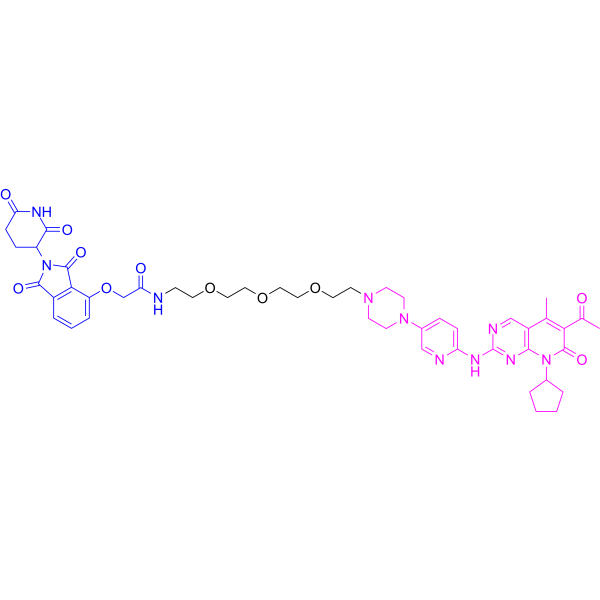
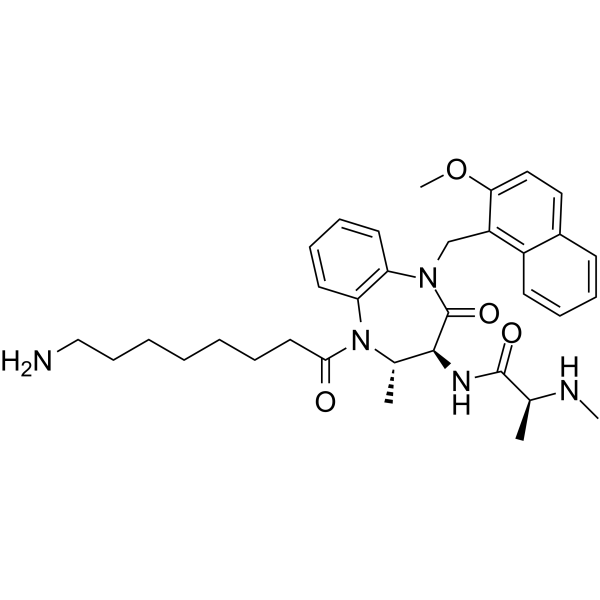
    Seldegamadlin (KT-253) is a selective p53 stabilizer and a MDM2 PROTAC degrader (DC50 = 0.4 nM). Seldegamadlin inhibits the proliferation of cancer cell RS4;11 with an IC50 of 0.3 nM, arrests the cell cycle at G2/M phase, and induces apoptosis. Seldegamadlin upregulates p53 activity and overcomes the p53-MDM2 feedback loop. Seldegamadlin can be used for the study of hematologic and solid tumors, such as acute myeloid leukemia (AML) and acute lymphoblastic leukemia (ALL). (Pink: ligand for target protein MDM2 ligand 4 (HY-170452); Black: linker (HY-W001478); Blue: ligand for E3 ligase cereblon (HY-163927)) .
    Seldegamadlin
  • HY-111556
    BSJ-03-123
    5 Publications Verification

    PROTACs CDK Cancer
    BSJ-03-123 is a PROTAC connected by ligands for Cereblon and CDK as a potent and novel CDK6-selective small-molecule degrader.
    BSJ-03-123
  • HY-114312
    MD-224
    5+ Cited Publications

    PROTACs MDM-2/p53 E1/E2/E3 Enzyme Cancer
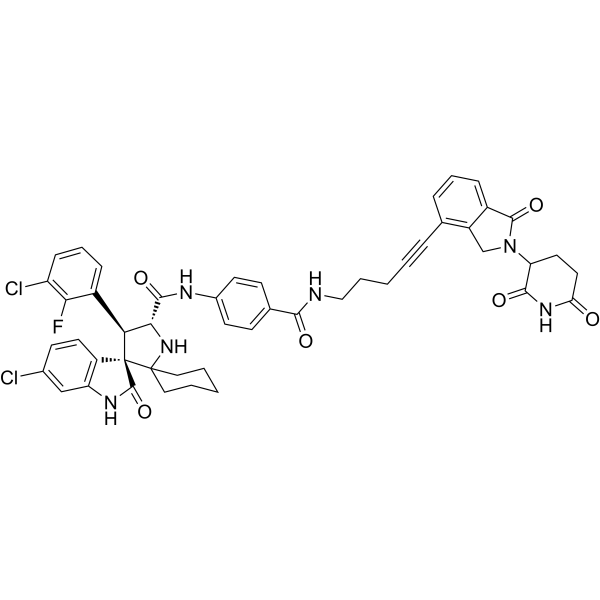
    MD-224 is a first-in-class and highly potent small-molecule human murine double minute 2 (MDM2) degrader based on the proteolysistargeting chimera (PROTAC) concept. MD-224 consists of ligands for Cereblon and MDM2. MD-224 induces rapid degradation of MDM2 at concentrations <1 nM in human leukemia cells, and achieves an IC50 value of 1.5 nM in inhibition of growth of RS4;11 cells. MD-224 has the potential to be a new class of anticancer agent . MD-224 is a click chemistry reagent, it contains an Alkyne group and can undergo copper-catalyzed azide-alkyne cycloaddition (CuAAc) with molecules containing Azide groups.
    MD-224
  • HY-120722
    TCH-165
    2 Publications Verification

    Proteasome Cancer
    TCH-165 is a small molecule modulator of proteasome assembly, which increases 20S levels and facilitates 20S-mediated protein degradation .
    TCH-165
  • HY-147858

    PROTACs EGFR Apoptosis Cancer
    PROTAC EGFR degrader 7 (compound 13b) is a potent and selective CRBN-recruiting PROTAC EGFR L858R/T790M degrader, with a DC50 of 13.2 nM. PROTAC EGFR degrader 7 inhibits NCI–H1975 cells proliferation, with an IC50 of 46.82 nM. PROTAC EGFR degrader 7 significantly induces apoptosis and G2/M phase arrest in NCI–H1975 cell. PROTAC EGFR degrader 7 shows antitumor activity, and can be used for non-small cell lung cancer (NSCLC) research . PROTAC EGFR degrader 7 is a click chemistry reagent, it contains an Alkyne group and can undergo copper-catalyzed azide-alkyne cycloaddition (CuAAc) with molecules containing Azide groups.
    PROTAC EGFR degrader 7
  • HY-138669

    PROTACs Tau Protein Neurological Disease
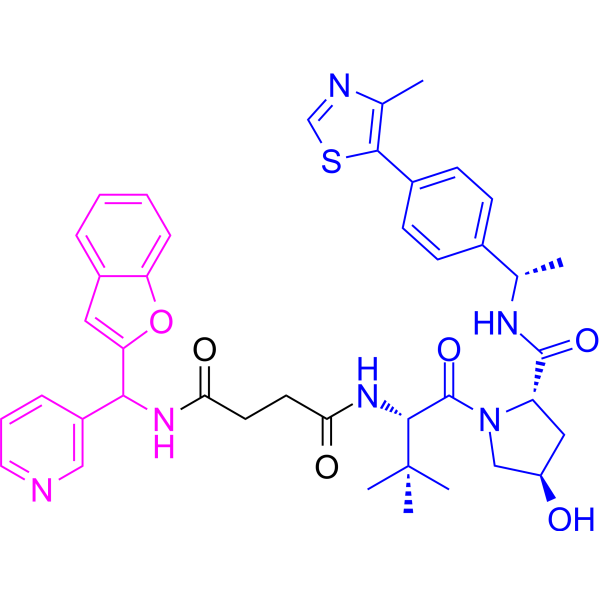
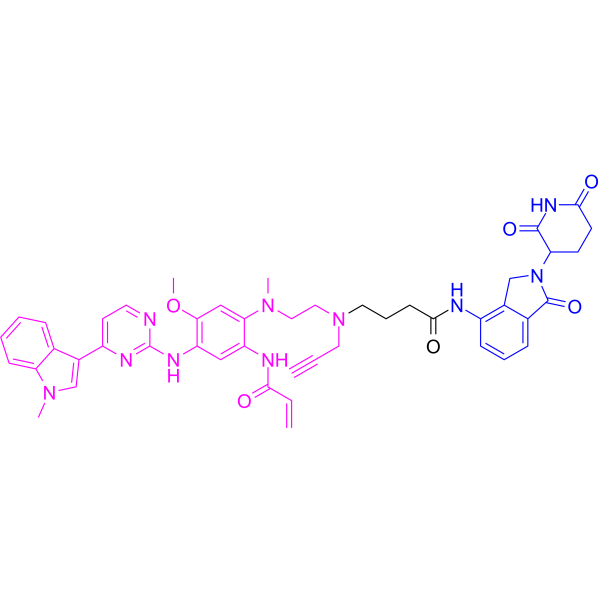
    C004019 is a BBB-penetrable and small-molecule PROTAC that targets tau. C004019 can simultaneously recruit tau and E3 ligase, and effectively clear tau proteins by promoting the ubiquitination and proteasome-dependent degradation of tau, thereby improving synaptic and cognitive functions in Alzheimer's disease (AD) mice. C004019 can be used in the research of AD and tau protein-related diseases. (Pink: Ligand for target protein (HY-138679); Black: linker (HY-140189); Blue: E3 Ligase Ligand (HY-138678))
    C004019
  • HY-153713
    MYC-RIBOTAC
    1 Publications Verification

    RIBOTAC c-Myc Apoptosis Cancer
    MYC-RIBOTAC is a nucleic acid-targeting degrader (ribonuclease-targeting chimera, RIBOTAC) that targets the MYC internal ribosome entry site (IRES). MYC-RIBOTAC contains a MYC mRNA binding component and a small molecule that recruits and locally activates RNAse L1. MYC-RIBOTAC reduces MYC mRNA and protein expression levels, induces cell apoptosis, and can be used for antitumor research . MYC-RIBOTAC consists of pre-miR-155 binder Anticancer agent 167 (HY-156839), RNA binder NCI-B16 (HY-156215), and Linker Amino-PEG4-alcohol (HY-W008005).
    MYC-RIBOTAC
  • HY-155021

    PROTACs α-synuclein Neurological Disease
    PROTAC α-synuclein degrader 5 is a highly selective small-molecule degrader (PROTAC) of α-synuclein aggregates, with a DC50 of 7.51 μM and the highest degradation rate Dmax of 89%. PROTAC α-synuclein degrader 5 contains probe molecule sery308 and E3 ligase ligands. PROTAC α-synuclein degrader 5 can be used for neurological disease research .
    PROTAC α-synuclein degrader 5
  • HY-144984

    β-catenin Molecular Glues Cancer
    NRX-1933 is a type of molecular glue. NRX-1933 is a β-catenin:β-TrCP interaction enhancer for the development of small molecule degraders. NRX-1933 promotes the ubiquitination of mutated β-Catenin, leading to degradation. NRX-1933 can be applied to tumor research on abnormal activation of Wnt/β - catenin signaling pathway .
    NRX-1933
  • HY-149508

    Keap1-Nrf2 Reactive Oxygen Species (ROS) Cancer
    Nrf2-IN-3 (Compound R16) is a small-molecule NRF2 inhibitor and increases reactive oxygen species (ROS) production. Nrf2-IN-3 selectively binds KEAP1 mutants and restores their NRF2-inhibitory function by repairing the disrupted KEAP1/NRF2 interactions, leading to proteasome-dependent NRF2 degradation in cells. Nrf2-IN-3 sensitizes KEAP1-mutated tumor cells to Cisplatin (HY-17394), Gefitinib (HY-50895), and KEAP1 G333C-mutated xenograft to Cisplatin .
    Nrf2-IN-3
  • HY-115865
    XIAP degrader-1
    1 Publications Verification

    IAP Cancer
    XIAP degrader-1, a primary amine tethered small molecule, promotes the degradation of X-linked inhibitor of apoptosis protein (XIAP).
    XIAP degrader-1
  • HY-146324

    PROTACs Apoptosis CaMK Cancer
    PROTAC eEF2K degrader-1 (Compound 11l) is an eEF2K-Targeting PROTAC small molecule that induces apoptosis in MDA-MB-231 cells. PROTAC eEF2K degrader-1 mediates eEF2K degradation .
    PROTAC eEF2K degrader-1
  • HY-130245

    PCSK9 Metabolic Disease
    PCSK9 degrader 1 (Compound 16) is a small molecule ligand for proprotein convertase substilisin-like/kexin type 9 (PCSK9) and shows high affinity to PCSK9 with a Ki of 107 nM. PCSK9 degrader 1 can involve in a protein-protein interaction with the low-density lipoprotein (LDL) receptor .
    PCSK9 degrader 1
  • HY-103608

    VHL Ligand-Linker Conjugates 11; E3 ligase Ligand-Linker Conjugates 11

    E3 Ligase Ligand-Linker Conjugates Cancer
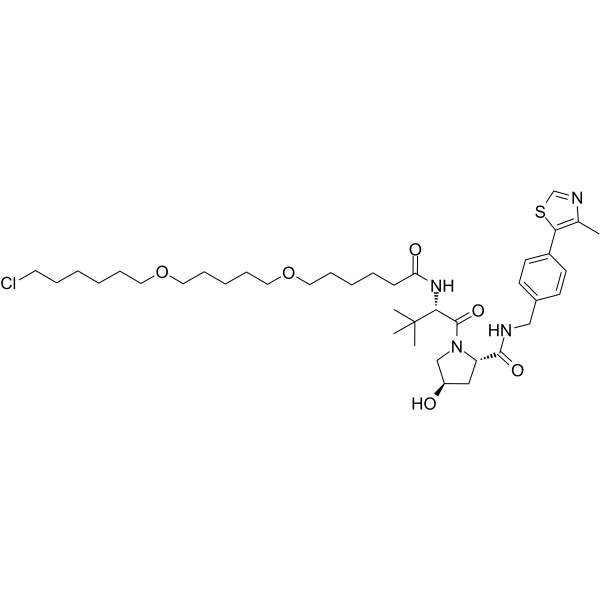
    (S,R,S)-AHPC-(C3-​PEG)​2-​C6-​Cl is a small molecule HaloPROTAC that incorporates the (S,R,S)-AHPC based VHL ligand and 2-unit PEG linker. (S,R,S)-AHPC-(C3-​PEG)​2-​C6-​Cl is capable of inducing the degradation of GFP-HaloTag7 in cell-based assays .
    (S,R,S)-AHPC-(C3-​PEG)​2-​C6-​Cl
  • HY-122702

    PROTAC Linkers Others
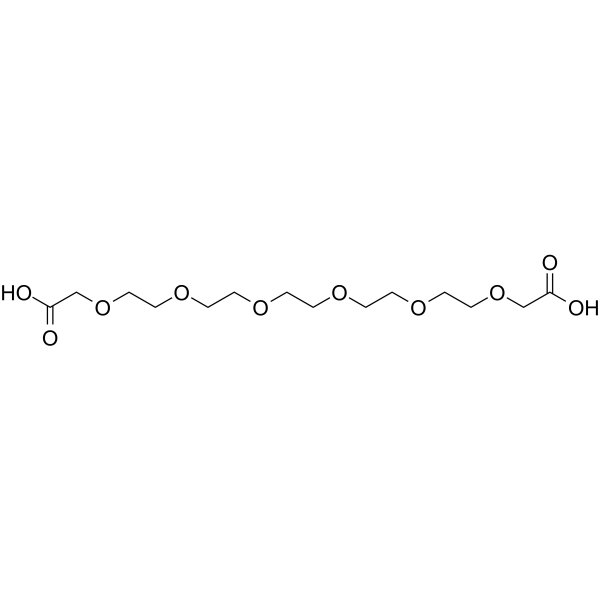
    PEG6-(CH2CO2H)2 is a symmetric PEG PROTAC linker, for the synthesis of Homo-PROTACs which is bivalent small-molecule dimerizers of the VHL E3 ubiquitin ligase to induce self-degradation .
    PEG6-(CH2CO2H)2
  • HY-156084

    CDK PROTACs Apoptosis c-Myc Cancer
    LL-K9-3 is a potent small-molecule degrader of CDK9-cyclin T1. LL-K9-3 has anti-proliferative and pro-apoptotic activities and suppresses downstream signaling of CDK9 and AR. Moreover, LL-K9-3 inhibits AR and Myc-driven oncogenic transcriptional programs .
    LL-K9-3
  • HY-156730A

    Molecular Glues STAT Cancer
    KT-333 ammonium (Compound A) is a molecular glues that degrades STAT3 protein. KT-333 ammonium mediates the selective degradation of STAT3 through the ubiquitin-proteasome system by binding to STAT3 protein and E3 ubiquitin ligase von Hippel-Lindau protein (VHL). KT-333 ammonium has strong selectivity for STAT3 protein degradation and good antitumor activity. KT-333 ammonium can be used in the study of hematologic malignancies such as large granular lymphocytic leukemia (LGL-L), peripheral T-cell lymphoma (PTCL), and cutaneous T-cell lymphoma (CTCL) .
    KT-333 ammonium
  • HY-W877989

    Ligands for E3 Ligase Cancer
    BWA-522 intermediate-1 is an intermediate in the synthesis of PROTAC BWA-522 (HY-149433) and serves as a ligand molecule for cereblon E3 ubiquitin ligase. BWA-522 is an orally active small molecule protein-targeting chimera (PROTAC) that has significant degradation effects on AR-FL and AR-V7 .
    BWA-522 intermediate-1
  • HY-131203

    PROTACs Epigenetic Reader Domain Apoptosis c-Myc Caspase Cancer
    PROTAC BRD4 Degrader-6 (compound 32a) is a potent small-molecule BRD4PROTAC degrader with IC50 value of 2.7 nM for BRD4 BD1. PROTAC BRD4 Degrader-6 potently degrades BRD4 protein and inhibits the expression of c-Myc. PROTAC BRD4 Degrader-6 inhibits the proliferation of pancreatic cancer cell line BxPC3 and induces apoptosis. PROTAC BRD4 Degrader-6 can be used for human pancreatic cancer research (Pink: Mivebresib (HY-100015); Black: linker, Azido-PEG1-CH2CO2H (HY-108369); Blue: Lenalidomide (HY-A0003)) .
    PROTAC BRD4 Degrader-6
  • HY-400766

    Drug Intermediate Cancer
    BWA-522 intermediate-2 is a BWA-522 intermediate. BWA-522 is an orally available small molecule protein-targeting chimera (PROTACs) with significant degradation effect on AR-FL and AR-V7 .
    BWA-522 intermediate-2
  • HY-12362G

    ADC Linker Cancer
    Val-cit-PAB-OH GMP is a GMP grade Val-cit-PAB-OH (HY-12362). GMP small molecules works appropriately as an auxiliary reagent for cell therapy manufacture. Val-cit-PAB-OH is a degradable ADC linker.
    Val-cit-PAB-OH
  • HY-142881

    LYTACs Others
    D-MoDE-A (1) is a bifunctional small molecule that mediates the degradation of extracellular proteins through the asialoglycoprotein receptor (ASGPR).
    D-MoDE-A (1)
  • HY-156730B

    Molecular Glues STAT Cancer
    KT-333 diammonium is a molecular glues that degrades STAT3 protein. KT-333 diammonium mediates the selective degradation of STAT3 through the ubiquitin-proteasome system by binding to STAT3 protein and E3 ubiquitin ligase von Hippel-Lindau protein (VHL). KT-333 diammonium has strong selectivity for STAT3 protein degradation and good antitumor activity. KT-333 diammonium can be used in the study of hematologic malignancies such as large granular lymphocytic leukemia (LGL-L), peripheral T-cell lymphoma (PTCL), and cutaneous T-cell lymphoma (CTCL) .
    KT-333 diammonium
  • HY-113646

    FKBP Others
    Shield-2 is an efficient stabilizing ligand binding to the FKBP (F36V) protein with a dissociation constant of 29 nM. Shield-2 binds tightly to the FKBP mutants destabilizing domains and prevents degradation, thus providing small molecule regulation over intracellular protein levels .
    Shield-2
  • HY-124070

    MDM-2/p53 Cancer
    ISA 27 is a small-molecule MDM2-p53 protein-protein interaction inhibitor. ISA 27 inhibits MDM2-mediated p53 ubiquitination and degradation. ISA 27 is promising for research of p53-mutant solid tumors (e.g., thyroid, breast cancer) .
    ISA 27
  • HY-149434

    Androgen Receptor PROTACs Apoptosis Cancer
    PROTAC AR-NTD antagonist 1 (compound 18) is a small molecule protein-targeting chimera (PROTACs) targeting the Androgen Receptor AR-V7. PROTAC AR-NTD antagonist 1 antagonizes the N-terminal domain of AR (AR-NTD), degrades AR-V7 protein, and induces apoptosis in prostate cancer (PC) cells. The efficiencies of PROTAC AR-NTD antagonist 1 in degrading AR-V7 in VCaP cells were 62.2% (1 μM) and 71.1% (5 μM), respectively .
    PROTAC AR-NTD degrader 1
  • HY-129265

    Polo-like Kinase (PLK) Cancer
    Poloxin-2 is a small molecule Plk1 PBD inhibitor that can effectively induce cell mitotic arrest with an EC50 of approximately 15 μM in HeLa cells. Poloxin-2HT was developed by conjugating a hydrophobic tag (HT) to Poloxin-2, a new application of inhibitors targeting protein-protein interactions. Poloxin-2HT significantly enhanced the effects on cell viability and apoptosis by selectively degrading Plk1 protein, and its effect was stronger than that of untagged Poloxin-2. These data validate hydrophobic tags as a new strategy for targeting and disrupting disease-associated proteins.
    Poloxin-2
  • HY-142885

    LYTACs Others
    M-MoDE-A (2) is a bifunctional small molecule that mediates the degradation of extracellular proteins through the asialoglycoprotein receptor (ASGPR).
    M-MoDE-A (2)
  • HY-130245A

    PCSK9 Metabolic Disease
    (R,R)-PCSK9 degrader 1 is the isomer of PCSK9 degrader 1 (HY-130245). PCSK9 degrader 1 (Compound 16) is a small molecule ligand for proprotein convertase substilisin-like/kexin type 9 (PCSK9) and shows high affinity to PCSK9 with a Ki of 107 nM. PCSK9 degrader 1 can involve in a protein-protein interaction with the low-density lipoprotein (LDL) receptor .
    (R,R)-PCSK9 degrader 1
  • HY-401056

    Drug Intermediate Cancer
    BWA-522 intermediate-3 is a BWA-522 intermediate. BWA-522 is an orally available small molecule protein-targeting chimera (PROTACs) with significant degradation effect on AR-FL and AR-V7 .
    BWA-522 intermediate-3
  • HY-167680

    GSK823093

    Endogenous Metabolite Metabolic Disease
    Denagliptin (GSK823093) is a small molecule dipeptidyl peptidase IV (DPP-4) inhibitor with activity for the suppression of endocrine and metabolic diseases. Denagliptin can be used to study type 2 diabetes. Denagliptin is stable in the solid state but degrades in solution and in mixtures with various excipients. Denagliptin also exhibits degradation in capsules, mainly through cyclization reactions to form (3S,7S,8aS) aminoamines to provide further synthetic materials. The degradation pathway of Denagliptin was elucidated, providing data to support its formulation development and regulatory filings .
    Denagliptin
  • HY-114366

    CXCR Others
    BC-1485 is a small molecule inhibitor of Fibrosis-inducing E3 ligase 1 (FIEL1). BC-1485 protects PIAS4 from ubiquitin-mediated degradation. BC-1485 decreases α-SMA, BAL and CXCL1. BC-1485 ameliorates fibrotic lung injury in murine models .
    BC-1485
  • HY-B0399G

    (R)-Carnitine; Levocarnitine

    Endogenous Metabolite Neurological Disease Cancer
    L-Carnitine (GMP) is L-Carnitine (HY-B0399) produced by using GMP guidelines. GMP small molecules work appropriately as an auxiliary reagent for cell therapy manufacture. L-Carnitine, a highly polar, small zwitterion, is an essential co-factor for the mitochondrial β-oxidation pathway. L-Carnitine functions to transport long chain fatty acyl-CoAs into the mitochondria for degradation by β-oxidation. L-Carnitine is an antioxidant. L-Carnitine can ameliorate metabolic imbalances in many inborn errors of metabolism .
    L-Carnitine
  • HY-174148

    Anion Exchangers Ferroptosis Cancer
    Anion transporter-4 (Compound 6) is a small-molecule anion transporter, which induces tubulin degradation and mitochondrial dysfunction. Anion transporter-4 can increase intracellular anion levels such as chloride ions by disrupting microtubule dynamics, promoting lipid peroxidation, and impairing mitochondrial function. Anion transporter-4 triggers ferroptosis to exert anticancer activity. Anion transporter-4 is promising for research of cancers .
    Anion transporter-4
  • HY-120625

    HSP Cancer
    PU3 is a small molecule inhibitor of Hsp90 that competes with geldanamycin for Hsp90. PU3 induces degradation of proteins, including Her2, similar to geldanamycin. PU3 inhibits the growth of breast cancer cells, causing retinoblastoma protein hypophosphorylation, G1 arrest, and differentiation. PU3 represents a novel class of synthetic compounds that bind to Hsp90 and inhibit the proliferation of cancer cells. PU3 could provide a new strategy for the treatment of cancers .
    BMS-358233
  • HY-138111

    p-Nitopheyl β-D-cellotetaoside

    Fluorescent Dye Others
    4-Nitrophenyl β-D-cellotetraoside (p-Nitopheyl β-D-cellotetaoside) is a small molecule cellulose mimetic consisting of a tetramer of D-glucose units linked by β-1-4 glycosidic bonds. The fragmentation pattern of 4-Nitrophenyl β-D-cellotetraoside after enzymatic hydrolysis can be analyzed by TLC or by the release of 4-nitrophenol, which has a strong absorbance at 395 nm in alkaline solutions. 4-Nitrophenyl β-D-cellotetraoside can be used in cellulose degradation studies to determine the specificity of cellulases .
    4-Nitrophenyl β-D-cellotetraoside
  • HY-W012597

    Biochemical Assay Reagents Others
    Monoethyl succinate is a small molecule ester compound. Monoethyl succinate can be used as a model substrate for polyethylene terephthalate (PET) and poly-(butylene succinate-co-adipate) (PBSA), to simulate the interaction between the PET-degrading enzyme Cut190 and its natural substrates .
    Monoethyl succinate
  • HY-180548

    E1/E2/E3 Enzyme Infection Inflammation/Immunology
    MRC37 is a potent and selective small-molecule ligand of TRIM21 that binds the PRYSPRY domain of TRIM21. MRC37 inhibits the natural antiviral function of TRIM21 by preventing antibody neutralisation of adenovirus 5 (Adv5). MRC37 is also capable of inhibiting Trim-Away, a targeted protein degradation technology where TRIM21 is recruited to specific proteins via electroporated antibodies .
    MRC37
  • HY-181759

    Ligands for Target Protein for PROTAC Epigenetic Reader Domain Histone Acetyltransferase Cancer
    CBP/p300/BRD4 ligand-1 is a small-molecule inhibitor targeting CBP, p300, and BRD4. CBP/p300/BRD4 ligand-1 competitively binds to the functional domains of target proteins without disrupting key interactions. CBP/p300/BRD4 ligand-1 can be used for the construction of dual-target PROTAC degraders (HY-181758) in studies related to prostate cancer and other cancers .
    CBP/p300/BRD4 ligand-1
  • HY-165539

    Autophagy Atg8/LC3 Huntingtin α-synuclein Neurological Disease
    SMER10 is a small-molecule enhancer that can induce autophagy. SMER10 can increase the number of EGFP-LC3 positive autophagosoms in COS-7 and HeLa cells, promoting the conversion of LC3-I to autophagosome-associated LC3-II. SMER10 can efficiently promote the degradation of autophagy substrates, including the mutant huntingtin protein (EGFP-HDQ74) associated with Huntington's disease and the A53T α-synuclein protein associated with Parkinson's disease. SMER10 exerts neuroprotective effect .
    SMER10
  • HY-103608R

    VHL Ligand-Linker Conjugates 11 (Standard); E3 ligase Ligand-Linker Conjugates 11 (Standard)

    Reference Standards E3 Ligase Ligand-Linker Conjugates Cancer
    (S,R,S)-AHPC-(C3-​PEG)​2-​C6-​Cl (Standard) is the analytical standard of (S,R,S)-AHPC-(C3-​PEG)​2-​C6-​Cl (HY-103608). This product is intended for research and analytical applications. (S,R,S)-AHPC-(C3-​PEG)​2-​C6-​Cl is a small molecule HaloPROTAC that incorporates the (S,R,S)-AHPC based VHL ligand and 2-unit PEG linker. (S,R,S)-AHPC-(C3-​PEG)​2-​C6-​Cl is capable of inducing the degradation of GFP-HaloTag7 in cell-based assays .
    (S,R,S)-AHPC-(C3-​PEG)​2-​C6-​Cl (Standard)
  • HY-N0565AG

    Apoptosis MMP Akt PI3K Infection Neurological Disease Inflammation/Immunology Cancer
    Doxycycline hydrochloride GMP is Doxycycline (hydrochloride) (HY-N0565A) produced by using GMP guidelines. GMP small molecules works appropriately as an auxiliary reagent for cell therapy manufacture. Doxycycline hydrochloride is an orally active highly lipophilic, tissue-permeable MMP inhibitor with broad-spectrum antibacterial activity. Doxycycline hydrochloride is also a semi-synthetic antibiotic with chelating properties, which blocks bacterial protein synthesis and inhibits extracellular matrix degradation through interactions with zinc and calcium atoms. Doxycycline hydrochloride also inhibits mitochondrial biogenesis, translation, and the expression of respiratory chain proteins. Doxycycline hydrochloride induces apoptosis, inhibits autophagy and EMT, downregulates stem cell markers, and activates the PI3K-AKT pathway, thereby effectively inhibiting the viability and proliferation of cancer cells such as breast cancer cells. Doxycycline hydrochloride also promotes the survival and self-renewal of embryonic stem cells and neural stem cells, and reduces the frequency of medium changes in culture. Doxycycline hydrochloride has been applied in studies related to breast cancer, prostate cancer, bladder cancer, and other cancers .
    Doxycycline (hydrochloride)

Consulta en línea

Your information is safe with us. * Required Fields.

Saludo


Country or Region *

Nombre del solicitante *


Nombre de la Organizaciòn *

Department *


Direcciòn del E-mail *


Nombre del producto *

Cat. No.


Requested quantity *

Número de teléfono *


Observaciones

Consulta en línea

Inquiry Information

Nombre del producto:
Cat. No.:
Cantidad:
MCE Japan Authorized Agent:

