From 11:00 pm to 12:00 pm EST ( 8:00 pm to 9:00 pm PST ) on January 6th, the website will be under maintenance. We are sorry for the inconvenience. Please arrange your schedule properly.
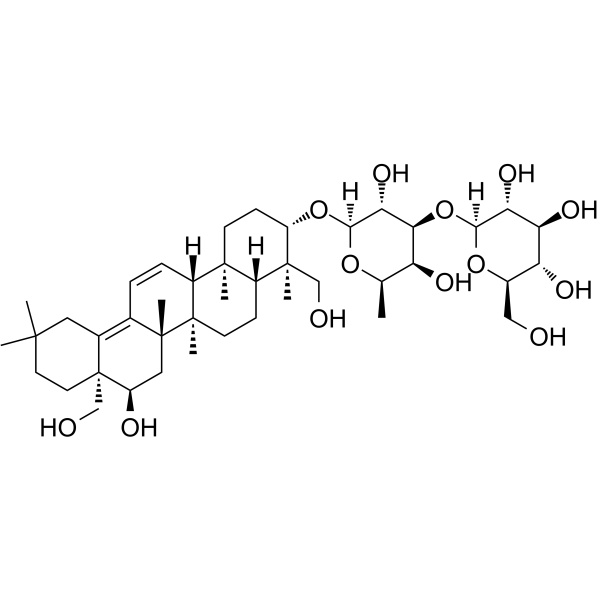
Saikosaponin B2 is an antiviral and anticancer agent that regulates multiple transporters (such as various solutecarriers and ATP-binding cassette transporters including MRP1, MRP2, and OCT2). Saikosaponin B2 is isolated from the plant glycoside component of the roots of Bupleurum scorzonerifolium. Saikosaponin B2 enhances the liver targeting of anticancer drugs via vinegar-baked Radix Bupleuri. Saikosaponin B2 inhibits HCV entry, replication, and translation, is effective against Daclatasvir (HY-10466)-resistant strains, and exerts a synergistic effect when used in combination with Daclatasvir. Saikosaponin B2 is commonly used in studies related to hepatocellular carcinoma and HCV infection .
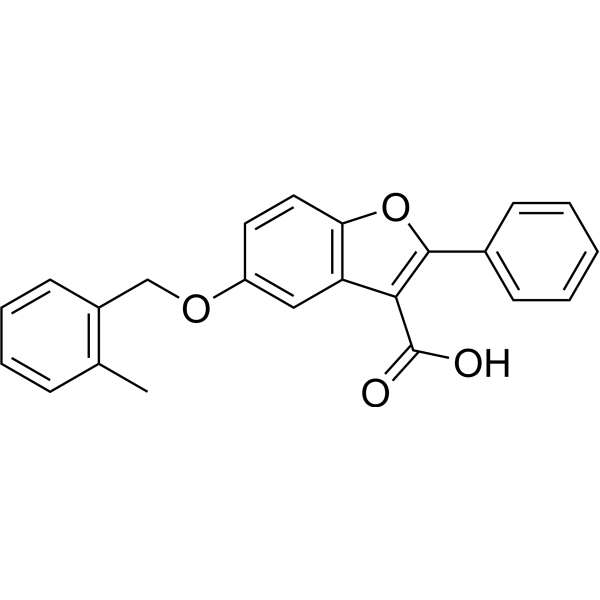
SLC26A3-IN-2 is an orally active inhibitor of anion exchanger protein SLC26A3 (IC50=360 nM). SLC26A3 belongs to solutecarrier (SLC) proteins, and the SLC26 family. SLC26 family has broad anion specificity for chloride, bicarbonate, sulfate and oxalate. SLC26A3 down-regulates in adenoma, DRA, involves in in intestinal absorption of chloride and oxalate. The loss of SLC26A3 function mutations is associated with chloride-losing diarrhea .
Talaroconvolutin A is a ferroptosis inducer. Talaroconvolutin A induces ferroptosis by increasing reactive oxygen species (ROS) levels rather than the GPX4 pathway. Talaroconvolutin A downregulates the expression of the channel protein solutecarrier family 7 member 11 (SLC7A11) and upregulates arachidonic acid lipoxygenase 3 (ALOXE3). Talaroconvolutin A inhibits the growth of colorectal cancer cells HCT116 and bladder cancer cells SW480 with IC50 values of 1.22 μM and 1.4 μM, respectively. Talaroconvolutin A can be used in the study of colorectal cancer and bladder cancer [1] [2] [3].
Lepadin H is a ferroptosis inducer and apoptosis inducer with in vitro cytotoxicity and in vivo antitumor efficacy against cancer cells. Lepadin H reduces GPX4 and SLC7A11 levels, increases p53 and ACSL4 expression, drives lipid hydroperoxide production, elevates reactive oxygen species (ROS) levels, reduces cellular glutathione (GSH) levels, induces lipid peroxidation and G2/M phase cell cycle arrest, and suppresses clonogenic growth and migration of cancer cells.Lepadin H can be used for the research of melanoma .
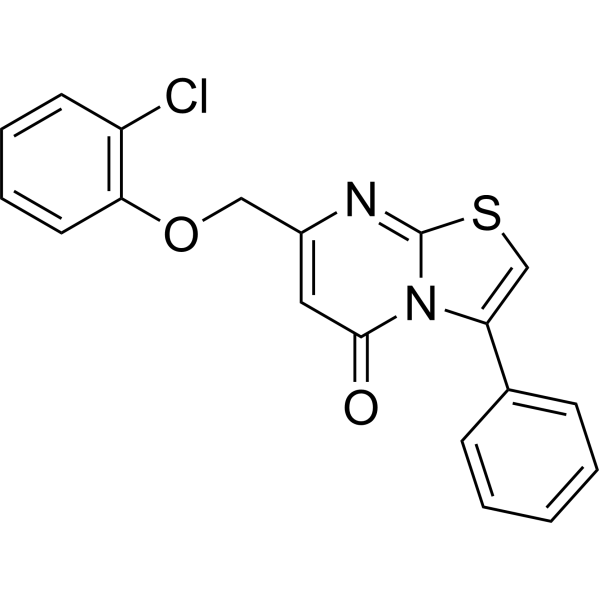
SLC26A3-IN-1 is an inhibitor of anion exchanger protein SLC26A3 (IC50=340 nM). SLC26A3 belongs to solutecarrier (SLC) proteins, and the SLC26 family. SLC26 family has broad anion specificity for chloride, bicarbonate, sulfate and oxalate. SLC26A3 down-regulates in adenoma, DRA, involves in in intestinal absorption of chloride and oxalate. The loss of SLC26A3 function mutations is associated with chloride-losing diarrhea .
Saikosaponin B2 (Standard) is the analytical standard of Saikosaponin B2. This product is intended for research and analytical applications. Saikosaponin B2 is an antiviral and anticancer agent that regulates multiple transporters (such as various solutecarriers and ATP-binding cassette transporters including MRP1, MRP2, and OCT2). Saikosaponin B2 is isolated from the plant glycoside component of the roots of Bupleurum scorzonerifolium. Saikosaponin B2 enhances the liver targeting of anticancer drugs via vinegar-baked Radix Bupleuri. Saikosaponin B2 inhibits HCV entry, replication, and translation, is effective against Daclatasvir (HY-10466)-resistant strains, and exerts a synergistic effect when used in combination with Daclatasvir. Saikosaponin B2 is commonly used in studies related to hepatocellular carcinoma and HCV infection .
P-LPK is a dodecapeptide that specifically targets SLC1A5, which is highly expressed on the membrane of colorectal cancer cells, with a Kd value of 1.19 μM. P-LPK has no intrinsic cell proliferation regulatory activity. Gallium-68-labeled P-LPK selectively accumulates at colorectal cancer tumor sites in xenograft mouse models. P-LPK can serve as a targeted carrier to deliver Camptothecin (HY-16560) to colorectal cancer cells, forming the conjugate P-LPK-CPT. P-LPK can be used in the research of colorectal cancer .
Saikosaponin B2 is an antiviral and anticancer agent that regulates multiple transporters (such as various solutecarriers and ATP-binding cassette transporters including MRP1, MRP2, and OCT2). Saikosaponin B2 is isolated from the plant glycoside component of the roots of Bupleurum scorzonerifolium. Saikosaponin B2 enhances the liver targeting of anticancer drugs via vinegar-baked Radix Bupleuri. Saikosaponin B2 inhibits HCV entry, replication, and translation, is effective against Daclatasvir (HY-10466)-resistant strains, and exerts a synergistic effect when used in combination with Daclatasvir. Saikosaponin B2 is commonly used in studies related to hepatocellular carcinoma and HCV infection .
Talaroconvolutin A is a ferroptosis inducer. Talaroconvolutin A induces ferroptosis by increasing reactive oxygen species (ROS) levels rather than the GPX4 pathway. Talaroconvolutin A downregulates the expression of the channel protein solutecarrier family 7 member 11 (SLC7A11) and upregulates arachidonic acid lipoxygenase 3 (ALOXE3). Talaroconvolutin A inhibits the growth of colorectal cancer cells HCT116 and bladder cancer cells SW480 with IC50 values of 1.22 μM and 1.4 μM, respectively. Talaroconvolutin A can be used in the study of colorectal cancer and bladder cancer [1] [2] [3].
Lepadin H is a ferroptosis inducer and apoptosis inducer with in vitro cytotoxicity and in vivo antitumor efficacy against cancer cells. Lepadin H reduces GPX4 and SLC7A11 levels, increases p53 and ACSL4 expression, drives lipid hydroperoxide production, elevates reactive oxygen species (ROS) levels, reduces cellular glutathione (GSH) levels, induces lipid peroxidation and G2/M phase cell cycle arrest, and suppresses clonogenic growth and migration of cancer cells.Lepadin H can be used for the research of melanoma .
Saikosaponin B2 (Standard) is the analytical standard of Saikosaponin B2. This product is intended for research and analytical applications. Saikosaponin B2 is an antiviral and anticancer agent that regulates multiple transporters (such as various solutecarriers and ATP-binding cassette transporters including MRP1, MRP2, and OCT2). Saikosaponin B2 is isolated from the plant glycoside component of the roots of Bupleurum scorzonerifolium. Saikosaponin B2 enhances the liver targeting of anticancer drugs via vinegar-baked Radix Bupleuri. Saikosaponin B2 inhibits HCV entry, replication, and translation, is effective against Daclatasvir (HY-10466)-resistant strains, and exerts a synergistic effect when used in combination with Daclatasvir. Saikosaponin B2 is commonly used in studies related to hepatocellular carcinoma and HCV infection .
The SLC51B protein is an important component of the Ost-α/Ost-β complex, which transports bile acids from enterocytes to portal blood. SLC51B Protein, Human (sf9, His, MBP, FLAG) is the recombinant human-derived SLC51B protein, expressed by sf9 insect cells , with N-MBP, C-Flag, N-8*His labeled tag.
SLC19A2 Protein, supported by studies, crucially transports thiamine and mediates H(+)-dependent pyridoxine uptake. This dual function highlights SLC19A2's vital role in cellular processes for essential vitamin intake, emphasizing its significance in sustaining metabolic and biochemical functions. SLC19A2 Protein, Human (sf9, His, Strep, FLAG) is the recombinant human-derived SLC19A2 protein, expressed by sf9 insect cells , with N-Strep, C-Flag, N-8*His labeled tag.
SLC21A3 is a Na(+)-independent transporter that greatly facilitates cellular uptake of a variety of organic anions, including bile salts necessary for intestinal absorption. SLC21A3 is responsible for transporting substances such as DHEAS, estrone 3-sulfate, and atROL in human retinal pigment epithelial cells to maintain the integrity of the visual cycle. SLC21A3 Protein, Human (sf9, His, MBP, FLAG) is the recombinant human-derived SLC21A3 protein, expressed by sf9 insect cells , with N-MBP, C-Flag, N-8*His labeled tag.
SLC25A19, a pivotal mitochondrial transporter, facilitates thiamine diphosphate uptake into mitochondria. While the specifics of its antiporter activity regarding the influence of membrane potential or proton electrochemical gradient remain unclear, SLC25A19's role as a transporter underscores its importance in mitochondrial processes, particularly the transport of thiamine diphosphate, a vital coenzyme in various metabolic pathways. SLC25A19 Protein, Human (Cell-Free, His) is the recombinant human-derived SLC25A19 protein, expressed by E. coli Cell-free , with N-10*His labeled tag.
The SLC19A1 protein acts as an antiporter, importing reduced folate and cyclic dinucleotides by exporting organic anions. It acts as a secondary active transporter, exporting intracellular organic anions to facilitate substrate uptake. SLC19A1 Protein, Human (HEK293, His-MBP, Flag) is the recombinant human-derived SLC19A1 protein, expressed by HEK293 , with N-8*His, C-Flag, N-MBP labeled tag.
SLC35F2 Protein, a putative solute transporter, potentially participates in the cellular transport of various solutes. Despite the lack of clarity on specific substrates and transport mechanisms, its designation implies a role in regulating intracellular solute concentrations. Precise details of its transport function and impact on cellular physiology require further research. SLC35F2 Protein, Human (sf9, His, Strep, FLAG) is the recombinant human-derived SLC35F2 protein, expressed by sf9 insect cells , with N-Strep, C-Flag, N-8*His labeled tag.
SLC25A45 Protein, Human (sf9, His, MBP, FLAG) is the recombinant human-derived SLC25A45 protein, expressed by sf9 insect cells, with N-MBP, C-Flag, N-8*His labeled tag.
SLC22A23 Protein, Human (HEK293, His, Strep, Flag) is the recombinant human-derived SLC22A23, expressed by HEK293 , with Strep, His, Flag labeled tag. ,
SLC22A23 Protein, Human (HEK293, His, MBP, Flag) is the recombinant human-derived SLC22A23 protein, expressed by HEK293, with N-8*His & C-Flag & N-MBP tag.
SLC26A4-VLPs Protein, Human (HEK293, His) is recommended for animal immunization, ELISA. It is not recommended for receptor-ligand interaction detection and SPR/BLI assay since there are other irrelevant membrane proteins of the host on the VLP envelope, and the receptor-ligand interaction will have strong background interference. High requirements for chips and experimental protocols are needed for SPR/BLI assays. If VLP control is required, it is recommended HY-P701236. Tags can only be detected under denaturing conditions.
The SLC46A1 protein is a proton-coupled folate symporter that utilizes the H(+) gradient in the proximal jejunum to drive folate absorption. It transports folate from the blood to the cerebrospinal fluid and exhibits alternating outward- and inward-open conformational states at acidic pH. SLC46A1 Protein, Human (HEK293, His, MBP, FLAG) is the recombinant human-derived SLC46A1 protein, expressed by HEK293 , with N-MBP, C-Flag, N-8*His labeled tag.
Copper transport 1 homolog; Copper transporter 1; COPT1; COPT1_HUMAN; CTR1; hCTR1; High affinity copper uptake protein 1; SLC31A1; solutecarrier family 31 copper tansporters; member 1; solutecarrier family 31 member 1
The SLC31A1 protein is an important uniporter that can transport copper(1+) from the extracellular space into the cytoplasm with remarkable specificity and deliver it directly to molecular chaperones such as ATOX1. This process tightly regulates intracellular copper(1+) levels and may be involved in intestinal copper absorption. SLC31A1 Protein, Human (Cell-Free, His-SUMO) is the recombinant human-derived SLC31A1 protein, expressed by E. coli Cell-free , with N-SUMO, N-6*His labeled tag.
SLC2A9 Protein, validated by studies, serves as a high-capacity urate transporter in proximal tubules. Additionally, it exhibits residual glucose and fructose transporter activities. Its rapid urate transport (45- to 60-fold faster than glucose) underscores its pivotal role. Notably, it excludes galactose transport and modestly facilitates adenine uptake, contributing to diverse physiological processes. SLC2A9 Protein, Human (Cell-Free, His) is the recombinant human-derived SLC2A9 protein, expressed by E. coli Cell-free , with N-10*His labeled tag. The total length of SLC2A9 Protein, Human (Cell-Free, His) is 540 a.a., with molecular weight of 60.2 kDa.
The SLC30A3 protein is a possible proton-coupled zinc antiporter that mediates cellular zinc homeostasis in the brain. It promotes zinc import into synaptic vesicles and regulates intracellular zinc levels, which are critical for neuronal processes. SLC30A3 Protein, Human (sf9, His, MBP, FLAG) is the recombinant human-derived SLC30A3 protein, expressed by sf9 insect cells , with N-MBP, C-Flag, N-8*His labeled tag.
The SLC30A2 protein acts as an electrically neutral proton-coupled antiporter, transporting zinc ions into various intracellular organelles. SLC30A2 Protein, Human (sf9, His, MBP, FLAG) is the recombinant human-derived SLC30A2 protein, expressed by sf9 insect cells , with N-MBP, C-Flag, N-8*His labeled tag.
SLC35A1 is a key player in intracellular transport, acting as a transporter to transport CMP-sialic acid from the cytoplasm to the Golgi apparatus. As an antiporter, it exchanges CMP-sialic acid for CMP, maintaining cellular homeostasis. SLC35A1 Protein, Human (sf9, His, MBP, FLAG) is the recombinant human-derived SLC35A1 protein, expressed by sf9 insect cells , with N-MBP, C-Flag, N-8*His labeled tag.
SLC14A1 Protein plays a pivotal role in cellular processes, mediating urea transport across erythrocyte and renal inner medullary collecting duct membranes. It is crucial for the urinary concentrating mechanism and regulates water transport in erythrocytes. With a dual role in urea transport, SLC14A1 maintains cellular osmotic balance and contributes to physiological processes associated with urinary concentration, highlighting its significance. SLC14A1 Protein, Human (sf9, His, MBP, FLAG) is the recombinant human-derived SLC14A1 protein, expressed by sf9 insect cells , with N-MBP, C-Flag, N-8*His labeled tag.
The SLC44A1 protein acts as a choline/H+ and high-affinity ethanolamine/H+ antiporter and is critical for regulating cellular choline and ethanolamine transport. Its dual function actively redistributes intracellular ethanolamine and balances the CDP-Cho and CDP-Etn arms of the Kennedy pathway. SLC44A1 Protein, Human (HEK293) is the recombinant human-derived SLC44A1 protein, expressed by HEK293.
Cystine/glutamate transporter; Amino acid transport system xc-; Calcium channel blocker resistance protein CCBR1; solutecarrier family 7 member 11; xCT
The SLC7A11 protein forms a heterodimer with SLC3A2 and acts as an antiporter to exchange extracellular L-cystine for intracellular L-glutamate across the plasma membrane. This sodium-independent electroneutral transport, with a 1:1 stoichiometry, relies on high intracellular levels of L-glutamate and intracellular reduction of L-cystine. SLC7A11 Protein, Human (Cell-Free, His) is the recombinant human-derived SLC7A11 protein, expressed by E. coli Cell-free , with N-10*His labeled tag.
SLC30A8 Protein, a proton-coupled zinc ion antiporter, crucially regulates insulin secretion. Serving as a mediator, SLC30A8 enables zinc entry into pancreatic beta cell secretory granules, maintaining the required zinc concentration. This process finely tunes insulin release dynamics, emphasizing SLC30A8's pivotal role in physiological insulin secretion control and glucose homeostasis. SLC30A8 Protein, Mouse (Cell-Free, His) is the recombinant mouse-derived SLC30A8 protein, expressed by E. coli Cell-free , with N-10*His labeled tag.
SLC35A2 is a key transmembrane protein that acts as an antiporter to transport uridine diphosphate galactose (UDP-galactose) into the Golgi apparatus. The process involves the exchange of UDP-galactose with UMP and exhibits versatility through exchange with AMP and CMP. SLC35A2 Protein, Human (sf9, His, MBP, FLAG) is the recombinant human-derived SLC35A2 protein, expressed by sf9 insect cells , with N-MBP, C-Flag, N-8*His labeled tag.
SLC52A3 Protein, a vital plasma membrane transporter, facilitates cellular uptake of vitamin B2/riboflavin, crucial for metabolic reactions. Humans rely on external sources for B2, emphasizing SLC52A3's significance. Vitamin B2 transport, underlining its importance in supporting fundamental metabolic pathways for cellular function and human health. SLC52A3 Protein, Human (sf9, His, MBP, FLAG) is the recombinant human-derived SLC52A3 protein, expressed by sf9 insect cells , with N-MBP, C-Flag, N-8*His labeled tag.
The SLC44A1 protein acts as a choline/H+ and high-affinity ethanolamine/H+ antiporter and is critical for regulating cellular choline and ethanolamine transport. Its dual function actively redistributes intracellular ethanolamine and balances the CDP-Cho and CDP-Etn arms of the Kennedy pathway. SLC44A1 Protein, Human (sf9, His, MBP, FLAG) is the recombinant human-derived SLC44A1 protein, expressed by sf9 insect cells , with N-MBP, C-Flag, N-8*His labeled tag.
The SLC15A2 protein is a proton-coupled amino acid transporter that prefers dipeptides and transports oligopeptides containing 2 to 4 amino acids. The stoichiometric ratio of protons to peptides is 2:1 or 3:1, which helps the kidneys absorb dipeptides and tripeptides. SLC1542 Protein, Human (HEK293, GFP-Strep-His) is the recombinant human-derived SLC15A2 protein, expressed by HEK293 , with C-GFP-Strep-His tag.
The SLC11A1 protein is a macrophage-specific antiporter that transports metal ions reversibly through proton gradients. It localizes to late endosomal lysosomal membranes and transports divalent cations into acidic compartments, affecting antibacterial activity. SLC11A1 Protein, Human (HEK293, His-MBP, FLAG) is the recombinant human-derived SLC11A1 protein, expressed by sHEK293 , with N-8*His-MBP, C-Flag labeled tag.
SLC12A2 Protein mediates electroneutral transport of chloride, potassium, and/or sodium ions across the membrane, crucial for regulating ionic balance and cell volume. SLC12A2 Protein, Human (HEK293, His, Strep, FLAG) is the recombinant human-derived SLC12A2 protein, expressed by HEK293 insect cells , with N-Strep, C-Flag, N-8*His labeled tag.
The SLC30A10 protein is a plasma membrane calcium:manganese antiporter that promotes the release of intracellular manganese and the simultaneous import of extracellular calcium. SLC30A10 Protein, Human (sf9, His, MBP, FLAG) is the recombinant human-derived SLC30A10 protein, expressed by sf9 insect cells , with N-MBP, C-Flag, N-8*His labeled tag.
SLC12A2 Protein mediates electroneutral transport of chloride, potassium, and/or sodium ions across the membrane, crucial for regulating ionic balance and cell volume. SLC12A2 Protein, Human (HEK293, His, Strep, GFP) is the recombinant human-derived SLC12A2 protein, expressed by HEK293 , with N-Strep, N-EGF, N-His labeled tag.
The SLC30A10 protein is a plasma membrane calcium:manganese antiporter that promotes the release of intracellular manganese and the simultaneous import of extracellular calcium. SLC30A10 Protein, Human (sf9, His, Strep, FLAG) is the recombinant human-derived SLC30A10 protein, expressed by sf9 insect cells , with N-Strep, C-Flag, N-8*His labeled tag.
SLC10A2 Protein-VLP, Human (HEK293, His) is recommended for animal immunization, ELISA. It is not recommended for receptor-ligand interaction detection and SPR/BLI assay since there are other irrelevant membrane proteins of the host on the VLP envelope, and the receptor-ligand interaction will have strong background interference. High requirements for chips and experimental protocols are needed for SPR/BLI assays. If VLP control is required, it is recommended HY-P701236. Tags can only be detected under denaturing conditions.
SLC40A1 plays a pivotal role in systemic iron homeostasis by transporting Fe(2+) from cells to the bloodstream. Essential for maintaining iron balance, it enables dietary iron uptake, recycling by macrophages and erythrocytes, and controlled release from hepatocytes. In iron surplus, elevated HAMP/hepcidin levels prompt SLC40A1 degradation, limiting iron efflux into the plasma. SLC40A1 Protein, Human (HEK293) is the recombinant human-derived SLC40A1 protein, expressed by HEK293, with tag free.
SLC17A3 is a voltage-driven organic anion transporter that plays a critical role in the renal proximal tubule. It actively promotes urate secretion and is essential for the elimination of the end products of purine metabolism. SLC17A3 Protein, Human (sf9, His, MBP, FLAG) is the recombinant human-derived SLC17A3 protein, expressed by sf9 insect cells , with N-MBP, C-Flag, N-8*His labeled tag.
The SLC22A6 protein acts as a Na(+)-independent organic anion (OA)/dicarboxylic acid antiporter and promotes renal elimination by transporting OA from proximal tubule cells into the urine. It transports coenzymes (BH4, BH2, septopterin) and determines blood biopterin levels as well as prostaglandins, cyclic nucleotides, tryptophan metabolites, uremic toxins (e.g. indoxyl sulfate) and xenobiotics (e.g. ochratoxin). SLC22A6 Protein, Human (Sf9, His, MBP, FLAG) is the recombinant human-derived SLC22A6 protein, expressed by Sf9 insect cells .
SLC37A4 protein, an endoplasmic reticulum antiporter, transports glucose-6-phosphate into the endoplasmic reticulum lumen while moving inorganic phosphate in the opposite direction. This function is integral to glucose production through glycogenolysis and gluconeogenesis, underscoring SLC37A4's central role in regulating blood glucose levels and maintaining metabolic balance. SLC37A4 Protein, Human (sf9, His, MBP, FLAG) is the recombinant human-derived SLC37A4 protein, expressed by sf9 insect cells , with N-MBP, C-Flag, N-8*His labeled tag.
The SLC16A2 protein is a specific thyroid hormone transmembrane transporter that promotes bidirectional movement of thyroid hormone across cell membranes independent of pH or Na(+) gradients. SLC16A2 has a significant preference for substrates such as T3 and T4 and is a key mediator of thyroid hormone transport. SLC16A2 Protein, Human (sf9, His, MBP, FLAG) is the recombinant human-derived SLC16A2 protein, expressed by sf9 insect cells , with N-MBP, C-Flag, N-8*His labeled tag.
The SLC11A2 protein is a proton-coupled metal ion symporter that selectively transports divalent metal cations, including Cd(2+), Fe(2+), Co(2+), Mn(2+), and less Significant Zn(2+), Ni(2+), VO(2+), the stoichiometric ratio of protons and metal ions is 1:1. It is critical for iron homeostasis, regulating intestinal Fe(2+) absorption, transporting TF-associated endosomal Fe(2+), and promoting Fe(2+) and Mn(2+) entry into mitochondria. SLC11A2 Protein, Human (HEK293, His, MBP, FLAG) is the recombinant human-derived SLC11A2 protein, expressed by HEK293 , with N-MBP, C-Flag, N-8*His labeled tag.
The SLC20A2 protein is a sodium-phosphate symporter that transports monovalent phosphate with a stoichiometry of two sodium ions per phosphate ion. Its role in bone mineralization is critical to bone quality and strength. SLC20A2 Protein, Human (sf9, His, MBP, FLAG) is the recombinant human-derived SLC20A2 protein, expressed by sf9 insect cells , with N-MBP, C-Flag, N-8*His labeled tag.
Sodium-dependent phosphate transport protein 2B; Slc34a2; Sodium-phosphate transport protein 2B; Na(+)-dependent phosphate cotransporter 2B; Sodium/phosphate cotransporter 2B (Na(+)/Pi cotransporter 2B; NaPi-2b); solutecarrier family 34 member 2 (rNaPi IIb)
The SLC23A2 protein is a sodium/ascorbic acid cotransporter that significantly promotes the electrical uptake of vitamin C, with a stoichiometry of 2 Na(+) ions per ascorbic acid molecule. Its role is critical in maintaining cellular vitamin C homeostasis, emphasizing its specific and efficient ascorbic acid transport. SLC23A2 Protein, Human (Cell-Free, His) is the recombinant human-derived SLC23A2 protein, expressed by E. coli Cell-free , with C-6*His labeled tag.
The SLC52A1 protein acts as a plasma membrane transporter, promoting cellular uptake of vitamin B2/riboflavin that is critical for metabolic responses. Humans rely on external sources to obtain B2, which emphasizes its importance. SLC52A1 Protein, Human (sf9, His, MBP, FLAG) is the recombinant human-derived SLC52A1 protein, expressed by sf9 insect cells , with N-MBP, C-Flag, N-8*His labeled tag.
Sodium-dependent phosphate transport protein 2B; SLC34A2; Sodium-phosphate transport protein 2B; Na(+)-dependent phosphate cotransporter 2B; NaPi3b; Sodium/phosphate cotransporter 2B (Na(+)/Pi cotransporter 2B; NaPi-2b); solutecarrier family 34 member 2
The SLC38A1 protein acts as an symporter, facilitating the pH-dependent cotransport of short-chain neutral amino acids and sodium ions across cell membranes. Crucially, it mediates astrocyte-derived glutamine transport to GABAergic interneurons, contributing to de novo GABA synthesis. SLC38A1 Protein, Human (sf9, His, MBP, FLAG) is the recombinant human-derived SLC38A1 protein, expressed by sf9 insect cells , with N-MBP, C-Flag, N-8*His labeled tag.
The SLC29A2 protein is a bidirectional uniporter that maintains cellular nucleoside homeostasis. As a Na(+)-independent transporter, it facilitates the transport of various nucleosides and nucleobases, including inosine, adenosine, uridine, thymidine, cytidine, and guanosine. SLC29A2 Protein, Human (Sf9, His, MBP, FLAG) is the recombinant human-derived SLC29A2 protein, expressed by Sf9 insect cells , with N-MBP, C-Flag, N-8*His labeled tag.
The DDX39B protein intricately coordinates nuclear mRNA export and is specifically associated with spliced mRNA as a key component of the TREX complex. This coupling of mRNA transcription, processing, and export involves rounds of ATP-dependent hydrolysis, recruiting components such as ALYREF/THOC and CHTOP. DDX39B Protein, Human (GST) is the recombinant human-derived DDX39B protein, expressed by E. coli , with N-GST labeled tag.
Cystine/glutamate transporter; Amino acid transport system xc-; Calcium channel blocker resistance protein CCBR1; solutecarrier family 7 member 11; xCT;
WB, IHC-P, ICC/IF, IP, ELISA
Human, Mouse, Rat
xCT Antibody (YA6191) is a Rabbit-derived and non-conjugated IgG monoclonal antibody, targeting to xCT.
DA transporter; DAT 1; DAT; DAT1; SC6A3_HUMAN; SLC6A3; Sodium dependent dopamine transporter; Sodium-dependent dopamine transporter; solutecarrier family 6 (neurotransmitter transporter dopamine), member 3; solutecarrier family 6 member 3; Variable number tandem repeat (VNTR); dopamine transporter; ADAT 1; Adenosine deaminase tRNA specific 1; HADAT1; tRNA specific adenosine deaminase 1.
WB, ELISA, IHC-P, IHC-F, ICC/IF
Human, Mouse, Rat
Dopamine Transporter Antibody is a Rabbit-derived and non-conjugated IgG polyclonal antibody, targeting to Dopamine Transporter.
SLC34A2; Sodium-dependent phosphate transport protein 2B; Sodium-phosphate transport protein 2B; Na(+)-dependent phosphate cotransporter 2B; NaPi3b; Sodium/phosphate cotransporter 2B (Na(+)/Pi cotransporter 2B; NaPi-2b); solutecarrier family 34 member 2
IHC-P
Human
SLC34A2 Antibody (YA1182) is a Rabbit-derived and non-conjugated IgG monoclonal antibody, targeting to SLC34A2.
SLC34A2; Sodium-dependent phosphate transport protein 2B; Sodium-phosphate transport protein 2B; Na(+)-dependent phosphate cotransporter 2B; NaPi3b; Sodium/phosphate cotransporter 2B (Na(+)/Pi cotransporter 2B; NaPi-2b); solutecarrier family 34 member 2
IHC-P
Human
SLC34A2 Antibody (YA1182) is a Rabbit-derived and non-conjugated IgG monoclonal antibody, targeting to SLC34A2.
SLC7A5; CD98LC, LAT1; MPE16; Large neutral amino acids transporter small subunit 1; 4F2 light chain (4F2 LC; 4F2LC); CD98 light chain; Integral membrane protein E16; solutecarrier family 7 member 5
IHC-P
Human
SLC7A5/LAT1 Antibody (YA1193) is a Rabbit-derived and non-conjugated IgG monoclonal antibody, targeting to SLC7A5/LAT1.
SLC7A5; CD98LC, LAT1; MPE16; Large neutral amino acids transporter small subunit 1; 4F2 light chain (4F2 LC; 4F2LC); CD98 light chain; Integral membrane protein E16; solutecarrier family 7 member 5
IHC-P
Human
SLC7A5/LAT1 Antibody (YA1193) is a Rabbit-derived and non-conjugated IgG monoclonal antibody, targeting to SLC7A5/LAT1.
Western blot analysis of extracts from THP-1(lane 2(20μg), Jurkat (lane 3(20μg) and NIH3T3(lane 4(20μg) using FOXO1A (HY-P80132) Rabbit mAb. Proteins were transferred
to a PVDF membrane and blocked with 5% non-fat milk in TBST for 2 hour at room temperature. The primary antibody (1/1000) and Loading control antibody (Beta Actin, HY-P80438, 1/10000) was
used in 5% non-fat milk in TBST at 4°C overnight. Goat Anti-Mouse/Rabbit IgG-HRP Secondary Antibody (1/10000) was used for 1 hour at room temperature.
Western blot analysis of extracts from THP-1(lane 2(20μg), Jurkat (lane 3(20μg) and NIH3T3(lane 4(20μg) using FOXO1A (HY-P80132) Rabbit mAb. Proteins were transferred
to a PVDF membrane and blocked with 5% non-fat milk in TBST for 2 hour at room temperature. The primary antibody (1/1000) and Loading control antibody (Beta Actin, HY-P80438, 1/10000) was
used in 5% non-fat milk in TBST at 4°C overnight. Goat Anti-Mouse/Rabbit IgG-HRP Secondary Antibody (1/10000) was used for 1 hour at room temperature.
Western blot analysis of extracts from THP-1(lane 2(20μg), Jurkat (lane 3(20μg) and NIH3T3(lane 4(20μg) using FOXO1A (HY-P80132) Rabbit mAb. Proteins were transferred
to a PVDF membrane and blocked with 5% non-fat milk in TBST for 2 hour at room temperature. The primary antibody (1/1000) and Loading control antibody (Beta Actin, HY-P80438, 1/10000) was
used in 5% non-fat milk in TBST at 4°C overnight. Goat Anti-Mouse/Rabbit IgG-HRP Secondary Antibody (1/10000) was used for 1 hour at room temperature.
Western blot analysis of extracts from THP-1(lane 2(20μg), Jurkat (lane 3(20μg) and NIH3T3(lane 4(20μg) using FOXO1A (HY-P80132) Rabbit mAb. Proteins were transferred
to a PVDF membrane and blocked with 5% non-fat milk in TBST for 2 hour at room temperature. The primary antibody (1/1000) and Loading control antibody (Beta Actin, HY-P80438, 1/10000) was
MedchemExpress Validation 03
Western blot analysis of extracts from THP-1(lane 2(20μg), Jurkat (lane 3(20μg) and NIH3T3(lane 4(20μg) using FOXO1A (HY-P80132) Rabbit mAb. Proteins were transferred
MedchemExpress Validation 04
Western blot analysis of extracts from THP-1(lane 2(20μg), Jurkat (lane 3(20μg) and NIH3T3(lane 4(20μg) using FOXO1A (HY-P80132) Rabbit mAb. Proteins were transferred
to a PVDF membrane and blocked with 5% non-fat milk in TBST for 2 hour at room temperature. The primary antibody (1/1000) and Loading control antibody (Beta Actin, HY-P80438, 1/10000) was
used in 5% non-fat milk in TBST at 4°C overnight. Goat Anti-Mouse/Rabbit IgG-HRP Secondary Antibody (1/10000) was used for 1 hour at room temperature.
MedchemExpress Validation
Western blot analysis of extracts from THP-1(lane 2(20μg), Jurkat (lane 3(20μg) and NIH3T3(lane 4(20μg) using FOXO1A (HY-P80132) Rabbit mAb. Proteins were transferred
to a PVDF membrane and blocked with 5% non-fat milk in TBST for 2 hour at room temperature. The primary antibody (1/1000) and Loading control antibody (Beta Actin, HY-P80438, 1/10000) was
used in 5% non-fat milk in TBST at 4°C overnight. Goat Anti-Mouse/Rabbit IgG-HRP Secondary Antibody (1/10000) was used for 1 hour at room temperature.
Western blot analysis of extracts from THP-1(lane 2(20μg), Jurkat (lane 3(20μg) and NIH3T3(lane 4(20μg) using FOXO1A (HY-P80132) Rabbit mAb. Proteins were transferred
to a PVDF membrane and blocked with 5% non-fat milk in TBST for 2 hour at room temperature. The primary antibody (1/1000) and Loading control antibody (Beta Actin, HY-P80438, 1/10000) was
used in 5% non-fat milk in TBST at 4°C overnight. Goat Anti-Mouse/Rabbit IgG-HRP Secondary Antibody (1/10000) was used for 1 hour at room temperature.
MedchemExpress Validation
Western blot analysis of extracts from THP-1(lane 2(20μg), Jurkat (lane 3(20μg) and NIH3T3(lane 4(20μg) using FOXO1A (HY-P80132) Rabbit mAb. Proteins were transferred
to a PVDF membrane and blocked with 5% non-fat milk in TBST for 2 hour at room temperature. The primary antibody (1/1000) and Loading control antibody (Beta Actin, HY-P80438, 1/10000) was
used in 5% non-fat milk in TBST at 4°C overnight. Goat Anti-Mouse/Rabbit IgG-HRP Secondary Antibody (1/10000) was used for 1 hour at room temperature.
MedchemExpress Validation
Western blot analysis of extracts from THP-1(lane 2(20μg), Jurkat (lane 3(20μg) and NIH3T3(lane 4(20μg) using FOXO1A (HY-P80132) Rabbit mAb. Proteins were transferred
to a PVDF membrane and blocked with 5% non-fat milk in TBST for 2 hour at room temperature. The primary antibody (1/1000) and Loading control antibody (Beta Actin, HY-P80438, 1/10000) was
used in 5% non-fat milk in TBST at 4°C overnight. Goat Anti-Mouse/Rabbit IgG-HRP Secondary Antibody (1/10000) was used for 1 hour at room temperature.
MedchemExpress Validation
Western blot analysis of extracts from THP-1(lane 2(20μg), Jurkat (lane 3(20μg) and NIH3T3(lane 4(20μg) using FOXO1A (HY-P80132) Rabbit mAb. Proteins were transferred
to a PVDF membrane and blocked with 5% non-fat milk in TBST for 2 hour at room temperature. The primary antibody (1/1000) and Loading control antibody (Beta Actin, HY-P80438, 1/10000) was
used in 5% non-fat milk in TBST at 4°C overnight. Goat Anti-Mouse/Rabbit IgG-HRP Secondary Antibody (1/10000) was used for 1 hour at room temperature.
MedchemExpress Validation
Western blot analysis of extracts from THP-1(lane 2(20μg), Jurkat (lane 3(20μg) and NIH3T3(lane 4(20μg) using FOXO1A (HY-P80132) Rabbit mAb. Proteins were transferred
to a PVDF membrane and blocked with 5% non-fat milk in TBST for 2 hour at room temperature. The primary antibody (1/1000) and Loading control antibody (Beta Actin, HY-P80438, 1/10000) was
used in 5% non-fat milk in TBST at 4°C overnight. Goat Anti-Mouse/Rabbit IgG-HRP Secondary Antibody (1/10000) was used for 1 hour at room temperature.
MedchemExpress Validation
Western blot analysis of extracts from THP-1(lane 2(20μg), Jurkat (lane 3(20μg) and NIH3T3(lane 4(20μg) using FOXO1A (HY-P80132) Rabbit mAb. Proteins were transferred
to a PVDF membrane and blocked with 5% non-fat milk in TBST for 2 hour at room temperature. The primary antibody (1/1000) and Loading control antibody (Beta Actin, HY-P80438, 1/10000) was
used in 5% non-fat milk in TBST at 4°C overnight. Goat Anti-Mouse/Rabbit IgG-HRP Secondary Antibody (1/10000) was used for 1 hour at room temperature.
MedchemExpress Validation
Western blot analysis of extracts from THP-1(lane 2(20μg), Jurkat (lane 3(20μg) and NIH3T3(lane 4(20μg) using FOXO1A (HY-P80132) Rabbit mAb. Proteins were transferred
to a PVDF membrane and blocked with 5% non-fat milk in TBST for 2 hour at room temperature. The primary antibody (1/1000) and Loading control antibody (Beta Actin, HY-P80438, 1/10000) was
used in 5% non-fat milk in TBST at 4°C overnight. Goat Anti-Mouse/Rabbit IgG-HRP Secondary Antibody (1/10000) was used for 1 hour at room temperature.
MedChemExpress values your privacy and your trust is important to us. We use cookies to enhance your website experience. Some cookies are necessary to run the website.
Privacy and Cookie Policy

