



Hyaluronic acid
Based on 19 publication(s) in Google Scholar
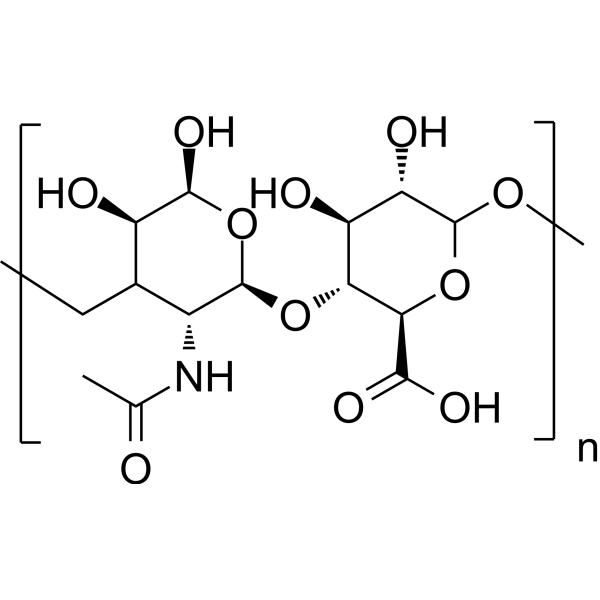
Hyaluronic acid is a biopolymer composed of repeating units of disaccharides with various applications. Hyaluronic acid is a major component of the extracellular matrix (ECM). Hyaluronic acid is synthesized at the plasma membrane. Increased hyaluronic acid levels are associated with tumor cell growth, adhesion, migration, invasion and angiogenesis in digestive cancers. Hyaluronic acid participates in tissue remodeling and rapid cell proliferation in some physiological processes including embryonic morphogenesis and wound-healing. Hyaluronic acid activates the PI3K-Akt signaling. Hyaluronic acid acts as a regulator of cancer-associated lymphangiogenesis. Hyaluronic acid also enhances cell invasion and angiogenesis by promoting proteolytic MMP-9 binding to cell surface or stimulating MMP-9 binding to cell surface. Hyaluronic acid can be used as drug delivery for sodium butyrate to improve the anti-proliferative activity on breast cancer cell line. Hyaluronic acid can be studied in joint diseases, wound healing and cancer.
For research use only. We do not sell to patients.
- CAS No.: 9004-61-9
- Formula: (C14H21NO11)n
- Molecular Weight:379.32 (monomer)
-
Storage:
4°C, protect from light
* In solvent : -80°C, 6 months; -20°C, 1 month (protect from light)


-
 Biological Activity
-
Chemical Information
-
Solvent & Solubility
- Purity & Documentation
- References
-
 Help & FAQs
-

Anti-Infection Compound Library
HY-L002
-
Immunology/Inflammation Compound Library
HY-L007
-
Metabolism/Protease Compound Library
HY-L012
-
PI3K/Akt/mTOR Compound Library
HY-L015
-
Stem Cell Signaling Compound Library
HY-L017
-
Natural Product Library
HY-L021
-
FDA-Approved Drug Library
HY-L022
-
Anti-Cancer Compound Library
HY-L025
-
Autophagy Compound Library
HY-L029
-
Human Endogenous Metabolite Compound Library
HY-L030
-
Anti-Aging Compound Library
HY-L034
-
Drug Repurposing Compound Library
HY-L035
-
Reprogramming Compound Library
HY-L039
-
Oxygen Sensing Compound Library
HY-L045
-
Antibacterial Compound Library
HY-L049
-
Anti-COVID-19 Compound Library
HY-L052
-
NMPA-Approved Drug Library
HY-L053
-
Glycolysis Compound Library
HY-L058
-
Cytoskeleton Compound Library
HY-L060
-
Orally Active Compound Library
HY-L061
-
Glutamine Metabolism Compound Library
HY-L064
-
Traditional Chinese Medicine Active Compound Library
HY-L065
-
FDA Approved & Pharmacopeial Drug Library
HY-L066
-
Neuroprotective Compound Library
HY-L070
-
Anti-Breast Cancer Compound Library
HY-L074
-
Anti-Pancreatic Cancer Compound Library
HY-L077
-
Gut Microbial Metabolite Library
HY-L078
-
Anti-Cancer Metabolism Compound Library
HY-L083
-
Microbial Metabolite Library
HY-L084
-
Angiogenesis-Related Compound Library
HY-L088
-
Glucose Metabolism Compound Library
HY-L092
-
Food-Sourced Compound Library
HY-L094
-
Inactive Ingredient Library
HY-L096
-
Rare Diseases Drug Library
HY-L102
-
Pediatric Drug Library
HY-L104
-
Anti-Cancer Natural Product Library
HY-L107
-
Antidepressant Compound Library
HY-L108
-
Anti-inflammatory Traditional Chinese Medicine Active Compound Library
HY-L114
-
Plant-Sourced Natural Product Library
HY-L115
-
FDA-Approved Anticancer Drug Library
HY-L122
-
Human Metabolite Library
HY-L123
-
Anti-Prostate Cancer Compound Library
HY-L124
-
Pain-Related Compound Library
HY-L139
-
Off-patent Drug Library
HY-L141
-
Mitochondrial Protection Compound Library
HY-L144
-
Membrane Protein-targeted Compound Library
HY-L149
-
Animal-Sourced Natural Product Library
HY-L157
-
FDA-Approved Traditional Chinese Medicine Active Compound Library
HY-L163
-
Multi-Target Compound Library
HY-L176
-
Bioactive Compound Library Max
HY-L181
-
Natural Product Library Plus
HY-L021P
-
Drug Repurposing Compound Library Plus
HY-L035P
-
FDA-Approved Drug Library Plus
HY-L022P
-
FDA-Approved Drug Library Mini
HY-L022M
-
Natural Product and Natural Product-Like Compound Library
HY-L021M
-
Bioactive Compound Library
HY-L001
-
Protein Kinase Compound Library
HY-L196
-
Non-Alcoholic Fatty Liver Disease (NAFLD) Compound Library
HY-L199
-
Cell Proliferation Compound Library
HY-L201
-
High-Throughput Bioactive Compound Library
HY-L205
-
High-Throughput Natural Product Library
HY-L206
-
Polysaccharides Compound Library
HY-L216
-
Cosmetic Ingredient Compound Library
HY-L221
-
Diarrhea-Related Traditional Chinese Medicine Active Compound Library
HY-L224
-
Flavors and Fragrances Compound Library
HY-L242
-
RNA Binding Bioactive Compound Library
HY-L248
-
Lactylation Compound Library
HY-L249
-
Classic FDA-Approved Drug Library
HY-L261


Publications Citing Use of MedChemExpress (MCE) Hyaluronic acid
More- Science. 2026 Feb 5;391(6785):eadz4075. [Abstract]
- Immunity. 2021 May 11;54(5):962-975.e8. [Abstract]
- ACS Nano. 2023 Dec 12;17(23):23535-23544. [Abstract]
- Nat Commun. 2025 Jul 1;16(1):5675. [Abstract]
- Nano Today. 2024 Oct.
- J Immunother Cancer. 2026 Mar 9;14(3):e014179. [Abstract]
- Adv Healthc Mater. 2026 Feb 21:e05684. [Abstract]
- Biomed Pharmacother. 2024 Jan:170:116100. [Abstract]
- Oncogene. 2023 Oct;42(44):3221-3235. [Abstract]
- Chem Mater. 2026 Jun 15.
- Cell Death Discov. 2022 Apr 11;8(1):193. [Abstract]
- Front Bioeng Biotechnol. 2022 Jul 1;10:918368. [Abstract]
- Int Immunopharmacol. 2026 Jan 1;168(Pt 1):115747. [Abstract]
- J Biol Chem. 2021 Jul;297(1):100806. [Abstract]
- Microbiol Spectr. 2021 Dec 22;9(3):e0064621. [Abstract]
- Regen Ther. 2026 Mar 7:32:101098. [Abstract]
- Drug Dev Ind Pharm. 2023 Feb;49(2):189-206. [Abstract]
- J Chem Neuroanat. 2021 Nov:117:101996. [Abstract]
- Research Square Preprint. 2024 Feb 6.
 Customer Validation & Images

-
IF
-
Histological Imaging/Staining
-
IHC
-
Apoptosis Analysis
-
In Vivo Efficacy Study
All Endogenous Metabolite Isoforms
More

Biological Activity
|
Human Endogenous Metabolite |
Hyaluronic acid (HA) is widely used in aesthetic medicine due to its binding ability with a large number of water molecules. It improves tissue hydration and their resistance to mechanical damage. HA plays an important role in wound healing, ovulation, fertilization, signal transduction, and tumor physiology. HA is used in joint diseases such as osteoarthritis or rheumatoid arthritis. HA of a high molecular mass reduces the chemotaxis and migration of inflammatory cells which acts as a good barrier to the inflammatory process and protects against the effects of free radicals. HA is used in ophthalmology due to its lubricating properties for the corneal endothelium, and improves tissue hydration and cellular resistance to mechanical damage in aesthetic dermatology, and has marginal adverse effects. Several trials indicate its role in tumor markers, liver diseases, and in pharmaceuticals[1]. Hyaluronan plays an important role in cancer growth and metastasis. HA and HA fragment-tumor cell interaction could activate the downstream signaling pathways, promoting cell proliferation, adhesion, migration and invasion, and inducing angiogenesis, lymphangiogenesis, epithelial-mesenchymal transition, stem cell-like property, and chemoradioresistance in digestive cancers[2].
MedChemExpress (MCE) has not independently confirmed the accuracy of these methods. They are for reference only.
MedChemExpress (MCE) has not independently confirmed the accuracy of these methods. They are for reference only.


Chemical Information
-
CAS No. 9004-61-9
-
Appearance Solid
-
Molecular Weight 379.32 (monomer)
-
Formula (C14H21NO11)n
-
Color White to off-white
-
SMILES
CO[C@H]1[C@H](O)[C@@H](CO)O[C@@H](O[C@H]2[C@@H]([C@H]([C@@H](O[C@H]2C(O)=O)OC)O)O)[C@@H]1NC(C)=O.[n]
-
Synonyms
Hyaluronan; Hyaluronate
-
Structure Classification
-
Shipping
Room temperature in continental US; may vary elsewhere.
-
Storage
4°C, protect from light
* In solvent : -80°C, 6 months; -20°C, 1 month (protect from light)


Publications (19)
-
Journal Impact Factor
-
Most Recent
-
Science
2026 Feb 5;391(6785):eadz4075. PMID: 41643022 -
Immunity
Golgi apparatus-synthesized sulfated glycosaminoglycans mediate polymerization and activation of the cGAMP sensor STING. [Abstract]2021 May 11;54(5):962-975.e8. PMID: 33857420 -
ACS Nano
A Side-Effect-Free Interventional Therapy for Precisely Eliminating Unresectable Cancer Pain. [Abstract]2023 Dec 12;17(23):23535-23544. PMID: 38084419 -
Nat Commun
2025 Jul 1;16(1):5675. PMID: 40593710 -
-
J Immunother Cancer
Hyaluronic acid-CD44 signaling defines therapeutic resistance and immunosuppressive microenvironment in peritoneal metastasis of gastric cancer. [Abstract]2026 Mar 9;14(3):e014179. PMID: 41802813 -
Adv Healthc Mater
An Injectable Liposome-Hydrogel Composite for Targeted Delivery of a Non-Lactylated Peptide to Rebalance Bone Metabolism in Hyperlipidemia. [Abstract]2026 Feb 21:e05684. PMID: 41721628 -
Biomed Pharmacother
Hyaluronan delays human amniotic epithelial stem cell senescence by regulating CD44 isoform switch to activate AKT/mTOR signals. [Abstract]2024 Jan:170:116100. PMID: 38159379 -
Oncogene
Mesenchymal stromal cells confer breast cancer doxorubicin resistance by producing hyaluronan. [Abstract]2023 Oct;42(44):3221-3235. PMID: 37704784
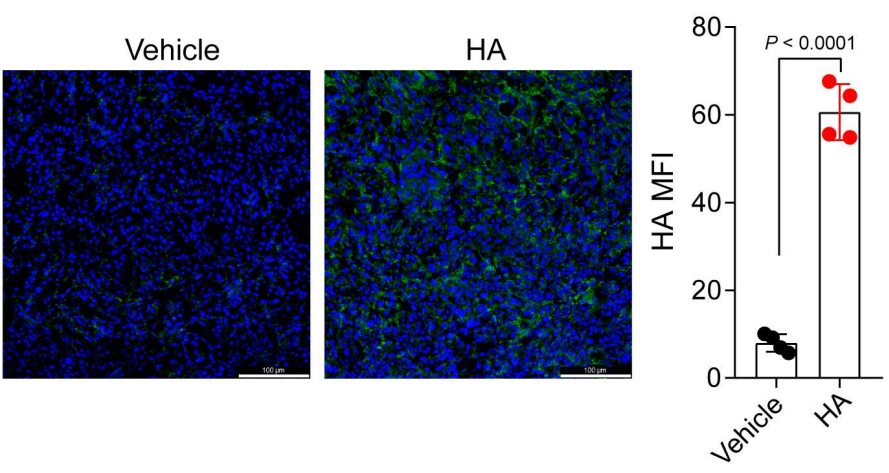
Hyaluronic acid purchased from MedChemExpress. Usage Cited in: Oncogene. 2023 Oct;42(44):3221-3235. [Abstract]
4T1 cells mixed with exogenous Hyaluronic acid (HA, 500 μg) were subcutaneously inoculated into BALB/c mice, the mice were sacrificed on the eighth day after tumor graft. Representative immunofluorescent images of HA (green) and Hoechst33342 (blue) in tumors (left, scale bar, 100 μm), and statistic result of the MFI of HA (right), n = 4. P values were calculated by two-tailed unpaired t tests. E-F, The MSCs supernatant react with increasing dose of DOX. The results showed that exogenous HA was effectively converted into increased intratumoral HA content when assayed on the eighth day after tumor implantation.
-
-
Cell Death Discov
Suppression of the hyaluronic acid pathway induces M1 macrophages polarization via STAT1 in glioblastoma. [Abstract]2022 Apr 11;8(1):193. PMID: 35410993 -
Front Bioeng Biotechnol
Hyaluronic Acid-Modified Nanoplatforms as a Vector for Targeted Delivery of Autophagy-Related Gene to the Endometriotic Lesions in Mice. [Abstract]2022 Jul 1;10:918368. PMID: 35845410 -
Int Immunopharmacol
Microbial metabolite tigloside alleviates osteoarthritis by repolarizing macrophages from M1 to M2 phenotype through Trafd1 destabilization and Trafd1-mediated NF-κB/STAT6 signaling pathways. [Abstract]2026 Jan 1;168(Pt 1):115747. PMID: 41192114 -
J Biol Chem
2021 Jul;297(1):100806. PMID: 34022223 -
Microbiol Spectr
2021 Dec 22;9(3):e0064621. PMID: 34730435 -
Regen Ther
Therapeutic effects of Tetramethylpyrazine on Cartilage in Rat Model of Post-traumatic Osteoarthritis. [Abstract]2026 Mar 7:32:101098. PMID: 41852452 -
Drug Dev Ind Pharm
Multiple stimulus-response berberine plus baicalin micelles with particle size-charge-release triple variable properties for breast cancer therapy. [Abstract]2023 Feb;49(2):189-206. PMID: 36971392 -
J Chem Neuroanat
Caffeine abrogates oxidative stress imbalance: Its implication on lateral geniculate nucleus and visual cortex following hyaluronic acid exposure. [Abstract]2021 Nov:117:101996. PMID: 34214592
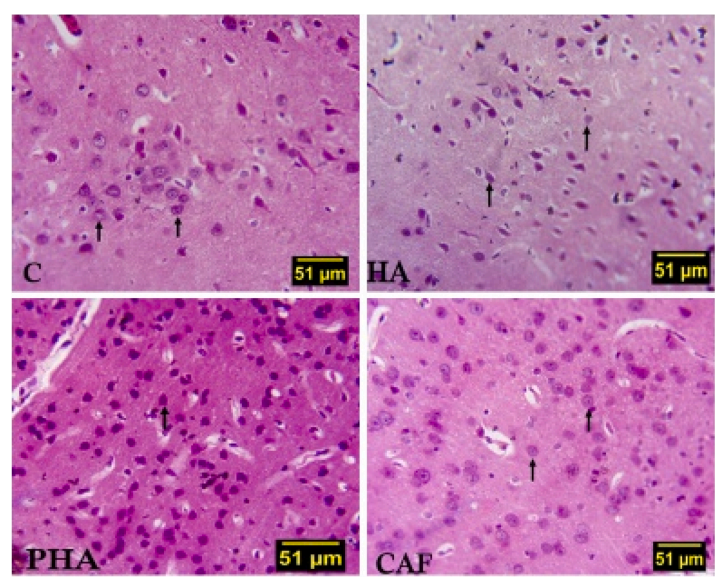
Hyaluronic acid purchased from MedChemExpress. Usage Cited in: J Chem Neuroanat. 2021 Nov:117:101996. [Abstract]
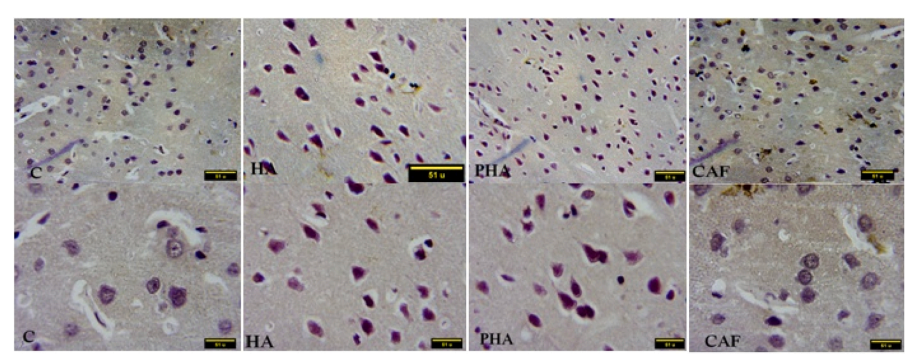
Photomicrograph of the visual cortex in section following hyaluronic acid injection and caffeine treatment. C (control group) revealed a normal neuronal cells distribution pattern with distinct nuclei; HA (Hyaluronic acid group; 25 μL/kg; single injection at the unilateral corneoscleral limbus) revealed pyknotic and scanty distribution of neuronal cells. PHA (intervention group) revealed histological alteration when compared to control group. CAF (caffeine group; 20 mg/kg; i.p.; once daily for 7 days) revealed scantily distribution of normal neuronal cells. Stained with H&E, (Scale bar = 51 μm).
Hyaluronic acid purchased from MedChemExpress. Usage Cited in: J Chem Neuroanat. 2021 Nov:117:101996. [Abstract]
Photomicrograph showing TNF-α in a rat glaucomatous visual cortex. C represents the control group; HA (Hyaluronic acid; 25 μL/kg; single injection at the unilateral corneoscleral limbus) represent the hyaluronic acid group; PHA represents the intervention group; CAF represent the caffeine group. The expressions of TNF-α, and the damaged cells were characterized by a deep brown precipitates, round and shrunken morphology. (Scale bar = 51 μm).
Hyaluronic acid purchased from MedChemExpress. Usage Cited in: J Chem Neuroanat. 2021 Nov:117:101996. [Abstract]
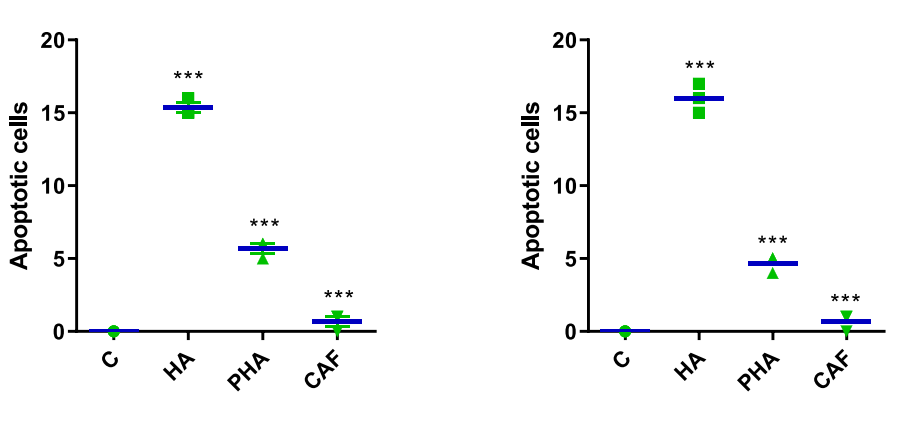
Effect of Caffeine on the tumour necrosis factor in the LGB and visual cortex of HA (25 μL/kg; single injection at the unilateral corneoscleral limbus)-induced rat. A): Tunel assay immunoreactivity in the primary visual cortex. B): Tunel assay immunoreactivity in the Lateral geniculate nucleus (LGN). Data represented as mean ± S.E.M. (n = 4). C = Control, HA= Hyaluronic acid, PHA = Post treatment group, CAF = Caffeine.
Hyaluronic acid purchased from MedChemExpress. Usage Cited in: J Chem Neuroanat. 2021 Nov:117:101996. [Abstract]
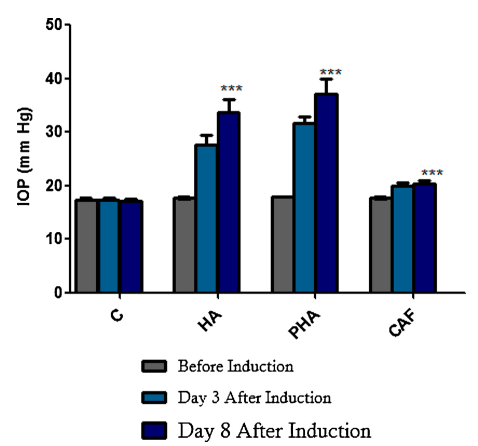
Tonopen measurements of IOP in rats with hyaluronic acid injection and caffeine treatment. The elevated IOP was observed in rats injected with hyaluronic acid compared to the control and caffeine group. The distinction between the control, CAF and HA (Hyaluronic acid group; 25 μL/kg; single injection at the unilateral corneoscleral limbus) group was statistically significant after 8 days of HA injection. Control (C); hyaluronic acid (HA); Post hyaluronic acid (PHA); Caffeine (CAF); Intraocular pressure (IOP) *P < 0.05 (P value = 0.0001).
-


Solvent & Solubility
H2O : 8.33 mg/mL (Need ultrasonic)
DMSO : < 1 mg/mL (insoluble or slightly soluble)
For the following dissolution methods, please prepare the working solution directly:
It is recommended to prepare fresh solutions and use them promptly within a short period of time.
The percentages shown for the solvents indicate their volumetric ratio in the final prepared solution. If precipitation or phase separation occurs during preparation, heat and/or sonication can be used to aid dissolution.
Add each solvent one by one: PBS
Solubility: 9.09 mg/mL; Clear solution; Need ultrasonic and warming and heat to 60°C
Please enter the basic information of animal experiments:
-
-
-
-
Recommended: Prepare an additional quantity of animals to account for potential losses during experiments.
Working solution concentration: 0.22 mg/mL


Purity & Documentation
-
Data Sheet (278 KB)
-
SDS (394 KB)
- English - EN (394 KB)
- Français - FR (394 KB)
- Deutsch - DE (394 KB)
- Norwegian - NO (394 KB)
- Español - ES (394 KB)
- Swedish - SV (394 KB)
- Italian - IT (394 KB)
- Portuguese - PT (394 KB)
-
Handling Instructions (2659 KB)
References
[1]. Salwowska NM, et al. Physiochemical properties and application of hyaluronic acid: a systematic review. J Cosmet Dermatol. 2016 Dec;15(4):520-526. [Content Brief]
[2]. Wu RL, et al. Hyaluronic acid in digestive cancers. J Cancer Res Clin Oncol. 2017 Jan;143(1):1-16. [Content Brief]
[3]. Kogan G, et al. Hyaluronic acid: a natural biopolymer with a broad range of biomedical and industrial applications. Biotechnol Lett. 2007 Jan;29(1):17-25. [Content Brief]
[4]. Coradini, D., et al., (1999). Hyaluronic acid as drug delivery for sodium butyrate: improvement of the anti-proliferative activity on a breast-cancer cell line. International journal of cancer, 81(3), 411–416. [Content Brief]
[5]. Goa, K. L., & Benfield, P. (1994). Hyaluronic acid. A review of its pharmacology and use as a surgical aid in ophthalmology, and its therapeutic potential in joint disease and wound healing. Drugs, 47(3), 536–566. [Content Brief]

Calculators
Concentration (start) × Volume (start) = Concentration (final) × Volume (final)


 Powered by Bioz