



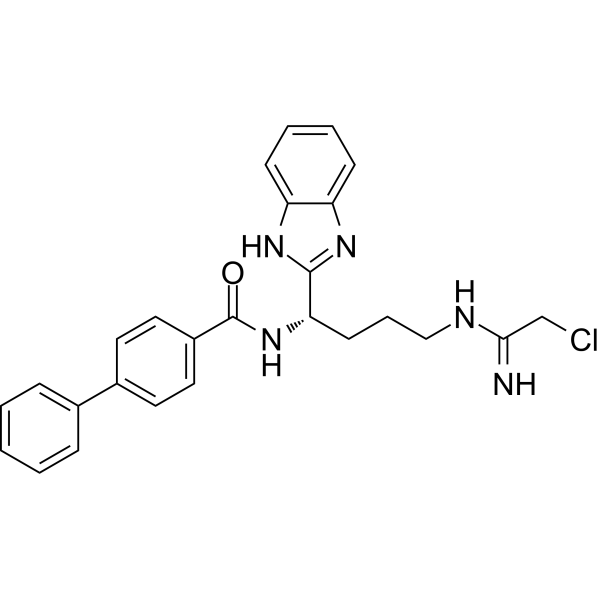
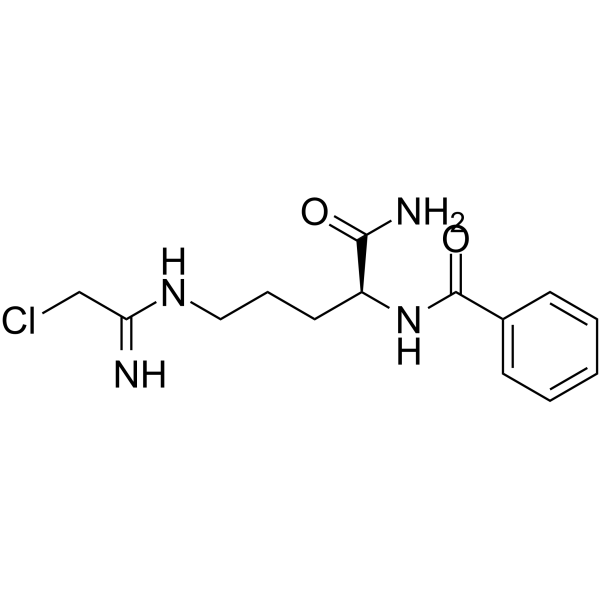
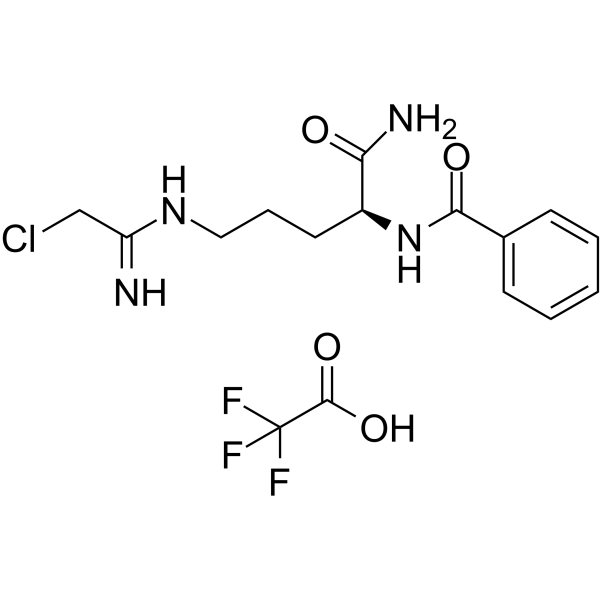
BB-Cl-Amidine
Based on 11 publication(s) in Google Scholar
BB-Cl-Amidine is a peptidylarginine deminase (PAD) inhibitor.
For research use only. We do not sell to patients.
- Purity: 98.19%
- CAS No.: 1802637-39-3
- Formula: C26H26ClN5O
- Molecular Weight:459.97
-
Storage:
-20°C, stored under nitrogen
* In solvent : -80°C, 6 months; -20°C, 1 month (stored under nitrogen)

To place orders, for customer services and technical support, please contact: MedChemExpress USA
Tel: 609-228-6898 E-mail: [email protected] [email protected]


-
 Biological Activity
-
Chemical Information
-
Solvent & Solubility
- Purity & Documentation
- References
-
 Help & FAQs


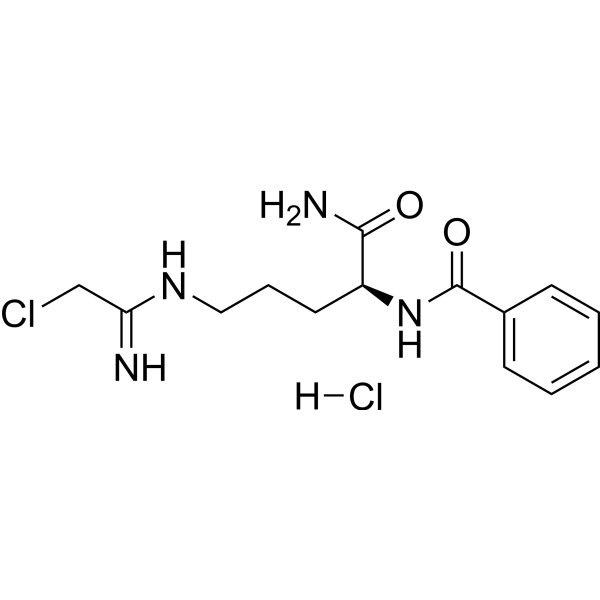
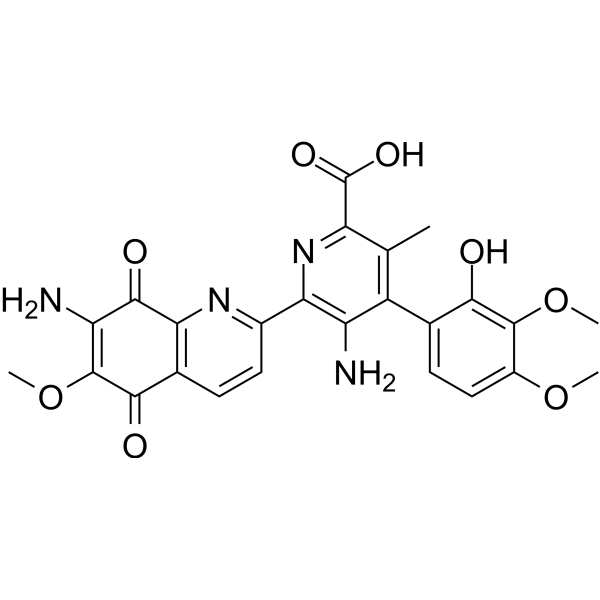
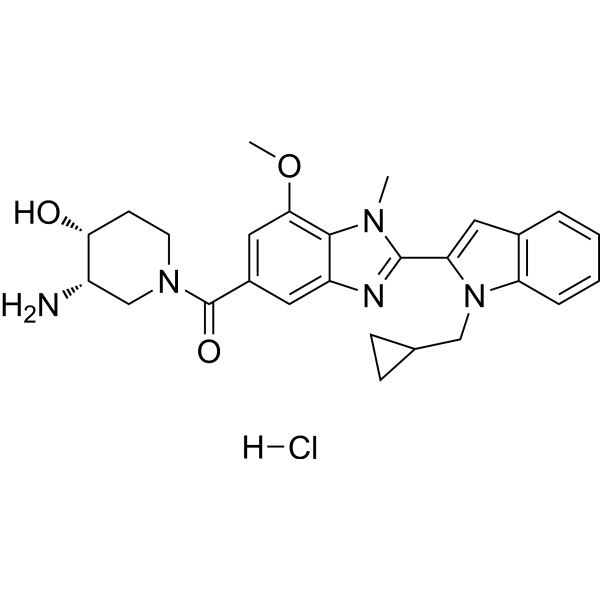

Publications Citing Use of MedChemExpress (MCE) BB-Cl-Amidine
More- Nat Cell Biol. 2021 Oct;23(10):1060-1072. [Abstract]
- Nat Commun. 2024 Sep 3;15(1):7654. [Abstract]
- Adv Sci (Weinh). 2025 Aug 20:e11873. [Abstract]
- Mol Med. 2025 Feb 5;31(1):46. [Abstract]
- Acta Neuropathol Commun. 2025 Feb 18;13(1):33. [Abstract]
- Int Immunopharmacol. 2024 Nov 5;143(Pt 3):113534. [Abstract]
- Oncol Rep. 2023 Jul;50(1):146. [Abstract]
- J Antibiot (Tokyo). 2025 Oct 9. [Abstract]
- Cell Physiol Biochem. 2024 Feb 19;58(1):63-82. [Abstract]
- bioRxiv. 2026 Jan 21:2026.01.20.700682. [Abstract]
- Res Sq. 2024 Jun 04.


Biological Activity
Description
IC50 & Target
PAD[1].
Cellular Effect
|
Cell Line

|
Type | Value | Description | References |
|---|---|---|---|---|
| U2OS | EC50 |
8.8 μM
Compound: 22; BB-Cl amidine
|
Cytotoxicity against human U2OS cells after 72 hrs by XTT assay
Cytotoxicity against human U2OS cells after 72 hrs by XTT assay
|
[PMID: 28505447] |
| U2OS | IC50 |
8.8 μM
Compound: 15
|
Cytotoxicity against human U2OS cells assessed as reduction in cell viability incubated for 72 hrs by MTT assay
Cytotoxicity against human U2OS cells assessed as reduction in cell viability incubated for 72 hrs by MTT assay
|
[PMID: 34520958] |
In Vivo
MedChemExpress (MCE) has not independently confirmed the accuracy of these methods. They are for reference only.
-
Animal Model:MRL/lpr mice[1].
-
Dosage:1 mg/kg.
-
Administration:Subcutaneous injection daily from 8 to 14 weeks of age.
-
Result:Significantly improved endothelium-dependent vasorelaxation and showed a strong trend towards downregulation of IRGs.


Chemical Information
-
CAS No. 1802637-39-3
-
Appearance Solid
-
Molecular Weight 459.97
-
Formula C26H26ClN5O
-
Color White to off-white
-
SMILES
O=C(C1=CC=C(C2=CC=CC=C2)C=C1)N[C@H](C3=NC4=CC=CC=C4N3)CCCNC(CCl)=N
-
Shipping
Room temperature in continental US; may vary elsewhere.
-
Storage
-20°C, stored under nitrogen
* In solvent : -80°C, 6 months; -20°C, 1 month (stored under nitrogen)


Publications (11)
-
Journal Impact Factor
-
Most Recent
-
Nat Cell Biol
2021 Oct;23(10):1060-1072. PMID: 34616019 -
Nat Commun
2024 Sep 3;15(1):7654. PMID: 39227578 -
Adv Sci (Weinh)
Succinate Dehydrogenase Subunit A (SDHA) Mediated Microglia Extracellular Traps Formation Participating in Cerebral Ischemic Reperfusion Injury. [Abstract]2025 Aug 20:e11873. PMID: 40832885 -
Mol Med
Platelet-derived HMGB1 induces NETosis, exacerbating brain damage in the photothrombotic stroke model. [Abstract]2025 Feb 5;31(1):46. PMID: 39910417 -
Acta Neuropathol Commun
Blocking peptidyl arginine deiminase 4 confers neuroprotective effect in the post-ischemic brain through both NETosis-dependent and -independent mechanisms. [Abstract]2025 Feb 18;13(1):33. PMID: 39966968 -
Int Immunopharmacol
HSYA ameliorates venous thromboembolism by depleting the formation of TLR4/NF-κB pathway-dependent neutrophil extracellular traps. [Abstract]2024 Nov 5;143(Pt 3):113534. PMID: 39504860 -
Oncol Rep
Inhibition of protein arginine deiminase II suppresses retinoblastoma in orthotopic transplantation in mice. [Abstract]2023 Jul;50(1):146. PMID: 37326108 -
J Antibiot (Tokyo)
Antibacterial effects of BB-Cl-Amidine against multidrug-resistant Gram-positive pathogens via membrane disruption. [Abstract]2025 Oct 9. PMID: 41068498 -
Cell Physiol Biochem
Peptidylarginine Deiminases Inhibitors Decrease Endothelial Cells Angiogenic Potential by Affecting Akt Signaling and the Expression and Secretion of Angiogenic Factors. [Abstract]2024 Feb 19;58(1):63-82. PMID: 38374715 -
bioRxiv
Reciprocal regulation between the protein arginine deiminases and mSWI/SNF chromatin remodelers controls skeletal muscle differentiation and regeneration. [Abstract]2026 Jan 21:2026.01.20.700682. PMID: 41659480 -


Solvent & Solubility
In Vitro:
DMSO : 100 mg/mL (217.41 mM; Need ultrasonic; Hygroscopic DMSO has a significant impact on the solubility of product, please use newly opened DMSO)
Please refer to the solubility information to select the appropriate solvent. Once prepared, please aliquot and store the solution to prevent product inactivation from repeated freeze-thaw cycles.
Storage method and period of stock solution: -80°C, 6 months; -20°C, 1 month (stored under nitrogen). When stored at -80°C, please use it within 6 months. When stored at -20°C, please use it within 1 month.
Please refer to the solubility information to select the appropriate solvent. Once prepared, please aliquot and store the solution to prevent product inactivation from repeated freeze-thaw cycles.
Storage method and period of stock solution: -80°C, 6 months; -20°C, 1 month (stored under nitrogen). When stored at -80°C, please use it within 6 months. When stored at -20°C, please use it within 1 month.
Concentration (start) × Volume (start) = Concentration (final) × Volume (final)
In Vivo:
Select the appropriate dissolution method based on your experimental animal and administration route.
- For the following dissolution methods, please ensure to first prepare a clear stock solution using an In Vitro approach and then sequentially add co-solvents:
- To ensure reliable experimental results, the clarified stock solution can be appropriately stored based on storage conditions. As for the working solution for In Vivo experiments, it is recommended to prepare freshly and use it on the same day.
- The percentages shown for the solvents indicate their volumetric ratio in the final prepared solution. If precipitation or phase separation occurs during preparation, heat and/or sonication can be used to aid dissolution.
Add each solvent one by one: 10% DMSO 90% (20% SBE-β-CD in Saline)
Solubility: ≥ 2.5 mg/mL (5.44 mM); Clear solution
This protocol yields a clear solution of ≥ 2.5 mg/mL (saturation unknown).
Taking 1 mL working solution as an example, add 100 μL DMSO stock solution (25.0 mg/mL) to 900 μL 20% SBE-β-CD in Saline, and mix evenly.
Preparation of 20% SBE-β-CD in Saline (4°C, storage for one week): 2 g SBE-β-CD powder is dissolved in 10 mL Saline, completely dissolve until clear.
Add each solvent one by one: 10% DMSO 40% PEG300 5% Tween-80 45% Saline
Solubility: ≥ 2.08 mg/mL (4.52 mM); Clear solution
This protocol yields a clear solution of ≥ 2.08 mg/mL (saturation unknown).
Taking 1 mL working solution as an example, add 100 μL DMSO stock solution (20.8 mg/mL) to 400 μL PEG300, and mix evenly; then add 50 μL Tween-80 and mix evenly; then add 450 μL Saline to adjust the volume to 1 mL.
Preparation of Saline: Dissolve 0.9 g sodium chloride in ddH₂O and dilute to 100 mL to obtain a clear Saline solution.
In Vivo Dissolution Calculator
Please enter the basic information of animal experiments:
-
-
-
-
Recommended: Prepare an additional quantity of animals to account for potential losses during experiments.
Please enter your animal formula composition:
-
%DMSO +
Recommended: Keep the proportion of DMSO in working solution below 2% if your animal is weak.
-
%+
-
+%Tween-80 + +
-
%Saline +
The co-solvents required include: DMSO, . All of co-solvents are available by MedChemExpress (MCE). , Tween 80. All of co-solvents are available by MedChemExpress (MCE).
Working solution concentration: 0.22 mg/mL
Method for preparing stock solution: mg drug dissolved in μL DMSO. Stock solution concentration: mg/mL. * In solvent : -80°C, 6 months; -20°C, 1 month (stored under nitrogen)
1. Take μL DMSO stock solution;
2. Add μL .
μL , mix evenly;
3. Then add μL Tween 80, mix evenly;
4. Then add μL
Please ensure that the stock solution in the first step is dissolved to a clear state, and add co-solvents in sequence. You can use ultrasonic heating (ultrasonic cleaner, recommended frequency 20-40 kHz), vortexing, etc. to assist dissolution.


Purity & Documentation
-
Data Sheet (273 KB)
-
SDS (393 KB)
- English - EN (393 KB)
- Français - FR (393 KB)
- Deutsch - DE (393 KB)
- Norwegian - NO (393 KB)
- Español - ES (393 KB)
- Swedish - SV (393 KB)
- Italian - IT (393 KB)
- Korean - KR (393 KB)
- Portuguese - PT (393 KB)
-
Handling Instructions (2659 KB)
References


Complete Stock Solution Preparation Table
Please refer to the solubility information to select the appropriate solvent. Once prepared, please aliquot and store the solution to prevent product inactivation from repeated freeze-thaw cycles.
Storage method and period of stock solution: -80°C, 6 months; -20°C, 1 month (stored under nitrogen). When stored at -80°C, please use it within 6 months. When stored at -20°C, please use it within 1 month.
| Optional Solvent | Concentration Solvent Mass | 1 mg | 5 mg | 10 mg | 25 mg |
|---|---|---|---|---|---|
| DMSO | 1 mM | 2.1741 mL | 10.8703 mL | 21.7405 mL | 54.3514 mL |
| 5 mM | 0.4348 mL | 2.1741 mL | 4.3481 mL | 10.8703 mL | |
| 10 mM | 0.2174 mL | 1.0870 mL | 2.1741 mL | 5.4351 mL | |
| 15 mM | 0.1449 mL | 0.7247 mL | 1.4494 mL | 3.6234 mL | |
| 20 mM | 0.1087 mL | 0.5435 mL | 1.0870 mL | 2.7176 mL | |
| 25 mM | 0.0870 mL | 0.4348 mL | 0.8696 mL | 2.1741 mL | |
| 30 mM | 0.0725 mL | 0.3623 mL | 0.7247 mL | 1.8117 mL | |
| 40 mM | 0.0544 mL | 0.2718 mL | 0.5435 mL | 1.3588 mL | |
| 50 mM | 0.0435 mL | 0.2174 mL | 0.4348 mL | 1.0870 mL | |
| 60 mM | 0.0362 mL | 0.1812 mL | 0.3623 mL | 0.9059 mL | |
| 80 mM | 0.0272 mL | 0.1359 mL | 0.2718 mL | 0.6794 mL | |
| 100 mM | 0.0217 mL | 0.1087 mL | 0.2174 mL | 0.5435 mL |


BB-Cl-Amidine Related Classifications
HY-111347 Related Classifications
 Powered by Bioz