



Pisum sativum Linn
-
Pisum sativum Linn (9)


Arabinoxylan Medium viscosity is an orally active Dectin-1 splice variant modulator, glucose absorption inhibitor, and chyme viscosity enhancer. Arabinoxylan Medium viscosity inhibits particulate β-glucan-induced Dectin-1A activation and mildly suppresses Dectin-1B activation. In human dendritic cells stimulated with particulate β-glucan, Arabinoxylan Medium viscosity reduces the production of IL-10 and TNF-α, and increases the production of IL-4 and IL-23. Arabinoxylan Medium viscosity also supports antifungal immune responses without activating TLR2, TLR4 or TLR5, and does not induce cytokine production when used to stimulate human dendritic cells alone. Arabinoxylan Medium viscosity increases small intestinal chyme viscosity, gets degraded in the large intestine to produce short-chain fatty acids, reduces glucose absorption and insulin response, and improves glucose homeostasis. Arabinoxylan Medium viscosity supports microbial fermentation and the growth of beneficial microbiota in the gastrointestinal tract, prevents bile acid reabsorption, and delays starch digestion. Arabinoxylan Medium viscosity can be used in research related to type 2 diabetes, impaired glucose tolerance, and metabolic syndrome.

- Formula: C10H8ClNO2
- Molecular Weight: 209.63
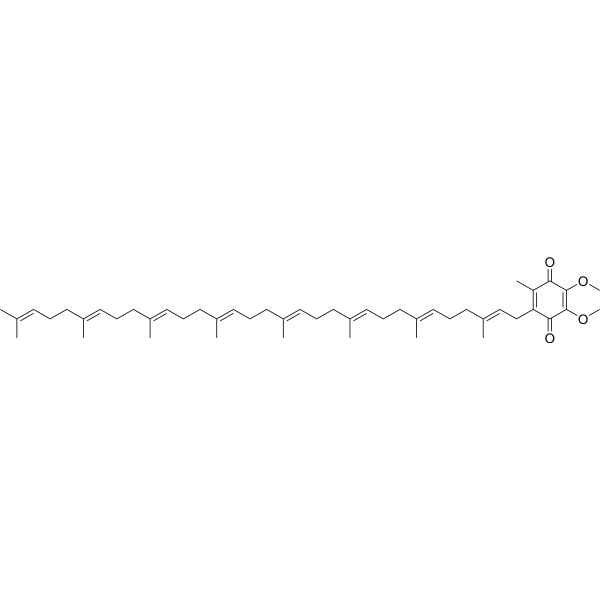
- Formula: C49H74O4
- Molecular Weight: 727.11
Coenzyme Q8 (Ubiquinone 8) is an isoprenoid quinone that mediates electron transfer within the aerobic respiratory chain and reduces oxidative stress. Coenzyme Q8 maintains bacterial respiratory function and enhances host resistance to bacterial infection. Coenzyme Q8 stimulates macrophage phagocytosis and increases antibody-producing cells. Coenzyme Q8 can be used in infectious disease research.
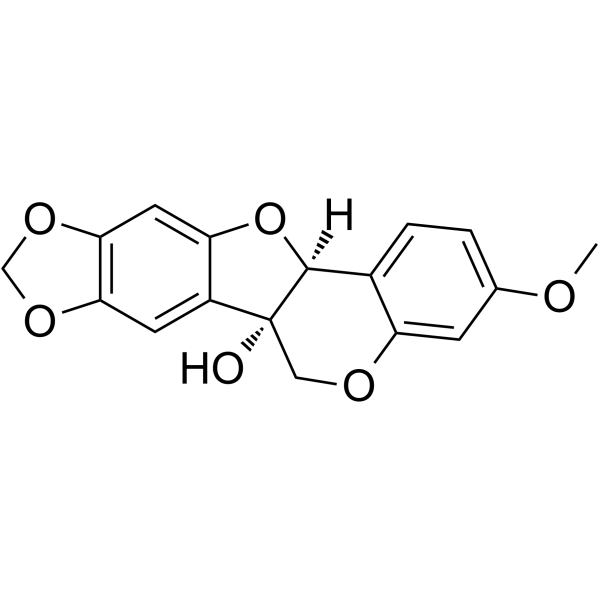
- Formula: C17H14O6
- Molecular Weight: 314.29
(S,S)-Pisatin is a pterocarpan phytoalexin and allelopathic growth inhibitor found in Millettia pachyloba grains and Pisum sativum shoots. (S,S)-Pisatin inhibits root and hypocotyl growth of plants.

- Formula: C6H10O4
- Molecular Weight: 146.14
Monoethyl succinate is a small molecule ester compound. Monoethyl succinate can be used as a model substrate for polyethylene terephthalate (PET) and poly-(butylene succinate-co-adipate) (PBSA), to simulate the interaction between the PET-degrading enzyme Cut190 and its natural substrates.


- Formula: C17H27N3O17P2
- Molecular Weight: 607.35
UDP-GlcNAc (UDP-N-Acetyl-D-glucosamine) is an important component and precursor of bacterial peptidoglycan. UDP-GlcNAc is a nucleotide sugar used by Glycosyltransferases to synthesize glycoproteins, glycosaminoglycans, glycolipids, and glycoRNA. UDP-GlcNAc also serves as the donor substrate for forming O-GlcNAc, a dynamic intracellular protein modification involved in diverse signaling and disease processes. UDP-GlcNAc is the sugar nucleotide donor for the synthesis of O-GlcNAc modified proteins. UDP-GlcNAc also acts as a full agonist of the P2Y14 receptor and inhibits the formation of cAMP. UDP-GlcNAc can be used in studies related to bacterial infections.

- Formula: C10H8ClNO2
- Molecular Weight: 209.63
4-Chloroindole-3-acetic acid (Standard) is the analytical standard of 4-Chloroindole-3-acetic acid (HY-W006267). This product is intended for research and analytical applications. 4-Chloroindole-3-acetic acid (4-Cl-IAA) is a chlorinated analogue of indole-3-acetic acid (IAA) (HY-18569) auxin that functions as a plant hormone, which is found in the seeds of Medicago truncatula、Melilotus indicus and Trifolium.



